
FERMENTATIONS WHICH PRODUCE H 2 WUN Biologie St
FERMENTATIONS, WHICH PRODUCE H 2 WUN Biologie St. D Dr. Jürgen Braun OSt. R Thomas Dürr (Dipl. -Biol. ) St. D Dr. Hauke Holtorf St. D Dr. Roland Studer
Fermentation, which produce H 2 Ø Injection of the fermentation because of build fermentation products (e. g. lactid acid) ü Butyric acid fermentation ü Mixed acid fermentation ü Fermentation of butanol ü Fermentation of capoic acid
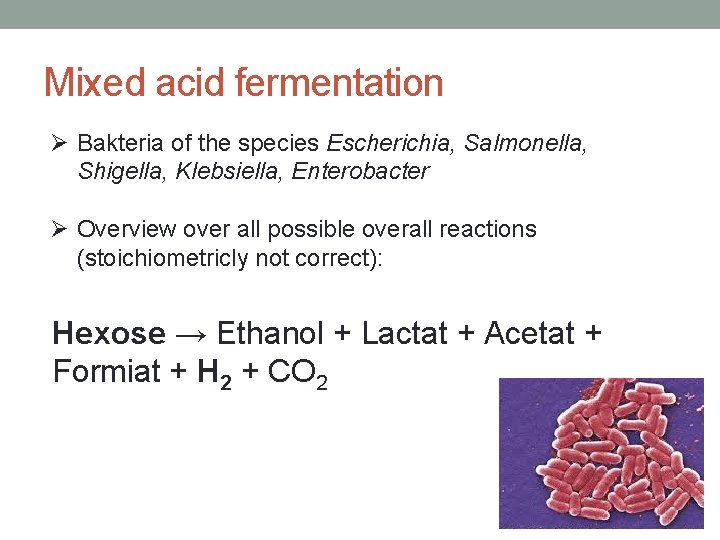
Mixed acid fermentation Ø Bakteria of the species Escherichia, Salmonella, Shigella, Klebsiella, Enterobacter Ø Overview over all possible overall reactions (stoichiometricly not correct): Hexose → Ethanol + Lactat + Acetat + Formiat + H 2 + CO 2
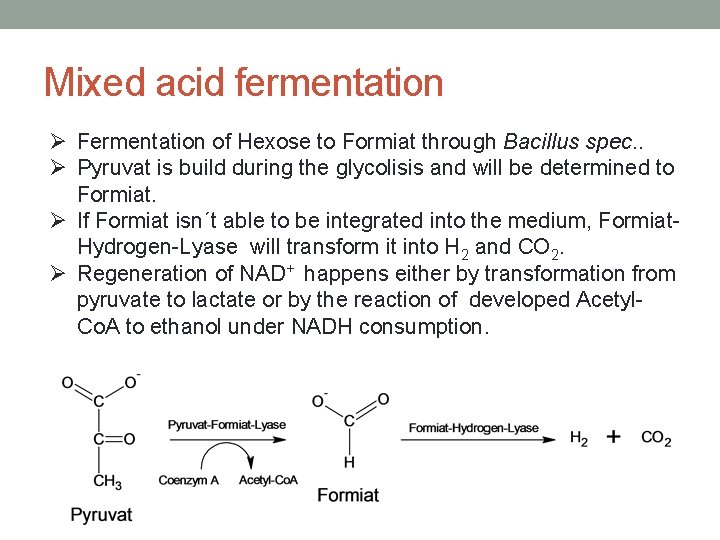
Mixed acid fermentation Ø Fermentation of Hexose to Formiat through Bacillus spec. . Ø Pyruvat is build during the glycolisis and will be determined to Formiat. Ø If Formiat isn´t able to be integrated into the medium, Formiat. Hydrogen-Lyase will transform it into H 2 and CO 2. Ø Regeneration of NAD+ happens either by transformation from pyruvate to lactate or by the reaction of developed Acetyl. Co. A to ethanol under NADH consumption.
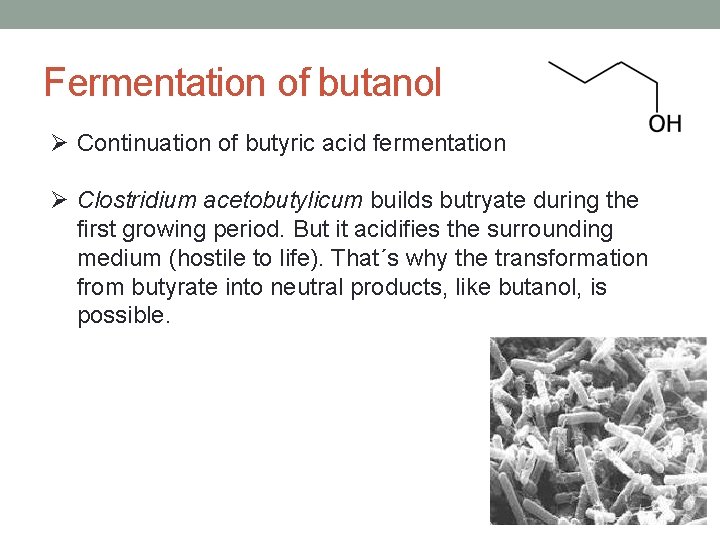
Fermentation of butanol Ø Continuation of butyric acid fermentation Ø Clostridium acetobutylicum builds butryate during the first growing period. But it acidifies the surrounding medium (hostile to life). That´s why the transformation from butyrate into neutral products, like butanol, is possible.

Fermentation of butanol Ø The butryate, that is formed during the butyric acid fermentation, will get activated to butyrat-Co. A and will be reduced to butanol with the help of two Dehydrogenasen. Ø Hyperacidity will not happen.
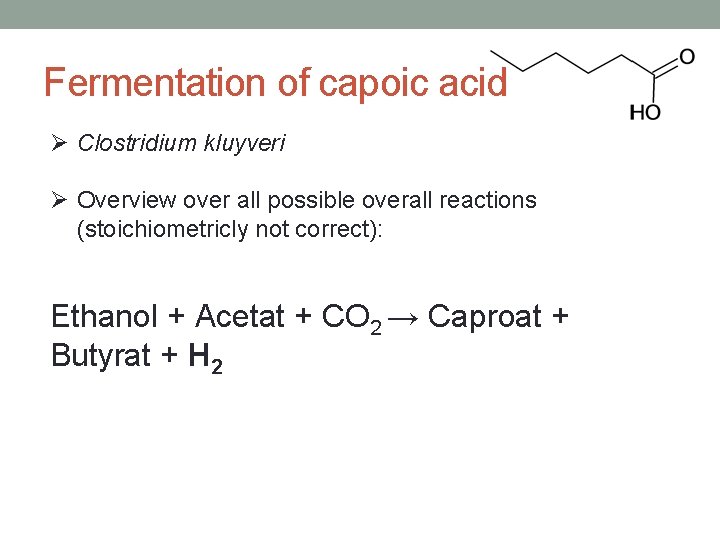
Fermentation of capoic acid Ø Clostridium kluyveri Ø Overview over all possible overall reactions (stoichiometricly not correct): Ethanol + Acetat + CO 2 → Caproat + Butyrat + H 2
Sources • BROCK et al. : Mikrobiologie, Pearson-Studium, 2006. • MUNK et al: Mikrobiologie. Thieme-Verlag, 2008.
That was a presentation of WUN-groupe
- Slides: 9