
Fermentation and Control of Cellular Respiration AP Biology
Fermentation and Control of Cellular Respiration AP Biology Unit 4
Fermentation • Occurs when there is no oxygen available • allows some cells to produce ATP without the use of oxygen – ATP yield would be lower, though. Do you know why? – Only glycolysis is carried out– only 2 ATP produced.

Fermentation Overview • Fermentation allows glycolysis to continue by producing the reactants it needs – NAD+ • Where is the NAD+ usually regenerated from? – Electron transport chain– after the NADH drops off its electrons.
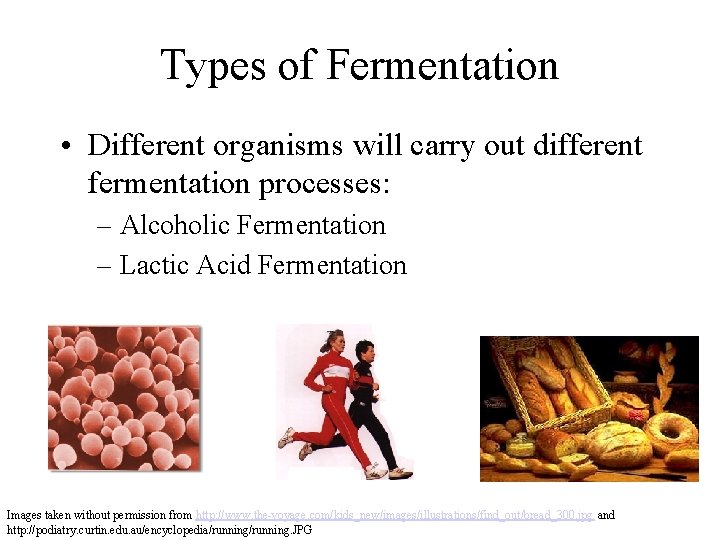
Types of Fermentation • Different organisms will carry out different fermentation processes: – Alcoholic Fermentation – Lactic Acid Fermentation Images taken without permission from http: //www. the-voyage. com/kids_new/images/illustrations/find_out/bread_300. jpg and http: //podiatry. curtin. edu. au/encyclopedia/running. JPG

Alcoholic Fermentation • Occurs in yeast and many bacteria • End products are ethanol and NAD+ • Used to make bread, wine, beer
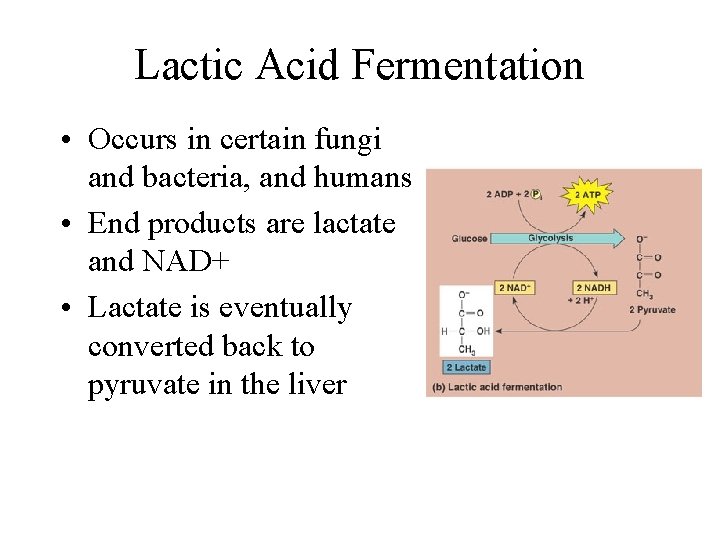
Lactic Acid Fermentation • Occurs in certain fungi and bacteria, and humans • End products are lactate and NAD+ • Lactate is eventually converted back to pyruvate in the liver
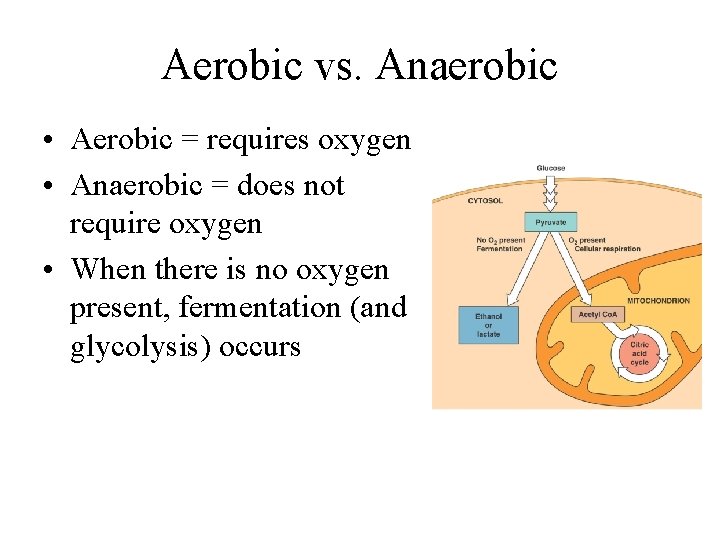
Aerobic vs. Anaerobic • Aerobic = requires oxygen • Anaerobic = does not require oxygen • When there is no oxygen present, fermentation (and glycolysis) occurs
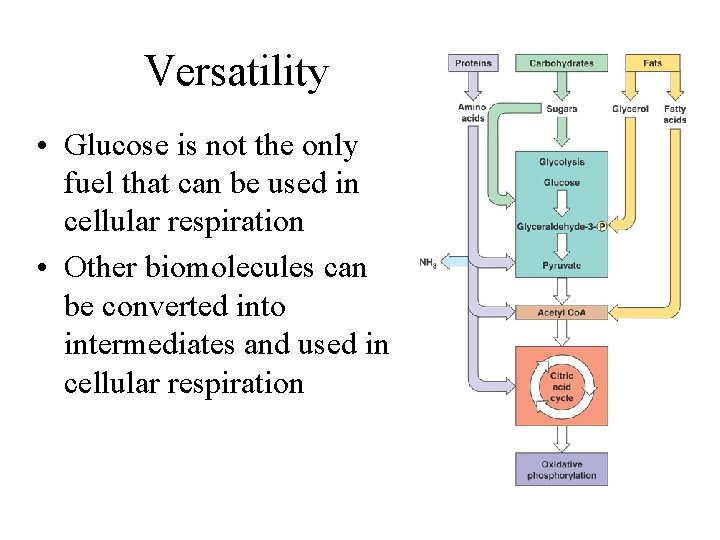
Versatility • Glucose is not the only fuel that can be used in cellular respiration • Other biomolecules can be converted into intermediates and used in cellular respiration

Control of Cellular Respiration • Feedback mechanisms help regulate cellular respiration – Ex. Feedback inhibition – Phosphofructokinase (PFK) is the major enzyme in glycolysis that is controlled – ATP, Citrate inhibits – ADP, AMP stimulates it
- Slides: 9