
Femoro Acetabular Impingement FAI What You Need To
Femoro. Acetabular Impingement (FAI): What You Need To Know As a Team Physician Marc R. Safran, MD Professor, Orthopaedic Surgery Chief, Division of Sports Medicine Stanford University 2019 Advanced Team Physician Course December 12, 2019 - Las Vegas, NV
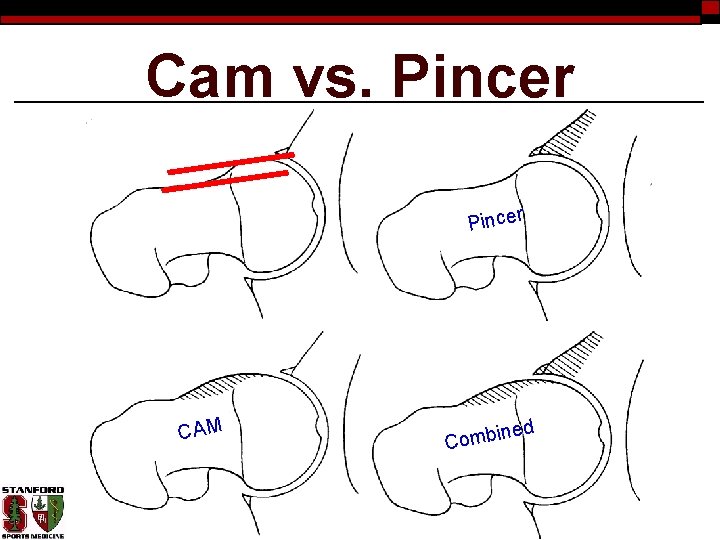
Cam vs. Pincer CAM d ine Comb
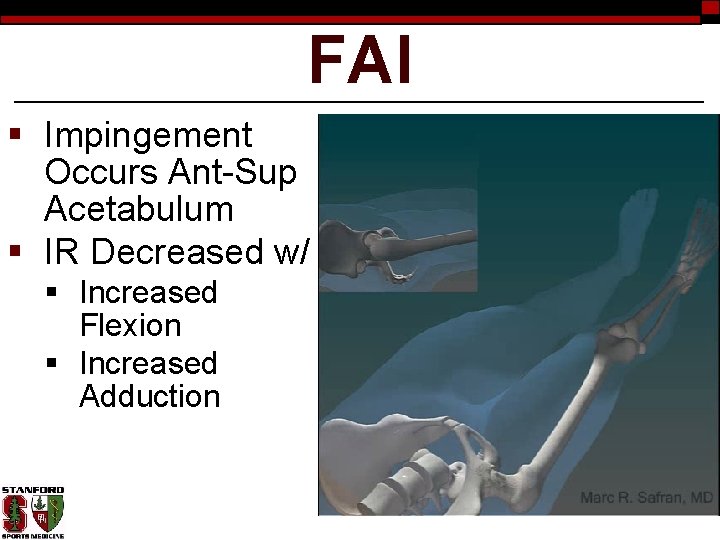
FAI § Impingement Occurs Ant-Sup Acetabulum § IR Decreased w/ § Increased Flexion § Increased Adduction
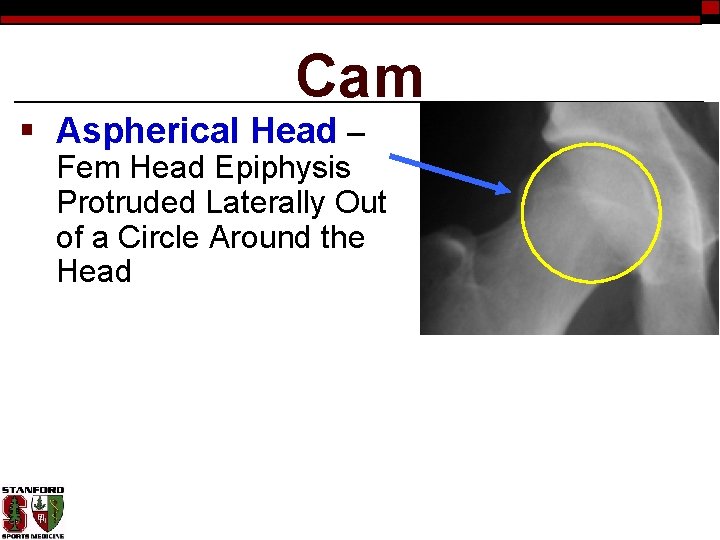
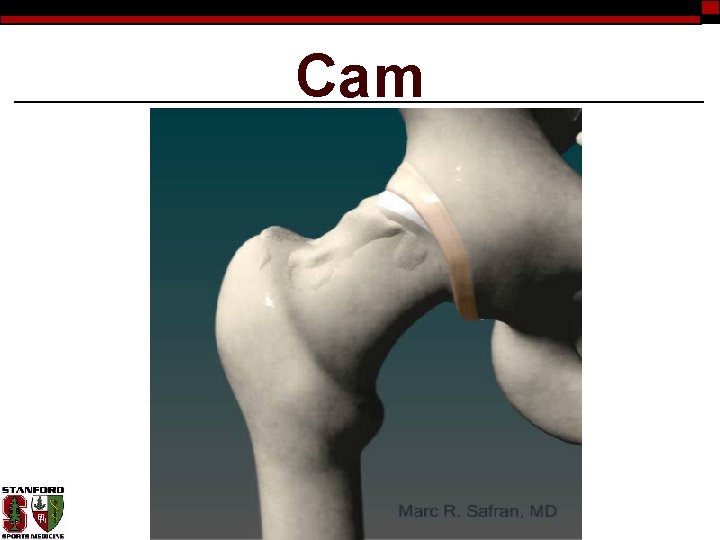
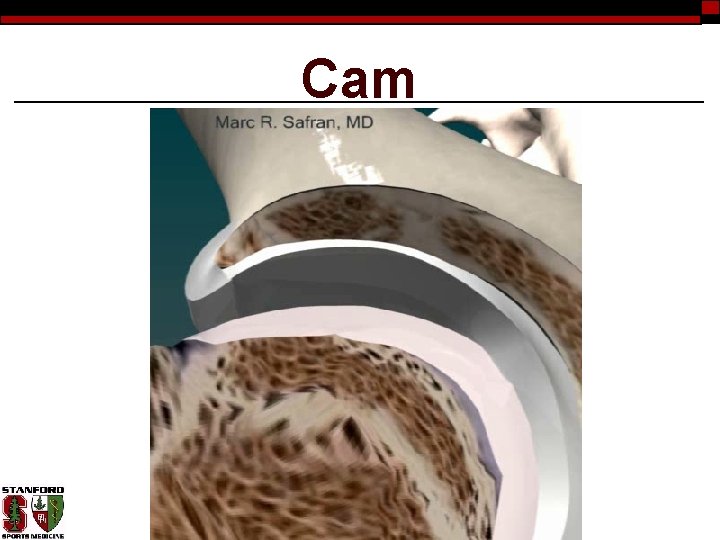
Cam § Aspherical Head – Fem Head Epiphysis Protruded Laterally Out of a Circle Around the Head
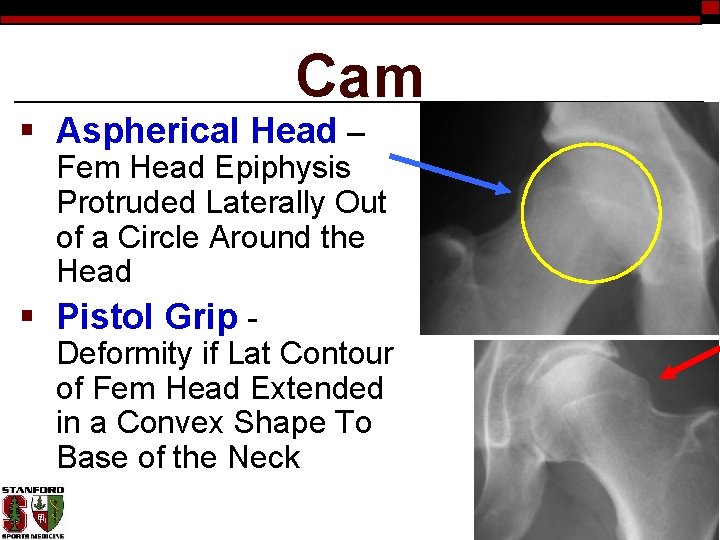
Cam § Aspherical Head – Fem Head Epiphysis Protruded Laterally Out of a Circle Around the Head § Pistol Grip Deformity if Lat Contour of Fem Head Extended in a Convex Shape To Base of the Neck
Cam
Cam
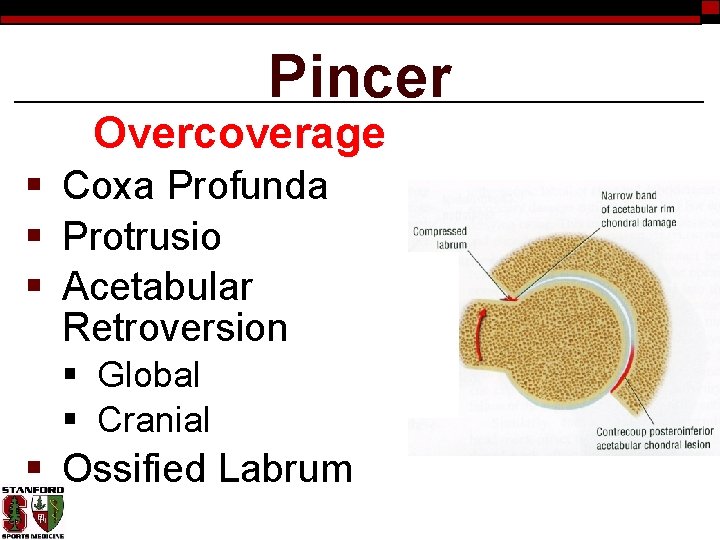
Pincer Overcoverage § Coxa Profunda § Protrusio § Acetabular Retroversion § Global § Cranial § Ossified Labrum
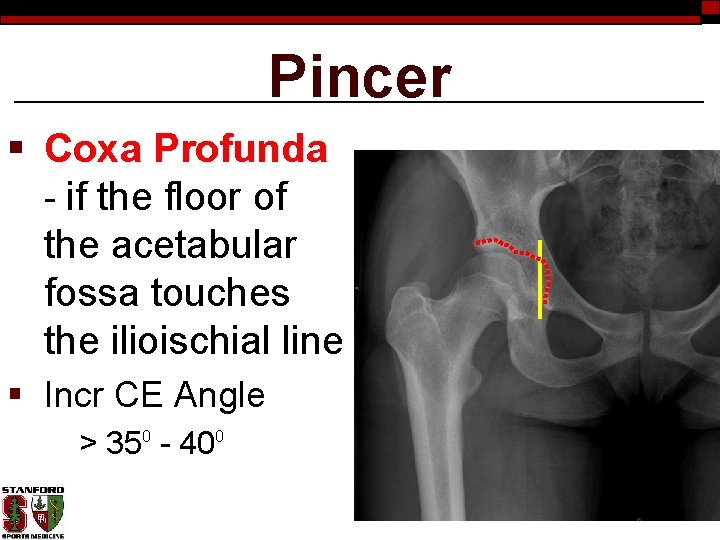
Pincer § Coxa Profunda - if the floor of the acetabular fossa touches the ilioischial line § Incr CE Angle > 350 - 400
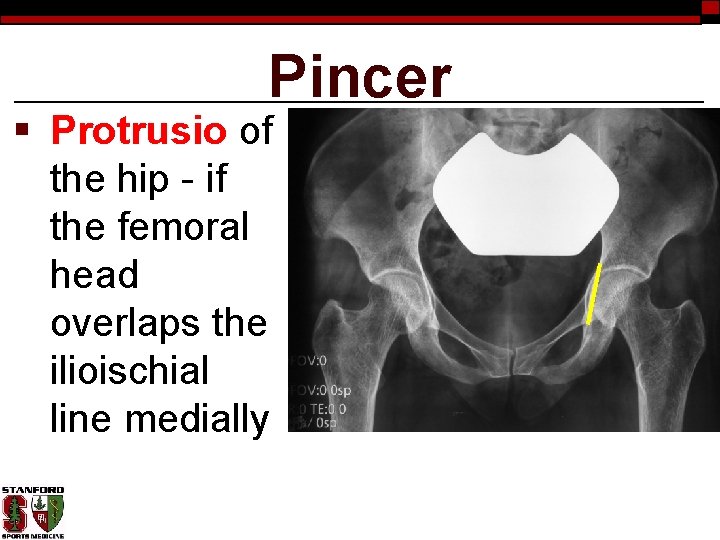
Pincer § Protrusio of the hip - if the femoral head overlaps the ilioischial line medially
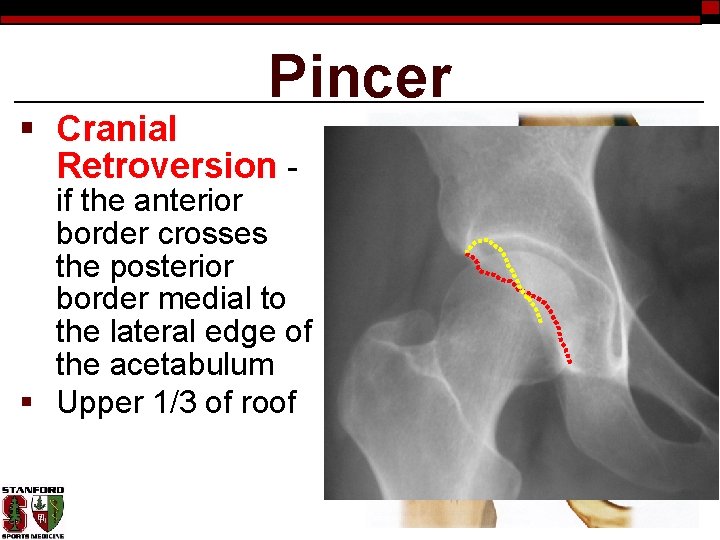
Pincer § Cranial Retroversion - if the anterior border crosses the posterior border medial to the lateral edge of the acetabulum § Upper 1/3 of roof
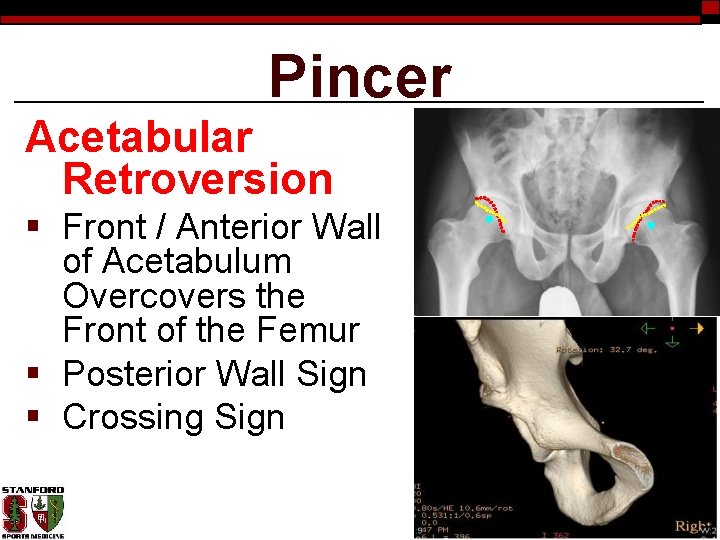
Pincer Acetabular Retroversion § Front / Anterior Wall of Acetabulum Overcovers the Front of the Femur § Posterior Wall Sign § Crossing Sign
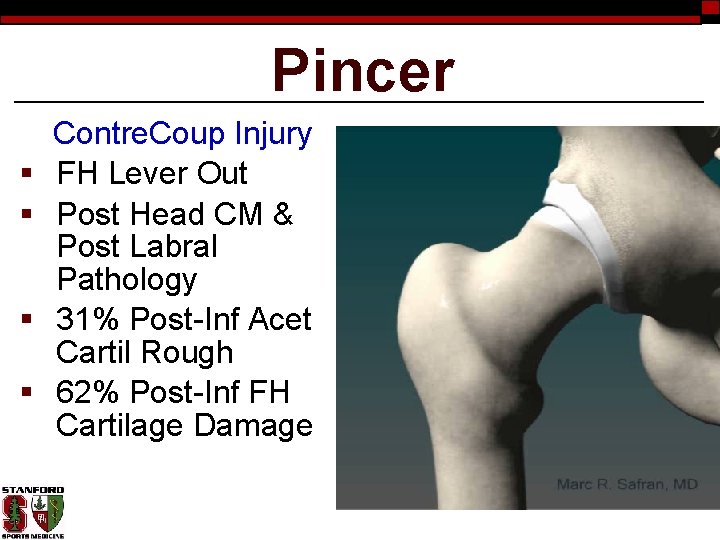
Pincer § § Contre. Coup Injury FH Lever Out Post Head CM & Post Labral Pathology 31% Post-Inf Acet Cartil Rough 62% Post-Inf FH Cartilage Damage
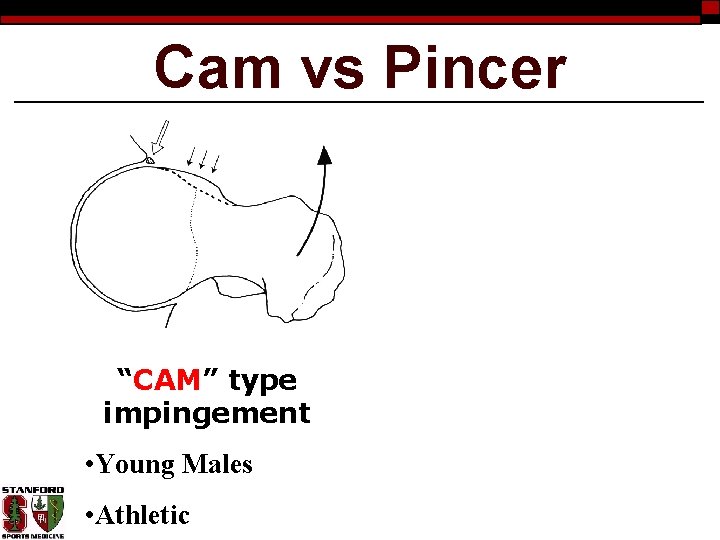
Cam vs Pincer “CAM” type impingement • Young Males • Athletic
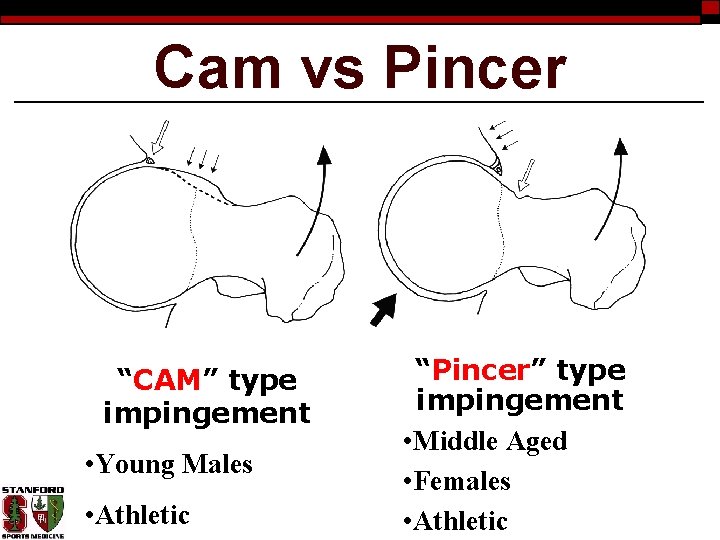
Cam vs Pincer “CAM” type impingement • Young Males • Athletic “Pincer” type impingement • Middle Aged • Females • Athletic
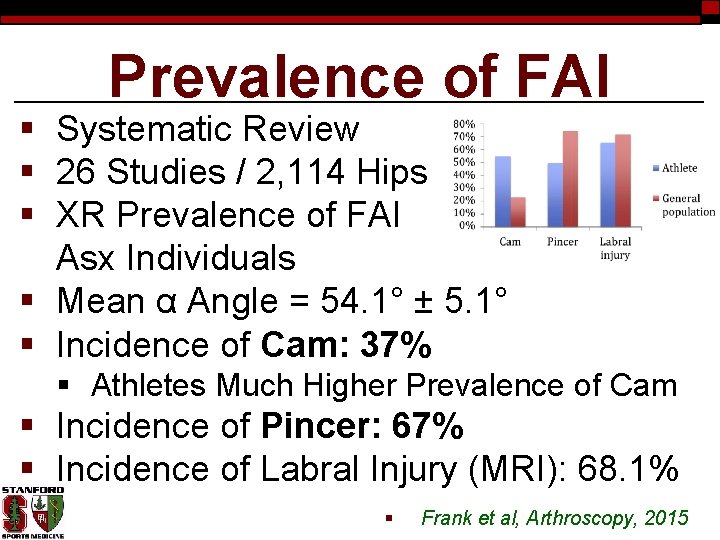
Prevalence of FAI § Systematic Review § 26 Studies / 2, 114 Hips § XR Prevalence of FAI Asx Individuals § Mean α Angle = 54. 1° ± 5. 1° § Incidence of Cam: 37% in § Athletes Much Higher Prevalence of Cam § Incidence of Pincer: 67% § Incidence of Labral Injury (MRI): 68. 1% § Frank et al, Arthroscopy, 2015
Epidemiology FAI: Athletes § 17% Males & 4% Females § >3000 (Copenhagen OA Study) Gosvig et al, CORR 2012 § 90% NFL Prospects of >1 XR Sign Larson et al AJSM 2011 § 94% Cam &/Or Pincer Morphology in Symptomatic FB Players Nepple et al, AJSM 2014 § 70% Cam Morphology in Elite Hockey Players Lerebour et al, AJSM 2016 § 89% Cam &/Or Pincer in Basketball Siebenrock et al, CORR 2011
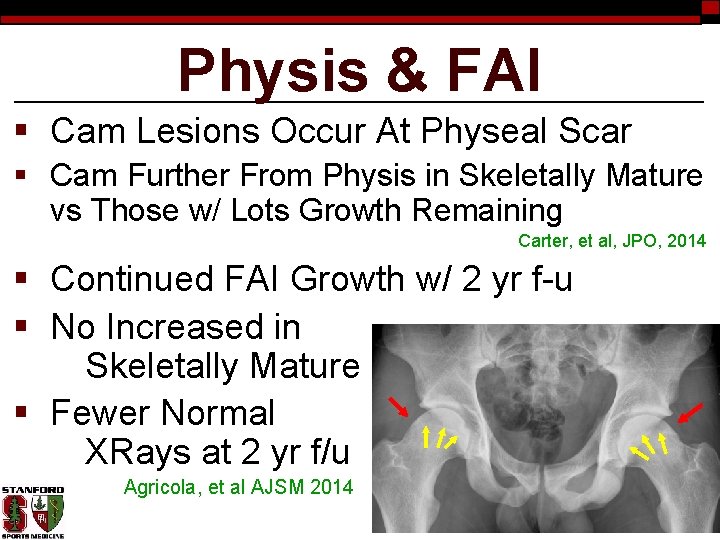
Physis & FAI § Cam Lesions Occur At Physeal Scar § Cam Further From Physis in Skeletally Mature vs Those w/ Lots Growth Remaining Carter, et al, JPO, 2014 § Continued FAI Growth w/ 2 yr f-u § No Increased in Skeletally Mature § Fewer Normal XRays at 2 yr f/u Agricola, et al AJSM 2014
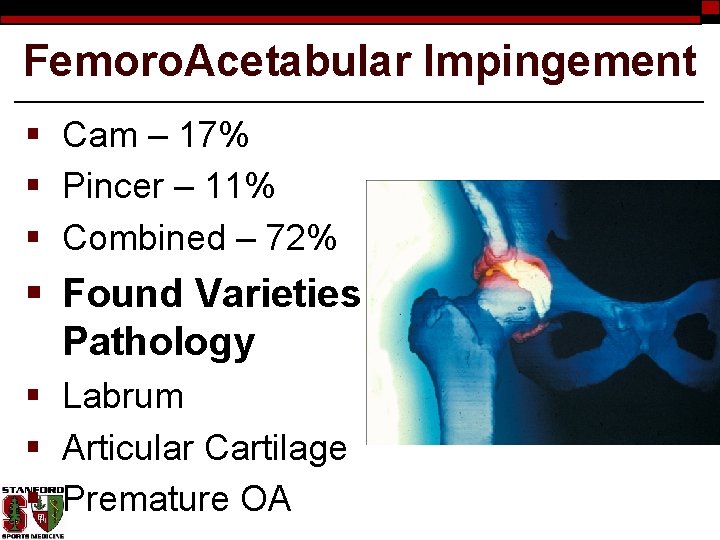
Femoro. Acetabular Impingement § Cam – 17% § Pincer – 11% § Combined – 72% § Found Varieties of Assoc Pathology § Labrum § Articular Cartilage § Premature OA
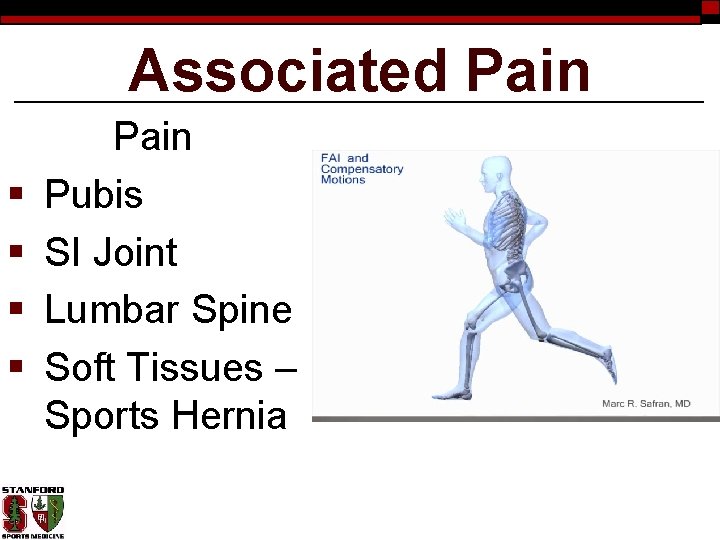
Associated Pain § § Pain Pubis SI Joint Lumbar Spine Soft Tissues – Sports Hernia
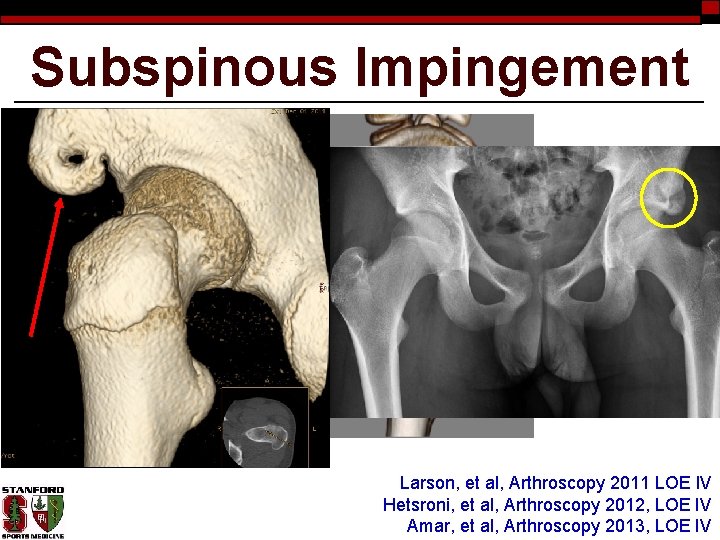
Subspinous Impingement 17 y/o Soccer Player Larson, et al, Arthroscopy 2011 LOE IV Hetsroni, et al, Arthroscopy 2012, LOE IV Amar, et al, Arthroscopy 2013, LOE IV
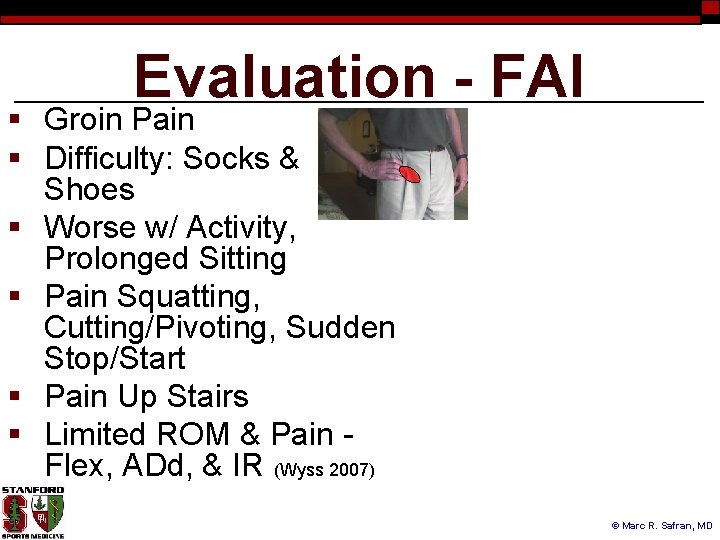
Evaluation - FAI § Groin Pain § Difficulty: Socks & Shoes § Worse w/ Activity, Prolonged Sitting § Pain Squatting, Cutting/Pivoting, Sudden Stop/Start § Pain Up Stairs § Limited ROM & Pain Flex, ADd, & IR (Wyss 2007) © Marc R. Safran, MD
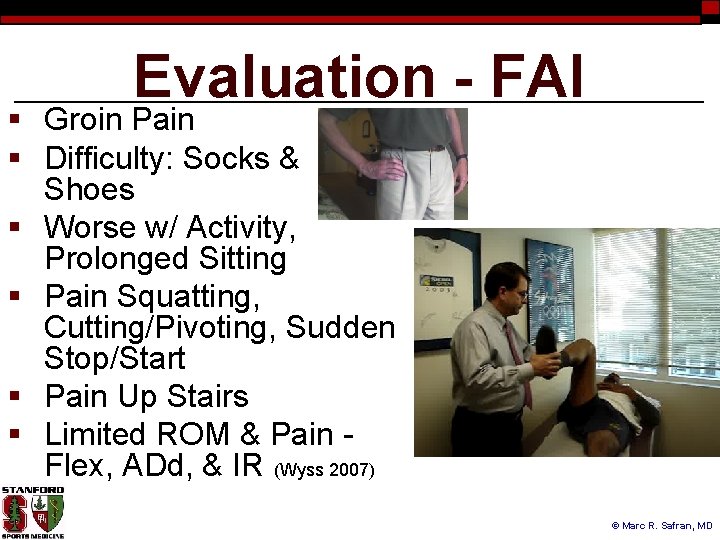
Evaluation - FAI § Groin Pain § Difficulty: Socks & Shoes § Worse w/ Activity, Prolonged Sitting § Pain Squatting, Cutting/Pivoting, Sudden Stop/Start § Pain Up Stairs § Limited ROM & Pain Flex, ADd, & IR (Wyss 2007) © Marc R. Safran, MD
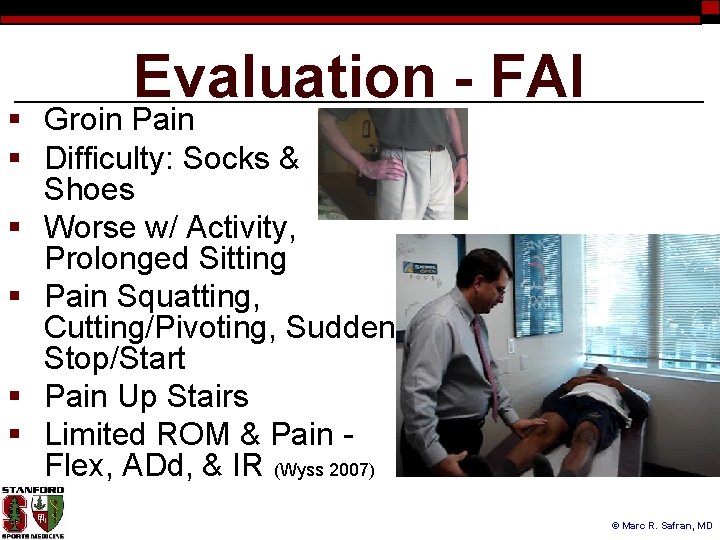
Evaluation - FAI § Groin Pain § Difficulty: Socks & Shoes § Worse w/ Activity, Prolonged Sitting § Pain Squatting, Cutting/Pivoting, Sudden Stop/Start § Pain Up Stairs § Limited ROM & Pain Flex, ADd, & IR (Wyss 2007) © Marc R. Safran, MD
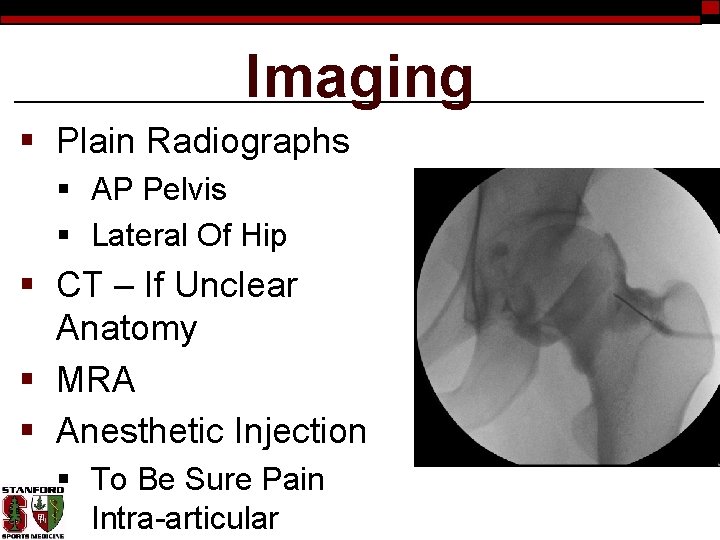
Imaging § Plain Radiographs § AP Pelvis § Lateral Of Hip § CT – If Unclear Anatomy § MRA § Anesthetic Injection § To Be Sure Pain Intra-articular
Treatment § The Bony Anatomy Does Not Cause Pain § Pain is Usually the Result of the Tissue Breaking Down § The Bony Anatomy Puts the Soft Tissues (Labrum, Chondral) At Risk § If Involved in Sports That Require Full Hip ROM (Flexion, Rotation), & Anatomy Of FAI, Then Risk of Breaking Down
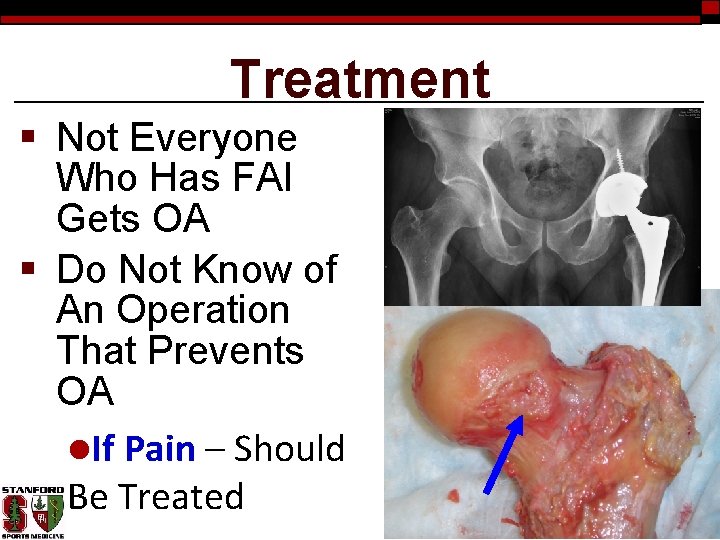
Treatment § Not Everyone Who Has FAI Gets OA § Do Not Know of An Operation That Prevents OA l. If Pain – Should Be Treated
Conservative FAI Treatment Options § Activity Modification § Reduce ROM Extremes § No Squats § No Lunges § NSAID § Usually only Temporary Relief Sx § PT May Increase Sx
Outcomes PT § § § FASHION Study RCT, 23 Centers UK 348 patients 16 – 60 y/o A/S vs PT w/ Activity Modification § PT – 6 – 12 Visits over 12 – 24 weeks § PT: 113 M (64%), 64 F (36%) § Arthroscopy: 100 M (58%), 71 F (42%) Griffin, et al, Lancet, 2018
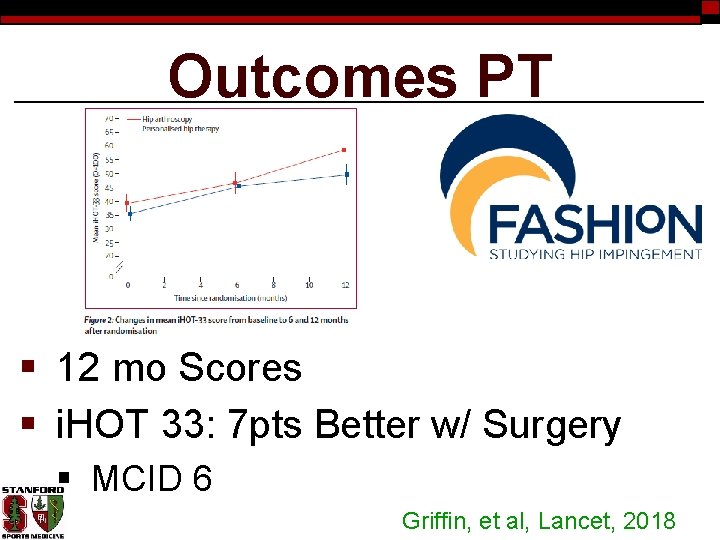
Outcomes PT § 12 mo Scores § i. HOT 33: 7 pts Better w/ Surgery § MCID 6 Griffin, et al, Lancet, 2018
Outcomes PT § FAIT Study § RCT, 222 patients § 18 – 60 y/o § PT: 37 M (34%), 73 F (66%) § Arthroscopy: 38 M (34%), 74 F (66%) § A/S vs PT w/ Activity Modification § PT – Max 8 session in 5 mo Palmer, et al, BMJ, 2019
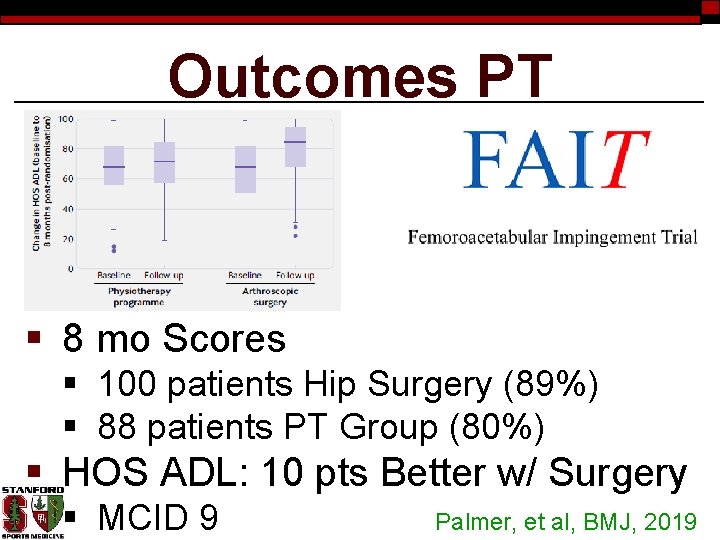
Outcomes PT § 8 mo Scores § 100 patients Hip Surgery (89%) § 88 patients PT Group (80%) § HOS ADL: 10 pts Better w/ Surgery § MCID 9 Palmer, et al, BMJ, 2019
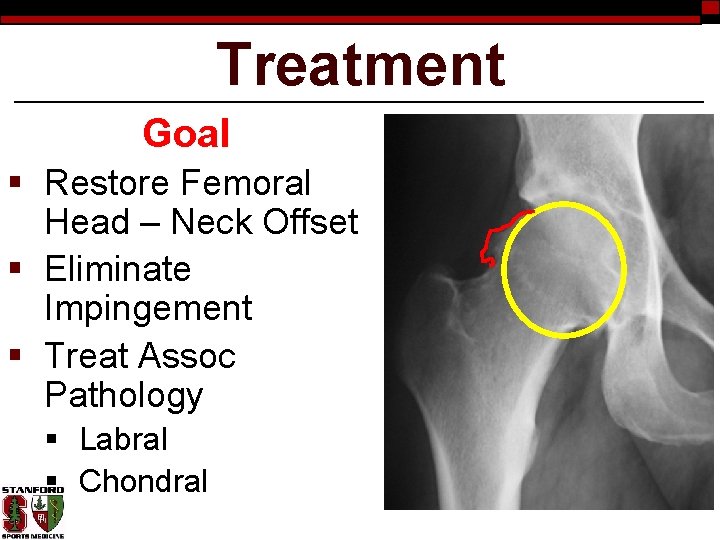
Treatment Goal § Restore Femoral Head – Neck Offset § Eliminate Impingement § Treat Assoc Pathology § Labral § Chondral
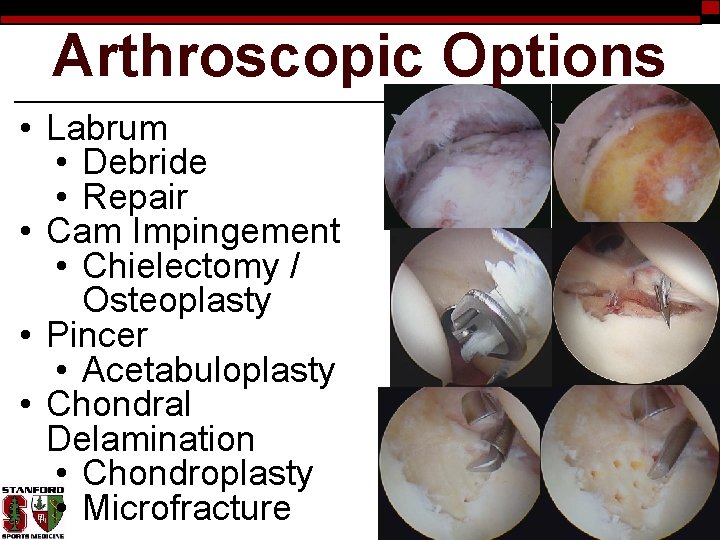
Arthroscopic Options • Labrum • Debride • Repair • Cam Impingement • Chielectomy / Osteoplasty • Pincer • Acetabuloplasty • Chondral Delamination • Chondroplasty • Microfracture
Outcomes of FAI Treatment Nwachukwu et al, AJSM, 2015: Systematic Review & Meta-analysis of 16 Studies Comparing Open vs A/S Tx: § W/ THA as Endpoint, Survival Rate of 93% for Open & 90. 5% for A/S Procedures (p = 0. 06) § Either Rx, m. HHS Improve 59. 6 83. 0 § Either Rx, HOOS-Sports-Specific Subscale Improvement 45. 3 77. 5
Outcomes of FAI Treatment Steppacher et al, CORR, 2015: 10 -yr Follow-Up of Surgical Hip Dislocation & Deformity Trimming § Prevalence of + Impingement Decreased § 95% (preop) 38% @ 10 yrs § 80% Survivorship § Predictors of Failure: § § Age > 40 BMI > 30 LCEA < 22° or > 32° Posterior Acetabular Coverage < 34%
Outcomes of FAI Treatment Kierkegaard et al, BJSM, 2016: Systematic Review & Meta-Analysis of Time-Dependent Improvement After Hip Arthroscopy for FAI § 19 Studies § Clinically Relevant Improvements in Pain & ADLs 1 st Reported Between 3 & 6 mos § Sports Function Improvements Reported Between 6 mo & 1 year § Plateau of PRO Scores Generally Lower Than Healthy Subjects
Outcomes of FAI Rx - Athletes Reiman et al, BJSM, 2018: FAI Surgery Allows 74% of Athletes To Return To Same Competitive Level of Sports Participation But Their Level of Performance Remains Unreported: A Systematic Review with Meta-analysis § 35 Studies – Level 3 b – 4 § 74% (67 – 81%) RTP At Pre-Injury Level § 37% Reported RTS At Pre-Injury Level § Time to RTS 7. 0 + 2. 6 mo
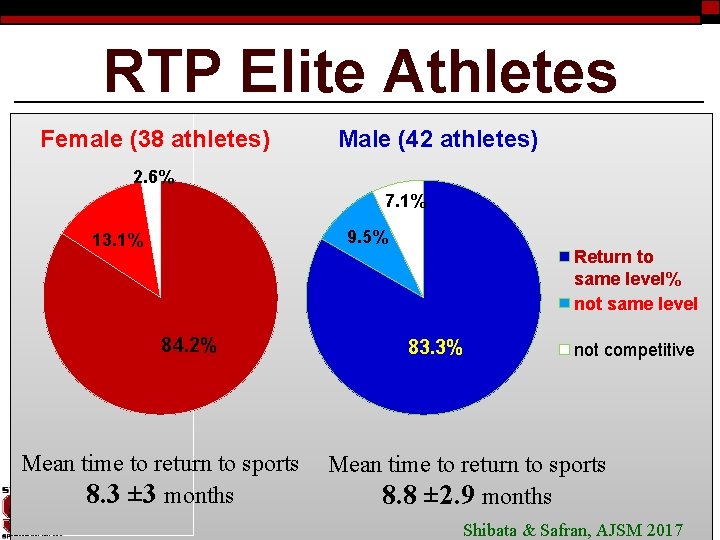
RTP Elite Athletes Female (38 athletes) Male (42 athletes) 2. 6% 7. 1% 9. 5% 13. 1% 84. 2% Mean time to return to sports 8. 3 ± 3 months Return to same level% not same level 83. 3% not competitive Mean time to return to sports 8. 8 ± 2. 9 months Shibata & Safran, AJSM 2017
Conclusions § FAI is an Important, Very Common Cause of Hip Pain § Associated w/ Early OA, Labral Damage § Cam & Pincer Types § Treatment is Usually Surgical § Open or Arthroscopic Methods Are Safe & Effective § Long-Term Follow-Up is Necessary § Treat Impingement As Well As Associated Pathology § RTP 6 -8 months

Thank You
- Slides: 41