
Femoral Artery Access Using Landmarks and Fluoroscopy Zoltan



- Slides: 36
Femoral Artery Access Using Landmarks and Fluoroscopy Zoltan G. Turi, M. D. Rutgers Robert Wood Johnson Medical School New Brunswick, NJ
Disclosure Statement of Financial Interest Affiliation/Financial Relationship None related to this talk Company
Step 1 Recognize That Vascular Access in the New Percutaneous Technologies Era is: Taken for Granted Under-investigated but Way Over-represented in Complications
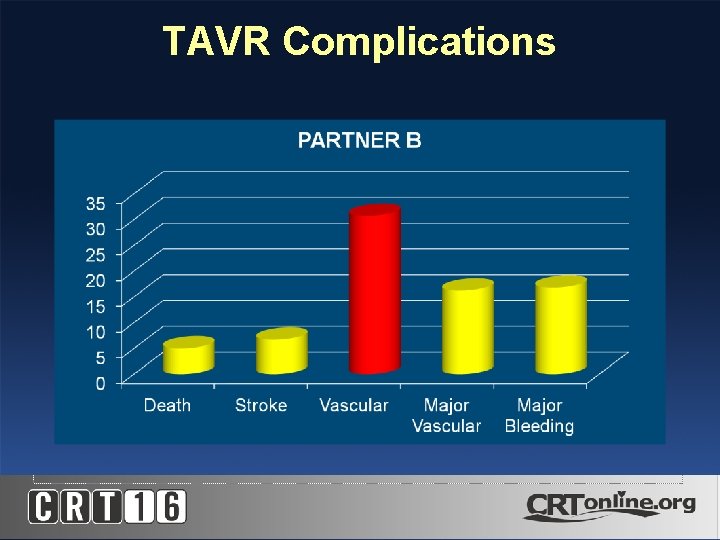
TAVR Complications NEJM 2010
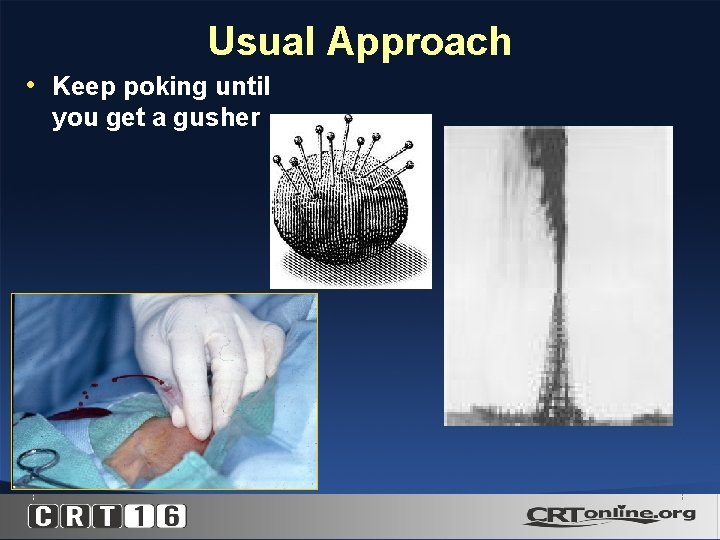
Usual Approach • Keep poking until you get a gusher
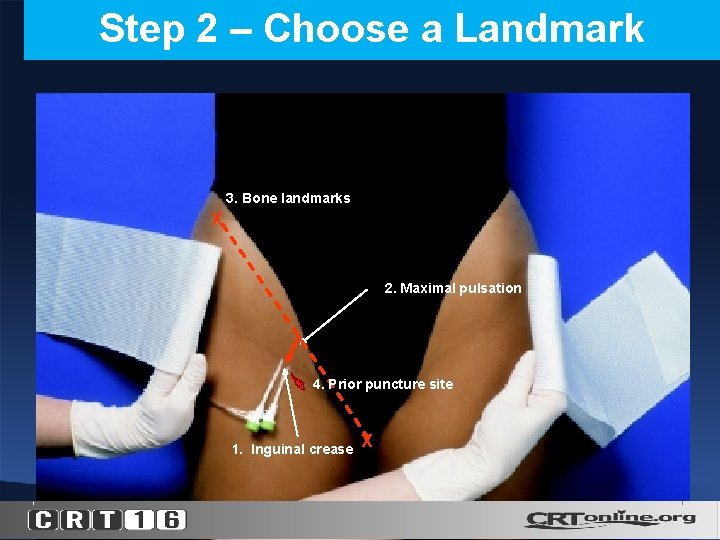
Step 2 – Choose a Landmark 3. Bone landmarks X 2. Maximal pulsation 4. Prior puncture site 1. Inguinal crease X
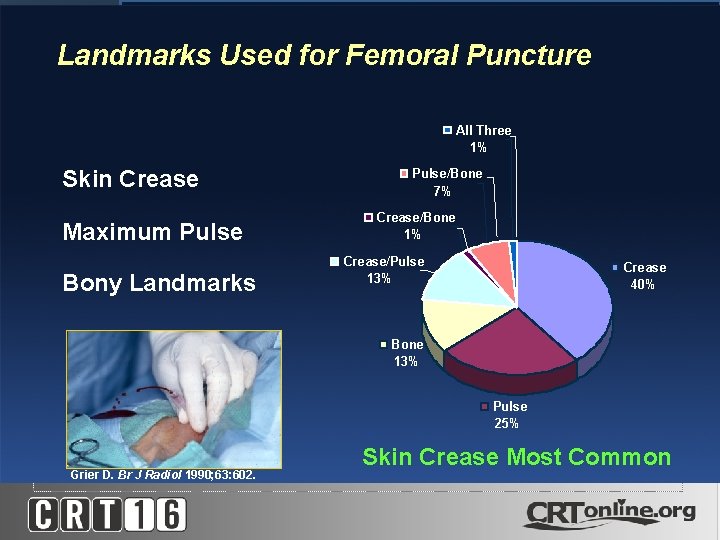
Landmarks Used for Femoral Puncture All Three 1% Skin Crease Maximum Pulse Bony Landmarks Pulse/Bone 7% Crease/Bone 1% Crease/Pulse 13% Crease 40% Bone 13% Pulse 25% Grier D. Br J Radiol 1990; 63: 602. Skin Crease Most Common
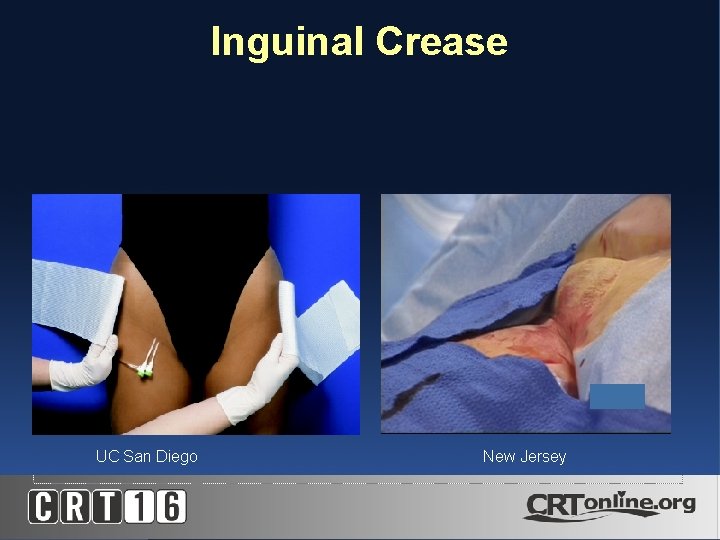
Inguinal Crease UC San Diego New Jersey
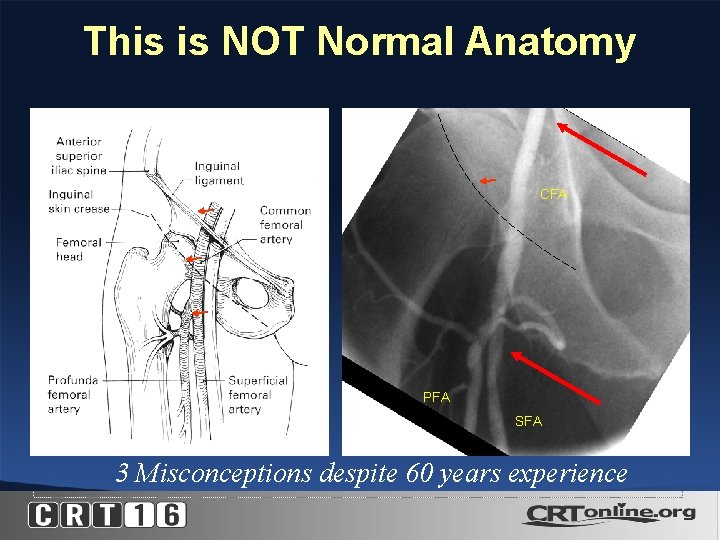
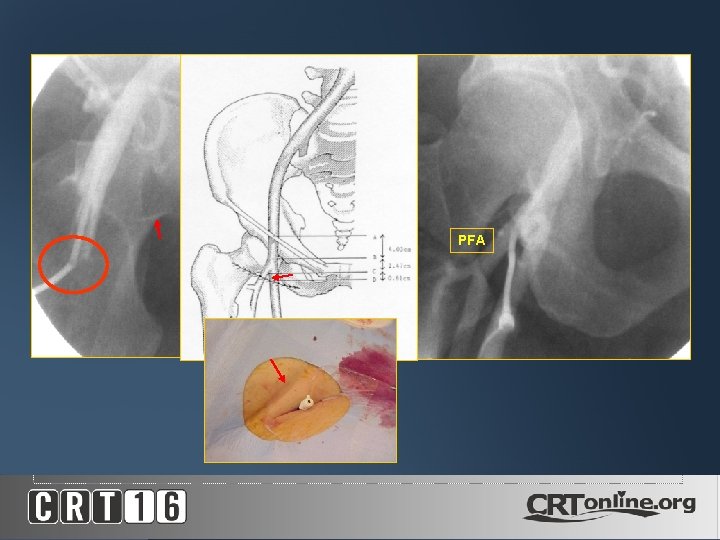
This is NOT Normal Anatomy CFA PFA SFA 3 Misconceptions despite 60 years experience
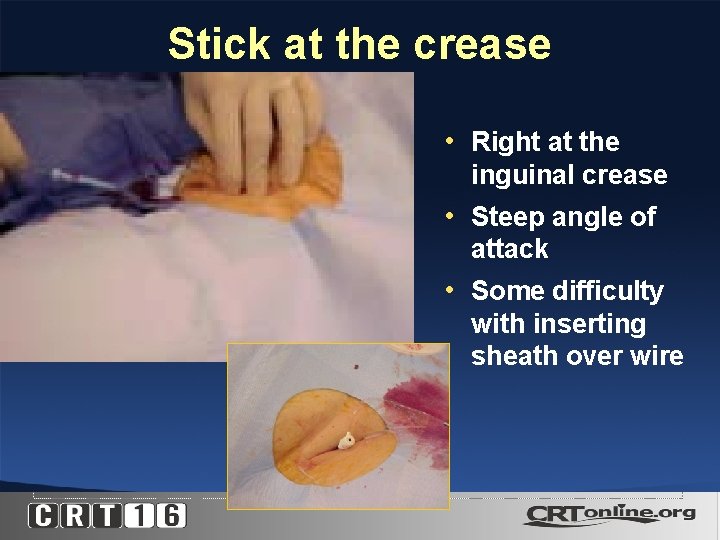
Stick at the crease • Right at the inguinal crease • Steep angle of attack • Some difficulty with inserting sheath over wire
PFA
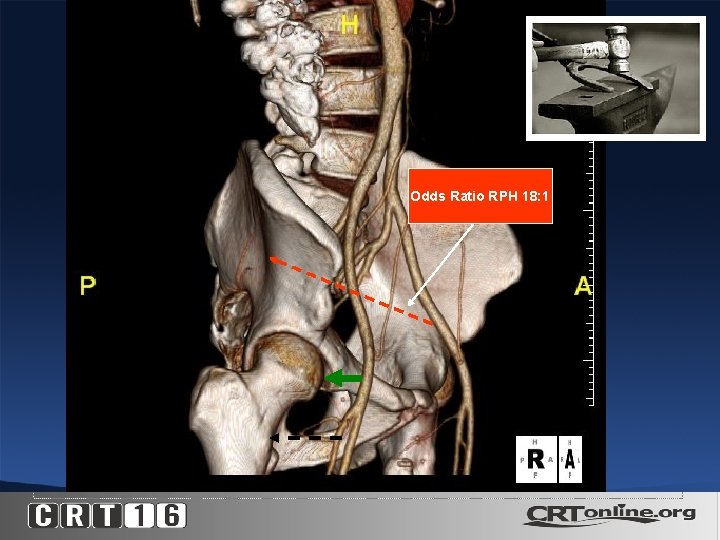
Odds Ratio RPH 18: 1
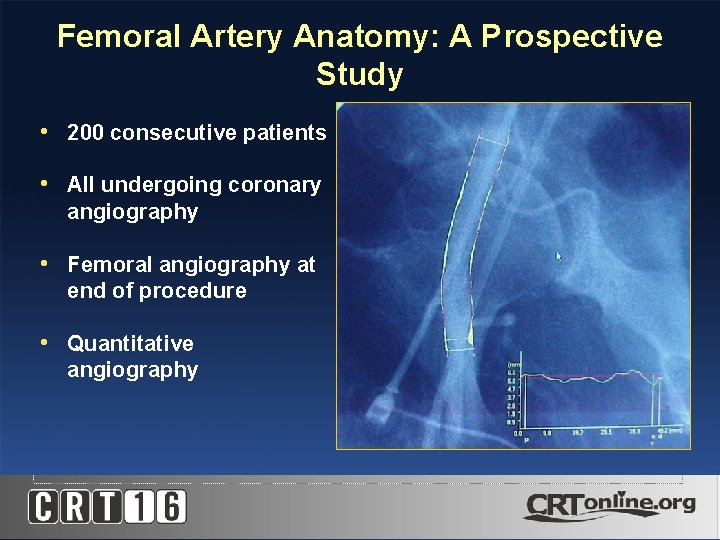
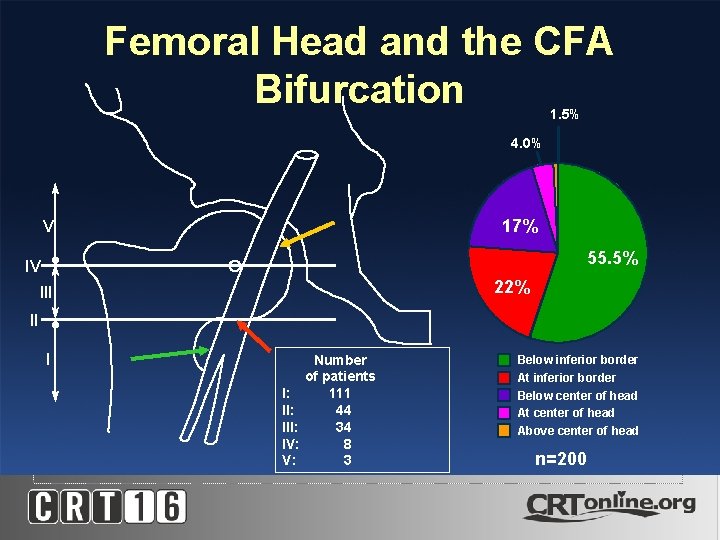
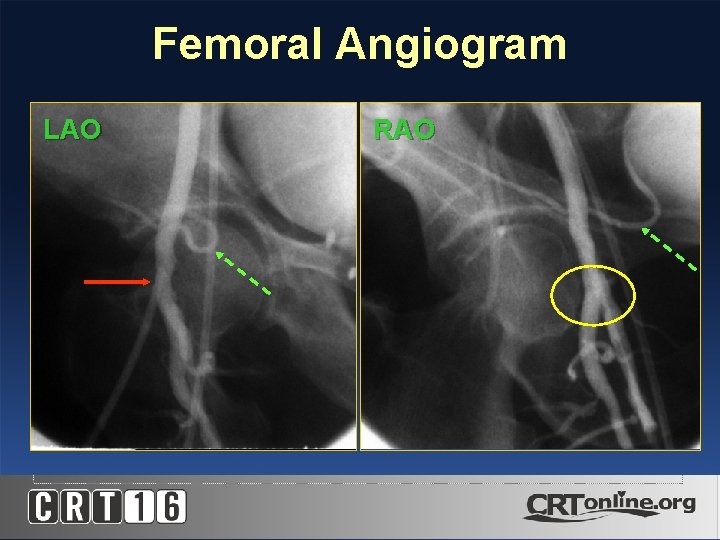
Femoral Artery Anatomy: A Prospective Study • 200 consecutive patients • All undergoing coronary angiography • Femoral angiography at end of procedure • Quantitative angiography Schnyder et al CCI 2001
Femoral Head and the CFA Bifurcation 1. 5% 4. 0% 17% V 55. 5% IV 22% III II I I: III: IV: V: Number of patients 111 44 34 8 3 Below inferior border At inferior border Below center of head At center of head Above center of head n=200
Femoral Angiogram LAO RAO
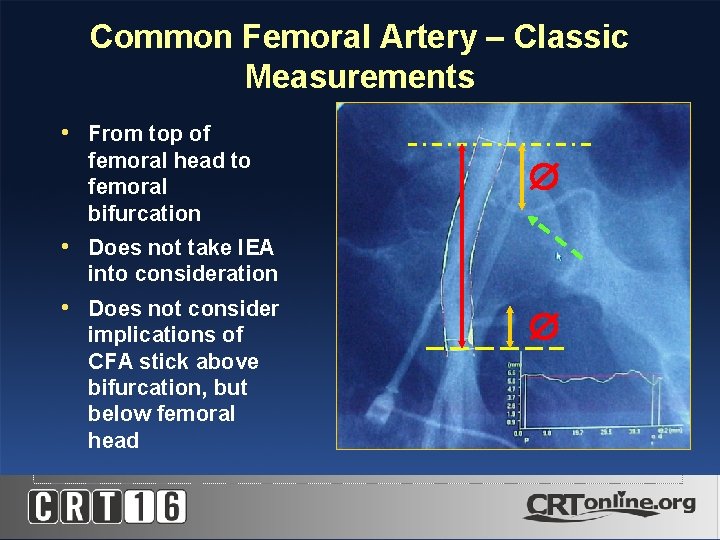
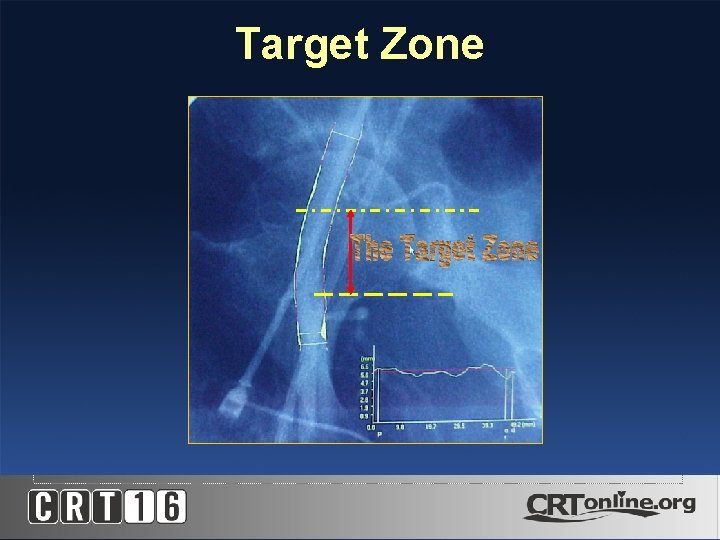
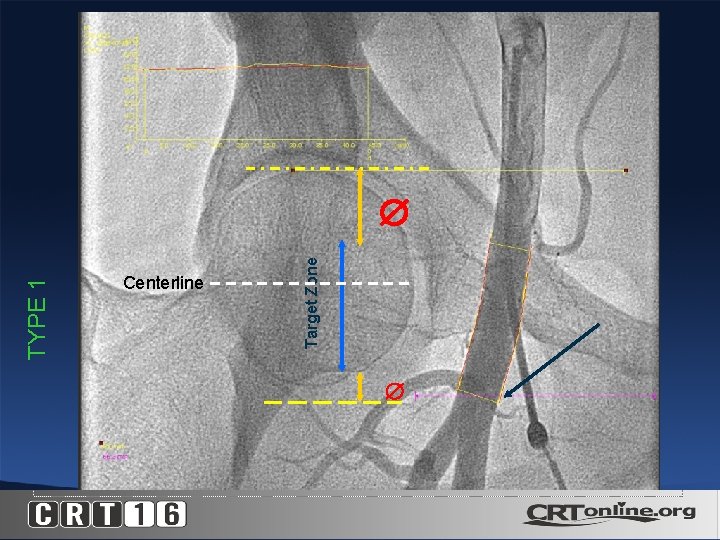
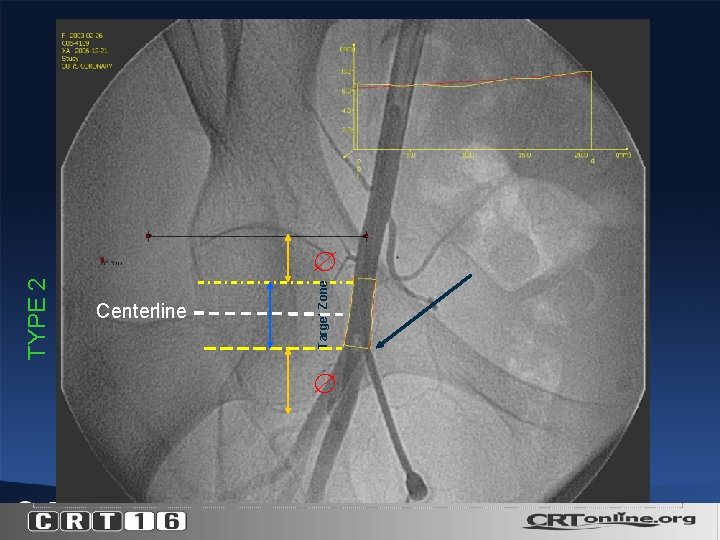
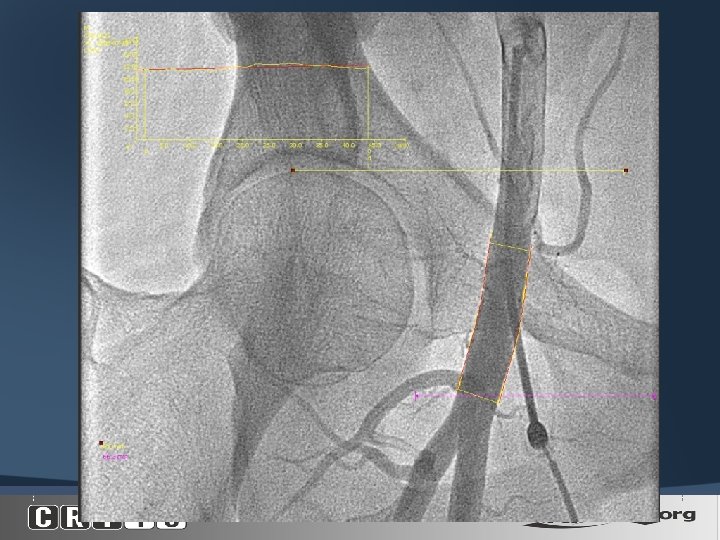
Common Femoral Artery – Classic Measurements • From top of femoral head to femoral bifurcation • Does not take IEA into consideration • Does not consider implications of CFA stick above bifurcation, but below femoral head
Target Zone
TYPE 1 Centerline Target Zone
TYPE 2 Centerline Target Zone
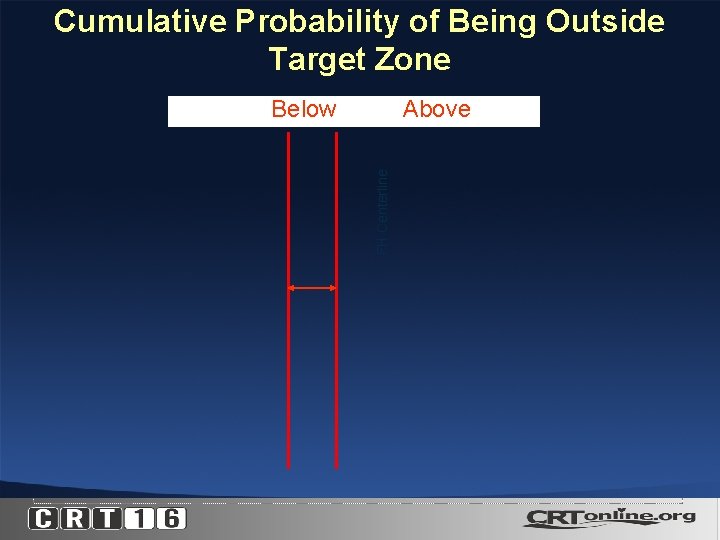
Cumulative Probability of Being Outside Target Zone Above FH Centerline Below
IEA FH Centerline Cumulative Target Zone BIF
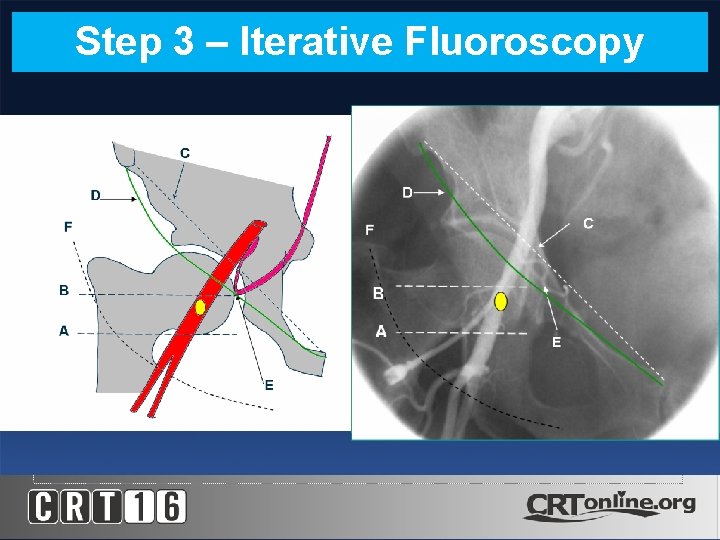
Step 3 – Iterative Fluoroscopy
N=296
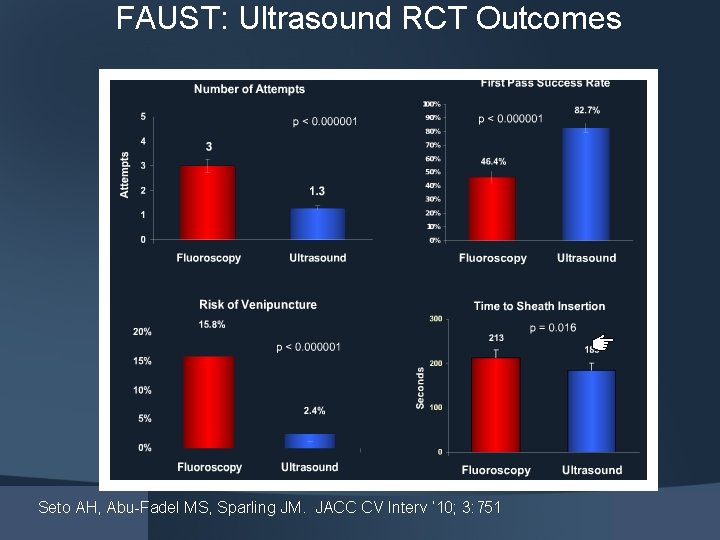
FAUST: Ultrasound RCT Outcomes Seto AH, Abu-Fadel MS, Sparling JM. JACC CV Interv ’ 10; 3: 751
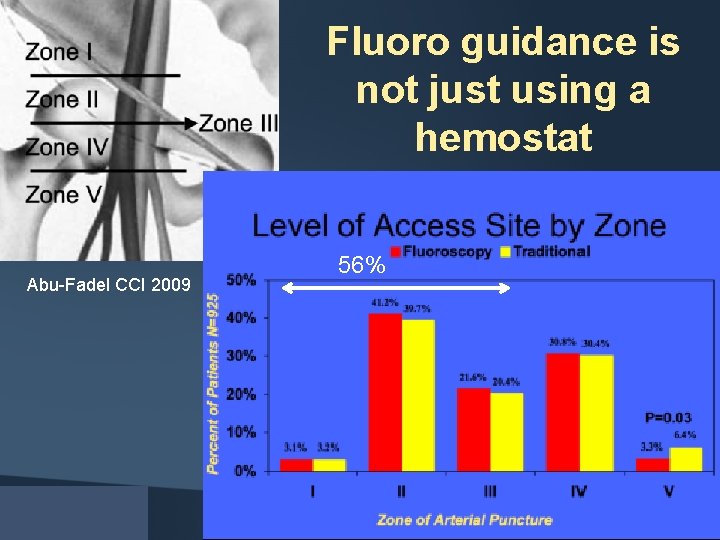
Fluoro guidance is not just using a hemostat Abu-Fadel CCI 2009 56%
How to Decrease Risk of Complications 1. Access using fluoroscopy and/or ultrasound 2. Needle entry below centerline of femoral head 3. Femoral angiogram regardless of closure device use 4. Proceed to PCI (and anticoagulate) only if puncture in safe zone
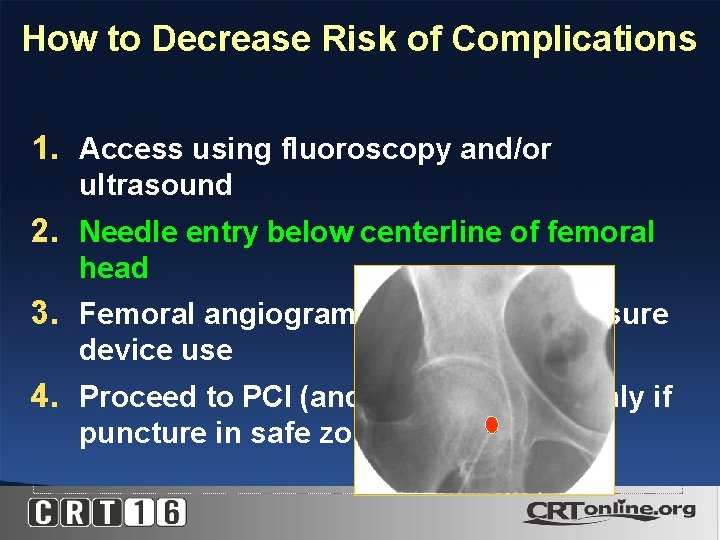
How to Decrease Risk of Complications 1. Access using fluoroscopy and/or ultrasound 2. Needle entry below centerline of femoral head 3. Femoral angiogram regardless of closure device use 4. Proceed to PCI (and anticoagulate) only if puncture in safe zone
How to Decrease Risk of Complications 1. Access using fluoroscopy and/or ultrasound 2. Needle entry below centerline of femoral head 3. Femoral angiogram regardless of closure device use 4. Proceed to PCI (and anticoagulate) only if puncture in safe zone
How to Decrease Risk of Complications 1. Access using fluoroscopy and/or ultrasound 2. Needle entry below centerline of femoral head 3. Femoral angiogram regardless of closure device use 4. Proceed to PCI (and anticoagulate) only if puncture in target zone
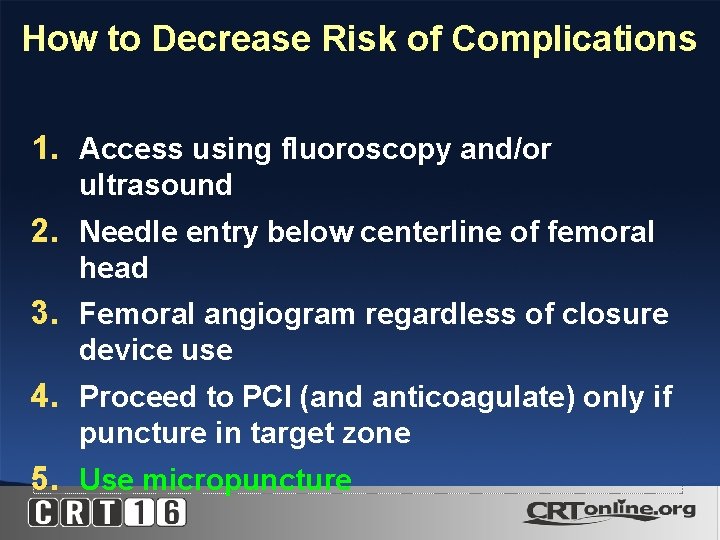
How to Decrease Risk of Complications 1. Access using fluoroscopy and/or ultrasound 2. Needle entry below centerline of femoral head 3. Femoral angiogram regardless of closure device use 4. Proceed to PCI (and anticoagulate) only if puncture in target zone 5. Use micropuncture
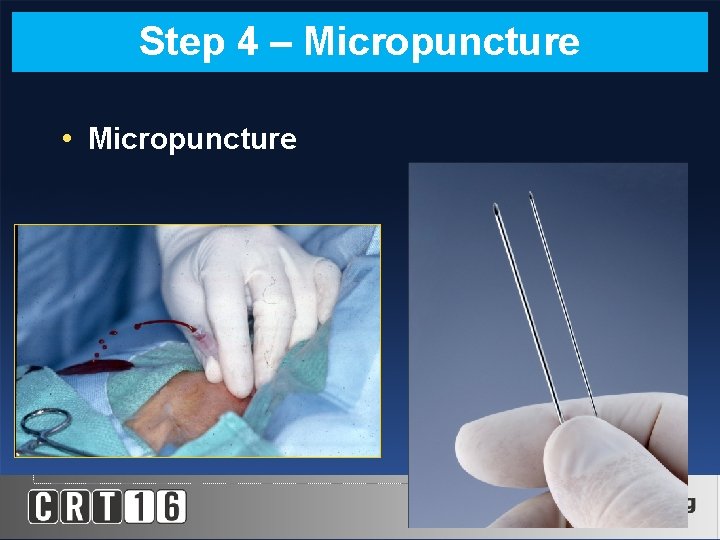
Step 4 – Micropuncture • Micropuncture
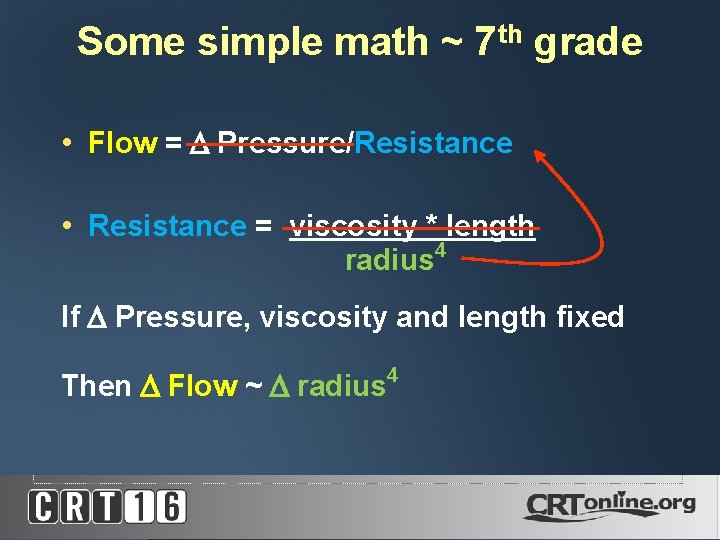
Some simple math ~ 7 th grade • Flow = Pressure/Resistance • Resistance = viscosity * length radius 4 If Pressure, viscosity and length fixed Then Flow ~ radius 4
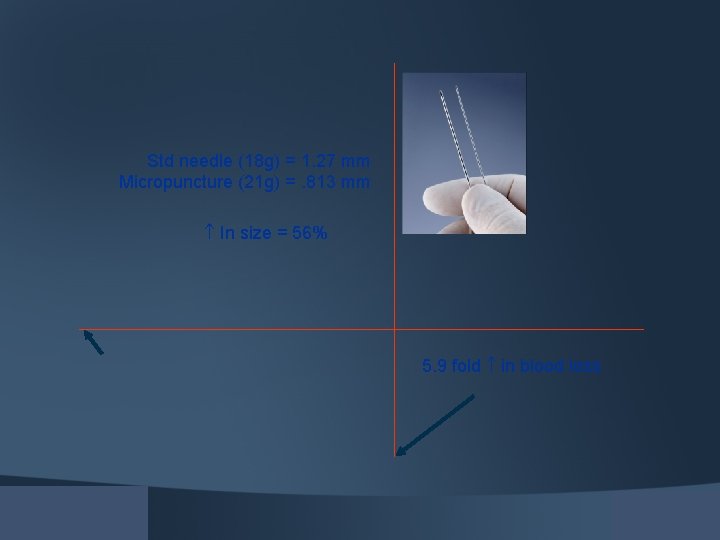
Std needle (18 g) = 1. 27 mm Micropuncture (21 g) =. 813 mm In size = 56% 5. 9 fold in blood loss
The Way To The Heart Is Through The Wrist: Radial Catheterization Comes To America (Finally)