
Feminist Therapy AMY M MOORE MAED PCCR LSW

- Slides: 12
Feminist Therapy AMY M. MOORE, MAED, PC/CR, LSW
Foundation �Evolution: Feminist philosophy, psychological theory and practice, and political theory �Feminist philosophy and theory looks at power structures in society
The evolution �“In particular feminists recognize the impact of society in creating and maintaining the problems and issues brought into therapy” • (FEMINIST THERAPY INSTITUTE, 1999) The personal is political
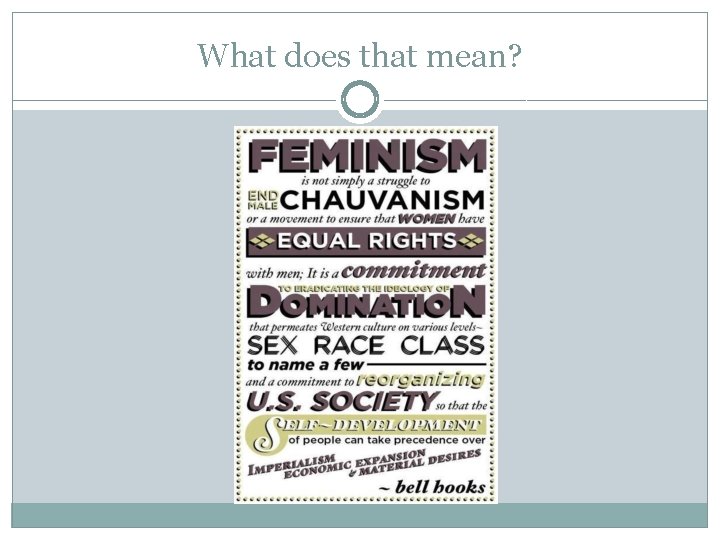
What does that mean?
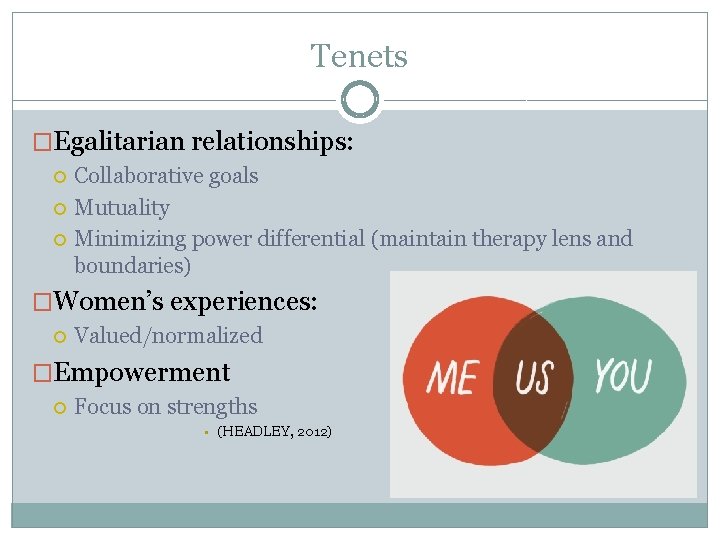
Tenets �Egalitarian relationships: Collaborative goals Mutuality Minimizing power differential (maintain therapy lens and boundaries) �Women’s experiences: Valued/normalized �Empowerment Focus on strengths • (HEADLEY, 2012)
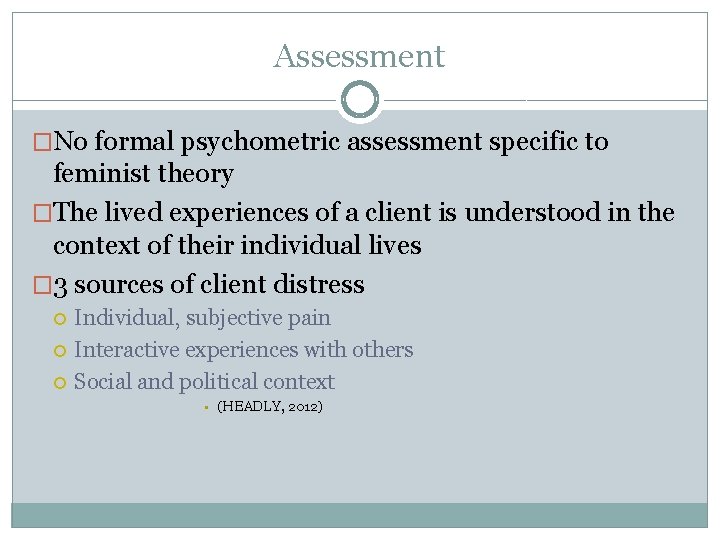
Assessment �No formal psychometric assessment specific to feminist theory �The lived experiences of a client is understood in the context of their individual lives � 3 sources of client distress Individual, subjective pain Interactive experiences with others Social and political context • (HEADLY, 2012)
Diagnosis �Feminist therapist could experience conflict and ambivalence in regards to formal diagnosis This reflects dominant paradigm with inherent biases �Some feminist therapist avoid use of diagnosis �If a diagnosis is required it is a collaborative process with client • (HEADLY, 2012)
Treatment �Feminist model of psychotherapy Sociostructural environment Client identity, political/relational setting of therapy, biology, etc. Agenda is collaborative Use a wide variety of interventions Ultimately changes for the client that are positive can lead to and include social change • (HEADLEY, 2012)
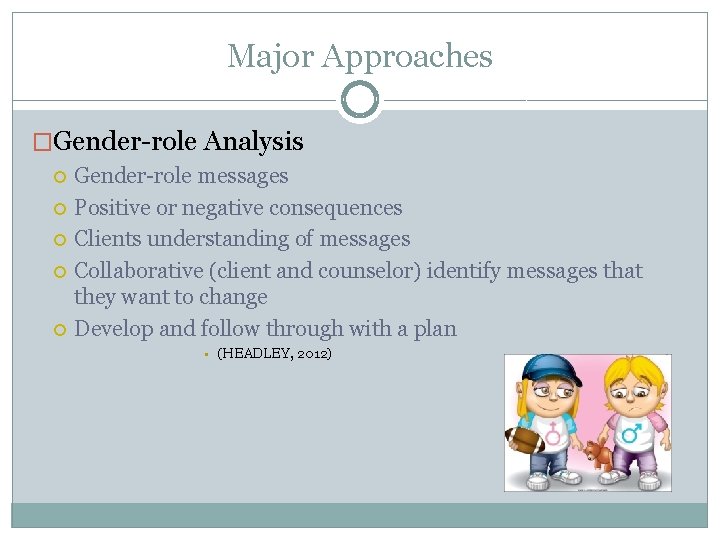
Major Approaches �Gender-role Analysis Gender-role messages Positive or negative consequences Clients understanding of messages Collaborative (client and counselor) identify messages that they want to change Develop and follow through with a plan • (HEADLEY, 2012)
Power Analysis �Explore definitions of power; client determines which one is most fitting (e. g. , coercive power, legitimate power) �Discuss access to power �How can power be used to bring change? �Gender-role messages that interfere with the use of power �Use of power strategies in identified situations when appropriate • (HEADLEY, 2012)
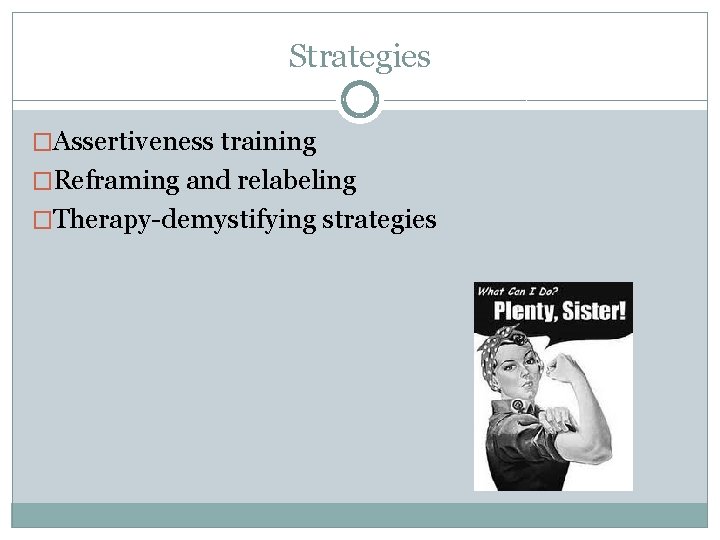
Strategies �Assertiveness training �Reframing and relabeling �Therapy-demystifying strategies
References �Feminist Therapy Institute. (1999). Feminist therapy code of ethics (revised). Retrieved from http: //www. chrysaliscounseling. org/Feminist T herapy. html �Headley, J. (2012), Feminist Therapy [Power. Point slides] �Sharf, R. (2012). Feminist Therapy: A Multicultural Approach. Theories of Psychotherapy & Counseling: Concepts and Cases (5 ed. , ). Belmont: BROOKS/COLE.