
Female sexual dysfunctions WALID SARHAN ARHP A Brief
Female sexual dysfunctions WALID SARHAN ARHP
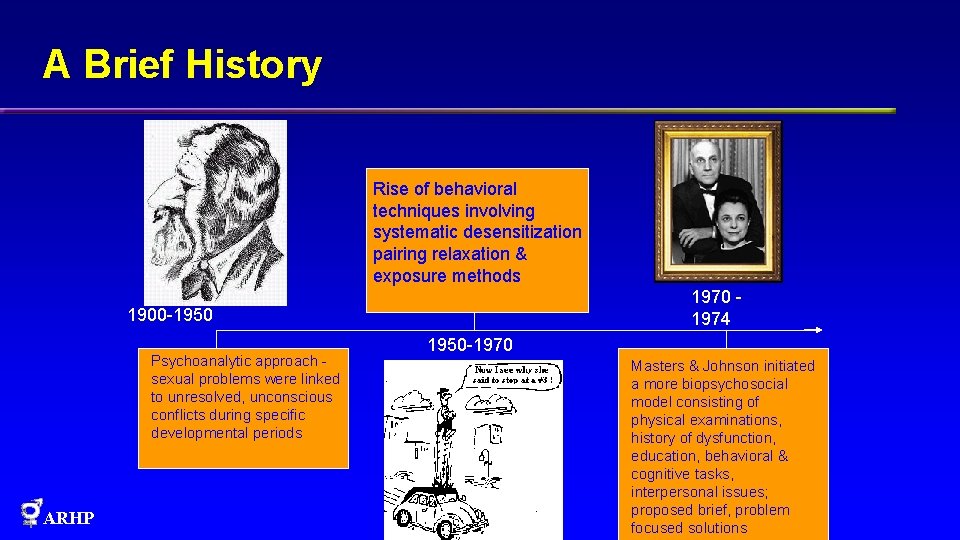
A Brief History Rise of behavioral techniques involving systematic desensitization pairing relaxation & exposure methods 1970 - 1974 1900 -1950 Psychoanalytic approach sexual problems were linked to unresolved, unconscious conflicts during specific developmental periods ARHP 1950 -1970 Masters & Johnson initiated a more biopsychosocial model consisting of physical examinations, history of dysfunction, education, behavioral & cognitive tasks, interpersonal issues; proposed brief, problem focused solutions
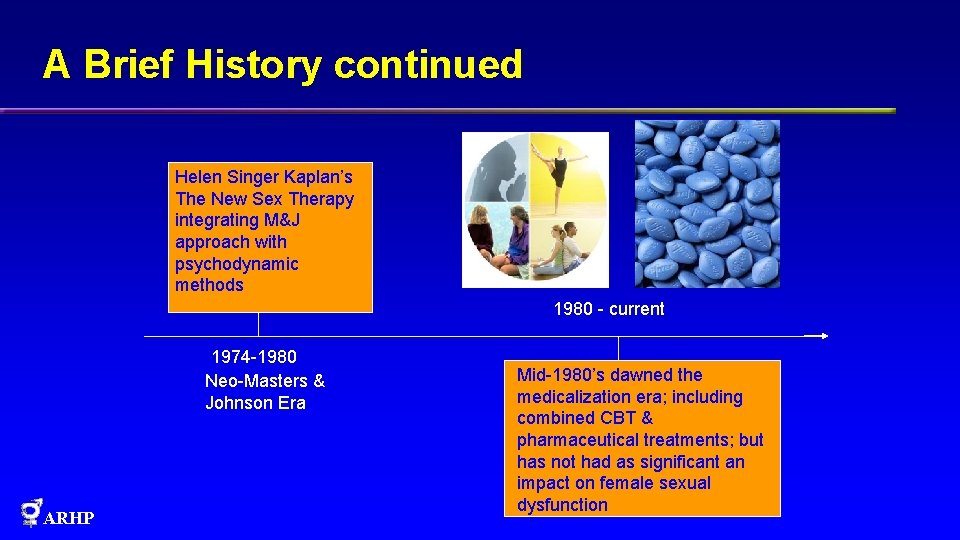
A Brief History continued Helen Singer Kaplan’s The New Sex Therapy integrating M&J approach with psychodynamic methods 1980 - current 1974 -1980 Neo-Masters & Johnson Era ARHP Mid-1980’s dawned the medicalization era; including combined CBT & pharmaceutical treatments; but has not had as significant an impact on female sexual dysfunction
Healthy Sexuality • Women’s sexuality is complex • It is less studied, understood than male sexuality • Many theories, beliefs about female sexuality are inaccurate or outdated Lack of Personal • Clinicians may find training issues topic difficult to address Time Berman Fertil Steril 2003 ARHP Kingsberg Sexuality, Reproduction &
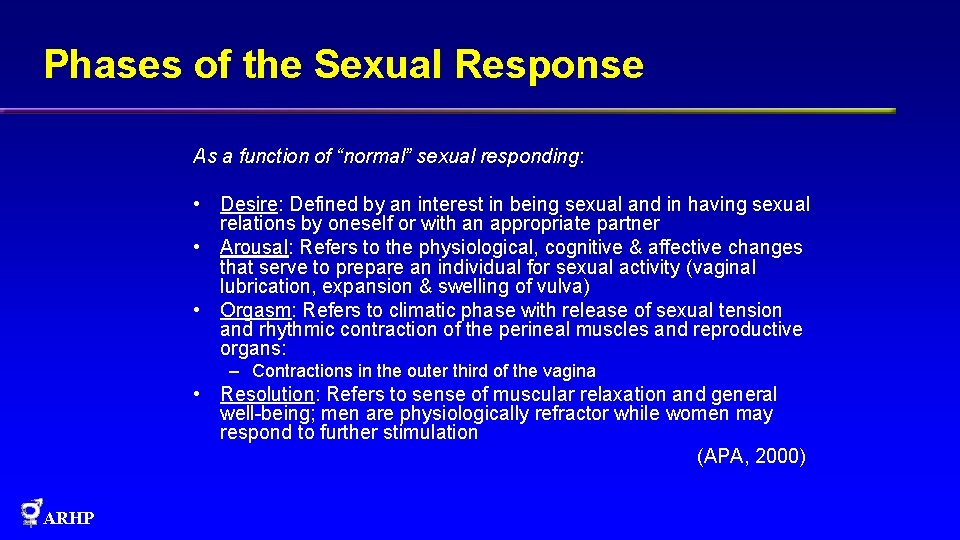
Phases of the Sexual Response As a function of “normal” sexual responding: • Desire: Defined by an interest in being sexual and in having sexual relations by oneself or with an appropriate partner • Arousal: Refers to the physiological, cognitive & affective changes that serve to prepare an individual for sexual activity (vaginal lubrication, expansion & swelling of vulva) • Orgasm: Refers to climatic phase with release of sexual tension and rhythmic contraction of the perineal muscles and reproductive organs: – Contractions in the outer third of the vagina • Resolution: Refers to sense of muscular relaxation and general well-being; men are physiologically refractor while women may respond to further stimulation (APA, 2000) ARHP
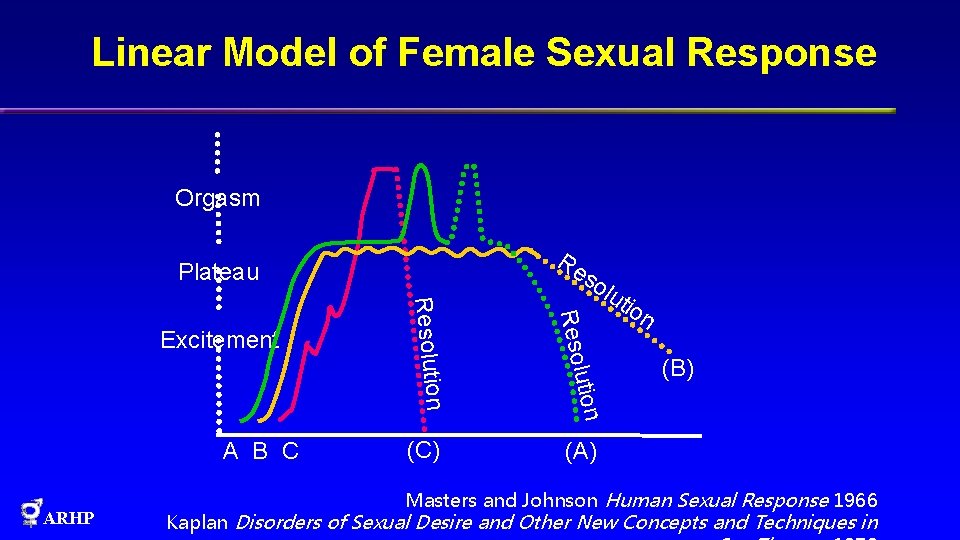
Linear Model of Female Sexual Response Orgasm Re Plateau lut i lution ARHP (C) Reso A B C Resolution Excitement so on (B) (A) Masters and Johnson Human Sexual Response 1966 Kaplan Disorders of Sexual Desire and Other New Concepts and Techniques in
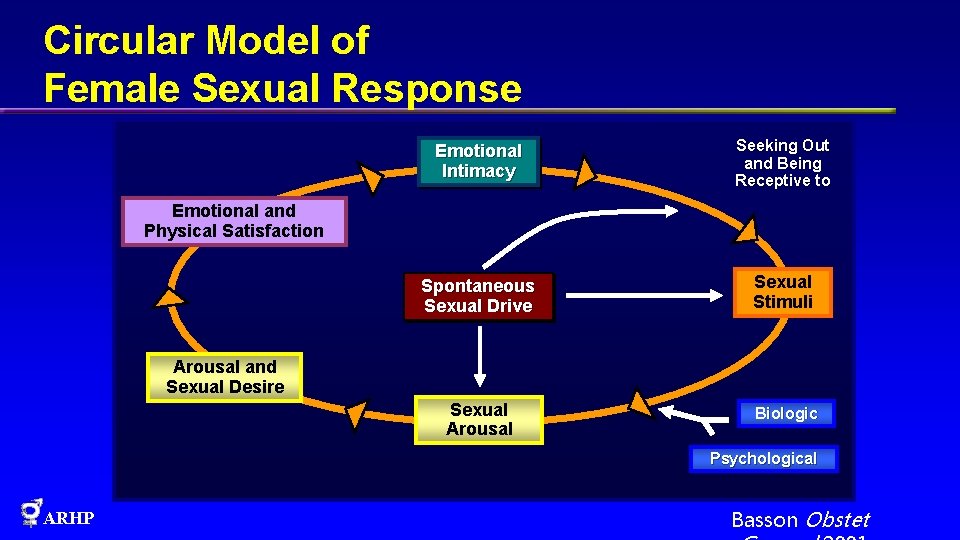
Circular Model of Female Sexual Response Emotional Intimacy Seeking Out and Being Receptive to Spontaneous Sexual Drive Sexual Stimuli Sexual Arousal Biologic Emotional and Physical Satisfaction Arousal and Sexual Desire Psychological ARHP Basson Obstet
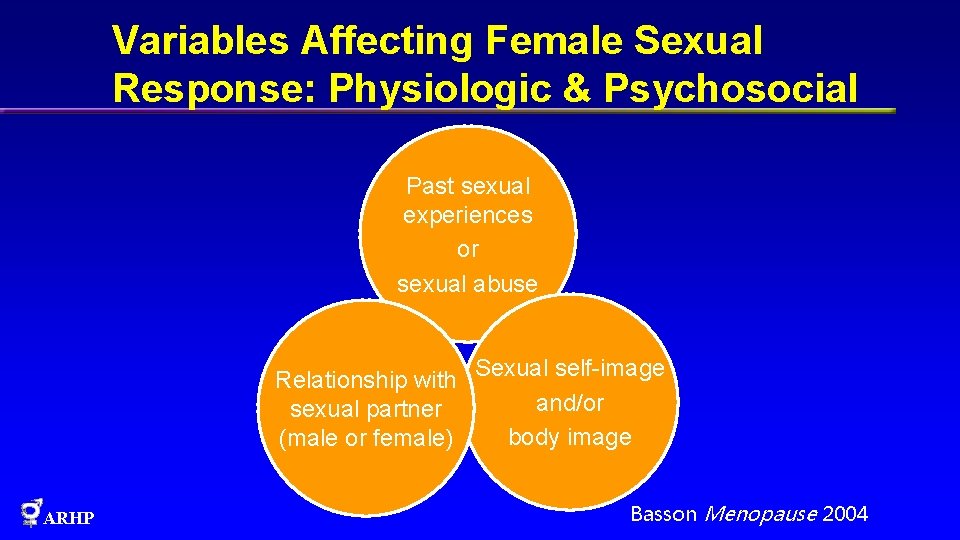
Variables Affecting Female Sexual Response: Physiologic & Psychosocial Past sexual experiences or sexual abuse Relationship with Sexual self-image and/or sexual partner body image (male or female) ARHP Basson Menopause 2004
Female Sexual Response Cycle • Masters and Johnson characterized cycle with four phases: – Excitement – Plateau – Orgasmic – Resolution • Kaplan proposed idea of “desire” and a three-phase model. – Desire – Arousal – Orgasm ARHP W SARHAN

Female Sexual Response Physiological indicators of arousal • Vasocongestion in the pelvis • Vaginal lubrication • Labia minora may darken • Clitoris hardens leading the vaginal hood (prepuce of clit) to appear enlarged • Causing the vulva to lengthen and widen • Areola hardens & nipples become erect • Breast tumescence ARHP
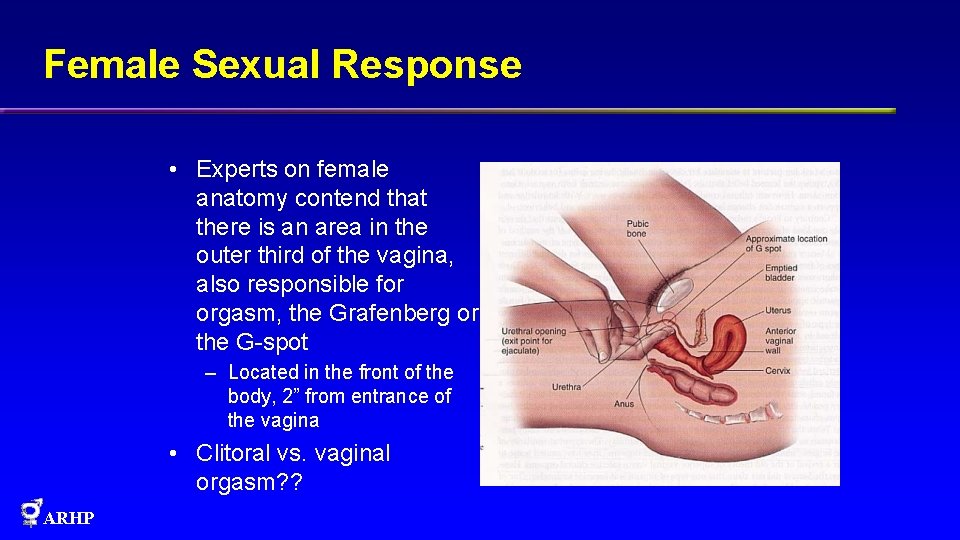
Female Sexual Response • Experts on female anatomy contend that there is an area in the outer third of the vagina, also responsible for orgasm, the Grafenberg or the G-spot – Located in the front of the body, 2” from entrance of the vagina • Clitoral vs. vaginal orgasm? ? ARHP
Female sexual disorders include: • Sexual desire disorders: – Hypoactive sexual desire disorder – Sexual aversion disorder • Sexual arousal disorder • Orgasmic disorder • Sexual pain disorders: – Dyspareunia – Vaginismus ARHP
Sexual Desire Disorders: Hypoactive sexual desire disorder • Persistently or recurrently deficient (or absent) sexual fantasies and desire for sexual activity. The judgment of deficiency or absence is made by the clinician, taking into account factors that affect sexual functioning, such as age and the context of the person's life. • The disturbance causes marked distress or interpersonal difficulty. • The sexual dysfunction is not better accounted for by another disorder • It is not due exclusively to the direct physiological effects of a substance (e. g. , a drug of abuse, a medication) or a general medical condition. ARHP W SARHAN
Sexual Desire Disorders: Sexual aversion disorder • Persistent or recurrent extreme aversion to, and avoidance of, all (or almost all) genital sexual contact with a sexual partner. • The disturbance causes marked distress or interpersonal difficulty. ARHP W SARHAN
Sexual Arousal Disorder • Persistent or recurrent inability to attain, or to maintain until completion of the sexual activity, an adequate lubricationswelling response of sexual excitement. • The disturbance causes marked distress or interpersonal difficulty. • The sexual dysfunction is not better accounted for by another disorder • It is not due exclusively to the direct physiological effects of a substance (e. g. , a drug of abuse, a medication) or a general medical condition. ARHP W SARHAN
Orgasmic Disorder • Persistent or recurrent delay in, or absence of, orgasm following a normal sexual excitement phase. Women exhibit wide variability in the type or intensity of stimulation that triggers orgasm. • The disturbance causes marked distress or interpersonal difficulty. • The orgasmic dysfunction is not better accounted for by disorder • It is not due exclusively to the direct physiological effects of a substance (e. g. , a drug of abuse, a medication) or a general medical condition. ARHP W SARHAN
Sexual Pain Disorders: Dyspareunia • Recurrent or persistent genital pain associated with sexual intercourse in either a male or a female. • The disturbance causes marked distress or interpersonal difficulty. • The disturbance is not caused exclusively by Vaginismus or lack of lubrication, • It is not better accounted for by another disorder • it is not due exclusively to the direct physiological effects of a substance (e. g. , a drug of abuse, a medication) or a general medical condition. ARHP W SARHAN
Sexual Pain Disorders: Vaginimus • Recurrent or persistent involuntary spasm of the musculature of the outer third of the vagina that interferes with sexual intercourse. • The disturbance causes marked distress or interpersonal difficulty. • The disturbance is not better accounted for by another disorder • It is not due exclusively to the direct physiological effects of a general medical condition. ARHP W SARHAN
Populations who may experience female sexual dysfunction (FSD): • • • • • Abused Perimenopausal Pregnancy Multiple sclerosis Childhood sex abuse Chemotherapy Genital mutation Post menopausal Lack of sensitivity ARHP W SARHAN Gynecological cancer Radiation Battered Nuerogenic disease Sexual trauma Spinal cord injury Vascualr disease Post-hysterectomy Post-partum
Etiology • “The etiologies of female sexual dysfunction affect a variety of populations and may be caused by psychological, emotional, or physiological reasons. Often, the etiology is multifactorial And interrelated. ” ARHP W SARHAN
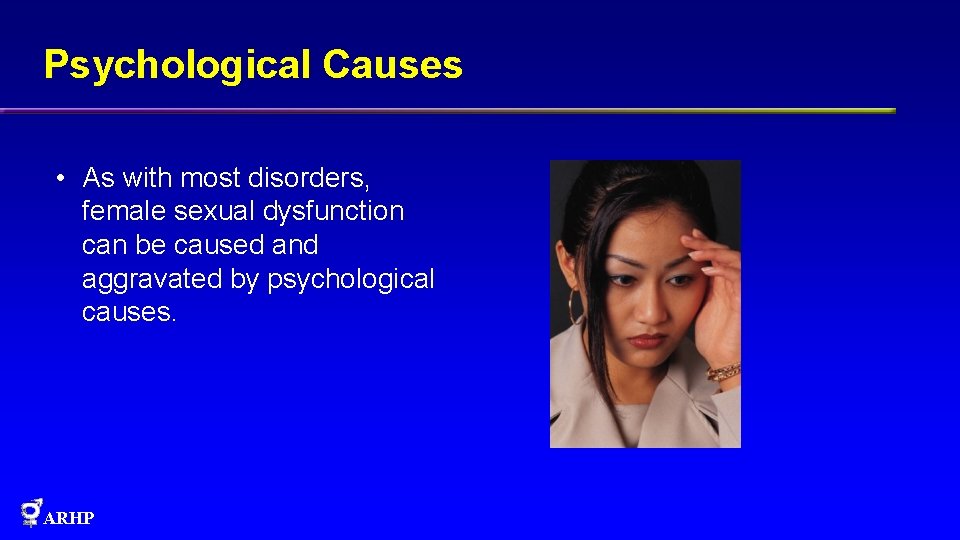
Psychological Causes • As with most disorders, female sexual dysfunction can be caused and aggravated by psychological causes. ARHP
There are five main Psychological Causes to FSD. • • • Sexual or Emotional Abuse Depression Relationship Issues Stress Self Esteem Cultural factors in the Arabic society ARHP W SARHAN
Depression • Depression is a prevalent cause of sexual dysfunction in both men and women. • Most women, when grieving, experience a loss of sexual desire. • Depression can be a double edged sword for some, due to the increase of sexual dysfunction caused by antidepressants. ARHP
Relationship • A healthy relationship is based on trust, intimacy, and communication. • sexual dysfunction is highly associated with negative experiences in sexual relationships and overall wellbeing. ARHP W SARHAN
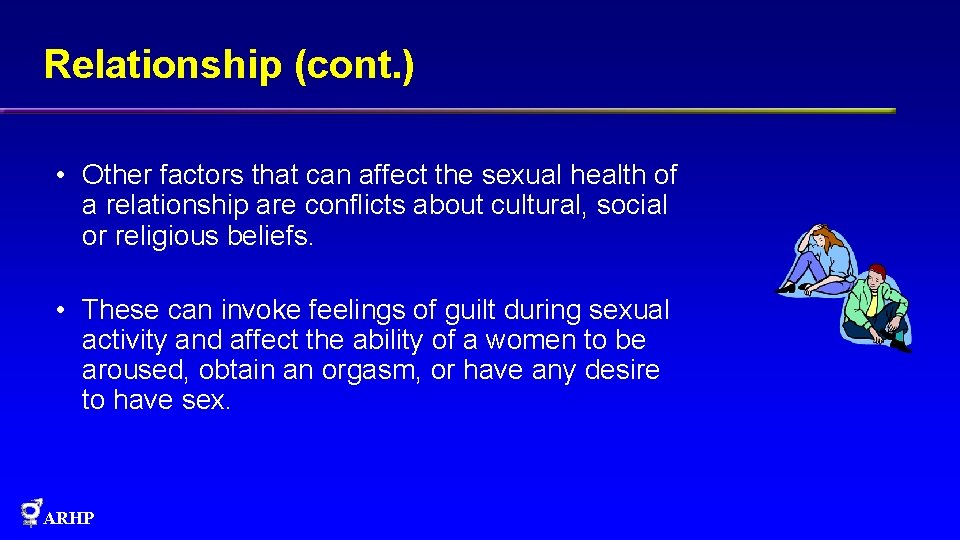
Relationship (cont. ) • Other factors that can affect the sexual health of a relationship are conflicts about cultural, social or religious beliefs. • These can invoke feelings of guilt during sexual activity and affect the ability of a women to be aroused, obtain an orgasm, or have any desire to have sex. ARHP

Diagnostic and Statistical Manual of Mental Disorders DSM-5 2013 Female Orgasmic Disorder – Delay, infrequency or absence of orgasm or reduced intensity of orgasm sensations lasting more than 6 months – Wide estimates of prevalence: 10%-42% – 10% of women do not report experience of orgasm – Lifelong vs. acquired; generalized v. situational, also never; mild, moderate or severe
Diagnostic and Statistical Manual of Mental Disorders DSM-5 2013 Female Sexual Interest/Arousal Disorder – Absent/reduced interest/arousal related to sexual activities, thoughts, encounters, cues, etc. – Becomes persistent problem for relationships – Lifelong vs. acquired; generalized v. situational; mild, moderate or severe
Diagnostic and Statistical Manual of Mental Disorders DSM-5 2013 Genito-Pelvic Pain/Penetration Disorder – Difficulties with 1 vaginal penetration during intercourse, 2 pain during intercourse, 3 fear or anxiety about pain or penetration, or contraction of pelvic floor muscles during sex – lasting more than 6 months – 15% of women report some pain during intercourse – Lifelong vs. acquired; mild, moderate or severe
How common is sexual dysfunction? Laumann, Paik, & Rosen 1999 estimate about 43% of women and about 31% of men have experienced sexual dysfunction based on a national survey of Americans. This makes sexual dysfunction the most common psychological problem in US.
How Common is Inadequate Lubrication? Approximately 40% of females in the United States have reported inadequate lubrication during sexual activity, making it the second most common sexual difficulty reported by females after low arousal. Inadequate lubrication is a physiological sign that a female is insufficiently sexually aroused. Sexual arousal is both a psychological and physiological response. Without proper vaginal lubrication, intercourse can be painful and can result in bodily injuries, such as chaffing or tearing of the vaginal mucosa (inner vaginal wall)
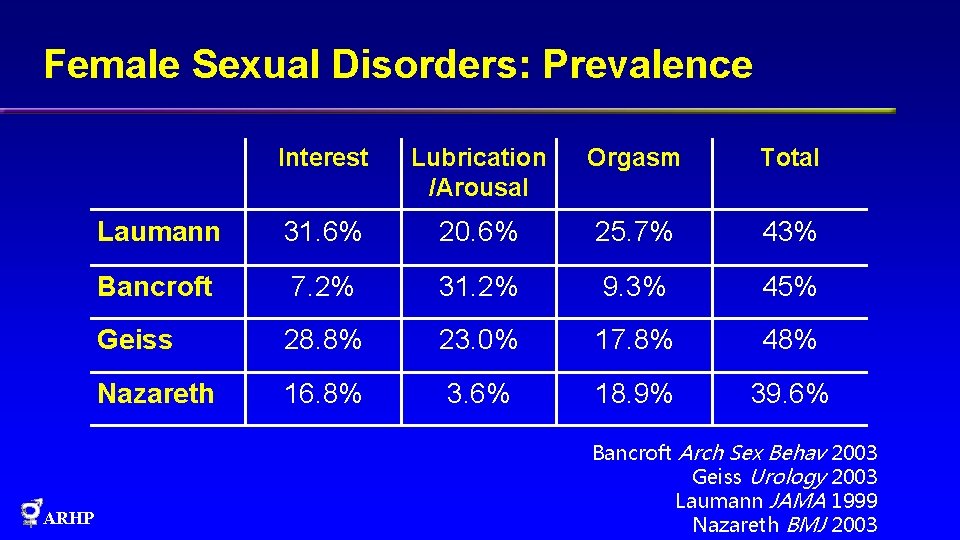
Female Sexual Disorders: Prevalence ARHP Interest Lubrication /Arousal Orgasm Total Laumann 31. 6% 20. 6% 25. 7% 43% Bancroft 7. 2% 31. 2% 9. 3% 45% Geiss 28. 8% 23. 0% 17. 8% 48% Nazareth 16. 8% 3. 6% 18. 9% 39. 6% Bancroft Arch Sex Behav 2003 Geiss Urology 2003 Laumann JAMA 1999 Nazareth BMJ 2003
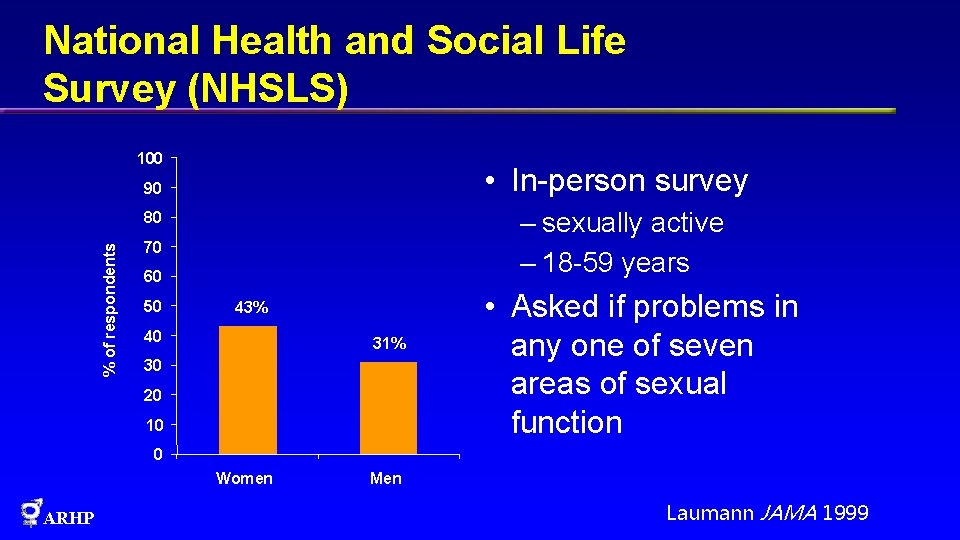
National Health and Social Life Survey (NHSLS) 100 • In-person survey 90 – sexually active – 18 -59 years % of respondents 80 70 60 50 43% 40 31% 30 20 10 • Asked if problems in any one of seven areas of sexual function 0 Women ARHP Men Laumann JAMA 1999
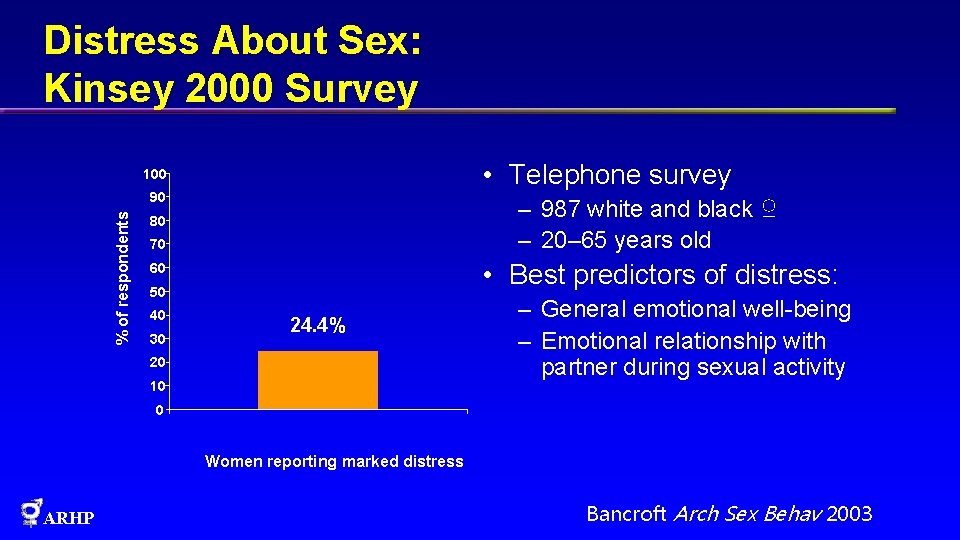
Distress About Sex: Kinsey 2000 Survey • Telephone survey 100 % of respondents 90 – 987 white and black ♀ – 20– 65 years old 80 70 • Best predictors of distress: 60 50 40 30 24. 4% 20 10 – General emotional well-being – Emotional relationship with partner during sexual activity 0 Women reporting marked distress ARHP Bancroft Arch Sex Behav 2003
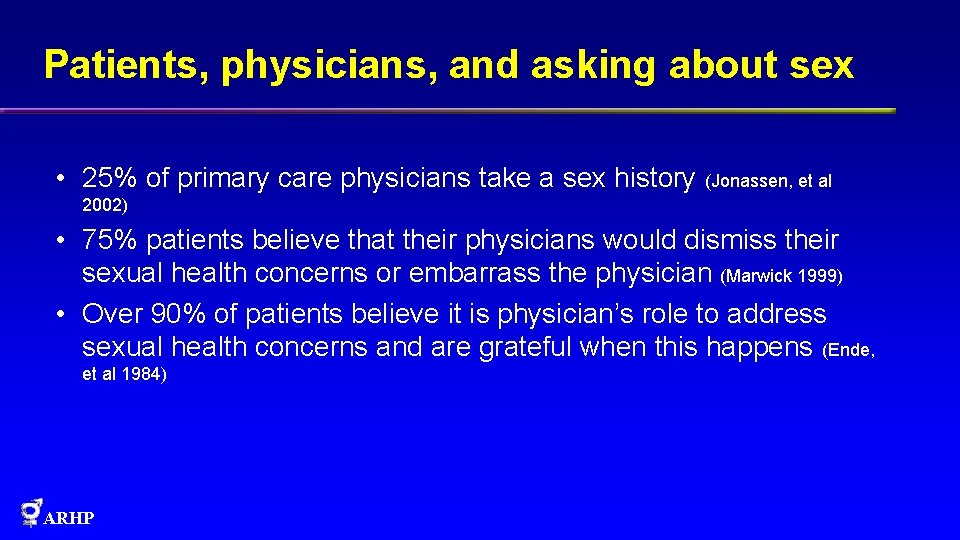
Patients, physicians, and asking about sex • 25% of primary care physicians take a sex history (Jonassen, et al 2002) • 75% patients believe that their physicians would dismiss their sexual health concerns or embarrass the physician (Marwick 1999) • Over 90% of patients believe it is physician’s role to address sexual health concerns and are grateful when this happens (Ende, et al 1984) ARHP
Reluctance to seek help • Studies show that over 50 % of individuals with sexual problems do not ask for help from health care provider • Studies indicate that of those seeking help (from any health care provider), less than 50% found the assistance helpful ARHP
Patient Perceptions • Although 85% of adults want to discuss sexual functioning with their physicians… – 71% believe their physicians doesn’t have the time – 68% don’t want to embarrass their physician – 76% thought no treatment was available for their problems • They also report… – Non-empathic and/or judgmental responses – Physician discomfort – Concern about privacy and/or confidentiality – Lack of cultural sensitivity ARHP Marwick C. JAMA 1993; 281: 2 173 -4 Maurice WI, Bowman MA, Sexual Medicine in Primary Care 1999: 1 -41
Treatment Approaches • • Sex Therapy (CBT + Master’s & Johnson) Pharmacotherapy & Medical Devices A Systemic Approach Bibliotherapy ARHP
Bibliography • Basson, R. , Berman, J. , Burnett, A. , Derogatis, L. , Ferguson, D. , Fourcroy, J. , Goldstein, I. , Graziottin, A. , Heiman, J. , Laan, E. , Leiblum, S. , Padma. Nathan, H. , Rosen, R. , Segraves, K. , Segraves, R. T. , Shabsigh, R. , Sipski, M. , Wagner, G. , & Whipple, B. (2001). Report of the International Consensus Development Conference on Female Sexual Dysfunction: Definitions and classifications. Journal of Sex & Marital Therapy, 27, 83 -94. • Berman, J. R. , Berman, L. , and Goldstein, I. (1999). Female Sexual Dysfunction: incidence, Pathophysiology, evaluation, and treatment options. Urology, 45, 385 -391. • Brassil, D. F, Keller, M. (2002). Female Sexual Dysfunction: Definitions, Causes, and Treatment. Urologic Nursing, 22, 237 -242. • Laumann, E. O, Paik, A. , Rosen, R. C. (1999). Sexual Dysfunction in the United States. Journal of the American Medical Association, 281, 537 -544. • Sarwer, D. B, Durlak, J. A. (1996). Childhood Sexual Abuse as a Predictor of Female Sexual Dysfunction: A Study of Couples Seeking Sex Therapy. Child Abuse & Neglect, 20, 963 -972. • Segraves, R. T. (2002). Female Sexual Disorders: Psychiatric Aspects. Canadian Journal of Psychiatry, 419 -426. Retrieved April 6, 2004 from Ebsco host. • Tiefer, L. , Hall, M. , & Travis, C. (2002). Beyond dysfunction: A new view of women’s sexual problems. Journal of Sex & Marital Therapy, 28, 225 -232. • http: //www. behavenet. com/ (2004). Behavenet Clinical Capsule: DSM-IV-TR (Text Revision). Reprinted with permission from the Diagnostic and Statistical Manual of Mental Disorders, Fourth Edition, Text Revision (2000). ARHP

Thank you wsarhan 34@gmail. com ARHP
- Slides: 39