
Female Reproductive Unit Introduction Sexual reproduction This is
- Slides: 13
Female Reproductive Unit -Introduction Sexual reproduction ØThis is the union of the nuclei of ovum and sperm cell. ØOvum and sperm cells are called gametes. ØEach gamete contains half the number of chromosomes of a normal body cell. Gametes (ovum and sperm cell) ØGametes are produced in the gonads. ØFemale gonads are the ovaries; male gonads are the testes.
Introduction Fertilization ØAn ovum leaves the ovaries and travels through the fallopian tube. ØFertilization takes place if sperm cells are present and unite with the ovum. ØThe fertilized egg implants then divides to form a ball of cells, called a zygote (and later an embryo and then a fetus).
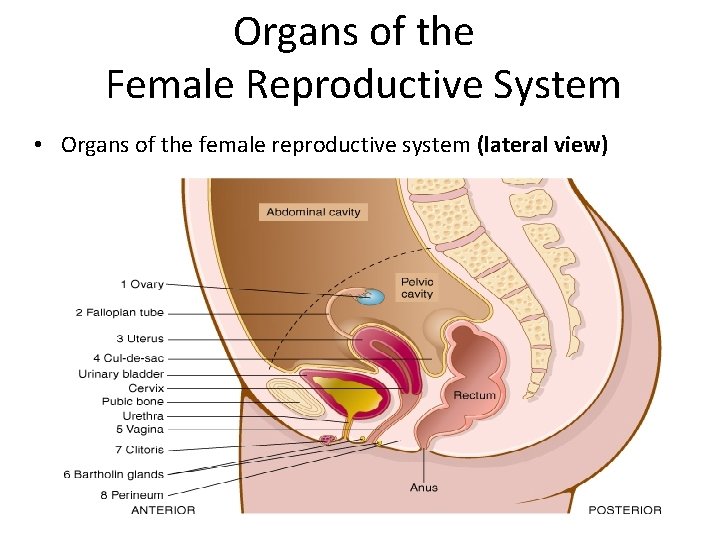
Organs of the Female Reproductive System • Organs of the female reproductive system (lateral view)
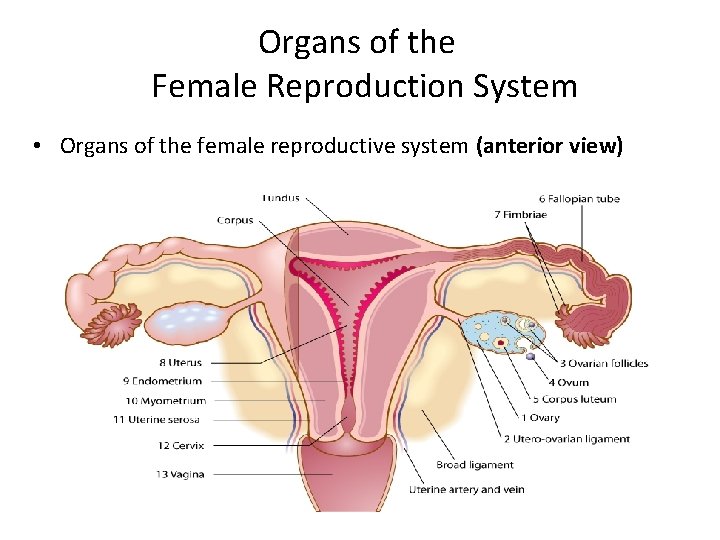
Organs of the Female Reproduction System • Organs of the female reproductive system (anterior view)
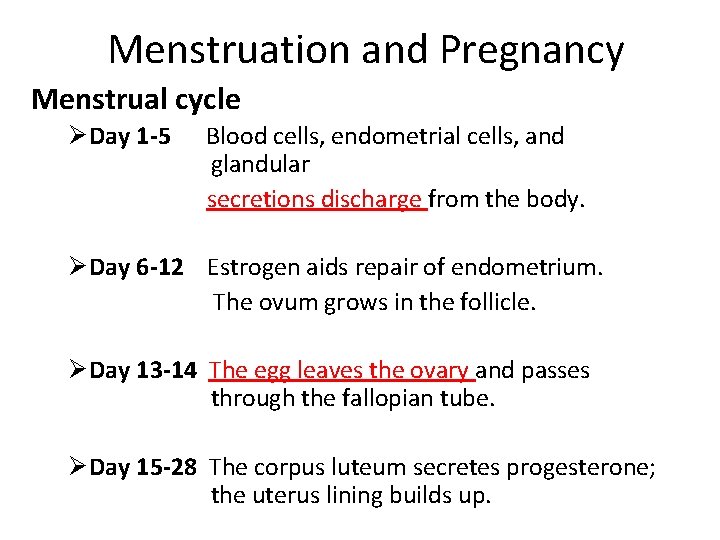
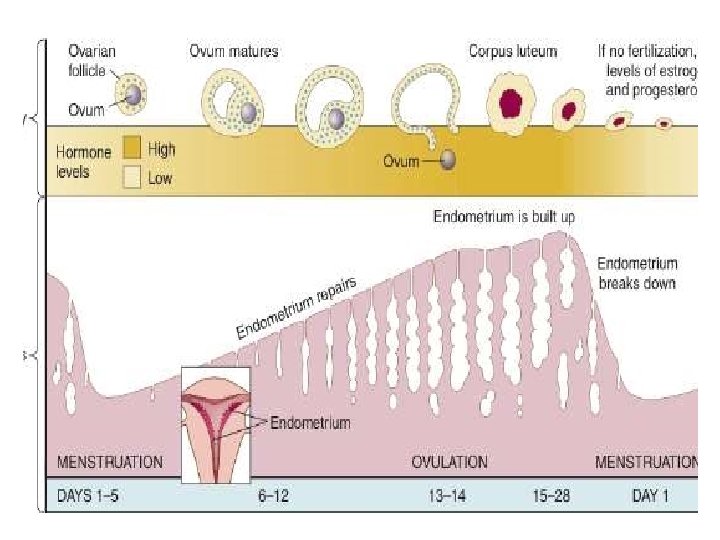
Menstruation and Pregnancy Menstrual cycle Ø Day 1 -5 Blood cells, endometrial cells, and glandular secretions discharge from the body. Ø Day 6 -12 Estrogen aids repair of endometrium. The ovum grows in the follicle. Ø Day 13 -14 The egg leaves the ovary and passes through the fallopian tube. Ø Day 15 -28 The corpus luteum secretes progesterone; the uterus lining builds up.
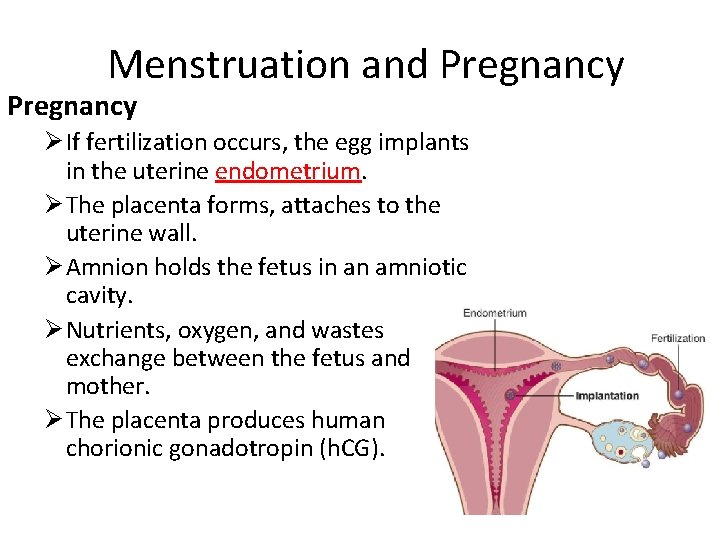
Menstruation and Pregnancy Ø If fertilization occurs, the egg implants in the uterine endometrium. Ø The placenta forms, attaches to the uterine wall. Ø Amnion holds the fetus in an amniotic cavity. Ø Nutrients, oxygen, and wastes exchange between the fetus and mother. Ø The placenta produces human chorionic gonadotropin (h. CG).
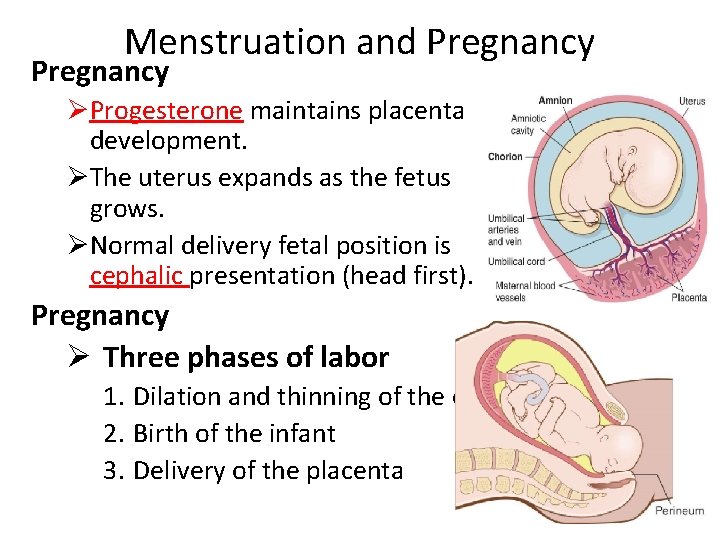
Menstruation and Pregnancy ØProgesterone maintains placenta development. ØThe uterus expands as the fetus grows. ØNormal delivery fetal position is cephalic presentation (head first). Pregnancy Ø Three phases of labor 1. Dilation and thinning of the cervix 2. Birth of the infant 3. Delivery of the placenta
Hormonal Interactions • The pituitary secretes: Ø Follicle-stimulating hormone (FSH) Ø Luteinizing hormone (LH) • The pituitary stops producing FSH and LH Ø During pregnancy Ø With oral contraceptives • Menopause Ø Gradual ending of the menstrual cycle Ø Normally begins between ages 45 and 55 Ø Falling estrogen levels Ø Option for estrogen replacement therapy
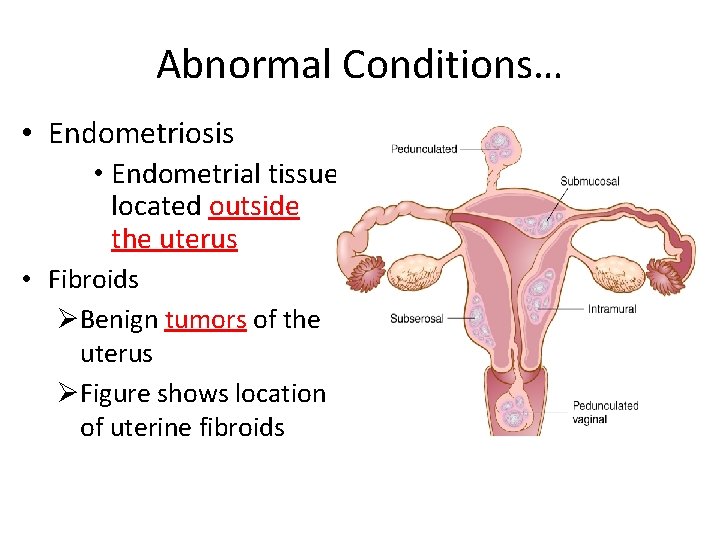
Abnormal Conditions… • Endometriosis • Endometrial tissue located outside the uterus • Fibroids ØBenign tumors of the uterus ØFigure shows location of uterine fibroids
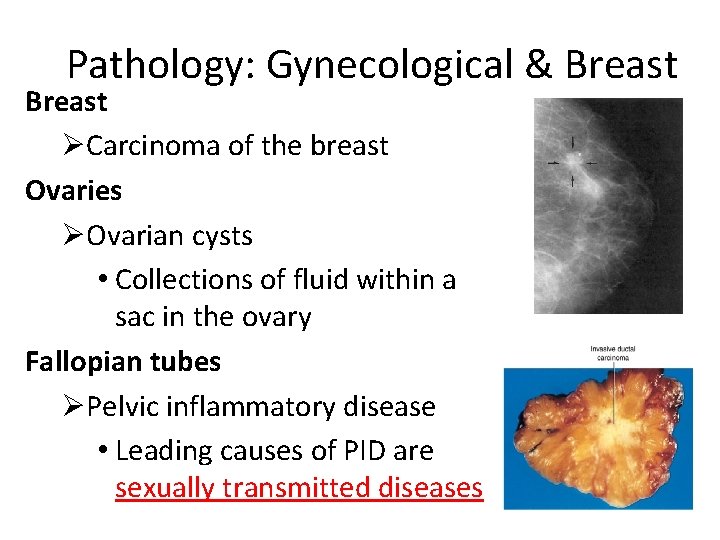
Pathology: Gynecological & Breast ØCarcinoma of the breast Ovaries ØOvarian cysts • Collections of fluid within a sac in the ovary Fallopian tubes ØPelvic inflammatory disease • Leading causes of PID are sexually transmitted diseases
Pathology: Pregnancy • Placenta previa- placenta grows in the lowest part of ØPremature the womb & covers all or separation of the normally implanted part of the opening to the placenta cervix. • Preeclampsia-occurrence • Ectopic pregnancy of elevated blood pressure ØMisplaced implantation of egg (hypertension) & significant amounts of protein in urine. • Abruptio placentae
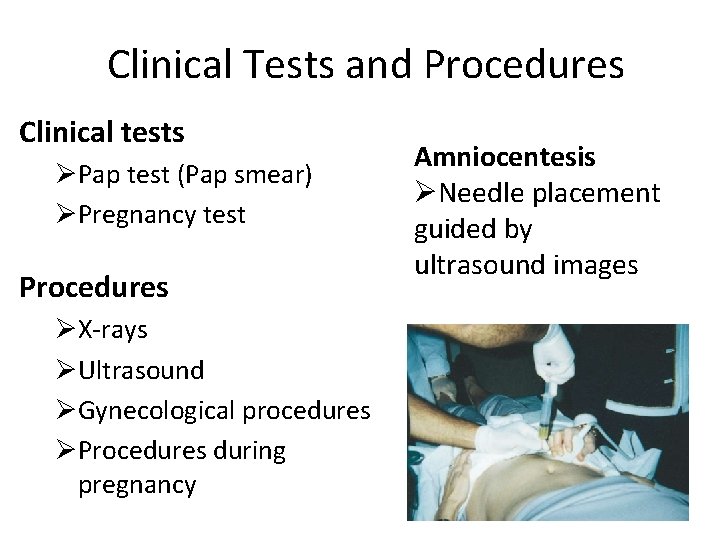
Clinical Tests and Procedures Clinical tests ØPap test (Pap smear) ØPregnancy test Procedures ØX-rays ØUltrasound ØGynecological procedures ØProcedures during pregnancy Amniocentesis ØNeedle placement guided by ultrasound images