
Female Reproductive System Ovaries produce 2 nd oocytes
- Slides: 19
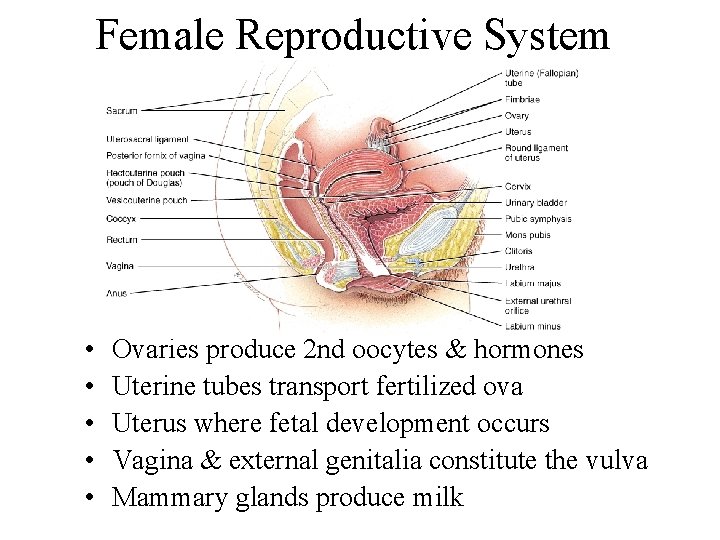
Female Reproductive System • • • Ovaries produce 2 nd oocytes & hormones Uterine tubes transport fertilized ova Uterus where fetal development occurs Vagina & external genitalia constitute the vulva Mammary glands produce milk
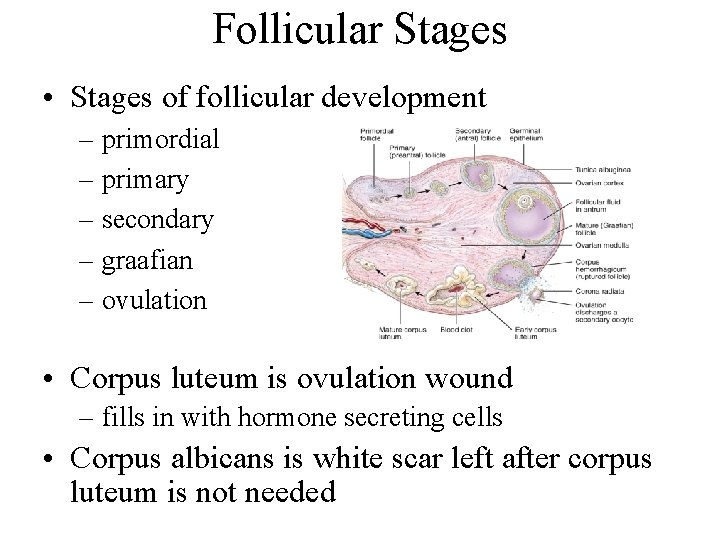
Follicular Stages • Stages of follicular development – primordial – primary – secondary – graafian – ovulation • Corpus luteum is ovulation wound – fills in with hormone secreting cells • Corpus albicans is white scar left after corpus luteum is not needed
Histology of a Graafian Follicle • Zona pellucida -- clear area between oocyte & granulosa cells • Corona radiata is granulosa cells attached to zona pellucida--still attached to oocyte at ovulation • Antrum formed by granulosa cells secreting fluid • By this time, the oocyte has reached the metaphase of meiosis II stage and stopped developing -- first polar body has been discarded
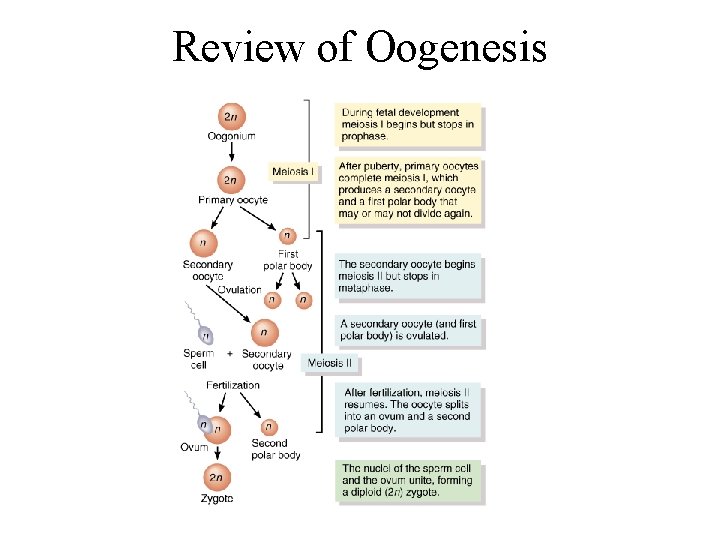
Life History of Oogonia • Germ cells from yolk sac migrate to ovary & become oogonia • As a fetus, oogonia divide to produce millions by mitosis but most degenerate (atresia) • Some develop into primary oocytes & stop in prophase stage of meiosis I – 200, 000 to 2 million present at birth – 40, 000 remain at puberty but only 400 mature during a woman’s life • Each month, hormones cause meiosis I to resume in several follicles so that meiosis II is reached by ovulation • Penetration by the sperm causes the final stages of meiosis to occur
Review of Oogenesis
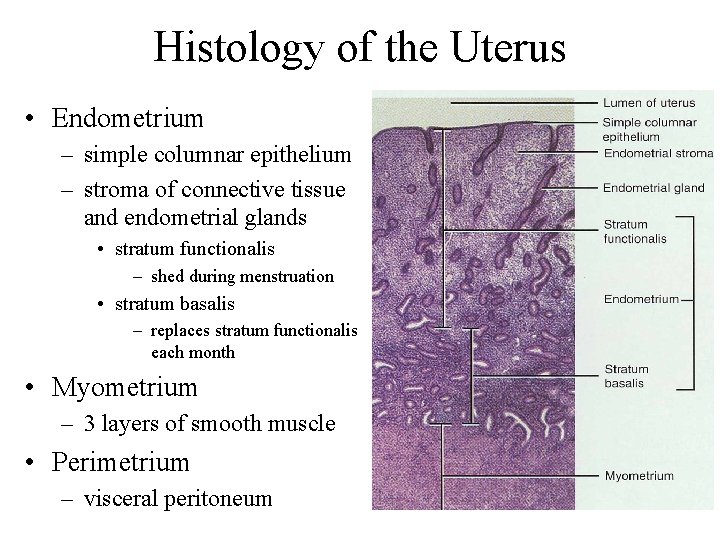
Histology of the Uterus • Endometrium – simple columnar epithelium – stroma of connective tissue and endometrial glands • stratum functionalis – shed during menstruation • stratum basalis – replaces stratum functionalis each month • Myometrium – 3 layers of smooth muscle • Perimetrium – visceral peritoneum
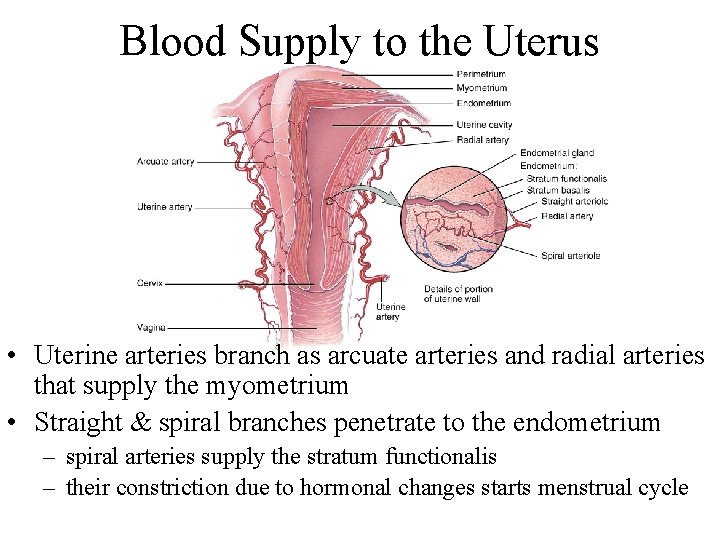
Blood Supply to the Uterus • Uterine arteries branch as arcuate arteries and radial arteries that supply the myometrium • Straight & spiral branches penetrate to the endometrium – spiral arteries supply the stratum functionalis – their constriction due to hormonal changes starts menstrual cycle
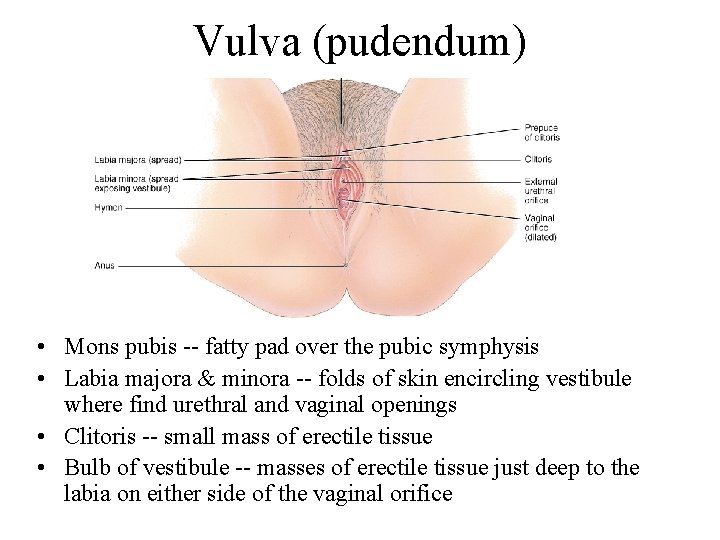
Vulva (pudendum) • Mons pubis -- fatty pad over the pubic symphysis • Labia majora & minora -- folds of skin encircling vestibule where find urethral and vaginal openings • Clitoris -- small mass of erectile tissue • Bulb of vestibule -- masses of erectile tissue just deep to the labia on either side of the vaginal orifice
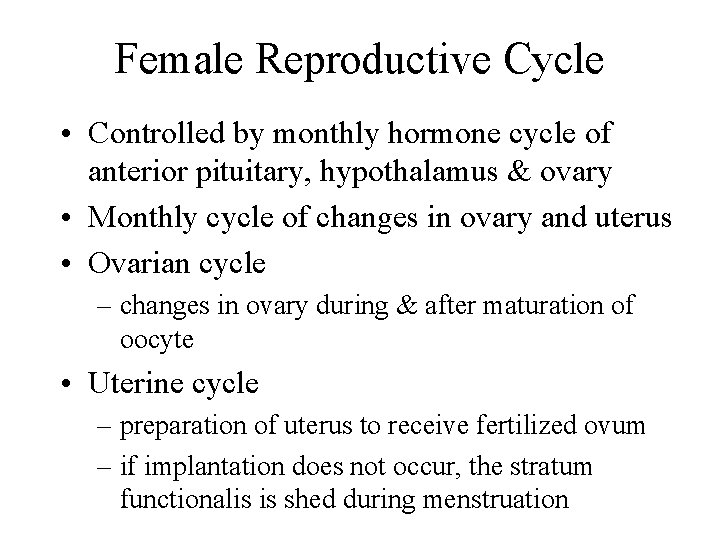
Female Reproductive Cycle • Controlled by monthly hormone cycle of anterior pituitary, hypothalamus & ovary • Monthly cycle of changes in ovary and uterus • Ovarian cycle – changes in ovary during & after maturation of oocyte • Uterine cycle – preparation of uterus to receive fertilized ovum – if implantation does not occur, the stratum functionalis is shed during menstruation
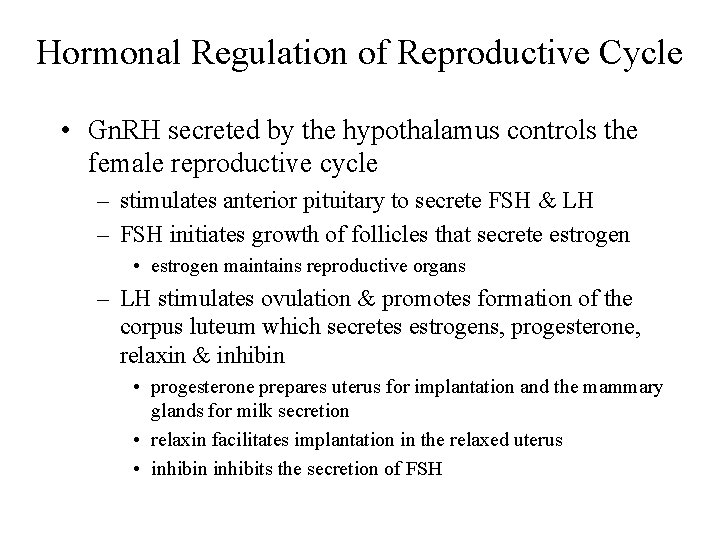
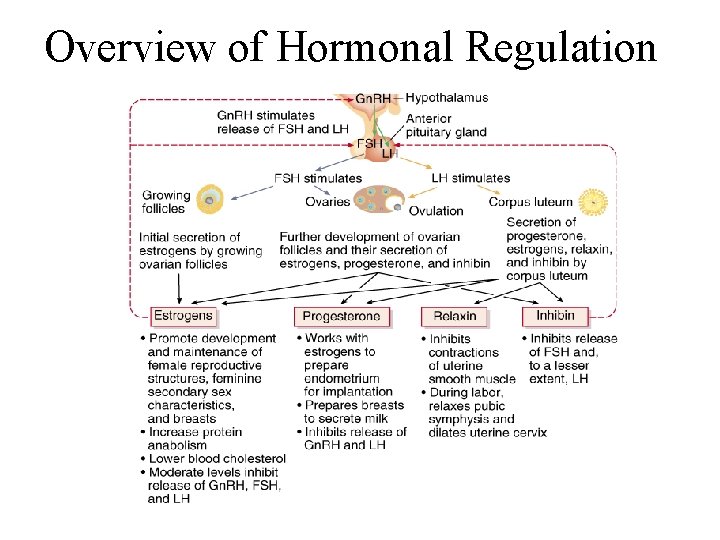
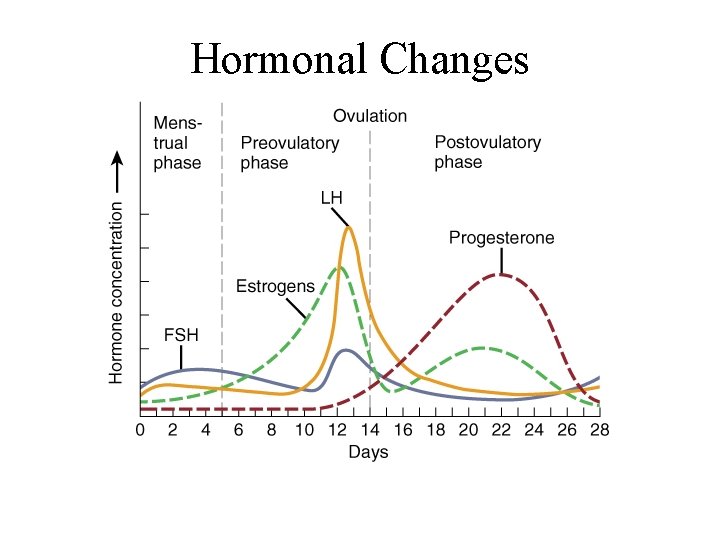
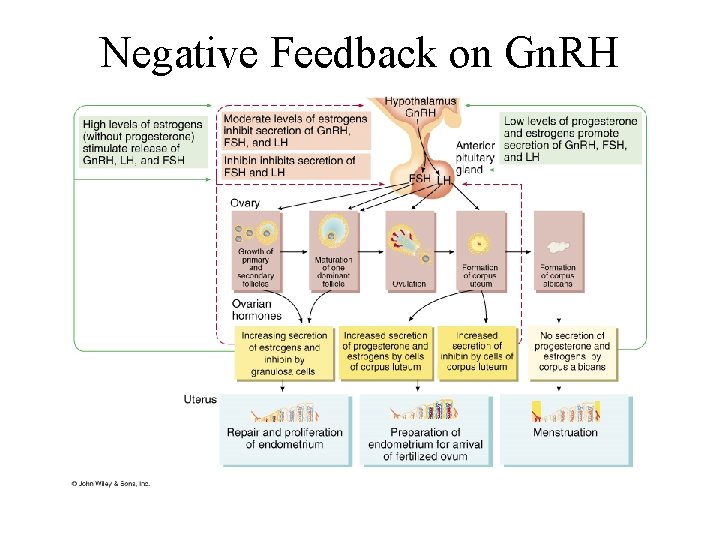
Hormonal Regulation of Reproductive Cycle • Gn. RH secreted by the hypothalamus controls the female reproductive cycle – stimulates anterior pituitary to secrete FSH & LH – FSH initiates growth of follicles that secrete estrogen • estrogen maintains reproductive organs – LH stimulates ovulation & promotes formation of the corpus luteum which secretes estrogens, progesterone, relaxin & inhibin • progesterone prepares uterus for implantation and the mammary glands for milk secretion • relaxin facilitates implantation in the relaxed uterus • inhibin inhibits the secretion of FSH
Overview of Hormonal Regulation
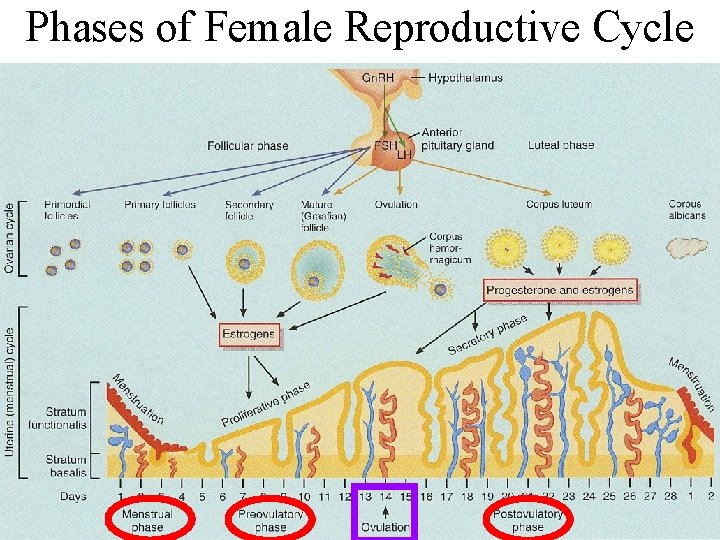
Phases of Female Reproductive Cycle
Hormonal Changes
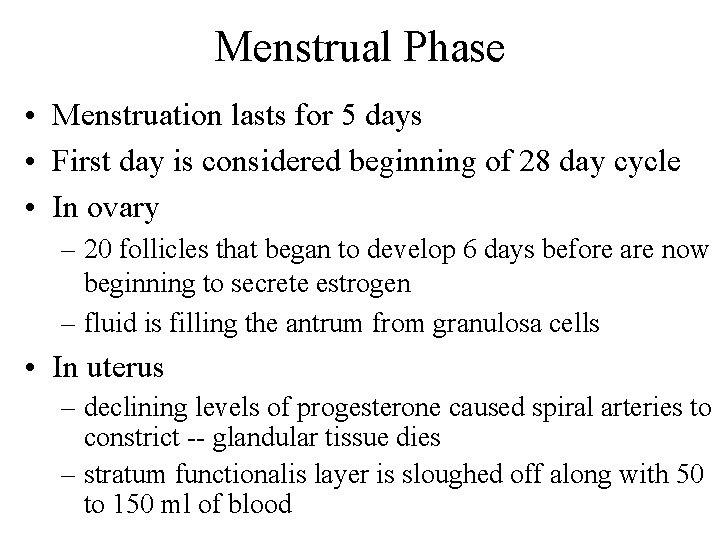
Menstrual Phase • Menstruation lasts for 5 days • First day is considered beginning of 28 day cycle • In ovary – 20 follicles that began to develop 6 days before are now beginning to secrete estrogen – fluid is filling the antrum from granulosa cells • In uterus – declining levels of progesterone caused spiral arteries to constrict -- glandular tissue dies – stratum functionalis layer is sloughed off along with 50 to 150 ml of blood
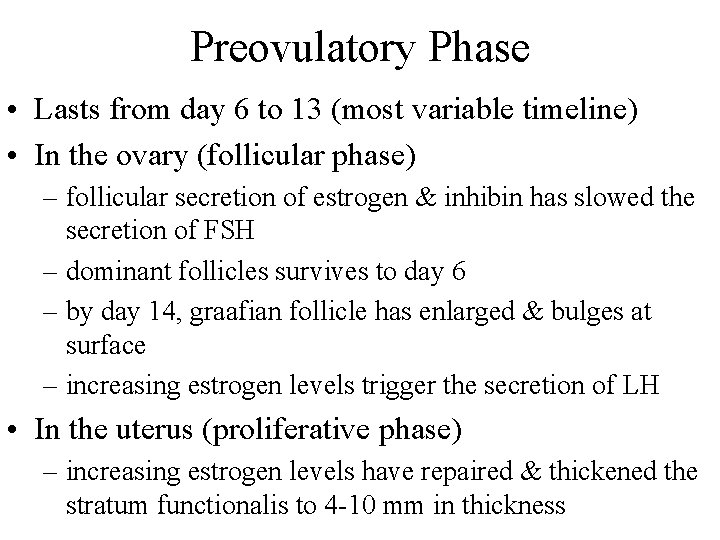
Preovulatory Phase • Lasts from day 6 to 13 (most variable timeline) • In the ovary (follicular phase) – follicular secretion of estrogen & inhibin has slowed the secretion of FSH – dominant follicles survives to day 6 – by day 14, graafian follicle has enlarged & bulges at surface – increasing estrogen levels trigger the secretion of LH • In the uterus (proliferative phase) – increasing estrogen levels have repaired & thickened the stratum functionalis to 4 -10 mm in thickness
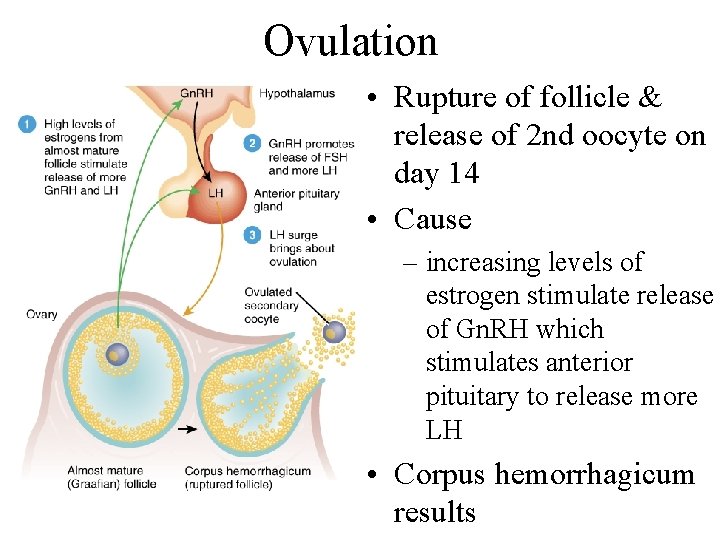
Ovulation • Rupture of follicle & release of 2 nd oocyte on day 14 • Cause – increasing levels of estrogen stimulate release of Gn. RH which stimulates anterior pituitary to release more LH • Corpus hemorrhagicum results
Signs of Ovulation • • Increase in basal body temperature Changes in cervical mucus Cervix softens Mittelschmerz---pain
Postovulatory Phase • Most constant timeline = lasts 14 days • In the ovary (luteal phase) – if fertilization did not occur, corpus albicans is formed • as hormone levels drop, secretion of Gn. RH, FSH & LH rise – if fertilization did occur, developing embryo secretes human chorionic gonadotropin (h. CG) which maintains health of corpus luteum & its hormone secretions • In the uterus (secretory phase) – hormones from corpus luteum promote thickening of endometrium to 12 -18 mm • formation of more endometrial glands & vascularization – if no fertilization occurs, menstrual phase will begin
Negative Feedback on Gn. RH