
Female Reproductive System Female Reproductive System Section 1
- Slides: 23
Female Reproductive System
Female Reproductive System – Section 1: Structure and their function – Section 2: Menstruation
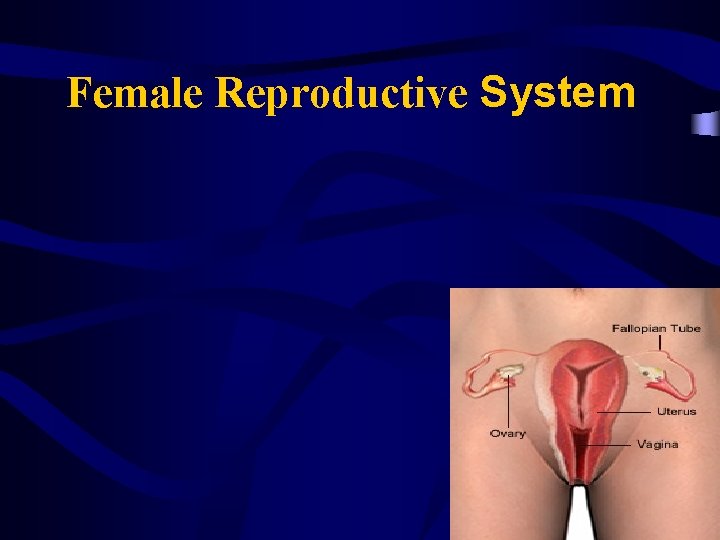
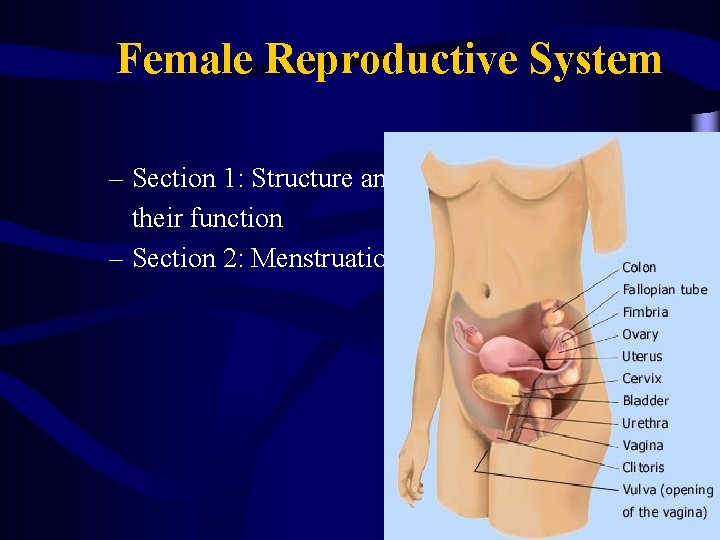
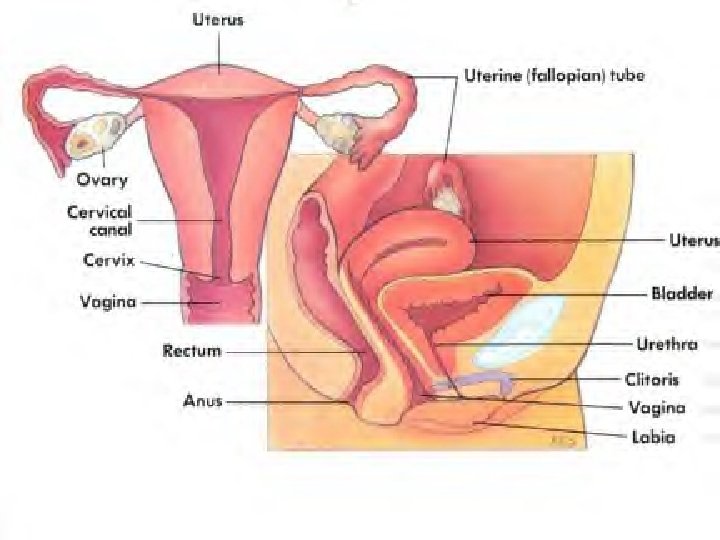
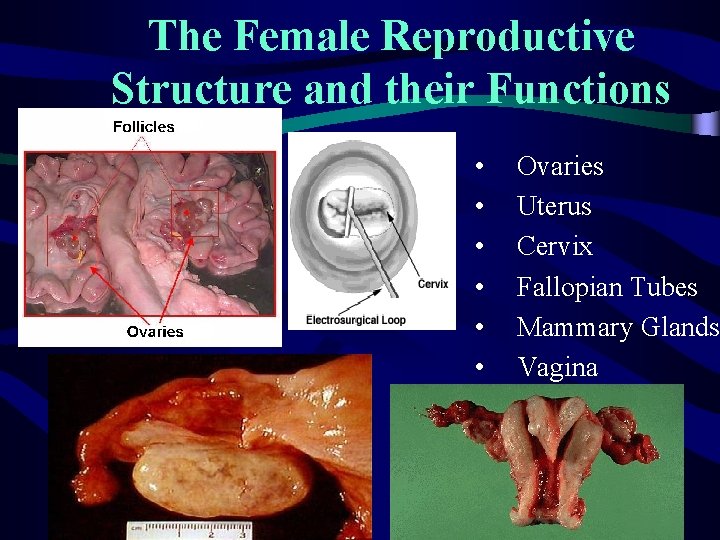
The Female Reproductive Structure and their Functions • • • Ovaries Uterus Cervix Fallopian Tubes Mammary Glands Vagina
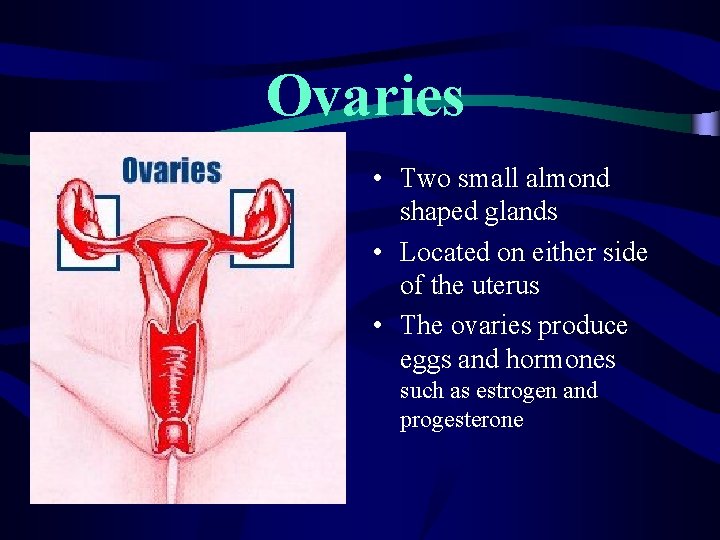
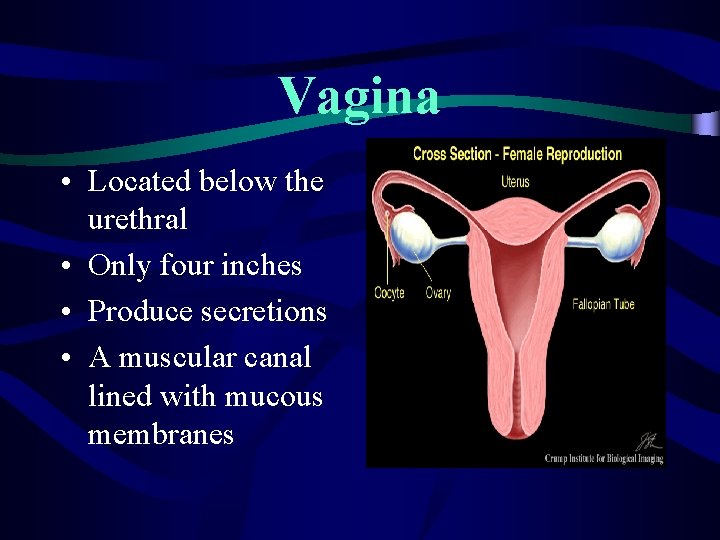
Ovaries • Two small almond shaped glands • Located on either side of the uterus • The ovaries produce eggs and hormones such as estrogen and progesterone
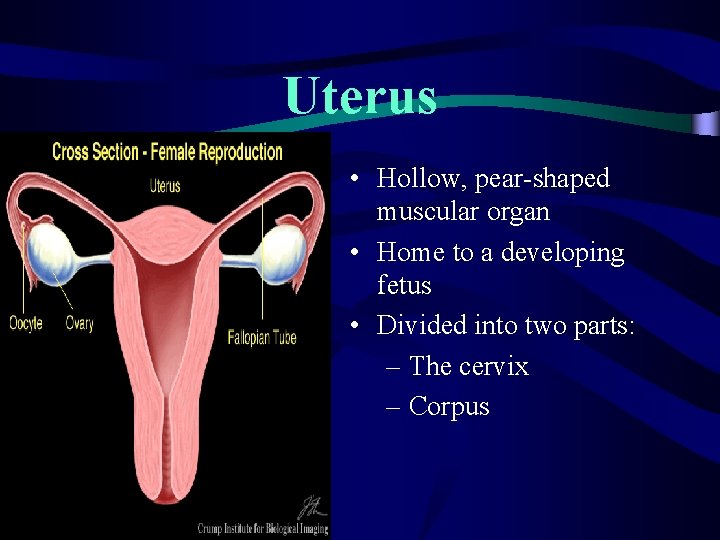
Uterus • Hollow, pear-shaped muscular organ • Home to a developing fetus • Divided into two parts: – The cervix – Corpus
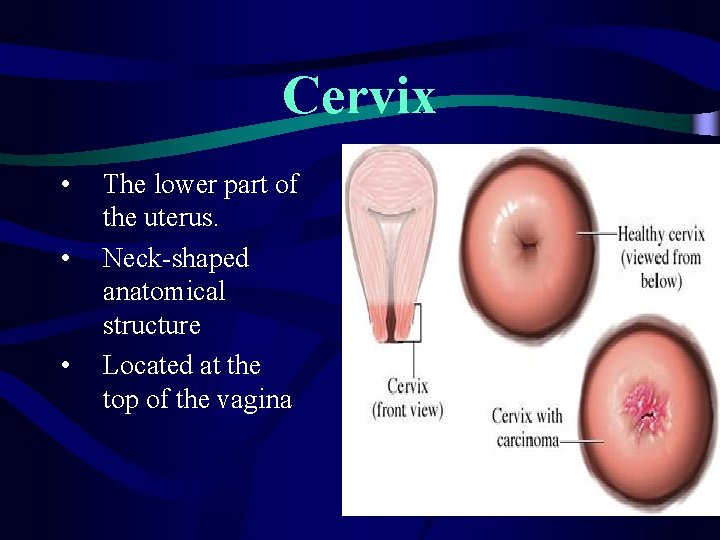
Cervix • • • The lower part of the uterus. Neck-shaped anatomical structure Located at the top of the vagina
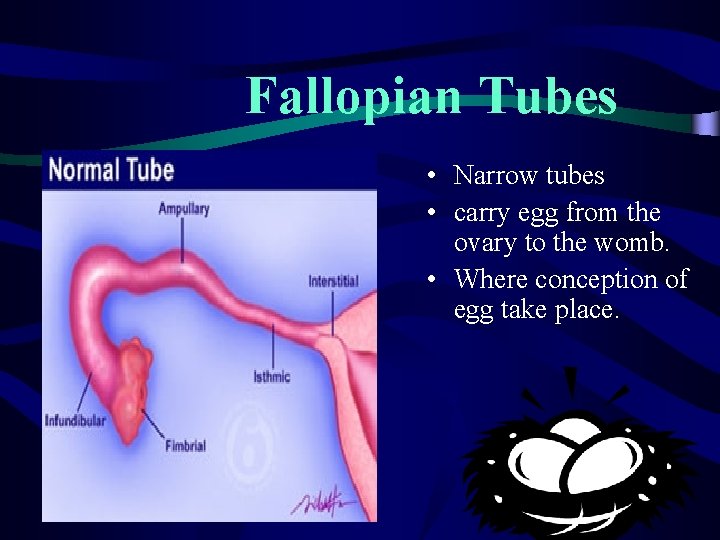
Fallopian Tubes • Narrow tubes • carry egg from the ovary to the womb. • Where conception of egg take place.
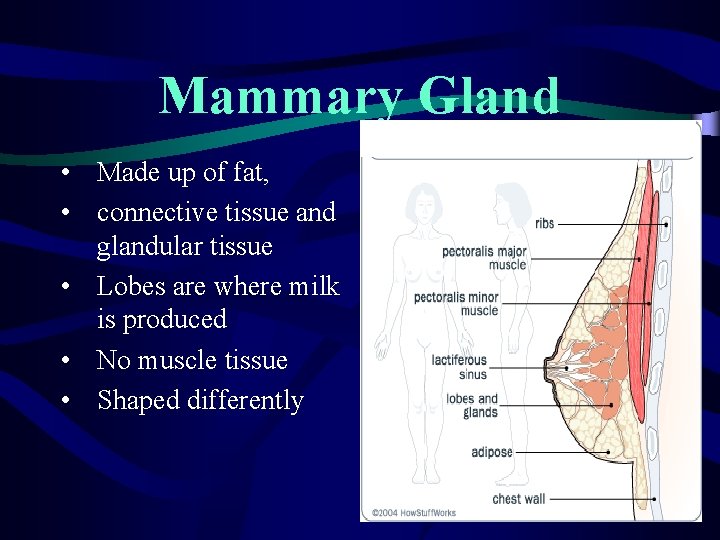
Mammary Gland • Made up of fat, • connective tissue and glandular tissue • Lobes are where milk is produced • No muscle tissue • Shaped differently
Vagina • Located below the urethral • Only four inches • Produce secretions • A muscular canal lined with mucous membranes
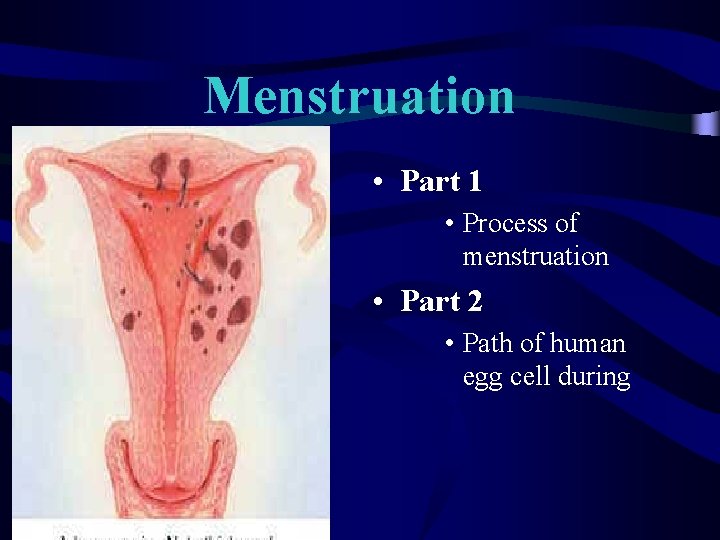
Menstruation • Part 1 • Process of menstruation • Part 2 • Path of human egg cell during
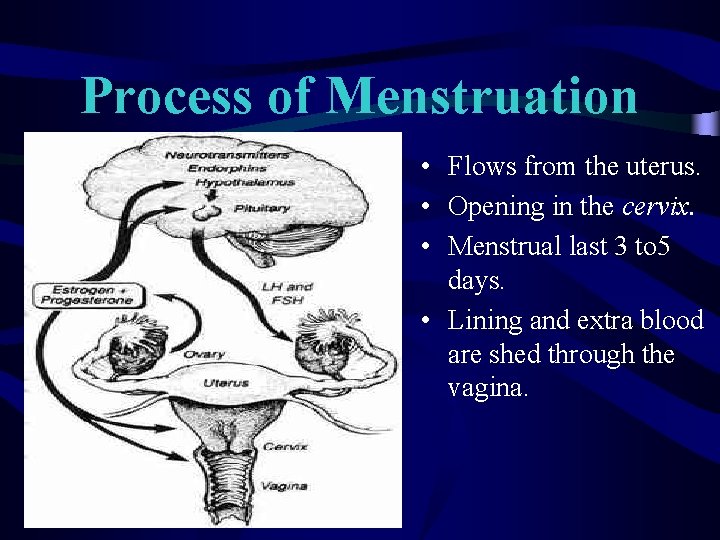
Process of Menstruation • Flows from the uterus. • Opening in the cervix. • Menstrual last 3 to 5 days. • Lining and extra blood are shed through the vagina.
Biology and the Menstrual Cycle • • Menstrual cycle is regulated by fluctuating • levels of sex hormones • • These hormones produce certain changes in • the ovaries and uterus • • Humans are nearly unique among species in having a menstrual cycle
The Phases of the Menstrual Cycle • • The menstrual cycle has 4 phases: • 1. Follicular phase - proliferative phase or preovulatory phase • 2. Ovulation • 3. Luteal phase - secretory phase or postovulatory phase • 4. Menstruation
Hormones and What Happens in the Ovaries • • Follicular phase - high levels of FSH secreted – Function is to stimulate follicles in the ovaries – One follicle begins to ripen and brings an egg to maturity – Follicle secretes estrogen • Ovulation - follicle ruptures open and releases the • ripened egg
Hormones and What Happens in the Ovaries • • Luteal phase - after releasing an egg, the follicle turns into the corpus luteum • – The corpus luteum manufactures progesterone • • Menstruation - shedding of the inner lining of the uterus
What Happens in the Uterus • • Follicular phase - endometrium proliferates • • Luteal phase - progesterone secreted by the corpus luteum stimulates the glands of the endometrium to start secreting the • nourishing substances (blood supply) • Corpus luteum continues to produce • estrogen and progesterone for about 10 to • 12 days • • If pregnancy has not occurred, its hormone • output declines
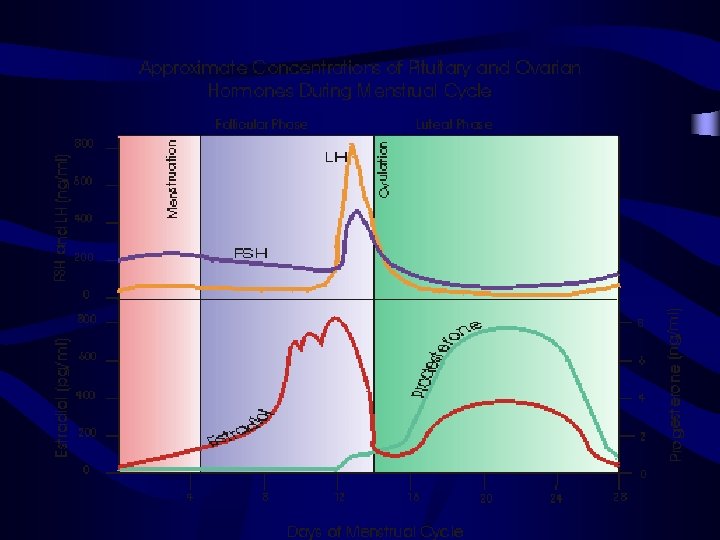
Length and Timing of the Cycle • Normal menstrual cycle = 20 to 36 to 40 days; • average is about 28 days • – Menstruation begins on day 1 and continues until about • day 4 or 5 • – Follicular phase extends from about day 5 to about day • 13 • – Ovulation occurs on day 14 • – Luteal phase extends from day 15 to the end of the • cycle, day 28
Hormones of Menstrual Cycle • The rising level of estrogen causes the endometrium to become thicker and more richly supplied with blood vessels and glands. • A rising level of LH and FSH causes the developing egg within the follicle to mature and become larger. • After about two weeks, there is a sudden surge in the production of LH. • This surge in LH triggers ovulation: the release of the egg into the fallopian tube.
LH/Progesterone • Under the continued influence of LH, the nowempty follicle develops into a corpus luteum • Stimulated by LH, the corpus luteum secretes progesterone which continues the preparation of the endometrium (lining of the uterus) for a possible pregnancy • inhibits the contraction of the uterus • inhibits the development of a new follicle
• If fertilization does not occur (which is usually the case), • Production of progesterone is stopped.
• As the progesterone and estrogen levels drop, • the endometrium begins to break down, its cells committing programmed cell death (apoptosis); • the inhibition of uterine contraction is lifted, and • the bleeding and cramps of menstruation begin.