
Female Reproductive Anatomy Fallopian tube Internal Genitals Fallopian
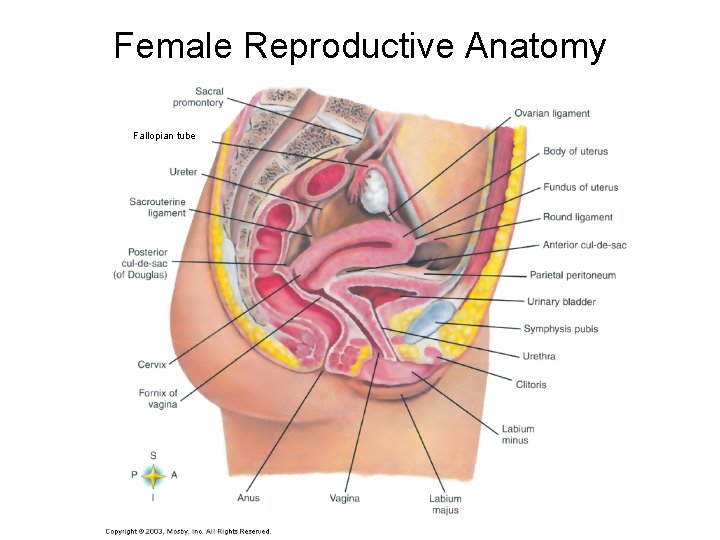
Female Reproductive Anatomy Fallopian tube
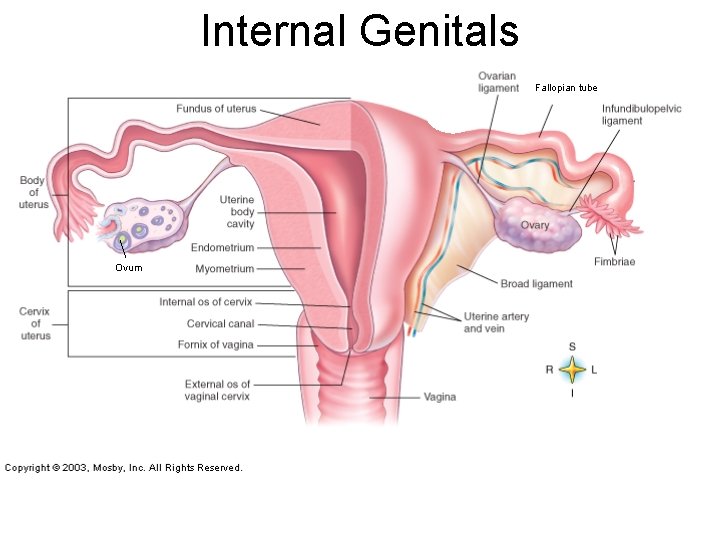
Internal Genitals Fallopian tube Ovum
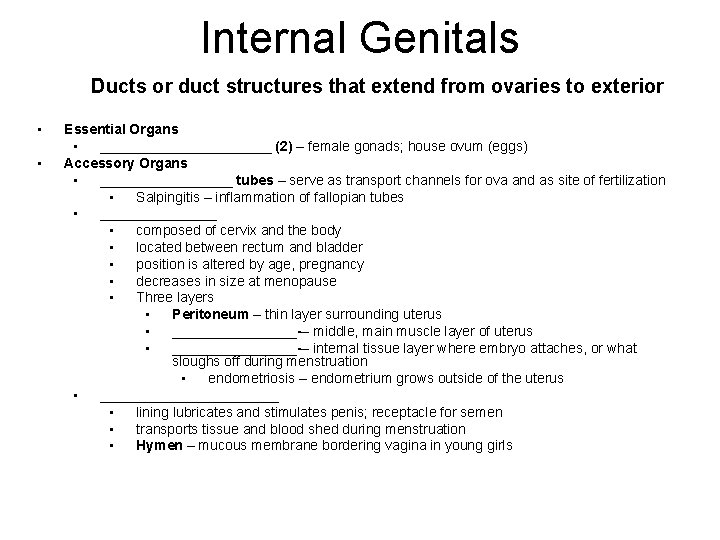
Internal Genitals Ducts or duct structures that extend from ovaries to exterior • • Essential Organs • ___________ (2) – female gonads; house ovum (eggs) Accessory Organs • _________ tubes – serve as transport channels for ova and as site of fertilization • Salpingitis – inflammation of fallopian tubes • ________ • composed of cervix and the body • located between rectum and bladder • position is altered by age, pregnancy • decreases in size at menopause • Three layers • Peritoneum – thin layer surrounding uterus • ________-– middle, main muscle layer of uterus • ________-– internal tissue layer where embryo attaches, or what sloughs off during menstruation • endometriosis – endometrium grows outside of the uterus • ____________ • lining lubricates and stimulates penis; receptacle for semen • transports tissue and blood shed during menstruation • Hymen – mucous membrane bordering vagina in young girls
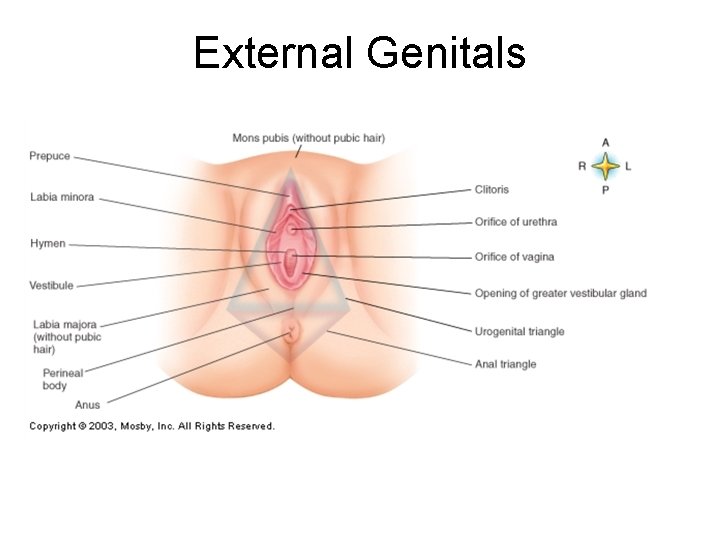
External Genitals
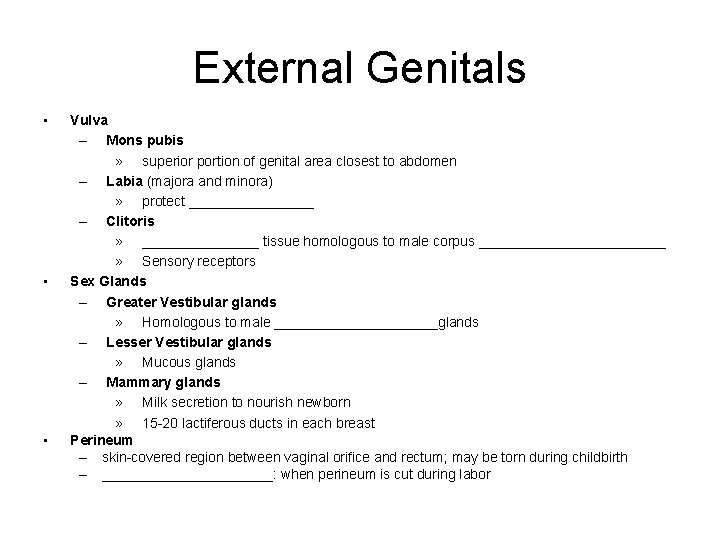
External Genitals • • • Vulva – Mons pubis » superior portion of genital area closest to abdomen – Labia (majora and minora) » protect ________ – Clitoris » ________ tissue homologous to male corpus ____________ » Sensory receptors Sex Glands – Greater Vestibular glands » Homologous to male ___________glands – Lesser Vestibular glands » Mucous glands – Mammary glands » Milk secretion to nourish newborn » 15 -20 lactiferous ducts in each breast Perineum – skin-covered region between vaginal orifice and rectum; may be torn during childbirth – ___________: when perineum is cut during labor
Breasts
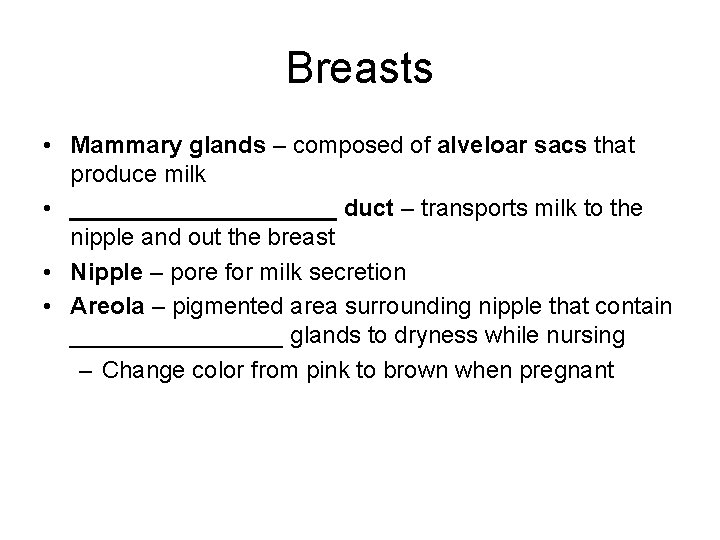
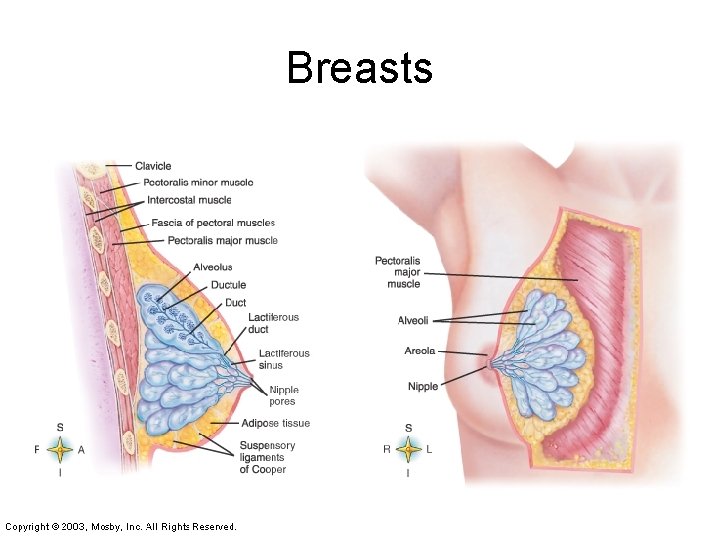
Breasts • Mammary glands – composed of alveloar sacs that produce milk • __________ duct – transports milk to the nipple and out the breast • Nipple – pore for milk secretion • Areola – pigmented area surrounding nipple that contain ________ glands to dryness while nursing – Change color from pink to brown when pregnant
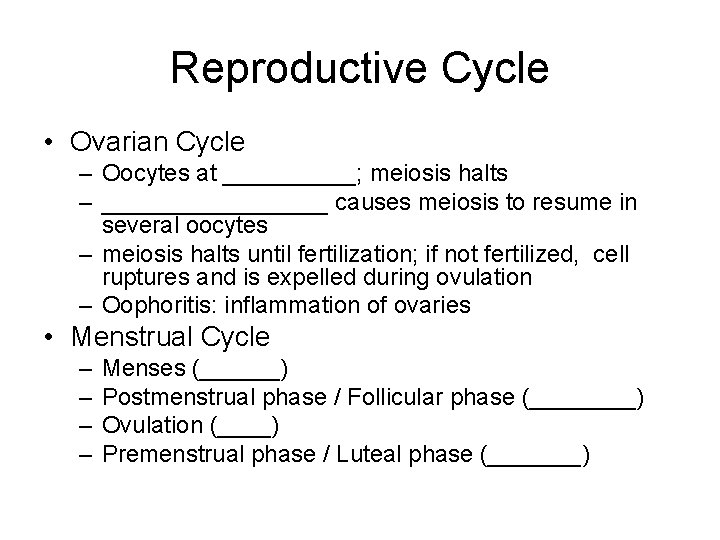
Reproductive Cycle • Ovarian Cycle – Oocytes at _____; meiosis halts – _________ causes meiosis to resume in several oocytes – meiosis halts until fertilization; if not fertilized, cell ruptures and is expelled during ovulation – Oophoritis: inflammation of ovaries • Menstrual Cycle – – Menses (______) Postmenstrual phase / Follicular phase (____) Ovulation (____) Premenstrual phase / Luteal phase (_______)

Menses • • • days 1 -5 of a new cycle endometrial lining sloughs off _____ – first menstrual flow _____ – lack of menstrual flow Endometriosis – lining of uterus grows outside of uterus
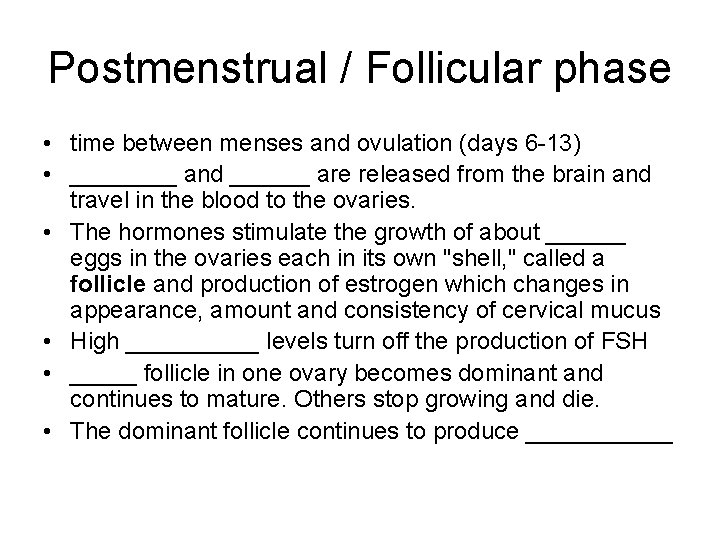
Postmenstrual / Follicular phase • time between menses and ovulation (days 6 -13) • ____ and ______ are released from the brain and travel in the blood to the ovaries. • The hormones stimulate the growth of about ______ eggs in the ovaries each in its own "shell, " called a follicle and production of estrogen which changes in appearance, amount and consistency of cervical mucus • High _____ levels turn off the production of FSH • _____ follicle in one ovary becomes dominant and continues to mature. Others stop growing and die. • The dominant follicle continues to produce ______

Ovulation • day 14; mature follicle ruptures and expels ovum into pelvic cavity • The rise in estrogen from the dominant follicle increases the amount of ____ (responsible for ovulation) • Dominant follicle releases its egg from the ovary (________) • Egg is captured by finger-like projections on the end of the fallopian tubes (fimbriae) which sweep the egg into the tube.
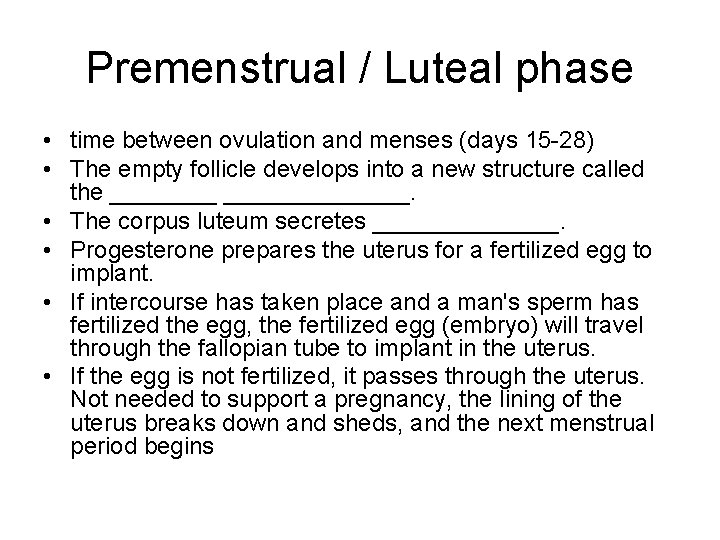
Premenstrual / Luteal phase • time between ovulation and menses (days 15 -28) • The empty follicle develops into a new structure called the ______________. • The corpus luteum secretes _______. • Progesterone prepares the uterus for a fertilized egg to implant. • If intercourse has taken place and a man's sperm has fertilized the egg, the fertilized egg (embryo) will travel through the fallopian tube to implant in the uterus. • If the egg is not fertilized, it passes through the uterus. Not needed to support a pregnancy, the lining of the uterus breaks down and sheds, and the next menstrual period begins
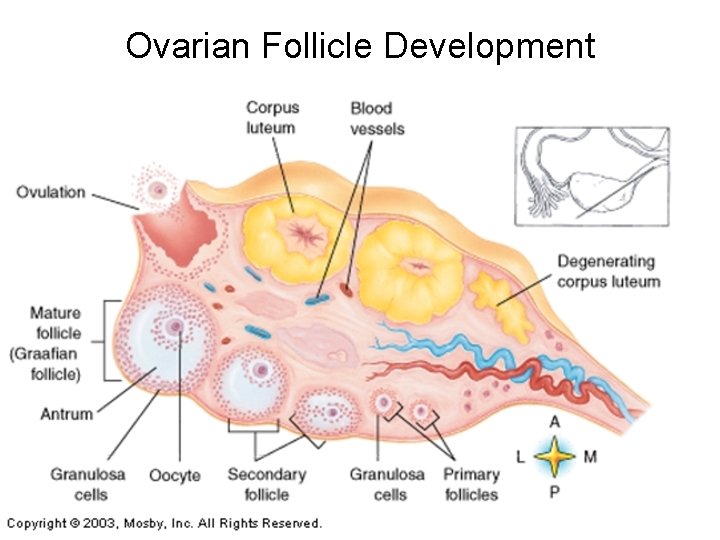
Ovarian Follicle Development
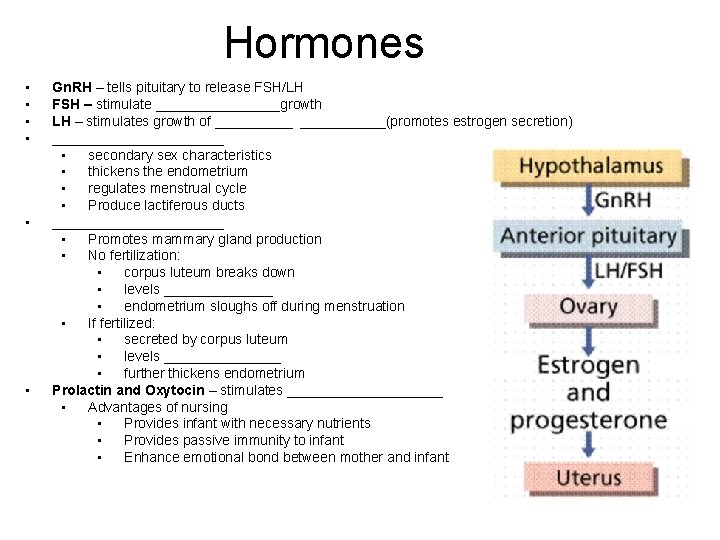
Hormones • • • Gn. RH – tells pituitary to release FSH/LH FSH – stimulate ________growth LH – stimulates growth of ___________(promotes estrogen secretion) ___________ • secondary sex characteristics • thickens the endometrium • regulates menstrual cycle • Produce lactiferous ducts ___________ • Promotes mammary gland production • No fertilization: • corpus luteum breaks down • levels _______ • endometrium sloughs off during menstruation • If fertilized: • secreted by corpus luteum • levels ________ • further thickens endometrium Prolactin and Oxytocin – stimulates __________ • Advantages of nursing • Provides infant with necessary nutrients • Provides passive immunity to infant • Enhance emotional bond between mother and infant
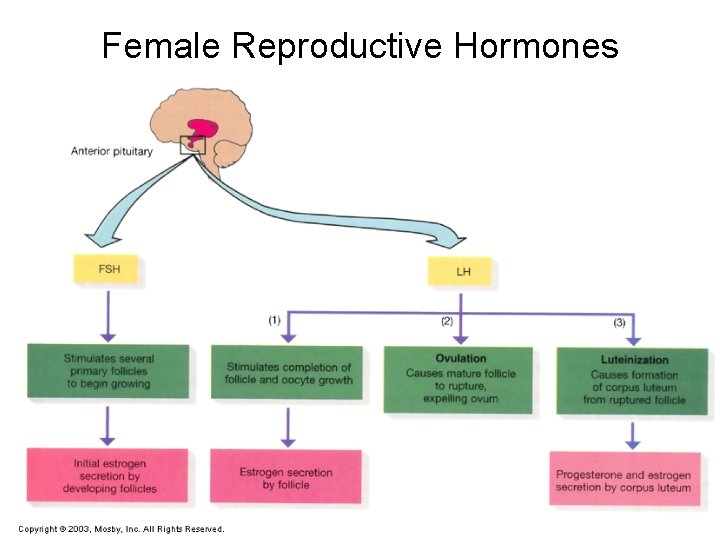
Female Reproductive Hormones
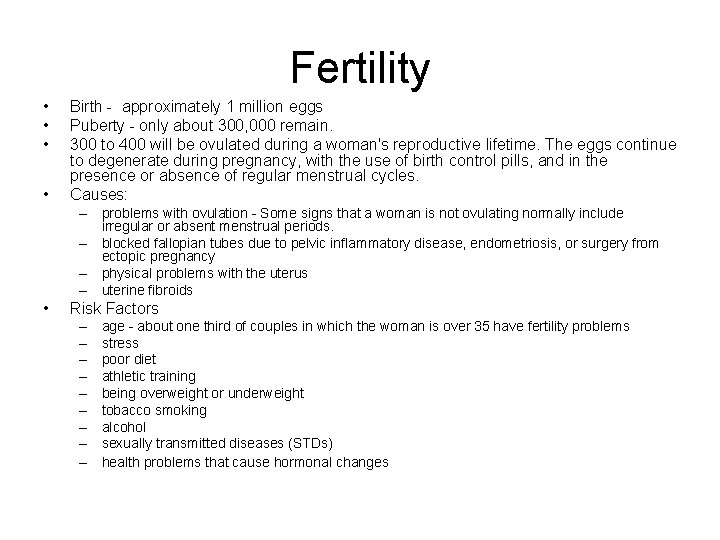
Fertility • • Birth - approximately 1 million eggs Puberty - only about 300, 000 remain. 300 to 400 will be ovulated during a woman's reproductive lifetime. The eggs continue to degenerate during pregnancy, with the use of birth control pills, and in the presence or absence of regular menstrual cycles. Causes: – problems with ovulation - Some signs that a woman is not ovulating normally include irregular or absent menstrual periods. – blocked fallopian tubes due to pelvic inflammatory disease, endometriosis, or surgery from ectopic pregnancy – physical problems with the uterus – uterine fibroids • Risk Factors – – – – – age - about one third of couples in which the woman is over 35 have fertility problems stress poor diet athletic training being overweight or underweight tobacco smoking alcohol sexually transmitted diseases (STDs) health problems that cause hormonal changes
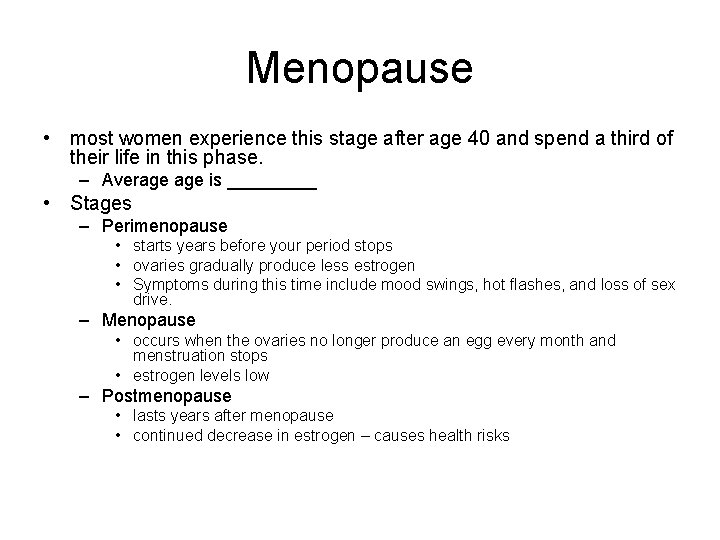
Menopause • most women experience this stage after age 40 and spend a third of their life in this phase. – Average is _____ • Stages – Perimenopause • starts years before your period stops • ovaries gradually produce less estrogen • Symptoms during this time include mood swings, hot flashes, and loss of sex drive. – Menopause • occurs when the ovaries no longer produce an egg every month and menstruation stops • estrogen levels low – Postmenopause • lasts years after menopause • continued decrease in estrogen – causes health risks
- Slides: 18