
FEMALE REPRODUCTION SYSTEM ANATOMY OF THE FEMALE REPRODUCTIVE
- Slides: 21
FEMALE REPRODUCTION SYSTEM
ANATOMY OF THE FEMALE REPRODUCTIVE SYSTEM �Ovaries �Primary reproductive organs of a female �Size and shape of an almond �Internal
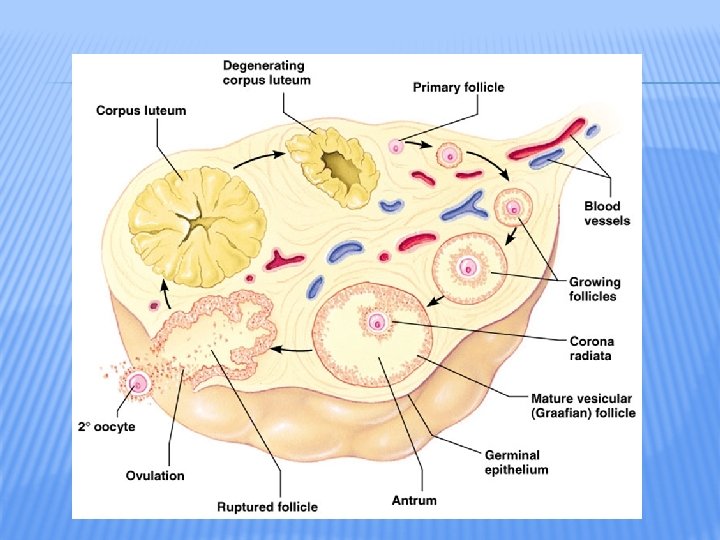
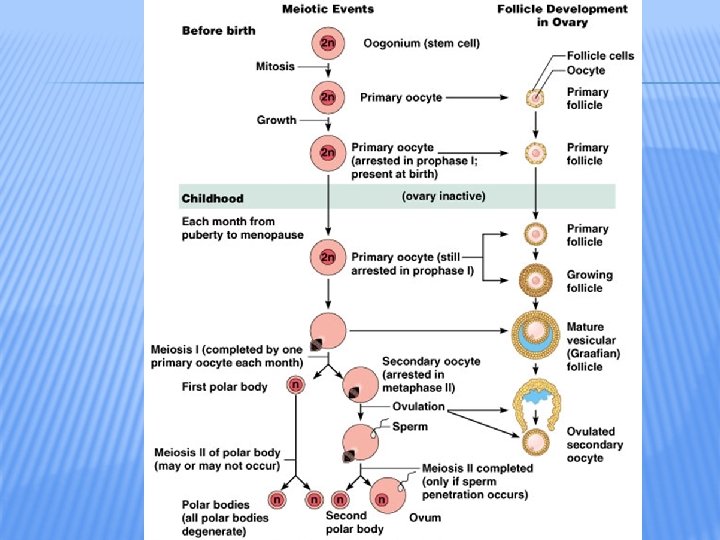
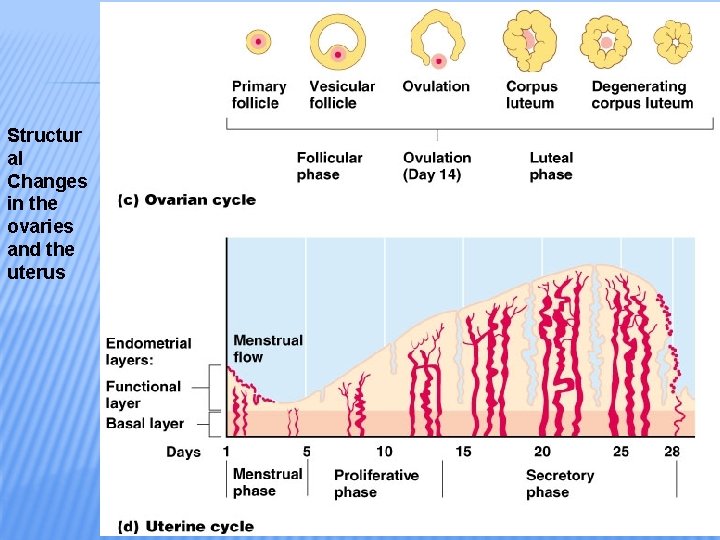
Ovarian Follicles � Tiny saclike structures � Each follicle consists of an immature egg called an oocyte. Surrounded by one or more layers of follicle cells. A follicle matures, enlarges and develops a fluidfilled center call an Antrum. At this stage the follicle is called: Vesicular or Graafian Follicle Mature and egg is ready to be ejected This event is called ovulation �Follicle is transformed into corpus luteum which degenerates
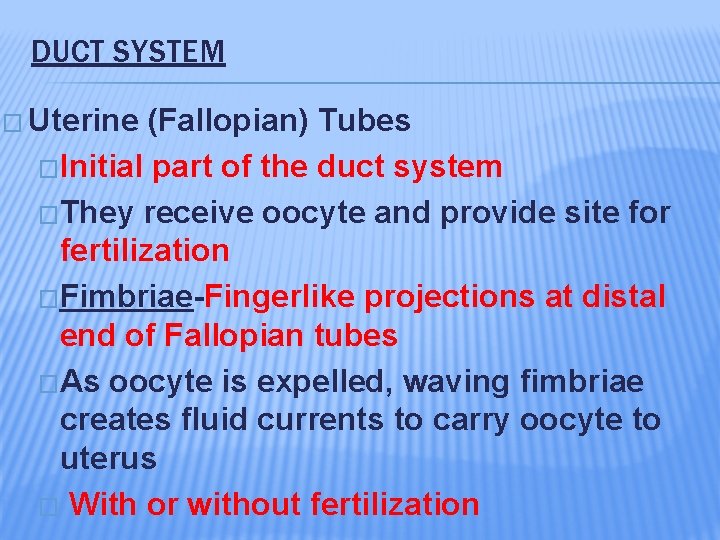
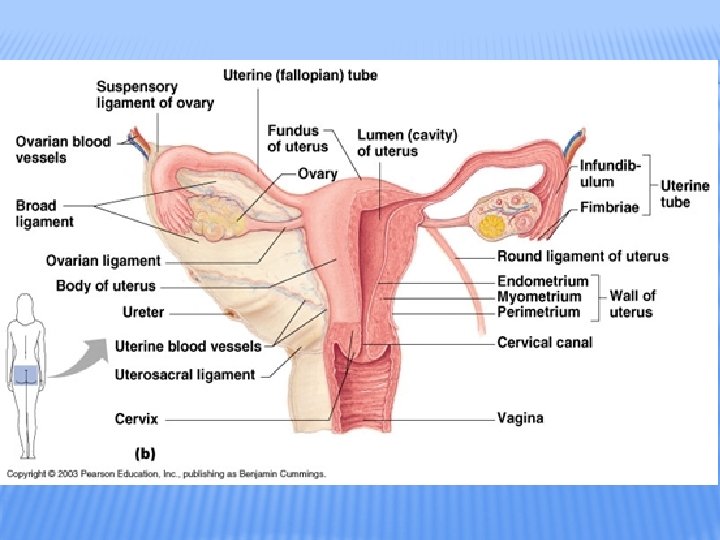
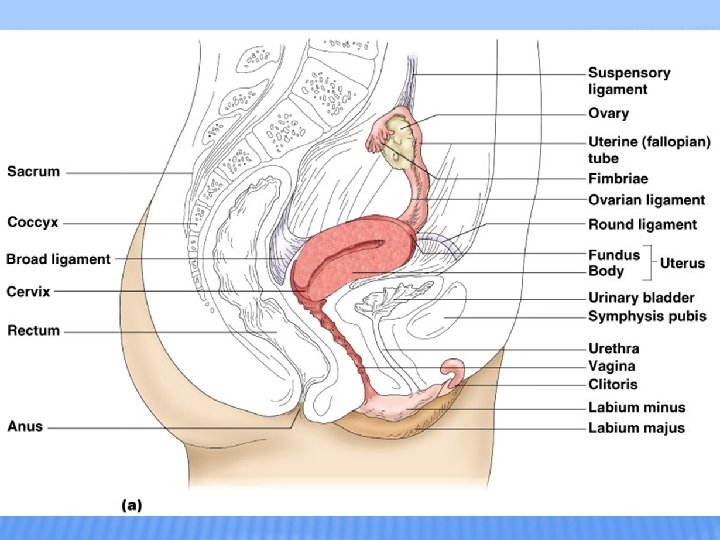
DUCT SYSTEM � Uterine (Fallopian) Tubes �Initial part of the duct system �They receive oocyte and provide site for fertilization �Fimbriae-Fingerlike projections at distal end of Fallopian tubes �As oocyte is expelled, waving fimbriae creates fluid currents to carry oocyte to uterus � With or without fertilization
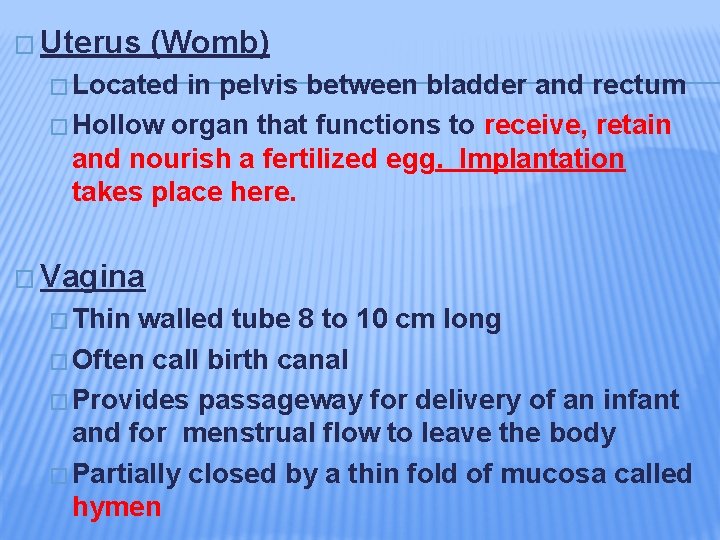
� Uterus (Womb) � Located in pelvis between bladder and rectum � Hollow organ that functions to receive, retain and nourish a fertilized egg. Implantation takes place here. � Vagina � Thin walled tube 8 to 10 cm long � Often call birth canal � Provides passageway for delivery of an infant and for menstrual flow to leave the body � Partially closed by a thin fold of mucosa called hymen
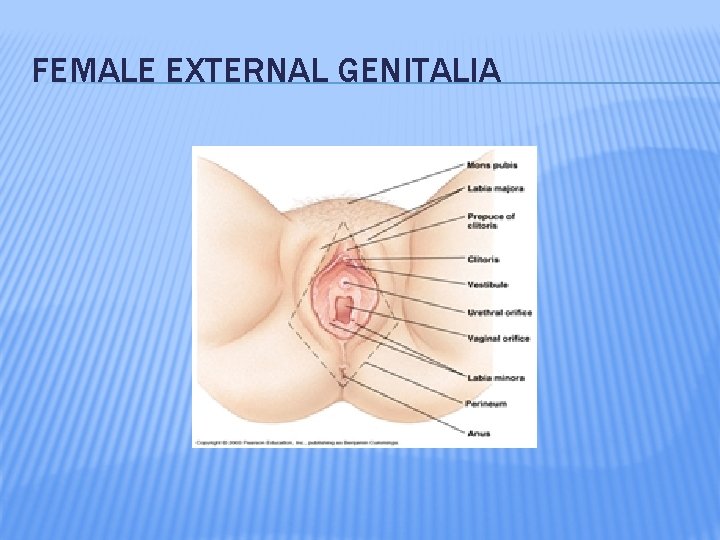
FEMALE EXTERNAL GENITALIA
EXTERNAL GENITALIA – VULVA � Mons Pubis � Fatty rounded area � After puberty – covered with pubic hair � Labia Majora � Two elongated hair-covered skin folds � enclose the Labia Minora � Delicate hair free folds
� Vestibule � Contains � Greater external openings of the urethra Vestibular Glands � Flank vagina on each side � Lubricates vagina during intercourse � Clitoris � Small protruding structure that corresponds to the male penis � Composed of sensitive erectile tissue that becomes swollen with blood during sexual excitement �
FEMALE REPRODUCTIVE FUNCTIONS AND CYCLES Oogenesis & Ovarian Cycle �Total supply of eggs a female can release is already determined by the time she is born. �Female’s lifetime supply of primary oocytes are in place in ovarian follicle (2 million)
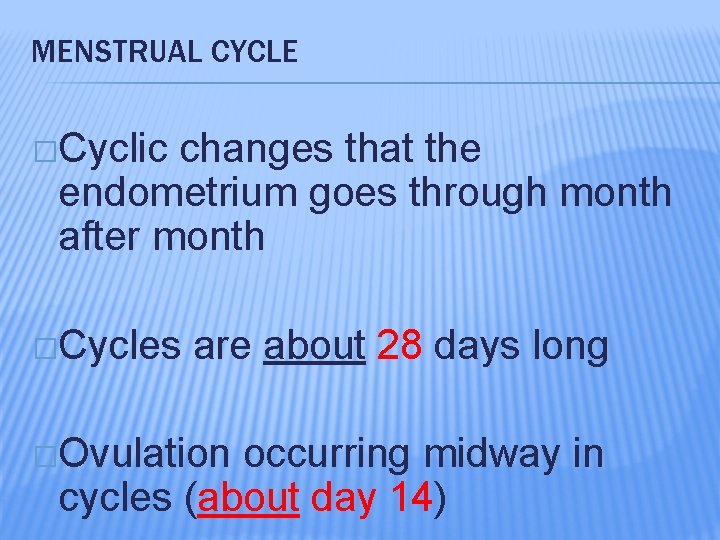
MENSTRUAL CYCLE �Cyclic changes that the endometrium goes through month after month �Cycles are about 28 days long �Ovulation occurring midway in cycles (about day 14)
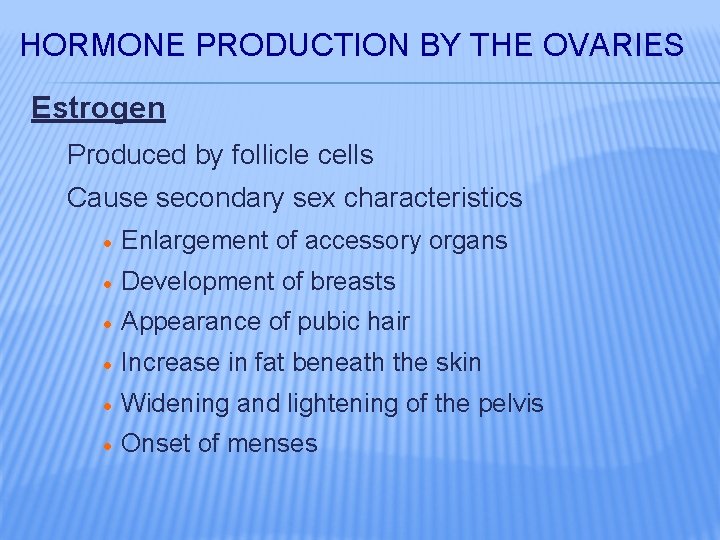
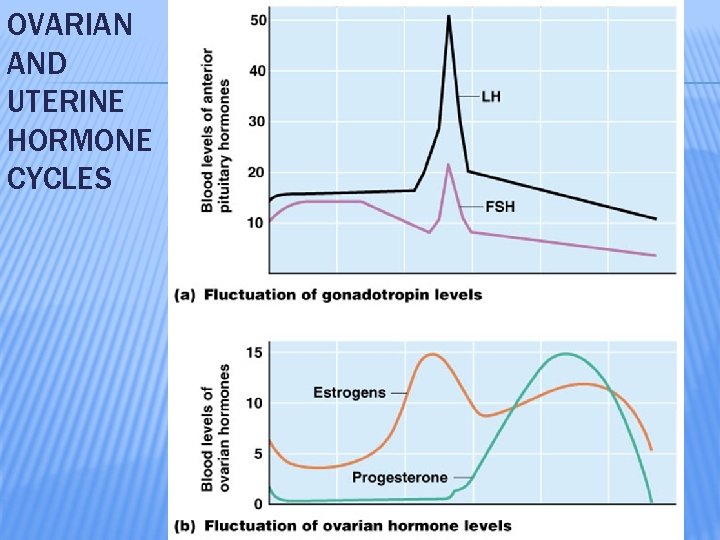
HORMONE PRODUCTION BY THE OVARIES Estrogen Produced by follicle cells Cause secondary sex characteristics · Enlargement of accessory organs · Development of breasts · Appearance of pubic hair · Increase in fat beneath the skin · Widening and lightening of the pelvis · Onset of menses
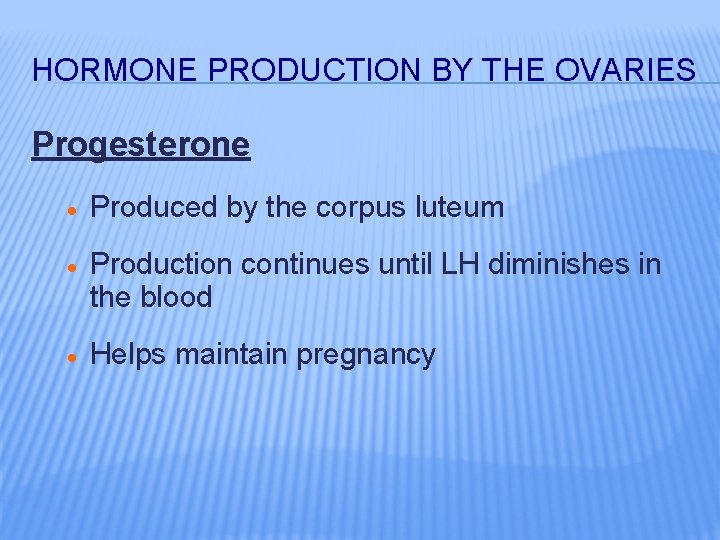
HORMONE PRODUCTION BY THE OVARIES Progesterone · Produced by the corpus luteum · Production continues until LH diminishes in the blood · Helps maintain pregnancy
OVARIAN AND UTERINE HORMONE CYCLES
Structur al Changes in the ovaries and the uterus
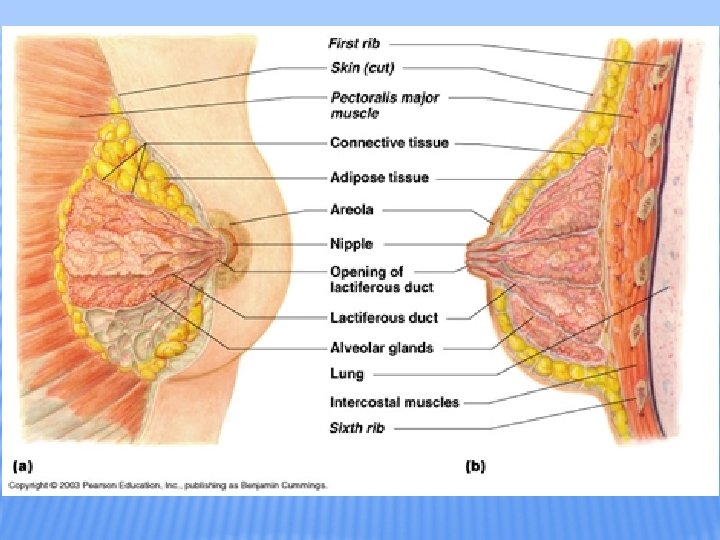
MAMMARY GLANDS � Both sexes, but normally function only in females � Biological role � Produce milk to nourish a newborn � The mammary glands are contained within a rounded skin-covered breast
Areola � Pigmented center of breast � Surrounds a central protruding nipple Internal: �Consists of 15 to 25 lobes which radiate around the nipple �Padded & separate from each other by connective tissue and fat �Lobules – smaller chambers �Contains clusters of Alveolar Glands �These produce milk when the woman is lactating