
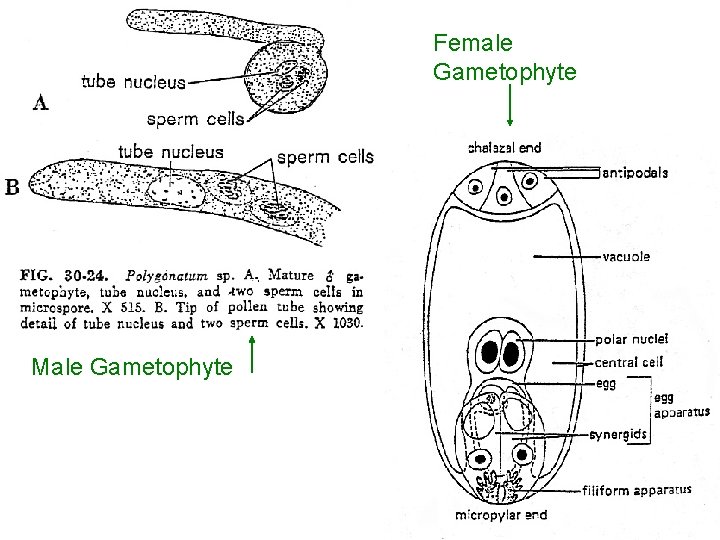
Female Gametophyte Male Gametophyte Ovary and 5 stigma


- Slides: 24
Female Gametophyte Male Gametophyte
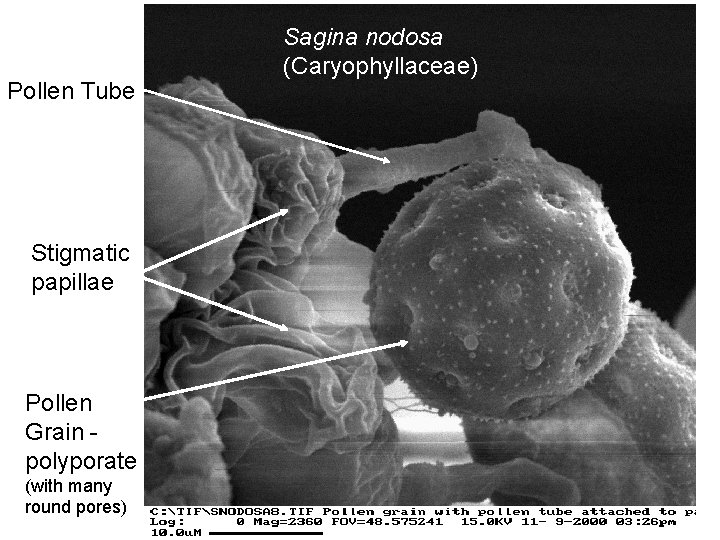
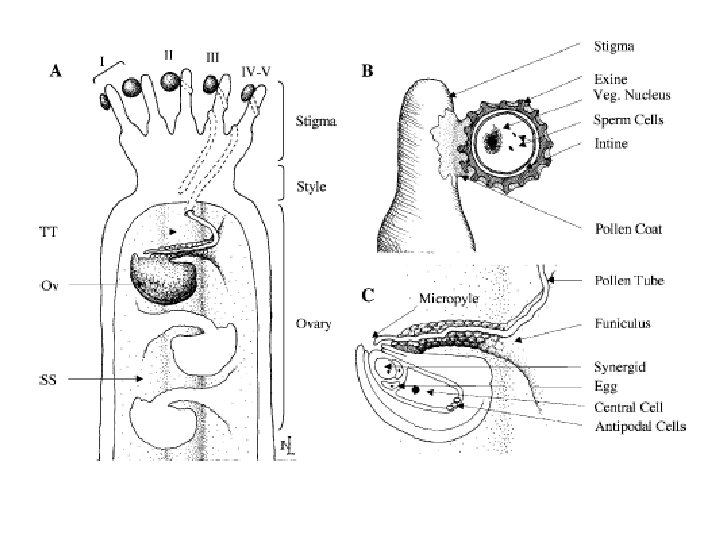
Ovary and 5 stigma lobes of Sagina nodosa (Knotted Pearlwort, Caryophyllaceae). Note stigmatic papillae.
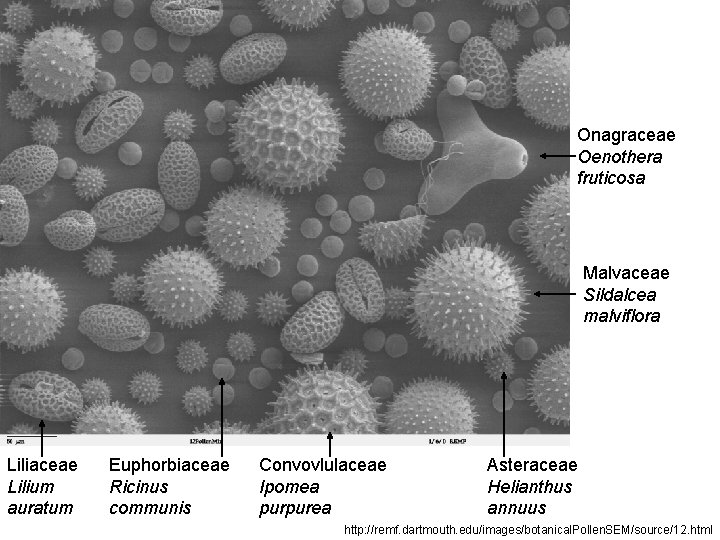
Onagraceae Oenothera fruticosa Malvaceae Sildalcea malviflora Liliaceae Lilium auratum Euphorbiaceae Ricinus communis Convovlulaceae Ipomea purpurea Asteraceae Helianthus annuus http: //remf. dartmouth. edu/images/botanical. Pollen. SEM/source/12. html
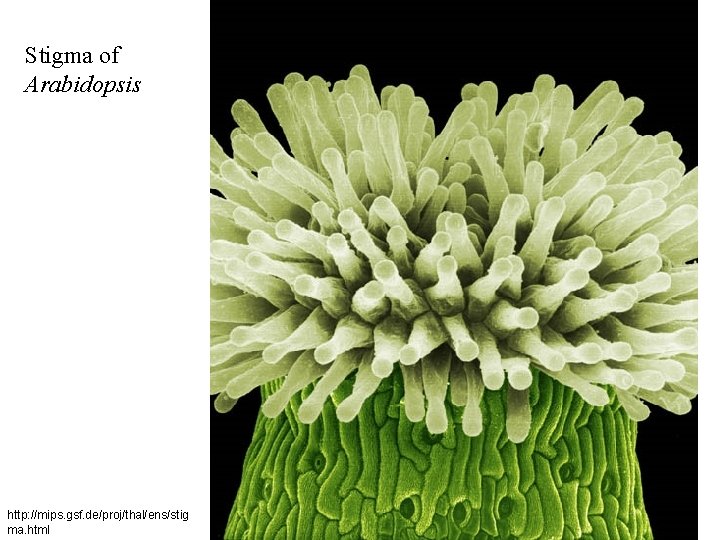
Stigma of Arabidopsis http: //mips. gsf. de/proj/thal/ens/stig ma. html
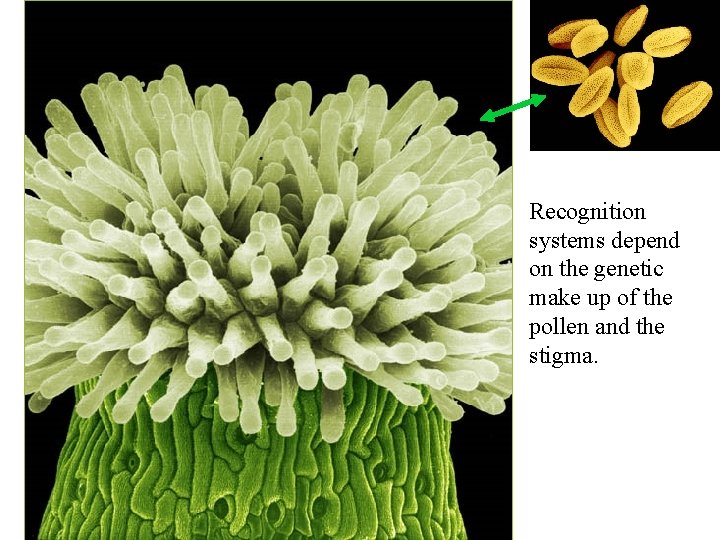
Recognition systems depend on the genetic make up of the pollen and the stigma.
Gametophytic Incompatibility
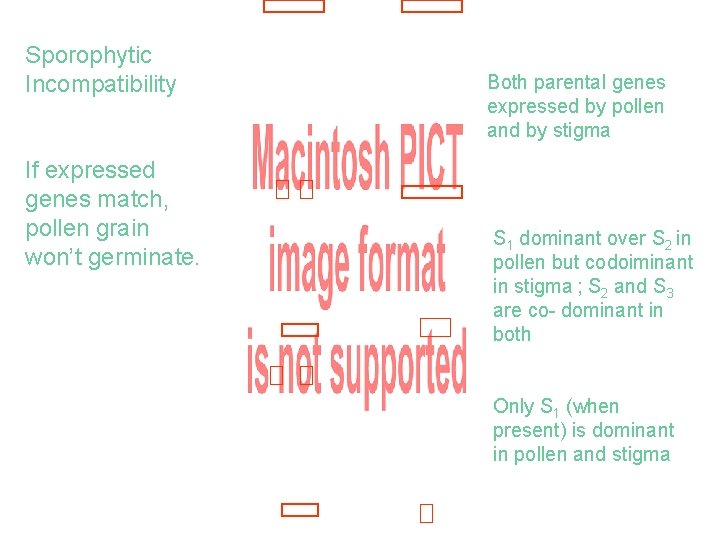
Sporophytic Incompatibility If expressed genes match, pollen grain won’t germinate. Both parental genes expressed by pollen and by stigma S 1 dominant over S 2 in pollen but codoiminant in stigma ; S 2 and S 3 are co- dominant in both Only S 1 (when present) is dominant in pollen and stigma
Pollen Tube Stigmatic papillae Pollen Grain polyporate (with many round pores) Sagina nodosa (Caryophyllaceae)
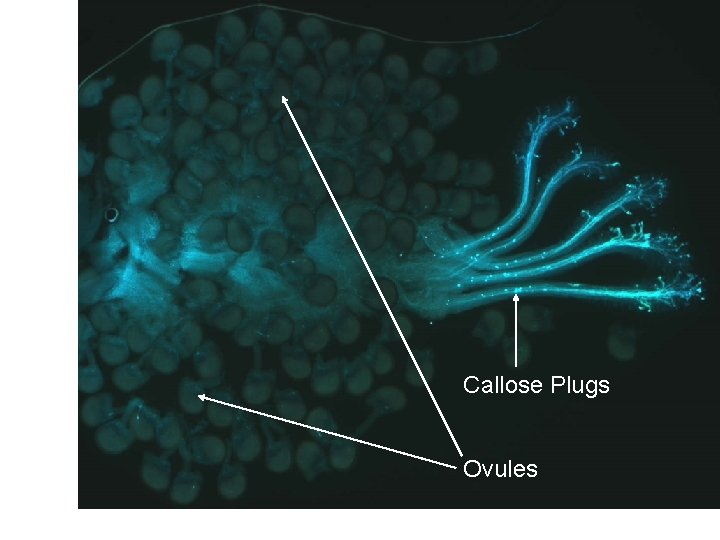
Callose Plugs Ovules
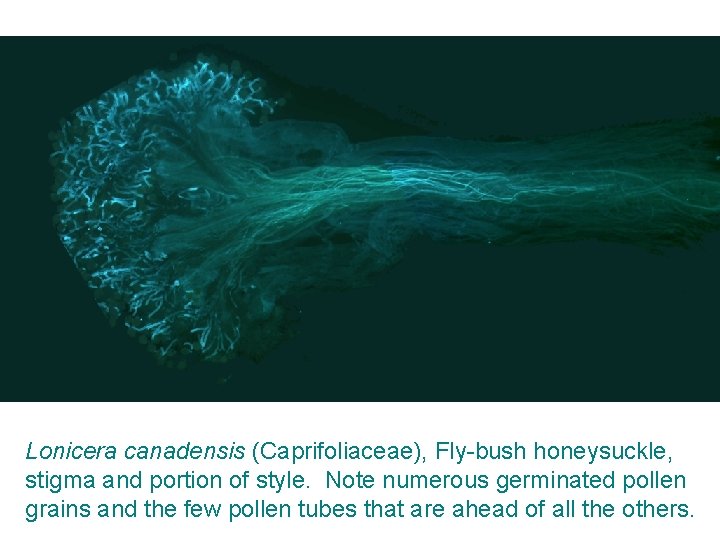
Lonicera canadensis (Caprifoliaceae), Fly-bush honeysuckle, stigma and portion of style. Note numerous germinated pollen grains and the few pollen tubes that are ahead of all the others.
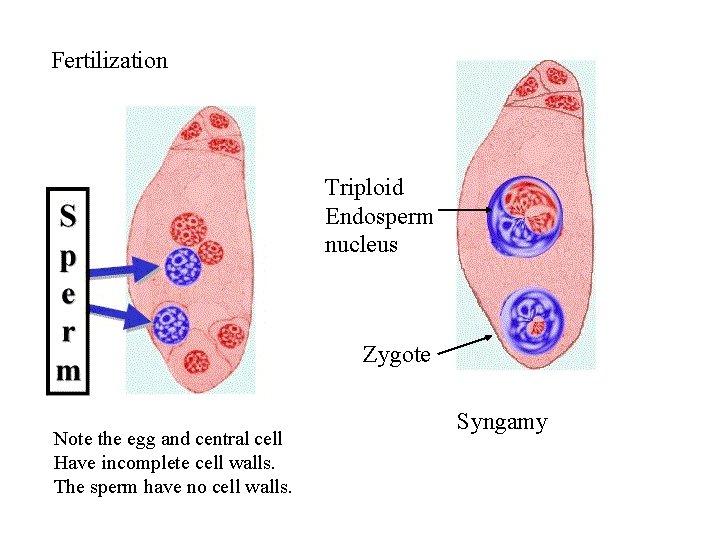
Fertilization Triploid Endosperm nucleus Zygote Note the egg and central cell Have incomplete cell walls. The sperm have no cell walls. Syngamy
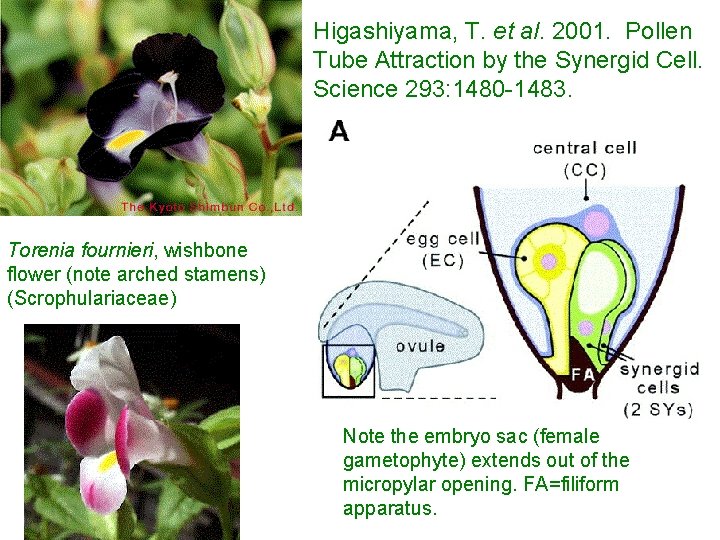
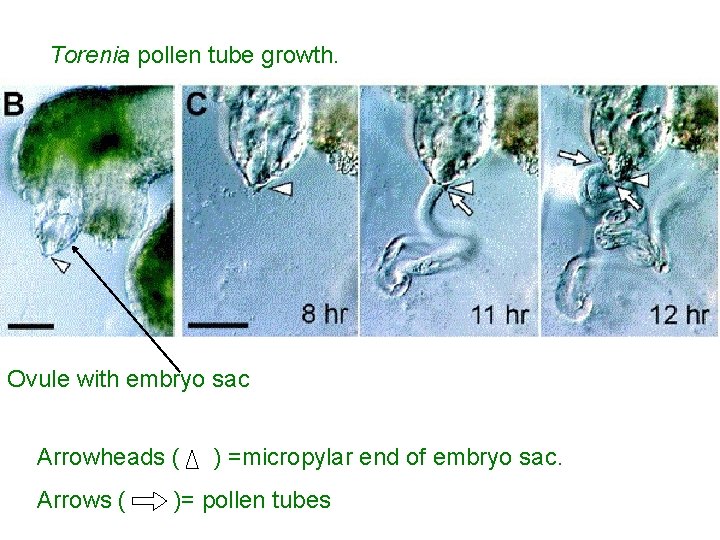
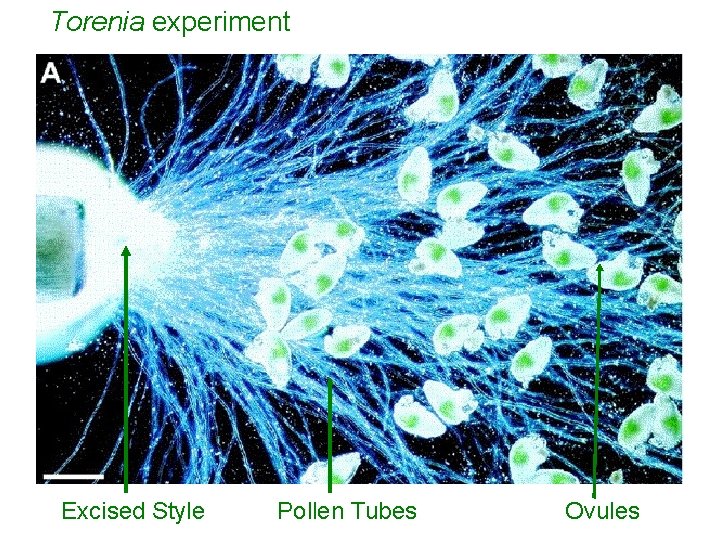
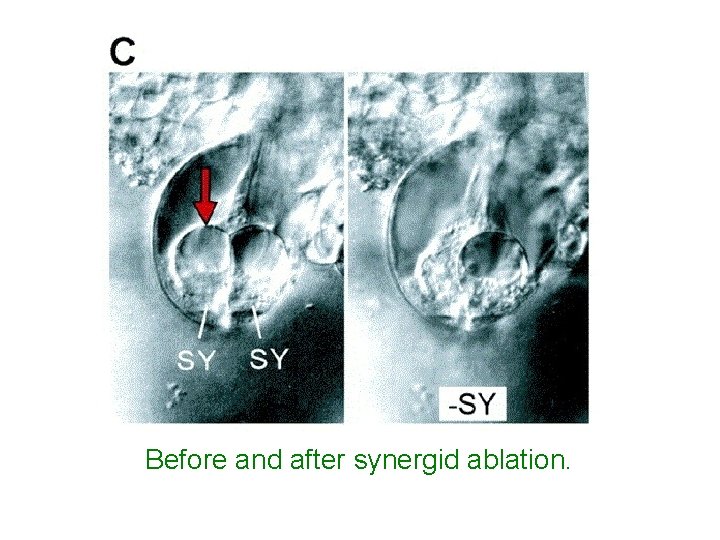
Higashiyama, T. et al. 2001. Pollen Tube Attraction by the Synergid Cell. Science 293: 1480 -1483. Torenia fournieri, wishbone flower (note arched stamens) (Scrophulariaceae) Note the embryo sac (female gametophyte) extends out of the micropylar opening. FA=filiform apparatus.
Torenia pollen tube growth. Ovule with embryo sac Arrowheads ( Arrows ( ) =micropylar end of embryo sac. )= pollen tubes
Torenia experiment Excised Style Pollen Tubes Ovules
Before and after synergid ablation.
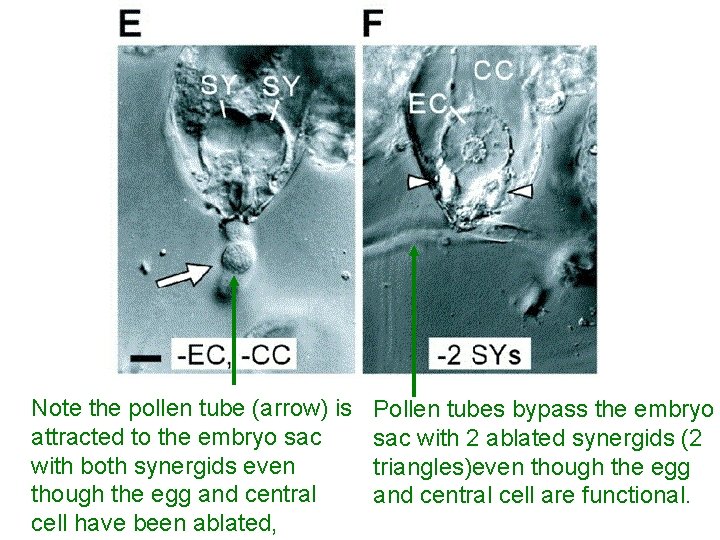
Note the pollen tube (arrow) is attracted to the embryo sac with both synergids even though the egg and central cell have been ablated, Pollen tubes bypass the embryo sac with 2 ablated synergids (2 triangles)even though the egg and central cell are functional.
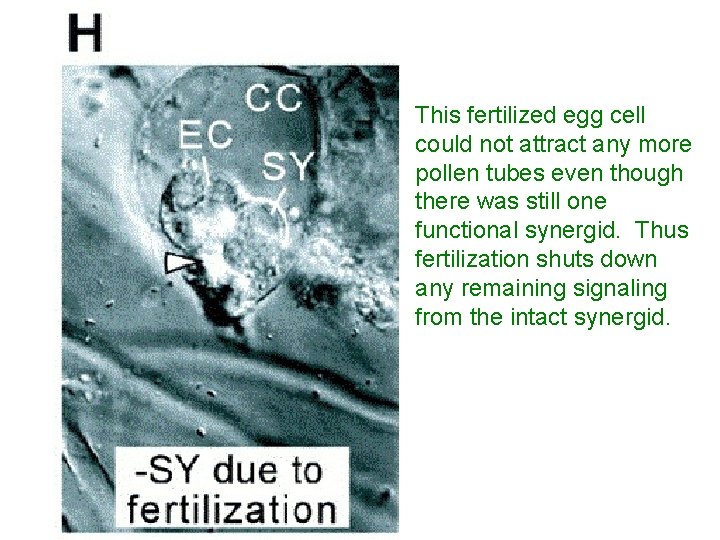
This fertilized egg cell could not attract any more pollen tubes even though there was still one functional synergid. Thus fertilization shuts down any remaining signaling from the intact synergid.
Williams & Friedman’s (2002) article on the diploid endosperm made the cover of Nature.
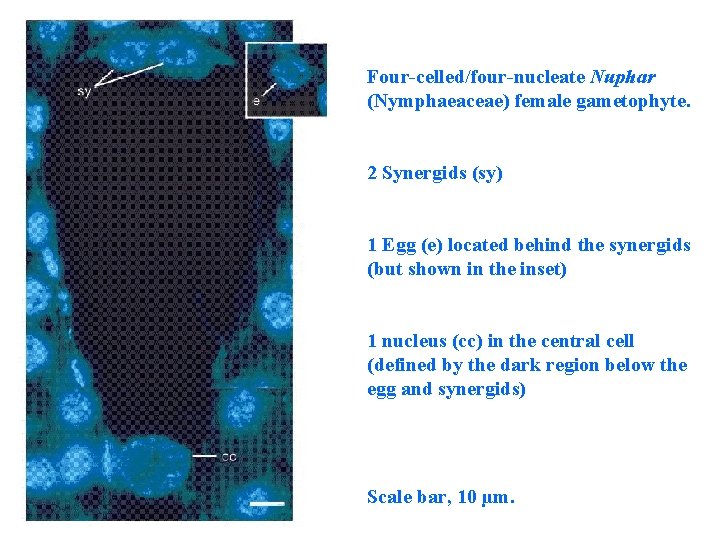
Four-celled/four-nucleate Nuphar (Nymphaeaceae) female gametophyte. 2 Synergids (sy) 1 Egg (e) located behind the synergids (but shown in the inset) 1 nucleus (cc) in the central cell (defined by the dark region below the egg and synergids) Scale bar, 10 µm.
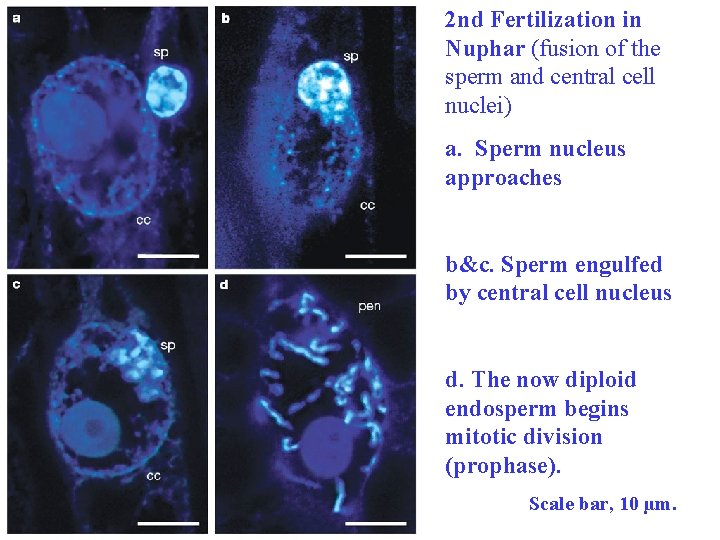
2 nd Fertilization in Nuphar (fusion of the sperm and central cell nuclei) a. Sperm nucleus approaches b&c. Sperm engulfed by central cell nucleus d. The now diploid endosperm begins mitotic division (prophase). Scale bar, 10 µm.
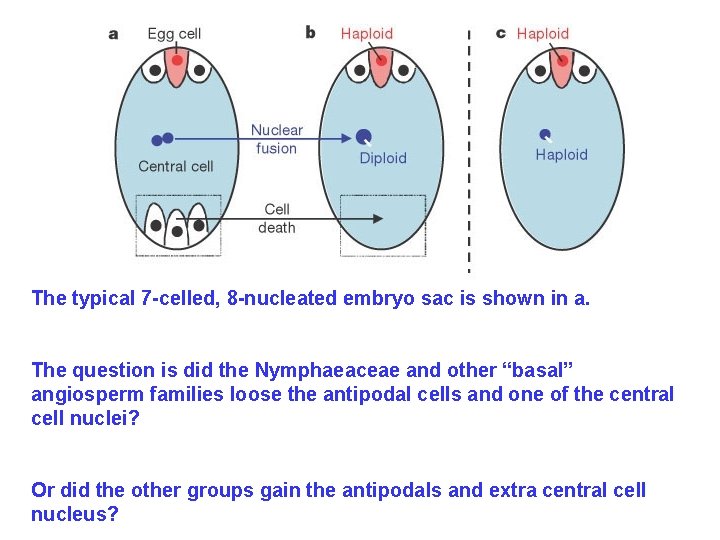
The typical 7 -celled, 8 -nucleated embryo sac is shown in a. The question is did the Nymphaeaceae and other “basal” angiosperm families loose the antipodal cells and one of the central cell nuclei? Or did the other groups gain the antipodals and extra central cell nucleus?
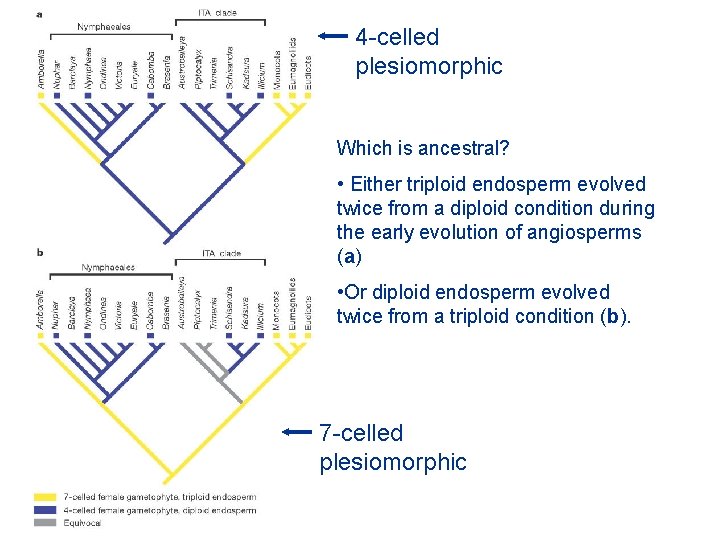
4 -celled plesiomorphic Which is ancestral? • Either triploid endosperm evolved twice from a diploid condition during the early evolution of angiosperms (a) • Or diploid endosperm evolved twice from a triploid condition (b). 7 -celled plesiomorphic