
Feline Nematode infection Routine Annual Health Visit History
- Slides: 11
Feline Nematode infection Routine Annual Health Visit
History and Signalment • Millie is a 4 year old, FS, Domestic Shorthair cat that lives indoors in an apartment building (21 st floor) in center city Philadelphia. She came in today for her annual check-up (her third since she became a patient at this clinic). • She is not displaying any clinical signs and her previous 2 annual exams both were unremarkable (no problems). • She is not on any medications. • She eats a mixture of commercial canned and dry cat food. No human food. • No other pets in the apartment.
• • • Physical Exam Weight 4. 5 kg Temperature: 101 F Heart: rate 180, no murmurs detected Respiration: 24 Body Condition: 6/9 Skin and hair: excellent (Flea combing found no evidence of fleas) Ears: clean Eyes: no problems Mouth: Normal, no gingivitis or tarter. Fecal exam: Stool formed. Saturated salt centrifugational flotation showed several similar looking parasite eggs.
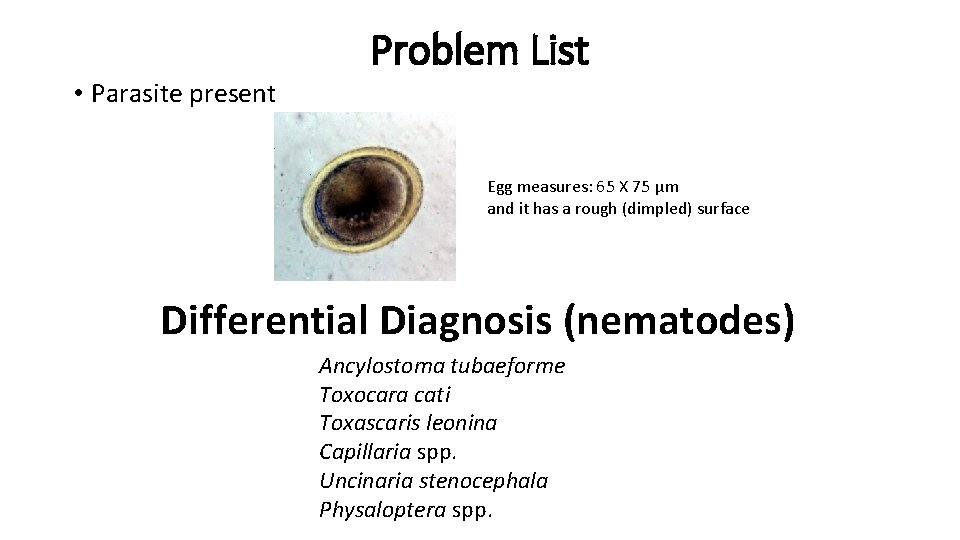
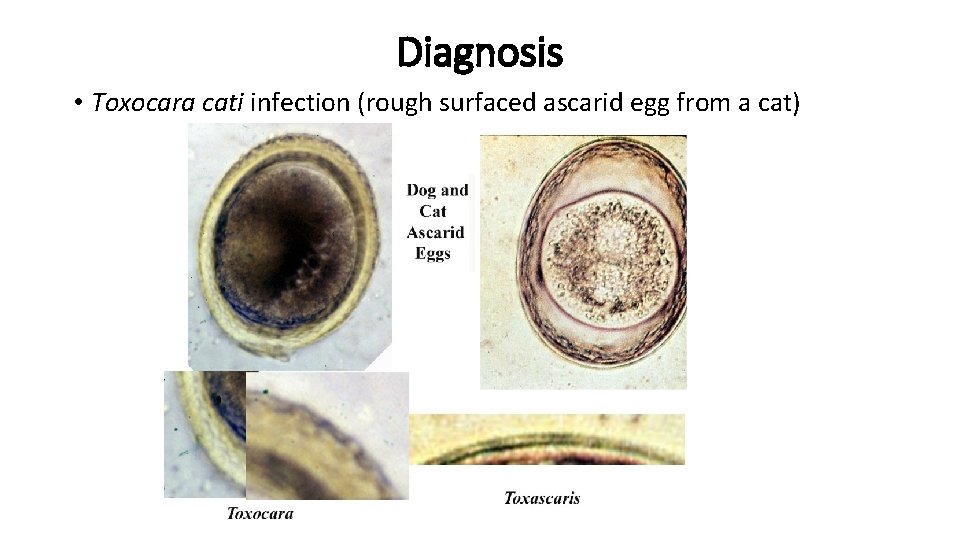
• Parasite present Problem List Egg measures: 65 X 75 μm and it has a rough (dimpled) surface Differential Diagnosis (nematodes) Ancylostoma tubaeforme Toxocara cati Toxascaris leonina Capillaria spp. Uncinaria stenocephala Physaloptera spp.
Diagnosis • Toxocara cati infection (rough surfaced ascarid egg from a cat)
Treatment Plan • Treat Toxocara cati infection with FDA approved drug. • Suggest to the owner that since we do not know how Millie became infected it would be best to put her on a monthly parasite prevention program (one that would also take care of fleas and heartworms).
Follow-up • If the owner chooses a monthly parasite prevention program, no follow-up is needed until Millie’s next scheduled check-up. (Make sure the owner leaves the clinic with the preventative and knows how to use it. ) • If the owner declines a monthly prevention program, request a fresh fecal sample be submitted 1 to 2 weeks after the last dose of anthelmintic in order to make sure the infection was completely cleared.
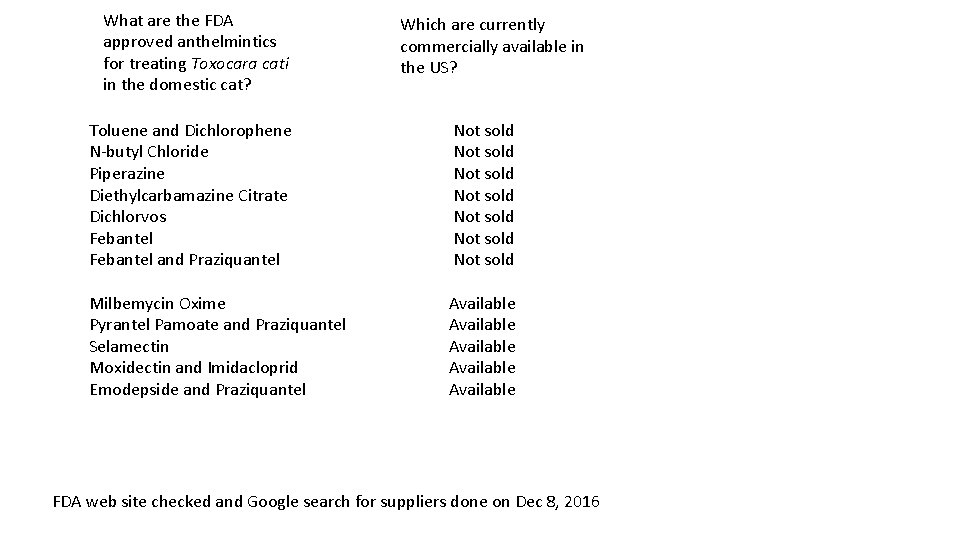
Test Your Knowledge • What are the FDA approved anthelmintics for treating Toxocara cati in the domestic cat? Which are currently commercially available in the US? • How might Millie have been infected?
What are the FDA approved anthelmintics for treating Toxocara cati in the domestic cat? Which are currently commercially available in the US? Toluene and Dichlorophene N-butyl Chloride Piperazine Diethylcarbamazine Citrate Dichlorvos Febantel and Praziquantel Not sold Not sold Milbemycin Oxime Pyrantel Pamoate and Praziquantel Selamectin Moxidectin and Imidacloprid Emodepside and Praziquantel Available Available FDA web site checked and Google search for suppliers done on Dec 8, 2016
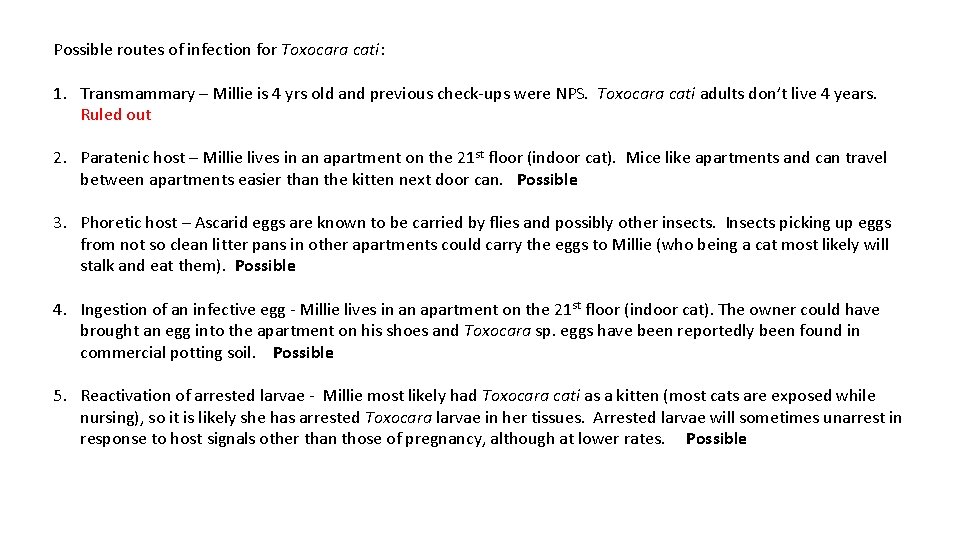
Possible routes of infection for Toxocara cati: 1. Transmammary – Millie is 4 yrs old and previous check-ups were NPS. Toxocara cati adults don’t live 4 years. Ruled out 2. Paratenic host – Millie lives in an apartment on the 21 st floor (indoor cat). Mice like apartments and can travel between apartments easier than the kitten next door can. Possible 3. Phoretic host – Ascarid eggs are known to be carried by flies and possibly other insects. Insects picking up eggs from not so clean litter pans in other apartments could carry the eggs to Millie (who being a cat most likely will stalk and eat them). Possible 4. Ingestion of an infective egg - Millie lives in an apartment on the 21 st floor (indoor cat). The owner could have brought an egg into the apartment on his shoes and Toxocara sp. eggs have been reportedly been found in commercial potting soil. Possible 5. Reactivation of arrested larvae - Millie most likely had Toxocara cati as a kitten (most cats are exposed while nursing), so it is likely she has arrested Toxocara larvae in her tissues. Arrested larvae will sometimes unarrest in response to host signals other than those of pregnancy, although at lower rates. Possible
Case Authors University of Pennsylvania School of Veterinary Medicine Thomas J. Nolan parasite@vet. upenn. edu Grace Anne Mengel