
Feline Immunodeficiency Virus Cause Feline Immunodeficiency Virus FIV
- Slides: 16
Feline Immunodeficiency Virus
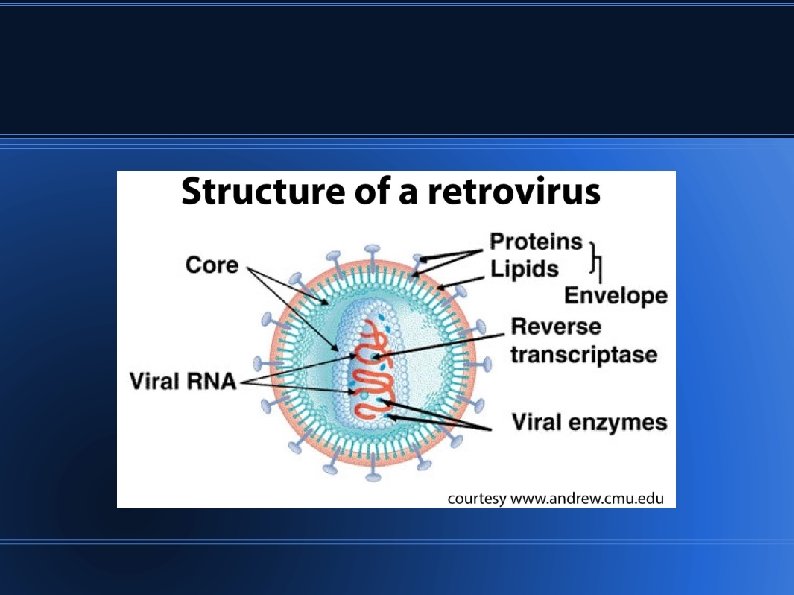
Cause Feline Immunodeficiency Virus (FIV) is caused by a retrovirus belonging to the lentivirus family.
History of FIV was first discovered 1986 in a California cattery where some cats appeared to have an illness similar to AIDS in people.
Singnalment Male cats are twice as likely as female cats to contact FIV. The average of infected cats is 3 -5 years old. In the United States, 1. 5 -3% of the cat population is infected with FIV.
Transmission Transmission usually occurs by fighting and bite wounds. Neonatal kittens may become infected by contact with infected queens. Unlike is humans, sexual contact is not a major means of transmission among cats.
Pathogenesis Following initial infection, FIV is carried to regional lymph nodes. The virus infects T lymphocytes, then is carried to the other lymph nodes in the body. Once the virus spreads to other lymph nodes it begins to target the macrophages.
Clinical Signs Enlarged lymph nodes Fever Anemia Weight loss Poor Appetite Diarrhea Wounds that don't heal.
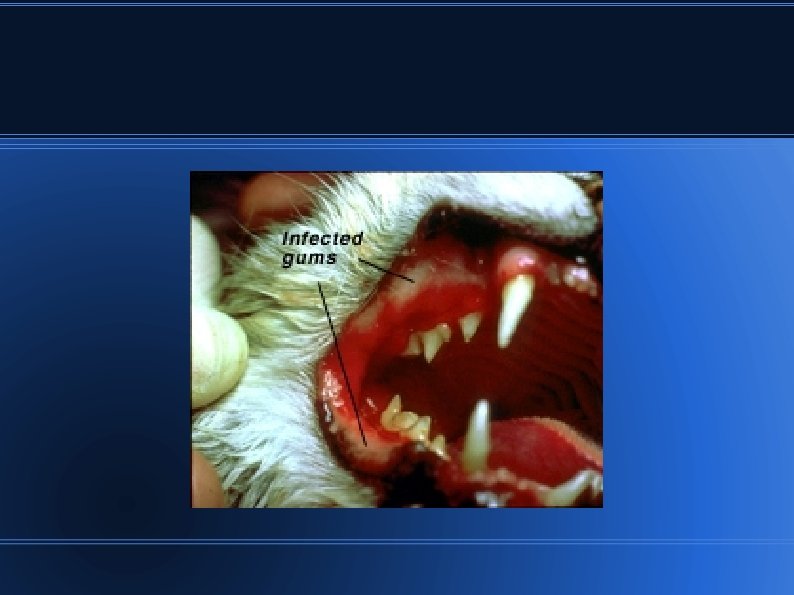
Clinical Signs (cont) Unresponsive infections (gingivitis, stomatitis, skin, ear, and/or respiratory tract infections). Chronic fever and cachexia are also common findings.
Diagnostic Tests Enzyme-linked immunosorbent assay (ELISA) blood test is the most common. ELISA detects antibodies to HIV in the blood. If antibodies are detected, more laboratory tests, such as IFA assays and Western blot tests are done to confirm the positive findings.
Treatment There is no known cure. Drug therapy may alleviate secondary symptoms.
Prognosis Not an automatic death sentence. Cats infected with FIV can live many months or even years with the proper secondary treatments. Death is usually caused by the secondary infections that come from the immune system being compromised by FIV.
Prevention There is no vaccine for FIV. Indoor cats have less chance of contacting FIV. Cats that are aggressive to other cats should be isolated from other cats.
Client Education Make sure the client knows there is no sure vaccine for FIV. Early detection gives the cat the highest survival rates. Early detection will help prevent the cat from spreading FIV to other cats.
References http: //www. vet. cornell. edu/fhc/brochures/fiv. html http: //www. winnfelinehealth. org/pages/FIV_web. pdf http: //cats. about. com/cs/healthissues/a/fiv_in_c ats. htm http: //www. cat-world. com. au/felineimmunodeficiency-virus