
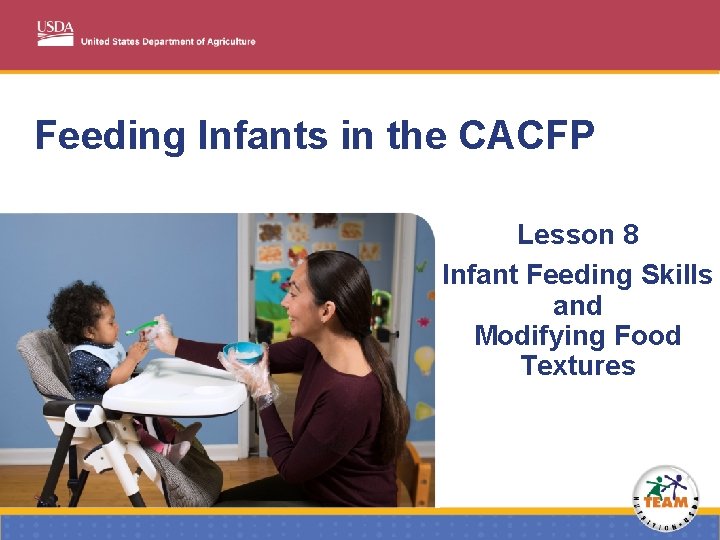
Feeding Infants in the CACFP Lesson 8 Infant
- Slides: 18
Feeding Infants in the CACFP Lesson 8 Infant Feeding Skills and Modifying Food Textures
Agenda • Feeding Skills • Preparing Foods To Prevent Choking • Communicating With Parents • Summary 2
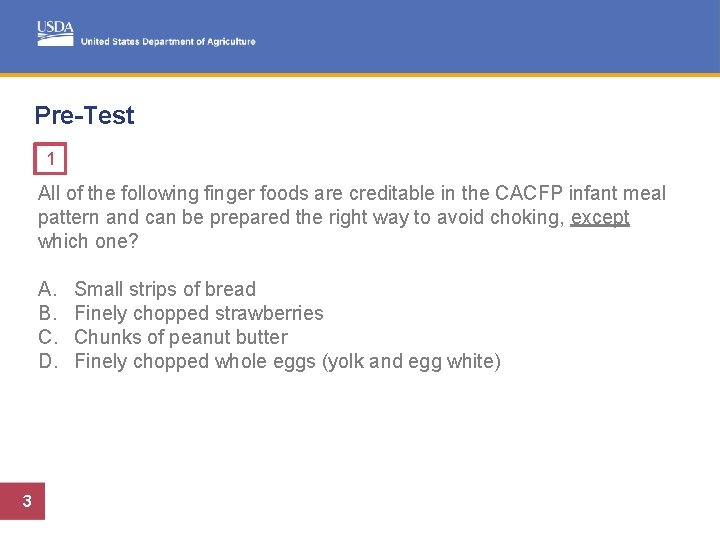
Pre-Test 3 2 1 All of the following finger foods are creditable in the CACFP infant meal pattern and can be prepared the right way to avoid choking, except which one? A. B. C. D. 3 Small strips of bread Finely chopped strawberries Chunks of peanut butter Finely chopped whole eggs (yolk and egg white)
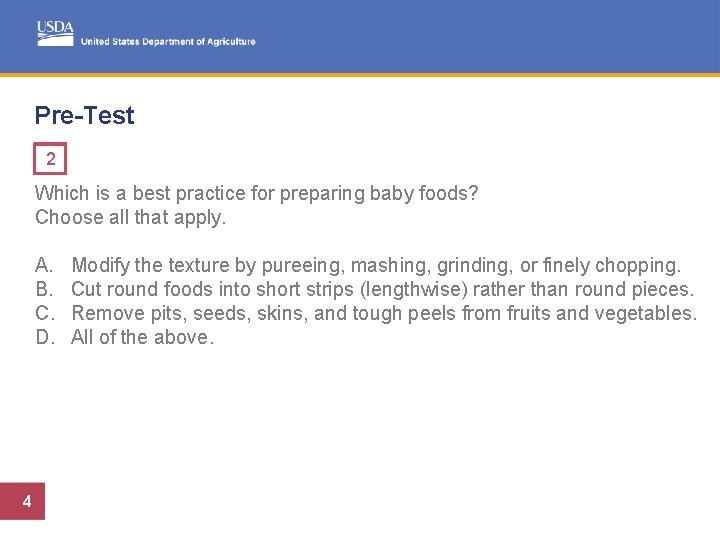
Pre-Test 3 2 Which is a best practice for preparing baby foods? Choose all that apply. A. B. C. D. 4 Modify the texture by pureeing, mashing, grinding, or finely chopping. Cut round foods into short strips (lengthwise) rather than round pieces. Remove pits, seeds, skins, and tough peels from fruits and vegetables. All of the above.
Pre-Test 3 To prepare foods that can be easily chewed by a baby, cut soft foods into small pieces: no larger than ______ or into thin slices or strips. A. B. C. D. 5 1/2 inch 2/3 inch 3/4 inch 1 inch
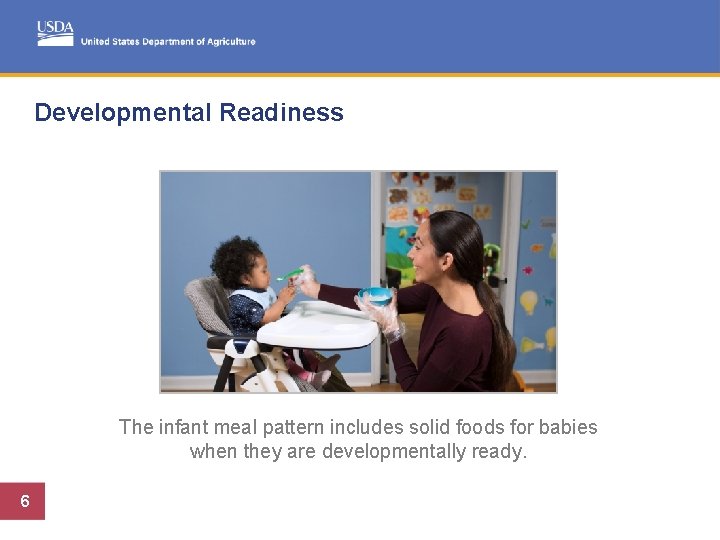
Developmental Readiness The infant meal pattern includes solid foods for babies when they are developmentally ready. 6
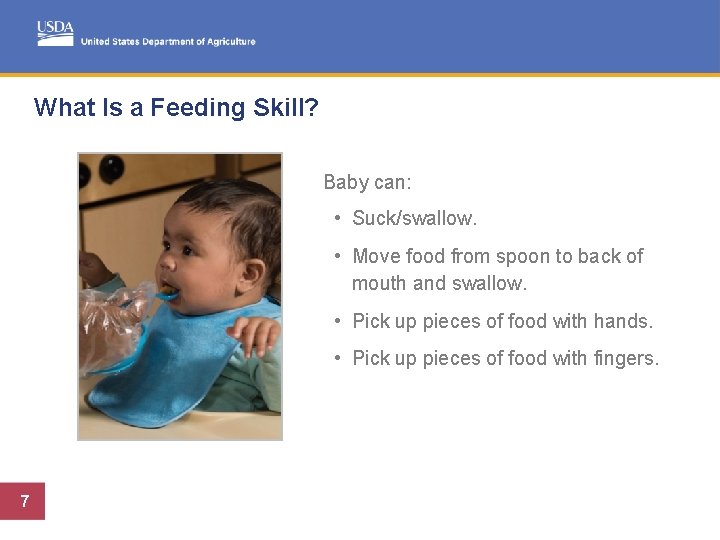
What Is a Feeding Skill? Baby can: • Suck/swallow. • Move food from spoon to back of mouth and swallow. • Pick up pieces of food with hands. • Pick up pieces of food with fingers. 7
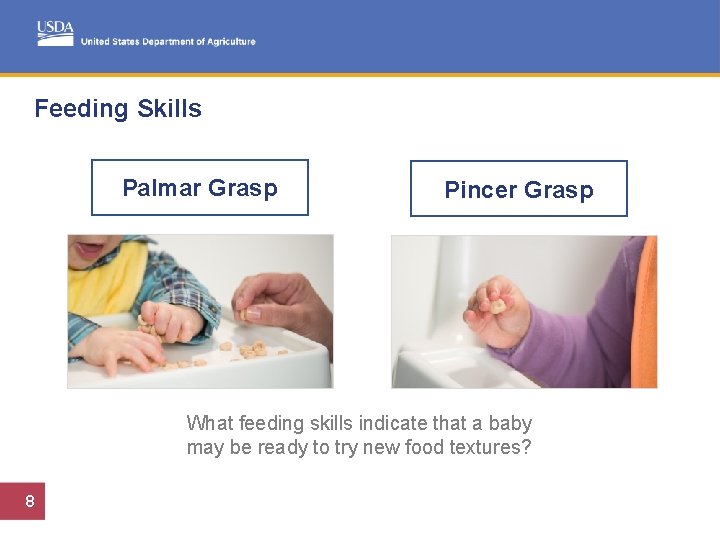
Feeding Skills Palmar Grasp Pincer Grasp What feeding skills indicate that a baby may be ready to try new food textures? 8
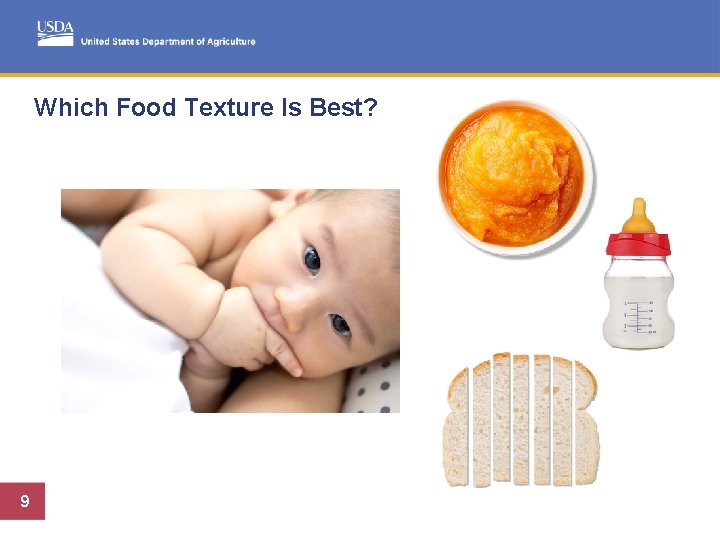
Which Food Texture Is Best? 9
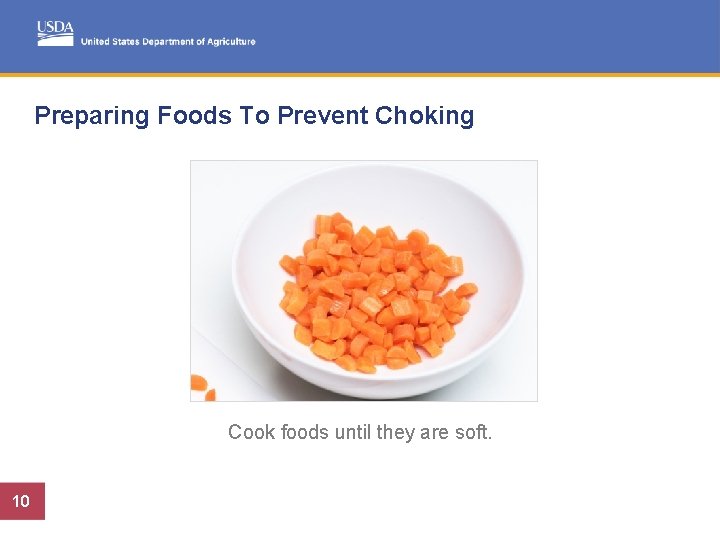
Preparing Foods To Prevent Choking Cook foods until they are soft. 10
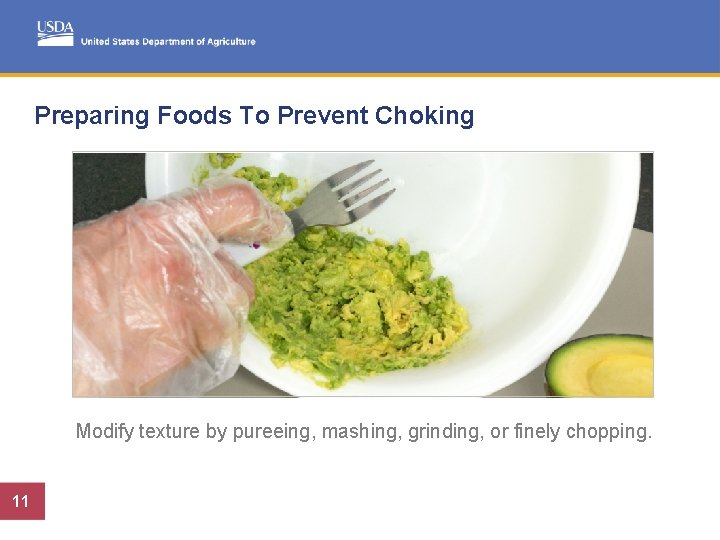
Preparing Foods To Prevent Choking Modify texture by pureeing, mashing, grinding, or finely chopping. 11
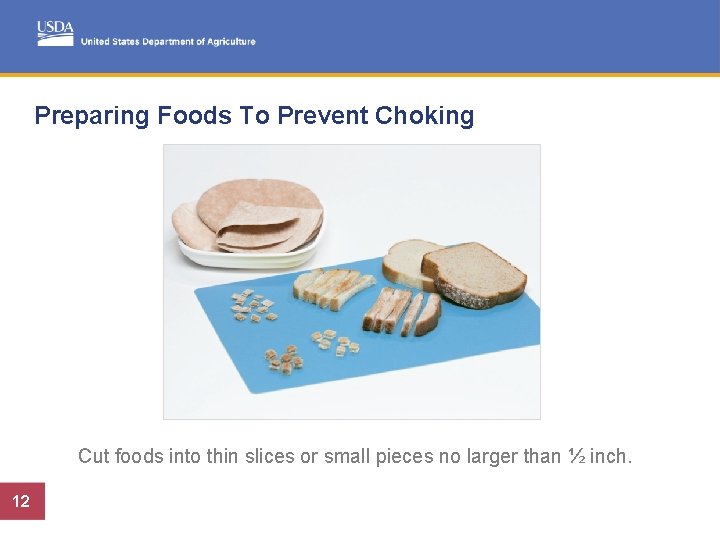
Preparing Foods To Prevent Choking Cut foods into thin slices or small pieces no larger than ½ inch. 12
Communicating With Parents • Start a conversation! • Handouts to use to start a conversation: • For Parents: Is Your Baby Ready for Solid Foods? (page 12) • For Parents: What Is Your Baby Eating? Let Us Know! (page 63) • For Parents: Varying Your Baby’s Veggies (page 88) https: //teamnutrition. usda. gov 13
Summary • CACFP infant meal pattern includes solid foods for babies that are developmentally ready. • Modify foods to match baby’s feeding skills and lower baby’s risk of choking. 14
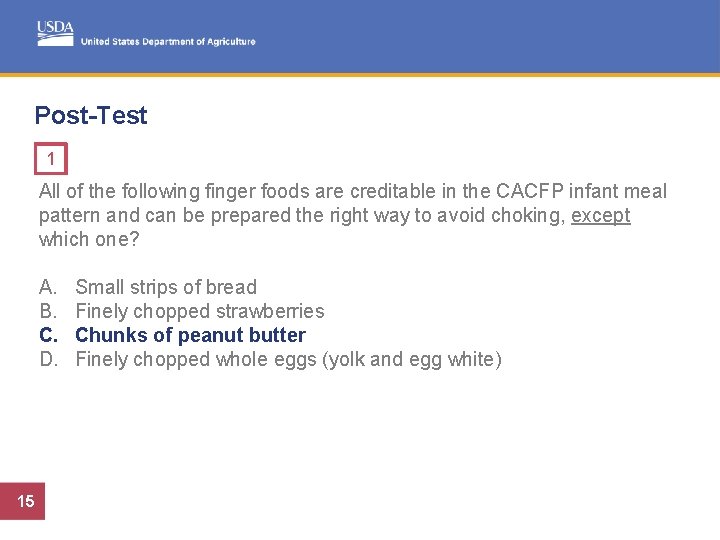
Post-Test 3 2 1 All of the following finger foods are creditable in the CACFP infant meal pattern and can be prepared the right way to avoid choking, except which one? A. B. C. D. 15 Small strips of bread Finely chopped strawberries Chunks of peanut butter Finely chopped whole eggs (yolk and egg white)
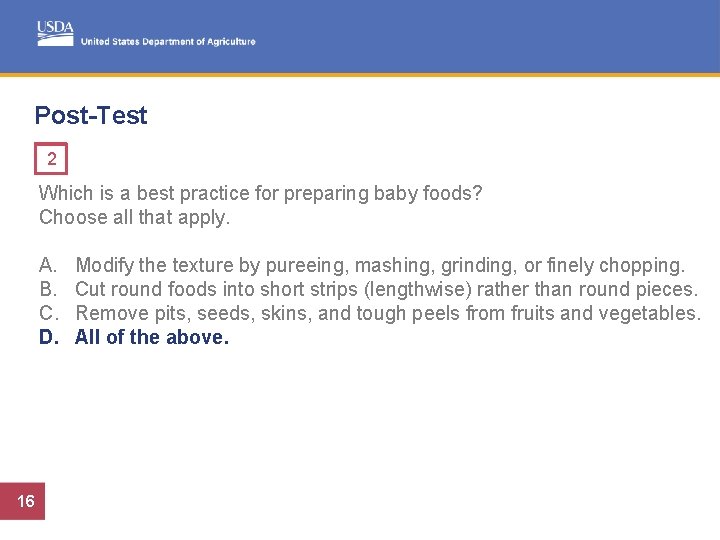
Post-Test 3 2 1 Which is a best practice for preparing baby foods? Choose all that apply. A. B. C. D. 16 Modify the texture by pureeing, mashing, grinding, or finely chopping. Cut round foods into short strips (lengthwise) rather than round pieces. Remove pits, seeds, skins, and tough peels from fruits and vegetables. All of the above.
Post-Test 3 To prepare foods that can be easily chewed by a baby, cut soft foods into small pieces: no larger than ______ or into thin slices or strips. A. B. C. D. 17 1/2 inch 2/3 inch 3/4 inch 1 inch
To learn more about the CACFP or access materials, visit: https: //teamnutrition. usda. gov Presentation End In accordance with Federal civil rights law and U. S. Department of Agriculture (USDA) civil rights regulations and policies, the USDA, its Agencies, offices, and employees, and institutions participating in or administering USDA programs are prohibited from discriminating based on race, color, national origin, religion, sex, gender identity (including gender expression), sexual orientation, disability, age, marital status, family/parental status, income derived from a public assistance program, political beliefs, or reprisal or retaliation for prior civil rights activity, in any program or activity conducted or funded by USDA (not all bases apply to all programs). Remedies and complaint filing deadlines vary by program or incident. Persons with disabilities who require alternative means of communication for program information (e. g. , Braille, large print, audiotape, American Sign Language, etc. ) should contact the responsible Agency or USDA’s TARGET Center at (202) 720 -2600 (voice and TTY) or contact USDA through the Federal Relay Service at (800) 877 -8339. Additionally, program information may be made available in languages other than English. To file a program discrimination complaint, complete the USDA Program Discrimination Complaint Form, AD-3027, found online at http: //www. ascr. usda. gov/complaint_filing_cust. html and at any USDA office or write a letter addressed to USDA and provide in the letter all of the information requested in the form. To request a copy of the complaint form, call (866) 632 -9992. Submit your completed form or letter to USDA by: (1) mail: U. S. Department of Agriculture, Office of the Assistant Secretary for Civil Rights, 1400 Independence Avenue, SW, Washington, D. C. 20250 -9410; (2) fax: (202) 690 -7442; or (3) email: program. intake@usda. gov. USDA is an equal opportunity provider, employer, and lender. United States Department of Agriculture – Food and Nutrition Service – November 2019 – FNS-785