
Feeding Fishes as predators Feeding Predation cycles Adaptations

- Slides: 25
Feeding: Fishes as predators Feeding & Predation cycles Adaptations of predators
Predator – Prey arms race • Co-evolution of predatory and escape mechanisms – Morphological adaptations – Behavioral adaptations – Ecological adaptations “there is no perfect predatory nor perfect escape tactic”
Predation Cycle • • • Search Pursuit Attack Capture Handling of Prey (Feeding Cycle)
Feeding Cycle • • Biting Sucking Chewing Swallowing
Search • Active Search (Use of locomotion while employing senses to detect prey) - Vision (Water column predators) • Herring & Anchovies • Tunas & Billfishes • Nocturnal Plankton feeders
Search • Active Search (Use of locomotion while employing senses to detect prey) - Vision (Water column predators) • Herring & Anchovies Tunas & Billfishes • Nocturnal Plankton feeders – Olfaction • Elasmobranchs • Moray eels
Search • Active Search (Use of locomotion while employing senses to detect prey) - Vision (Water column predators) • Herring & Anchovies Tunas & Billfishes • Nocturnal Plankton feeders – Olfaction • Elasmobranchs • Moray eels – Hearing • Elasmobranchs (low frecuency sounds 20 -300 Hz)
Search • Active Search (Use of locomotion while employing senses to detect prey) - Taste / Touch (benthic feeders) • Barbels (Catfishes, Goatfish, Croakers, etc…) • Modified fin rays (Sea robins, etc…)
Search • Active Search (Use of locomotion while employing senses to detect prey) - Taste / Touch (benthic feeders) • Barbels (Catfishes, Goatfish, Croakers, etc…) • Modified fin rays (Sea robins, etc…) – Electroreception • Passive (Elasmobranchs) • Active (Elephantfish, Gimnotids, etc…)
Search • Active Search (Use of locomotion while employing senses to detect prey) - Taste / Touch (benthic feeders) • Barbels (Catfishes, Goatfish, Croakers, etc…) • Modified fin rays (Sea robins, etc…) – Electroreception • Passive (Elasmobranchs) • Active (Elephantfish, Gimnotids, etc…) Speculation Search (‘try and see’ chicken tactic…) • usually occurs with attendant species
Search • Passive Search – Camouflage Predators (No use of locomotion) - Benthic Stalkers (Flounders, Scorpionfish, etc…) • Vision • Electrorecepcion
Search • Passive Search – Camouflage Predators (No use of locomotion) - Benthic Stalkers (Flounders, Scorpionfish, etc…) • Vision • Electrorecepcion – Open Water Stalkers (gars, pike, trumpetfish) • Vision
Pursuit • High Speed chases - Specific to capture fast prey • Open Water – Speed – Lamnid sharks, Tuna, Marlin… • Benthic – Fast Braking and turning – Salmon, Striped Bass, Groupers…
Pursuit • High Speed Chases - Specific to capture fast prey • Open Water – Speed – Lamnid sharks, Tuna, Marlin… • Benthic – Fast Braking and turning – Salmon, Striped Bass, Groupers… • Fast Start Interception – Convergent evolution of body shape – Pike, Barracuda, Gars, Needlefish…
Pursuit • High Speed chases - Specific to capture fast prey • Open Water – Speed – Lamnid sharks, Tuna, Marlin… • Benthic – Fast Braking and turning – Salmon, Striped Bass, Groupers… • Fast Start Performance – Convergent evolution of body shape – Pike, Barracuda, Gars, Needlefish… • Luring – Lophiiformes (fin rays), stargazers (buccal lures), Haplochromis livingstoni (death feigning). . .
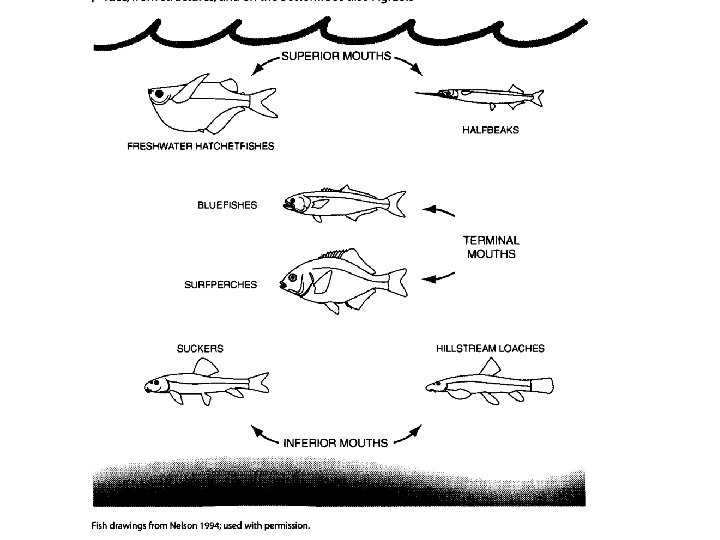
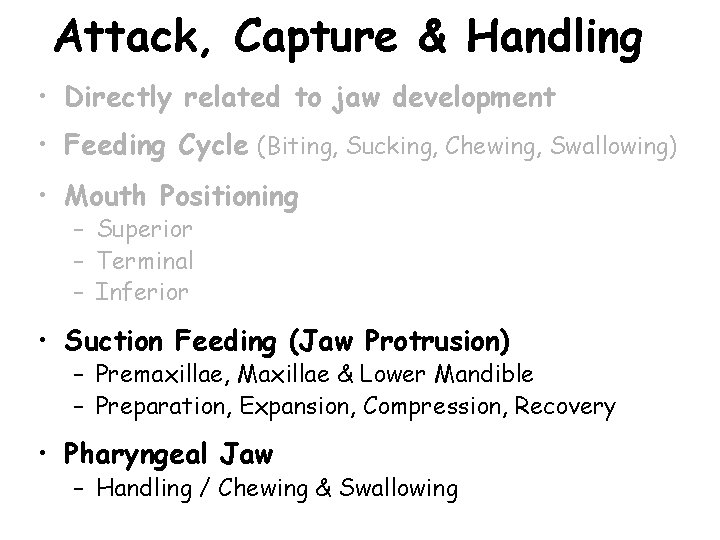
Attack, Capture & Handling • Directly related to jaw development • Feeding Cycle (Biting, Sucking, Chewing, Swallowing) • Mouth Positioning – Superior – Terminal – Inferior
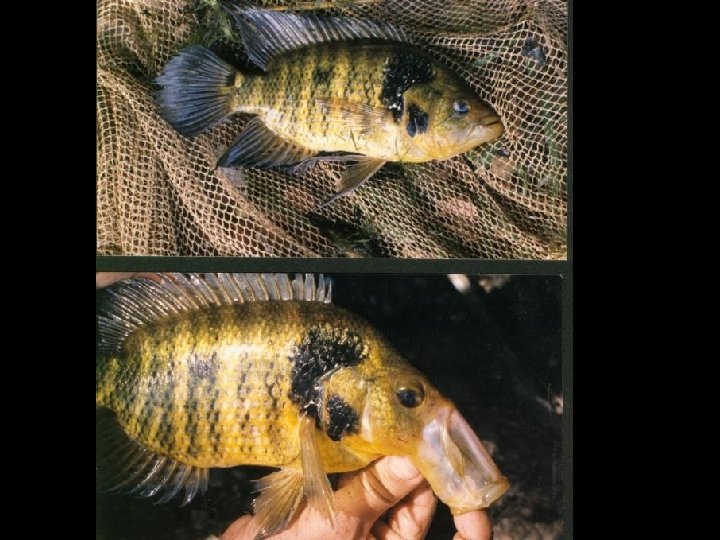
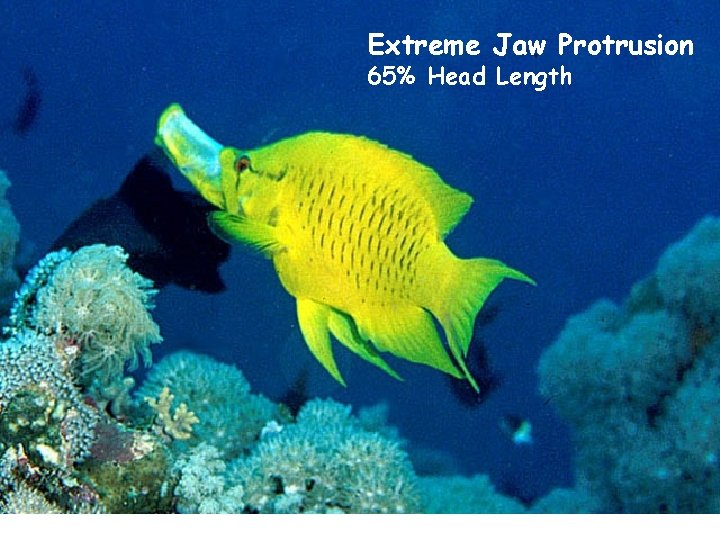
Attack, Capture & Handling • Directly related to jaw development • Feeding Cycle (Biting, Sucking, Chewing, Swallowing) • Mouth Positioning – Superior – Terminal – Inferior • Suction Feeding (Jaw Protrusion) – Premaxillae, Maxillae & Lower Mandible – Preparation, Expansion, Compression, Recovery • Pharyngeal Jaw – Handling / Chewing & Swallowing
Extreme Jaw Protrusion 65% Head Length
Attack, Capture & Handling • Overtake or Interception of prey • Suction of Prey – Fastest movements if mobile prey (example: Frogfish expand mouth 14 -fold in 6 milliseconds) – Slower movement if prey with limited movement
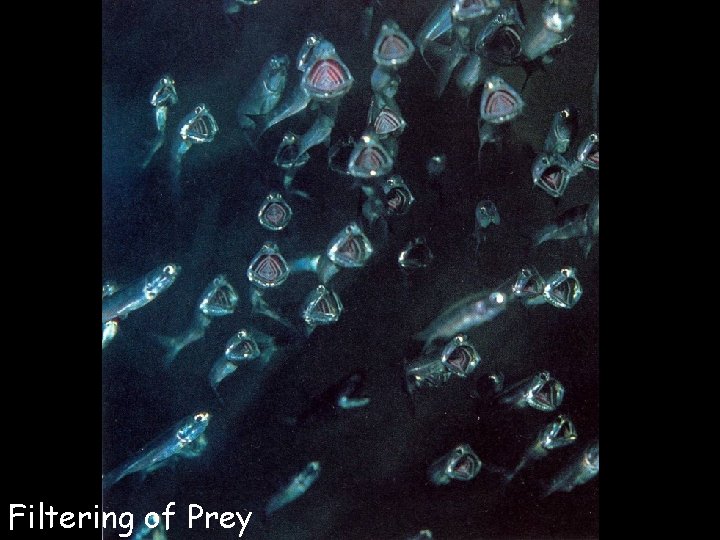
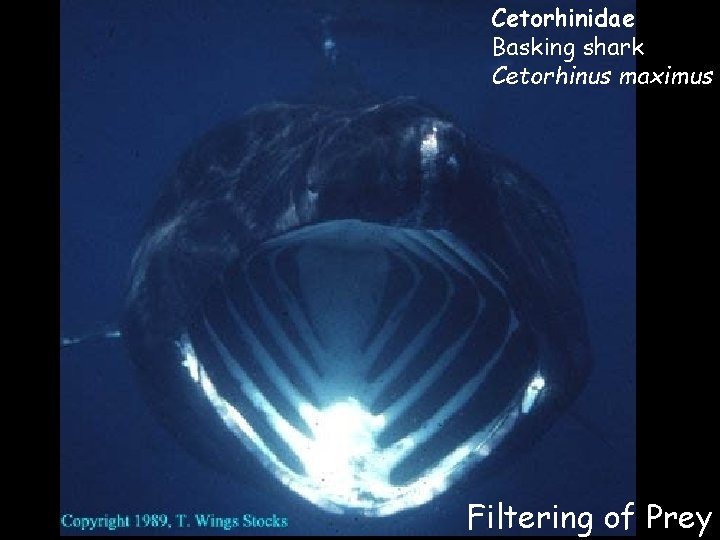
Attack, Capture & Handling • Overtake or Interception of prey • Suction of Prey – Fastest movements if mobile prey (example: Frogfish expand mouth 14 -fold in 6 milliseconds) – Slower movement if prey with limited movement • Filtering of prey – Swim with open mouths, filter planktonic prey
Filtering of Prey
Cetorhinidae Basking shark Cetorhinus maximus Filtering of Prey
Attack, Capture & Handling • Overtake or Interception of prey • Suction of Prey – Fastest movements if mobile prey (example: Frogfish expand mouth 14 -fold in 6 milliseconds) – Slower movement if prey with limited movement • Filtering of prey – Swim with open mouths, filter planktonic prey • Prey Immobilization – – Marlin, swordfish, sawfish (upper jaw extension) Thresher Shark (tail) Torpedo Rays (Electrical discharge) Hammerhead Shark (head)