
Feeding and Fueling Todays Athlete Roberta Anding MS

Feeding and Fueling Today’s Athlete Roberta Anding, MS, RD, CSSD, CDE, LD Director of Sports Nutrition Texas Children’s Hospital Sports Dietitian, Houston Texans Sports Dietitian, Houston Astros Rice University Owls

2012 Houston Texans Playoffs
What are key points to improve performance and your practice? Never underestimate the value of hydration Body composition matters to all athletes which translates into body fat loss and lean mass gain Athletes want a performance edge and turn to supplements first, food second Age matters!
Sports nutrition across the lifespan CHILDREN AND TEENS Hydration needs School challenges Concrete thinkers Teens are interested in supplements Puberty allows for muscular hypertrophy Without androgen, muscles can get stronger just not bigger COLLEGE & PROFESSIONAL More flexibility in meeting fluid needs Development of abstract thinking Supplements are norm Bodies fully developed with the ability to increase strength and hypertrophy
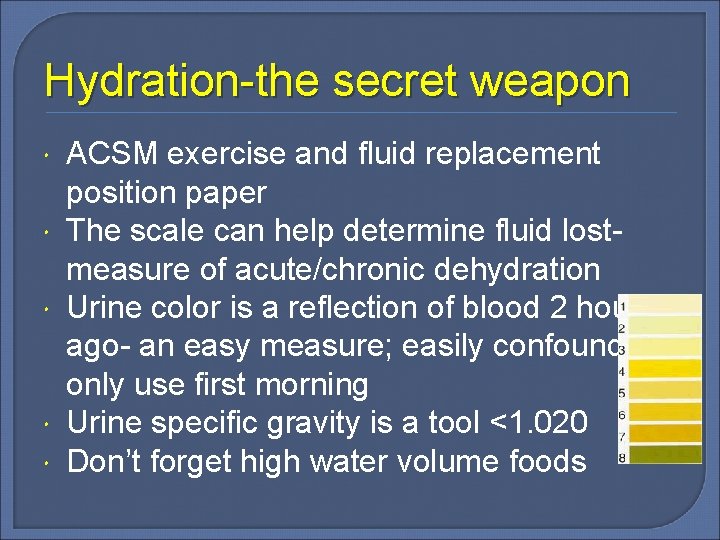
Hydration-the secret weapon ACSM exercise and fluid replacement position paper The scale can help determine fluid lostmeasure of acute/chronic dehydration Urine color is a reflection of blood 2 hours ago- an easy measure; easily confoundedonly use first morning Urine specific gravity is a tool <1. 020 Don’t forget high water volume foods
Who is at risk? Genetic predisposition-body size Level of acclimatization Heavy gear and multiple training session AAP position stand for children • Adults may place them at risk • 9 - to 12 -year-old children should drink 100 to 250 m. L of fluids every 20 minutes, and adolescents may consume 1. 0 to 1. 5 L of fluids every hour. Policy statement-Climatic heat stress and exercising children and adolescents. Pediatrics 2011
Sports Drinks ACSM position on hydration • • • Greater than 60 minutes in the heat Drink on a schedule Electrolyte replacement Not a lunch time beverage No need for athletes that don’t play
What type of athlete are you working with? Aerobic • Distance running • Triathlons • Cycling Anaerobic • • Stop and go sports Lineman Sprinters Max effort-short duration
Aerobic athletes Carbohydrates- focus on glycemic index with increased need Protein needs 1. 2 - 1. 4 g/kg/day Protein can help control postprandial rise in blood glucose and prevent hypoglycemia in very lean runners
Carbohydrate needs -IOC consensus on nutrition for sport Low intensity, skill based athletes with large body mass or energy restriction: 3 -5 g/kg/d Moderate Exercise Program~1 hour per day: 57 g/kg/d Endurance Program 1 -3 h moderate to high intensity: 7 -10 g/kg/d Extreme Commitment>4 -5 h per day moderate to high intensity: 8 -12 g/kg/d
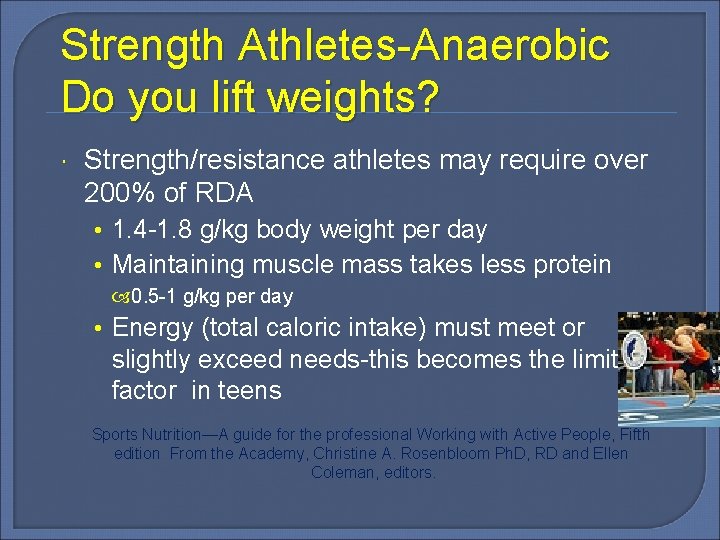
Strength Athletes-Anaerobic Do you lift weights? Strength/resistance athletes may require over 200% of RDA • 1. 4 -1. 8 g/kg body weight per day • Maintaining muscle mass takes less protein 0. 5 -1 g/kg per day • Energy (total caloric intake) must meet or slightly exceed needs-this becomes the limiting factor in teens Sports Nutrition—A guide for the professional Working with Active People, Fifth edition From the Academy, Christine A. Rosenbloom Ph. D, RD and Ellen Coleman, editors.

Resistance training and muscle hypertrophy Athletes want to get bigger and stronger In teens, Tanner staging makes a difference Women don’t want to look like guys Eccentric exercise appears to generate the best gains “Time under load” or “slow rep trigger an increase in muscle protein synthesis even when the weight lifted is the same Burd, et al. J Physiology 2012 590: 2 -351
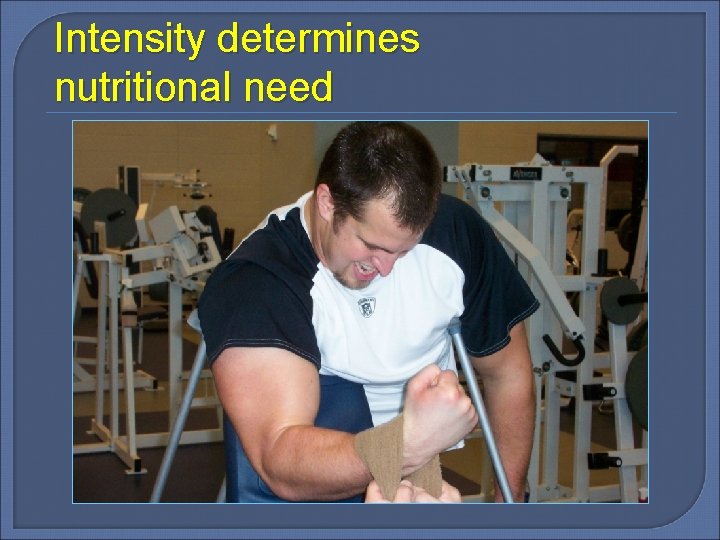
Intensity determines nutritional need
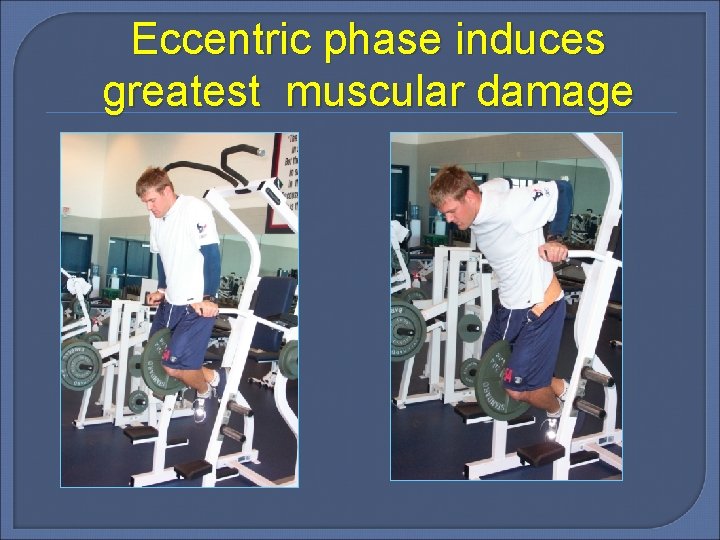
Eccentric phase induces greatest muscular damage
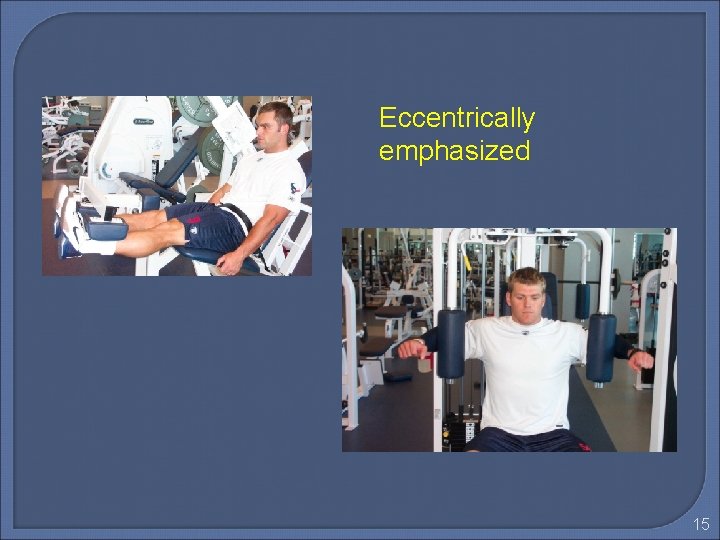
Eccentrically emphasized 15
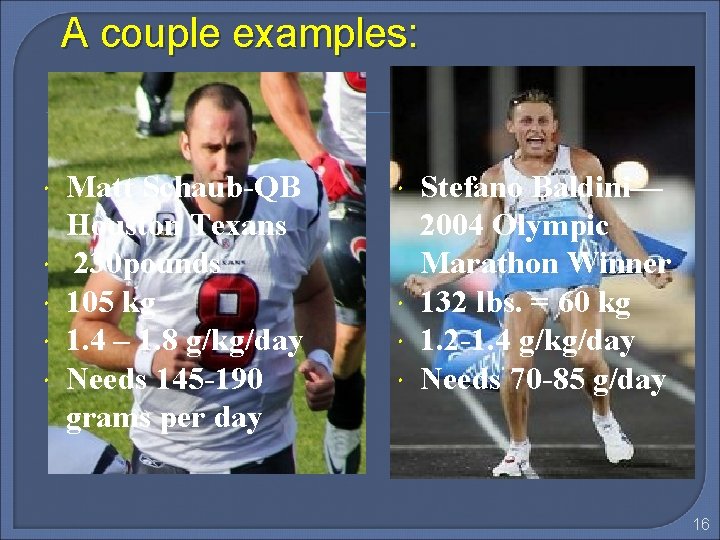
A couple examples: Matt Schaub-QB Houston Texans 230 pounds 105 kg 1. 4 – 1. 8 g/kg/day Needs 145 -190 grams per day Stefano Baldini— 2004 Olympic Marathon Winner 132 lbs. = 60 kg 1. 2 -1. 4 g/kg/day Needs 70 -85 g/day 16
Protein and muscle protein synthesis Protein requirements for strength athletes are no greater than 2 grams/kg. Few studies demonstrate greater needs in body builders A survey of collegiate athletes indicated 67% did not know the protein recommendations 33% estimated need at 8. 7 g/kg Fox, et al. JISSN 2011, 8: 9
Tradition, science and supplements Tradition, coaches, religious and cultural beliefs influence nutrition choices Parents provide nutrition information to youth in sports- consider Paleo, Atkins and other strategies Supplements may prove useful but the NCAA, NFL and MLB regulate what can be provided What happened to real food?

Informal Anding Survey Teaching point-remember your nursery rhymes! Question to athletes- where does whey protein come from? • Health food store • Supplements but only get NSF certified
Does the type of protein matter? Studies indicate improved muscle protein synthesis with fat free fluid milk and whey protein Both mitochondrial (aerobic) and myofibrillar proteins( force production) improve Driving factor may be the rich content of BCAA particularly leucine
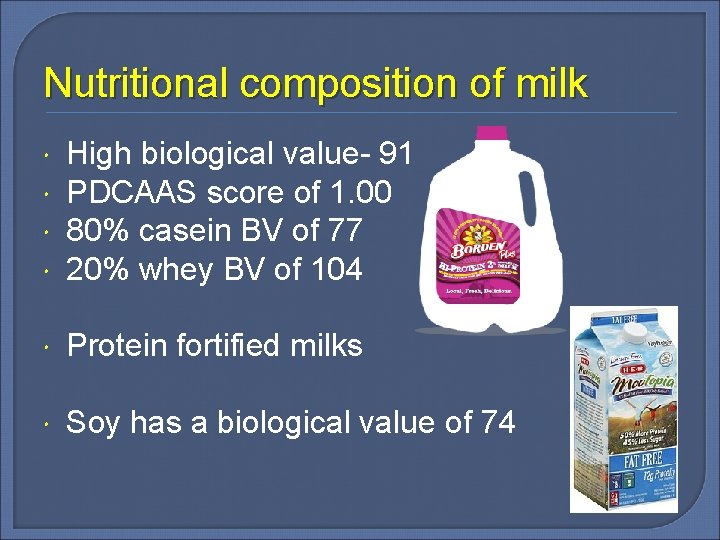
Nutritional composition of milk High biological value- 91 PDCAAS score of 1. 00 80% casein BV of 77 20% whey BV of 104 Protein fortified milks Soy has a biological value of 74
Branch chain amino acidsupplement or food? Isoleucine, leucine and valine Leucine alone is as effective as total BCCA Muscle protein’s “light switch” via m. TOR 3 -4 grams of leucine per serving is needed 500 ml of milk has 1. 35 grams of leucine Consider adding additional whey
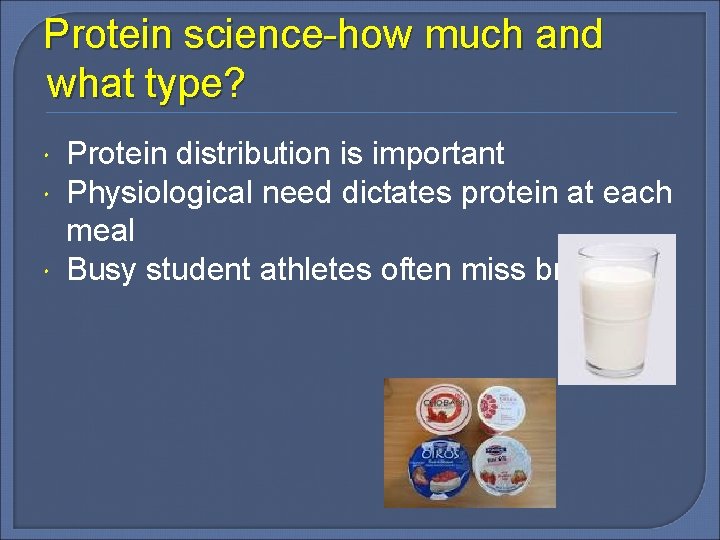
Protein science-how much and what type? Protein distribution is important Physiological need dictates protein at each meal Busy student athletes often miss breakfast
What about the women? Can women accrue the same benefits with strength training as men? Majority of studies done with men A study by Josse and Phillips demonstrated a favorable impact on overall body composition with the use of high quality milk/dairy protein in women not calorie restricted Josse, A & Phillips S. Acute Topics in Sports Nutrition 2013 59: 94
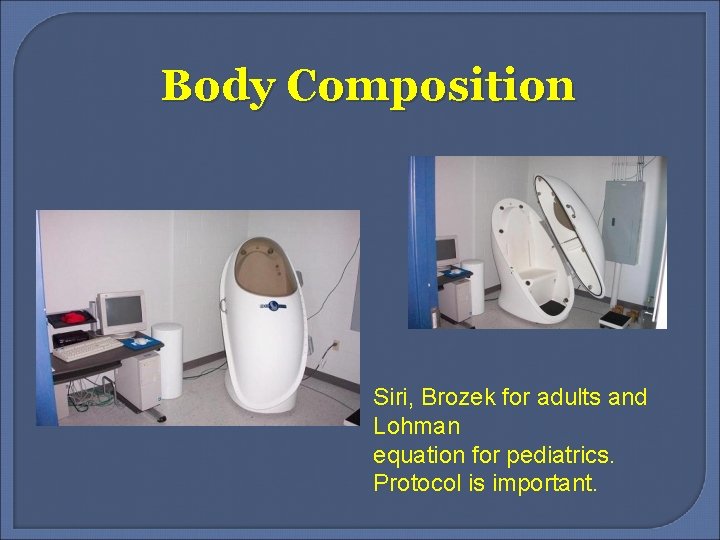
Body Composition Siri, Brozek for adults and Lohman equation for pediatrics. Protocol is important.
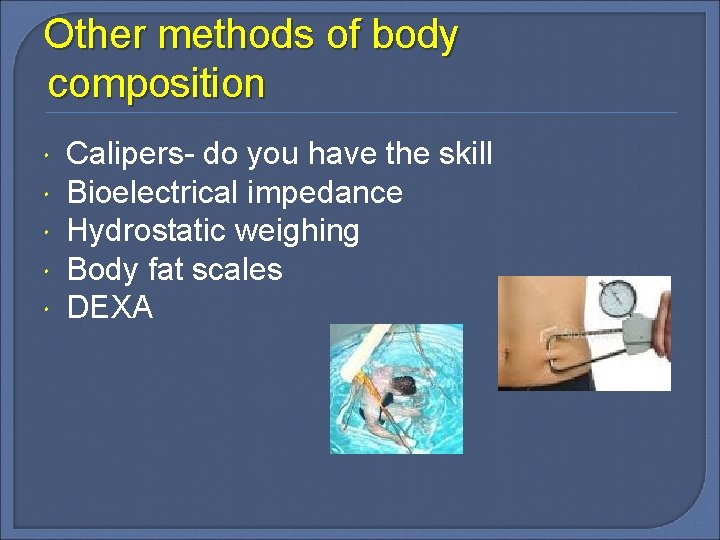
Other methods of body composition Calipers- do you have the skill Bioelectrical impedance Hydrostatic weighing Body fat scales DEXA
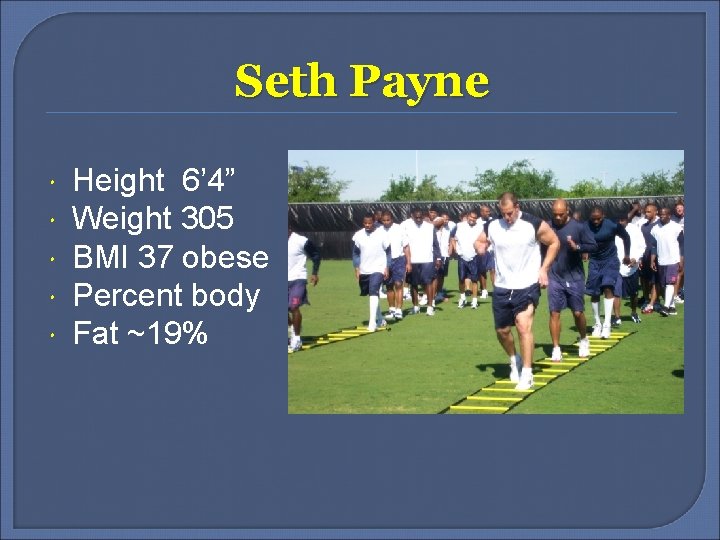
Seth Payne Height 6’ 4” Weight 305 BMI 37 obese Percent body Fat ~19%
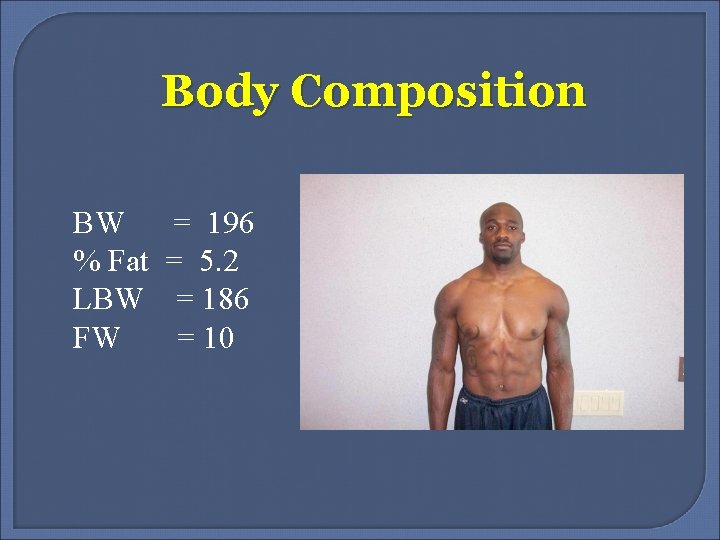
Body Composition BW % Fat LBW FW = 196 = 5. 2 = 186 = 10
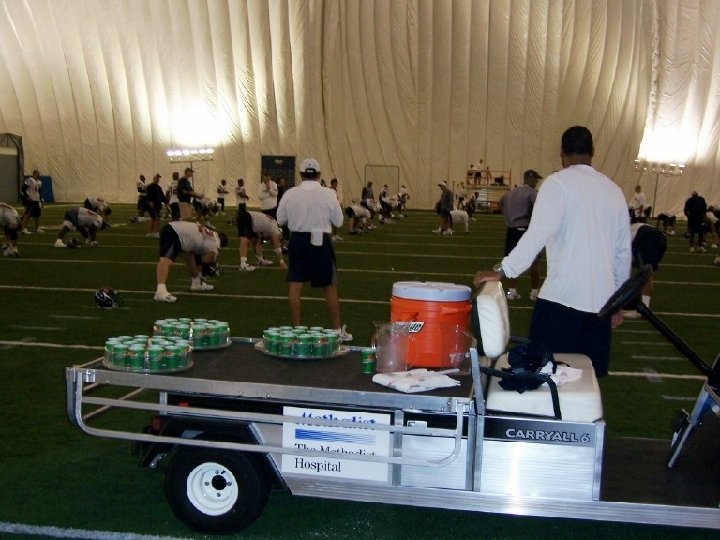
Recovery is a process aka translating science into practice is often the biggest challenge Research often focuses on the endurance athlete How do you operationalize any nutrition principle into a team sport? Barriers include education, culture, health beliefs religion, coaches and schedules John Ivy’s research has provided great insight
30

31
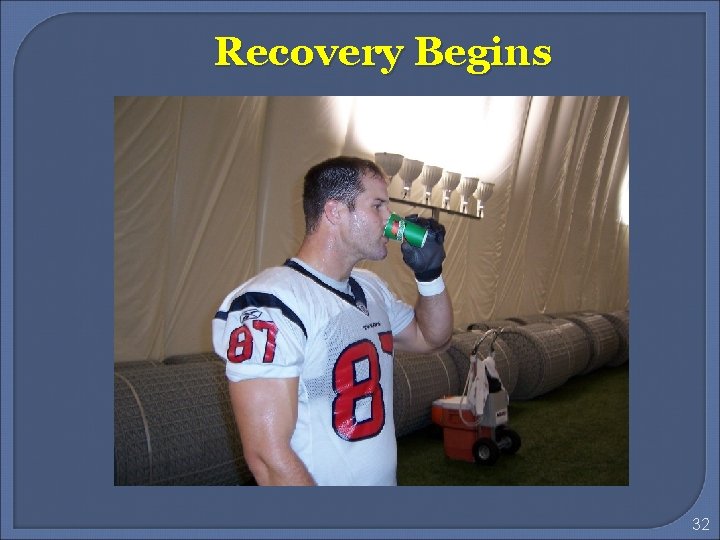
Recovery Begins 32
Are dietary supplements needed to enhance performance? Although science suggests that creatine, beta alanine and others have clinical utility, industry is still unregulated NCAA, NFL, MLB have policies in place NFL allows only Gatorade products Just because it is certified doesn’t mean it works

Beet root juice-Case in point Modulation of nitric oxide Reduces oxygen demand Challenge is the taste Smoothies Other nitrate rich vegetables • • Chinese cabbage Leeks, parsley Celery, spinach, beets Food based supplement-Garden Veggies/Nature Way
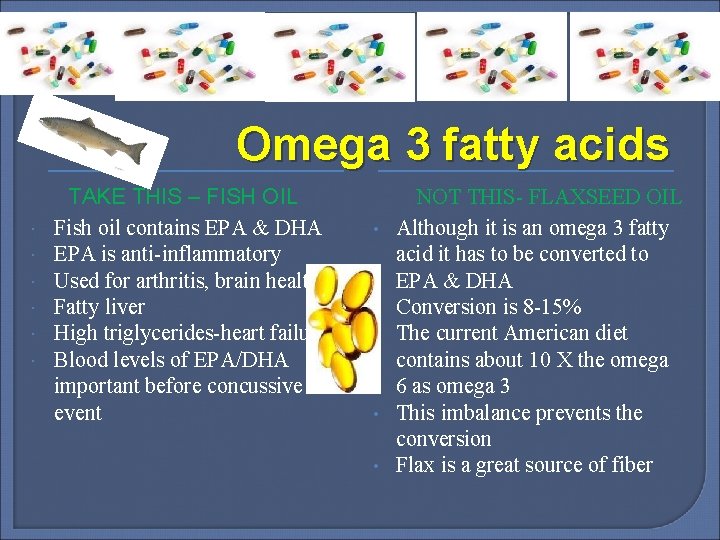
Omega 3 fatty acids TAKE THIS – FISH OIL Fish oil contains EPA & DHA EPA is anti-inflammatory Used for arthritis, brain health Fatty liver High triglycerides-heart failure Blood levels of EPA/DHA important before concussive event • • • NOT THIS- FLAXSEED OIL Although it is an omega 3 fatty acid it has to be converted to EPA & DHA Conversion is 8 -15% The current American diet contains about 10 X the omega 6 as omega 3 This imbalance prevents the conversion Flax is a great source of fiber

Food is 100% Legal We are dietitians- we promote food first !

Thank you! Roberta Anding MS, RD, LD, CDE, CSSD randing@bcm. edu
- Slides: 37