
Feedback System A receptor is a body structure
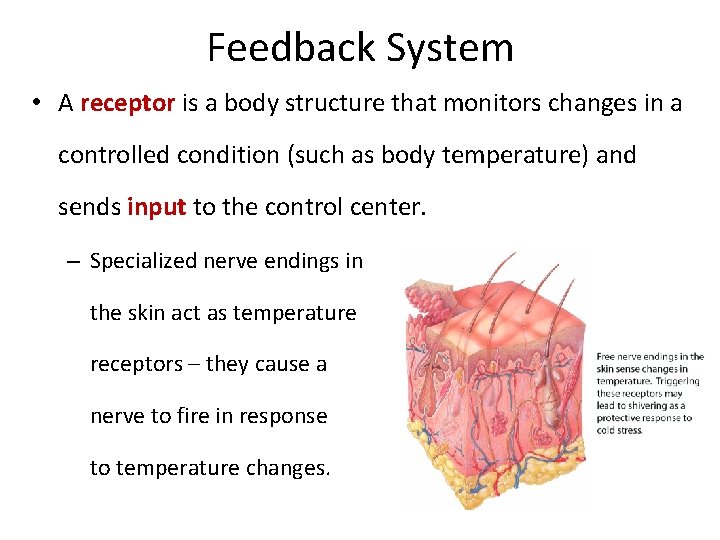
Feedback System • A receptor is a body structure that monitors changes in a controlled condition (such as body temperature) and sends input to the control center. – Specialized nerve endings in the skin act as temperature receptors – they cause a nerve to fire in response to temperature changes.
Feedback System u The control center sets the range of values to be maintained – usually this is done by the brain. § Evaluates input received from receptors and generates output command – Output involves nerve impulses, hormones, or other chemical agents. • Brain acts as a control center receiving nerve impulses from skin temperature receptors.
Feedback System • The effector receives output from the control center and produces a response or effect that changes the controlled condition. – Nearly every organ or tissue can serve as an effector. • Body temperature drops. • The brain sends an impulse to the skeletal muscles to contract. • Shivering occurs to generate heat.
Feedback System • Negative Feedback systems: – Reverses a change in a controlled condition • Regulation of blood pressure (force exerted by blood as it presses again the walls of the blood vessels) • Positive Feedback systems: – Strengthens or reinforces a change in one of the body’s controlled conditions • Normal child birth
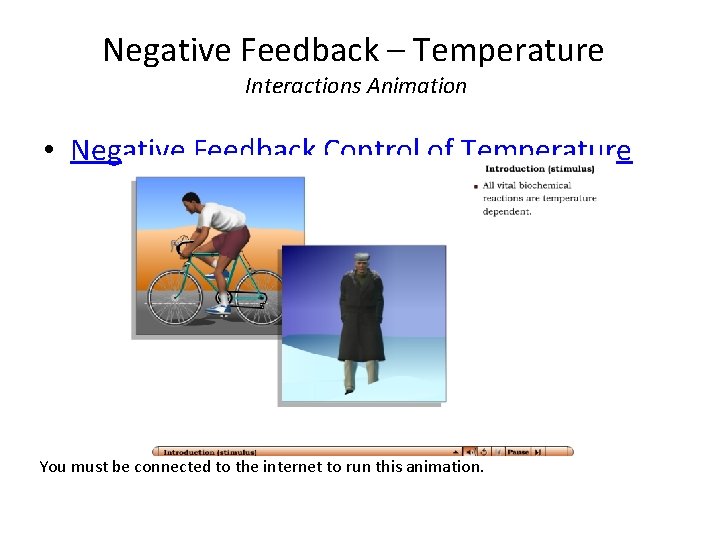
Negative Feedback – Temperature Interactions Animation • Negative Feedback Control of Temperature You must be connected to the internet to run this animation.
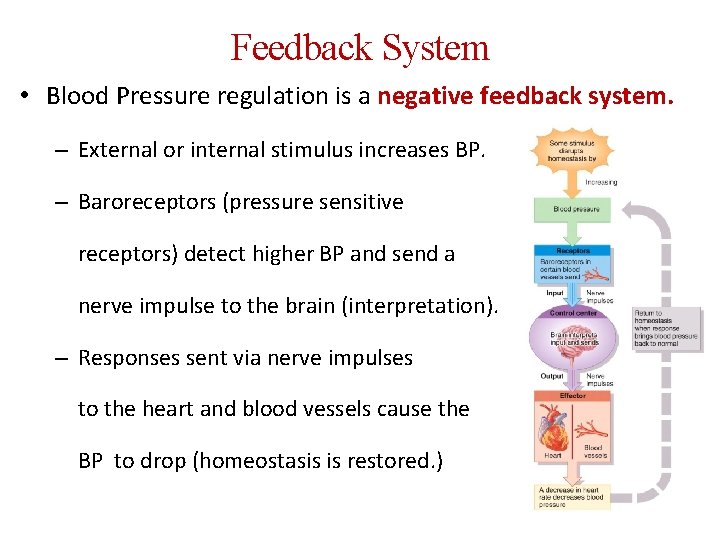
Feedback System • Blood Pressure regulation is a negative feedback system. – External or internal stimulus increases BP. – Baroreceptors (pressure sensitive receptors) detect higher BP and send a nerve impulse to the brain (interpretation). – Responses sent via nerve impulses to the heart and blood vessels cause the BP to drop (homeostasis is restored. )
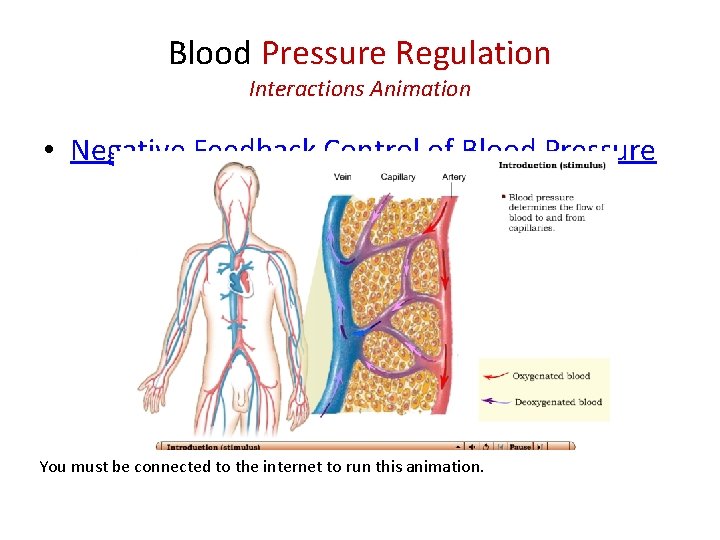
Blood Pressure Regulation Interactions Animation • Negative Feedback Control of Blood Pressure You must be connected to the internet to run this animation.
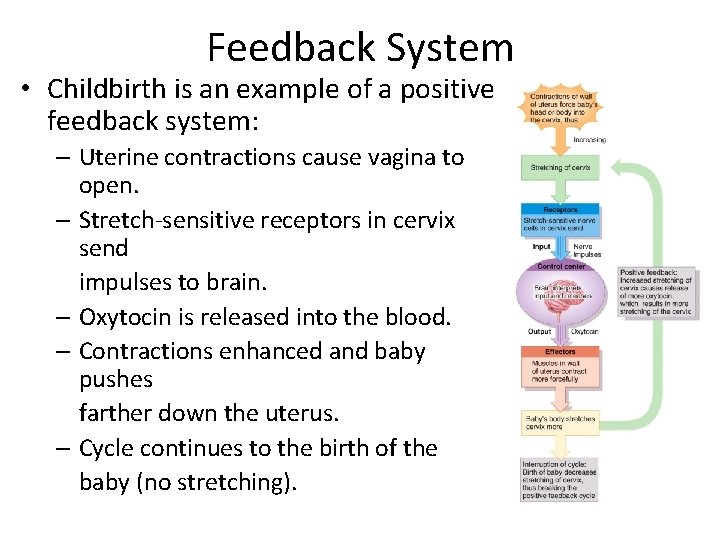
Feedback System • Childbirth is an example of a positive feedback system: – Uterine contractions cause vagina to open. – Stretch-sensitive receptors in cervix send impulses to brain. – Oxytocin is released into the blood. – Contractions enhanced and baby pushes farther down the uterus. – Cycle continues to the birth of the baby (no stretching).
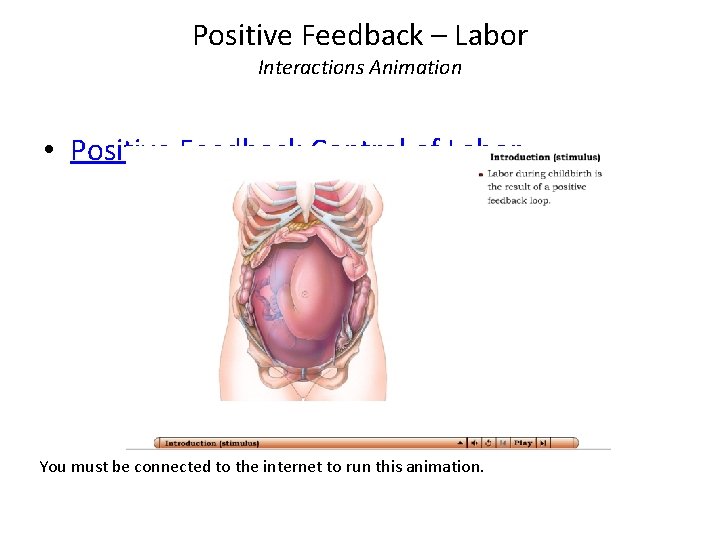
Positive Feedback – Labor Interactions Animation • Positive Feedback Control of Labor You must be connected to the internet to run this animation.
Clinical Connection • Diagnosis of Disease is done by assessing: – Signs and symptoms – Medical history • Collecting information about event • Present illnesses and past medical problems – Physical examination: • Orderly evaluation of the body and its function • Noninvasive techniques and other vital signs (pulse)
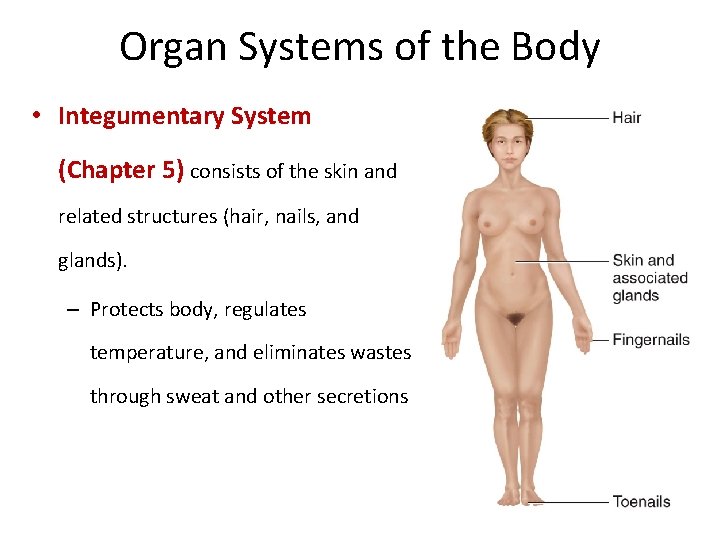
Organ Systems of the Body • Integumentary System (Chapter 5) consists of the skin and related structures (hair, nails, and glands). – Protects body, regulates temperature, and eliminates wastes through sweat and other secretions
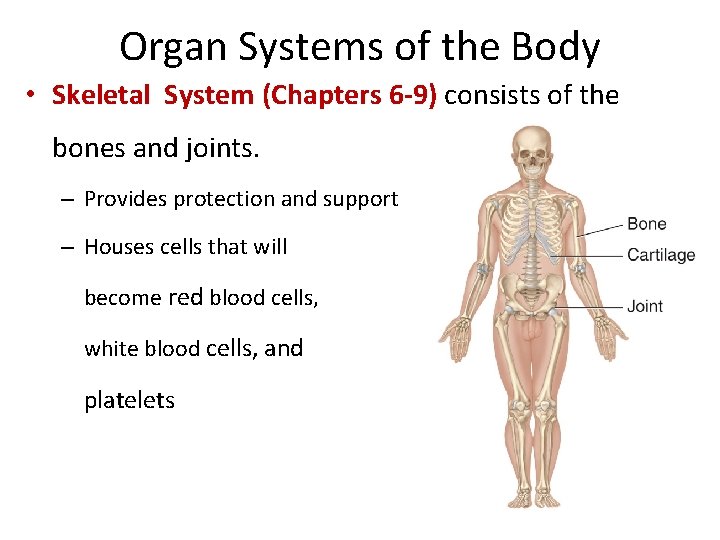
Organ Systems of the Body • Skeletal System (Chapters 6 -9) consists of the bones and joints. – Provides protection and support – Houses cells that will become red blood cells, white blood cells, and platelets
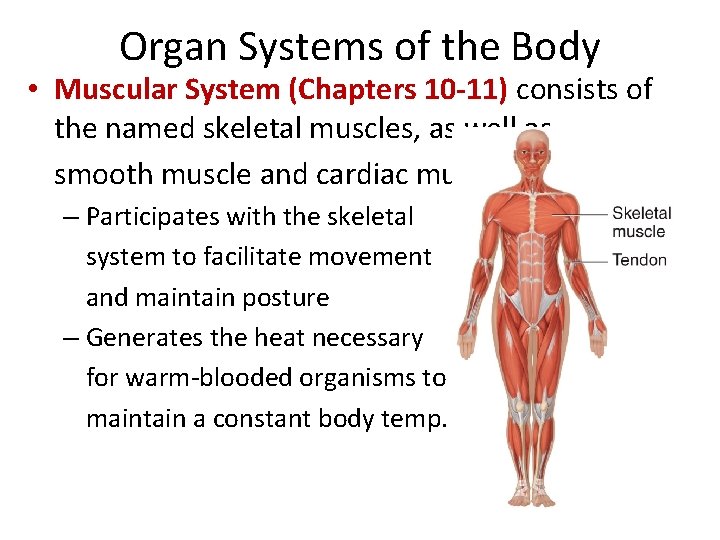
Organ Systems of the Body • Muscular System (Chapters 10 -11) consists of the named skeletal muscles, as well as smooth muscle and cardiac muscle. – Participates with the skeletal system to facilitate movement and maintain posture – Generates the heat necessary for warm-blooded organisms to maintain a constant body temp.
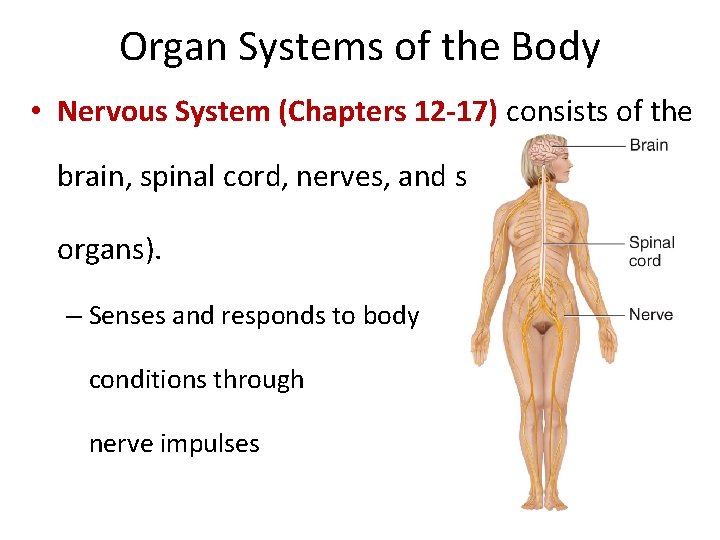
Organ Systems of the Body • Nervous System (Chapters 12 -17) consists of the brain, spinal cord, nerves, and sensory organs). – Senses and responds to body conditions through nerve impulses
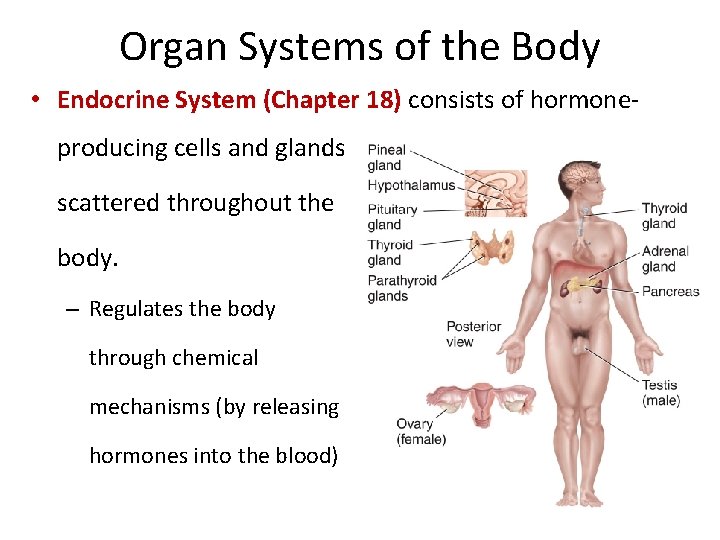
Organ Systems of the Body • Endocrine System (Chapter 18) consists of hormoneproducing cells and glands scattered throughout the body. – Regulates the body through chemical mechanisms (by releasing hormones into the blood)
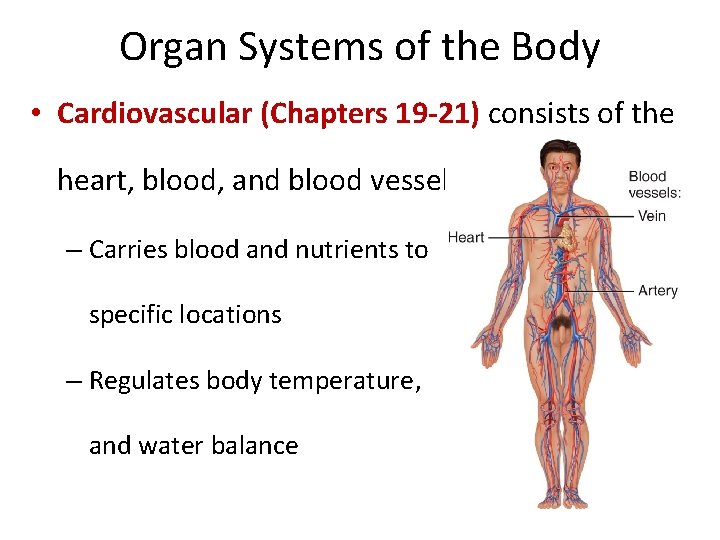
Organ Systems of the Body • Cardiovascular (Chapters 19 -21) consists of the heart, blood, and blood vessels. – Carries blood and nutrients to specific locations – Regulates body temperature, and water balance
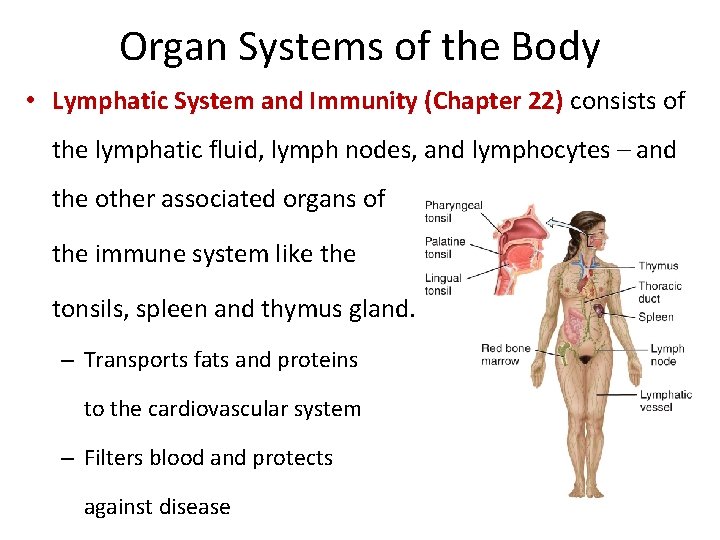
Organ Systems of the Body • Lymphatic System and Immunity (Chapter 22) consists of the lymphatic fluid, lymph nodes, and lymphocytes – and the other associated organs of the immune system like the tonsils, spleen and thymus gland. – Transports fats and proteins to the cardiovascular system – Filters blood and protects against disease
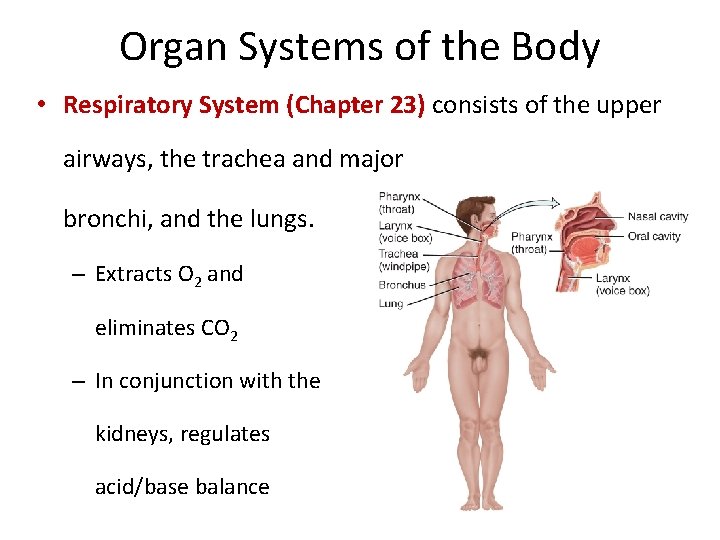
Organ Systems of the Body • Respiratory System (Chapter 23) consists of the upper airways, the trachea and major bronchi, and the lungs. – Extracts O 2 and eliminates CO 2 – In conjunction with the kidneys, regulates acid/base balance
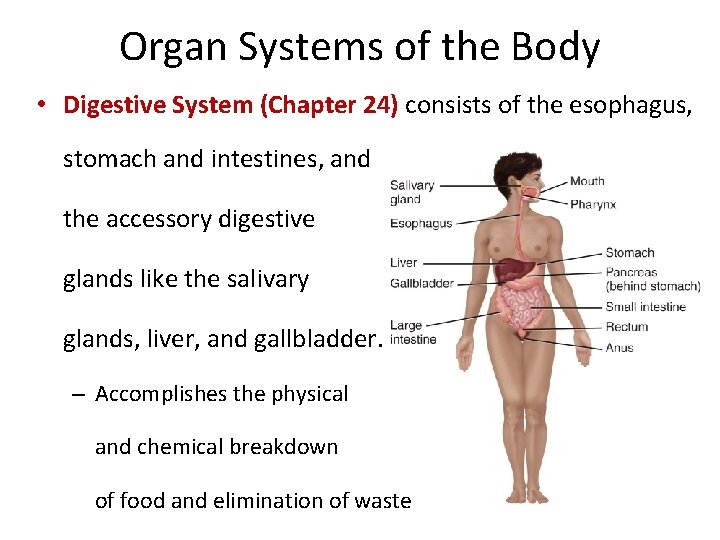
Organ Systems of the Body • Digestive System (Chapter 24) consists of the esophagus, stomach and intestines, and the accessory digestive glands like the salivary glands, liver, and gallbladder. – Accomplishes the physical and chemical breakdown of food and elimination of waste
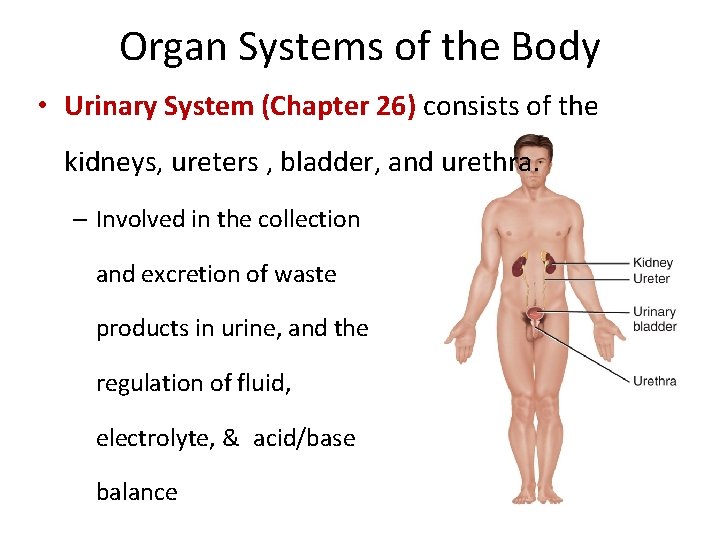
Organ Systems of the Body • Urinary System (Chapter 26) consists of the kidneys, ureters , bladder, and urethra. – Involved in the collection and excretion of waste products in urine, and the regulation of fluid, electrolyte, & acid/base balance
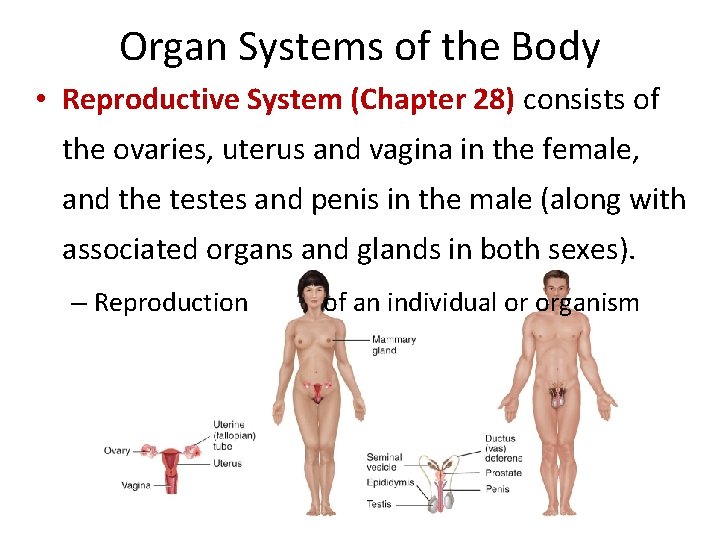
Organ Systems of the Body • Reproductive System (Chapter 28) consists of the ovaries, uterus and vagina in the female, and the testes and penis in the male (along with associated organs and glands in both sexes). – Reproduction of an individual or organism
Organ Systems of the Body • The systems of the body may appear to be separate and distinct, but the maintenance of most body functions requires the integration of many systems working together. – For example, regulation of body temperature involves the muscular, cardiovascular, nervous, and integumentary systems all working together to produce and distribute body heat appropriately.
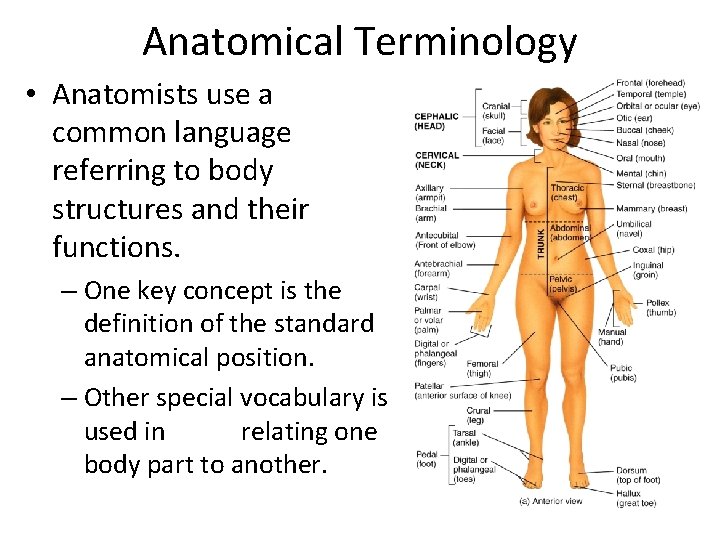
Anatomical Terminology • Anatomists use a common language referring to body structures and their functions. – One key concept is the definition of the standard anatomical position. – Other special vocabulary is used in relating one body part to another.
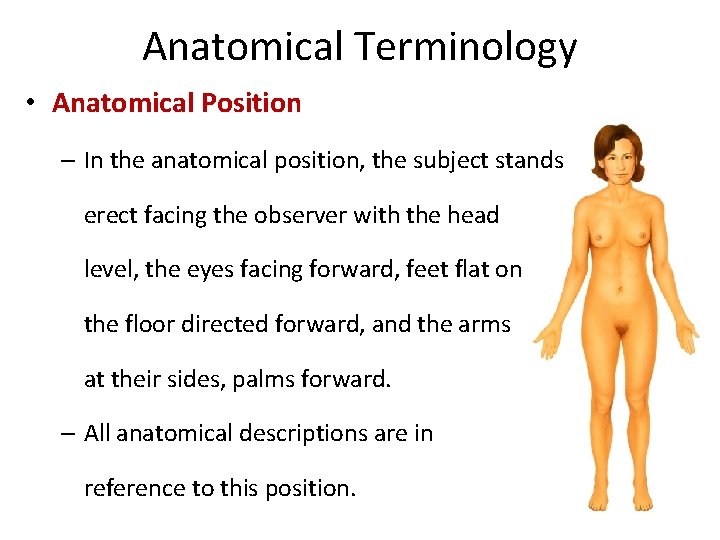
Anatomical Terminology • Anatomical Position – In the anatomical position, the subject stands erect facing the observer with the head level, the eyes facing forward, feet flat on the floor directed forward, and the arms at their sides, palms forward. – All anatomical descriptions are in reference to this position.
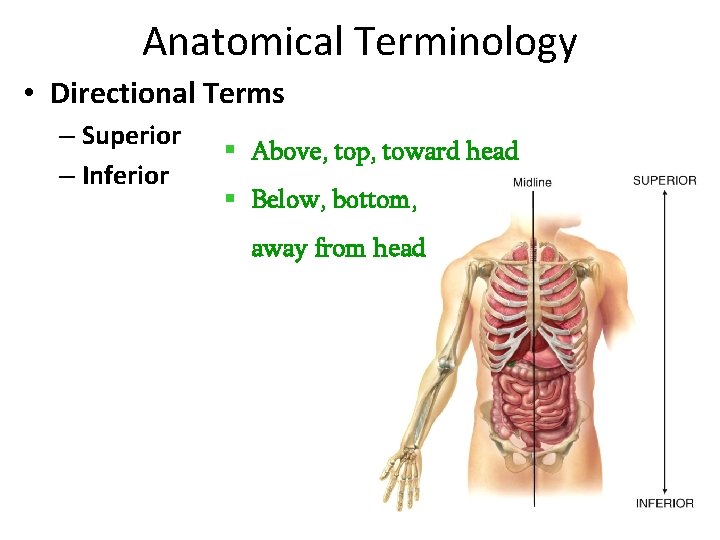
Anatomical Terminology • Directional Terms – Superior – Inferior § Above, top, toward head § Below, bottom, away from head
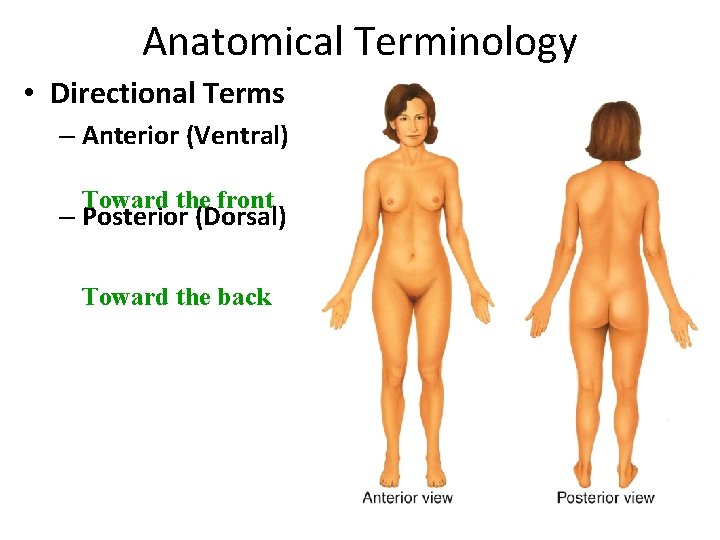
Anatomical Terminology • Directional Terms – Anterior (Ventral) Toward the front – Posterior (Dorsal) Toward the back
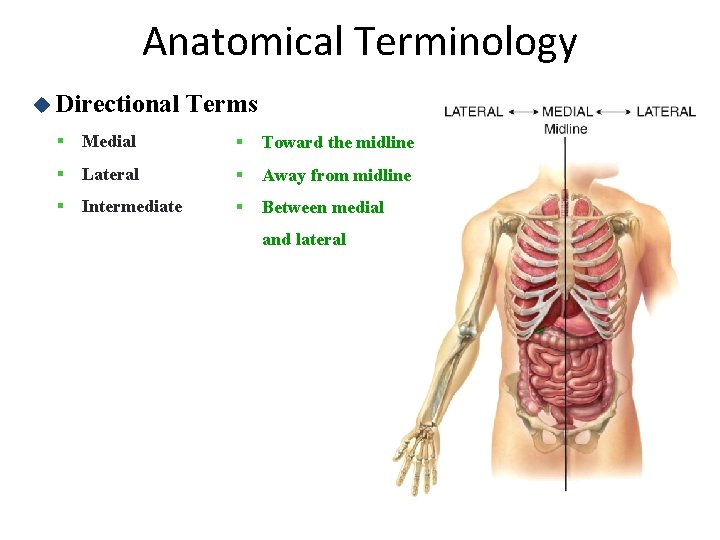
Anatomical Terminology u Directional Terms § Medial § Toward the midline § Lateral § Away from midline § Intermediate § Between medial and lateral
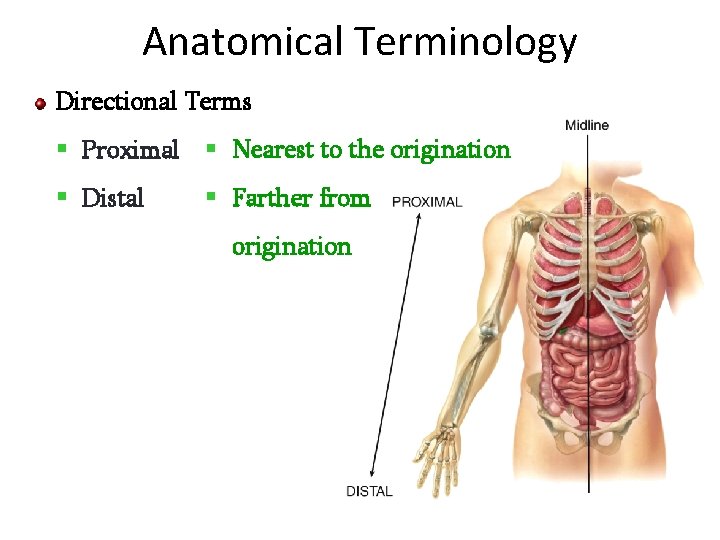
Anatomical Terminology Directional Terms § Proximal § Nearest to the origination § Distal § Farther from origination
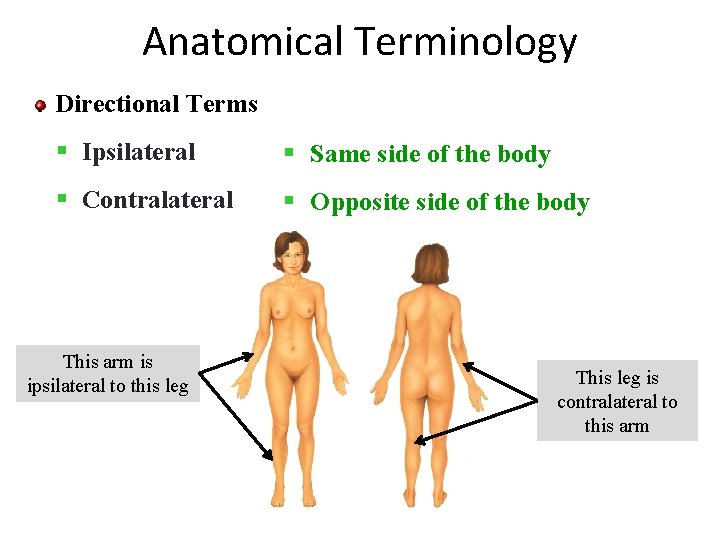
Anatomical Terminology Directional Terms § Ipsilateral § Same side of the body § Contralateral § Opposite side of the body This arm is ipsilateral to this leg This leg is contralateral to this arm
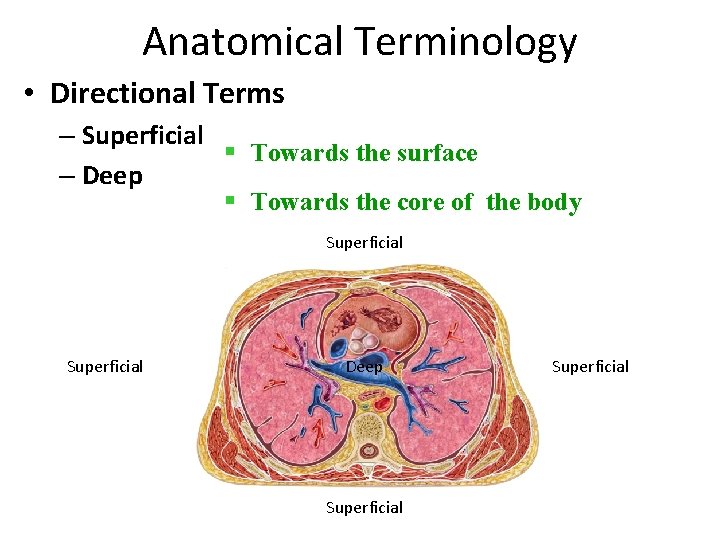
Anatomical Terminology • Directional Terms – Superficial § Towards the surface – Deep § Towards the core of the body Superficial Deep Superficial
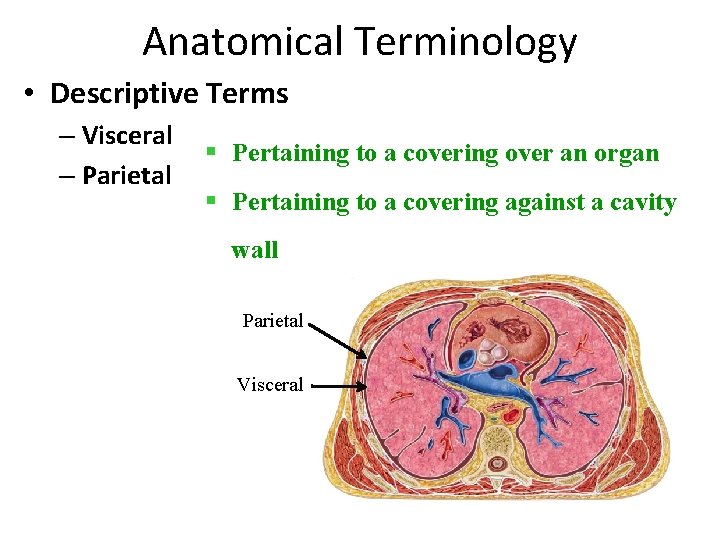
Anatomical Terminology • Descriptive Terms – Visceral – Parietal § Pertaining to a covering over an organ § Pertaining to a covering against a cavity wall Parietal Visceral
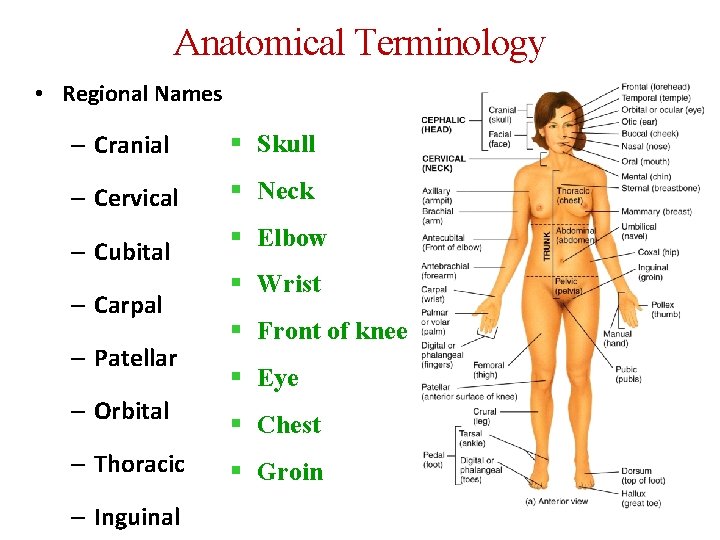
Anatomical Terminology • Regional Names – Cranial § Skull – Cervical § Neck – Cubital § Elbow – Carpal – Patellar § Wrist § Front of knee § Eye – Orbital § Chest – Thoracic § Groin – Inguinal
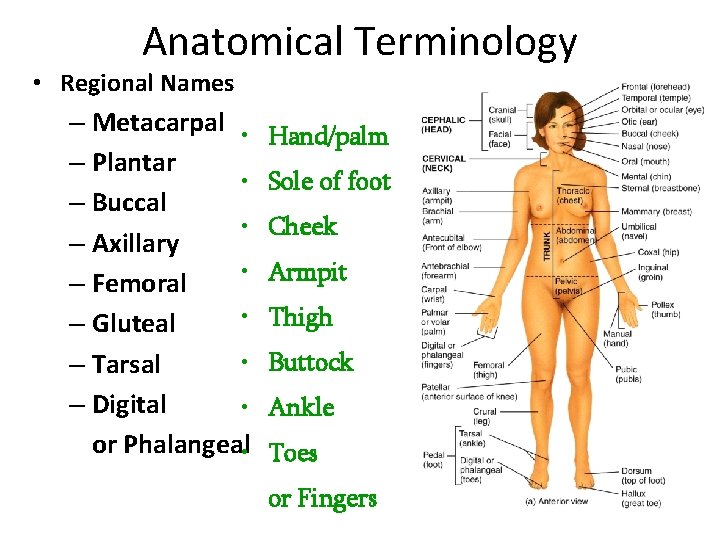
Anatomical Terminology • Regional Names – Metacarpal • – Plantar • – Buccal • – Axillary • – Femoral • – Gluteal • – Tarsal – Digital • or Phalangeal • Hand/palm Sole of foot Cheek Armpit Thigh Buttock Ankle Toes or Fingers
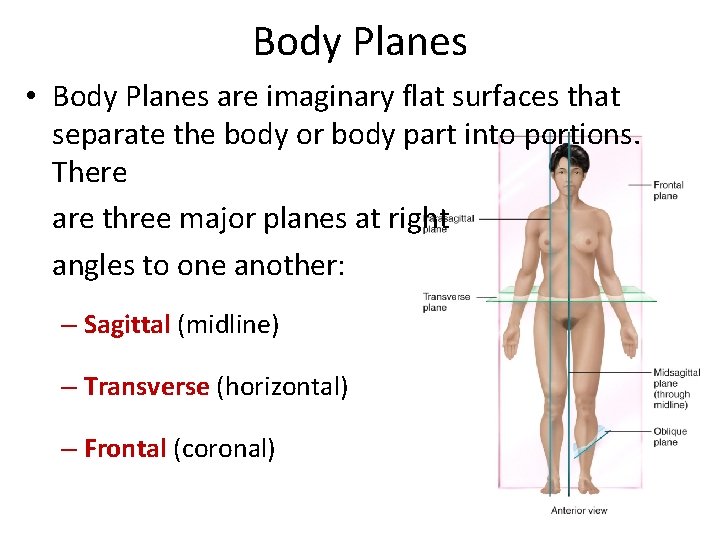
Body Planes • Body Planes are imaginary flat surfaces that separate the body or body part into portions. There are three major planes at right angles to one another: – Sagittal (midline) – Transverse (horizontal) – Frontal (coronal)
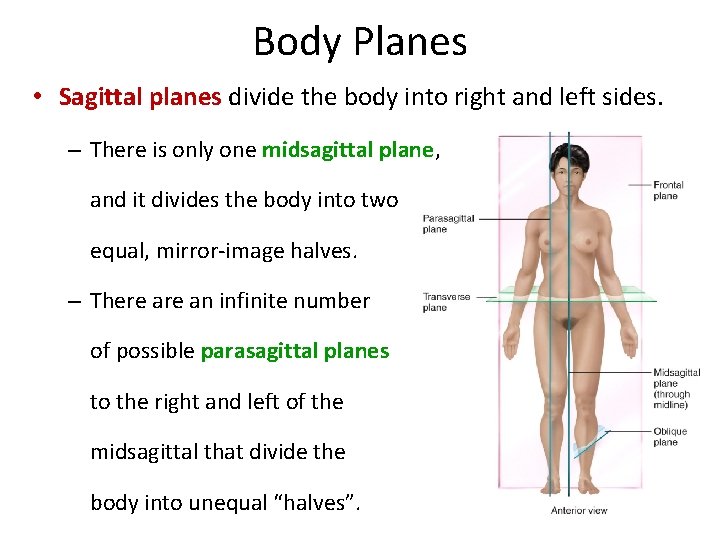
Body Planes • Sagittal planes divide the body into right and left sides. – There is only one midsagittal plane, and it divides the body into two equal, mirror-image halves. – There an infinite number of possible parasagittal planes to the right and left of the midsagittal that divide the body into unequal “halves”.
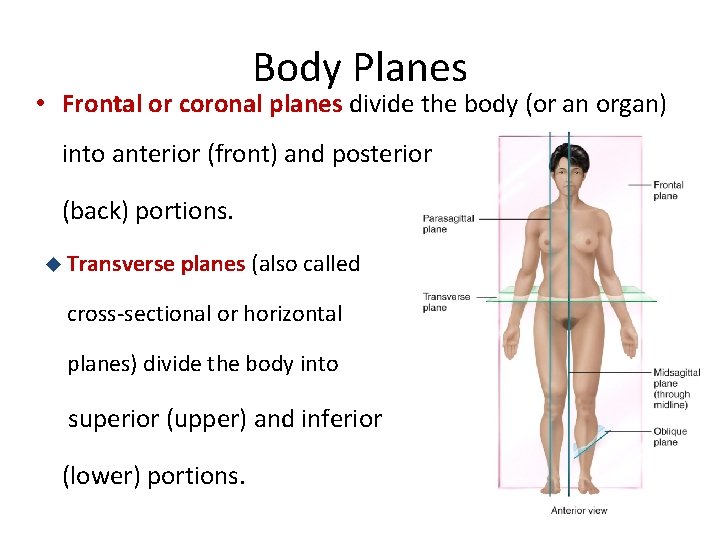
Body Planes • Frontal or coronal planes divide the body (or an organ) into anterior (front) and posterior (back) portions. u Transverse planes (also called cross-sectional or horizontal planes) divide the body into superior (upper) and inferior (lower) portions.
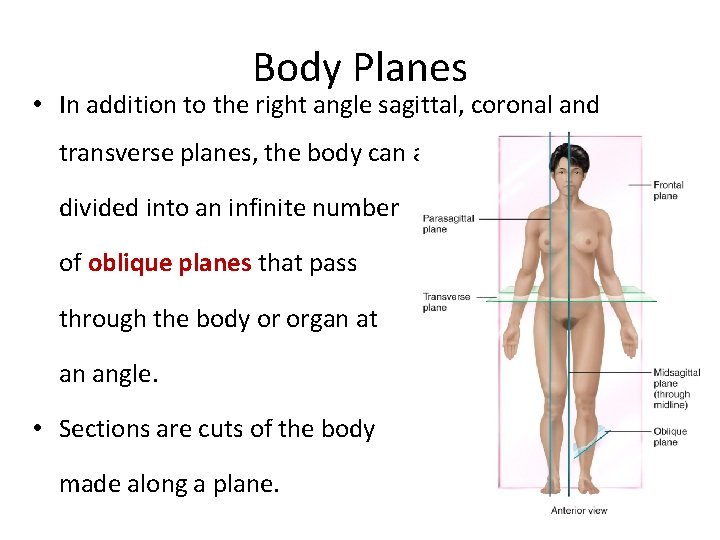
Body Planes • In addition to the right angle sagittal, coronal and transverse planes, the body can also be divided into an infinite number of oblique planes that pass through the body or organ at an angle. • Sections are cuts of the body made along a plane.
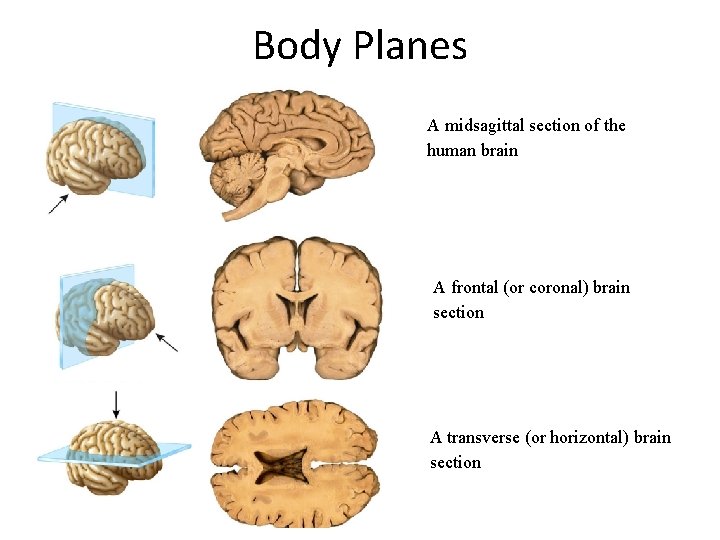
Body Planes A midsagittal section of the human brain A frontal (or coronal) brain section A transverse (or horizontal) brain section
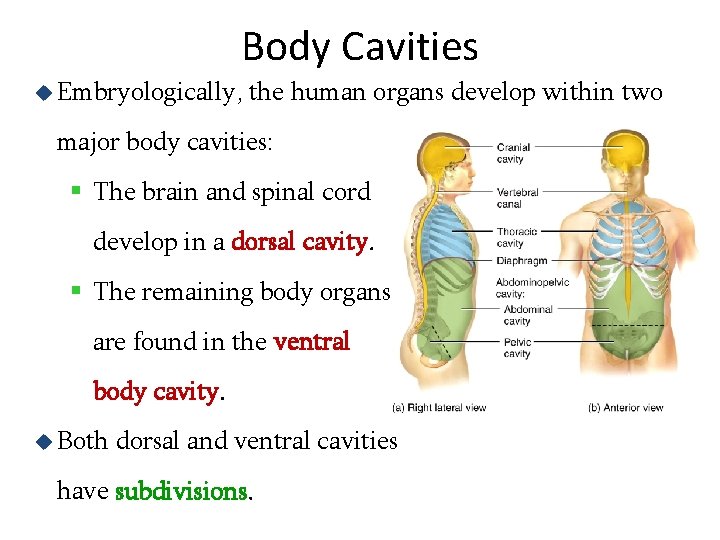
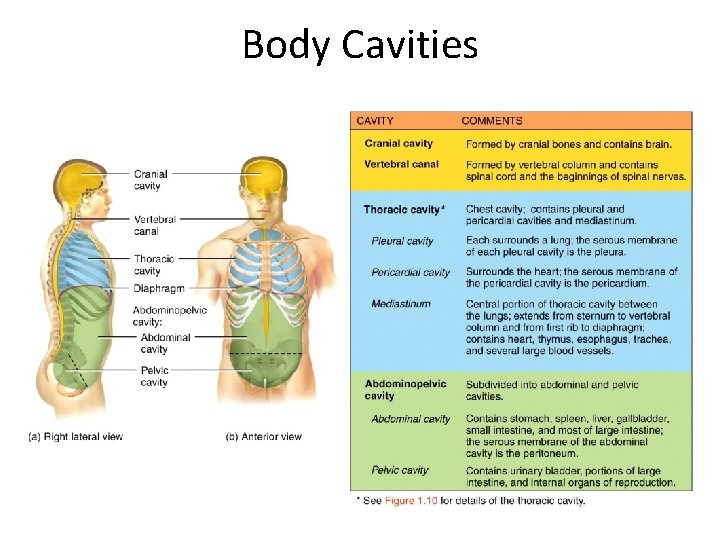
Body Cavities u Embryologically, the human organs develop within two major body cavities: § The brain and spinal cord develop in a dorsal cavity. § The remaining body organs are found in the ventral body cavity. u Both dorsal and ventral cavities have subdivisions.
Body Cavities
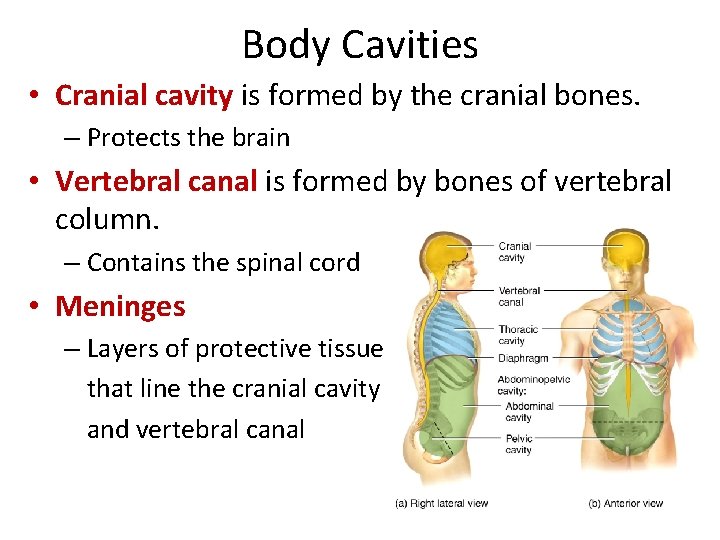
Body Cavities • Cranial cavity is formed by the cranial bones. – Protects the brain • Vertebral canal is formed by bones of vertebral column. – Contains the spinal cord • Meninges – Layers of protective tissue that line the cranial cavity and vertebral canal
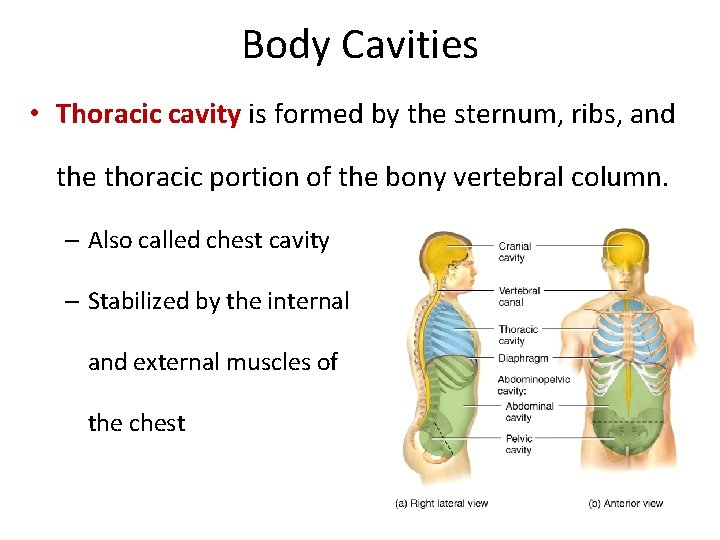
Body Cavities • Thoracic cavity is formed by the sternum, ribs, and the thoracic portion of the bony vertebral column. – Also called chest cavity – Stabilized by the internal and external muscles of the chest
- Slides: 42