
Feedback Part B Effect of Feedback on BW

Feedback: Part B – Effect of Feedback on BW Slides taken from: A. R. Hambley, Electronics, © Prentice Hall, 2/e, 2000 1
Overview l l l l The Concept of Feedback Effects of feedback on Gain Effects of feedback on non linear distortion Effects of feedback on noise Effects of feedback on input and output impedance Types of feedback networks Design of feedback amplifiers Effect of Feedback on Bandwidth l Transient and frequency response l Effect of feedback on pole location l Gain margin and phase margin l Dominant-pole compensation 2
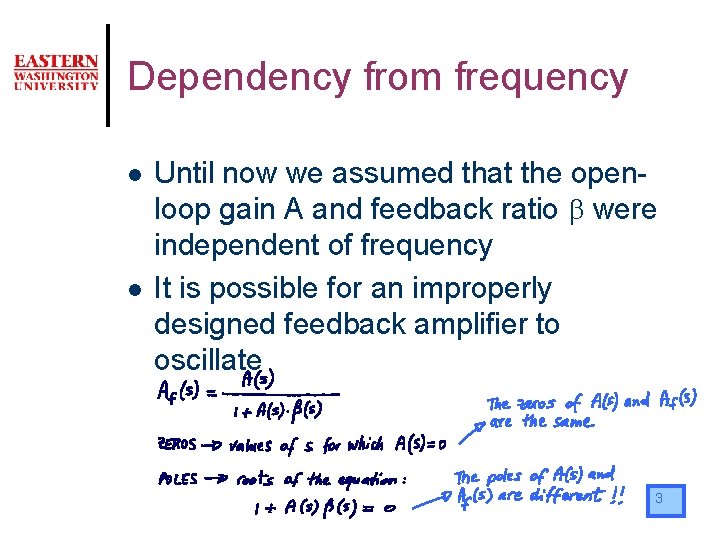
Dependency from frequency l l Until now we assumed that the openloop gain A and feedback ratio b were independent of frequency It is possible for an improperly designed feedback amplifier to oscillate 3

Transient Response in terms of pole location 4
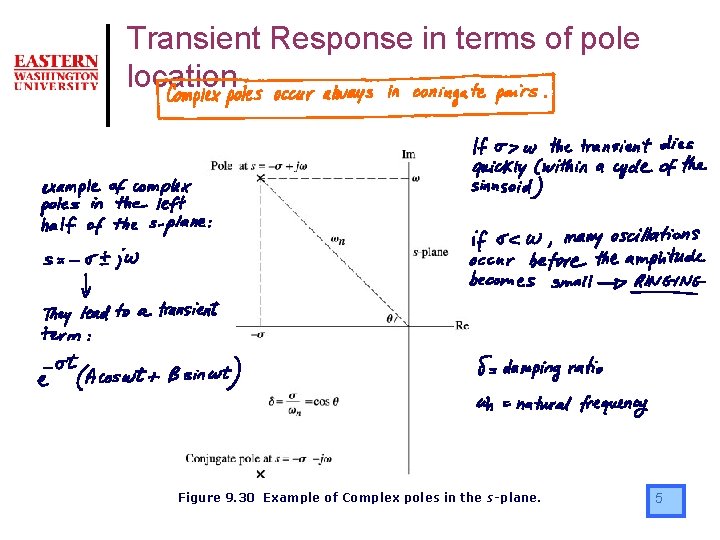
Transient Response in terms of pole location Figure 9. 30 Example of Complex poles in the s-plane. 5
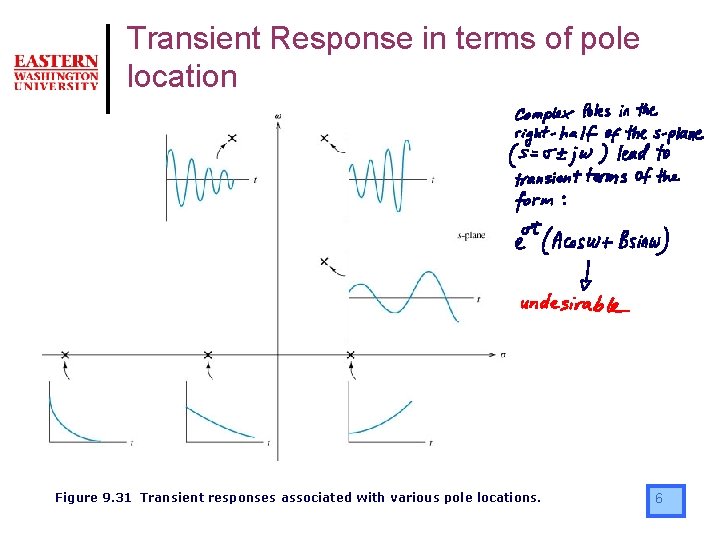
Transient Response in terms of pole location Figure 9. 31 Transient responses associated with various pole locations. 6
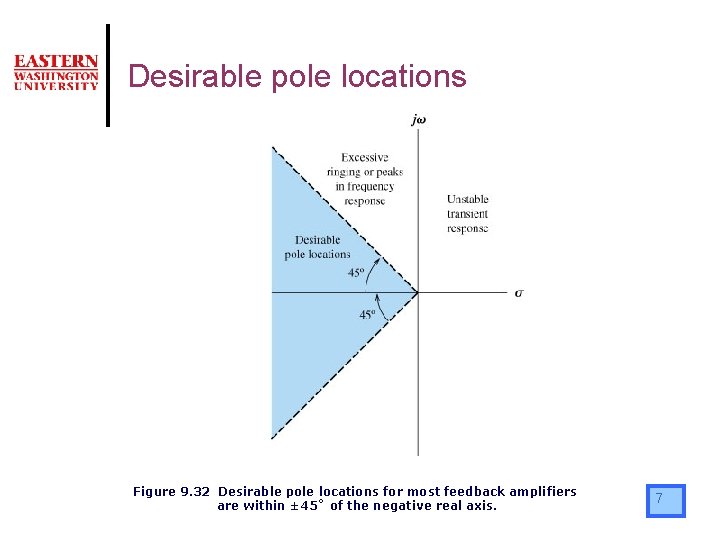
Desirable pole locations Figure 9. 32 Desirable pole locations for most feedback amplifiers are within ± 45˚ of the negative real axis. 7
Effect of Feedback on pole locations l l l Feedback has dramatic effect on pole locations of amplifiers. This in turn affect the transient response and frequency response of the amplifier Amplifiers Taxonomy: Dominant-Pole Amplifiers l Two-Pole Amplifiers l Amplifiers with three or more poles l 8
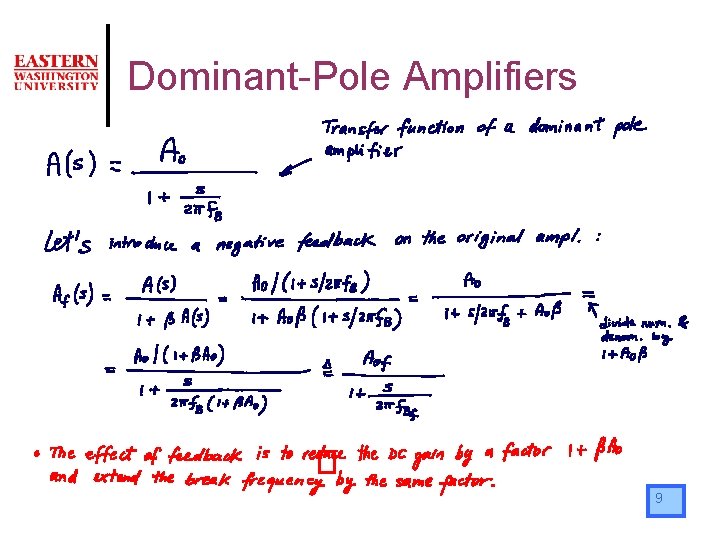
Dominant-Pole Amplifiers 9
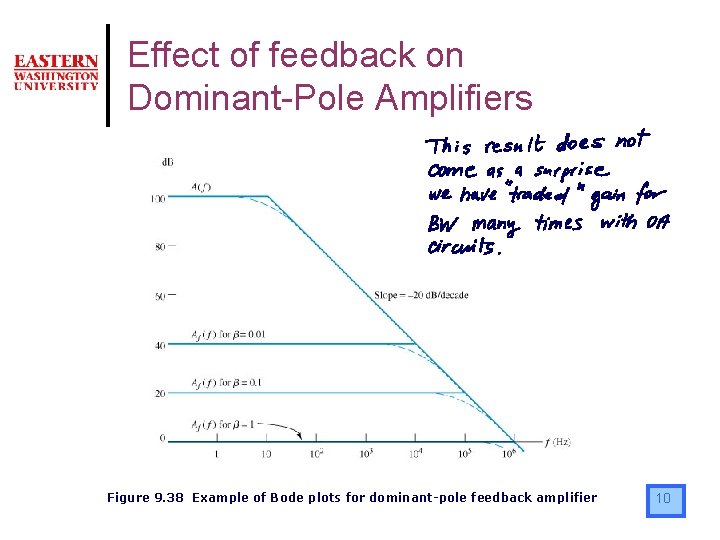
Effect of feedback on Dominant-Pole Amplifiers Figure 9. 38 Example of Bode plots for dominant-pole feedback amplifier 10
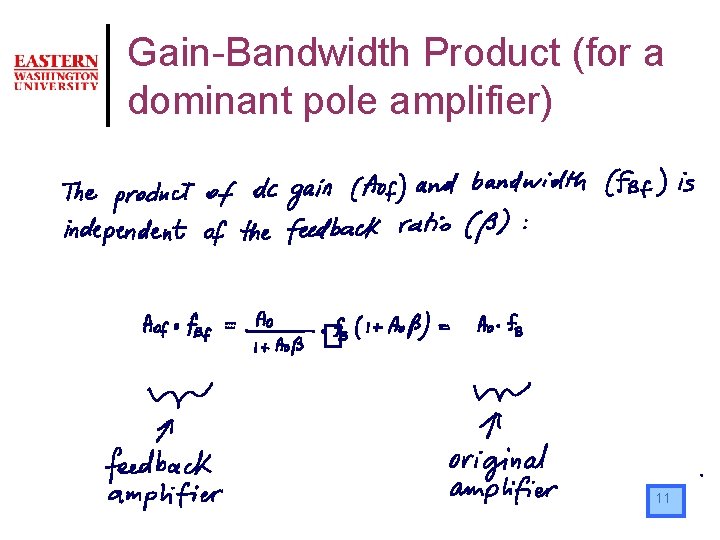
Gain-Bandwidth Product (for a dominant pole amplifier) 11
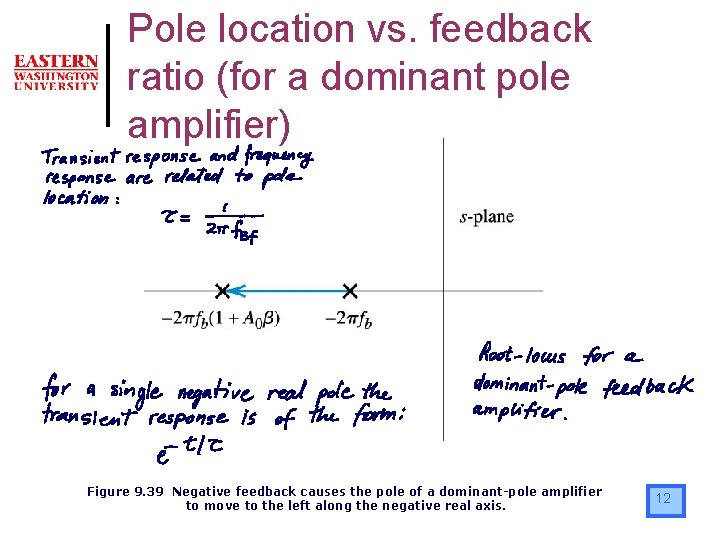
Pole location vs. feedback ratio (for a dominant pole amplifier) Figure 9. 39 Negative feedback causes the pole of a dominant-pole amplifier to move to the left along the negative real axis. 12
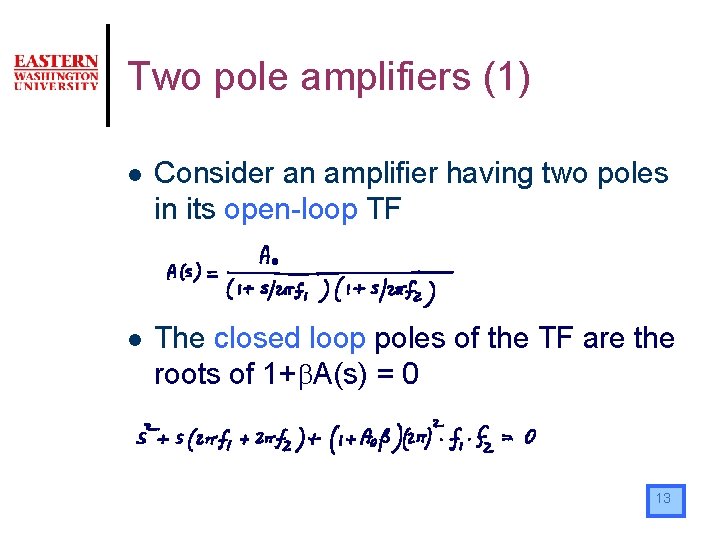
Two pole amplifiers (1) l Consider an amplifier having two poles in its open-loop TF l The closed loop poles of the TF are the roots of 1+b. A(s) = 0 13
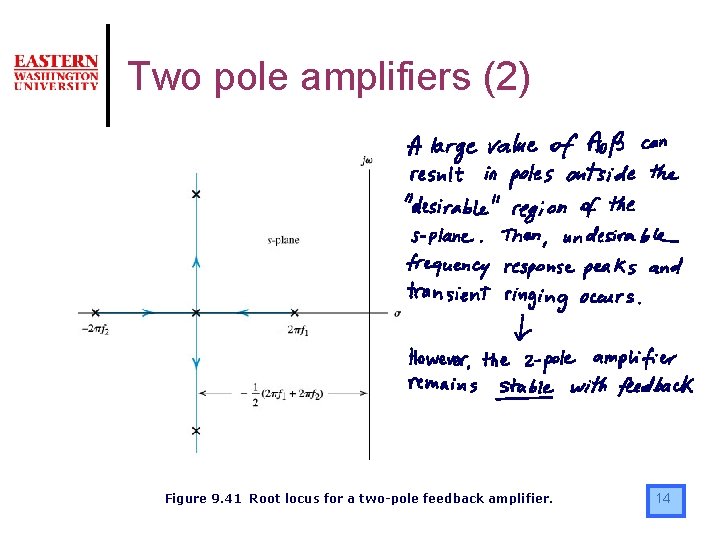
Two pole amplifiers (2) Figure 9. 41 Root locus for a two-pole feedback amplifier. 14
Amplifiers with 3 or more poles l An amplifier with 3 or more poles can become unstable when feedback is employed. l Typically the open-loop poles of the amplifier are on the negative real axis, but feedback can cause them to move into the right half of the s-plane. 15
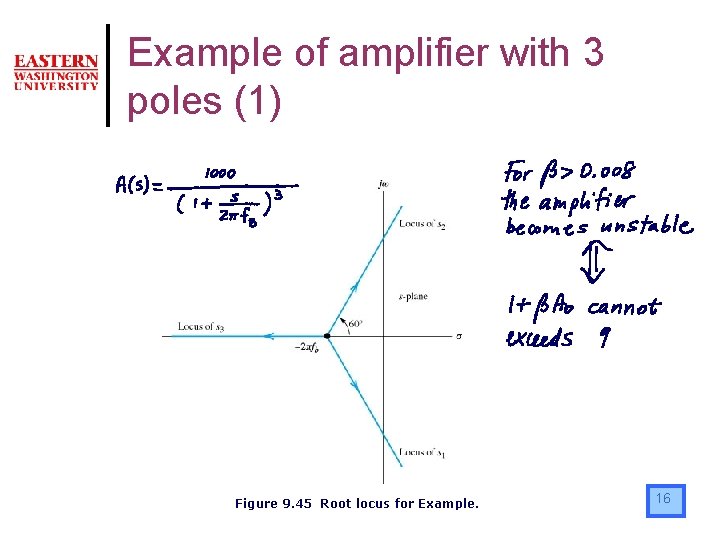
Example of amplifier with 3 poles (1) Figure 9. 45 Root locus for Example. 16
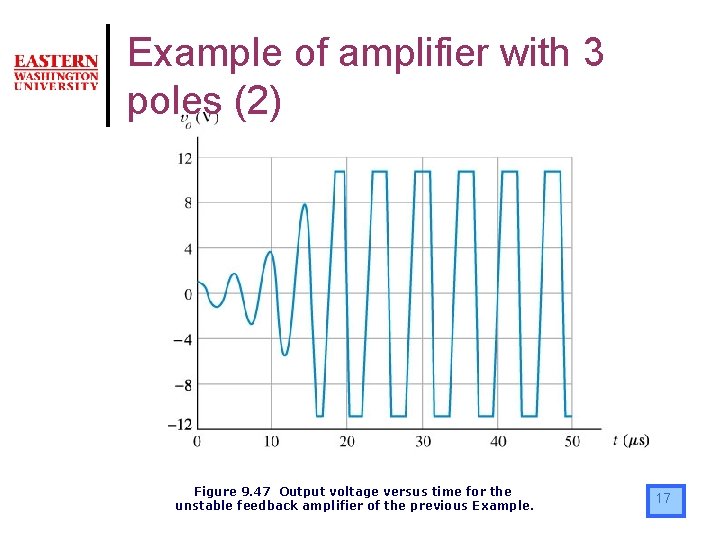
Example of amplifier with 3 poles (2) Figure 9. 47 Output voltage versus time for the unstable feedback amplifier of the previous Example. 17
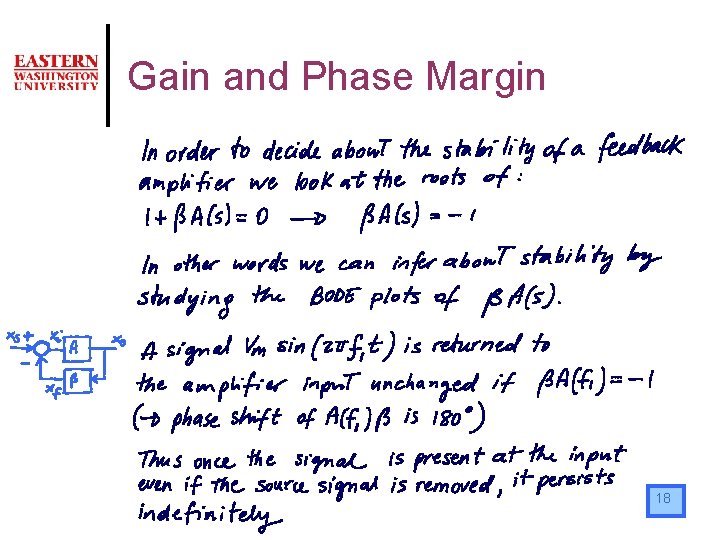
Gain and Phase Margin 18
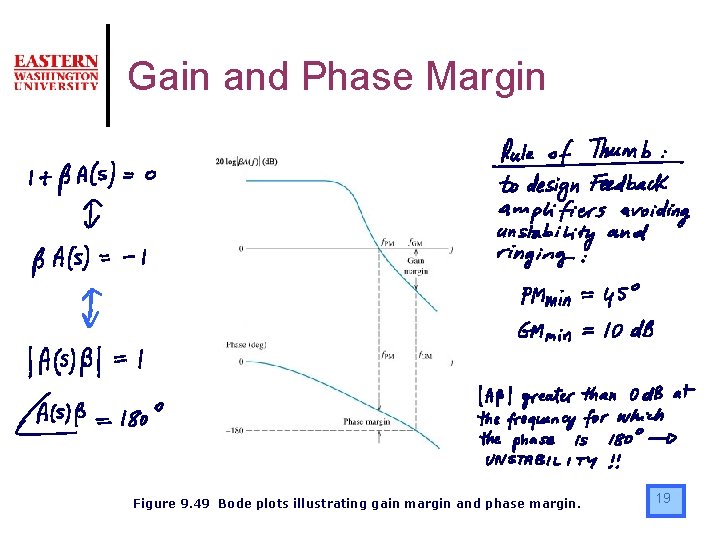
Gain and Phase Margin Figure 9. 49 Bode plots illustrating gain margin and phase margin. 19
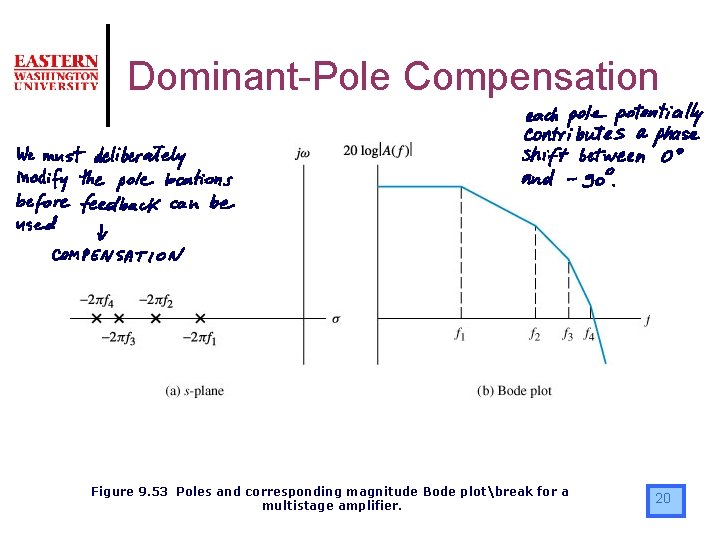
Dominant-Pole Compensation Figure 9. 53 Poles and corresponding magnitude Bode plotbreak for a multistage amplifier. 20
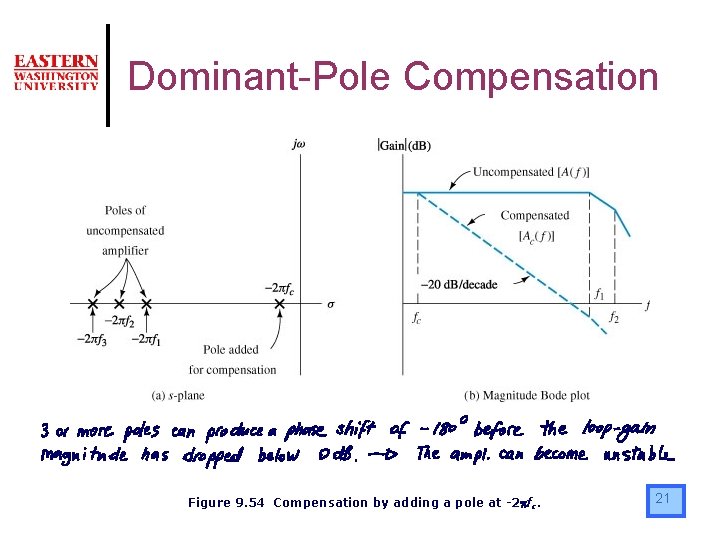
Dominant-Pole Compensation Figure 9. 54 Compensation by adding a pole at -2 pfc. 21
- Slides: 21