
Feedback Mechanisms Negative Feedback In Activity Describe how
Feedback Mechanisms Negative Feedback
“In” Activity • Describe how (you think) your body knows to keep its temperature from getting too high. ▫ Think about which systems interact and what they’re doing!
How did your answer compare? • 1. Your nervous system detects a change in temperature • 2. Your brain sends signals to your skin (integumentary) and sweat glands (endocrine) to start the production of sweat • 3. The evaporation of sweat cools your body • 4. Your nervous system detects the cooling temperature and signals to stop sweat production
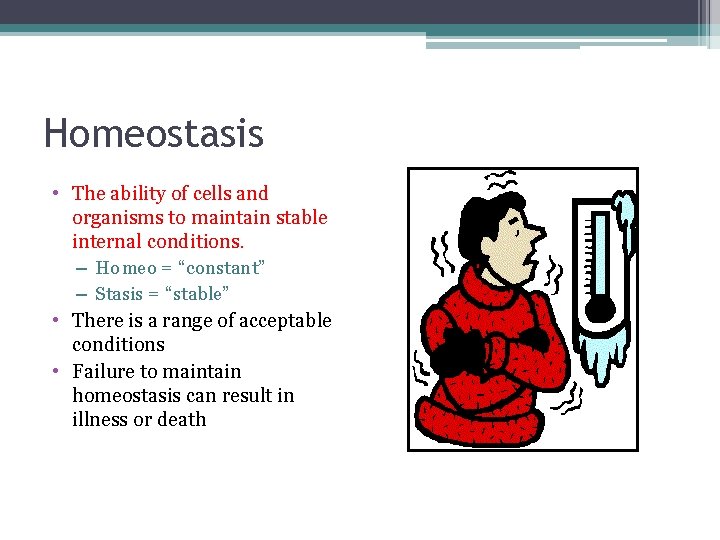
Homeostasis • The ability of cells and organisms to maintain stable internal conditions. – Homeo = “constant” – Stasis = “stable” • There is a range of acceptable conditions • Failure to maintain homeostasis can result in illness or death
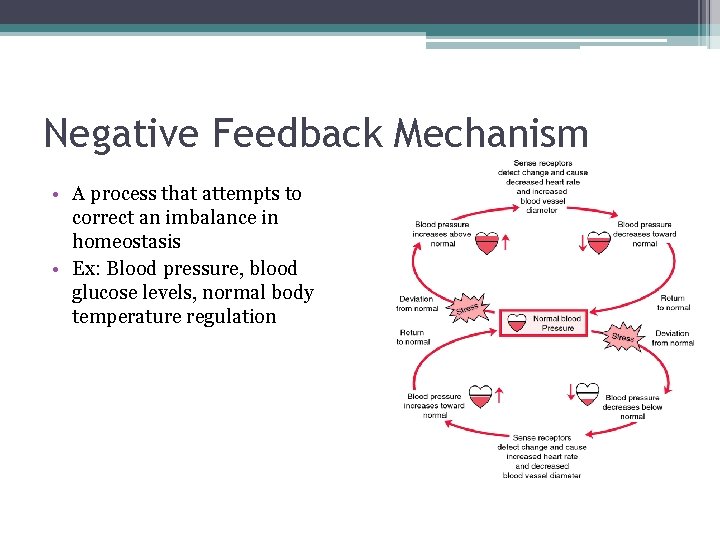
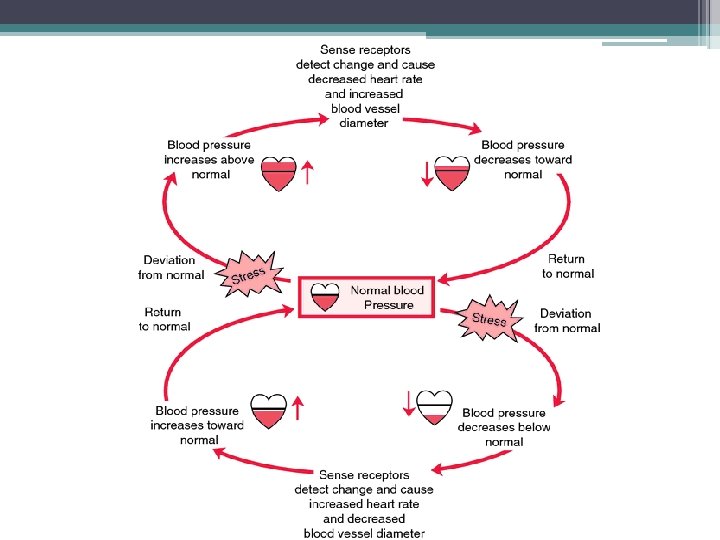
Negative Feedback Mechanism • A process that attempts to correct an imbalance in homeostasis • Ex: Blood pressure, blood glucose levels, normal body temperature regulation
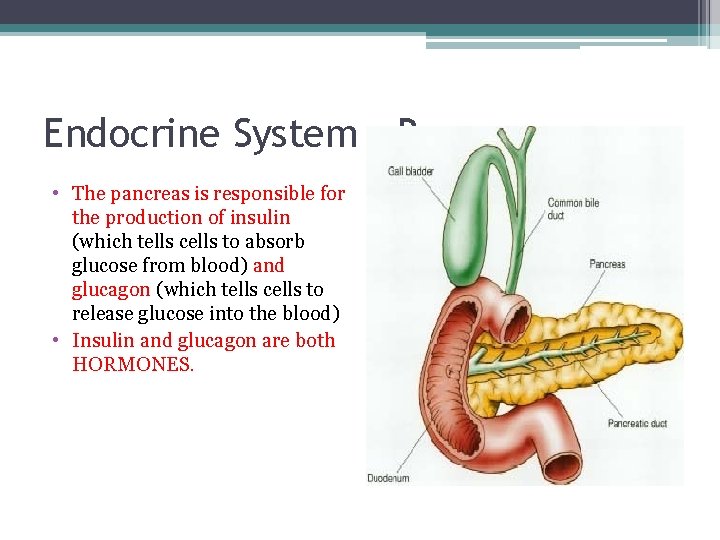
Endocrine System - Pancreas • The pancreas is responsible for the production of insulin (which tells cells to absorb glucose from blood) and glucagon (which tells cells to release glucose into the blood) • Insulin and glucagon are both HORMONES.
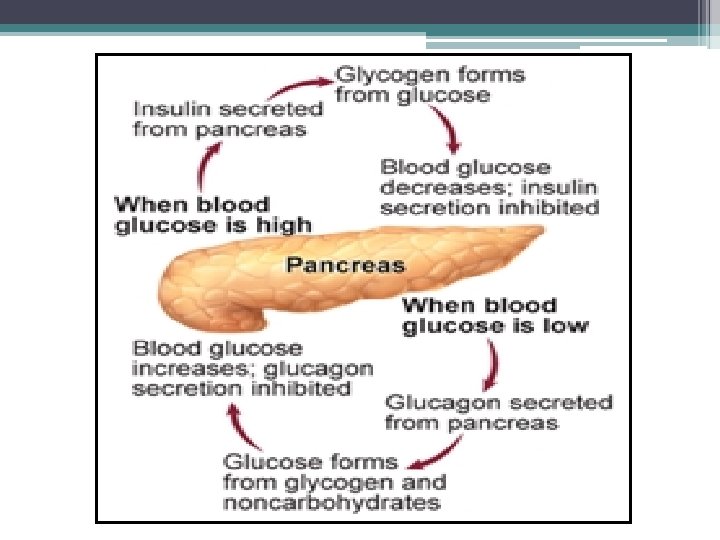
Endocrine System—Controls When would you expect to find HIGH levels of insulin in a person’s blood? ____________________________________________ ______ When would you expect to find HIGH levels of glucagon in a person’s blood? ____________________________________________ ______ What causes Diabetes Mellitus? (See p. 1007) _________________________ ______
Endocrine System—Controls When would you expect to find HIGH levels of insulin in a person’s blood? You should expect high levels of insulin in blood when blood glucose levels are HIGH. When would you expect to find HIGH levels of glucagon in a person’s blood? Glucagon can be broken down into glucose, so when it is released into the blood, blood glucose levels must be LOW. What causes Diabetes Mellitus? (See p. 1007) Diabetes can be caused when a person’s pancreas is no longer functioning (Type 1 Diabetes) or when their cells no longer respond to insulin (Type 2 Diabetes).
“OUT” Question. . . • Explain how the endocrine and nervous system work together to maintain homeostasis. Give an example!
- Slides: 11