
Feedback Feedback in education John Hattie Ron Berger
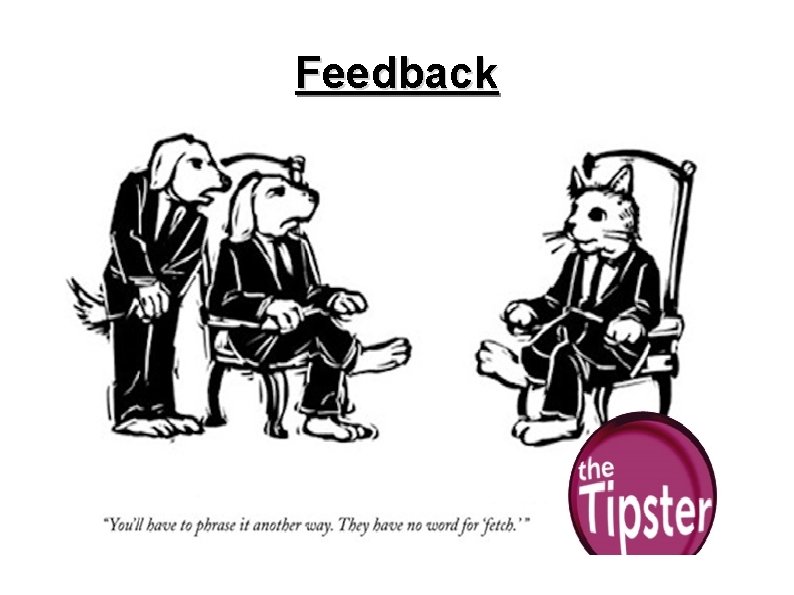
Feedback
Feedback in education • John Hattie • Ron Berger • Carol Dweck • Dylan William • William and Black • Kluger and Denisi
Task 1 • In about 20 -30 words write down on a post it note what you hope to achieve by the end of our CPD sessions on Feedback! • (5 mins)
Task 2 • In groups of up to 3 people write a SWOT analysis on feedback. It can be generic but you may also make reference to your specialism: • Strengths • Weaknesses • Opportunities • Threats • (10 mins)
Task 3 • With a partner discuss the different types of feedback in your subject area. You should consider: 1. Type(s) of feedback e. g. written, spoken, comment, grade, score 2. Does it vary depending on the piece of work? 3. How frequently do you give feedback? 4. How is the pupil involved? 5. Does the pupil have the chance to redraft and resubmit? (5 -10 mins)

Task 3 - example • ILC department 1. In languages we use a variety of feedback techniques: 2. Verbal e. g. très bien, extra! . Or it can be something like, “That was very good but just check the way you pronounced this word. ” 3. Written – This can be a simple score out of ten for spelling test, a tick and a written comment in the target language, a grade if it is a extended piece of writing at GCSE level or a more substantial WWGW / EBI feedback if a student had written a piece of writing of at least a paragraph. 4. Some form of feedback is given both during and at the end of each task. 5. The pupil has the chance to comment on his / her work and is often ask to provide corrections or answer a question at the end of their piece of work. 6. Once feedback is provided the pupil will have the chance to resubmit but due to time this is not always possible.
Task 4 Discuss the statements below with a partner: 1. Feedback must always be positive. 2. A score and brief comment is more effective than providing just a score. 3. A student should always be involved in the feedback process. 4. Sometimes a score is enough feedback. 5. Peer assessment is always useful. 6. Whole class feedback has little or no impact. 7. Positive feedback can be damaging to a pupil’s growth mindset. 8. For feedback to work we must set clear, challenging goals. 9. Praise should be left out of feedback altogether
Task 5 – ineffective feedback
• A student (Joe) shares with another student (Jane) a piece of writing that they are trying to refine. • Jane writes on the paper “great job!” • This is kind feedback, but it is neither helpful nor specific. Joe cannot do anything else to refine his paper with this feedback.

A student (Jessica) shares with another student (Jim) a piece of writing that they are trying to refine. Jim writes, “You need more examples and to fix your grammar. ” While this is still kind, and even helpful, it is not specific. If Jessica knew what grammatical errors she had made she might have been able to fix them.
Austin’s Butterfly • Watch the video on Austin’s Butterfly and note down what the children say when discussing feedback. • We can then look at how this can impact upon our specific subjects both positively and negatively. • http: //www. bing. com/videos/search? q=austin's+butterfly+youtube&docid=60805190775917899 1&mid=8 A 71 A 68 BA 96 DBFE 65400&view=detail&FORM=VIRE 1#vie w=detail&mid=8 A 71 A 68 BA 96 DBFE 65400

Ron Berger on critique and feedback In order to create beautiful work we must be willing to refine. To refine we require critique and feedback. In order to critique we need models and standards (what is beauty, what is finished) For feedback to be useful to us it must be: Kind Helpful Specific
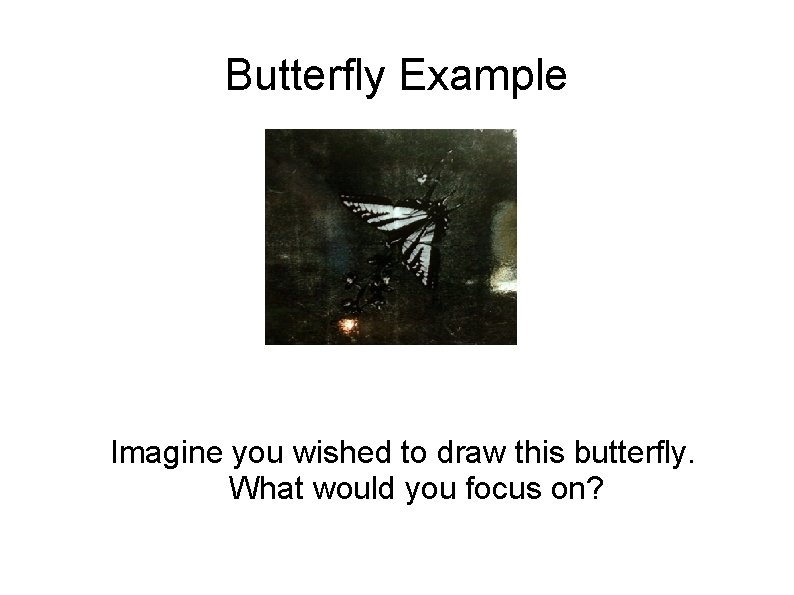
Butterfly Example Imagine you wished to draw this butterfly. What would you focus on?
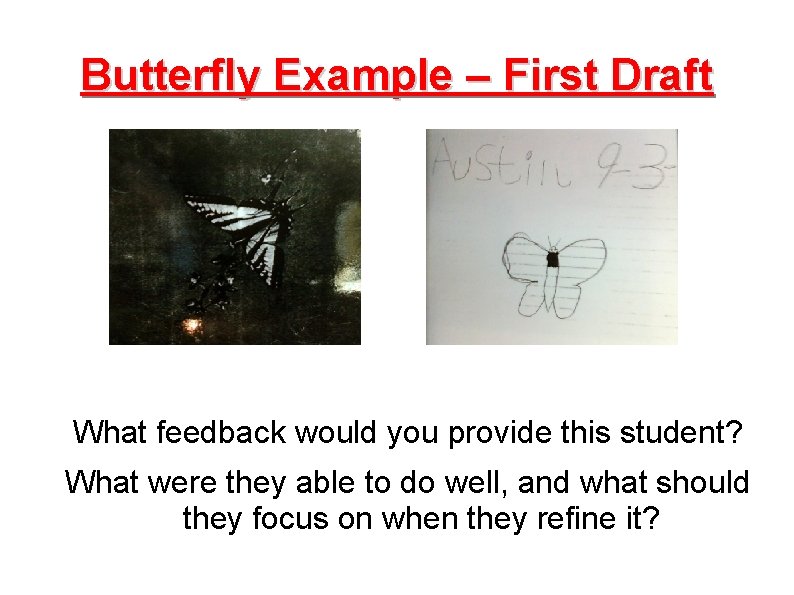
Butterfly Example – First Draft What feedback would you provide this student? What were they able to do well, and what should they focus on when they refine it?
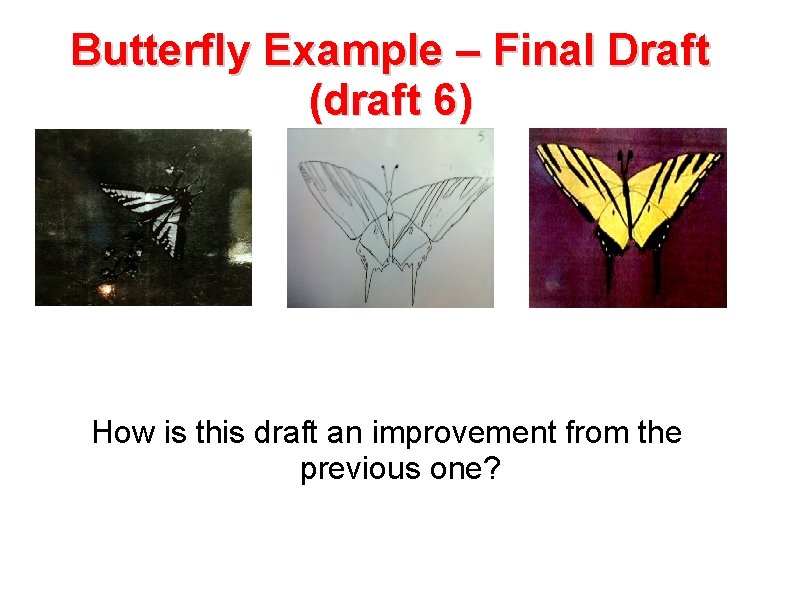
Butterfly Example – Final Draft (draft 6) How is this draft an improvement from the previous one?

Butterfly Example – Final Draft What were the standards that determined your feedback? What makes this draft a final draft?
Giving Effective Feedback Think of the butterfly examples. In each of those, the artist was able to make refinements and improvements because their feedback was: Kind Helpful Specfic The other reasons why these were effective feedback sessions is because: 1) There was a culture of welcoming feedback and criticism. 2) The feedback and refinement cycle was repeated until the creator was satisfied.
Implications • What are the implications of providing this level of feedback for our students. • Discuss in 3’s and feedback to the HUB in about 5 mins.
Task 7 • Select one of the labelled documents on feedback. Read through with a partner and present your understanding and findings to the rest of your HUB. Each presentation should allow time for discussion, questions and reflection • (15 mins to read and prepare) • ( 5 mins per group to present and discuss)
Task 8 • Consider document 5. What are our thoughts on the 8 ideas presented?
Action plan for next time
- Slides: 21