
FEEDBACK CIRCUITS CLASSIFICATION OF AMPLIFIER l CONCEPT OF
FEEDBACK CIRCUITS CLASSIFICATION OF AMPLIFIER l CONCEPT OF FEEDBACK l TYPES OF FEEDBACK l FEEDBACK TOPOLOGIES l Reference Books: 1. Electronic Devices and circuit theory, int. edition (Chapter 14) 2. Microelectronics circuits, 5 th ed. Sedra and smith (Chapter 8) 3. Microelectronic circuits: analysis and design (Chapter 10) 1
Classification of Amplifiers l Before proceeding with the concept of feedback it is useful to classify amplifiers into 4 basic categories based on their input & output signal relationships. ¡ Voltage amplifier ¡ Current amplifier ¡ Transconductance amplifier ¡ Transresistance amplifier 2
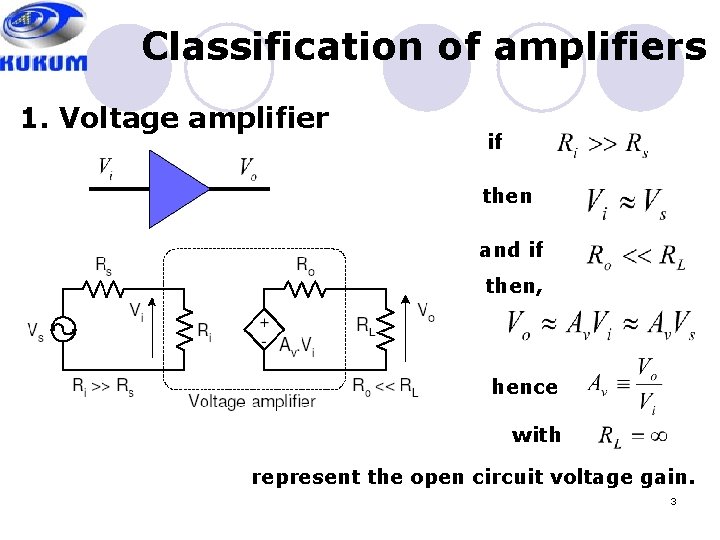
Classification of amplifiers 1. Voltage amplifier if then and if then, hence with represent the open circuit voltage gain. 3
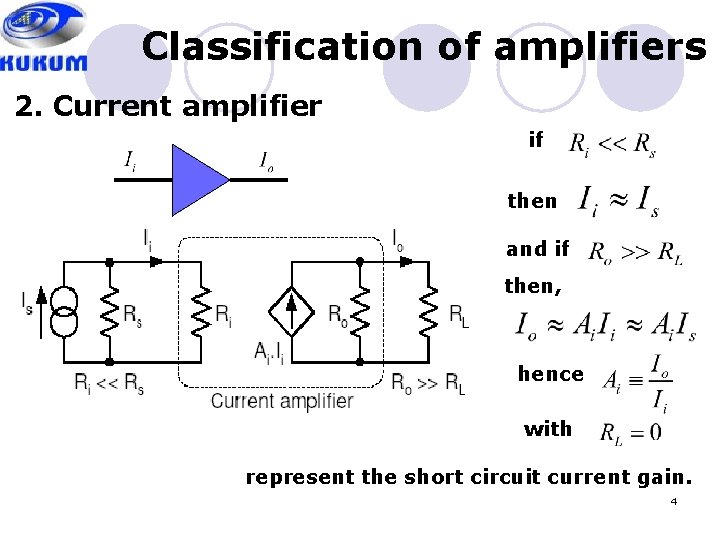
Classification of amplifiers 2. Current amplifier if then and if then, hence with represent the short circuit current gain. 4
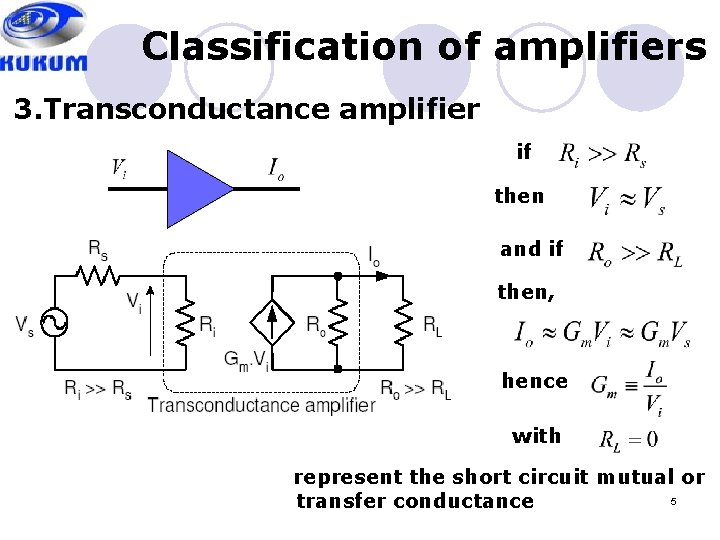
Classification of amplifiers 3. Transconductance amplifier if then and if then, hence with represent the short circuit mutual or 5 transfer conductance
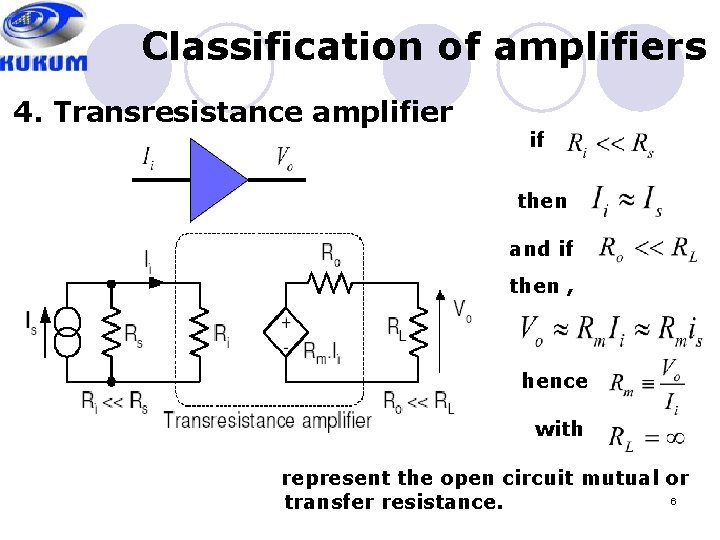
Classification of amplifiers 4. Transresistance amplifier if then and if then , hence with represent the open circuit mutual or 6 transfer resistance.
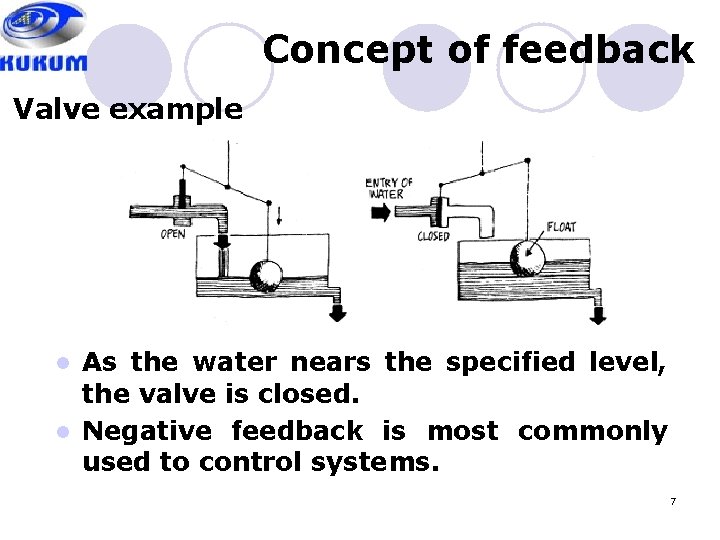
Concept of feedback Valve example As the water nears the specified level, the valve is closed. l Negative feedback is most commonly used to control systems. l 7
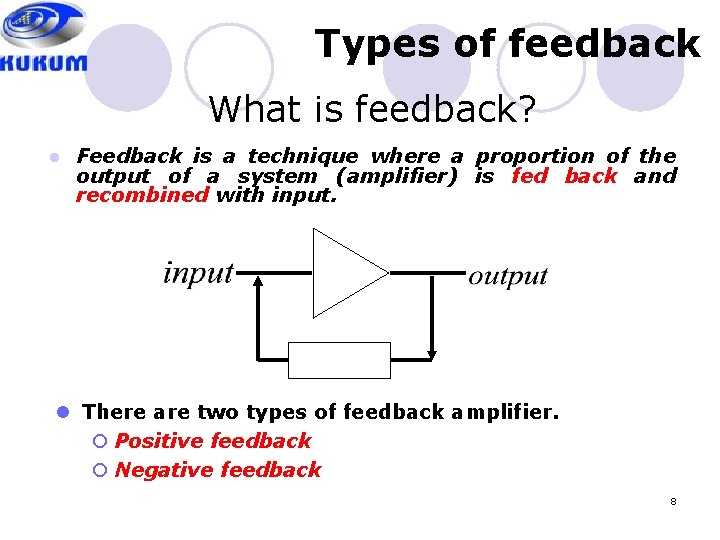
Types of feedback What is feedback? l Feedback is a technique where a proportion of the output of a system (amplifier) is fed back and recombined with input. l There are two types of feedback amplifier. ¡ Positive feedback ¡ Negative feedback 8
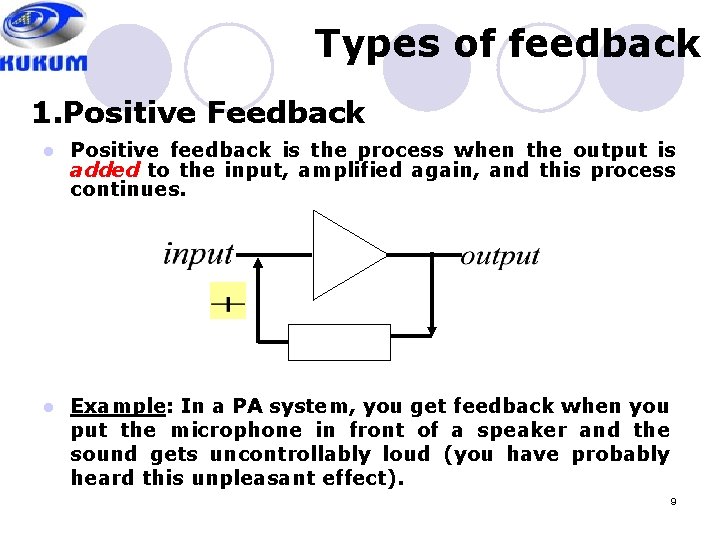
Types of feedback 1. Positive Feedback l Positive feedback is the process when the output is added to the input, amplified again, and this process continues. l Example: In a PA system, you get feedback when you put the microphone in front of a speaker and the sound gets uncontrollably loud (you have probably heard this unpleasant effect). 9
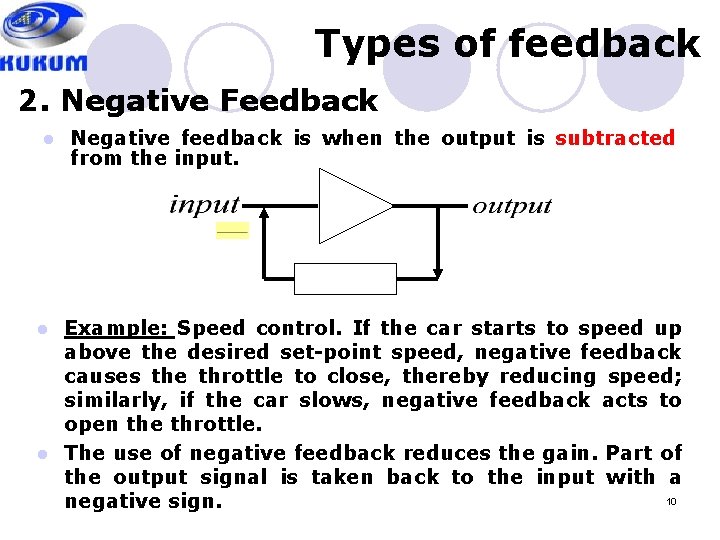
Types of feedback 2. Negative Feedback l Negative feedback is when the output is subtracted from the input. Example: Speed control. If the car starts to speed up above the desired set-point speed, negative feedback causes the throttle to close, thereby reducing speed; similarly, if the car slows, negative feedback acts to open the throttle. l The use of negative feedback reduces the gain. Part of the output signal is taken back to the input with a 10 negative sign. l

Types of feedback Negative Feedback Gain The gain with feedback (or closed-loop gain) Af as follows: The quantity A is called the loop gain, and the quantity (1+ A) is called the amount of feedback. 11
Advantages of Negative Feedback 1. Stabilization of gain ¡ make the gain less sensitive to changes in circuit components e. g. due to changes in temperature. 2. Reduce non-linear distortion ¡ make the output proportional to the input, keeping the gain constant, independent of signal level. 3. Reduce the effect of noise ¡ minimize the contribution to the output of unwanted signals generated in circuit components or extraneous interference. 12
Advantages of Negative Feedback (cont. ) 4. Extend the bandwidth of the amplifier ¡ Reduce the gain and increase the bandwidth 5. Modification the input and output impedances ¡ raise or lower the input and output impedances by selection of the appropriate feedback topology. Disadvantages of Negative Feedback 1. Circuit gain - Reduce 2. Stability – Tend to be oscillate 13

Basic structure of feedback amplifier A : open-loop gain B : feedback factor xs + xi A xo - xf Error signal The gain of the feedback amplifier l If AB is very large, the overall gain becomes a function of the feedback network only. 14
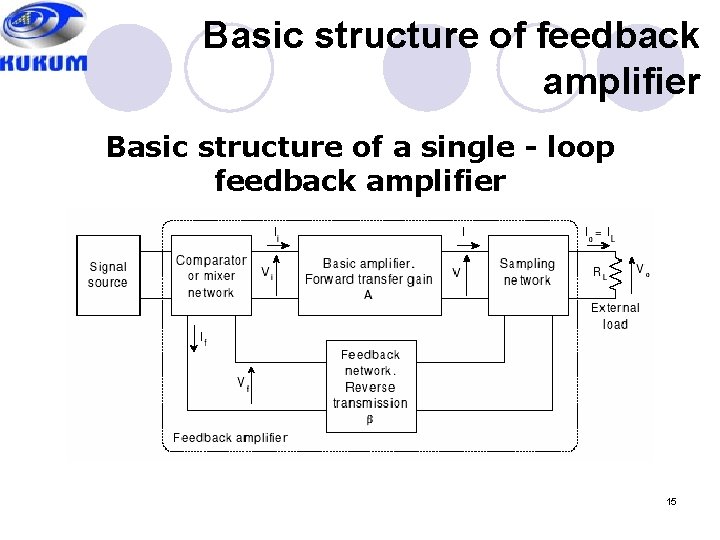
Basic structure of feedback amplifier Basic structure of a single - loop feedback amplifier 15
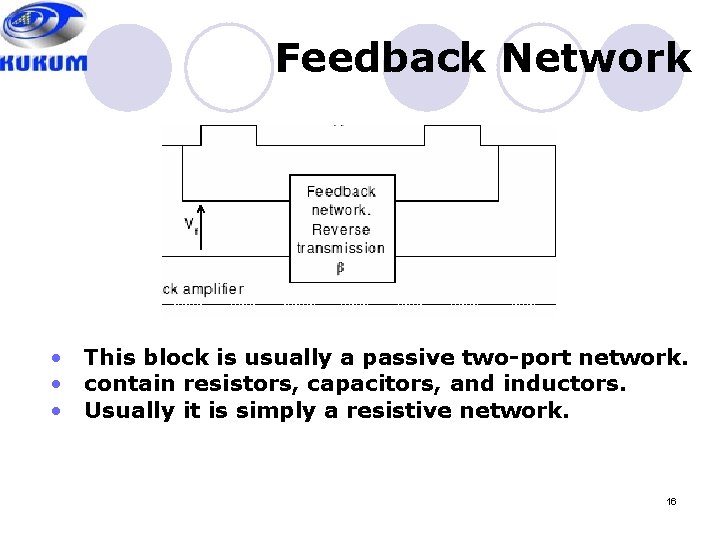
Feedback Network • • • This block is usually a passive two-port network. contain resistors, capacitors, and inductors. Usually it is simply a resistive network. 16
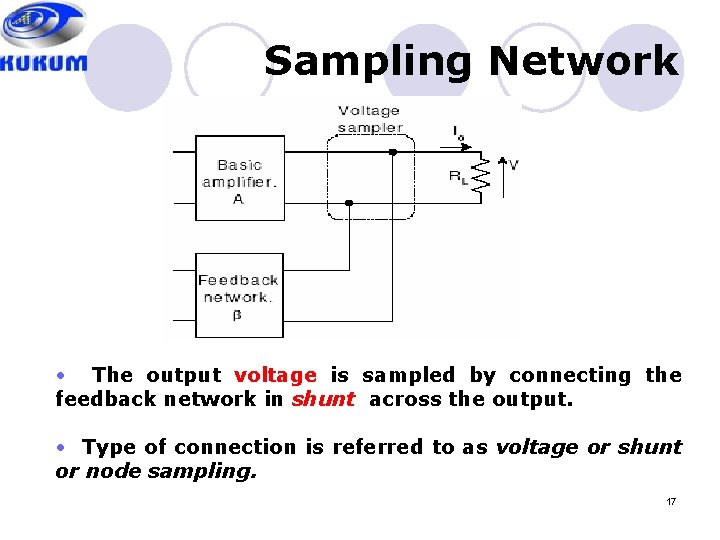
Sampling Network • The output voltage is sampled by connecting the feedback network in shunt across the output. • Type of connection is referred to as voltage or shunt or node sampling. 17
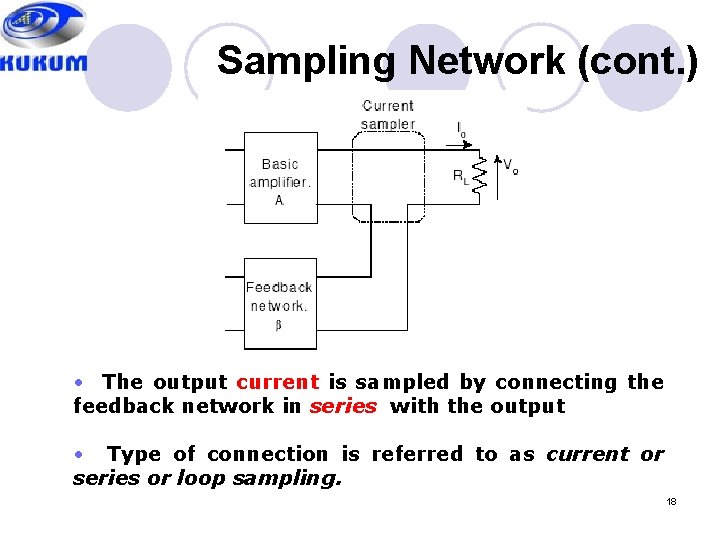
Sampling Network (cont. ) • The output current is sampled by connecting the feedback network in series with the output • Type of connection is referred to as current or series or loop sampling. 18
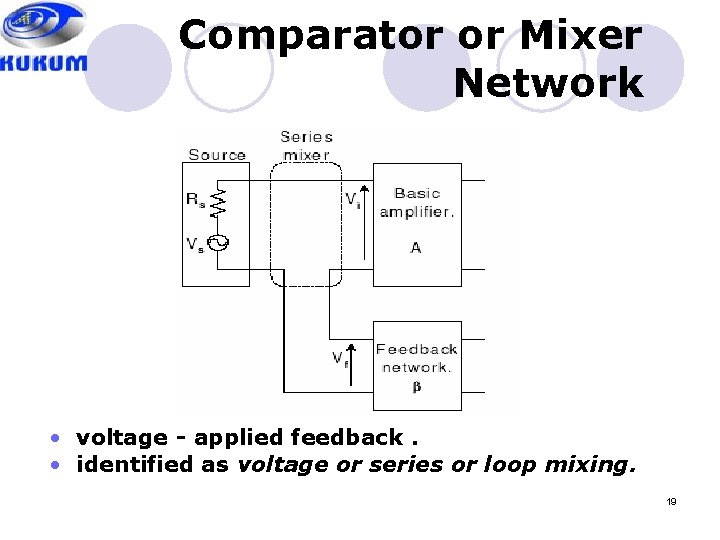
Comparator or Mixer Network • voltage - applied feedback. • identified as voltage or series or loop mixing. 19
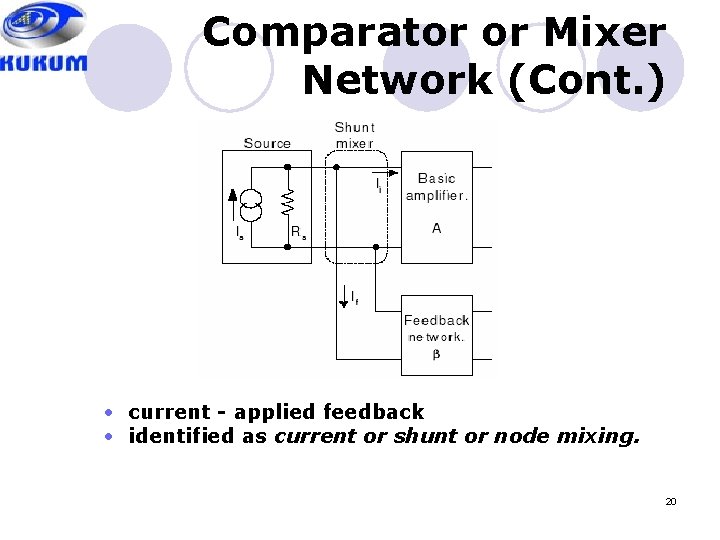
Comparator or Mixer Network (Cont. ) • current - applied feedback • identified as current or shunt or node mixing. 20
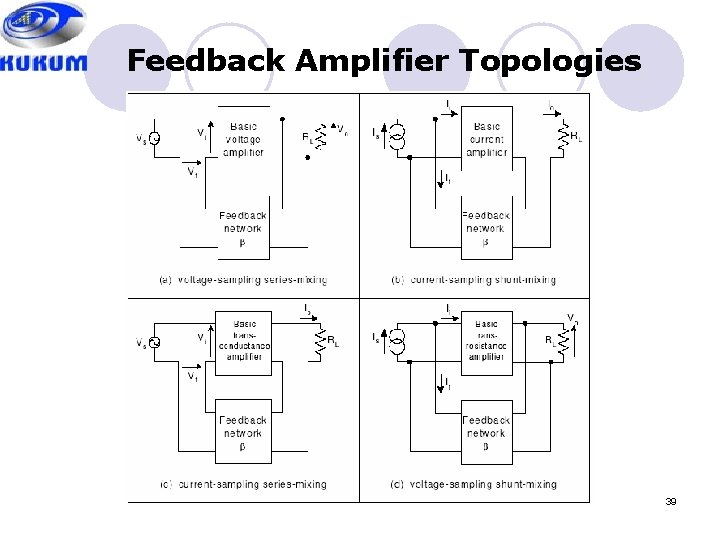
Feedback Topologies l Four basic feedback topologies based on the parameter to be amplified (voltage or current) and the output parameter (voltage or current). l The four feedback circuit can be described by the types of connections at the input and output of circuit. 21
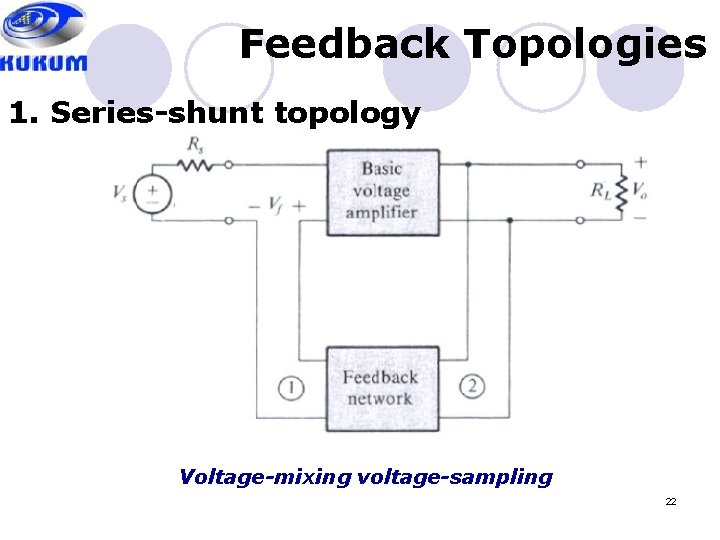
Feedback Topologies 1. Series-shunt topology Voltage-mixing voltage-sampling 22
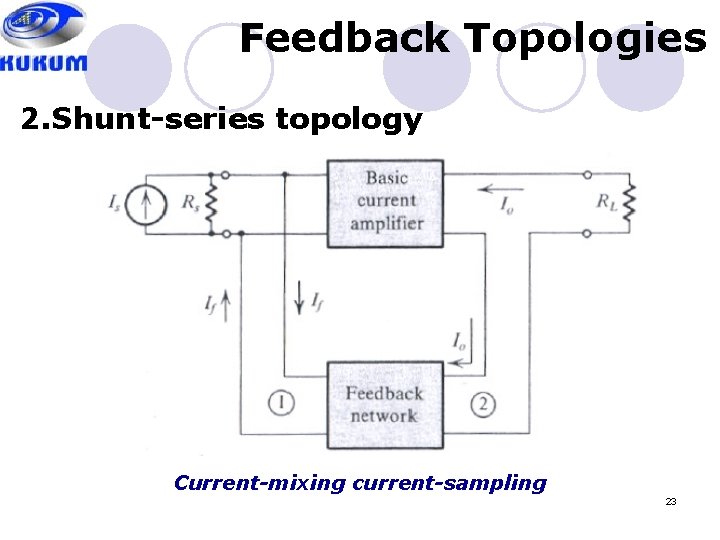
Feedback Topologies 2. Shunt-series topology Current-mixing current-sampling 23
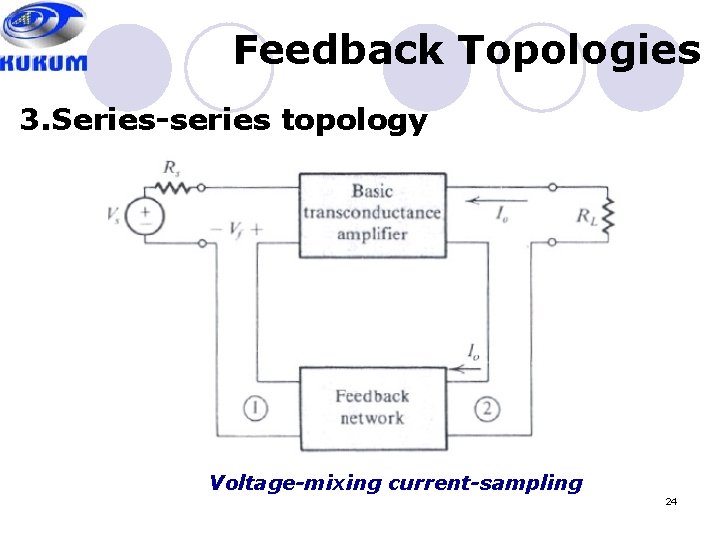
Feedback Topologies 3. Series-series topology Voltage-mixing current-sampling 24
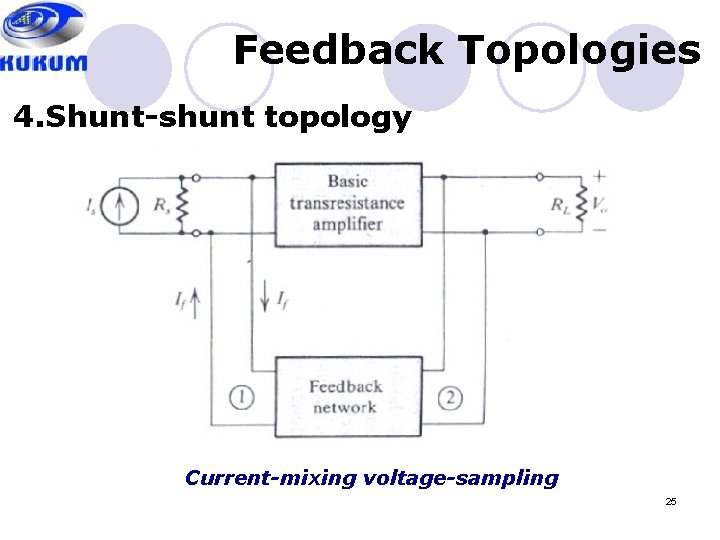
Feedback Topologies 4. Shunt-shunt topology Current-mixing voltage-sampling 25
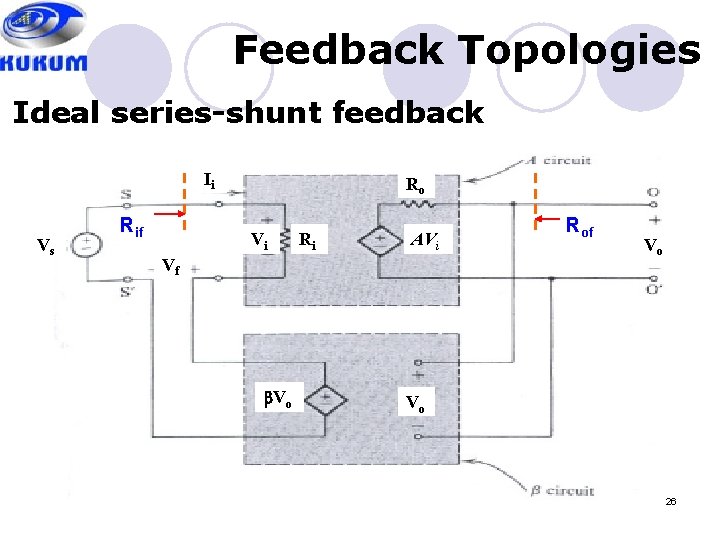
Feedback Topologies Ideal series-shunt feedback Ii Vs Rif Ro Vi Ri AVi Vf Vo Rof Vo Vo 26
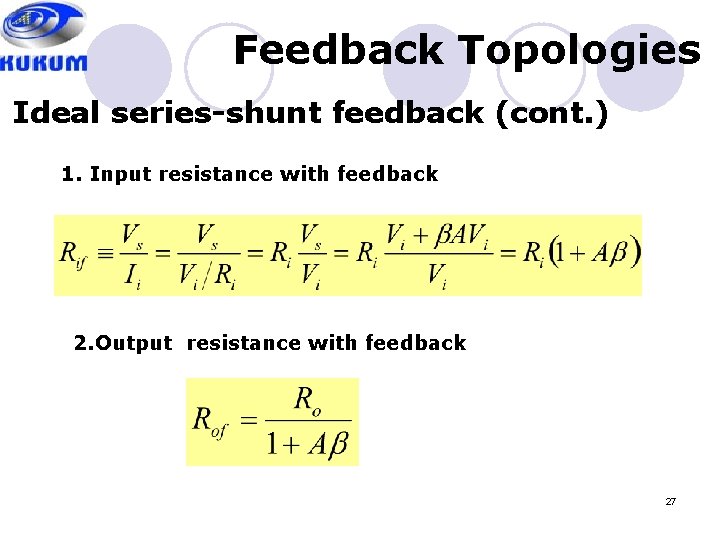
Feedback Topologies Ideal series-shunt feedback (cont. ) 1. Input resistance with feedback 2. Output resistance with feedback 27
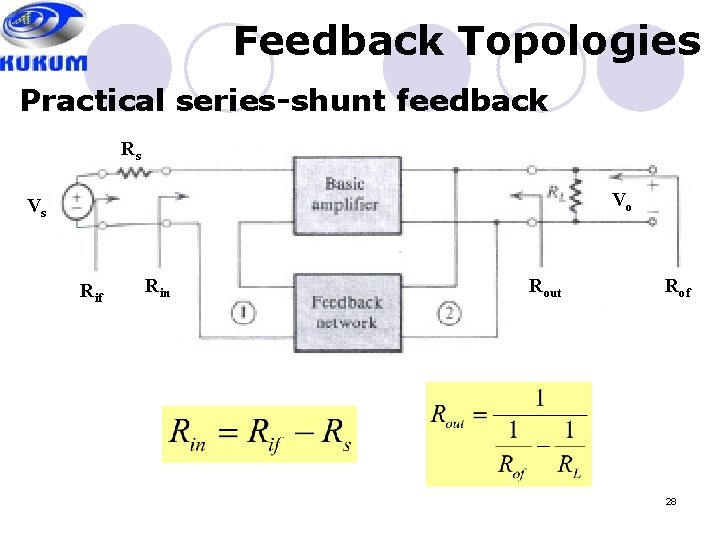
Feedback Topologies Practical series-shunt feedback Rs Vo Vs Rif Rin Rout Rof 28
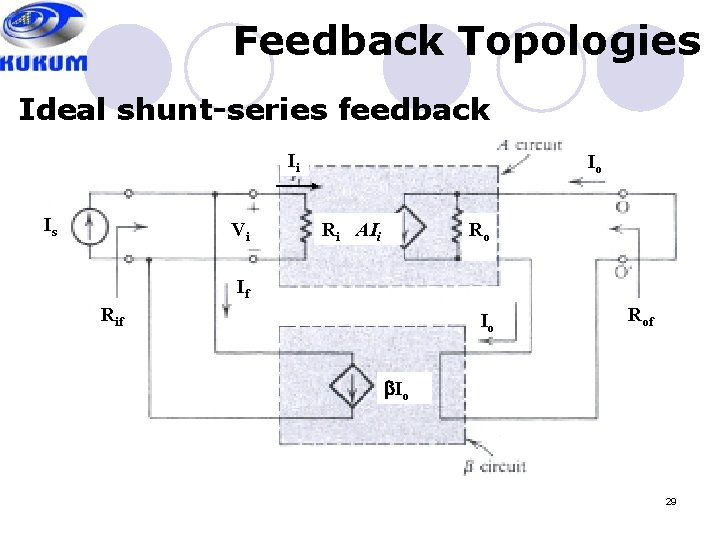
Feedback Topologies Ideal shunt-series feedback Ii Is Vi Io Ri AIi Ro If Rif Io Rof Io 29
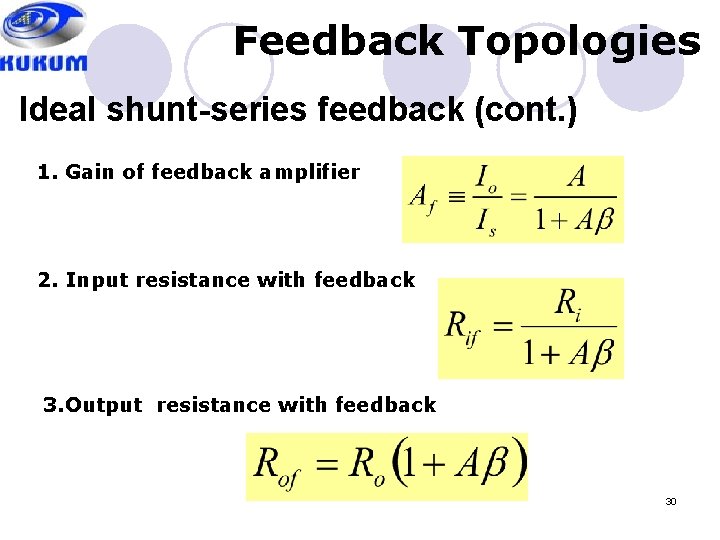
Feedback Topologies Ideal shunt-series feedback (cont. ) 1. Gain of feedback amplifier 2. Input resistance with feedback 3. Output resistance with feedback 30
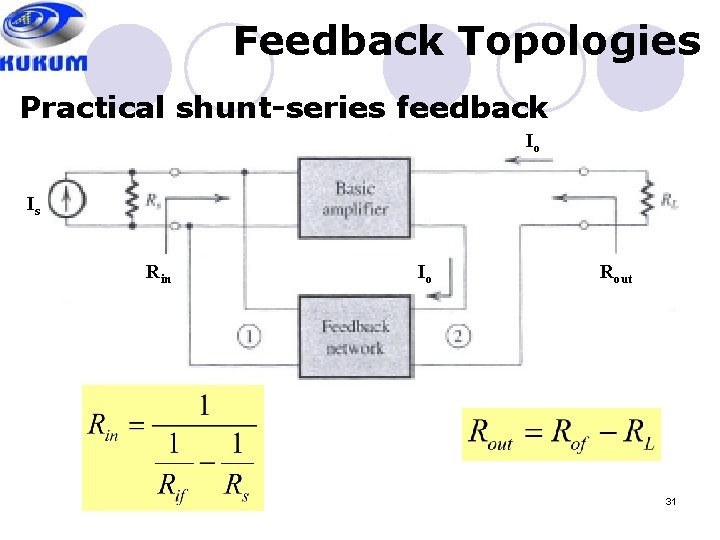
Feedback Topologies Practical shunt-series feedback Io RL Is Rin Io Rout 31
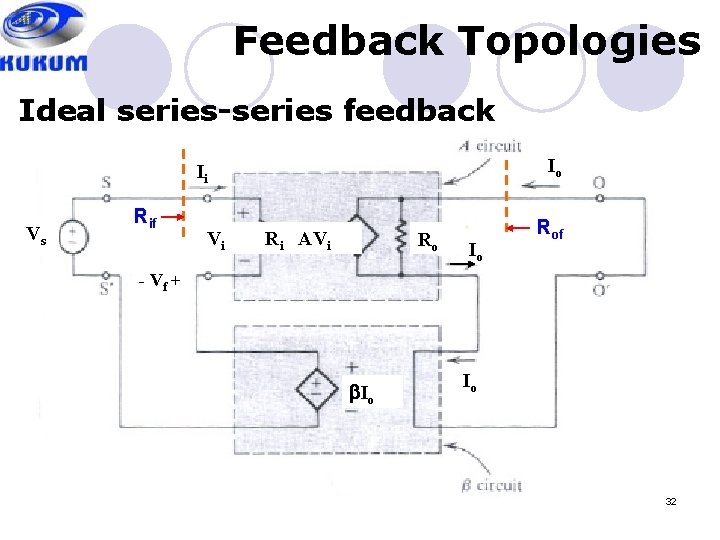
Feedback Topologies Ideal series-series feedback Io Ii Vs Rif Vi Ri AVi Ro Io Rof - Vf + Io Io 32
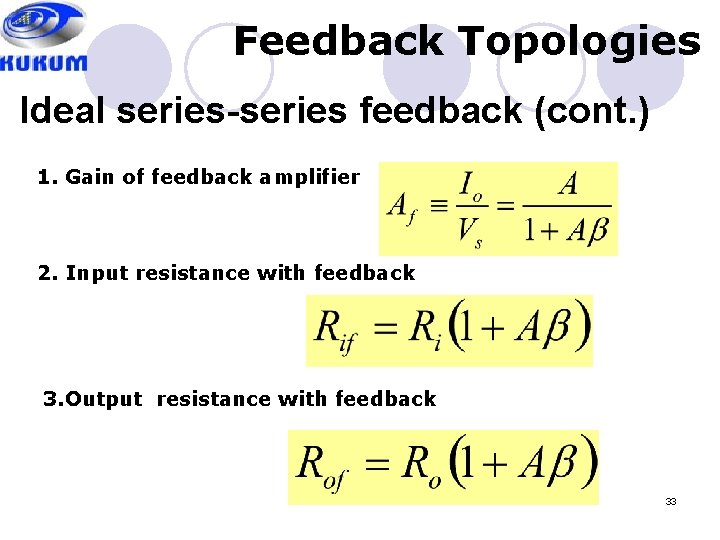
Feedback Topologies Ideal series-series feedback (cont. ) 1. Gain of feedback amplifier 2. Input resistance with feedback 3. Output resistance with feedback 33
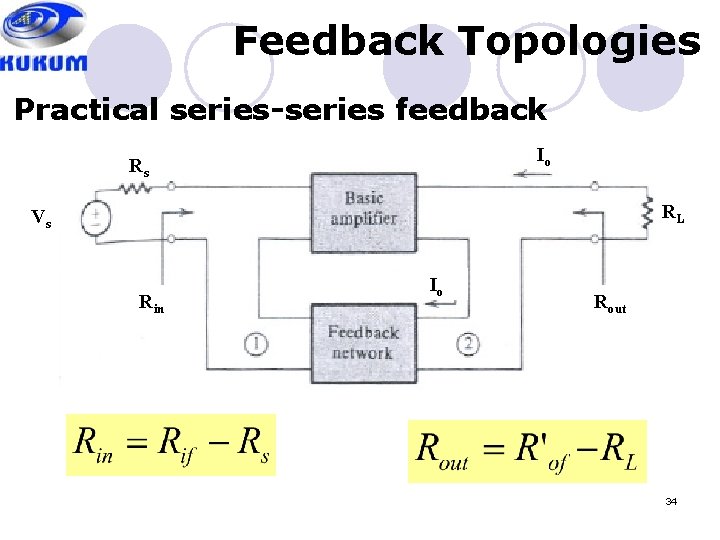
Feedback Topologies Practical series-series feedback Io Rs RL Vs Rin Io Rout 34
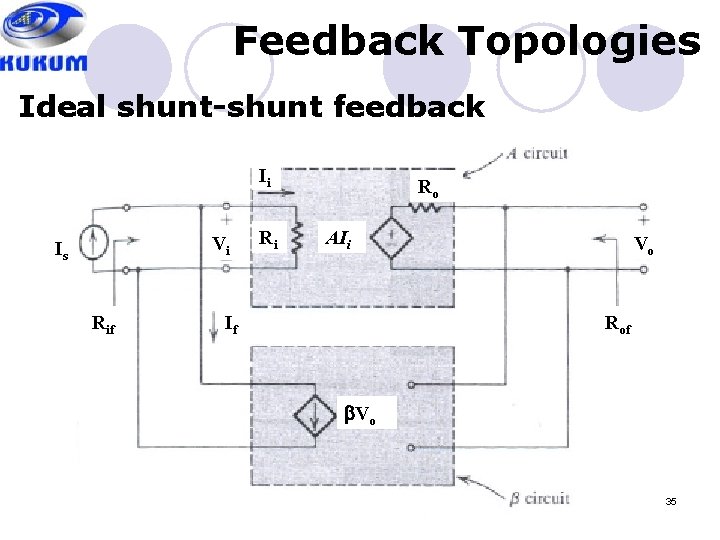
Feedback Topologies Ideal shunt-shunt feedback Ii Vi Is Rif Ri Ro AIi If Vo Rof Vo 35
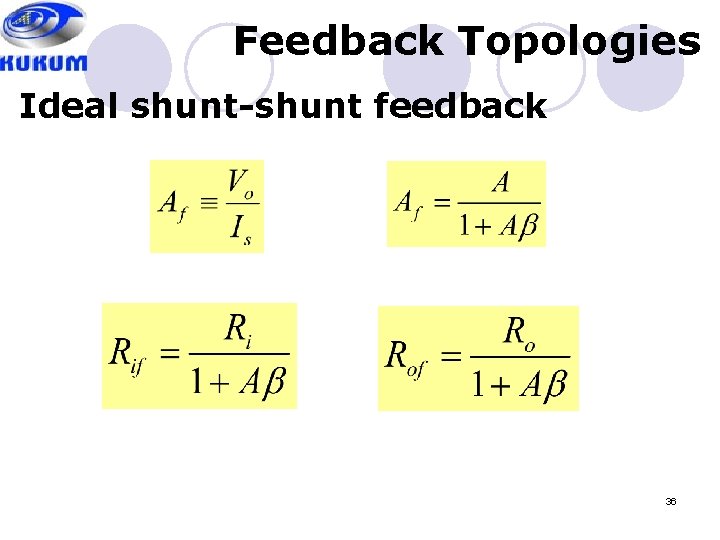
Feedback Topologies Ideal shunt-shunt feedback 36
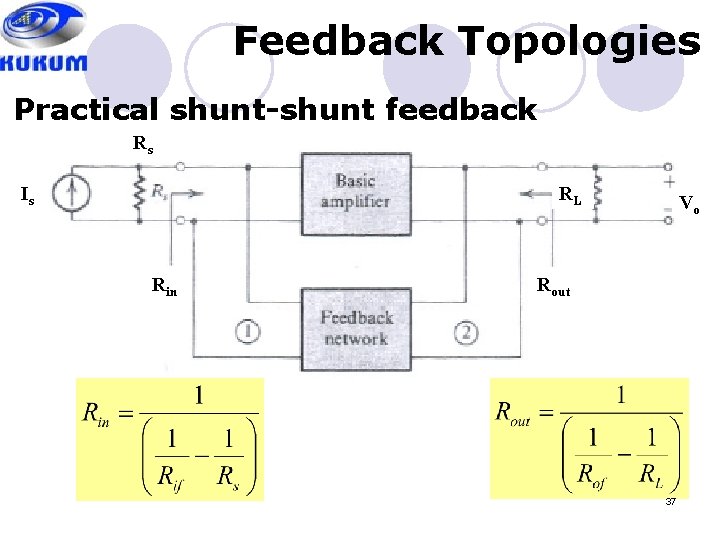
Feedback Topologies Practical shunt-shunt feedback Rs Is RL Rin Vo Rout 37
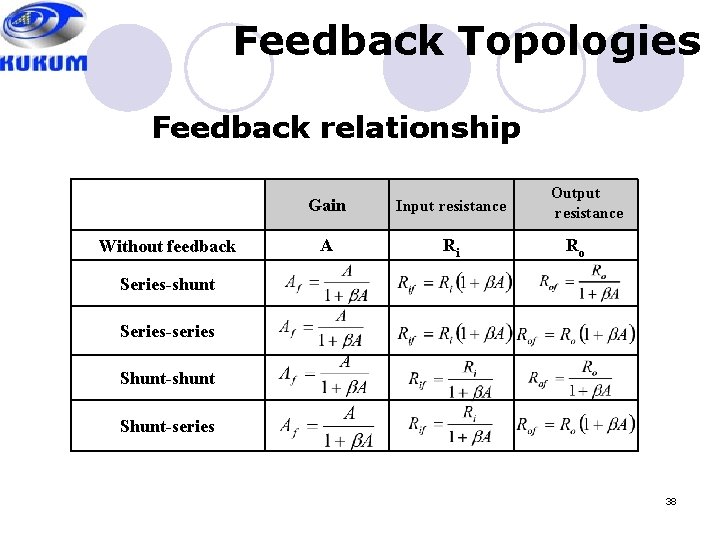
Feedback Topologies Feedback relationship Without feedback Gain Input resistance A Ri Output resistance Ro Series-shunt Series-series Shunt-shunt Shunt-series 38
Feedback Amplifier Topologies 39
FEEDBACK CIRCUITS Exercise Consider the non-inverting op-amp circuit with parameters R 1 = 10 k , R 2 = 30 k , and A = 104. Assume Ri = . Determine the closed-loop voltage gain. If the open-loop gain increases by a factor of 10, what is the percent change in the closed-loop gain? (Ans : 3. 9984, 0. 036%) l 40
- Slides: 40