
Federalist Period John Adams Development of Political Parties


- Slides: 18
Federalist Period: John Adams
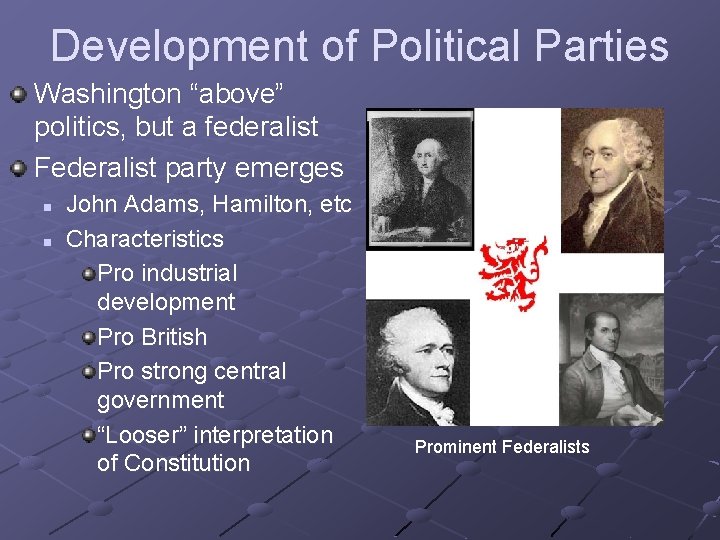
Development of Political Parties Washington “above” politics, but a federalist Federalist party emerges n n John Adams, Hamilton, etc Characteristics Pro industrial development Pro British Pro strong central government “Looser” interpretation of Constitution Prominent Federalists
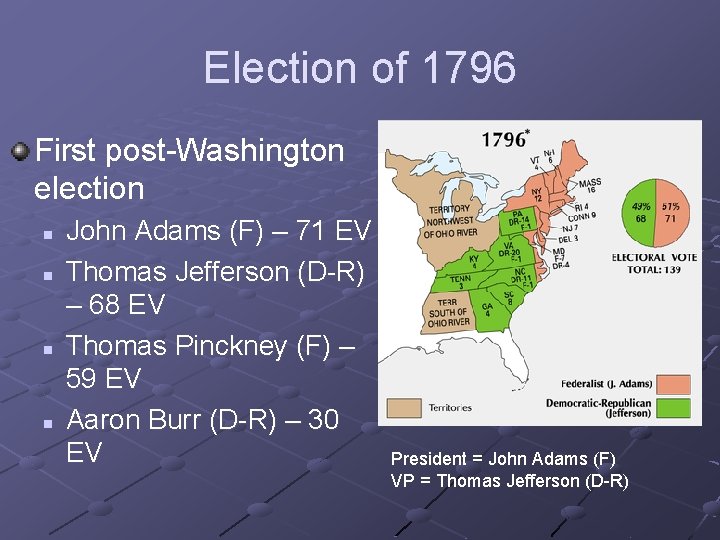
Election of 1796 First post-Washington election n n John Adams (F) – 71 EV Thomas Jefferson (D-R) – 68 EV Thomas Pinckney (F) – 59 EV Aaron Burr (D-R) – 30 EV President = John Adams (F) VP = Thomas Jefferson (D-R)
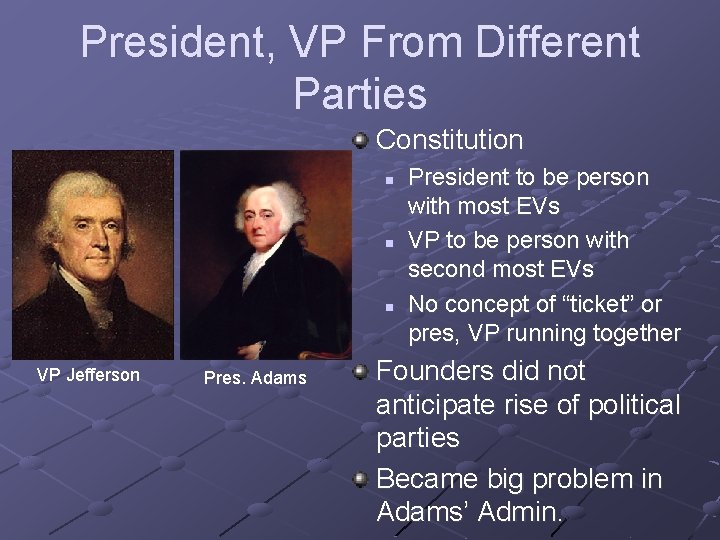
President, VP From Different Parties Constitution n VP Jefferson Pres. Adams President to be person with most EVs VP to be person with second most EVs No concept of “ticket” or pres, VP running together Founders did not anticipate rise of political parties Became big problem in Adams’ Admin.
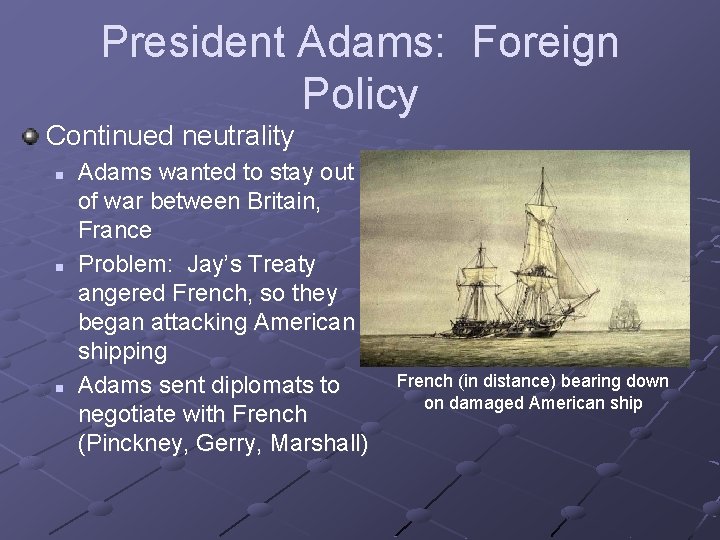
President Adams: Foreign Policy Continued neutrality n n n Adams wanted to stay out of war between Britain, France Problem: Jay’s Treaty angered French, so they began attacking American shipping Adams sent diplomats to negotiate with French (Pinckney, Gerry, Marshall) French (in distance) bearing down on damaged American ship
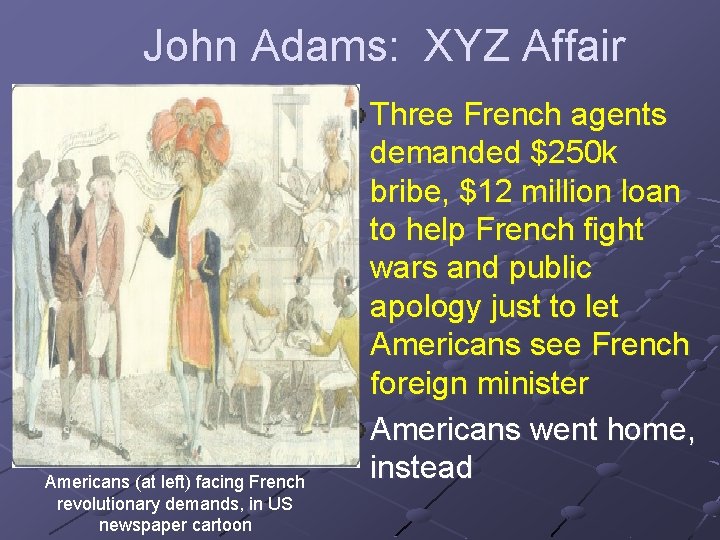
John Adams: XYZ Affair Americans (at left) facing French revolutionary demands, in US newspaper cartoon Three French agents demanded $250 k bribe, $12 million loan to help French fight wars and public apology just to let Americans see French foreign minister Americans went home, instead
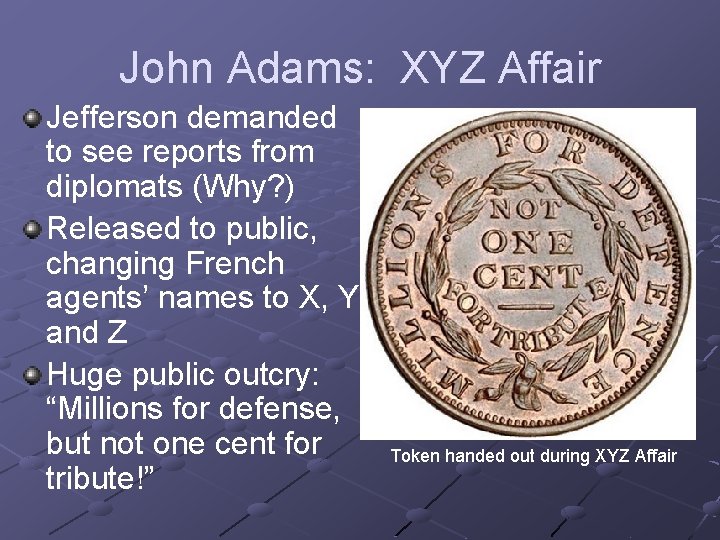
John Adams: XYZ Affair Jefferson demanded to see reports from diplomats (Why? ) Released to public, changing French agents’ names to X, Y and Z Huge public outcry: “Millions for defense, but not one cent for tribute!” Token handed out during XYZ Affair
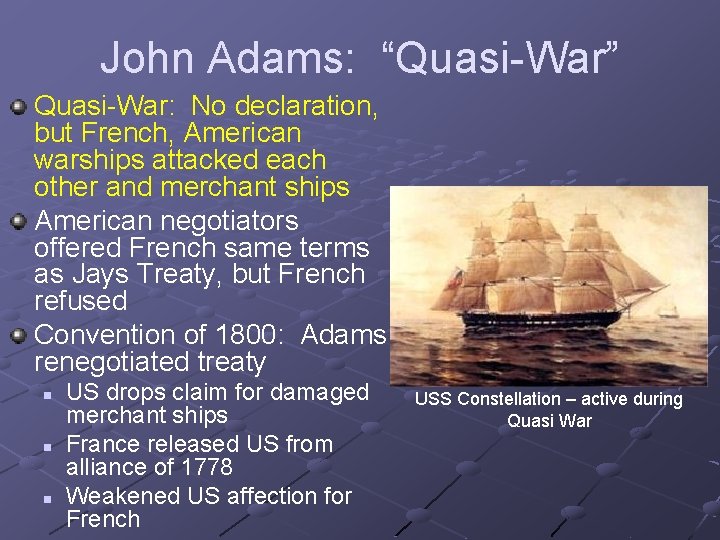
John Adams: “Quasi-War” Quasi-War: No declaration, but French, American warships attacked each other and merchant ships American negotiators offered French same terms as Jays Treaty, but French refused Convention of 1800: Adams renegotiated treaty n n n US drops claim for damaged merchant ships France released US from alliance of 1778 Weakened US affection for French USS Constellation – active during Quasi War
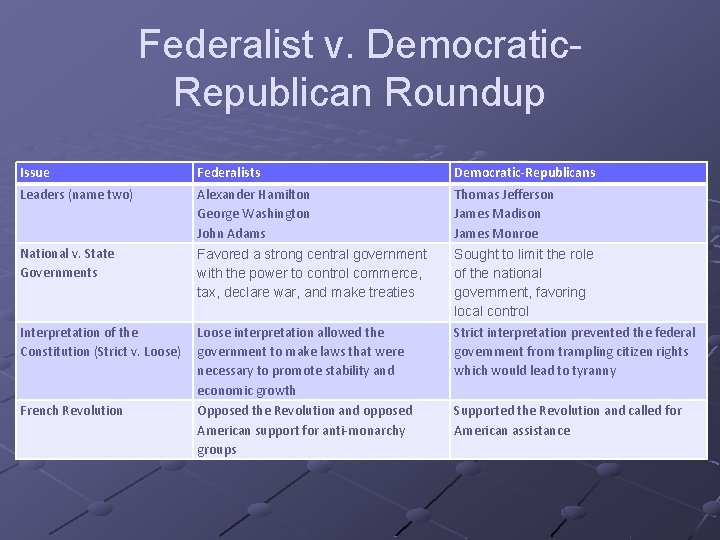
Federalist v. Democratic. Republican Roundup Issue Federalists Democratic-Republicans Leaders (name two) National v. State Governments Interpretation of the Constitution (Strict v. Loose) French Revolution Alexander Hamilton George Washington John Adams Favored a strong central government with the power to control commerce, tax, declare war, and make treaties Thomas Jefferson James Madison James Monroe Sought to limit the role of the national government, favoring local control Strict interpretation prevented the federal government from trampling citizen rights which would lead to tyranny Loose interpretation allowed the government to make laws that were necessary to promote stability and economic growth Opposed the Revolution and opposed American support for anti-monarchy groups Supported the Revolution and called for American assistance
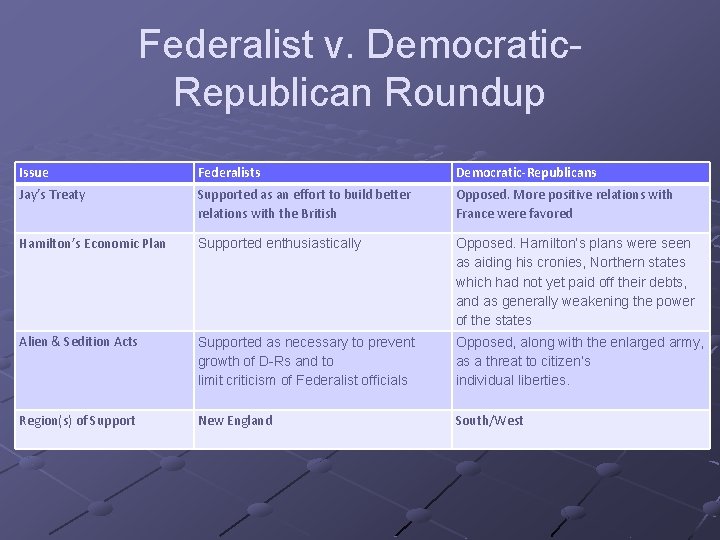
Federalist v. Democratic. Republican Roundup Issue Federalists Democratic-Republicans Jay’s Treaty Supported as an effort to build better relations with the British Opposed. More positive relations with France were favored Hamilton’s Economic Plan Supported enthusiastically Opposed. Hamilton’s plans were seen as aiding his cronies, Northern states which had not yet paid off their debts, and as generally weakening the power of the states Alien & Sedition Acts Region(s) of Supported as necessary to prevent growth of D-Rs and to limit criticism of Federalist officials Opposed, along with the enlarged army, as a threat to citizen’s individual liberties. New England South/West
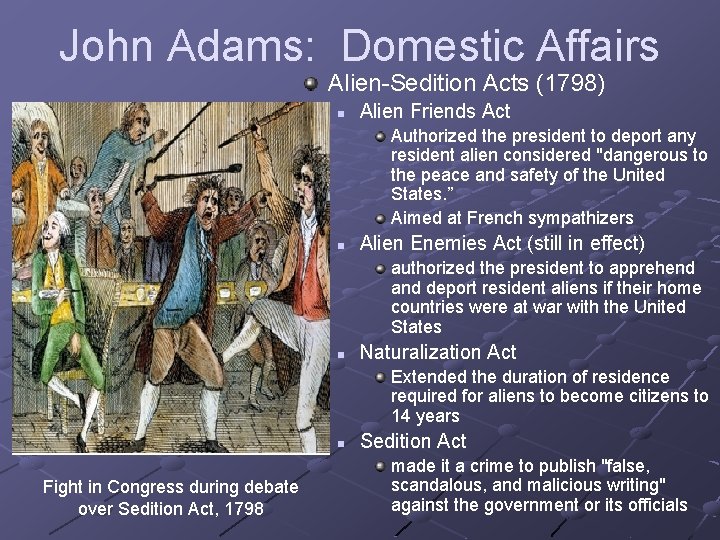
John Adams: Domestic Affairs Alien-Sedition Acts (1798) n Alien Friends Act Authorized the president to deport any resident alien considered "dangerous to the peace and safety of the United States. ” Aimed at French sympathizers n Alien Enemies Act (still in effect) authorized the president to apprehend and deport resident aliens if their home countries were at war with the United States n Naturalization Act Extended the duration of residence required for aliens to become citizens to 14 years n Fight in Congress during debate over Sedition Act, 1798 Sedition Act made it a crime to publish "false, scandalous, and malicious writing" against the government or its officials
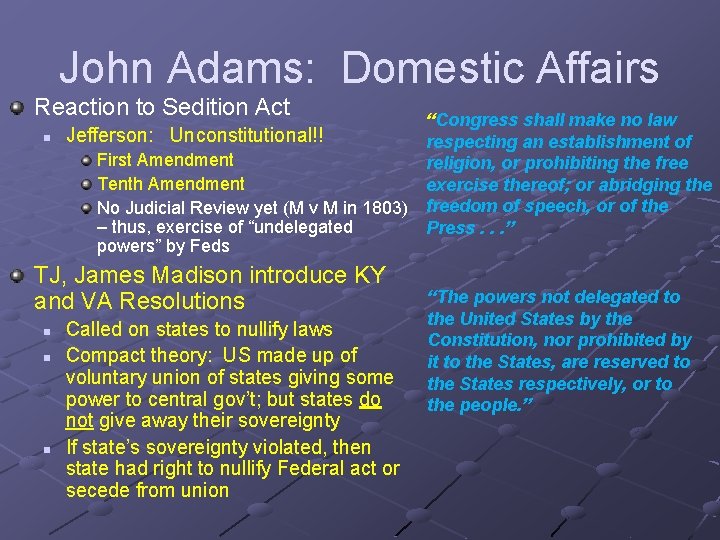
John Adams: Domestic Affairs Reaction to Sedition Act n “Congress shall make no law Jefferson: Unconstitutional!! respecting an establishment of First Amendment religion, or prohibiting the free Tenth Amendment exercise thereof; or abridging the No Judicial Review yet (M v M in 1803) freedom of speech, or of the – thus, exercise of “undelegated Press. . . ” powers” by Feds TJ, James Madison introduce KY and VA Resolutions n n n Called on states to nullify laws Compact theory: US made up of voluntary union of states giving some power to central gov’t; but states do not give away their sovereignty If state’s sovereignty violated, then state had right to nullify Federal act or secede from union “The powers not delegated to the United States by the Constitution, nor prohibited by it to the States, are reserved to the States respectively, or to the people. ”
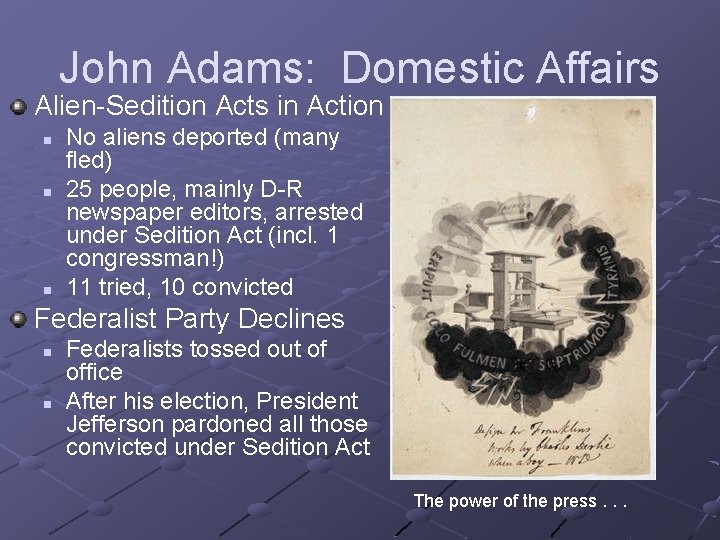
John Adams: Domestic Affairs Alien-Sedition Acts in Action n No aliens deported (many fled) 25 people, mainly D-R newspaper editors, arrested under Sedition Act (incl. 1 congressman!) 11 tried, 10 convicted Federalist Party Declines n n Federalists tossed out of office After his election, President Jefferson pardoned all those convicted under Sedition Act The power of the press. . .
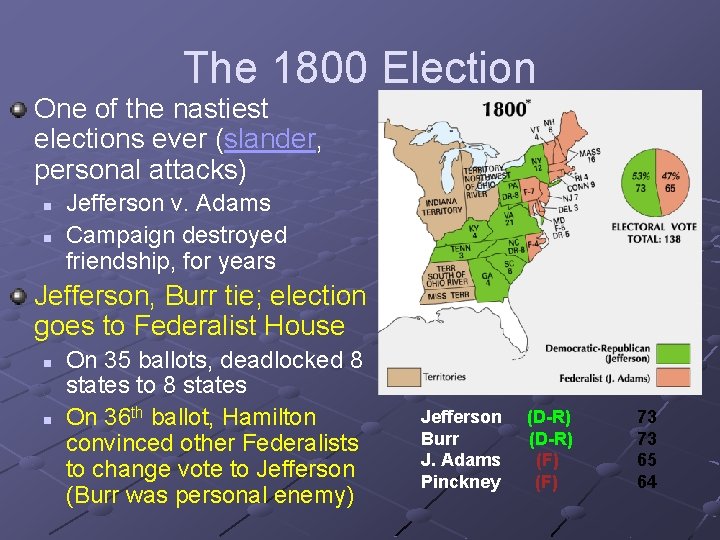
The 1800 Election One of the nastiest elections ever (slander, personal attacks) n n Jefferson v. Adams Campaign destroyed friendship, for years Jefferson, Burr tie; election goes to Federalist House n n On 35 ballots, deadlocked 8 states to 8 states On 36 th ballot, Hamilton convinced other Federalists to change vote to Jefferson (Burr was personal enemy) Jefferson Burr J. Adams Pinckney (D-R) (F) 73 73 65 64
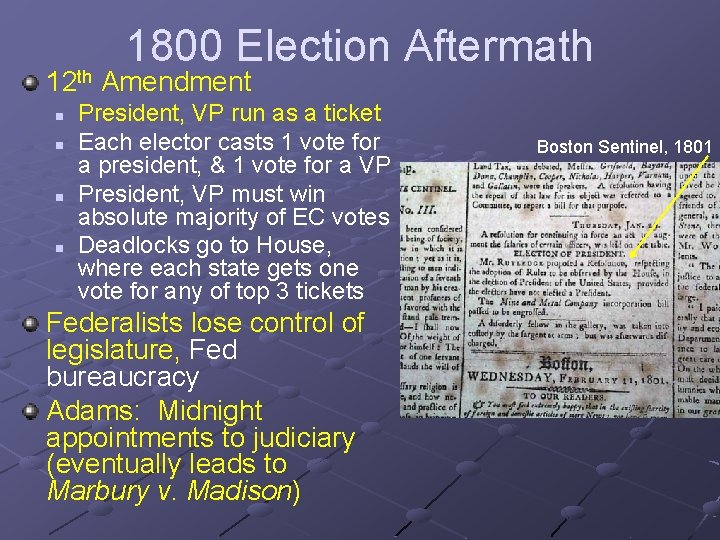
1800 Election Aftermath 12 th Amendment n n President, VP run as a ticket Each elector casts 1 vote for a president, & 1 vote for a VP President, VP must win absolute majority of EC votes Deadlocks go to House, where each state gets one vote for any of top 3 tickets Federalists lose control of legislature, Fed bureaucracy Adams: Midnight appointments to judiciary (eventually leads to Marbury v. Madison) Boston Sentinel, 1801
John Adams Administration Report Card Analysis
Election of 1800