
Federalism State Government Concurrent Powers National Government Expressed

- Slides: 5
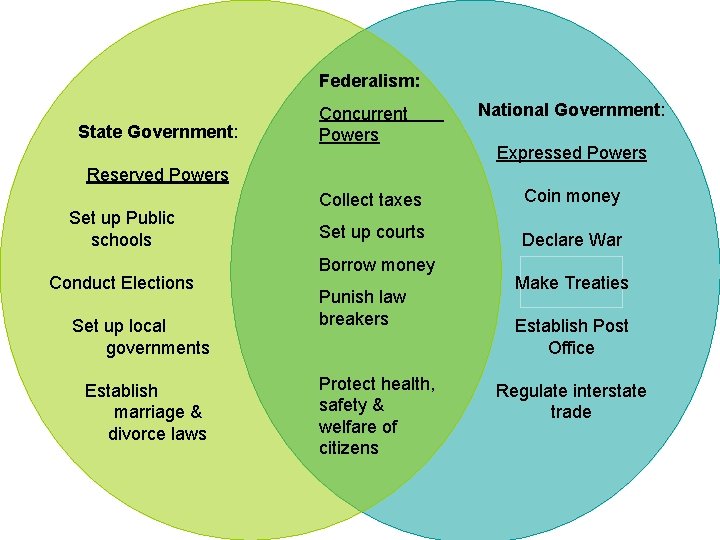
Federalism: State Government: Concurrent Powers National Government: Expressed Powers Reserved Powers Set up Public schools Conduct Elections Set up local governments Establish marriage & divorce laws Collect taxes Coin money Set up courts Declare War Borrow money Punish law breakers Protect health, safety & welfare of citizens Make Treaties Establish Post Office Regulate interstate trade
US Congress Qualifications: H – 25; S – 30 US Cit. H – 7 yrs; S – 9 yrs Senate has a 6 year term Numbers: H – 435; S - 100 Can declare war. US Senate represents states. NC General Assembly H - 2 yr term Duties/Powers: Both make laws Structure: Both bicameral [only Nebraska is unicameral] Leadership: determined by majority party Qualifications: H – 21; S – 25 Simply a US Citizen Senate has 2 year term Numbers: H – 120; S 50 NC Senate represents districts.
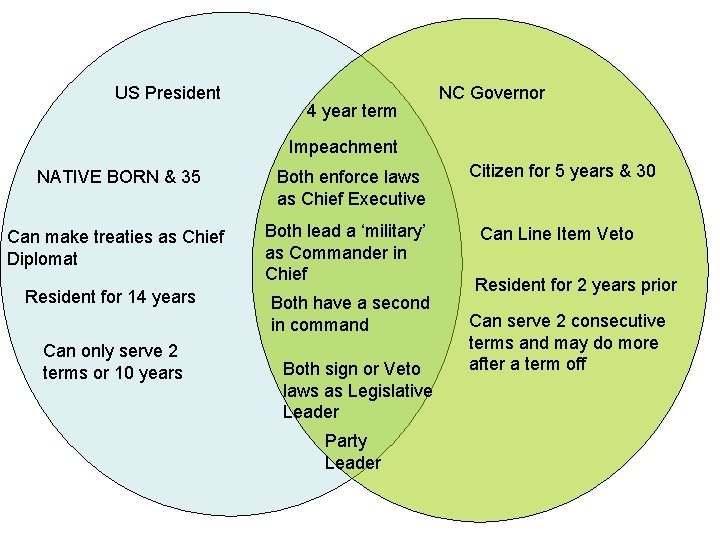
US President 4 year term NC Governor Impeachment NATIVE BORN & 35 Can make treaties as Chief Diplomat Resident for 14 years Can only serve 2 terms or 10 years Both enforce laws as Chief Executive Both lead a ‘military’ as Commander in Chief Both have a second in command Both sign or Veto laws as Legislative Leader Party Leader Citizen for 5 years & 30 Can Line Item Veto Resident for 2 years prior Can serve 2 consecutive terms and may do more after a term off
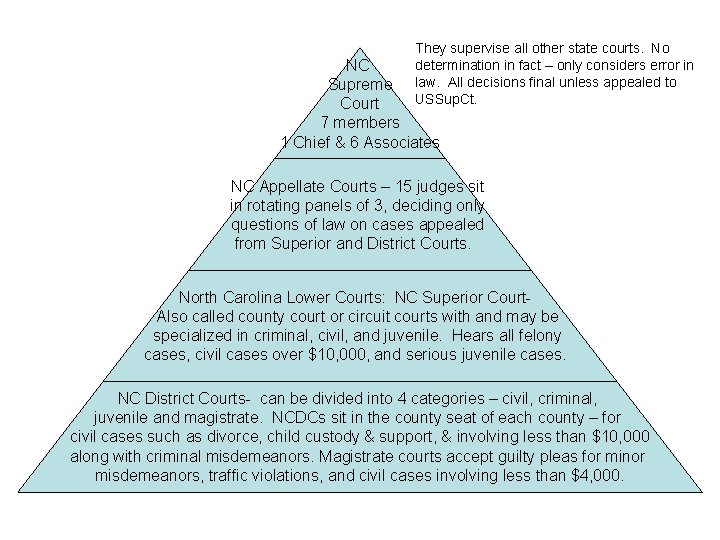
They supervise all other state courts. No determination in fact – only considers error in law. All decisions final unless appealed to USSup. Ct. NC Supreme Court 7 members 1 Chief & 6 Associates NC Appellate Courts – 15 judges sit in rotating panels of 3, deciding only questions of law on cases appealed from Superior and District Courts. North Carolina Lower Courts: NC Superior Court. Also called county court or circuit courts with and may be specialized in criminal, civil, and juvenile. Hears all felony cases, civil cases over $10, 000, and serious juvenile cases. NC District Courts- can be divided into 4 categories – civil, criminal, juvenile and magistrate. NCDCs sit in the county seat of each county – for civil cases such as divorce, child custody & support, & involving less than $10, 000 along with criminal misdemeanors. Magistrate courts accept guilty pleas for minor misdemeanors, traffic violations, and civil cases involving less than $4, 000.
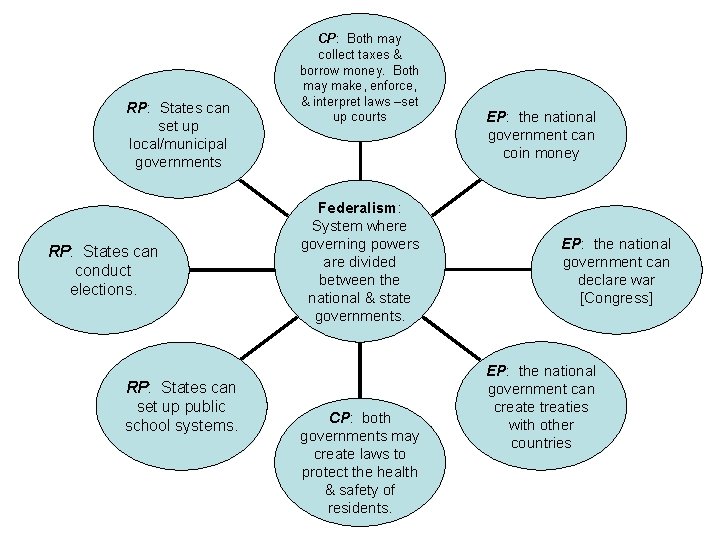
RP: States can set up local/municipal governments RP: States can conduct elections. RP: States can set up public school systems. CP: Both may collect taxes & borrow money. Both may make, enforce, & interpret laws –set up courts Federalism: System where governing powers are divided between the national & state governments. CP: both governments may create laws to protect the health & safety of residents. EP: the national government can coin money EP: the national government can declare war [Congress] EP: the national government can create treaties with other countries