
Federalism in the United States Unitary vs Federal
- Slides: 16
Federalism in the United States
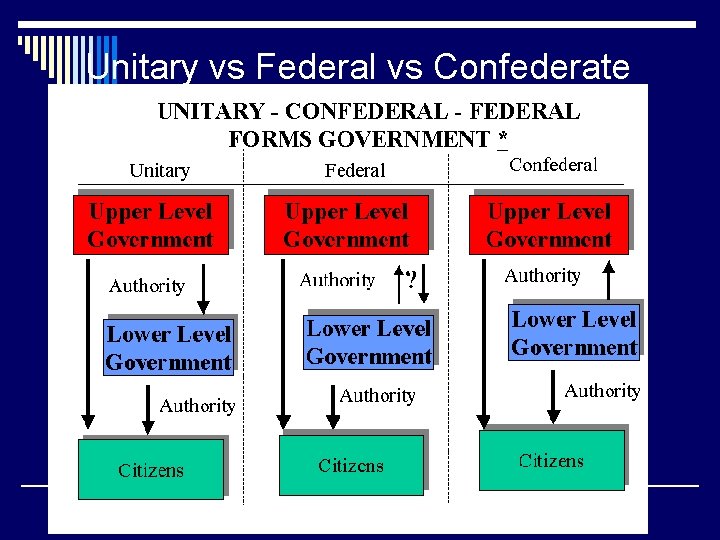
Unitary vs Federal vs Confederate
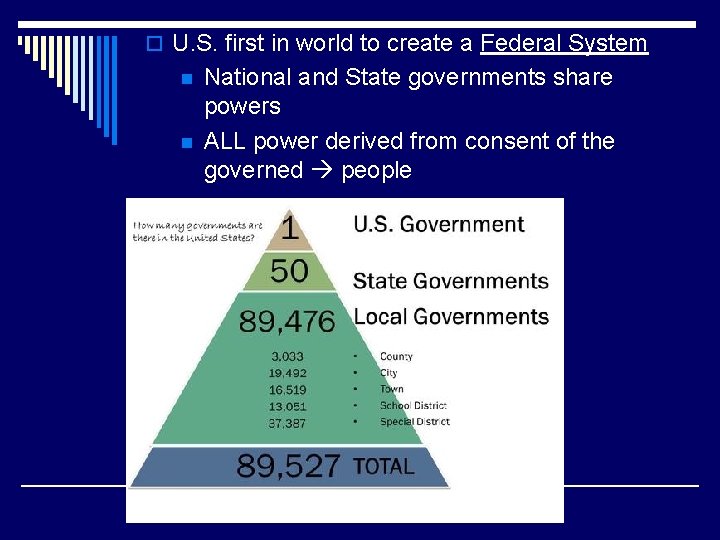
o U. S. first in world to create a Federal System n n National and State governments share powers ALL power derived from consent of the governed people
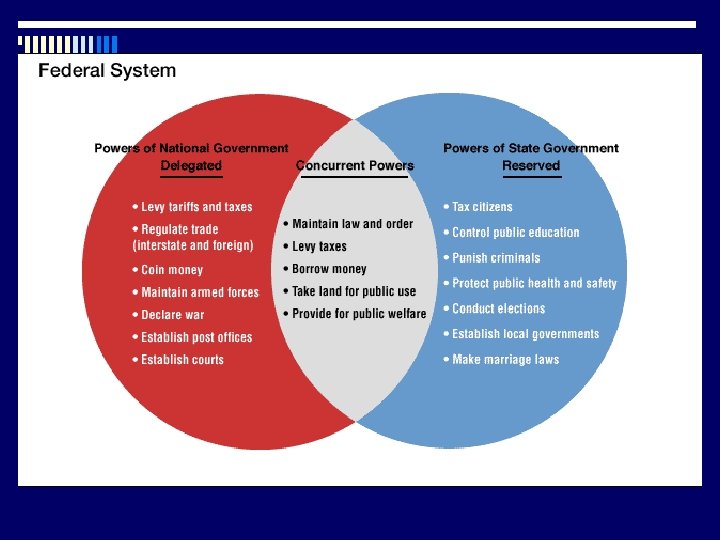
Federalism in the United States o Enumerated Powers: n n Specific powers granted government Article 1, Section 8 p AKA- Delegated, expressed o Implied Powers: n n Powers assumed, although not expressed “Elastic Clause” Article 1, Section 8, Clause 18 p AKA “Necessary and Proper Clause”
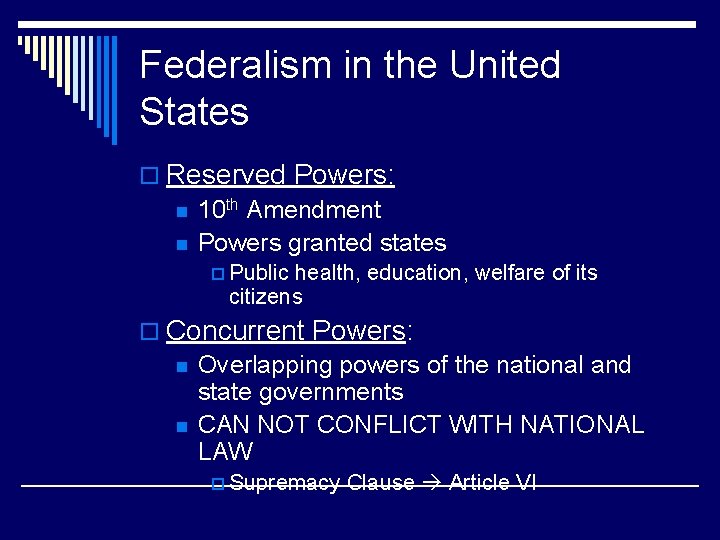
Federalism in the United States o Reserved Powers: n 10 th Amendment n Powers granted states p Public health, education, welfare of its citizens o Concurrent Powers: n Overlapping powers of the national and state governments n CAN NOT CONFLICT WITH NATIONAL LAW p Supremacy Clause Article VI
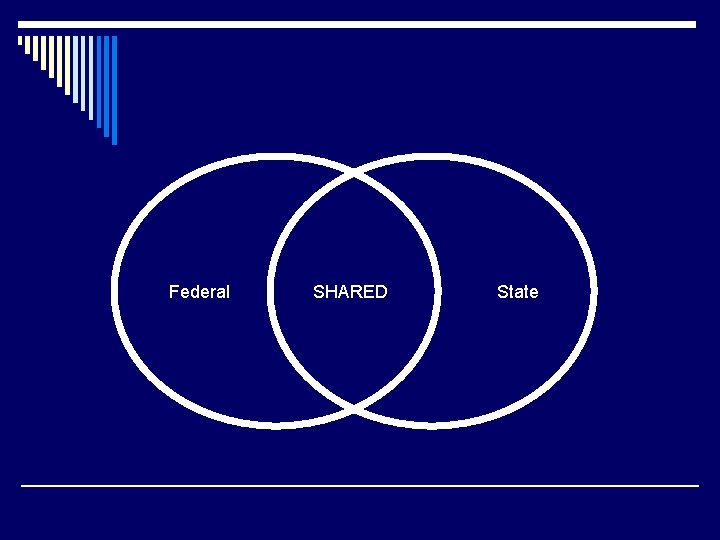
Federal SHARED State
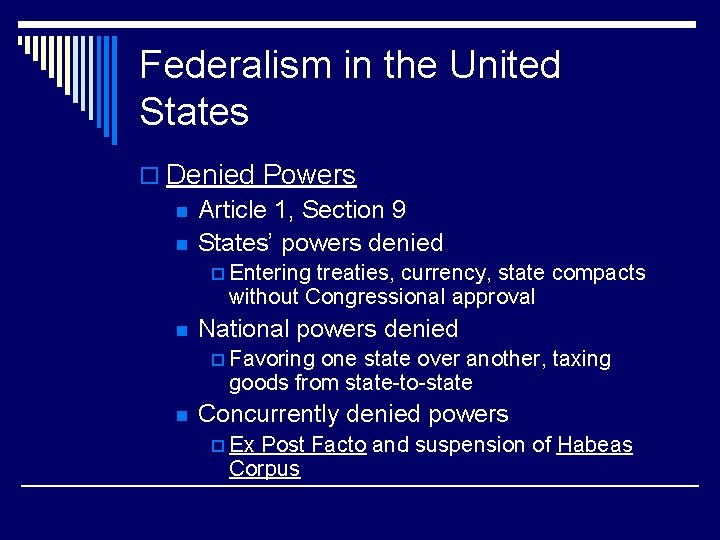
Federalism in the United States o Denied Powers n Article 1, Section 9 n States’ powers denied p Entering treaties, currency, state compacts without Congressional approval n National powers denied p Favoring one state over another, taxing goods from state-to-state n Concurrently denied powers p Ex Post Facto and suspension of Habeas Corpus
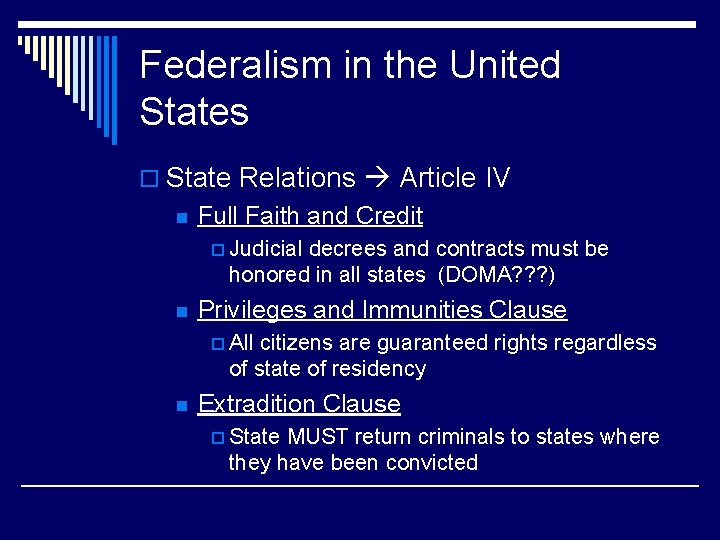
Federalism in the United States o State Relations Article IV n Full Faith and Credit p Judicial decrees and contracts must be honored in all states (DOMA? ? ? ) n Privileges and Immunities Clause p All citizens are guaranteed rights regardless of state of residency n Extradition Clause p State MUST return criminals to states where they have been convicted
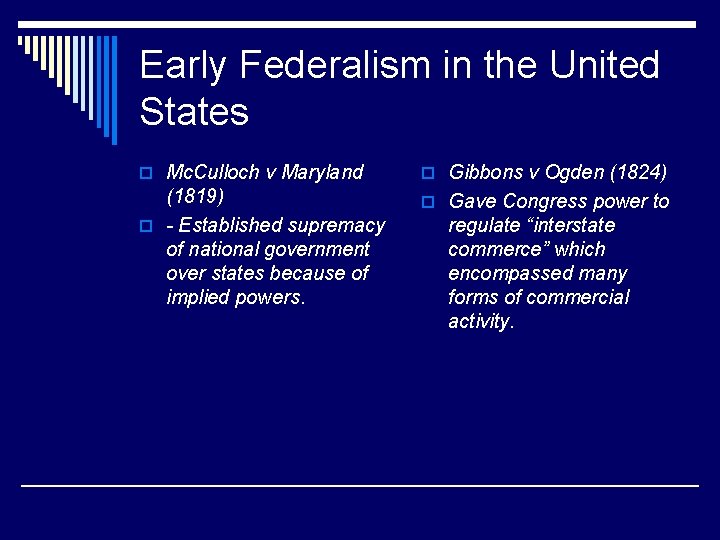
Early Federalism in the United States o Mc. Culloch v Maryland o Gibbons v Ogden (1824) (1819) o - Established supremacy of national government over states because of implied powers. o Gave Congress power to regulate “interstate commerce” which encompassed many forms of commercial activity.
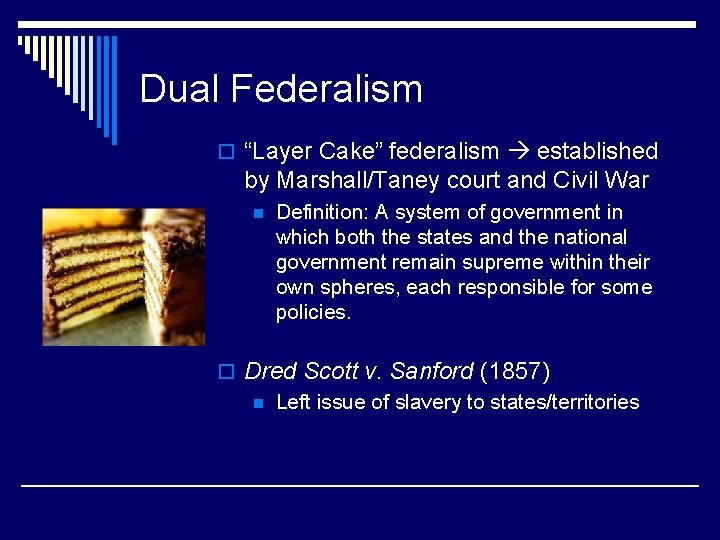
Dual Federalism o “Layer Cake” federalism established by Marshall/Taney court and Civil War n Definition: A system of government in which both the states and the national government remain supreme within their own spheres, each responsible for some policies. o Dred Scott v. Sanford (1857) n Left issue of slavery to states/territories
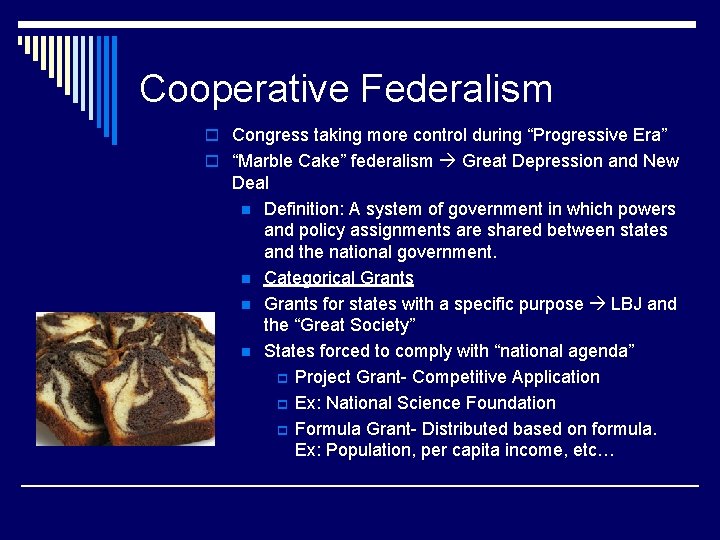
Cooperative Federalism o Congress taking more control during “Progressive Era” o “Marble Cake” federalism Great Depression and New Deal n Definition: A system of government in which powers and policy assignments are shared between states and the national government. n Categorical Grants n Grants for states with a specific purpose LBJ and the “Great Society” n States forced to comply with “national agenda” p Project Grant- Competitive Application p Ex: National Science Foundation p Formula Grant- Distributed based on formula. Ex: Population, per capita income, etc…
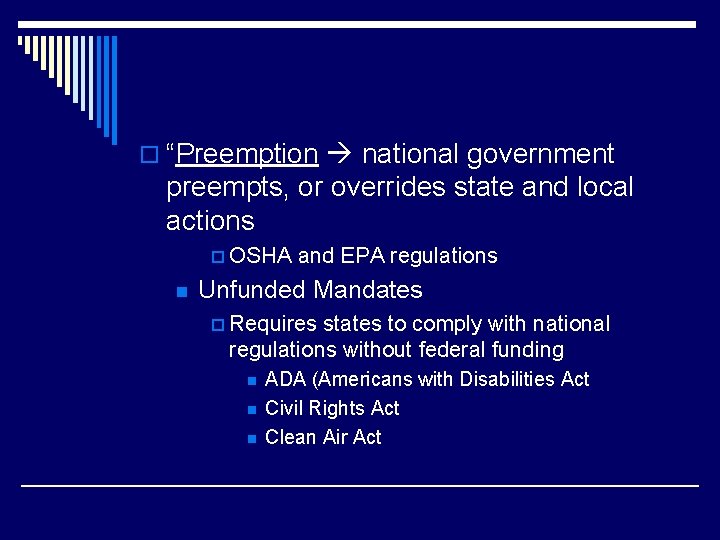
o “Preemption national government preempts, or overrides state and local actions p OSHA n and EPA regulations Unfunded Mandates p Requires states to comply with national regulations without federal funding n n n ADA (Americans with Disabilities Act Civil Rights Act Clean Air Act
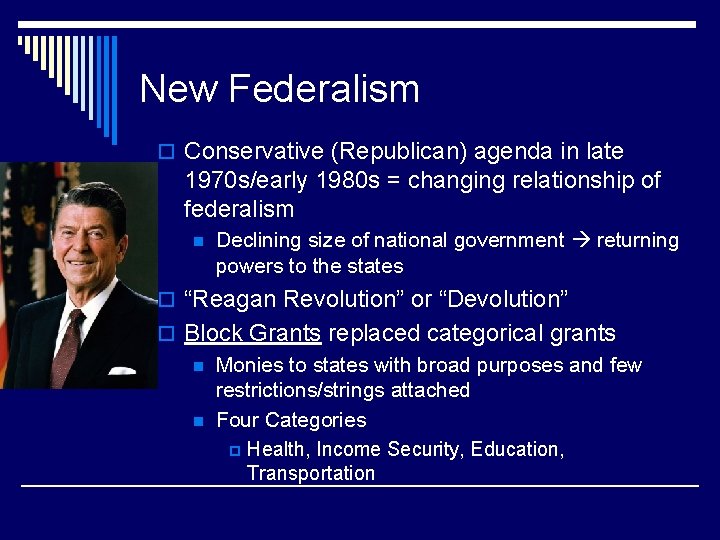
New Federalism o Conservative (Republican) agenda in late 1970 s/early 1980 s = changing relationship of federalism n Declining size of national government returning powers to the states o “Reagan Revolution” or “Devolution” o Block Grants replaced categorical grants n Monies to states with broad purposes and few restrictions/strings attached n Four Categories p Health, Income Security, Education, Transportation
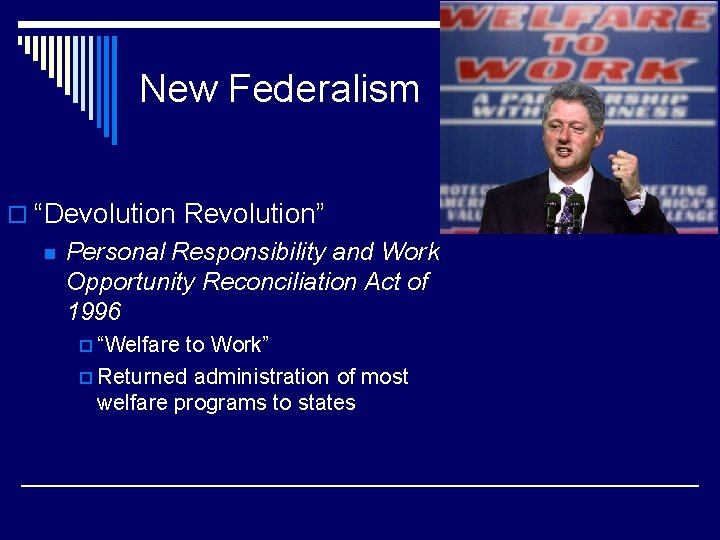
New Federalism o “Devolution Revolution” n Personal Responsibility and Work Opportunity Reconciliation Act of 1996 p “Welfare to Work” p Returned administration of most welfare programs to states
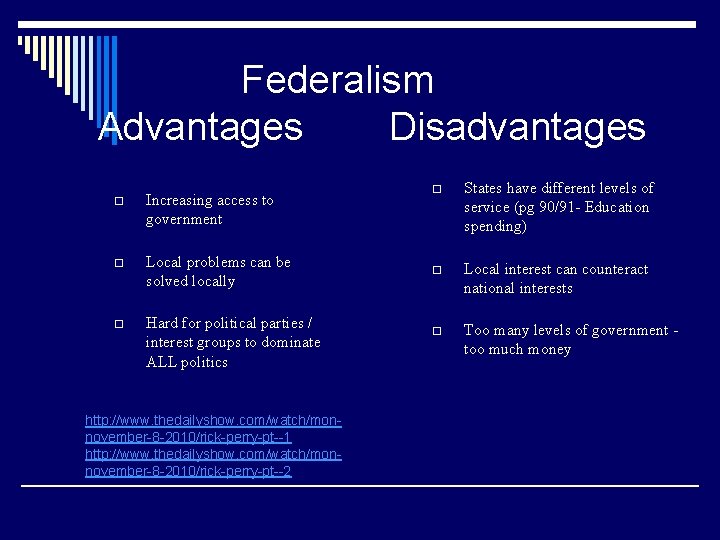
Federalism Advantages Disadvantages Increasing access to government Local problems can be solved locally Hard for political parties / interest groups to dominate ALL politics http: //www. thedailyshow. com/watch/monnovember-8 -2010/rick-perry-pt--1 http: //www. thedailyshow. com/watch/monnovember-8 -2010/rick-perry-pt--2 States have different levels of service (pg 90/91 - Education spending) Local interest can counteract national interests Too many levels of government too much money