
FEDERALISM IN THE CONSTITUTION Unit 2 U S

- Slides: 19
FEDERALISM IN THE CONSTITUTION Unit 2 U. S. Government Honors Stater
FEDERALISM Section 1
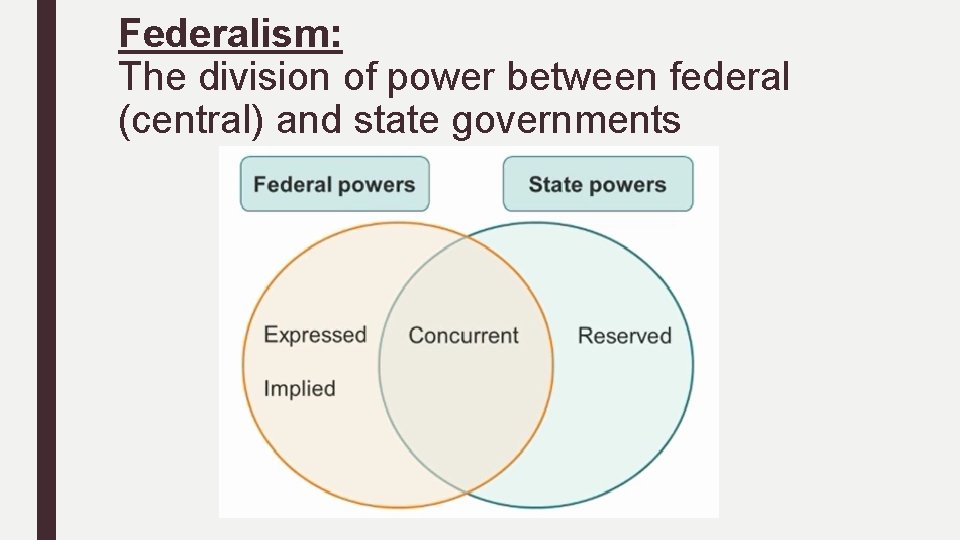
Federalism: The division of power between federal (central) and state governments
Major Types of Powers 1. Federal: – Expressed – Implied 2. State: – Reserved 3. Concurrent: – Shared powers
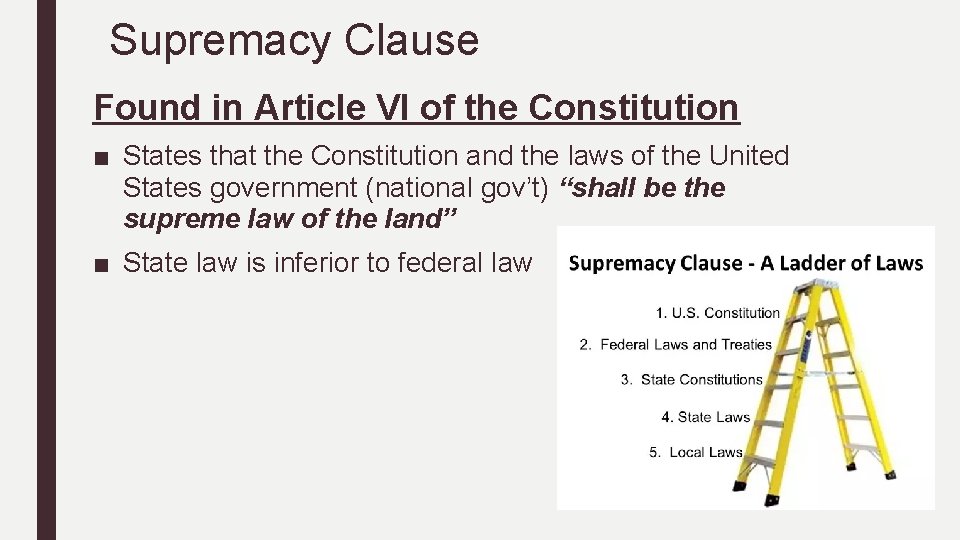
Supremacy Clause Found in Article VI of the Constitution ■ States that the Constitution and the laws of the United States government (national gov’t) “shall be the supreme law of the land” ■ State law is inferior to federal law
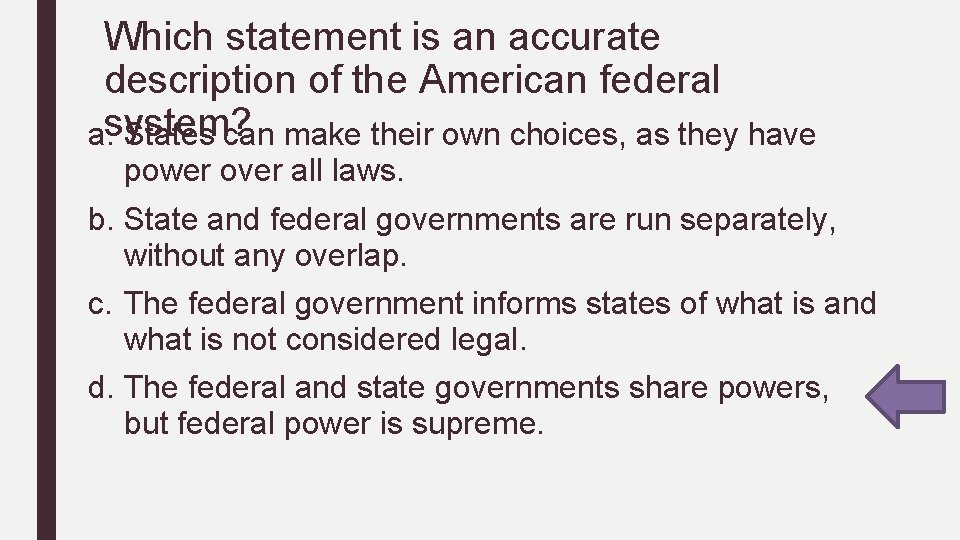
Which statement is an accurate description of the American federal a. system? States can make their own choices, as they have power over all laws. b. State and federal governments are run separately, without any overlap. c. The federal government informs states of what is and what is not considered legal. d. The federal and state governments share powers, but federal power is supreme.
FEDERAL POWERS Section 2
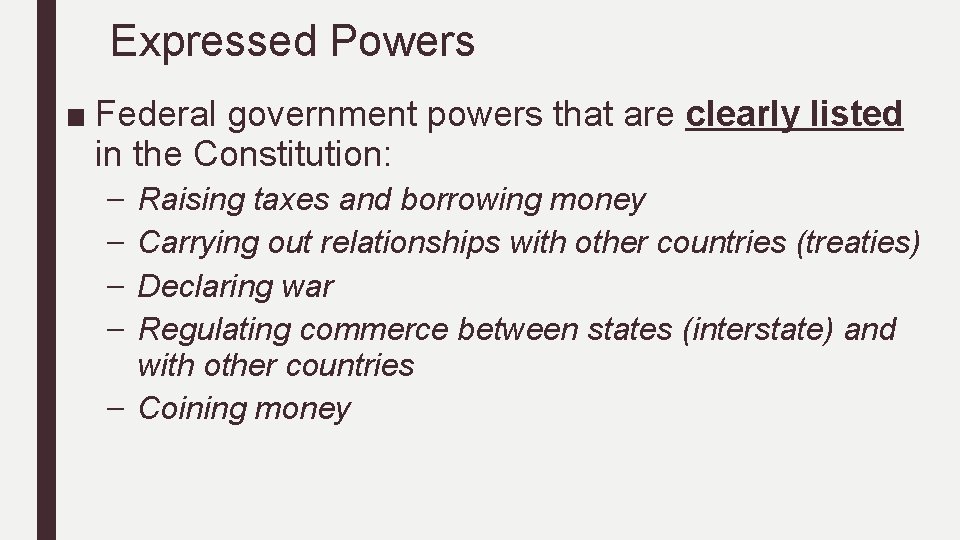
Expressed Powers ■ Federal government powers that are clearly listed in the Constitution: – – Raising taxes and borrowing money Carrying out relationships with other countries (treaties) Declaring war Regulating commerce between states (interstate) and with other countries – Coining money
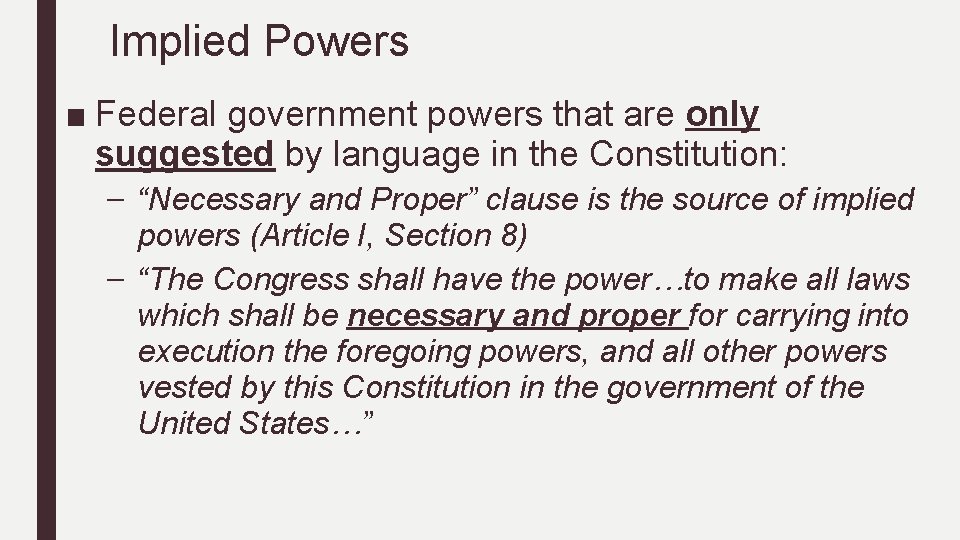
Implied Powers ■ Federal government powers that are only suggested by language in the Constitution: – “Necessary and Proper” clause is the source of implied powers (Article I, Section 8) – “The Congress shall have the power…to make all laws which shall be necessary and proper for carrying into execution the foregoing powers, and all other powers vested by this Constitution in the government of the United States…”
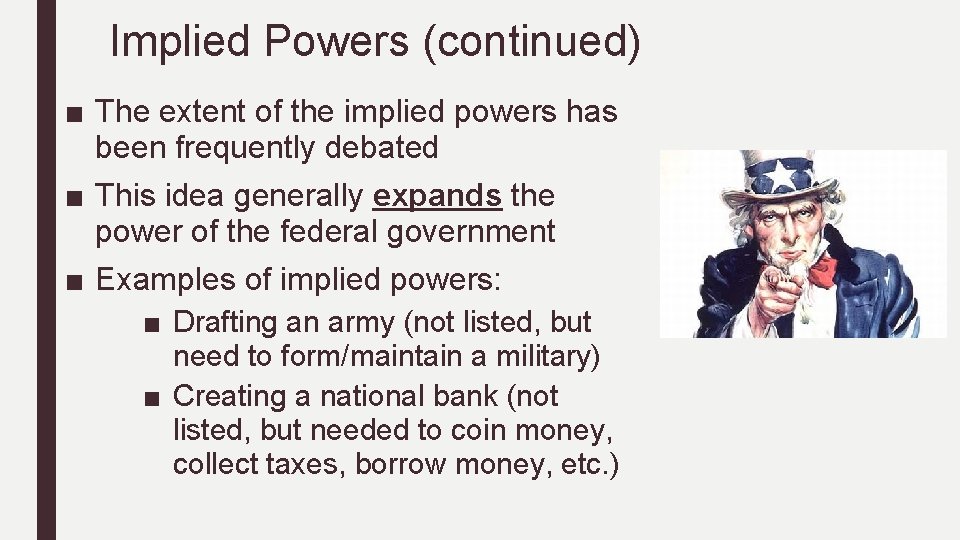
Implied Powers (continued) ■ The extent of the implied powers has been frequently debated ■ This idea generally expands the power of the federal government ■ Examples of implied powers: ■ Drafting an army (not listed, but need to form/maintain a military) ■ Creating a national bank (not listed, but needed to coin money, collect taxes, borrow money, etc. )
Declaring war and coining money are considered a. states’ rights. b. implied powers. c. national rights. d. expressed powers.
STATE POWERS Section 3
Reserved Powers ■ Refers to powers of the states alone ■ Found in the 10 th Amendment to the Constitution: – “The powers not delegated to the United States by the Constitution nor prohibited by it to the states, are reserved to the states respectively, or to the people. ” ■ Any power not already designated to the federal government should go to the states
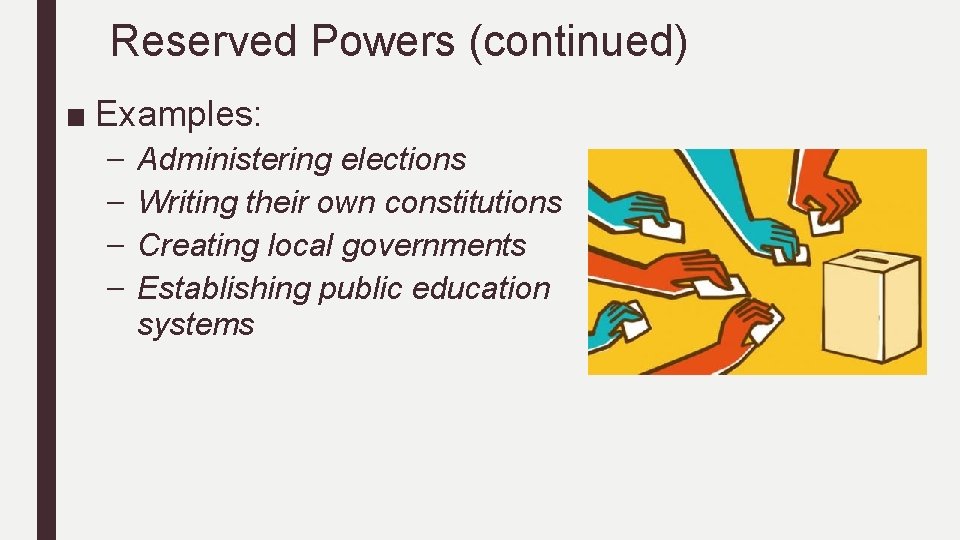
Reserved Powers (continued) ■ Examples: – – Administering elections Writing their own constitutions Creating local governments Establishing public education systems
Which government decision would best be handled at the state level? a. establishing trade with foreign countries b. allocating funding to troops c. issuing driver's licenses d. printing new currency and metal coins
CONCURRENT POWERS Section 4
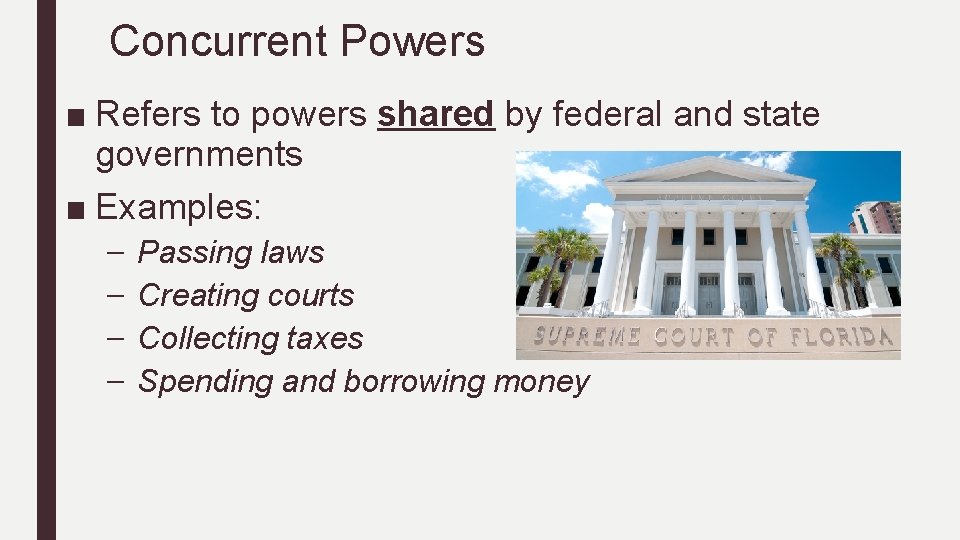
Concurrent Powers ■ Refers to powers shared by federal and state governments ■ Examples: – – Passing laws Creating courts Collecting taxes Spending and borrowing money
Ongoing Debate ■ Balancing federal and state powers has always been up for debate. ■ There a lot of gray areas. ■ Example: – The Affordable Care Act (also known as Obamacare) – Many feel this oversteps the boundaries of the federal government’s power – Others feel it is necessary to ensure healthcare across the nation
Why might balancing federal and state powers present a problem? a. The Constitution does not address how to handle conflicts between state and federal powers. b. People have different opinions on whether state or federal government should have power to control certain issues. c. The federal government does not believe states are responsible enough for concurrent powers. d. The balance applies only to implied powers, which are often open to misinterpretation.