
FEDERALISM Essential Question Why and how is power
- Slides: 28
FEDERALISM Essential Question: Why and how is power divided and shared among national, state, and local governments?
LEARNING OBJECTIVES I will… We will… Understand how power is divided between and shared amongst different levels of government • Analyze scenarios to determine if they are accurate examples of federalism
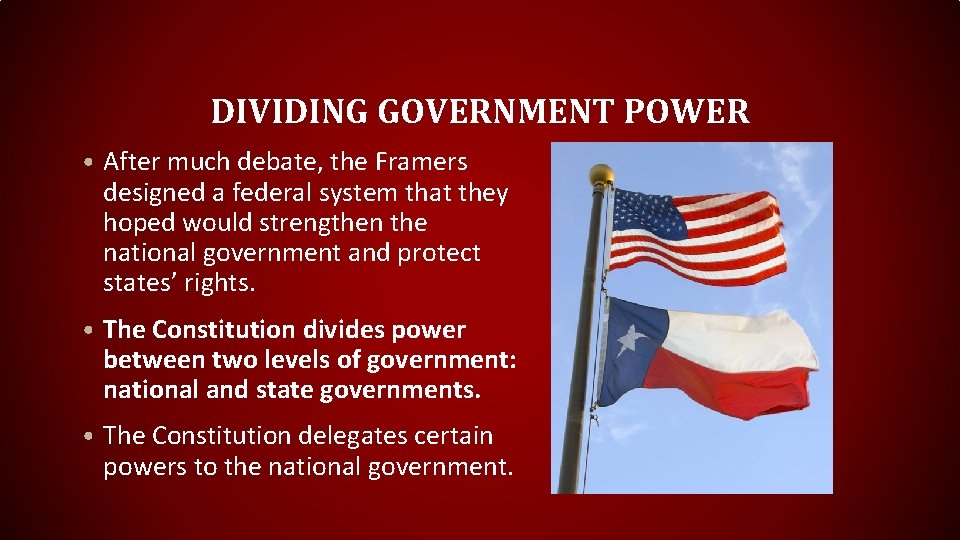
DIVIDING GOVERNMENT POWER • After much debate, the Framers designed a federal system that they hoped would strengthen the national government and protect states’ rights. • The Constitution divides power between two levels of government: national and state governments. • The Constitution delegates certain powers to the national government.
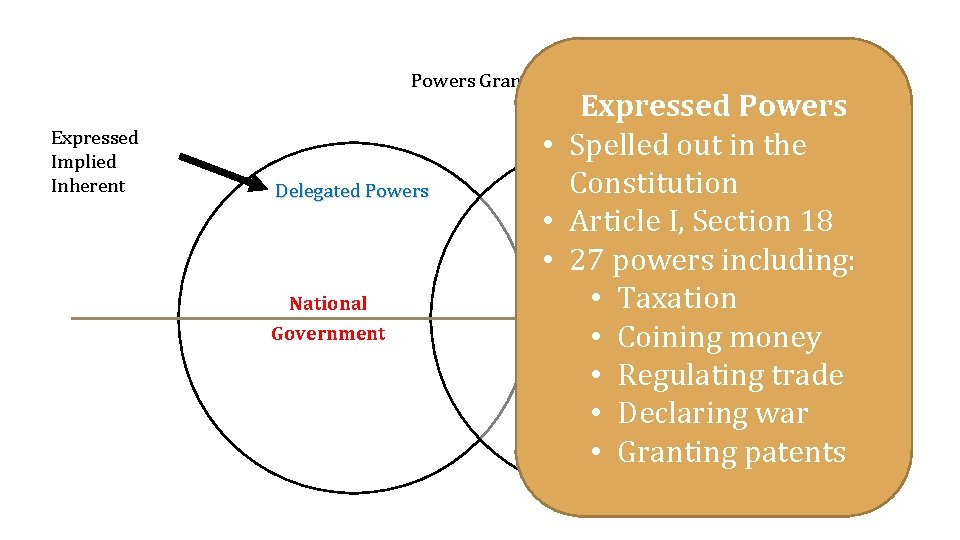
Powers Granted Expressed Implied Inherent Expressed Powers GOVERNMENT POWERS Delegated Powers National Government • Spelled out in the Constitution • Article I, Section 18 • 27 powers including: • State Taxation Government • Coining money • Regulating trade • Declaring war • Granting patents
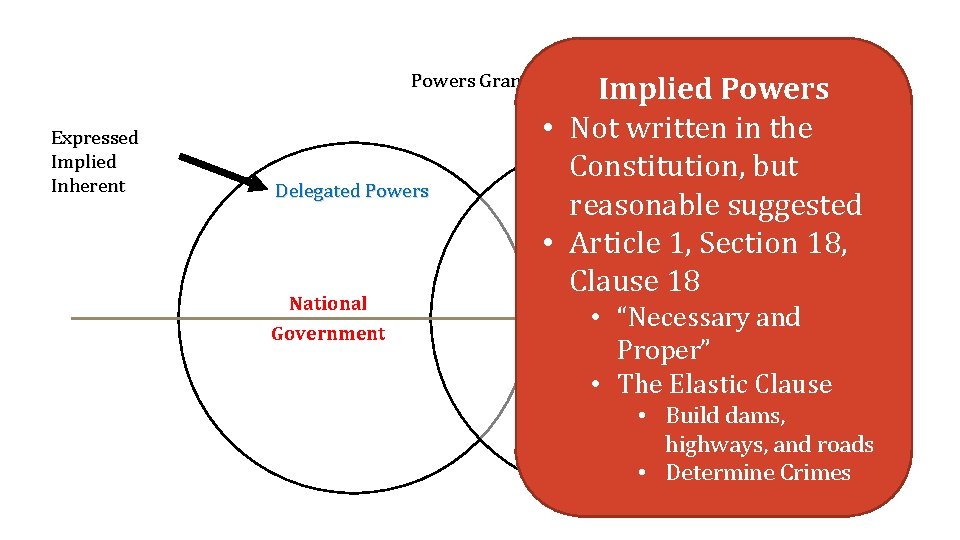
Powers Granted Expressed Implied Inherent Implied Powers GOVERNMENT POWERS • Not written in the Constitution, but Delegated Powers reasonable suggested • Article 1, Section 18, Clause 18 National Government State • “Necessary and Proper” • The Elastic Clause Government • Build dams, highways, and roads • Determine Crimes
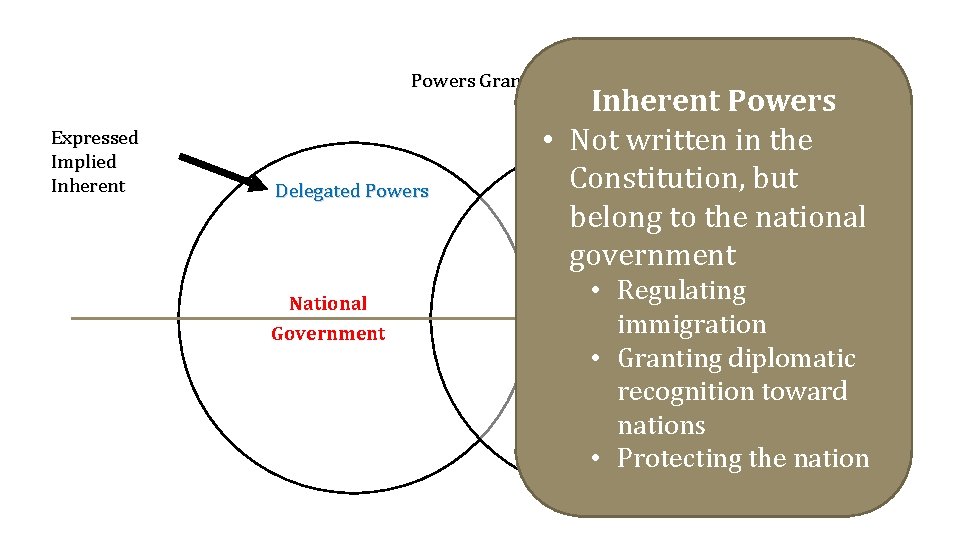
Powers Granted Expressed Implied Inherent Powers GOVERNMENT POWERS Delegated Powers National Government • Not written in the Constitution, but belong to the national government • State Regulating immigration Government • Granting diplomatic recognition toward nations • Protecting the nation
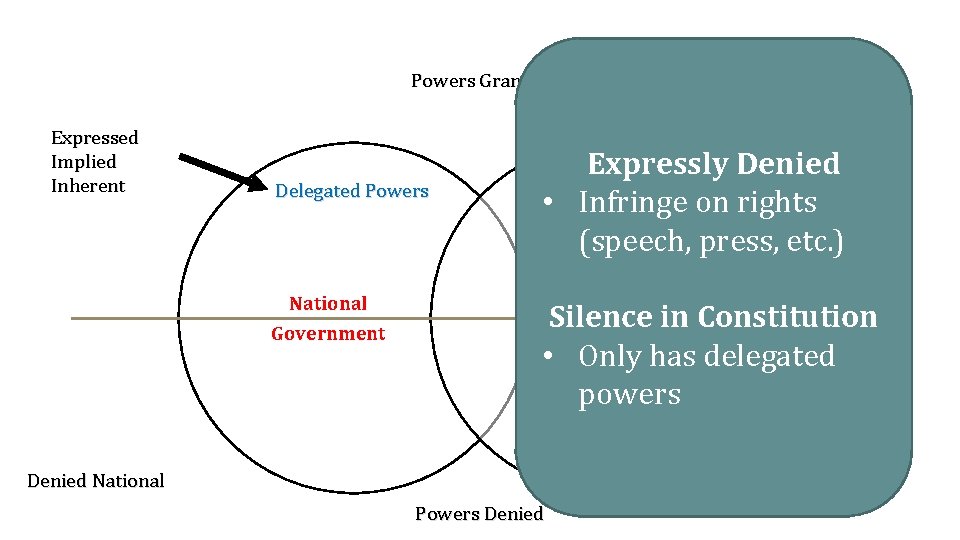
Powers Granted Expressed Implied Inherent GOVERNMENT POWERS Delegated Powers National Government Expressly Denied • Infringe on rights (speech, press, etc. ) State Silence in Constitution Government • Only has delegated powers Denied National Powers Denied
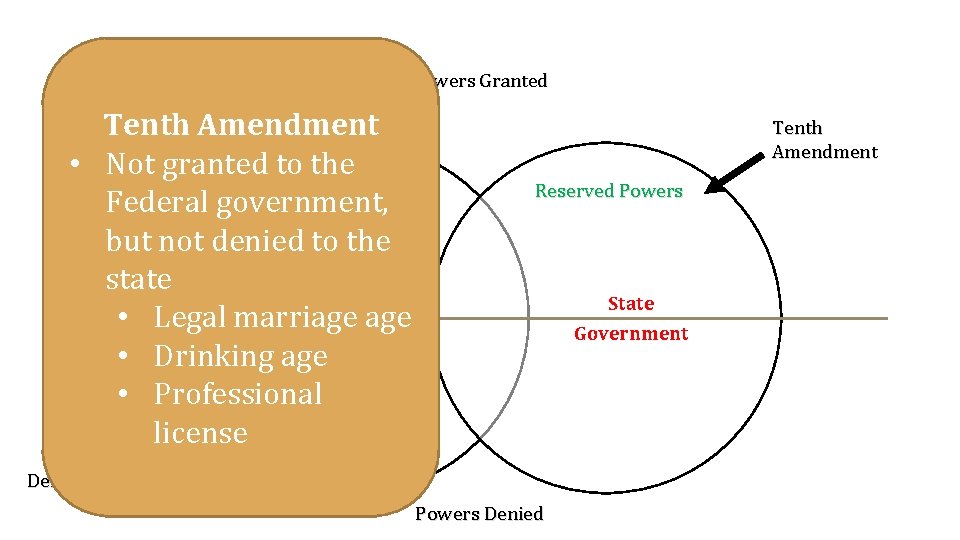
Powers Granted GOVERNMENT POWERS Tenth Amendment Expressed Implied • Not granted to the Inherent Reserved Powers Delegated Powers Federal government, but not denied to the state National State • Legal marriage Government • Drinking age • Professional license Denied National Powers Denied Tenth Amendment
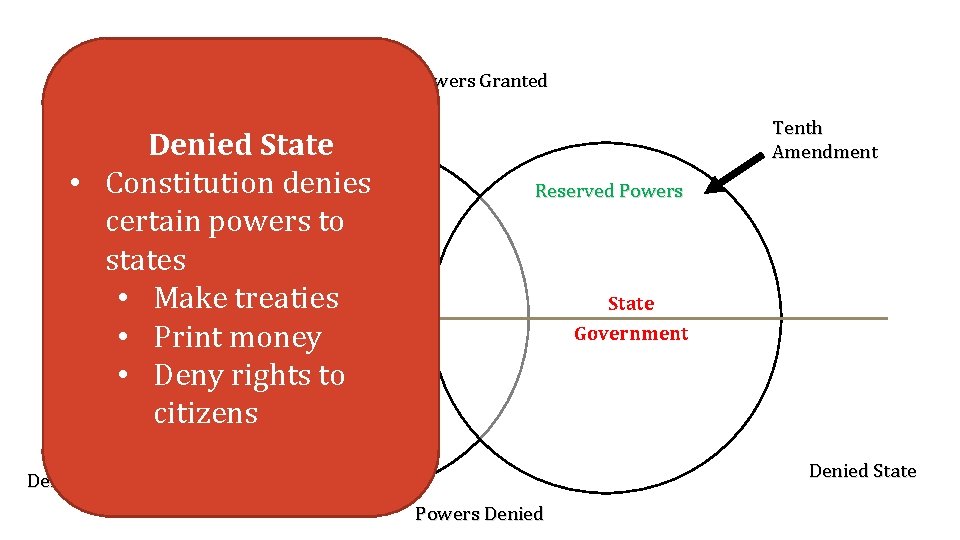
Powers Granted GOVERNMENT POWERS Denied State • Constitution. Delegated denies. Powers certain powers to states • Make treaties National Government • Print money • Deny rights to citizens Expressed Implied Inherent Tenth Amendment Reserved Powers State Government Denied State Denied National Powers Denied
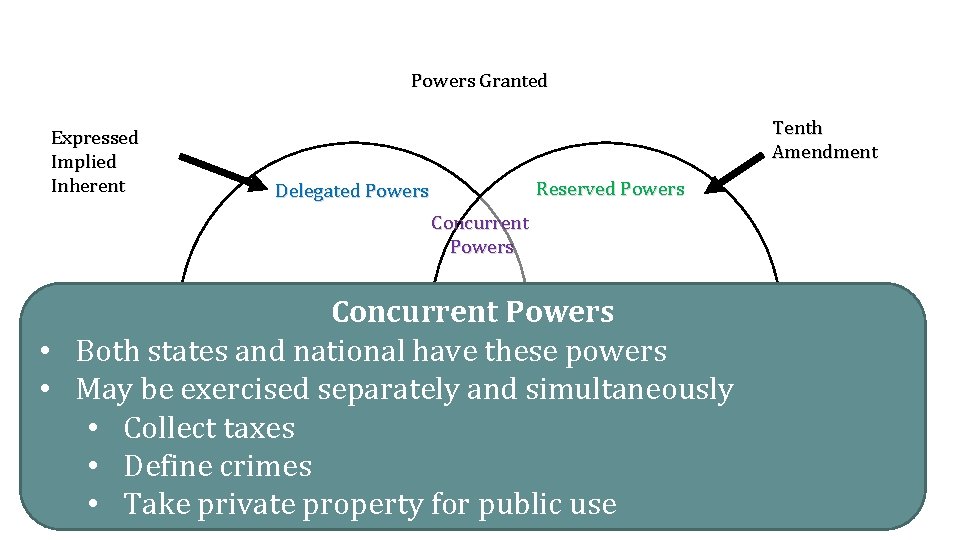
Powers Granted Expressed Implied Inherent GOVERNMENT POWERS Tenth Amendment Reserved Powers Delegated Powers Concurrent Powers National Concurrent Powers. State Government • Both states and national have these powers • May be exercised separately and simultaneously • Collect taxes • Define crimes Denied National • Take private property. Powers for public Denied use Denied State
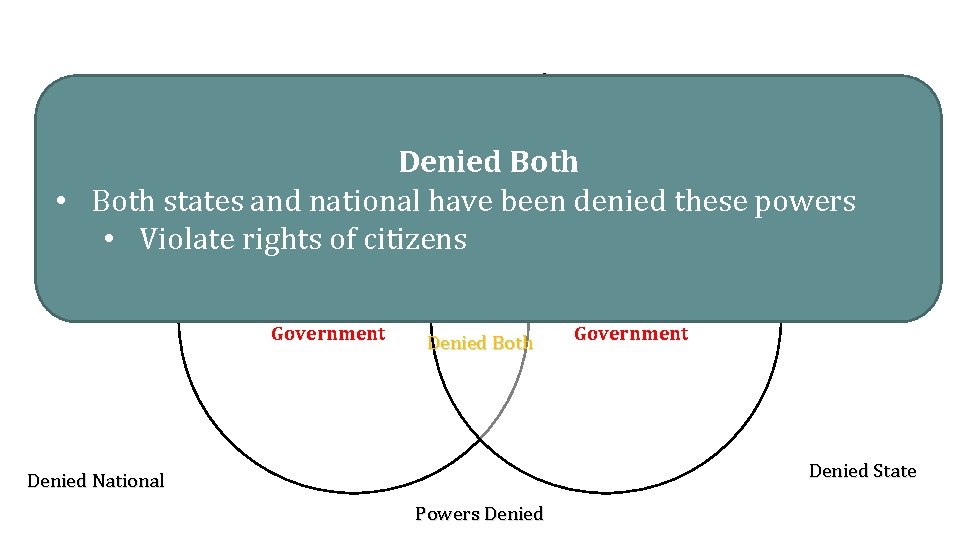
Powers Granted Expressed Implied Inherent GOVERNMENT POWERS Tenth Amendment Denied Both Reserved Powers Delegated Powers • Both states and national have been denied these powers Concurrent • Violate rights of citizens Powers National Government State Denied Both Government Denied State Denied National Powers Denied
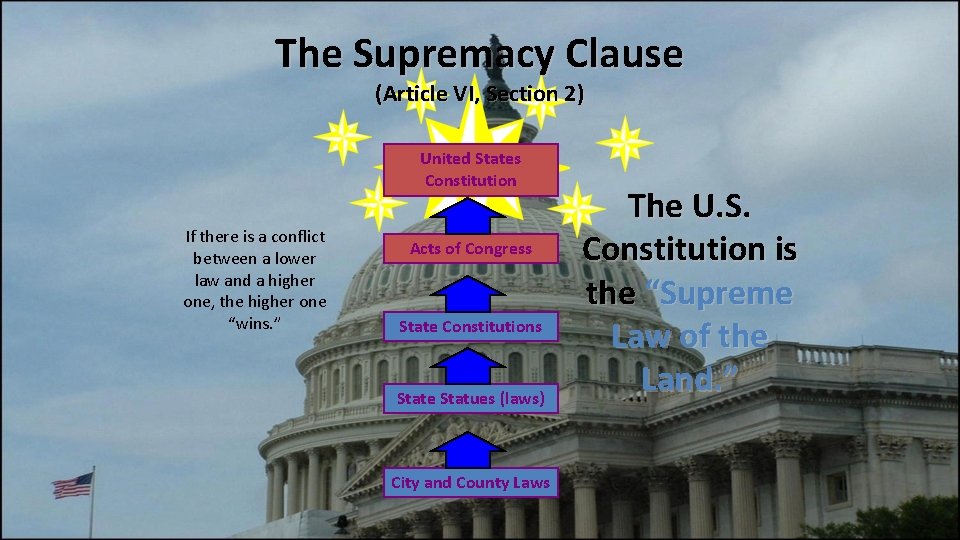
The Supremacy Clause (Article VI, Section 2) United States Constitution If there is a conflict between a lower law and a higher one, the higher one “wins. ” Acts of Congress State Constitutions State Statues (laws) City and County Laws The U. S. Constitution is the “Supreme Law of the Land. ”
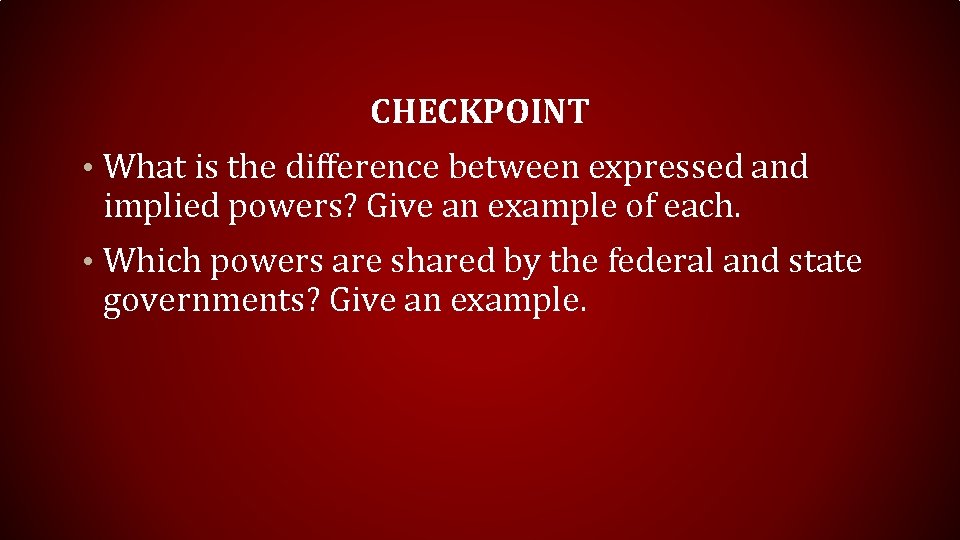
CHECKPOINT • What is the difference between expressed and implied powers? Give an example of each. • Which powers are shared by the federal and state governments? Give an example.
EXIT TICKET Read each statement. If the statement is an accurate description of FEDERALISM, answer TRUE. If the statement is inaccurate, answer FALSE. Be prepared to defend/discuss your answer.
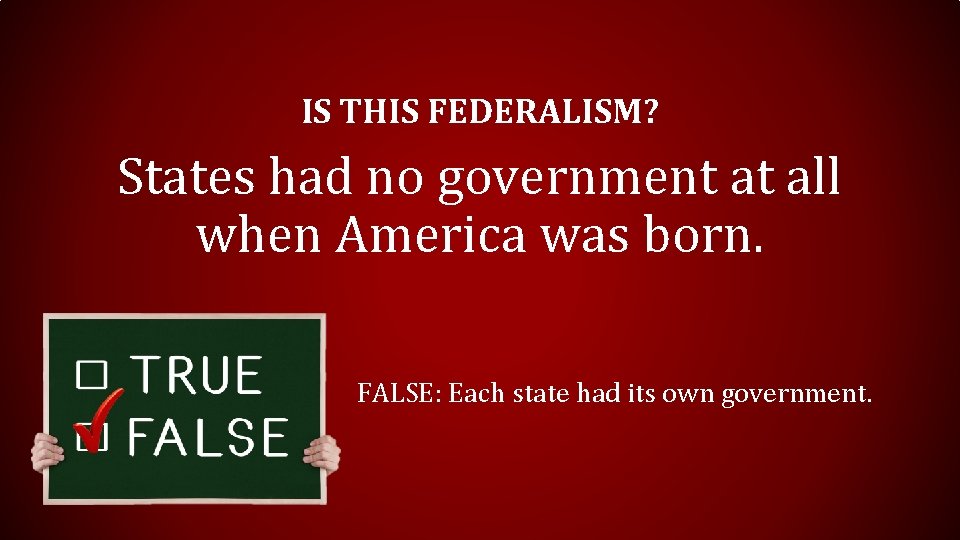
IS THIS FEDERALISM? States had no government at all when America was born. FALSE: Each state had its own government.
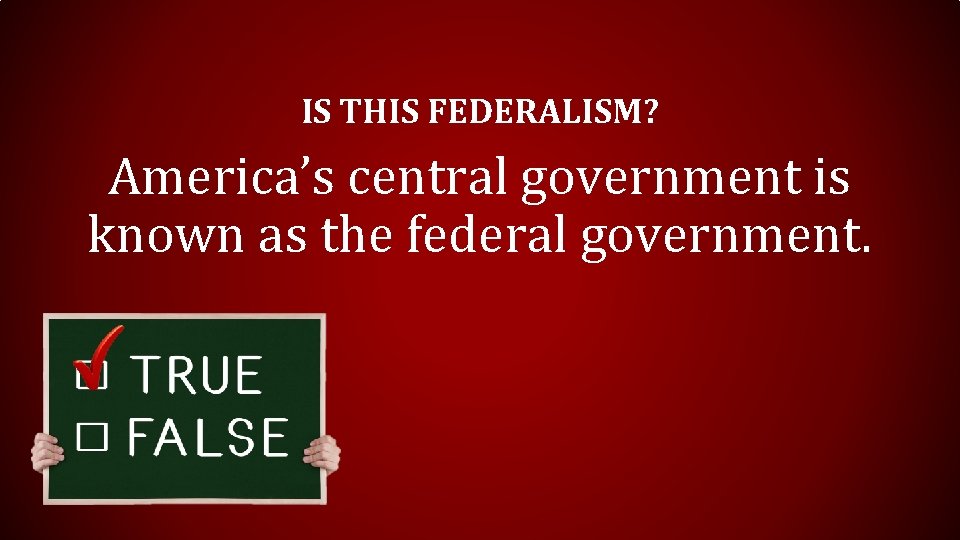
IS THIS FEDERALISM? America’s central government is known as the federal government.
IS THIS FEDERALISM? Federalism is the division of power between states. FALSE: Federalism is the division of power between states and a central government
IS THIS FEDERALISM? The Constitution divides federal power among three branches of government.
IS THIS FEDERALISM? Powers not given to the federal government are reserved for the states or the people.
IS THIS FEDERALISM? Powers that states and the federal government share called concurrent powers.
IS THIS FEDERALISM? The Supremacy clause says state laws are superior to federal laws. FALSE: Federal laws are superior to state and local laws.
IS THIS FEDERALISM? Implied powers are stated in the constitution and expressed powers are not. FALSE: It’s the other way around!
IS THIS FEDERALISM? The Constitution lets Congress do what is “necessary and proper” for carrying out its powers.
IS THIS FEDERALISM? Congress can’t pass laws that have anything to do with powers it doesn’t have, even if there is a link to a power it does have. FALSE: Congress often passes laws by finding links to the powers it has
IS THIS FEDERALISM? People today still debate about how much power states and the federal government should have.
IS THIS FEDERALISM? The Founders had to create a federal government system because there weren’t any other systems to choose from. FALSE: There are many types of government systems
IS THIS FEDERALISM? An association of independent states is called a unitary form of government. FALSE: This is a confederate government.
IS THIS FEDERALISM? A unitary form of government does not divide power between a central government and lower governments.