
FEDERALISM AP Government Mrs Lacks Federalism a system

- Slides: 30
FEDERALISM AP Government Mrs. Lacks
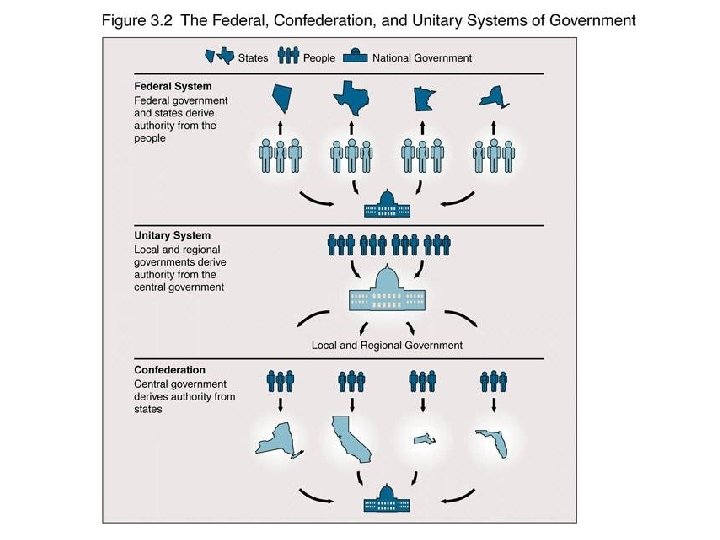
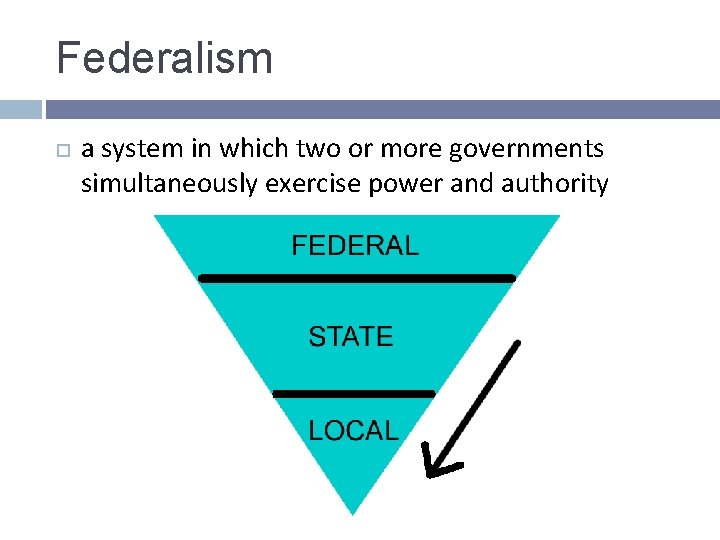
Federalism a system in which two or more governments simultaneously exercise power and authority
Why Federalism? Means of dispersing power Protects democracy Use states to test new programs/policies Feared “tyranny of the masses”
Kinds of Federalism Dual Cooperative Competitive Permissive
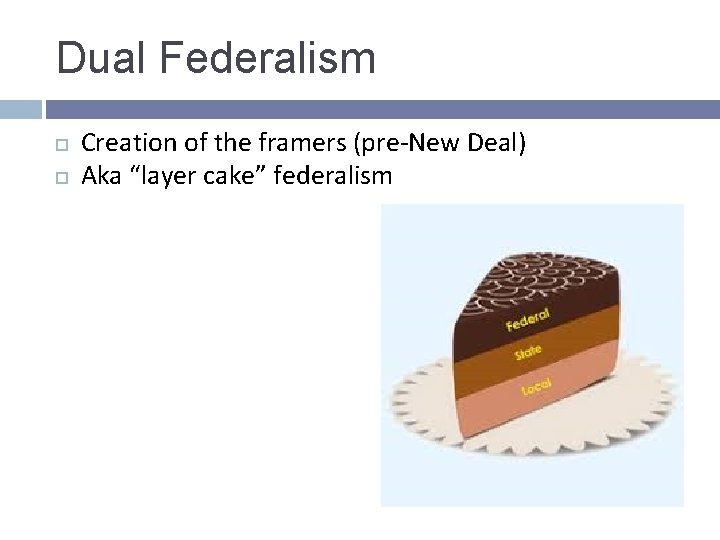
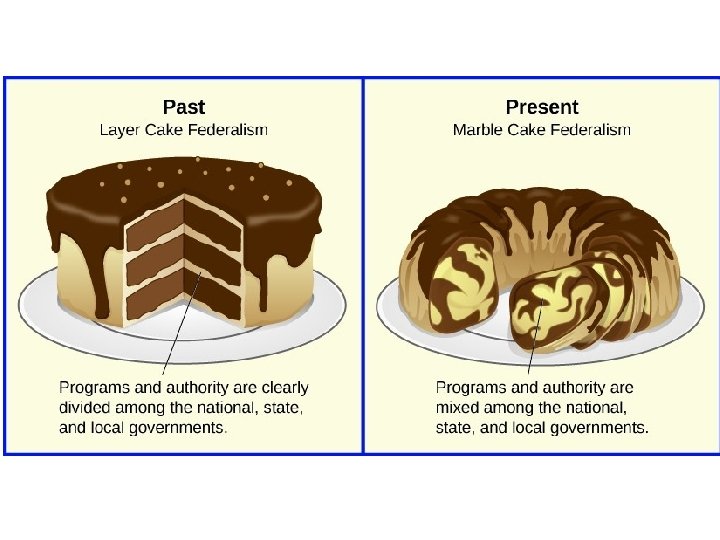
Dual Federalism Creation of the framers (pre-New Deal) Aka “layer cake” federalism
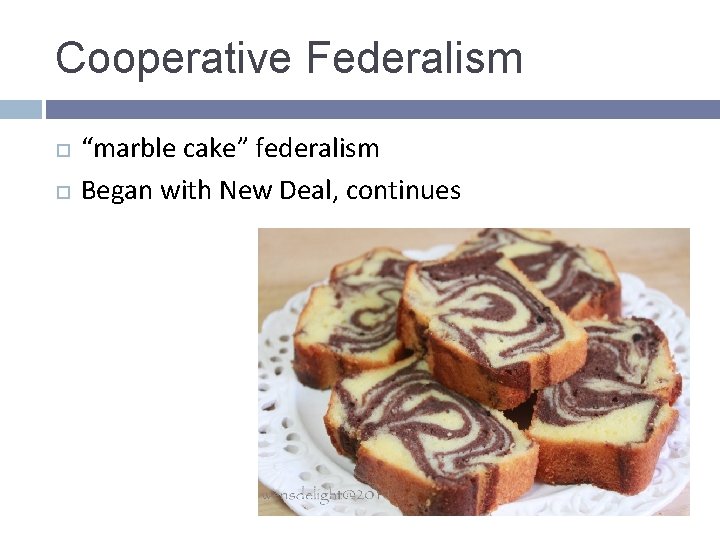
Cooperative Federalism “marble cake” federalism Began with New Deal, continues
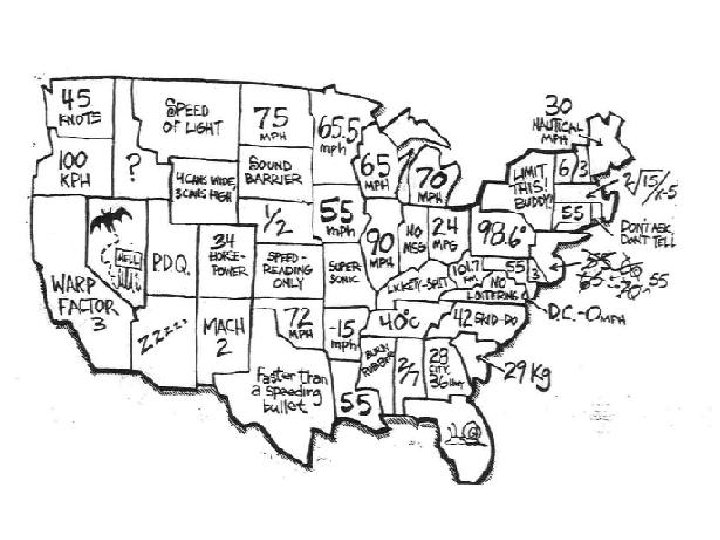
Competitive Governments within US compete for your business (housing, job, purchases, etc. )
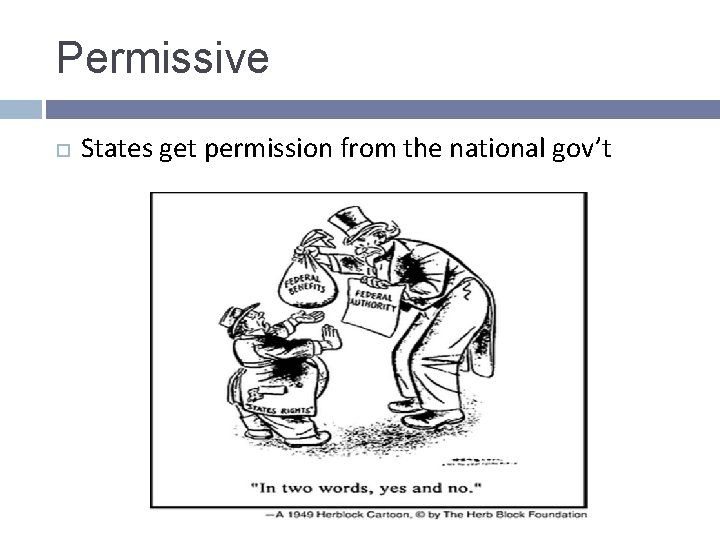
Permissive States get permission from the national gov’t
Fiscal Federalism Block Grants Categorical grants-in-aid Unfunded Mandates
FEDERALISM Part II
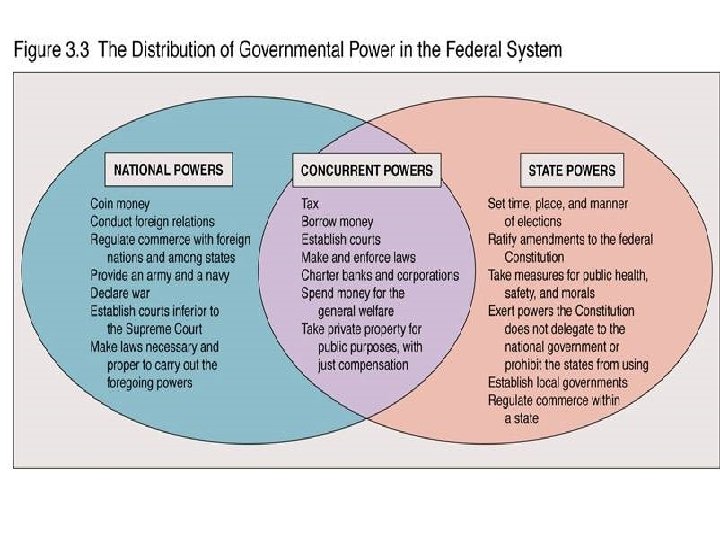
The Powers of Government in the Federal System The distribution of powers in the federal system consists of several parts:
Denied Powers Article I, section 9 lays out powers denied to the central government. For example: give preference to ports of one state over another Article I, section 10 lays out the powers denied to the states. For example: enter into treaties, alliances, or confederations
Enumerated Powers Aka expressed, explicit, or delegated Powers held only by the national govt Directly listed in the Constitution lay and collect taxes, duties, and imposts provide for the common defense and general welfare of the United States regulate commerce with foreign nations, and among the states, and with Indian tribes coin money and regulate the value thereof declare war
Reserved Powers given to the state governments alone (10 th Amendment)
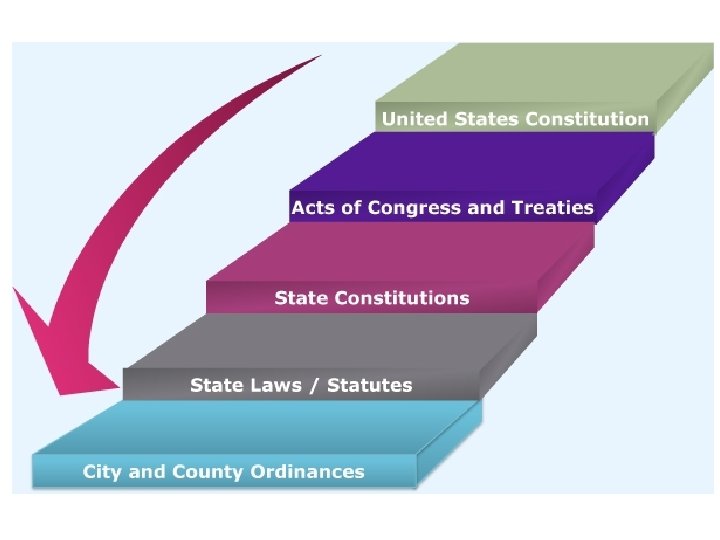
Supremacy Clause When state and federal laws conflict, federal laws supersedes
Implied Powers The central government may make all laws which shall be necessary and proper for carrying into execution the enumerated powers. Aka Elastic Clause (expands the powers of the national government)
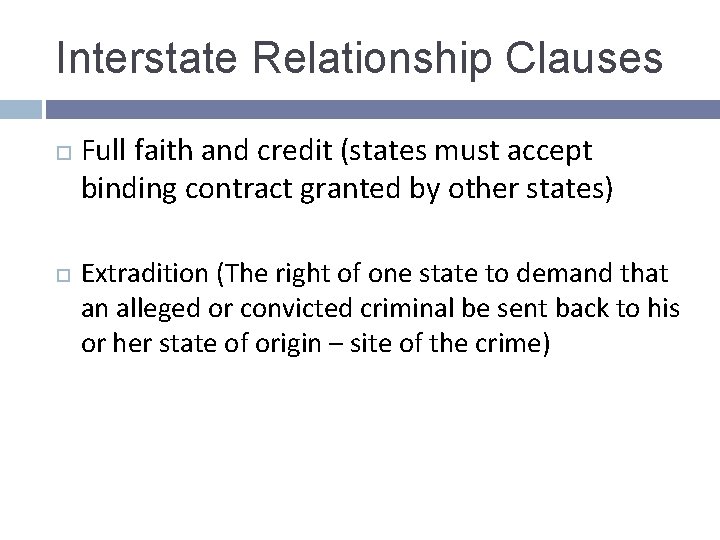
Interstate Relationship Clauses Full faith and credit (states must accept binding contract granted by other states) Extradition (The right of one state to demand that an alleged or convicted criminal be sent back to his or her state of origin – site of the crime)
Other important clauses Writ of habeas corpus Bill of attainder Ex post facto laws
States’ Rights vs. Federal Rights? Who should have more power? Centralists – People who favor national action over action at the state and local levels. Decentralists – People who favor state or local action rather than national action.
Devolution Revolution The effort to slow the growth of the federal government by returning many functions to the states Began with Nixon vision of the “New Federalism” designed to decentralize federal policies, hence, reverse the ever-rising tide of federal encroachment
Devolution Revolution Jimmy Carter cut national aid to states introduced the Sunset law (the reduction of the size of the federal bureaucracy by terminating programs and personnel when said programs outlived their usefulness)
Devolution Revolution Ronald Reagan (Reagan Revolution) cut federal taxes by a third, hoping to force a proportional reduction in federal programs, primarily social programs that were given birth under FDR’s and LBJ’s administrations. embraced Nixon’s New Federalism
Devolution Revolution Bill Clinton Reinvent Government, the intent to shift powers from the federal to the state level (welfare) Contract with America: Republican Congress’ plan to reverse the growth of the federal govt (Newt Gingrich)
Growth of Federal Govt 2006 Midterms: return of Democratic dominance in both the House and Senate 2008 & 2012 Election: President Obama Instilled policies calling for redistribution of wealth and opportunity (ex. universal health care, increased taxation)