
Federal Republic of Mexico Introduction Mexico Government Basics
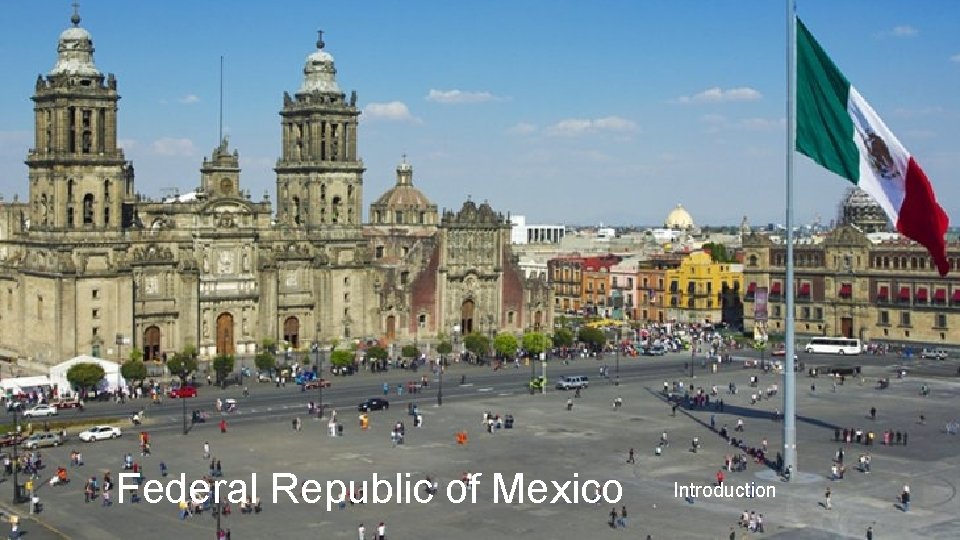
Federal Republic of Mexico Introduction

Mexico Government Basics Federal Republic Has been a republic of a federal government and states since 1917. Developing democracy The 1900 s was dominated by one party There were elections, but no real competition until the 2000 s. Now a party system is becoming a political reality

Mexico Land Geography Second largest country in Latin America Two mountain ranges run the length of Mexico Sierra Madre Occidental on west & Sierra Madre Oriental on the east The mountains limit large scale farming, transportation, and communication Has large oil and silver deposits, but has struggled to manage the resources.
Mexico Population Demographics 130 million people; 10 th largest country in the world The majority of the population is mestizo, 1/3 of Amerindian descent Population is highly urbanized (80%), Mexico City is world’s 12 th largest Internal migration sends many to northern Mexico for more economic opportunity External migration is an issue on its southern border, many in Central America come for better economic prospects in Mexico

Mexico Population Density Demographics

Mexico Ethnic Groups Demographics
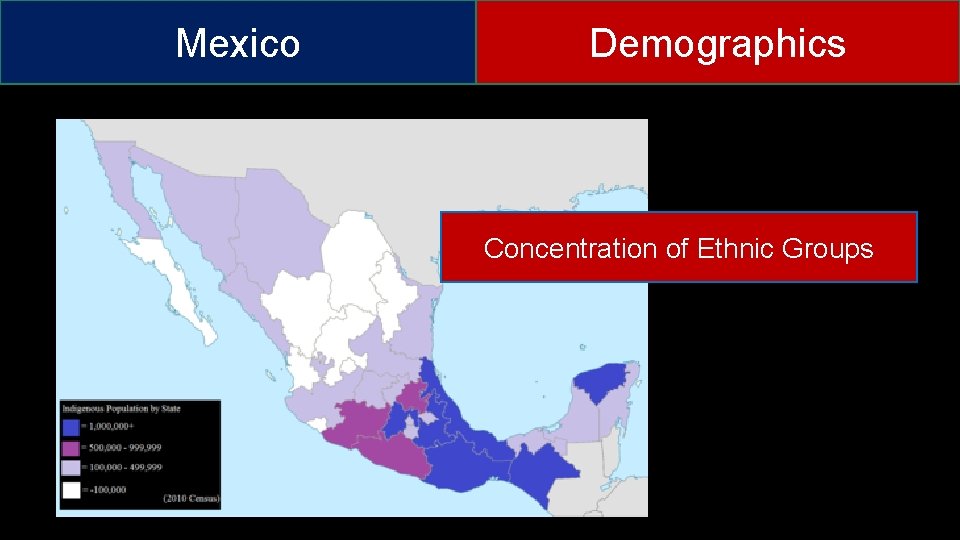
Mexico Demographics Concentration of Ethnic Groups
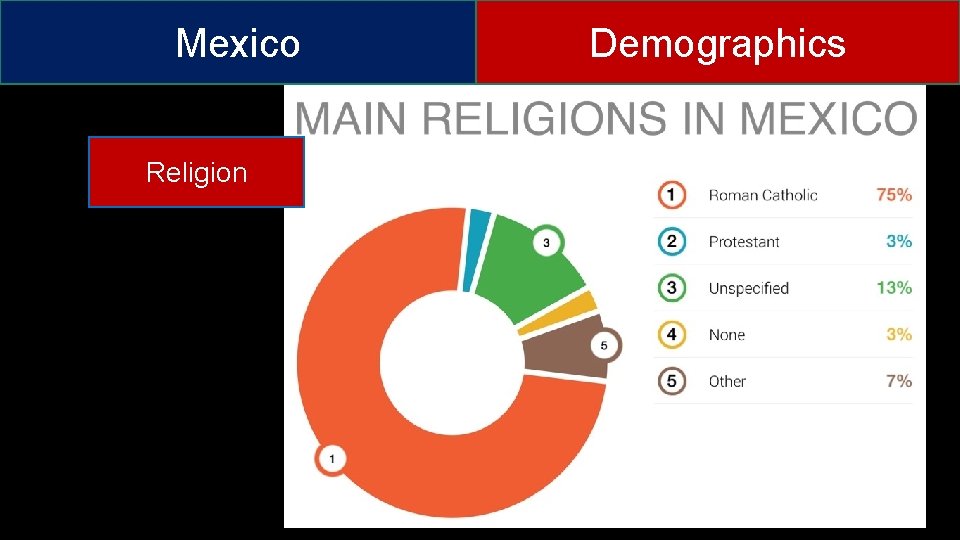
Mexico Religion Demographics
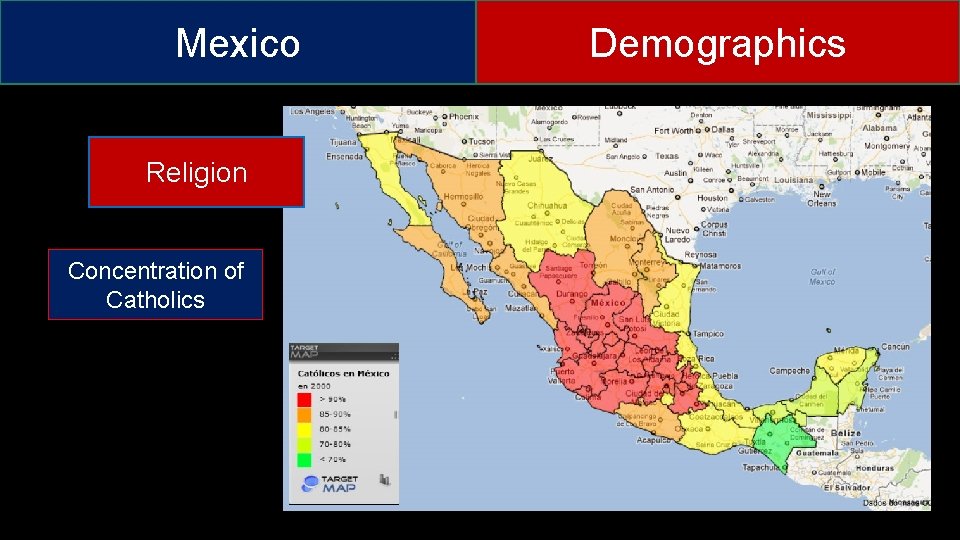
Mexico Religion Concentration of Catholics Demographics
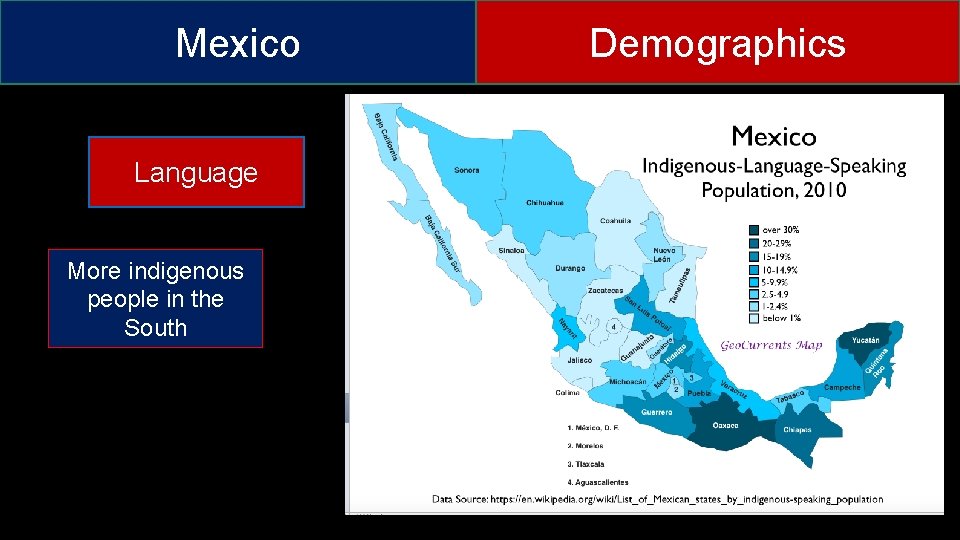
Mexico Language More indigenous people in the South Demographics
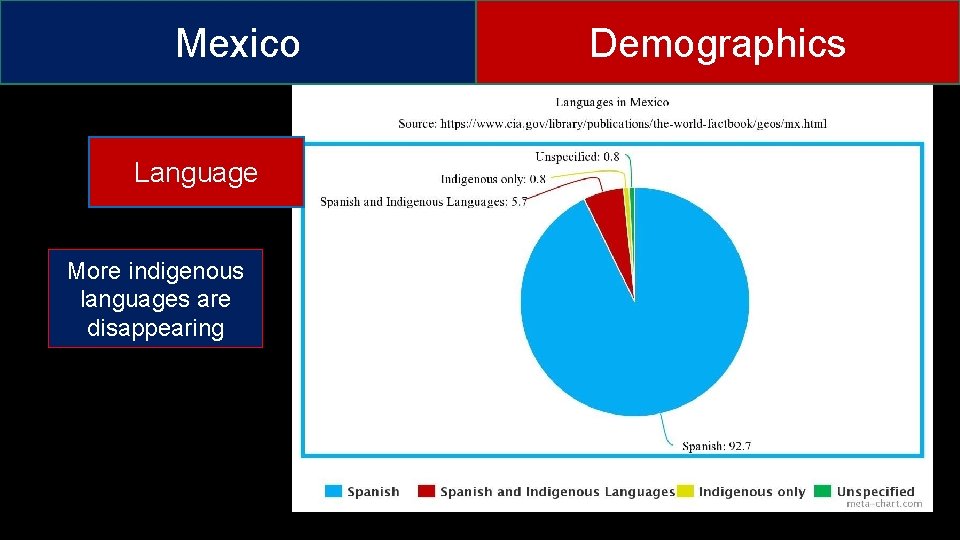
Mexico Language More indigenous languages are disappearing Demographics
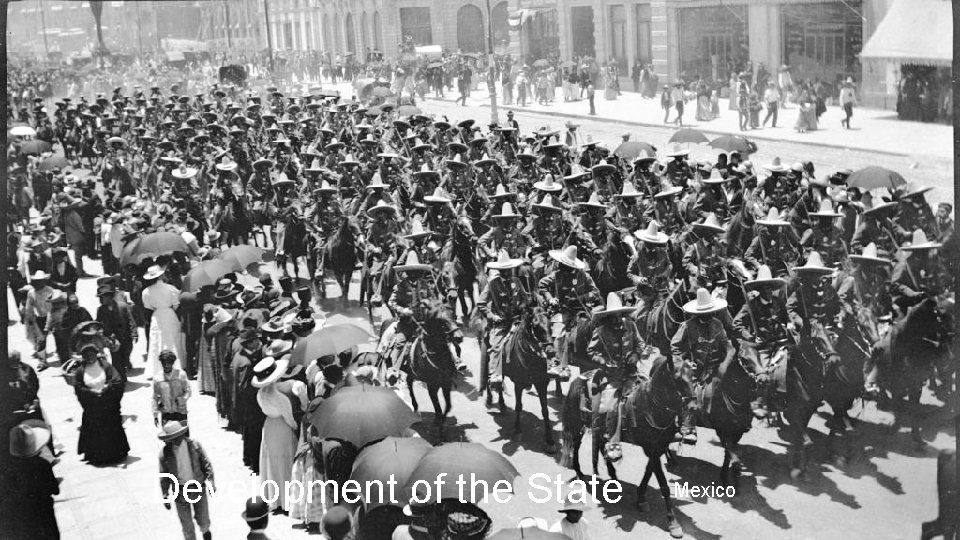
Development of the State Mexico

Mexico Colonial Mexico Critical Junctures Spanish forces conquered the Aztec Empire in 1521 Spain ruled Mexico directly for the next three hundred years Roman Catholicism was imported and wealth was exported to Spain Indigenous people were oppressed, enslaved and mostly died off
Mexico Independence Critical Junctures Miguel Hidalgo began the first wars for independence in 1810 Independence was gained in 1821, but legitimate govt was hard to build There were 36 presidents from 18331855 During this period, Mexico lost more than half of its territories Liberals & conservatives fought over the political and economic order, & especially the role of the Church Constitution of 1857 incorporated many goals of the liberals
Mexico Independence Critical Junctures France invaded in 1864, ending liberal rule (conservatives were happy) Benito Juarez defeated the French & returned to presidency in 1867 General Porfirio Diaz became dissatisfied with the lack of action He ran for president several times & finally won in 1876
Mexico Porfiriato Critical Junctures Porfirio Diaz established a dictatorship called the Porfiriato It lasted 34 years & was welcomed by many because it brought stability He imposed centralized political and economic control He relied on advisors known as cientificos who became very rich They monopolized political power & reserved economic opportunity for themselves Opportunities were closed off for upper & middle class Meixcans
Mexico Revolution of 1910 Critical Junctures Diaz promised an open presidential election & Madero ran as reformer Madero had support of middle classes and won election Peasant revolts in the south were led by Emiliano Zapata In the north, Pancho Villa was leading attacks on landowners & the USA Years of civil war ended in 1917 with the Constitution of 1917 The constitution was the result of the conflicting interests of factions
Mexico Newly Industrialized Critical Junctures Nigeria is dependent on unpredictable oil revenues, external loans, and foreign aid. It was self sufficient in the 1960 s but now relies heavily on imports for food. Manufacturing has not seen much government investment since the 1970 s Oil prices have dropped, especially in the 2008 recession, and Nigeria has not diversified its economy
Mexico Constitution of 1917 Critical Junctures It established a formal set of political institutions and guaranteed citizens a range of rights Social & Economic rights included agrarian reform, social security, right to unionize, minimum wage, 8 hour work day, profit sharing for workers, secular education, and adult male suffrage. Only Mexican citizens or the government could own land, water, or natural resources It severely limited the power of the Roman Catholic Church.
Mexico Calles Critical Junctures Power became consolidated in a group from the north, called the Sonoran Dynasty Putarco Elias Calles emerged as the jefe maximo, or supreme leader His rule was characterized by extreme anticlericalism, which led to outbreaks of violence After his term, he was able to select his successors and control them In 1929 he consolidated the most powerful political leaders into a political party, the PRI
Mexico Cardanas Critical Junctures Called picked Cardenas to succeed him – who went on to pursue even more radical goals than the revolution He redistributed twice as much land as previous revolutionary govts. The land was put in collective land grants & those who benefitted became the base of support for the party He put the petroleum industry under government control During his rule, the bulk of the population was incorporated into the political system as organizations were added to the official party.
Mexico Development Critical Junctures Cardenas years saw investment in industrialization, agriculture, and infrastructure His successors used the institutions he created to counteract his reforms They used patronage and clientelism to build loyalty into the PRI political system This reoriented the country away from egalitarian goals towards a development strategy Economic growth rates were very high during the 1940 s, 50 s, and 60 s. New oil discoveries in the 1970 s delated reforms further
Mexico Economic Crisis Critical Junctures The price of oil plunged in the early 1980 s, which put Mexico into a deep economic crisis New policies were put into place to reduce barriers to international trade In 1993, President Salinas agreed to NAFTA with the US & Canada The reforms of the 80 s & 90 s meant that Medico’s development would be tied to international economic conditions Economic problems were accompanied by increasing political instability
Mexico Political Crisis Critical Junctures The Zapatista Army of National Liberation seized control of towns in the southern state of Chiapas Citizens openly supported the rebels and criticized the government & military In 1994, the PRI’s candidate was assassinated in Tijuana The assassin was arrested, but investigation revealed a possible conspiracy by party leaders, law enforcement, and drug cartels The replacement candidate, Ernesto Zedillo, won in 1994, but people were now disillusioned with the system
Mexico End of PRI Critical Junctures In 1997, for the first time, the PRI lost a majority in the Chamber of Deputies In 2000, Vicente Fox was elected as the first non-PRI candidate in 7 decades His administration lacked experience and had a hard time implementing reform He looked to improve relations with the US, but the Sept 11 th attacks caused Bush to be more hostile towards the border When his term ended, the PAN ran Felipe Calderon, who increased taxes and actions in the War on Drugs
Economic Policy Mexico
Mexico State Capitalism State & Economy After the revolution, the government guided industrial & agricultural development Govt action was relied on to encourage private investment and reduce risks for private entrepreneurs – causing growth People also wanted Mexico to start to manufacture the goods that it imported Prior to Revolution, exporting raw materials was the main source of economic growth
Mexico Import Substitution State & Economy The govt promoted the development of industries to supply the domestic market Govt encouraged domestic and foreign investment to begin developing consumer goods They encouraged the development of private agriculture by investing in transportation & irrigation networks The govt invested mostly in large commercial farms instead of small peasant farmers In the 1940 s and 50 s GDP grew at an average rate of 7% and it remained at 5%
Mexico Favoritism State & Economy Some entrepreneurs developed a special relationship with the state Govt protected them through high tariffs, or special license requirements Energy costs were subsidized and they rarely had to pay any taxes These businesses became powerful in national politics and were able to veto govt efforts to cut back on their benefits
Mexico State & Economy Workers Widespread unionization took place under Cardenas Workers won many rights in the Constitution of 1917 Changes in the 1940 s made the unions dependent on the govt for benefits and protection Union membership brought job security, housing subsidies, and health care
Mexico Failures State & Economy Many were left behind as the economy grew in the 1940 s-1960 s By the 70 s, big parts of Mexico City’s population lived in squatter settlements surrounding the city The informal sector of the economy was the workers who sold goods & services at the margin of the economic system Peasant farmers were also left behind with the worst land & infrastructure Income disparities & high population growth rates led to guerilla movements
Mexico Oil State & Economy In the 1970 s Mexico became a major oil exporter As oil prices rose, so did the country’s ability to improve the economy and infrastructure Oil became 80% of the country’s exports, but the price of oil crashed in 1982. In 1982, they could not pay interest on the national debt.
Mexico Breaking Point State & Economy A wide variety of interests began to demand the PRI government do something about the economic problems at this point The govt had failed to respond to homelessness, crime, economic collapse The 1988 elections became a focus for protests against eh economic problems and the political powerlessness most citizens felt Opposition candidates almost won the election. The PRI candidate, Salinas only for 50. 7% of the vote
Mexico Structural Reform & NAFTA State & Economy Between 1988 and 1994 new free market policies were put in place. Deregulation gave the private sector less reason to seek special favors from the govt Salinas and Zedillo devolved power to the states and local govts to handle some economic regulation In NAFTA, Mexico created a free trade zone among USA & Canada which increased Mexico’s vulnerability to changes in international conditions. There was a major recession at first but now the Mexican economic is increasingly linked to the US economy
Mexico Standard of Living Society & Economy The standard of living rose after the 1940 s up until the 1980 s The government cut back on social expenditures in the 1980 s A large middle class developed, most of whom live in Mexico’s cities Economic development resulted in a widened gap between the rich and poor.
Mexico Wealth Distribution Society & Economy Economic development resulted in a widened gap between the rich and poor. In the 50 s, the bottom 40% of people had 14% of the wealth & top 30% of people had 16% of wealth. In 2008, that changed to 12% and 76%, respectively There are huge gaps in wealth between cities and rural areas There are huge gap between the north and south. Industry in in the north.
Mexico Central Mexico Society & Economy In the central and southern regions the population is denser but the land is poorer Most of the indigenous people remaining live in the south regions
Mexico Liberalization in the 80 s Society & Economy In the 1980 s the economic crisis made wages drop by half and unemployment rose As the govt privatized, it laid of workers Social services like education and health care also declined. Spending was almost cut in half. Since the 80 s there have been slow growth interrupted by economic shocks in the mid 90 s and late 2000 s
Mexico Trade Networks Global Economy Economic crisis on 1982 was the end of Mexican restrictions on the ability of foreigners to won property. Foreign investment was encouraged to hopefully increase manufacturing They joined GATT and WTO and singed trade pacts with many countries Now 80% of its exports go to the US and 48% of its imports come from there.
Mexico Impact of NAFTA Glonbal Economy Mexican farmers of corn and grains have been hurt by US competition Other agriculture exports and lots of manufacturing have improved The US has invested billions in economic assistance now that the Mexican economy is tied to the US economy They also worry about US cultural imperialism
Governing & Administration Mexico
Mexico Organization State Organization The institutions resemble those of the united States There are three branches with checks and balances between them Congress is composed of a Senate and Chamber of Deputies State and local governments are also elected by the people The constitution is long and easily amendable
Mexico President Executive The presidency is the central institution of governance and policy making Until the 1990 s, the president always chose who would run as the next president for the PRI President sets the broad outlines of policy and can make sure his preferences are adopted As a multiparty system develops, actors are more willing to stand up to the president
Mexico President Executive They can initiate legislation and make policy by decree They are in charge of foreign policy They are also head of a big patronage machine for filling positions in govt Until recently congress always approved any legislation they put forward. Under PRI presidents were always members of the outgoing presidents cabinet.
Mexico Recent presidents Executive In the 1990 s President Zedillo gave up many of the traditional powers He chose not to nominate a successor Fox and Calderon inherited a system where the president is expected to set lots of policies, but they needed strong parties in control of Congress to do so Until recently congress always approved any legislation they put forward.
Mexico Cabinet Executive Once elected, the president names a cabinet Under the PRI, al cabinet officials were members of the PRI Since PAN, they have had a hard time picking cabinet ministers with enough experience to be effective. More women have been picked as prominent cabinet ministers recently At the change of a president, there is typically high turnover in the cabinet and other top executive branch jobs
Mexico President Executive They each serve one six year term and have since 1940 They then remove themselves from politics to allow their successors to have full control of government No matter what party, they must demonstrate loyalty to myth and symbols of Mexican nationalism
Mexico Bureaucracy About one and a half million people work for the federal bureaucracy More people work in state owned factories and semi-autonomous agencies Another million and a half people work for state and local govts They don’t make huge salaries, but they do have significant power over public affairs and govt work is attractive for aspiring young professionals
Mexico Parastatals are semi autonomous govt agencies that produce goods & services They were very large and powerful prior to the 1990 s. Starting in the 1980 s, reforms led to privatization of many parastatals In 1970, there were 391 of them. In 1982, it had grown to 1155. By 1994, only 215 remained. There is symbolic importance to some public ownership, so they will not all be privatized
Mexico Military Other Institutions Mexico is the rare Latin American state to have kept their military out of politics They have rotated regional commands to prevent generals from building up regional bases of power They have given military leaders opportunities to engage in business so they would not seek political power Military has been helpful in dealing with civilian unrest on multiple occasions Its main role today is in helping the govt fight against crime and drug cartels
Mexico Judiciary The legal system is more formal – from Napoleonic tradition – than British style common law There are no punitive damages allowed in court cases, so there are fewer lawsuits The amparo is where an individual can ask for a writ of protection, claiming that their constitutional rights are violated. There are federal and state courts, but state courts play a subordinate role
Mexico Judiciary The system is structured like the US. There’s a Supreme Court, circuit courts, and district courts. There also specialized courts like labor court, military court, & electoral courts President Zedillo strengthened the courts by emphasizing rule of law and refusing to interfere with court’s judgements. The judicial branch is the weakest branch of government. In 2008 reforms called for the introduction of public trials and the presumption of innocence
Nigeria Subnational Govt Local governments and state governments are mostly poor They have little capacity to raise their own revenue so they rely mainly on funding from the central government They also suffer from a lack of well trained employees or the funds to attract There has been more effort to devolve power to local govts, but it’s been resisted by local officials who don’t have the budgets or capacity for more roles
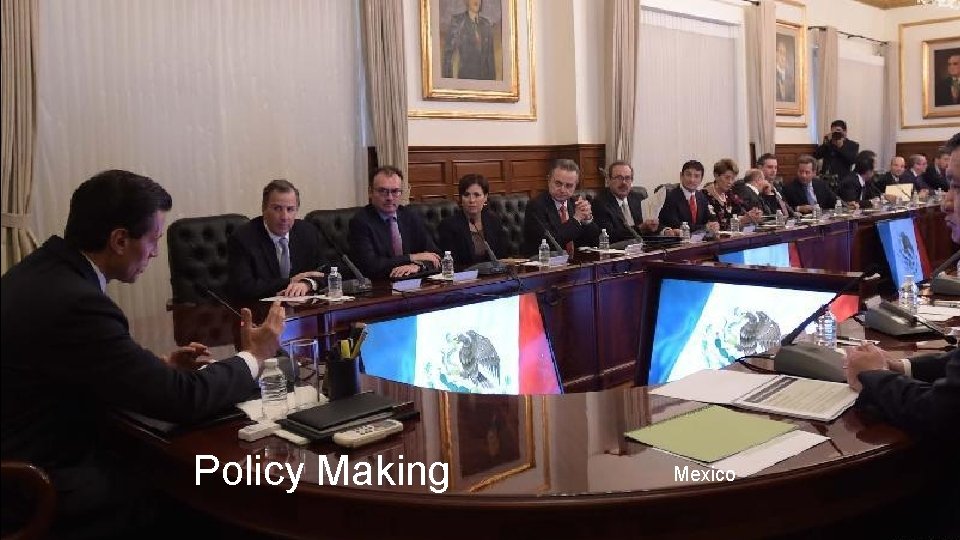
Policy Making Mexico
Mexico Policy making Policy Making Process Policy Making depends on the quality of leadership, especially the president Presidents bring in their teams and priorities & goals Since the end of PRI rule, the legislature has taken a more active policy role They can block legislation or force negotiation, even introduce bills The real problem in policy making comes in implementation where bureaucracy or local govt may not always be cooperative
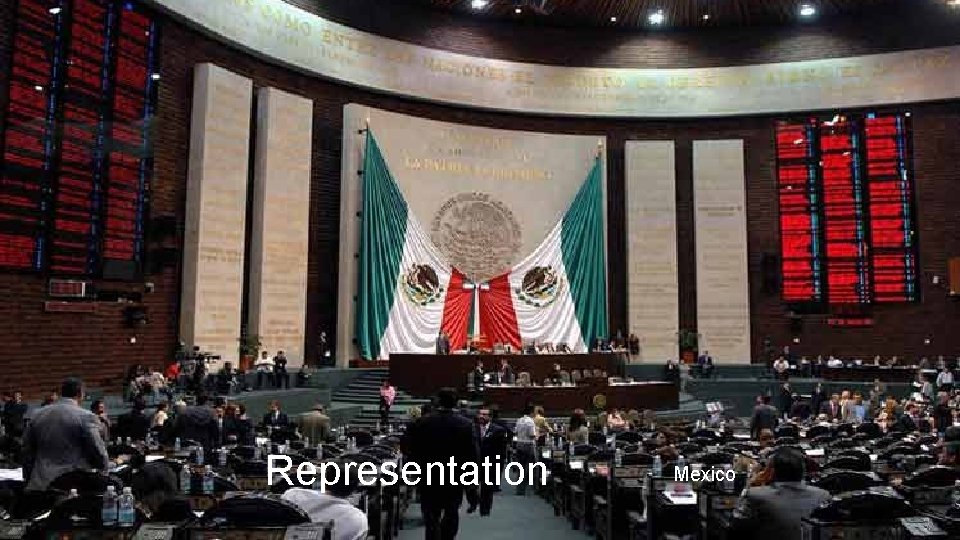
Representation Mexico
Mexico Congress Legislature The congress is bicameral – with a Senate and a Chamber of Deputies The Senate is made up of three senators from each of the 31 states. The Federal District also gets to select three senators Thirty two additional senators are also chosen by a proportional election national vote
Mexico Congress Legislature The Chamber of Deputies is the lower house made up of 500 members Three hundred of them are chosen by single member electoral districts Two hundred additional deputies are also chosen by a proportional election national vote Representation in both houses has become more diverse since the 1980 s More women and representatives from parties other than the PRI have been elected at higher rates
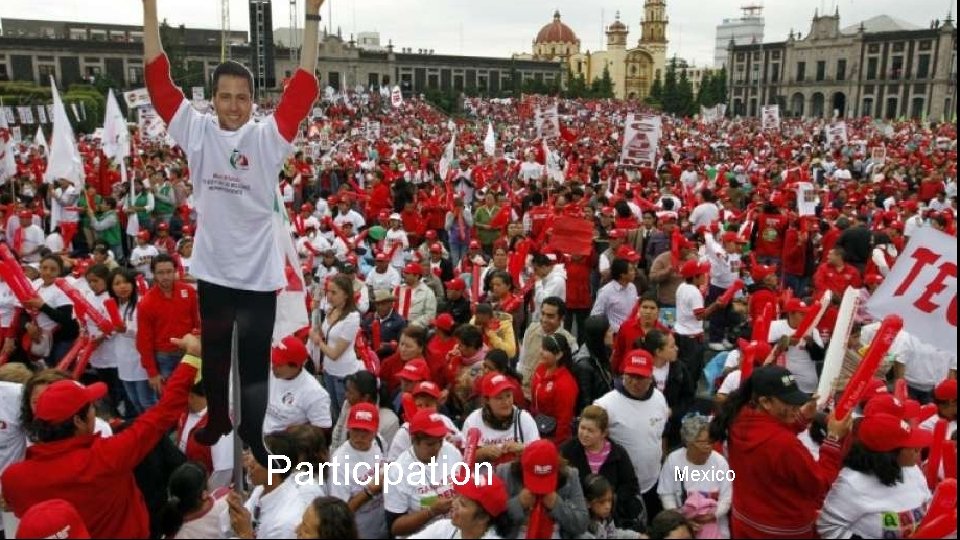
Participation Mexico
Mexico PRI Political Parties The PRI was founded by political elites to eliminate competition They could work out their differences within the party and the result would hopefully be less violence The PRI basically ruled Mexican govt for seventy years in the 1900 s By the 1990 s the PRI was dominated by corporatist representation The CTM represented Labor, CNC for peasants, and CNOP was for the “popular sector” (small business & regional associations)
Mexico PRI Political Parties As the country became more urban, the rural areas became less important to PRI They functioned by distributing resources and jobs to lower level activists who controlled blocs of voters Those who held office or hoped to built networks of supporters Those supporters traded support for access to public resources. The PRI is very centralized, so the corporatist groups don’t tell the elites what to do – the elites run the party
Mexico PRI Political Parties By the 1980 s, voters were more willing to question the party’s dominance As the govt cut back on public services in the 1980 s, they also had less resources to trade for support The party faced more competition as the 80 s and 90 s went on The PRI has to focus more on earning the support of urban voters
Mexico PAN Political Parties The National Action Party was formed in 1939 to oppose the PRI They have mostly functioned just as an opposition to PRI & because they felt there was a need for more than 1 party The party has been strongest in the north, where resistance to Mexico City is the strongest It gets most of its support from urban voters in who work in the private sector
Mexico PAN Political Parties They advocate for more autonomy for regional governments They want less govt involvement in the economy & less regulation of business. The party also calls for cleaner elections, better relations with the Catholic Church, and private & religious education The policy differences between them & the PRI were less clear after the PRI worked for more liberalized economic policies in the 1980 s and 1990 s
Mexico PAN Political Parties They had little success until the economic crisis of the 1980 s They gained more seats in Congress, eventually getting control of the Senate The party nominated Vincente Fox for president in 2000 even though he had not been a long time PAN member As first PAN president, Fox was not very successful at passing reforms because the party members were inexperienced and not united behind him Party insiders regained control and nominated Felipe Calderon to run in 2006
Mexico PRD Political Parties The Party of the Democratic Revolution is a leftist alternative to the PRI They have run the son of President Cardenas for president multiple times He had been a PRI insider until he was kicked out of the party for demanding internal reforms and social justice The PRD seemed to be set up to be the biggest challenger to the PRI in the 1980 s but internal divisions over leadership & election strategy caused it to lag behind PRD does have control over many local governments
Mexico Other Parties Political Parties must receive 2. 5% of the vote to compete in future elections There are still some small parties functioning in Mexican politics Smaller parties do sometimes win seats in the Chamber of Deputies & Senate because of the PR voting portions Convergence is a socialist party. PT is a labor based party. PVEM is a green party. New Alliance Party generally supports the PRI.
Mexico Elections Typical PRI voters tend to be rural, less educated, and older and poorer than voters for the other parties A typical PAN voter is in an urban setting in the north, a middle class professional, educated, and has a comfortable lifestyle PRD voters are typically young, educated, live in one of the central states, and in an urban setting The PRI is losing the most voters from economic and demographic changes. The elections since 1994 have been much more competitive and electoral fraud has been reduced.
Mexico Political Culture Mexicans are familiar with the political systems and how they can extract benefits from it Clientelism has always been a form of participation for almost all types of people Limited resources like access to health care distributed in ways that provide political payoff – people are used to it. Public opinion & mass media are becoming more important now that elections are more competitive The elections since 1994 have been much more competitive and electoral fraud has been reduced.
Estudiar con Enrique Mexico
Main Ideas Mexico <Military Rule Ethnic divisions Emerging Democratic Institutions Enrique’s Encouragement Resource Trap & Clientelism
- Slides: 71