
Federal Fire Department San Diego Truck Company Operations


- Slides: 39
Federal Fire Department San Diego Truck Company Operations Initial Assignments, Rescue, Fire Extension Control of Utilities
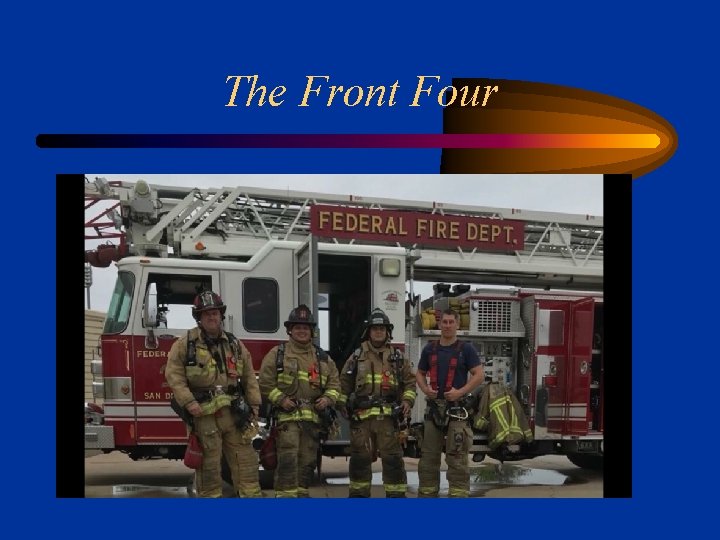
The Front Four
The Truck Companies role in fire Suppression: • • • Decimate Eliminate Mitigate Extricate Evacuate • Any obstacles or hazards that threaten the progress or safety of victims or engine company personnel
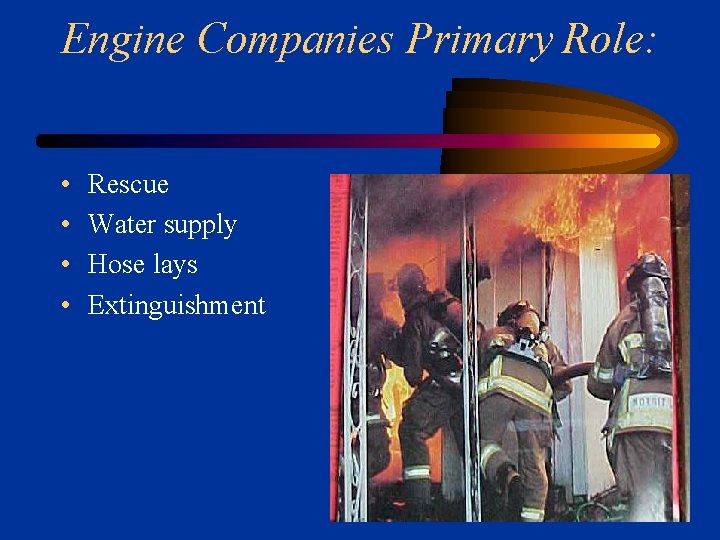
Engine Companies Primary Role: • • Rescue Water supply Hose lays Extinguishment
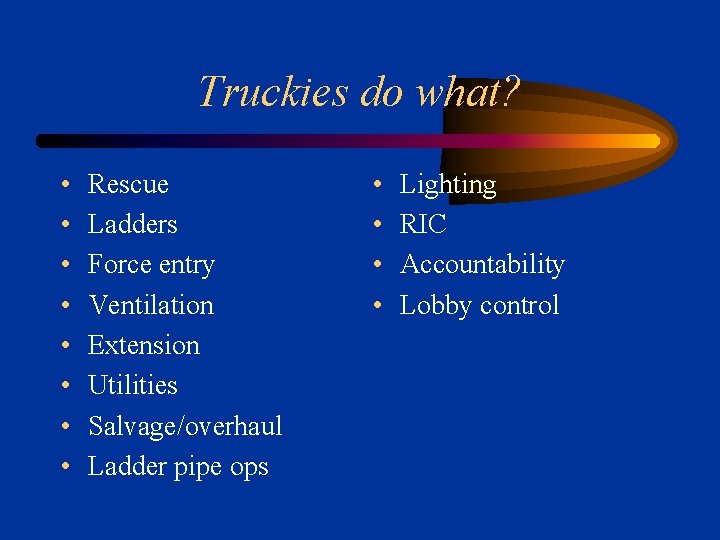
Truckies do what? • • Rescue Ladders Force entry Ventilation Extension Utilities Salvage/overhaul Ladder pipe ops • • Lighting RIC Accountability Lobby control
The Concept • Truck companies generally carry the bulk of the tools. • Truck companies will generally need to accomplish multiple task on the fireground. • There may be a need to accomplish these task simultaneously. • Pre-planning = Greater efficiency
Pre-designated Assignments • Enables personnel to consider the needs of an assignment before responding to an incident • Sets standards that enhance teamwork • Decreases stress by allowing personnel to focus on what they know • Allows personnel to apply what they know to what they will encounter
The Basic Assignment • Set ladders • This may be the most labor intensive task for truck crews. • Often requires 3 to 4 personnel • Once complete this allows for all other task to be assigned and completed • Assures safety escape routes are in place
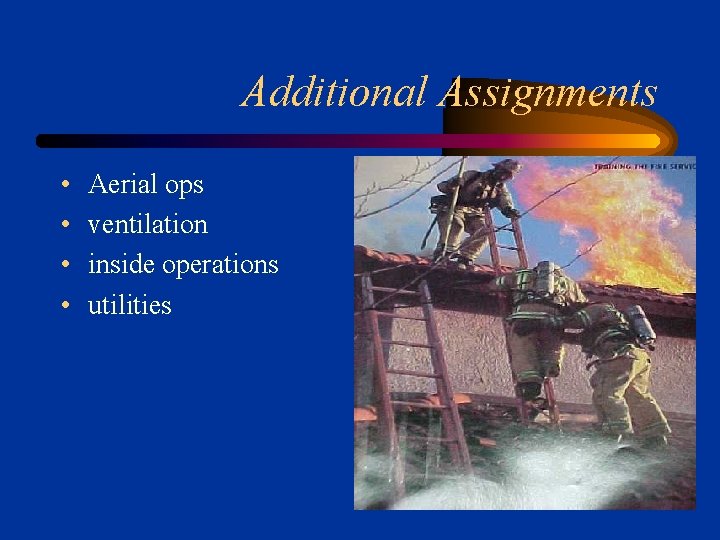
Additional Assignments • • Aerial ops ventilation inside operations utilities
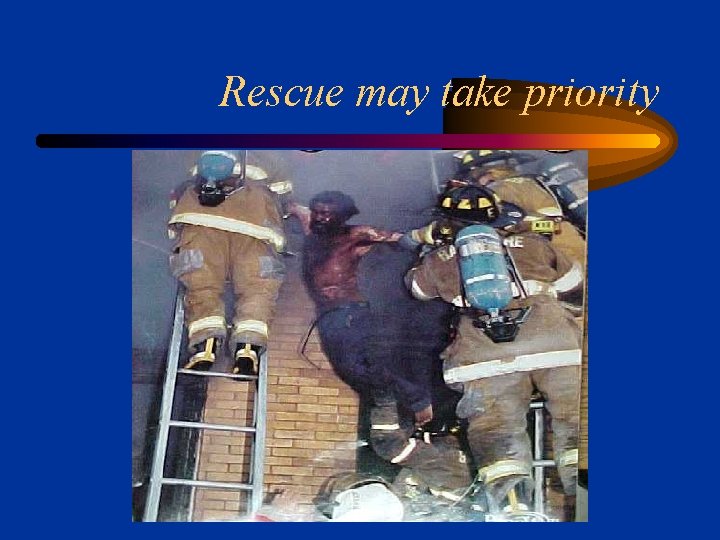
Rescue may take priority
Size up • • • Initially may be done by the truck captain Sets the tone for who will do what Always passes command May at this time spot for aerial ops May position apparatus to allow engine company hose line access • Keep your tool box close, ( truck proximity)
When on scene? • • Initial conditions dictate initial actions Is rescue needed Is ventilation needed Is forcible entry needed Is there a utility hazard Is exposure control needed (extension) Is aerial support needed
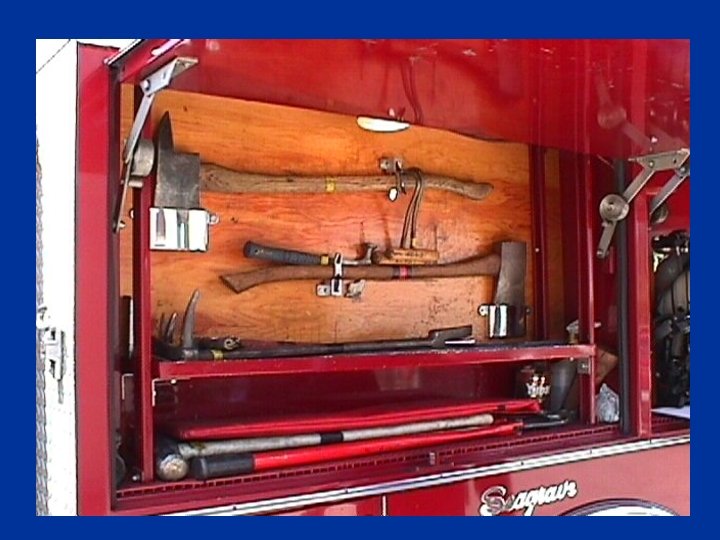
Tool Assignments • Crew personnel should be pre -assigned to a particular duty and tool assignment • This will eliminate confusion at scene and expedite the accomplishment of previously listed truck duties
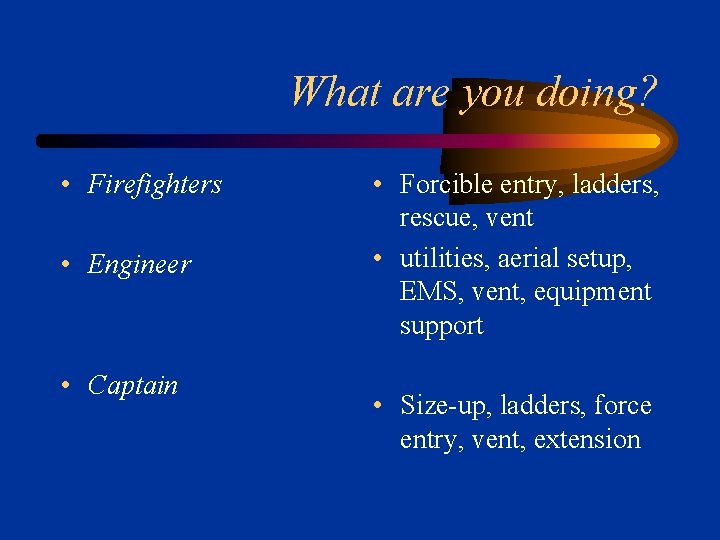
What are you doing? • Firefighters • Engineer • Captain • Forcible entry, ladders, rescue, vent • utilities, aerial setup, EMS, vent, equipment support • Size-up, ladders, force entry, vent, extension
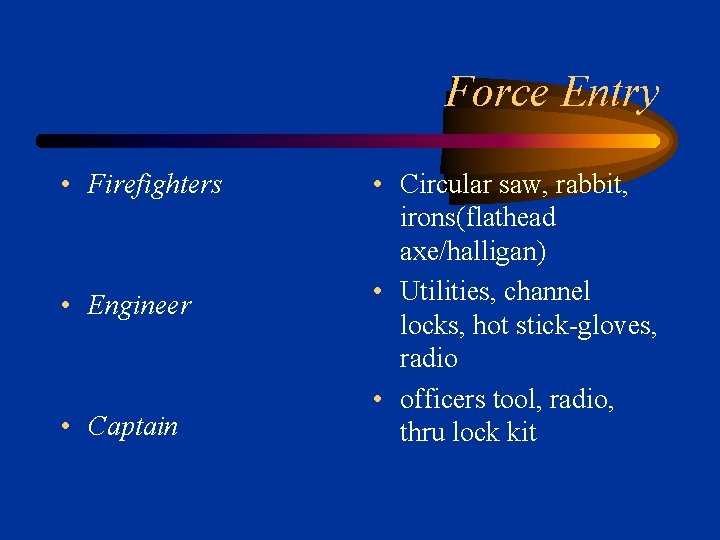
Force Entry • Firefighters • Engineer • Captain • Circular saw, rabbit, irons(flathead axe/halligan) • Utilities, channel locks, hot stick-gloves, radio • officers tool, radio, thru lock kit
Ventilation • Firefighters • Engineer • Captain • Chainsaw, spare blade, toolkit, pickhead axe, dropline, rubbish hook, ladders • If assigned- pike pole additional saw, or act as captain • Ladders, pike pole, pickhead axe, radio
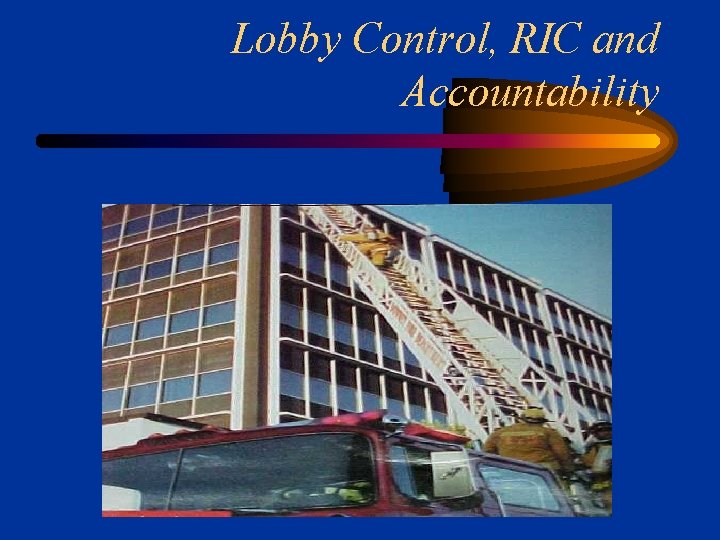
Lobby Control, RIC and Accountability
Lobby Control • As a truck company on a large incident or second in truck company. • Accountability for ingress and egress to structure. • Tracking of fire crews status. • Possibly scene safety officer also. • Positioned at main point of entry.
Tools Assignments for Lobby • • Target hazard book Elevator keys Status boards 2 Radios Scribe pad & pencils Knox box keys Building contact if possible
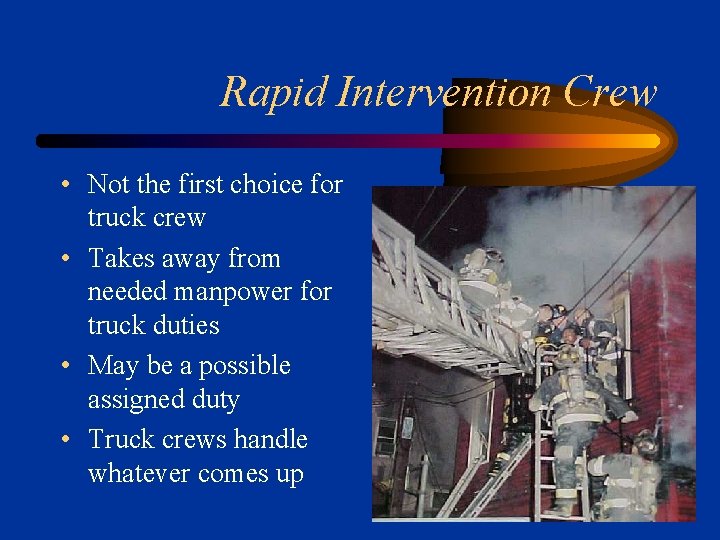
Rapid Intervention Crew • Not the first choice for truck crew • Takes away from needed manpower for truck duties • May be a possible assigned duty • Truck crews handle whatever comes up
Conclusion • Truck crews offer the IC a variety of options as to how incoming units will be utilized. Trucks can knock off many tasks simultaneously and allow engine companies to focus solely on their primary duties such as water supply, attack, RIC, exposures or sprinkler support.
A Truck crew with a clear understanding of pre-designated assignments can quickly and efficiently size-up, address and mitigate a wide range of problems on the fireground , thereby allowing quick and effective actions to be taken by arriving engine companies.
Rescue Operations Making the “Grab”
Chronology of Rescue Operations • Before the alarm • At the alarm • On the fireground
Before the alarm : Pre-fire planning • • Site plans Detailed drawings Special hazards or processes Emergency contacts
At the alarm: Potential for life hazard • • Type of occupancy School Hospital Theater/Church Residential High Rise Business
At the alarm: Potential for life hazard • • • Type of occupancy Hospitals Schools Theaters/churches High rise Residential • • • Time of day Occupied Vacant Day of the week Weather conditions Bystander statements
Size - up • • This task was initiated at receipt of alarm Determine need for rescue Can occupants be seen or heard Is smoke or fire showing Are cars in parking lots or drive ways Does occupancy suggest people on scene Where will fire go if unchecked
Other Information • Pay attention to what bystanders, coworkers and neighbors have to say • Don’t assume a vacant building is vacant • An all clear on the primary does not mean there won’t be a victim found on the secondary
Immediate Rescue Need • Situation requiring action now, before any other tasks are attempted • Victims will surely die or be severely injured if not rescued from their current position • The need for firefighters to remain calm and reassure the victim is imperative
Water Supply and Stream Placement • In many instances fire streams will be necessary to effect a rescue • This will require coordination between truck and engine crews • Streams should separate the fire from the people • Stairways, hallways, exits and entries need to be protected
Search and Rescue • All fires have primary and secondary search • Engine company support and hose line placement is critical • Communication between companies and the IC also critical • All searches should be methodical and orderly so as not to bypass any one room
Primary Search • This is when the structure is completely searched for occupants. • The fire is still active and danger exists for those inside the building
Secondary Search • This is when the area has been searched once, the fire is now under control, heat and smoke have been removed and vision has improved. • The secondary search is very thorough and leaves no doubt as to the building occupancy status. • This is in many cases the time victims are discovered
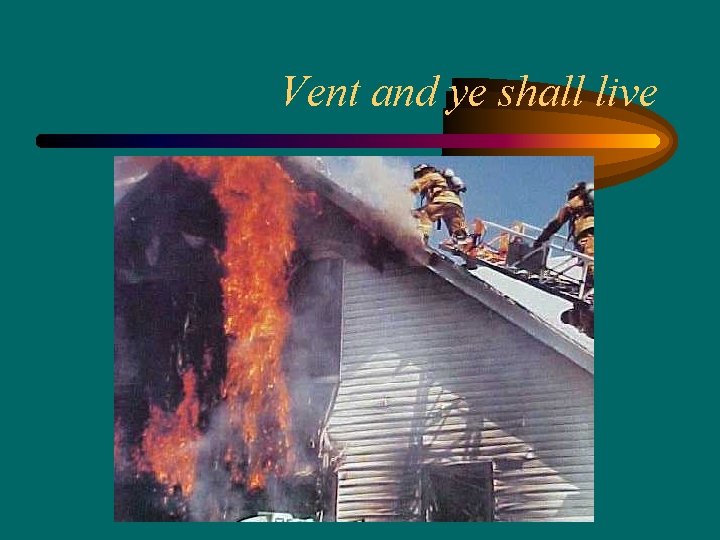
Ventilation • • The most under used rescue tool Needed to adequately search for victims Provides for a higher rate of victim survival Makes for faster more tenable search, rescue and attack • Must be done as a priority
Vent and ye shall live
Rescue considerations and Final Thoughts • Rescue is the removal of endangered occupants, from a place of danger and their relocation to a place of safety • Take into account the number of people in a building and their physical distribution and condition • Path of fire, heat and smoke • Ingress and egress for rescue personnel
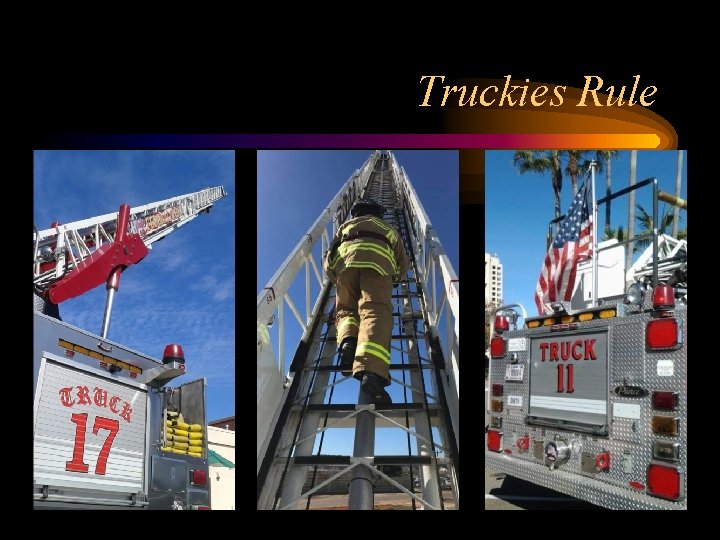
Truckies Rule