
Fecal Microbiota Transplantation Cure for C difficile Infection
Fecal Microbiota Transplantation: Cure for C. difficile Infection Apurva Trivedi, MD Gastroenterologist Scott and White Memorial Hospital Temple, TX
Outline • C. difficile infection • Fecal microbiota transplant • Possible role in ulcerative colitis and primary sclerosing cholangitis 1
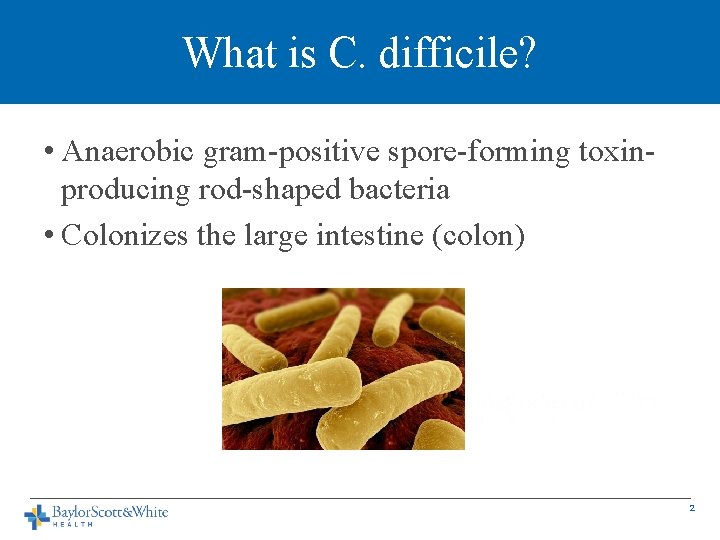
What is C. difficile? • Anaerobic gram-positive spore-forming toxinproducing rod-shaped bacteria • Colonizes the large intestine (colon) 2
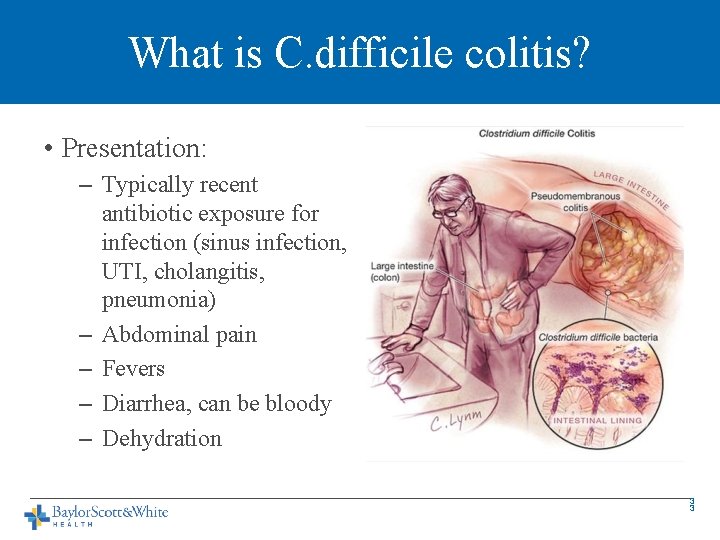
What is C. difficile colitis? • Presentation: – Typically recent antibiotic exposure for infection (sinus infection, UTI, cholangitis, pneumonia) – Abdominal pain – Fevers – Diarrhea, can be bloody – Dehydration 3 3
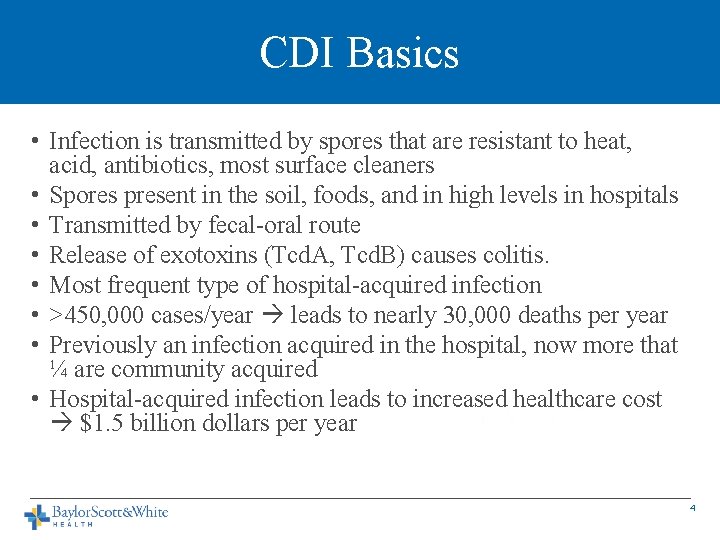
CDI Basics • Infection is transmitted by spores that are resistant to heat, acid, antibiotics, most surface cleaners • Spores present in the soil, foods, and in high levels in hospitals • Transmitted by fecal-oral route • Release of exotoxins (Tcd. A, Tcd. B) causes colitis. • Most frequent type of hospital-acquired infection • >450, 000 cases/year leads to nearly 30, 000 deaths per year • Previously an infection acquired in the hospital, now more that ¼ are community acquired • Hospital-acquired infection leads to increased healthcare cost $1. 5 billion dollars per year 4
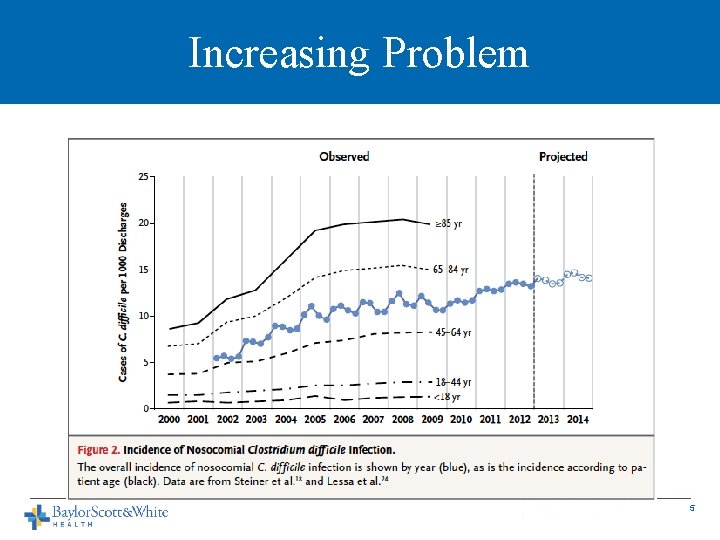
Increasing Problem 5
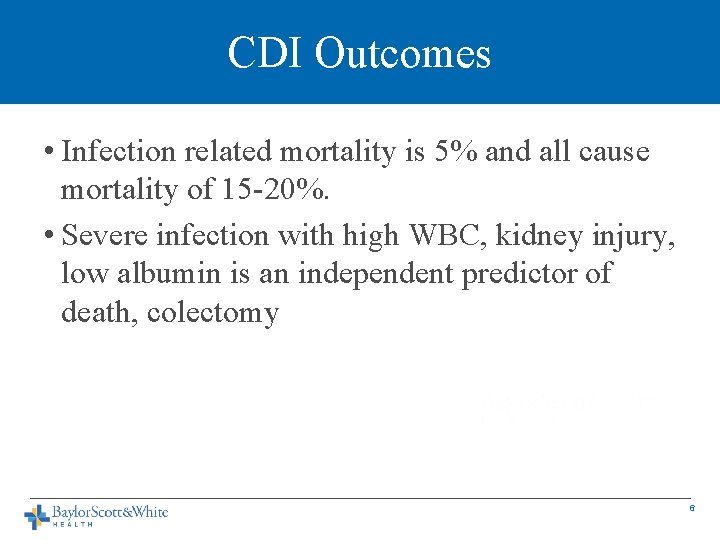
CDI Outcomes • Infection related mortality is 5% and all cause mortality of 15 -20%. • Severe infection with high WBC, kidney injury, low albumin is an independent predictor of death, colectomy 6

CDI Diagnosis • Diarrhea • Stool testing for toxin-producing DNA • Sigmoidoscopy 7
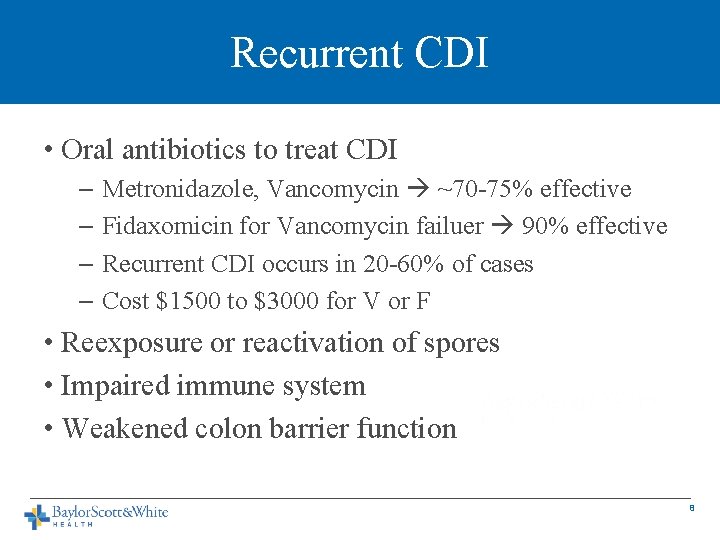
Recurrent CDI • Oral antibiotics to treat CDI – Metronidazole, Vancomycin ~70 -75% effective – Fidaxomicin for Vancomycin failuer 90% effective – Recurrent CDI occurs in 20 -60% of cases – Cost $1500 to $3000 for V or F • Reexposure or reactivation of spores • Impaired immune system • Weakened colon barrier function 8
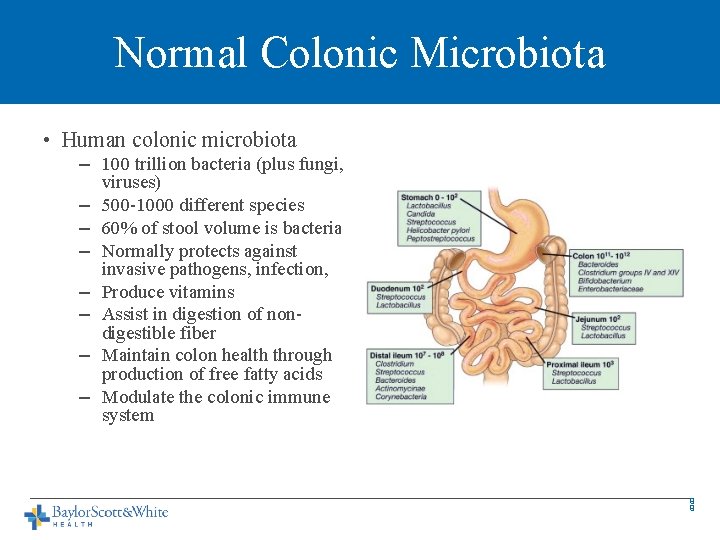
Normal Colonic Microbiota • Human colonic microbiota – 100 trillion bacteria (plus fungi, viruses) – 500 -1000 different species – 60% of stool volume is bacteria – Normally protects against invasive pathogens, infection, – Produce vitamins – Assist in digestion of nondigestible fiber – Maintain colon health through production of free fatty acids – Modulate the colonic immune system 9 9
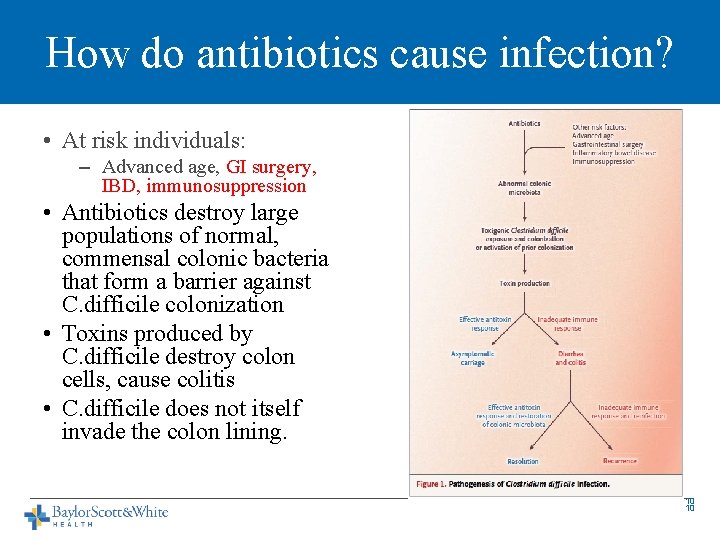
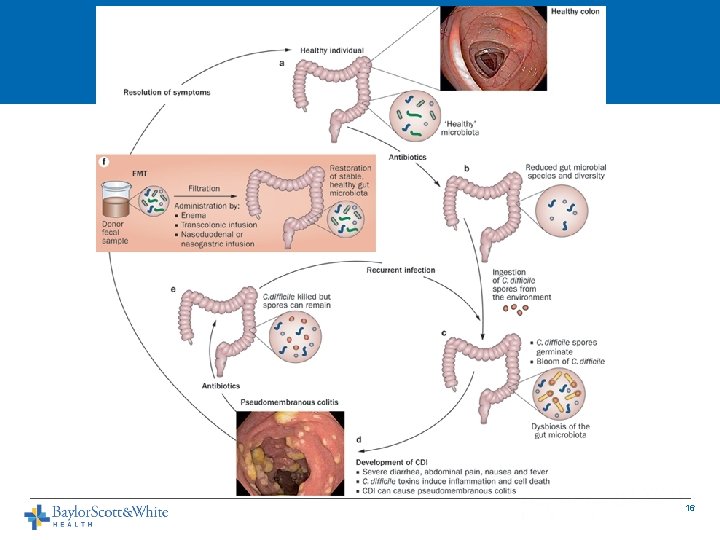
How do antibiotics cause infection? • At risk individuals: – Advanced age, GI surgery, IBD, immunosuppression • Antibiotics destroy large populations of normal, commensal colonic bacteria that form a barrier against C. difficile colonization • Toxins produced by C. difficile destroy colon cells, cause colitis • C. difficile does not itself invade the colon lining. 10 10
C. difficile Infection (CDI) • Increasing numbers of infections • More aggressive, virulent strains developing • 15/1000 hospitalizations in US • Antibiotics that trigger infection: – Penicillins, cephalosporins, clindamycin, fluoroquinolones. 11
What is FMT? • Transfer of stool and bacteria from the colon of a healthy person to the colon of a person ill with a CDI 12
How Are Donors Screened? • Use same exclusions as for blood product donation • Screen donor for any illness – generally want someone who is healthy and on no medications • Screen for hepatitis A, B, C, HIV, H. pylori, syphilis, C. difficile, Giardia, E. coli, Salmonella, Shigella, Campylobacter infections • Can be an individual familiar to the patient or familiar to the MD 13
What is the process? • Stool is collected from the donor, processed to create a liquid suspension in water, filtered for large particulates • Stool can be frozen and used later with similar efficacy 14
How is the FMT Administered? • Small bowel upper endoscopy to the jejunum • Nasojejunal tube placement • Colonoscopy • Retention enemas • Oral capsules 15
16
Results of FMT • Success rates depend slightly on route of delivery • Enema 80 -85% • Upper GI 80 -85% • Colonoscopy to the right colon 90 -95% • Usually see control of diarrhea symptoms within 48 -96 hours 17
Risks of FMT • Risk of aspiration if not delivered deep into upper small intestine • Risk of acquiring infection from donors – rare, single case reports • Risk of complications from sedation and endoscopy – bleeding, perforation, transmission of other infections: 1/1000 -1/10, 000 • DOES NOT IMPACT LIVER TRANSPLANTATION SCREENING OR STATUS 18
Studies Underway for IBD Treatment • Studies in IBD, IBS require intense regulatory oversight by the FDA. • Single study of 16 patients with IBD – Improved frequency of flares – 63% – Remission of flares over 21 months in 19% – No increased risk of flares – Average reduction in stool frequency from 8. 2 to 3. 6 per day – Some patients able to stop IBD meds (25%) • CDI in IBD responds well to FMT (90% cure rate) 19
Studies Underway for IBS Patients • Small study showed 70% improvement in bloating, constipation, diarrhea in 13 IBS patients 20
FMT for PSC? • May help with control of associated UC • No studies on treatment of PSC reported or underway • Certainly has a role in treatment of CDI in PSC patients, pre-transplant, during transplant evaluation, and post-transplantation 21
Conclusions • CDI is a growing problem with severe consequences • Oral antibiotics are inferior to FMT for treatment of recurrent CDI • FMT is safe and effective for CDI and may play a role in controlling IBD and IBS • Currently all uses for FMT outside of CDI treatment are considered investigational and must take place in the setting of a clinical trial • FMT does NOT alter liver transplant status, may resolve recurrent infections that delay transplantation. 22
- Slides: 23