
February 21 23 2010 Washington DC A StepbyStep

February 21 -23, 2010 Washington, DC A Step-by-Step Description of the Retrograde Approach: Collateral Examination, Guidewire and Microcatheter Selection AR Galassi, MD, FACC, FESC, FSCAI Head of Cardiac Catheterization and Interventional Cardiology Unit, Division of Cardiology, Ferrarotto Hospital Associate Professor of Cardiology, University of Catania, ITALY

DISCLOSURES Alfredo R. Galassi, MD I have no real or apparent conflicts of interest to report.
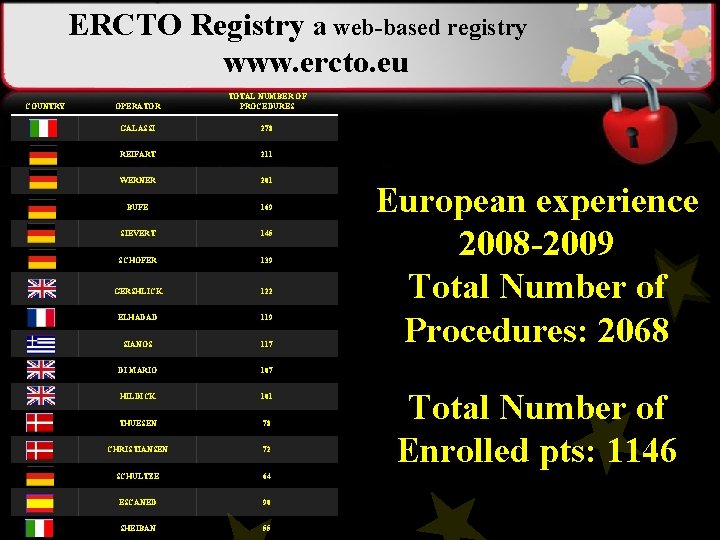
ERCTO Registry a web-based registry www. ercto. eu COUNTRY OPERATOR TOTAL NUMBER OF PROCEDURES GALASSI 278 REIFART 211 WERNER 201 BUFE 169 SIEVERT 145 SCHOFER 139 GERSHLICK 122 ELHADAD 119 SIANOS 117 DI MARIO 107 HILDICK 101 THUESEN 78 CHRISTIANSEN 72 SCHULTZE 64 ESCANED 90 SHEIBAN 55 European experience 2008 -2009 Total Number of Procedures: 2068 Total Number of Enrolled pts: 1146
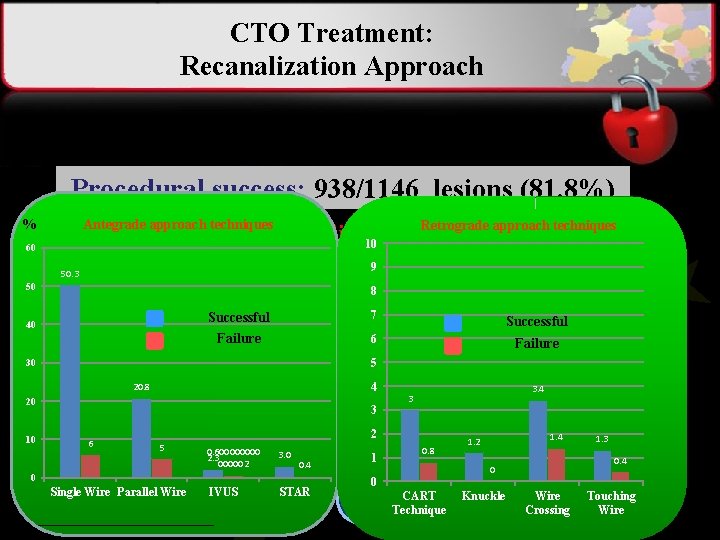
CTO Treatment: Recanalization Approach Procedural success: 938/1146 lesions (81. 8%) % Antegrade approach techniques Retrograde approach techniques Global recanalization approach 10 60 1200 50. 3 9 N° 50 1000 8 973 Successful 86, 3 % 40 800 Failure Successful 6 Failure 5 30 600 4 20. 8 20 3 400 10 7 6 Overall Successful 3. 4 3 Unsuccessful 2 5 200 0. 60000 2. 3 000002 3. 0 13, 7 % 0. 4 0 Single Wire Parallel 0 Wire IVUS STAR ANTEGRADE 1 0 0. 8 124 1. 2 78, 2 % 0 21, 8 % CART Knuckle RETROGRADE Technique Wire Crossing 1. 3 0. 4 Touching Wire

Why Retrograde Approach? By Ocviai/Japan

Why Retrograde Approach? By Ocviai/Japan

Indication of Retrograde Approach as a Primary Procedure • Antegrade wiring seems very difficult in terms of anatomical factors (complex CTO) • The patient has visible and continuous collaterals • The donor vessel is healthy • Re-attempt after previous failure
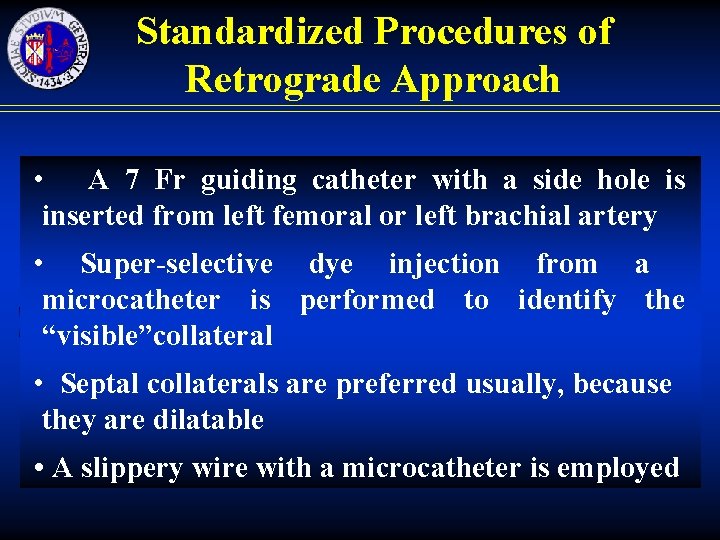
Standardized Procedures of Retrograde Approach • A 7 Fr guiding catheter with a side hole is inserted from left femoral or left brachial artery • Super-selective dye injection from a microcatheter is performed to identify the “visible”collateral • Septal collaterals are preferred usually, because they are dilatable • A slippery wire with a microcatheter is employed
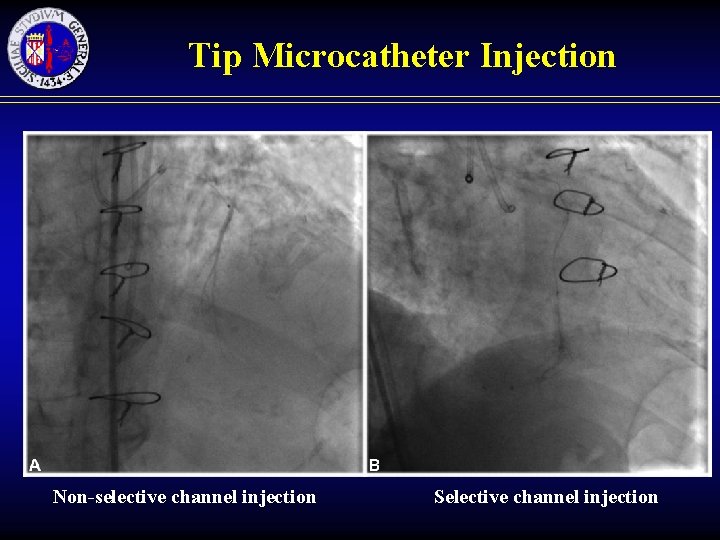
Tip Microcatheter Injection Non-selective channel injection Selective channel injection
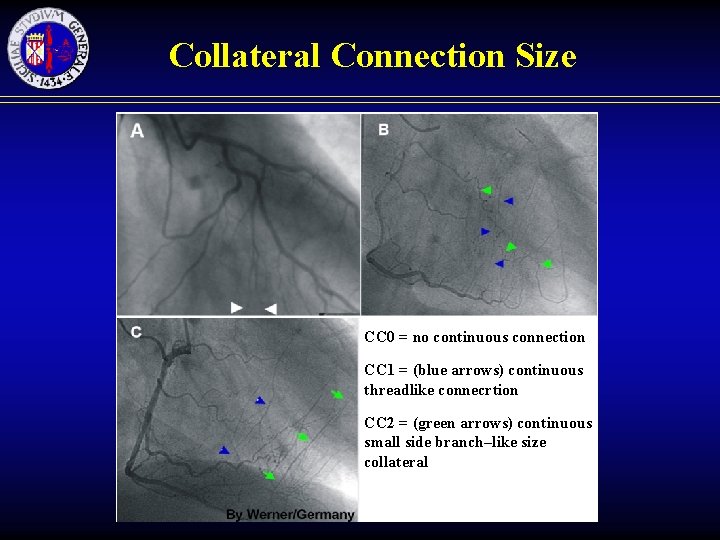
Collateral Connection Size CC 0 = no continuous connection CC 1 = (blue arrows) continuous threadlike connecrtion CC 2 = (green arrows) continuous small side branch–like size collateral
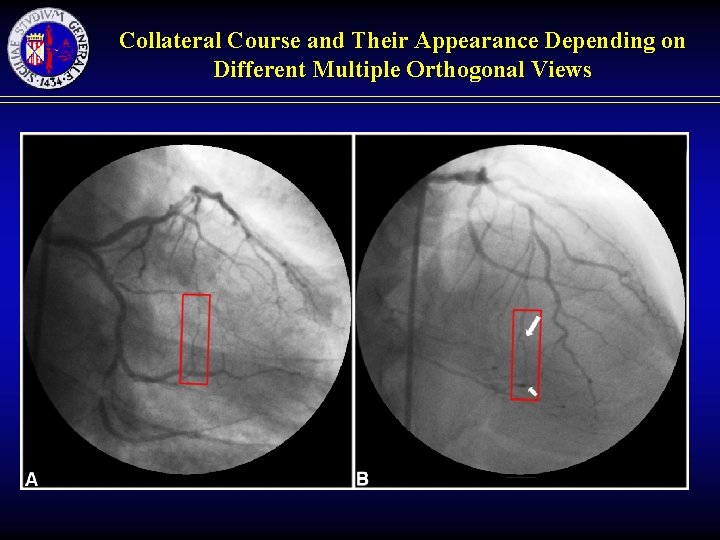
Collateral Course and Their Appearance Depending on Different Multiple Orthogonal Views

Characteristics of Specific Collateral Channels By Katoh O/Japan
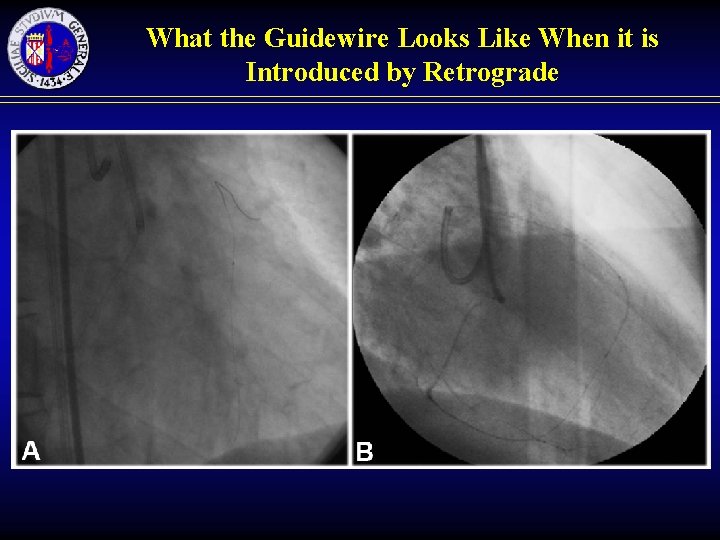
What the Guidewire Looks Like When it is Introduced by Retrograde
Standardized Procedures of Retrograde Approach • Slippery wires used for collaterals: - Epicardial Runthrough (Terumo), Whisper (Abbott) - Septal Fielder AC/FC (Asahi) - Cork screw X-treme (Asahi) • After the successful delivery of a slippery wire, the microcatheter is advanced towards the distal coronary artery via collaterals • If the microcatheter cannot be advanced, septal dilatation may be performed with a 1. 0 -1. 25 mm OTW balloon to 2 -3 atm
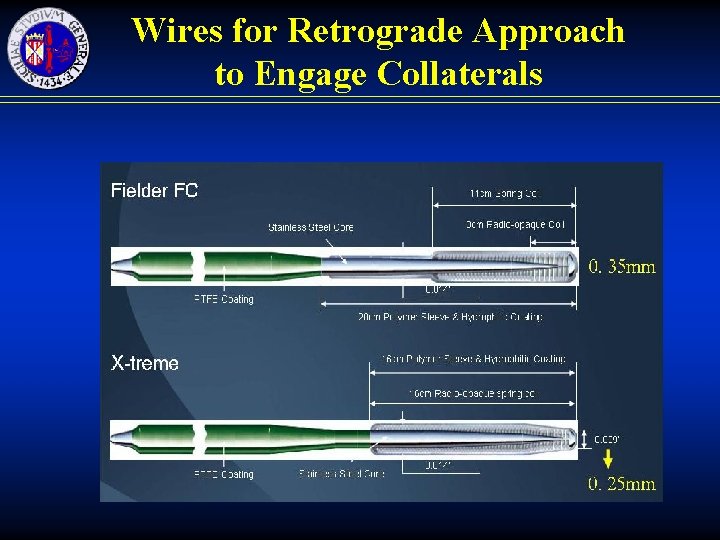
Wires for Retrograde Approach to Engage Collaterals

The Tips of Fielder FC and X-treme are Softer than Fielder

Support of Fielder FC and X-treme are Stronger than Fielder
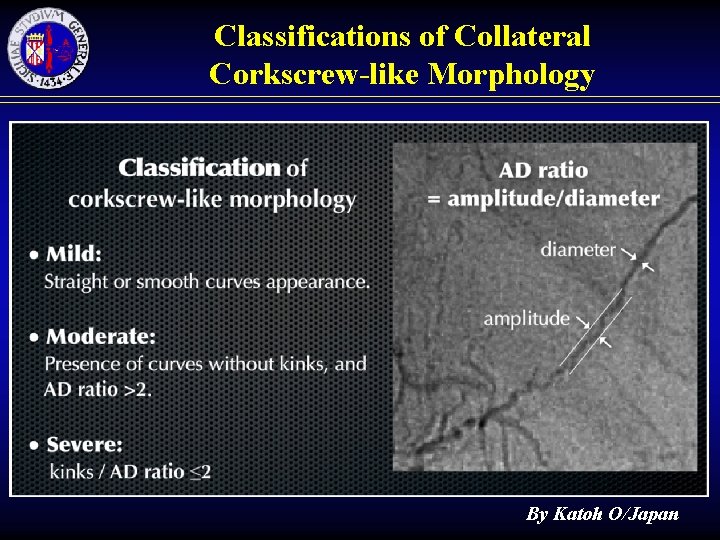
Classifications of Collateral Corkscrew-like Morphology By Katoh O/Japan
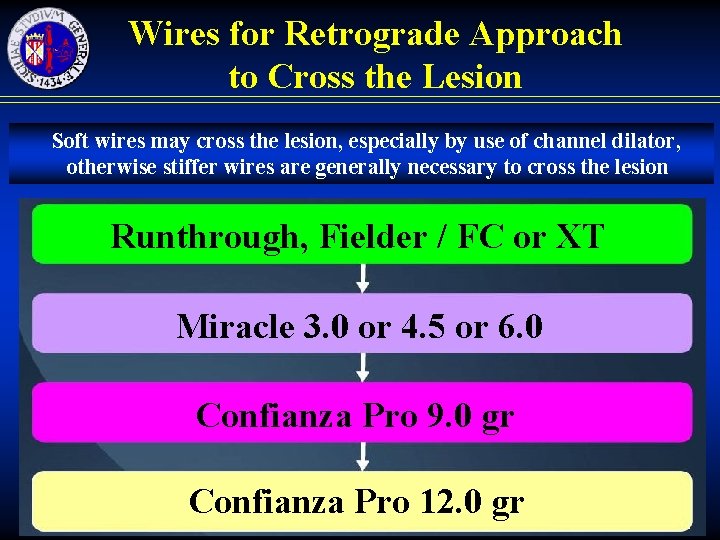
Wires for Retrograde Approach to Cross the Lesion Soft wires may cross the lesion, especially by use of channel dilator, otherwise stiffer wires are generally necessary to cross the lesion Runthrough, Fielder / FC or XT Miracle 3. 0 or 4. 5 or 6. 0 Confianza Pro 9. 0 gr Confianza Pro 12. 0 gr
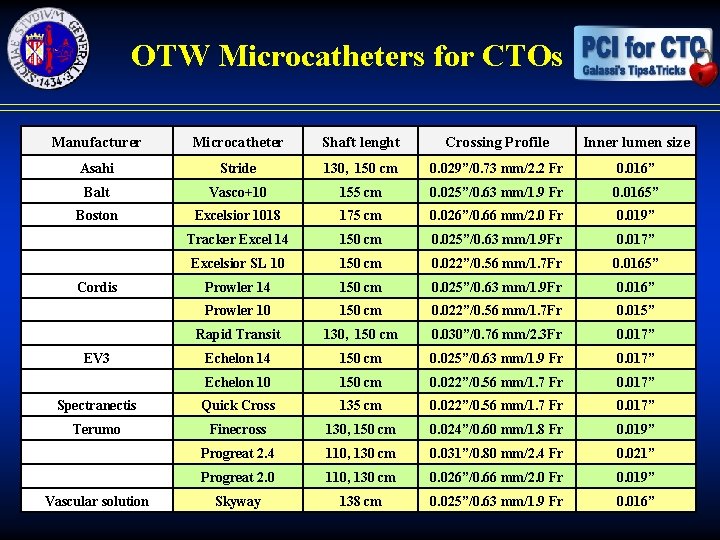
OTW Microcatheters for CTOs Manufacturer Microcatheter Shaft lenght Crossing Profile Inner lumen size Asahi Stride 130, 150 cm 0. 029”/0. 73 mm/2. 2 Fr 0. 016” Balt Vasco+10 155 cm 0. 025”/0. 63 mm/1. 9 Fr 0. 0165” Boston Excelsior 1018 175 cm 0. 026”/0. 66 mm/2. 0 Fr 0. 019” Tracker Excel 14 150 cm 0. 025”/0. 63 mm/1. 9 Fr 0. 017” Excelsior SL 10 150 cm 0. 022”/0. 56 mm/1. 7 Fr 0. 0165” Prowler 14 150 cm 0. 025”/0. 63 mm/1. 9 Fr 0. 016” Prowler 10 150 cm 0. 022”/0. 56 mm/1. 7 Fr 0. 015” Rapid Transit 130, 150 cm 0. 030”/0. 76 mm/2. 3 Fr 0. 017” Echelon 14 150 cm 0. 025”/0. 63 mm/1. 9 Fr 0. 017” Echelon 10 150 cm 0. 022”/0. 56 mm/1. 7 Fr 0. 017” Spectranectis Quick Cross 135 cm 0. 022”/0. 56 mm/1. 7 Fr 0. 017” Terumo Finecross 130, 150 cm 0. 024”/0. 60 mm/1. 8 Fr 0. 019” Progreat 2. 4 110, 130 cm 0. 031”/0. 80 mm/2. 4 Fr 0. 021” Progreat 2. 0 110, 130 cm 0. 026”/0. 66 mm/2. 0 Fr 0. 019” Skyway 138 cm 0. 025”/0. 63 mm/1. 9 Fr 0. 016” Cordis EV 3 Vascular solution
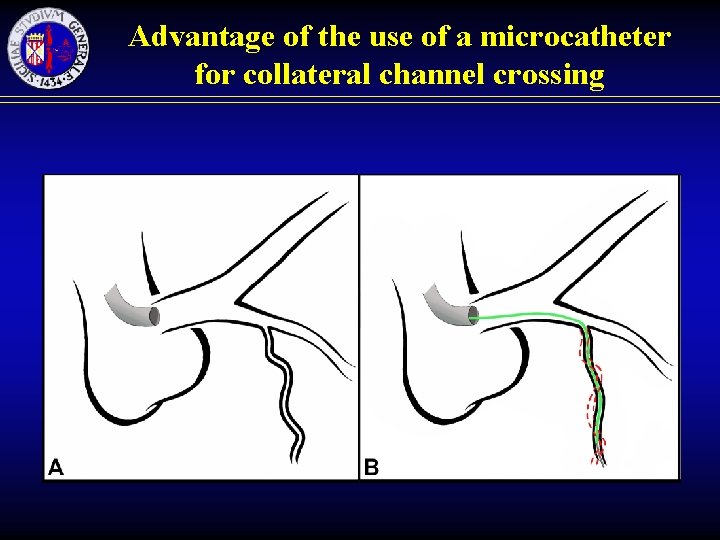
Advantage of the use of a microcatheter for collateral channel crossing
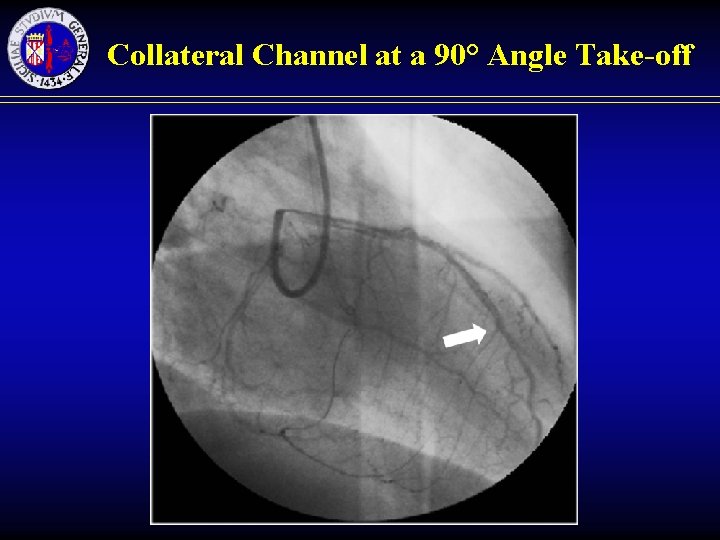
Collateral Channel at a 90° Angle Take-off
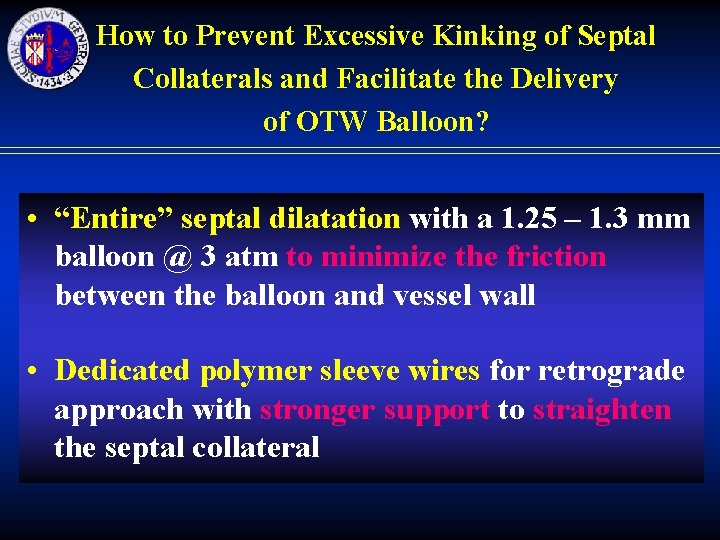
How to Prevent Excessive Kinking of Septal Collaterals and Facilitate the Delivery of OTW Balloon? • “Entire” septal dilatation with a 1. 25 – 1. 3 mm balloon @ 3 atm to minimize the friction between the balloon and vessel wall • Dedicated polymer sleeve wires for retrograde approach with stronger support to straighten the septal collateral
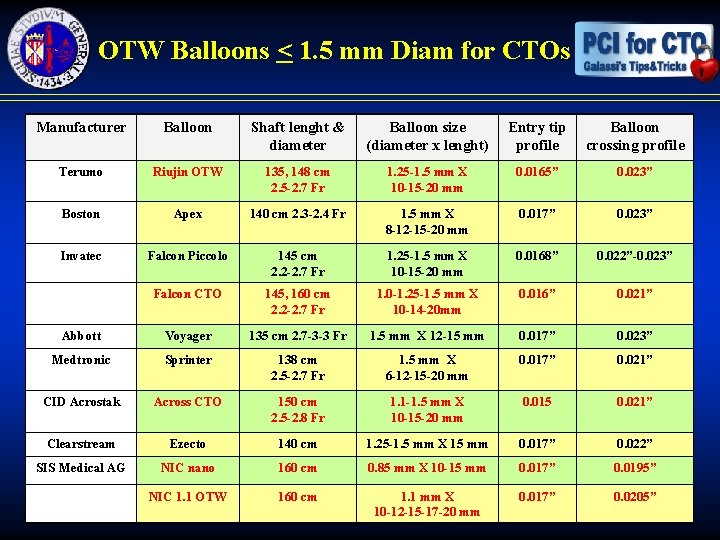
OTW Balloons < 1. 5 mm Diam for CTOs Manufacturer Balloon Shaft lenght & diameter Balloon size (diameter x lenght) Entry tip profile Balloon crossing profile Terumo Riujin OTW 135, 148 cm 2. 5 -2. 7 Fr 1. 25 -1. 5 mm X 10 -15 -20 mm 0. 0165” 0. 023” Boston Apex 140 cm 2. 3 -2. 4 Fr 1. 5 mm X 8 -12 -15 -20 mm 0. 017” 0. 023” Invatec Falcon Piccolo 145 cm 2. 2 -2. 7 Fr 1. 25 -1. 5 mm X 10 -15 -20 mm 0. 0168” 0. 022”-0. 023” Falcon CTO 145, 160 cm 2. 2 -2. 7 Fr 1. 0 -1. 25 -1. 5 mm X 10 -14 -20 mm 0. 016” 0. 021” Abbott Voyager 135 cm 2. 7 -3 -3 Fr 1. 5 mm X 12 -15 mm 0. 017” 0. 023” Medtronic Sprinter 138 cm 2. 5 -2. 7 Fr 1. 5 mm X 6 -12 -15 -20 mm 0. 017” 0. 021” CID Acrostak Across CTO 150 cm 2. 5 -2. 8 Fr 1. 1 -1. 5 mm X 10 -15 -20 mm 0. 015 0. 021” Clearstream Ezecto 140 cm 1. 25 -1. 5 mm X 15 mm 0. 017” 0. 022” SIS Medical AG NIC nano 160 cm 0. 85 mm X 10 -15 mm 0. 017” 0. 0195” NIC 1. 1 OTW 160 cm 1. 1 mm X 10 -12 -15 -17 -20 mm 0. 017” 0. 0205”
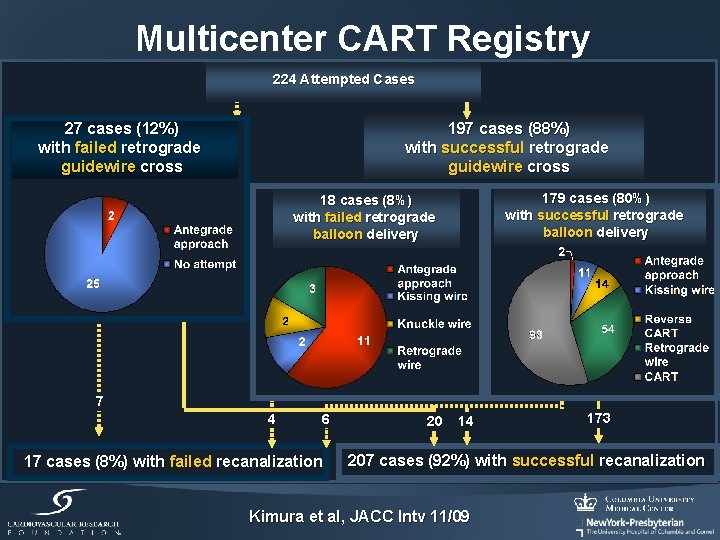
Multicenter CART Registry 224 Attempted Cases 27 cases (12%) with failed retrograde guidewire cross 197 cases (88%) with successful retrograde guidewire cross 179 cases (80%) with successful retrograde balloon delivery 18 cases (8%) with failed retrograde balloon delivery 7 4 6 17 cases (8%) with failed recanalization 20 14 173 207 cases (92%) with successful recanalization Kimura et al, JACC Intv 11/09
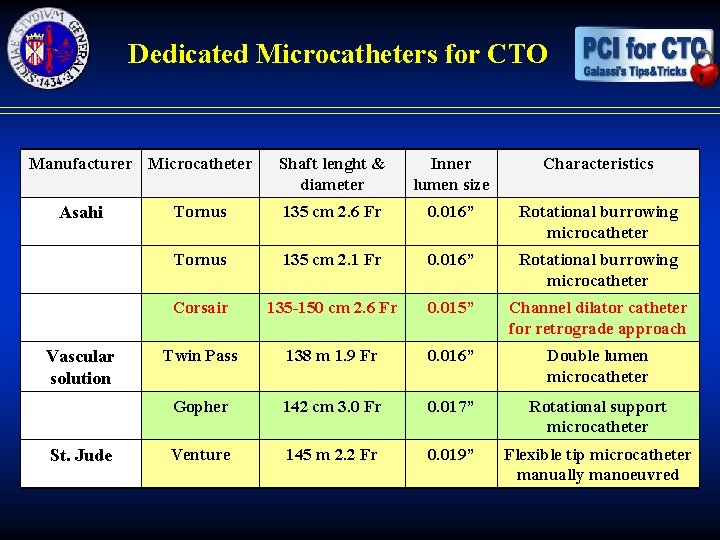
Dedicated Microcatheters for CTO Manufacturer Microcatheter Asahi Vascular solution St. Jude Shaft lenght & diameter Inner lumen size Characteristics Tornus 135 cm 2. 6 Fr 0. 016” Rotational burrowing microcatheter Tornus 135 cm 2. 1 Fr 0. 016” Rotational burrowing microcatheter Corsair 135 -150 cm 2. 6 Fr 0. 015” Channel dilator catheter for retrograde approach Twin Pass 138 m 1. 9 Fr 0. 016” Double lumen microcatheter Gopher 142 cm 3. 0 Fr 0. 017” Rotational support microcatheter Venture 145 m 2. 2 Fr 0. 019” Flexible tip microcatheter manually manoeuvred
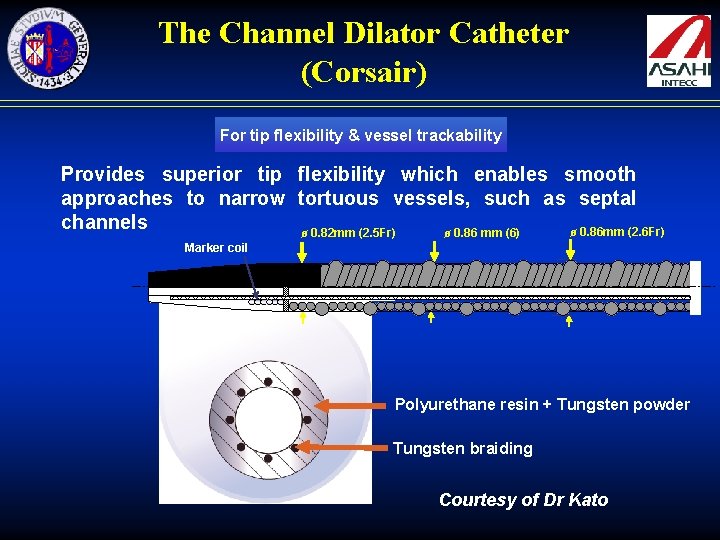
The Channel Dilator Catheter (Corsair) For tip flexibility & vessel trackability Provides superior tip flexibility which enables smooth approaches to narrow tortuous vessels, such as septal channels ø 0. 86 mm (2. 6 Fr) ø 0. 82 mm (2. 5 Fr) ø 0. 86 mm (6) Marker coil Polyurethane resin + Tungsten powder Tungsten braiding Courtesy of Dr Kato
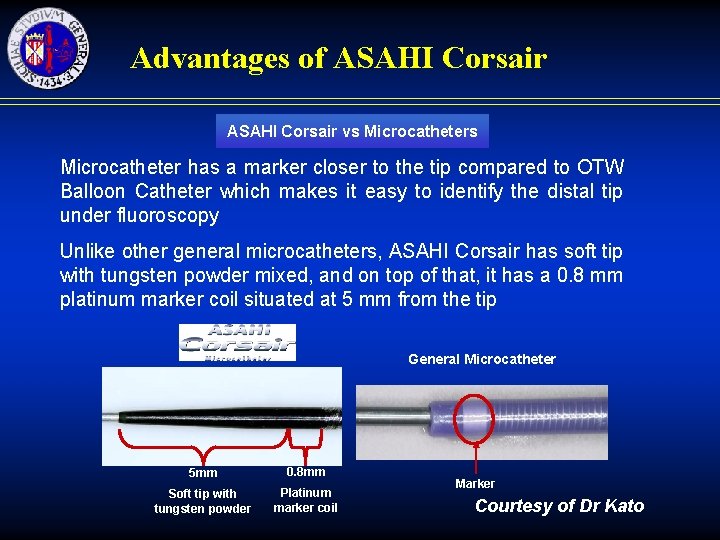
Advantages of ASAHI Corsair vs Microcatheter has a marker closer to the tip compared to OTW Balloon Catheter which makes it easy to identify the distal tip under fluoroscopy Unlike other general microcatheters, ASAHI Corsair has soft tip with tungsten powder mixed, and on top of that, it has a 0. 8 mm platinum marker coil situated at 5 mm from the tip General Microcatheter 5 mm 0. 8 mm Soft tip with tungsten powder Platinum marker coil Marker Courtesy of Dr Kato
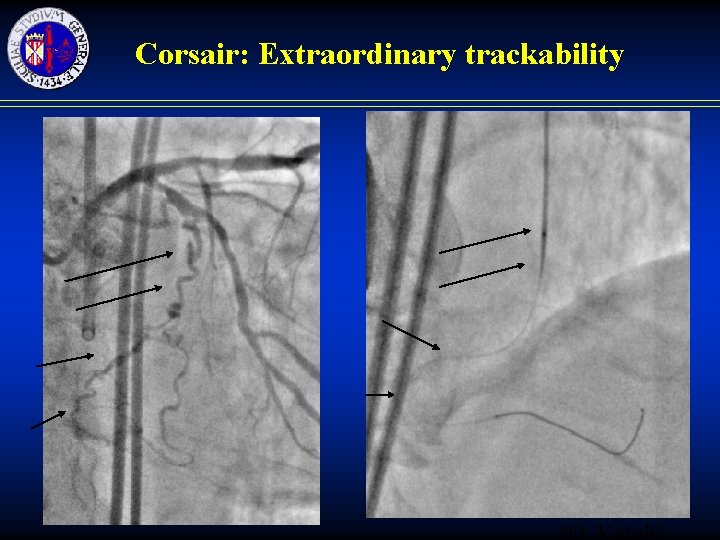
Corsair: Extraordinary trackability
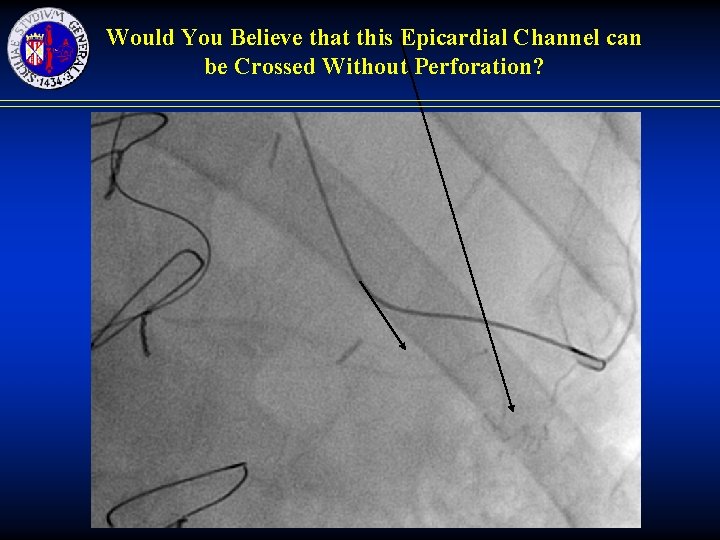
Would You Believe that this Epicardial Channel can be Crossed Without Perforation?
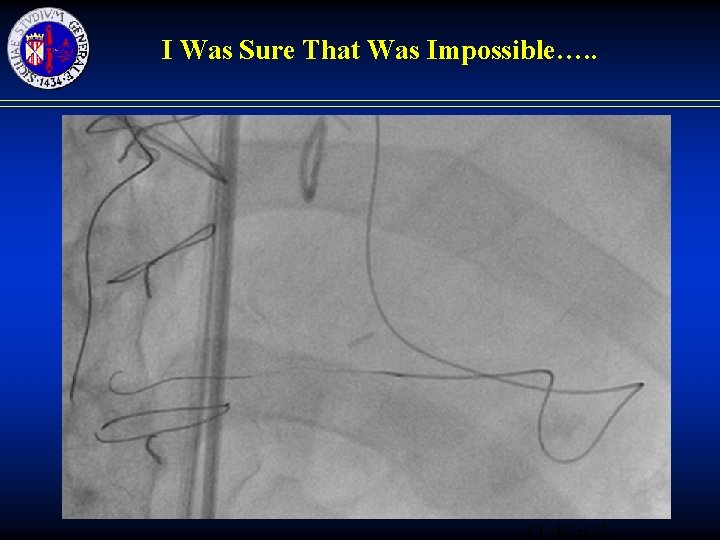
I Was Sure That Was Impossible…. .

Factors Contributing to Success of Retrograde Approach Favorable • Knowledge of dedicated materials and techniques • Operator skilfullness and experience • Shape and characteristics of the distal cap • Werner’s class coll type: CC 1 and CC 2 • Non tortuous epicardial collaterals • Donor vessel is healthy Unfavorable • Werner’s class coll type: CC 0 • Cork-screwing and angulated collaterals • Blood flow in distal vessel CTO is originating exclusively from collaterals used for retrograde approach • Multivessels disease and prior stenting in donor vessel (mild LMCA disease) • Presence of bifurcation lesion at distal cup (CTO exit )
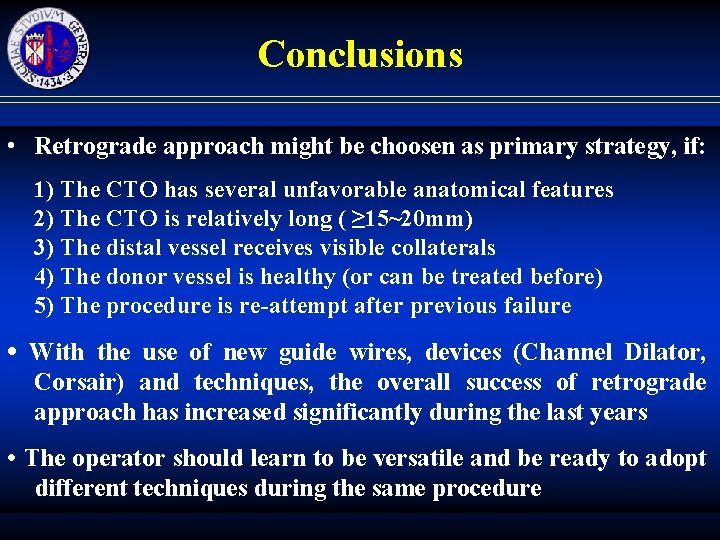
Conclusions • Retrograde approach might be choosen as primary strategy, if: 1) The CTO has several unfavorable anatomical features 2) The CTO is relatively long ( ≥ 15~20 mm) 3) The distal vessel receives visible collaterals 4) The donor vessel is healthy (or can be treated before) 5) The procedure is re-attempt after previous failure • With the use of new guide wires, devices (Channel Dilator, Corsair) and techniques, the overall success of retrograde approach has increased significantly during the last years • The operator should learn to be versatile and be ready to adopt different techniques during the same procedure

ITA-15003 VAG, Winner of the 2005 -2006 Italian IMS Championship Thank You For Your Attention argalassi@virgilio. it
- Slides: 34