
Features of Kingdom Protista All members have eukaryotic
Features of Kingdom Protista • • • All members have eukaryotic cells. Individual life cycles vary considerably, but reproduction is generally by cell division and sexual processes. Most multicellular members produce some motile cells.
• • • Outline Phylum Chlorophyta Phylum Chromophyta Phylum Rhodophyta Phylum Euglenophyta Phylum Dinophyta Phylum Cryptophyta Phylum Prymnesiophyta Phylum Charophyta Phylum Myxomycota Phylum Dictyosteliomycota Phylum Oomycota
Phylum Chlorophyta • The Green Algae v Includes about 7, 500 species that occur in a rich variety of forms and occur in diverse, widespread habitats. - Greatest variety found in freshwater lakes, ponds, and streams. - Most have a single nucleus. - Most reproduce both sexually and asexually.
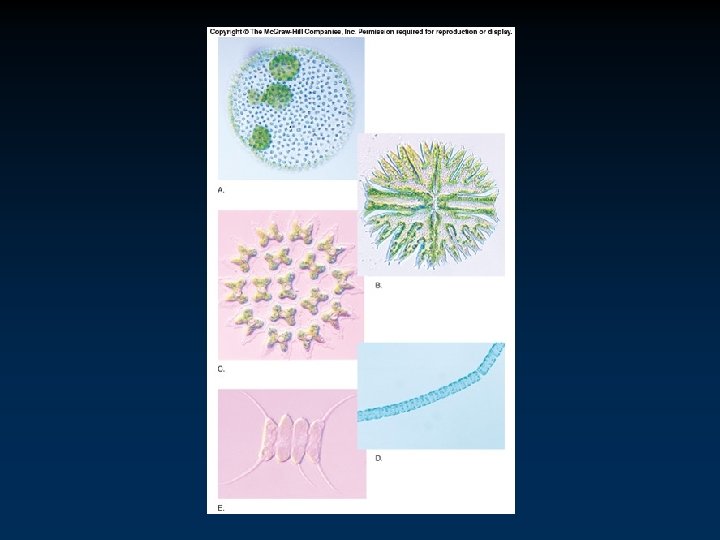
Fig. 18. 2
Green Algae: • • contain pigments (chl a & b) similar to higher plants. store food in the form of starch within their chloroplasts.
Phylum Chlorophyta • Chlamydomonas v Common inhabitant of freshwater pools. v Pair of whip-like flagella on one end pull the cell through the water. v Single, cup-shaped chloroplast with one or two pyrenoids inside. - Pyrenoids = Proteinaceous structures thought to contain starch synthesis enzymes.
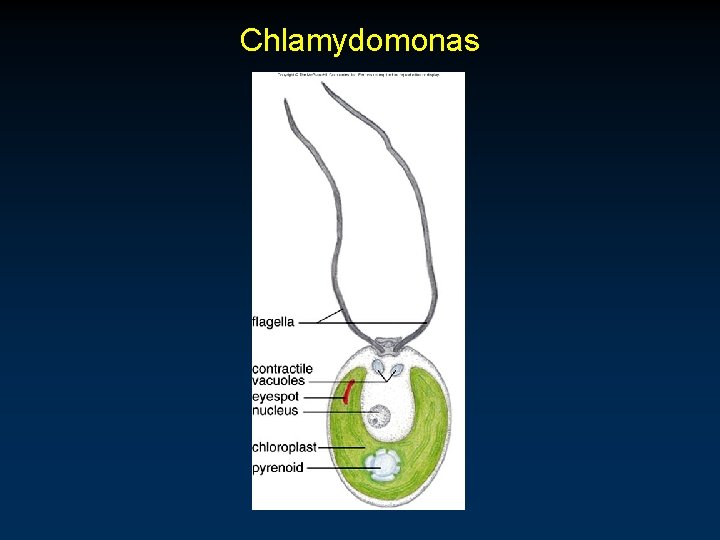
Chlamydomonas
Chlamydomonas • Asexual Reproduction v Nucleus divides by mitosis, and cell contents become two daughter cells within the cellulose wall. - Develop flagella and swim away.
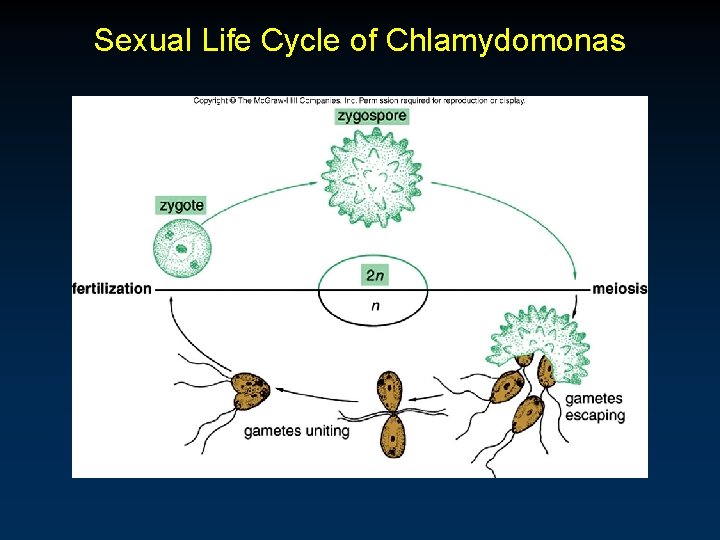
Sexual Life Cycle of Chlamydomonas
Phylum Chlorophyta • Ulothrix v Thread-like alga. - Single row of cylindrical cells forming a filament. Ø Basal cell functions as a holdfast.
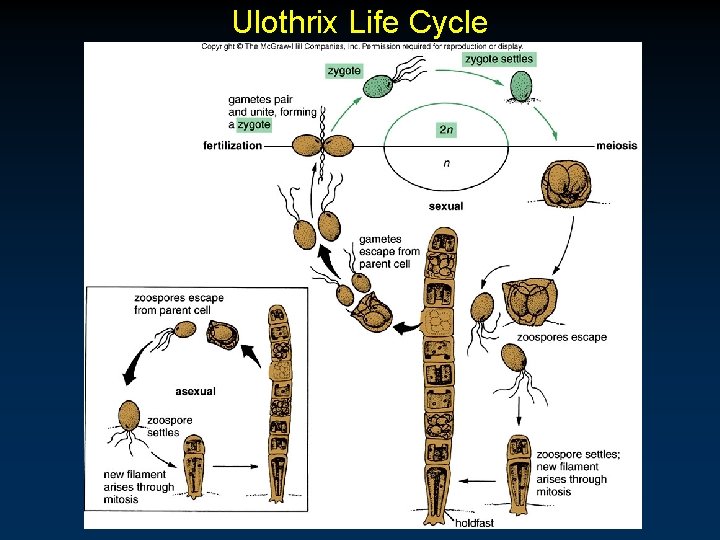
Ulothrix Life Cycle
Phylum Chlorophyta • Spirogyra (Watersilk) v Common freshwater algae consisting of unbranched filaments of cylindrical cells. - Frequently float in masses at the surface of quiet waters. v Asexual Reproduction - Fragmentation of existing filaments. v Sexual Reproduction - Papillae fuse and form conjugation tubes.

Spirogyra Sexual Reproduction
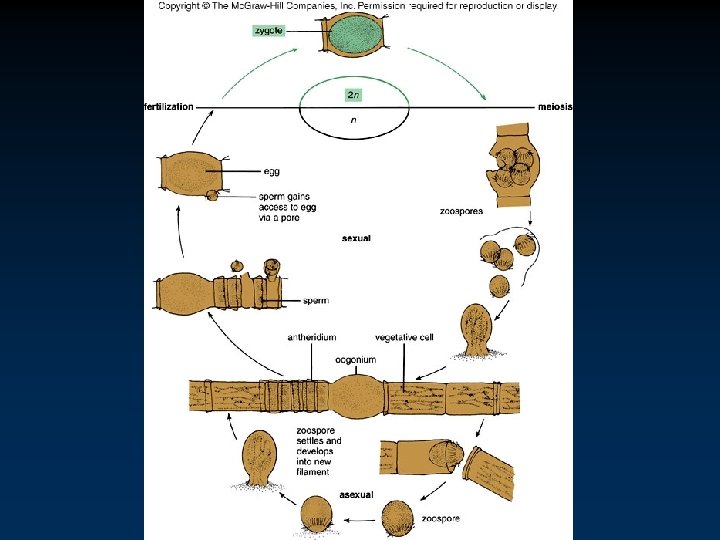
Phylum Chlorophyta • Oedogonium v Epiphytic filamentous green alga. - Each cell contains a large, netlike chloroplast that rolls and forms a tube around and toward the periphery of each protoplast.
Phylum Chlorophyta • Other Green Algae v Chorella - Widespread green alga composed of tiny spherical cells. - Reproduce by forming either daughter cells or autospores through mitosis. v Desmids - Mostly free-floating and unicellular. - Reproduce by conjugation.
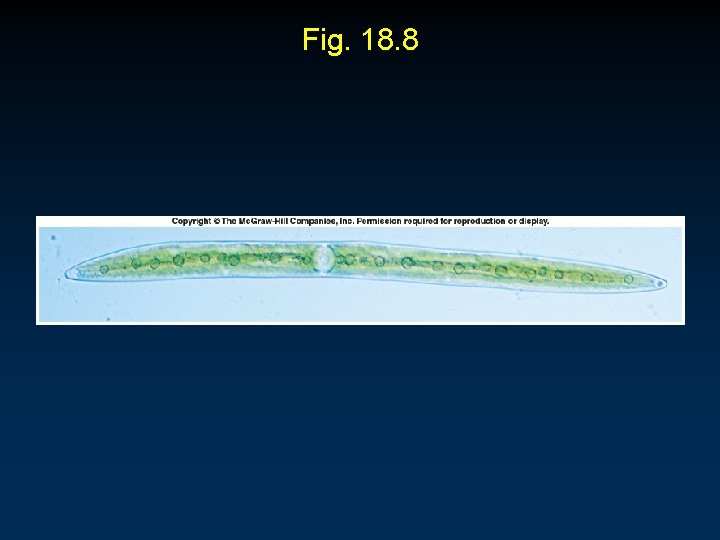
Fig. 18. 8
Phylum Chlorophyta • Other Green Algae v Hydrodictyon (Water Nets) - Net-like, tubular colonies with hexagonal or polygonal meshes. - Asexual reproduction as well as isogamous sexual reproduction. v Volvox - Colonial green algae held together in a secretion of gelatinous material - Reproduction asexual or sexual.
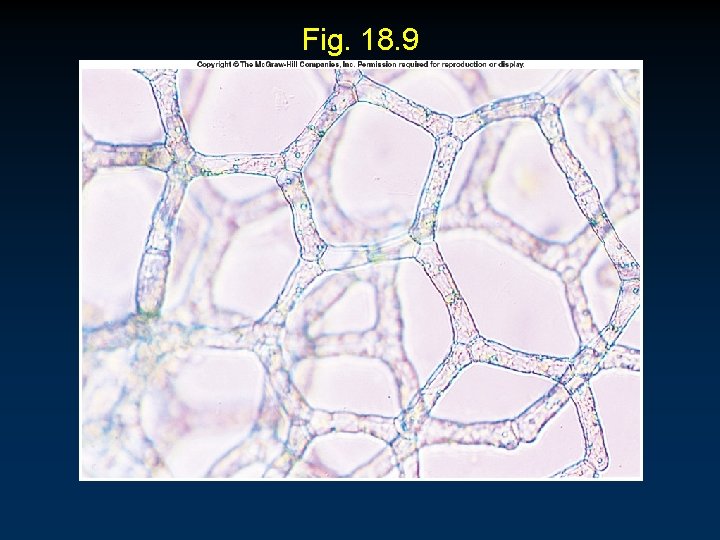
Fig. 18. 9
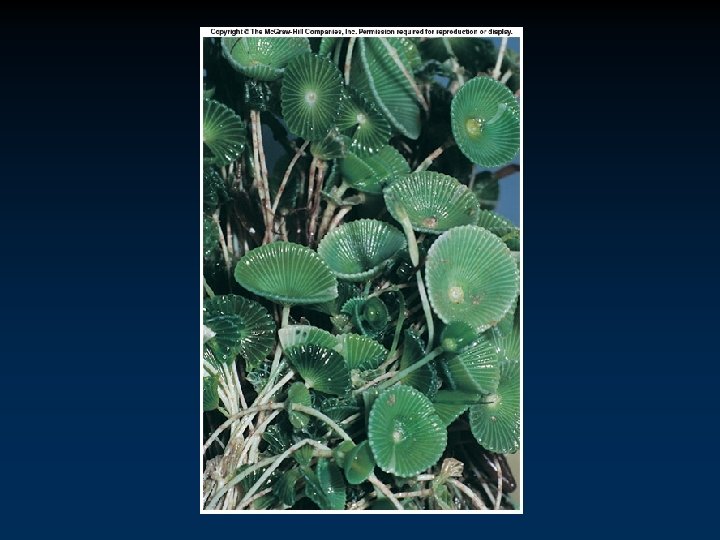
Fig. 18. 10
Phylum Chlorophyta • Other Green Algae v Ulva (Sea Lettuce) - Multicellular seaweed with flattened green blades. - Isomorphic reproductive structures. v Cladophora - Branched, filamentous green alga with species represented in both fresh and marine waters. - Mostly multinucleate.
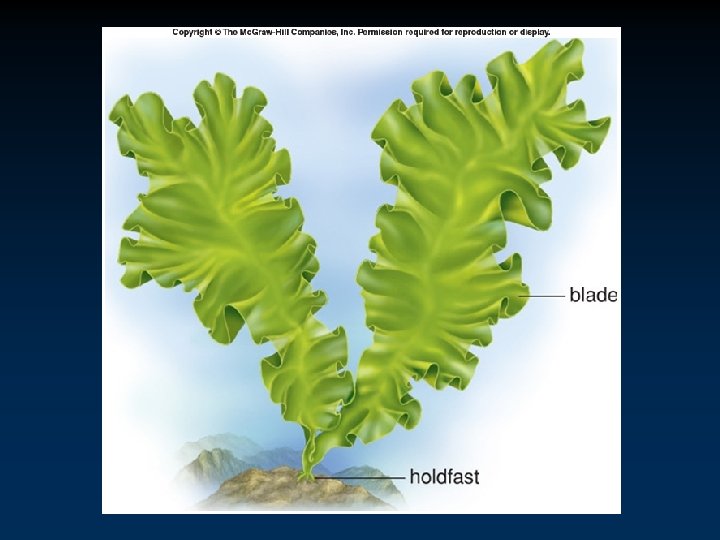
Fig. 18. 11
Phylum Chromophyta • The Diatoms (Bacillariophyceae) v Among best known and economically most important members of this phylum. - Mostly unicellular Ø Occur in both fresh and salt water. § Particularly abundant in colder marine habitats.
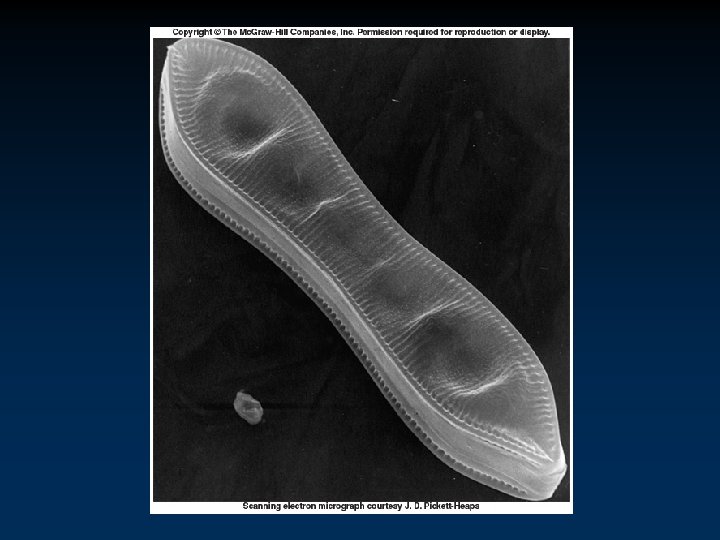
Fig. 18. 14
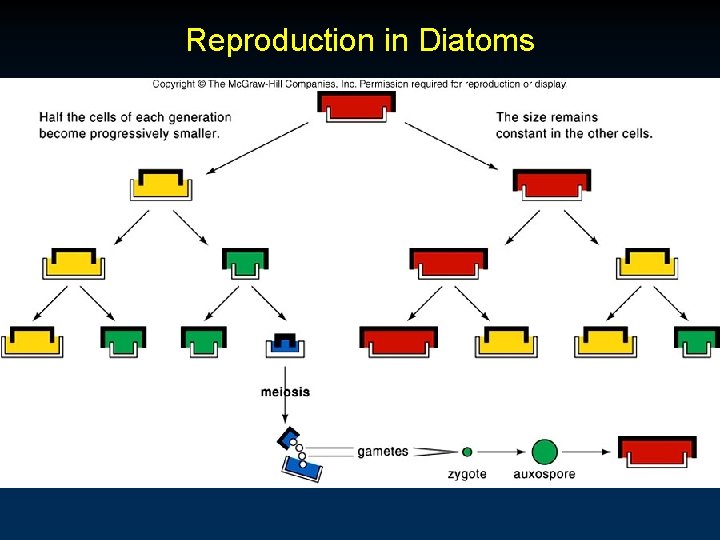
Reproduction in Diatoms
Phylum Chromophyta • The Brown Algae (Phaeophyceae) v Relatively Large v Most Marine v Non-Unicellular or Colonial v Many have a thallus differentiated into a holdfast, a stipe, and blades. - Blades may have gas-filled bladders. v Sargassum - Floating Brown Seaweed v Fucus - Common Rockweed
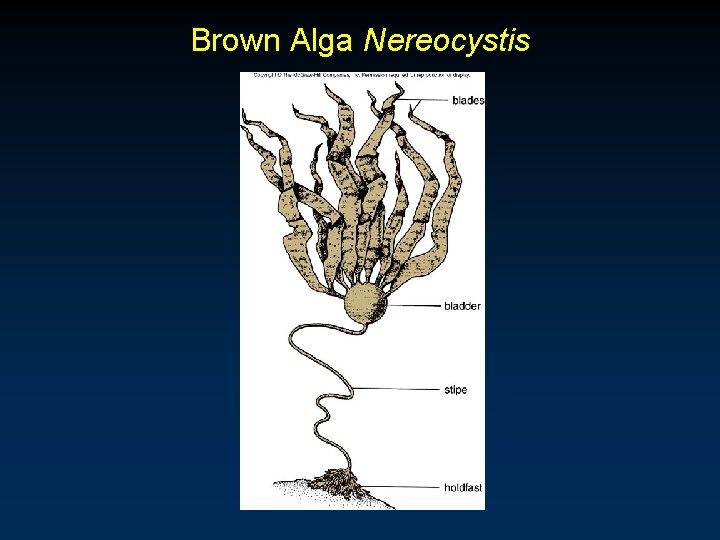
Brown Alga Nereocystis

Fig. 18. 16
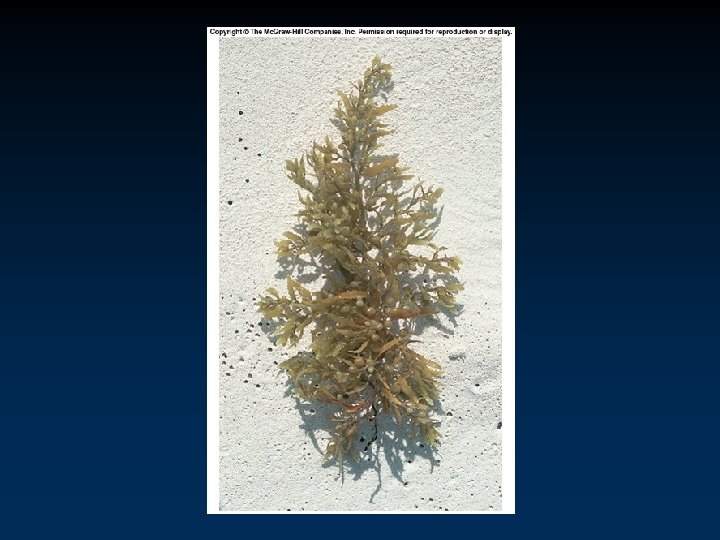
Fig. 18
Phylum Rhodophyta • The Red Algae v Most species are seaweed. - Tend to occur in warmer and deeper waters than brown algae. v Most are filamentous. v Relatively complex life cycle involving three types of thallus structures. v Colors mostly due to phycobilins. v Numbers of species produce agar.
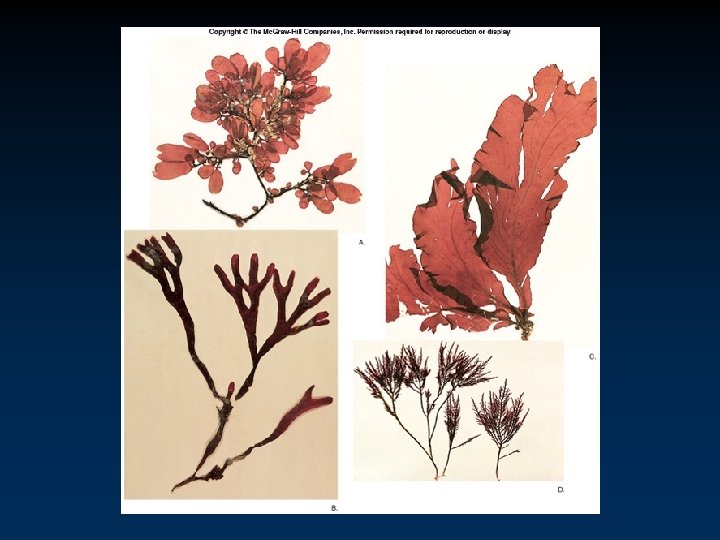
Fig. 18. 21
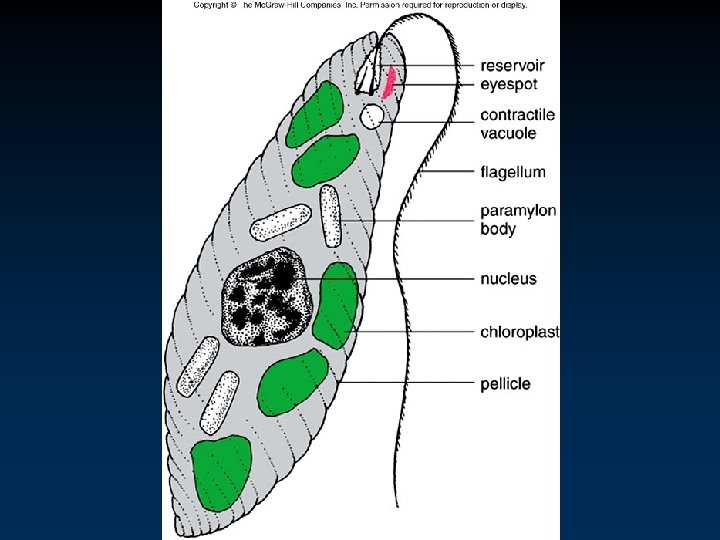
Phylum Euglenophyta • The Euglenoids v Spindle-shaped. v No cell wall, thus changes shape as it moves. - Sub-membrane strips and membrane form pellicle. v Contains gullet. v Contains red eyespot. v Reproduction by cell division.
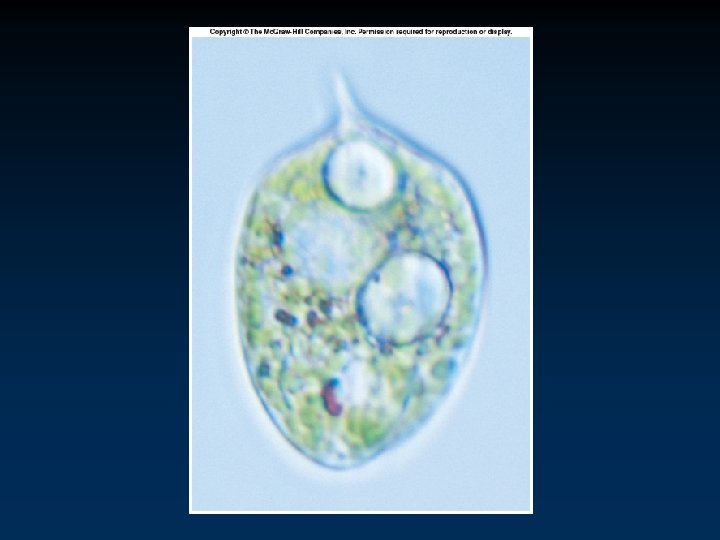
Fig. 18. 23

Phylum Dinophyta • The Dinoflagellates v Unicellular v Contain two flagella. - One trails behind the cell. - Other encircles the cell at right angles. v Most have disc-shaped chloroplasts. - Contain xanthophyll pigments. v Many have tiny projectiles. v Many types of toxins produced. (Red Tides)
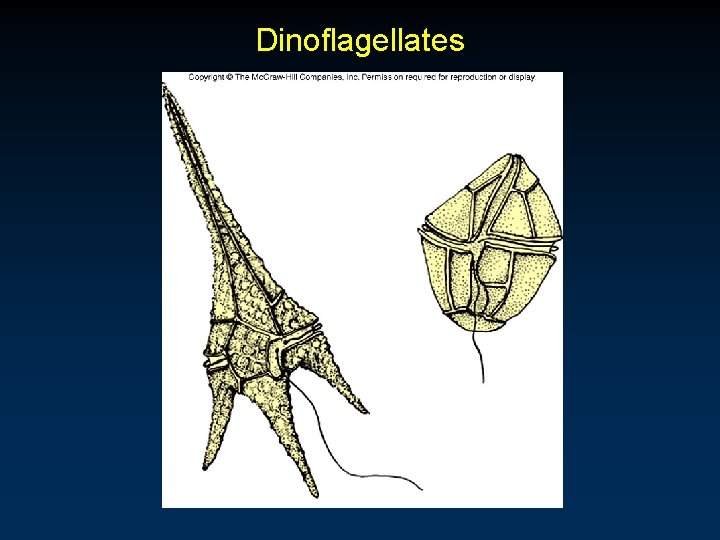
Dinoflagellates
Human and Ecological Relevance of Algae • • Diatoms v Oils are sources of vitamins. v Diatomaceous Earth - Filtration - Polishes - Reflectorized Paint Other Algae v Chlorella - Potential human food source.
Human and Ecological Relevance Algae • • Algin v Produced by giant kelp. - Ice Cream, Salad Dressing - Latex Paint, Textiles, Ceramics Agar v Produced by red alga Gelidium. - Solidifier of nutrient culture media for growth of bacteria.
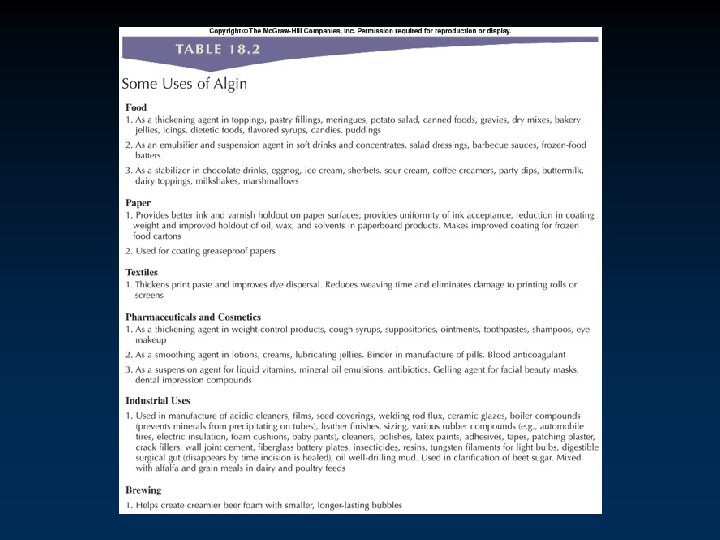
Table 18. 2
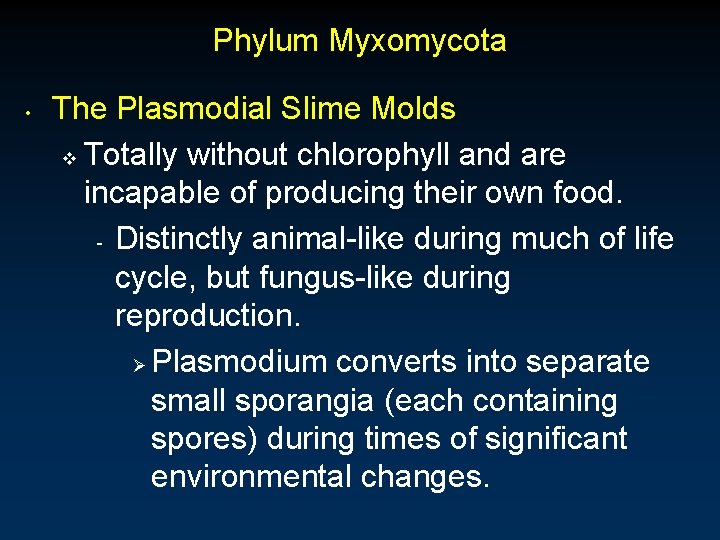
Phylum Myxomycota • The Plasmodial Slime Molds v Totally without chlorophyll and are incapable of producing their own food. - Distinctly animal-like during much of life cycle, but fungus-like during reproduction. Ø Plasmodium converts into separate small sporangia (each containing spores) during times of significant environmental changes.
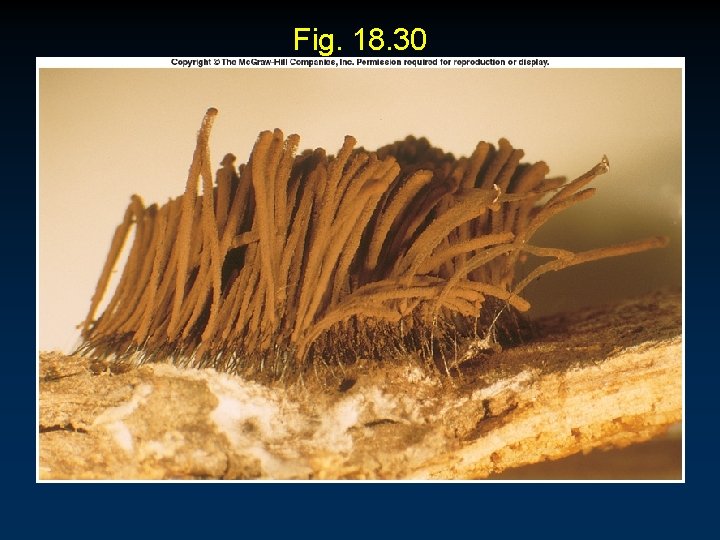
Fig. 18. 30
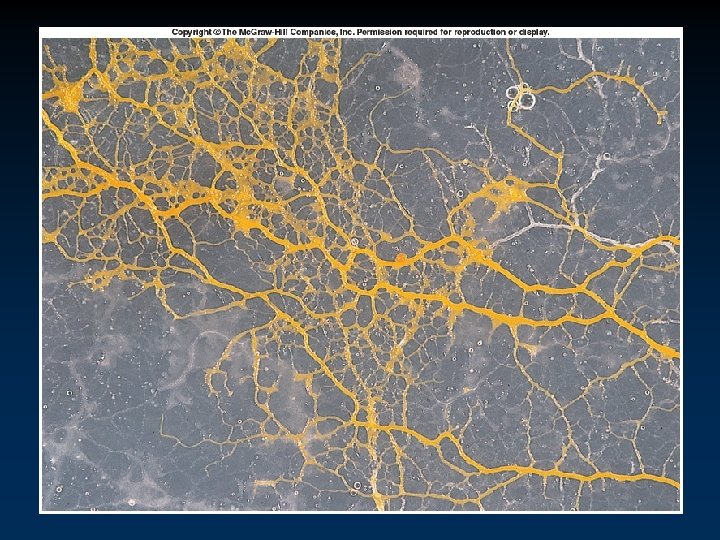
Fig. 18. 31
Phylum Dictyosteliomycota • The Cellular Slime Molds v About two dozen species of cellular slime molds are not closely related to the other slime molds. - Individual amoebalike cells feed independently, dividing and producing separate new cells periodically. v Human and Ecological Relevance - Break down organic particles to simpler substances.
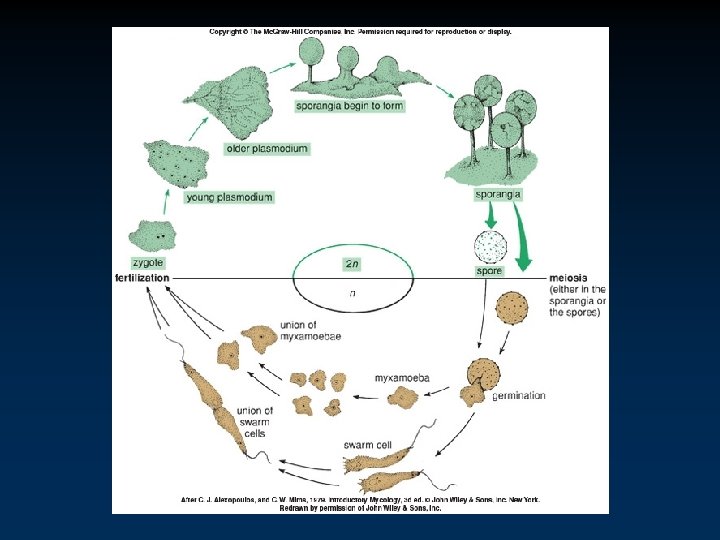
Fig. 18. 33
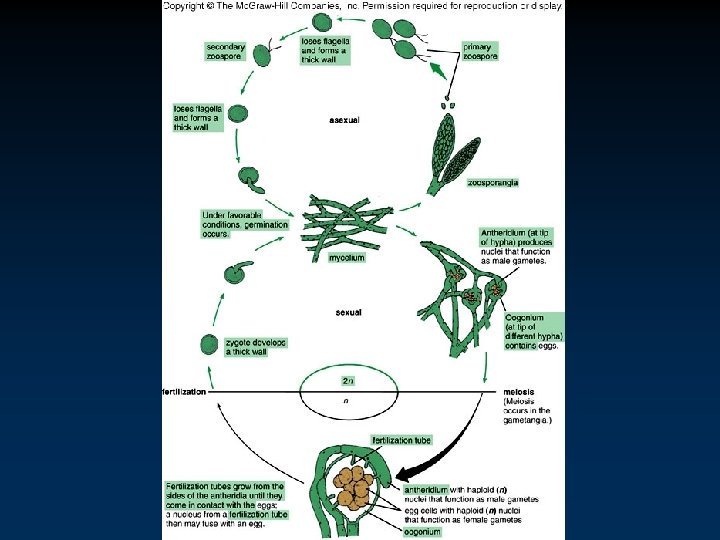
Phylum Oomycota • The Water Molds v Often found on dead insects. v Range in form from single spherical cells to branching, threadlike, coenocytic hyphae. - Coenocytic hyphae may form large thread masses (mycelia).
- Slides: 47