
Feature Extraction v 2 0 Martijn Schuemie OHDSI


- Slides: 19
Feature. Extraction v 2. 0 Martijn Schuemie
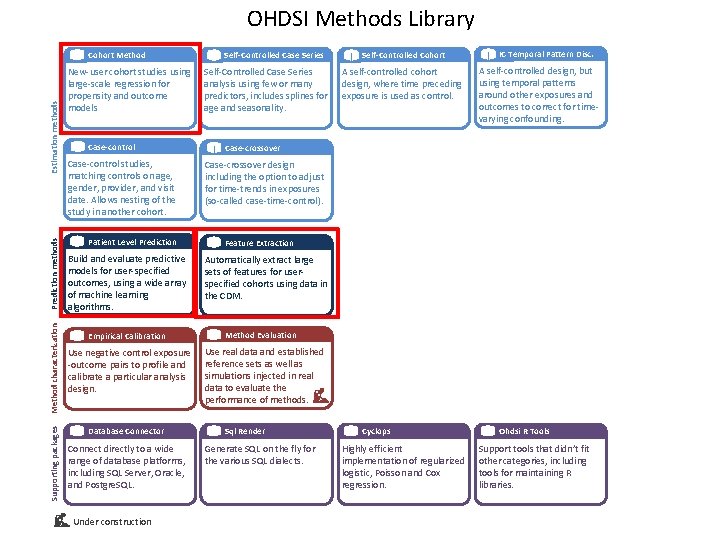
OHDSI Methods Library Supporting packages Method characterization Prediction methods Estimation methods Cohort Method New-user cohort studies using large-scale regression for s propensity and outcome models Case-control studies, matching controls s on age, gender, provider, and visit date. Allows nesting of the study in another cohort. Patient Level Prediction Build and evaluate predictive models for user-specified s outcomes, using a wide array of machine learning algorithms. Empirical Calibration Use negative control exposure -outcome pairssto profile and calibrate a particular analysis design. Database Connector Connect directly to a wide range of database s platforms, including SQL Server, Oracle, and Postgre. SQL. Under construction Self-Controlled Case Series analysis using few s or many predictors, includes splines for age and seasonality. Self-Controlled Cohort A self-controlled cohort design, where time preceding s exposure is used as control. IC Temporal Pattern Disc. A self-controlled design, but using temporalspatterns around other exposures and outcomes to correct for timevarying confounding. Case-crossover design including the option to adjust s for time-trends in exposures (so-called case-time-control). Feature Extraction Automatically extract large sets of featuress for userspecified cohorts using data in the CDM. Method Evaluation Use real data and established reference sets as s well as simulations injected in real data to evaluate the performance of methods. Sql Render Generate SQL on the fly for the various SQLs dialects. Cyclops Highly efficient implementations of regularized logistic, Poisson and Cox regression. Ohdsi R Tools Support tools that didn’t fit other categories, s including tools for maintaining R libraries.
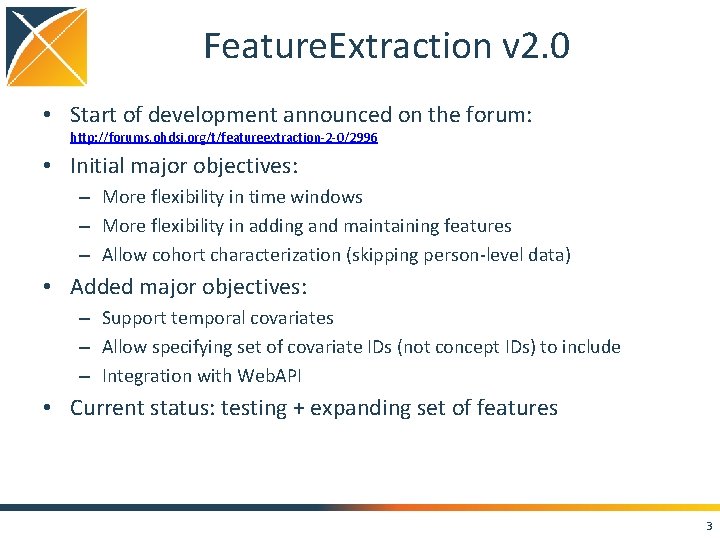
Feature. Extraction v 2. 0 • Start of development announced on the forum: http: //forums. ohdsi. org/t/featureextraction-2 -0/2996 • Initial major objectives: – More flexibility in time windows – More flexibility in adding and maintaining features – Allow cohort characterization (skipping person-level data) • Added major objectives: – Support temporal covariates – Allow specifying set of covariate IDs (not concept IDs) to include – Integration with Web. API • Current status: testing + expanding set of features 3
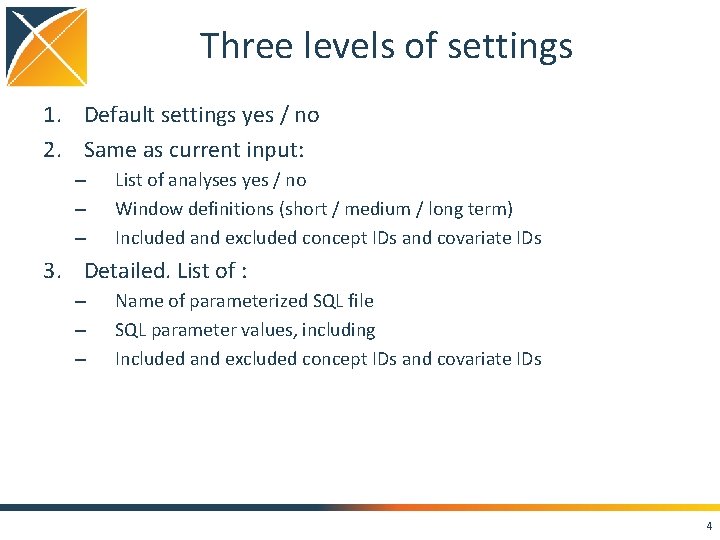
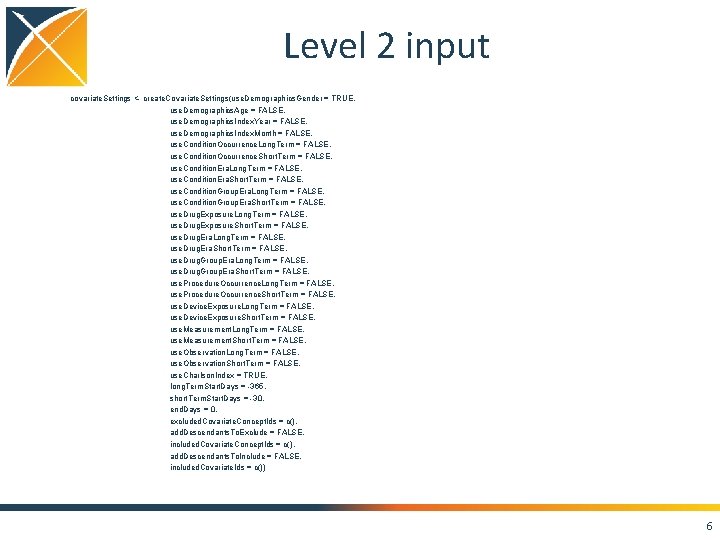
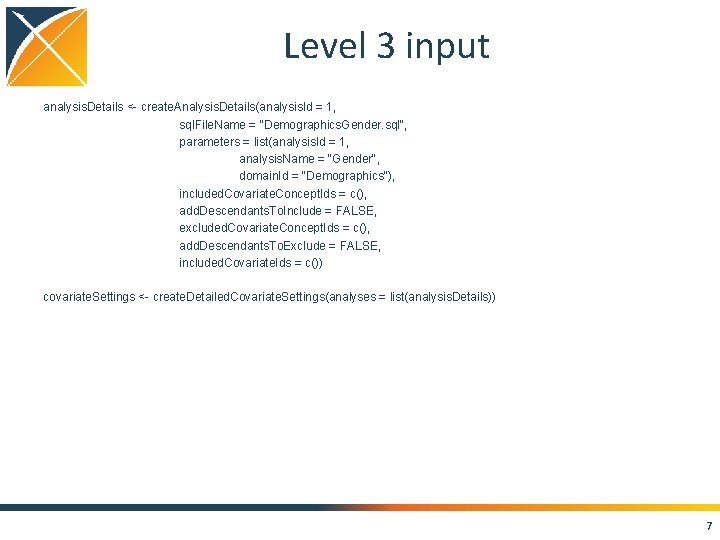
Three levels of settings 1. Default settings yes / no 2. Same as current input: – – – List of analyses yes / no Window definitions (short / medium / long term) Included and excluded concept IDs and covariate IDs 3. Detailed. List of : – – – Name of parameterized SQL file SQL parameter values, including Included and excluded concept IDs and covariate IDs 4
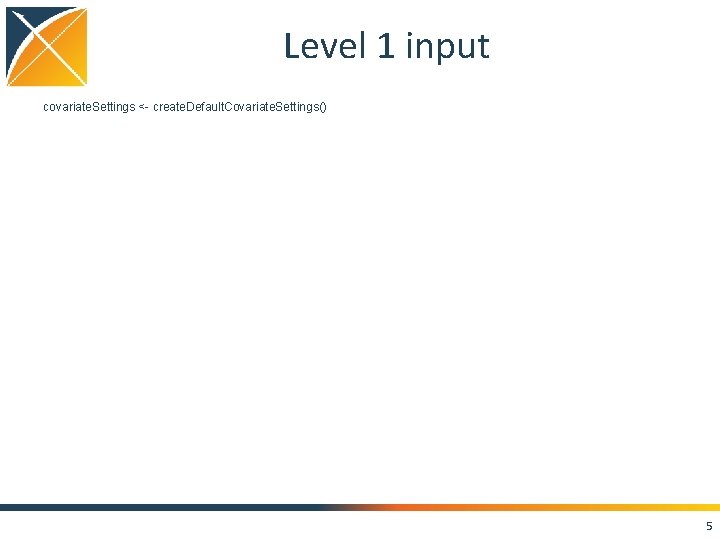
Level 1 input covariate. Settings <- create. Default. Covariate. Settings() 5
Level 2 input covariate. Settings <- create. Covariate. Settings(use. Demographics. Gender = TRUE, use. Demographics. Age = FALSE, use. Demographics. Index. Year = FALSE, use. Demographics. Index. Month = FALSE, use. Condition. Occurrence. Long. Term = FALSE, use. Condition. Occurrence. Short. Term = FALSE, use. Condition. Era. Long. Term = FALSE, use. Condition. Era. Short. Term = FALSE, use. Condition. Group. Era. Long. Term = FALSE, use. Condition. Group. Era. Short. Term = FALSE, use. Drug. Exposure. Long. Term = FALSE, use. Drug. Exposure. Short. Term = FALSE, use. Drug. Era. Long. Term = FALSE, use. Drug. Era. Short. Term = FALSE, use. Drug. Group. Era. Long. Term = FALSE, use. Drug. Group. Era. Short. Term = FALSE, use. Procedure. Occurrence. Long. Term = FALSE, use. Procedure. Occurrence. Short. Term = FALSE, use. Device. Exposure. Long. Term = FALSE, use. Device. Exposure. Short. Term = FALSE, use. Measurement. Long. Term = FALSE, use. Measurement. Short. Term = FALSE, use. Observation. Long. Term = FALSE, use. Observation. Short. Term = FALSE, use. Charlson. Index = TRUE, long. Term. Start. Days = -365, short. Term. Start. Days = -30, end. Days = 0, excluded. Covariate. Concept. Ids = c(), add. Descendants. To. Exclude = FALSE, included. Covariate. Concept. Ids = c(), add. Descendants. To. Include = FALSE, included. Covariate. Ids = c()) 6
Level 3 input analysis. Details <- create. Analysis. Details(analysis. Id = 1, sql. File. Name = "Demographics. Gender. sql", parameters = list(analysis. Id = 1, analysis. Name = "Gender", domain. Id = "Demographics"), included. Covariate. Concept. Ids = c(), add. Descendants. To. Include = FALSE, excluded. Covariate. Concept. Ids = c(), add. Descendants. To. Exclude = FALSE, included. Covariate. Ids = c()) covariate. Settings <- create. Detailed. Covariate. Settings(analyses = list(analysis. Details)) 7
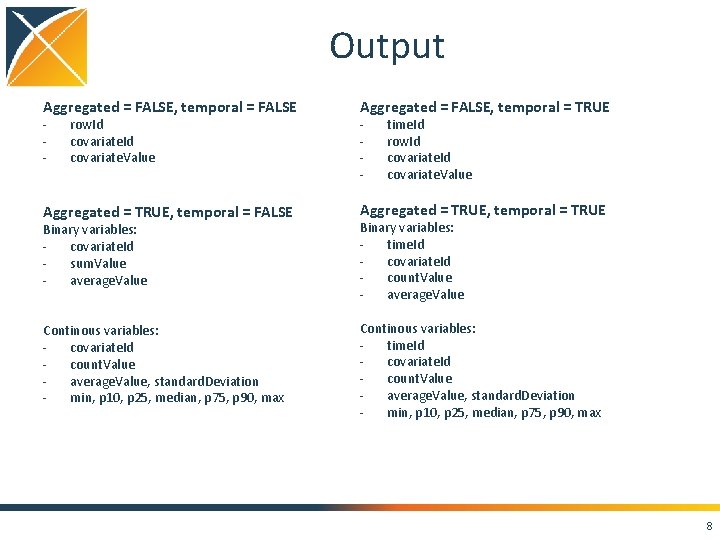
Output Aggregated = FALSE, temporal = FALSE Aggregated = FALSE, temporal = TRUE Aggregated = TRUE, temporal = FALSE Aggregated = TRUE, temporal = TRUE Binary variables: covariate. Id sum. Value average. Value Binary variables: time. Id covariate. Id count. Value average. Value Continous variables: covariate. Id count. Value average. Value, standard. Deviation min, p 10, p 25, median, p 75, p 90, max Continous variables: time. Id covariate. Id count. Value average. Value, standard. Deviation min, p 10, p 25, median, p 75, p 90, max - row. Id covariate. Value - time. Id row. Id covariate. Value 8
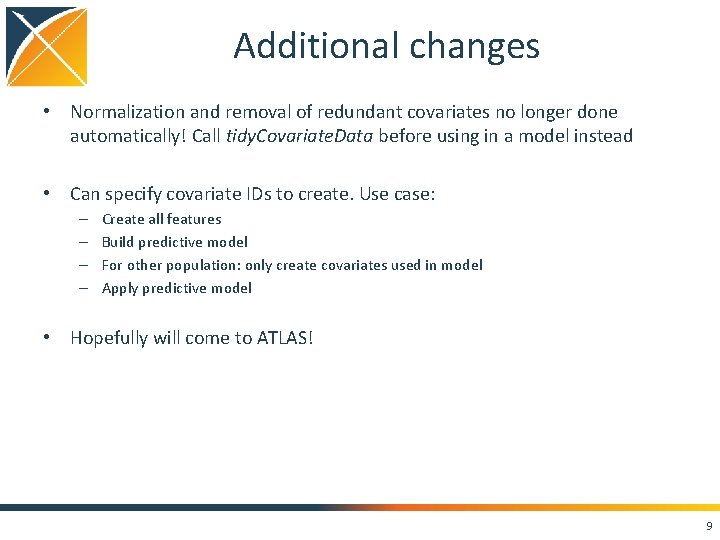
Additional changes • Normalization and removal of redundant covariates no longer done automatically! Call tidy. Covariate. Data before using in a model instead • Can specify covariate IDs to create. Use case: – – Create all features Build predictive model For other population: only create covariates used in model Apply predictive model • Hopefully will come to ATLAS! 9
Method evaluation Martijn Schuemie
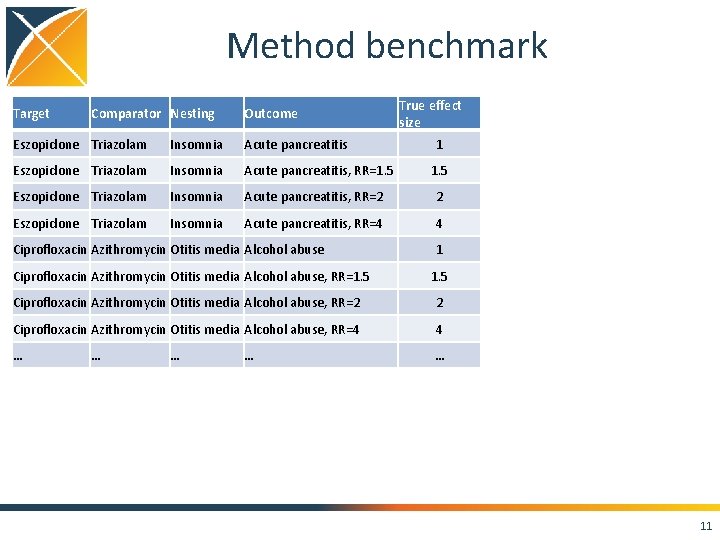
Method benchmark Target Comparator Nesting Outcome True effect size Eszopiclone Triazolam Insomnia Acute pancreatitis, RR=1. 5 Eszopiclone Triazolam Insomnia Acute pancreatitis, RR=2 2 Eszopiclone Triazolam Insomnia Acute pancreatitis, RR=4 4 Ciprofloxacin Azithromycin Otitis media Alcohol abuse, RR=1. 5 1 1. 5 Ciprofloxacin Azithromycin Otitis media Alcohol abuse, RR=2 2 Ciprofloxacin Azithromycin Otitis media Alcohol abuse, RR=4 4 … … … 11
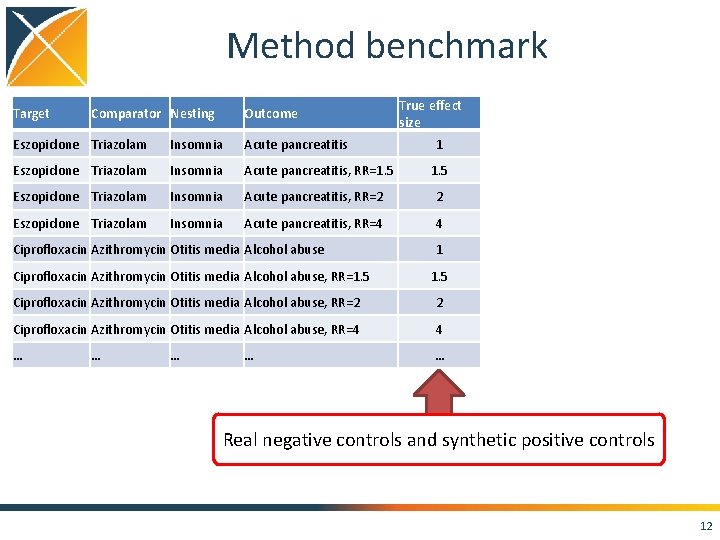
Method benchmark Target Comparator Nesting Outcome True effect size Eszopiclone Triazolam Insomnia Acute pancreatitis, RR=1. 5 Eszopiclone Triazolam Insomnia Acute pancreatitis, RR=2 2 Eszopiclone Triazolam Insomnia Acute pancreatitis, RR=4 4 Ciprofloxacin Azithromycin Otitis media Alcohol abuse, RR=1. 5 1 1. 5 Ciprofloxacin Azithromycin Otitis media Alcohol abuse, RR=2 2 Ciprofloxacin Azithromycin Otitis media Alcohol abuse, RR=4 4 … … … Real negative controls and synthetic positive controls 12
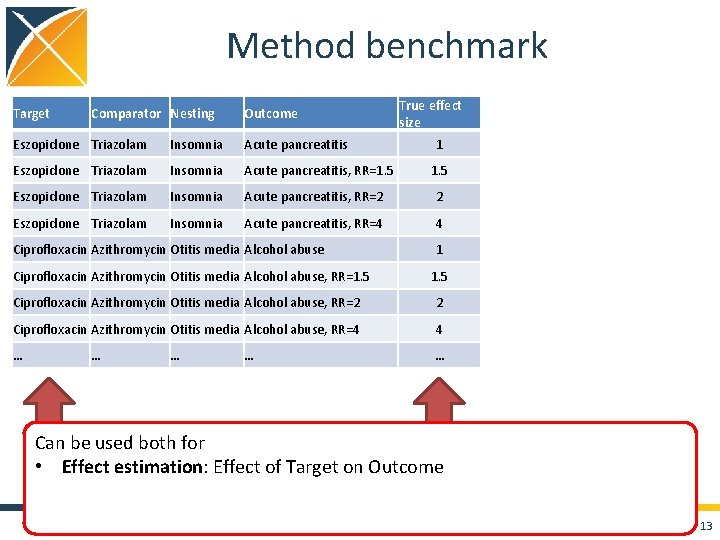
Method benchmark Target Comparator Nesting Outcome True effect size Eszopiclone Triazolam Insomnia Acute pancreatitis, RR=1. 5 Eszopiclone Triazolam Insomnia Acute pancreatitis, RR=2 2 Eszopiclone Triazolam Insomnia Acute pancreatitis, RR=4 4 Ciprofloxacin Azithromycin Otitis media Alcohol abuse, RR=1. 5 1 1. 5 Ciprofloxacin Azithromycin Otitis media Alcohol abuse, RR=2 2 Ciprofloxacin Azithromycin Otitis media Alcohol abuse, RR=4 4 … … … Can be used both for • Effect estimation: Effect of Target on Outcome 13
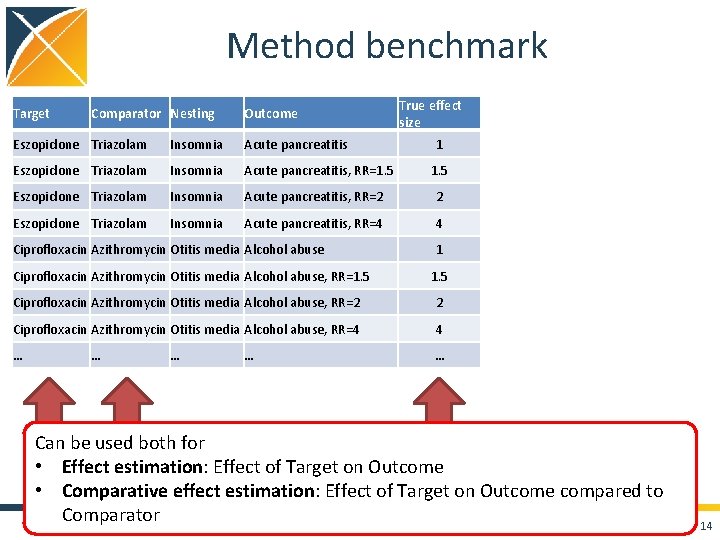
Method benchmark Target Comparator Nesting Outcome True effect size Eszopiclone Triazolam Insomnia Acute pancreatitis, RR=1. 5 Eszopiclone Triazolam Insomnia Acute pancreatitis, RR=2 2 Eszopiclone Triazolam Insomnia Acute pancreatitis, RR=4 4 Ciprofloxacin Azithromycin Otitis media Alcohol abuse, RR=1. 5 1 1. 5 Ciprofloxacin Azithromycin Otitis media Alcohol abuse, RR=2 2 Ciprofloxacin Azithromycin Otitis media Alcohol abuse, RR=4 4 … … … Can be used both for • Effect estimation: Effect of Target on Outcome • Comparative effect estimation: Effect of Target on Outcome compared to Comparator 14
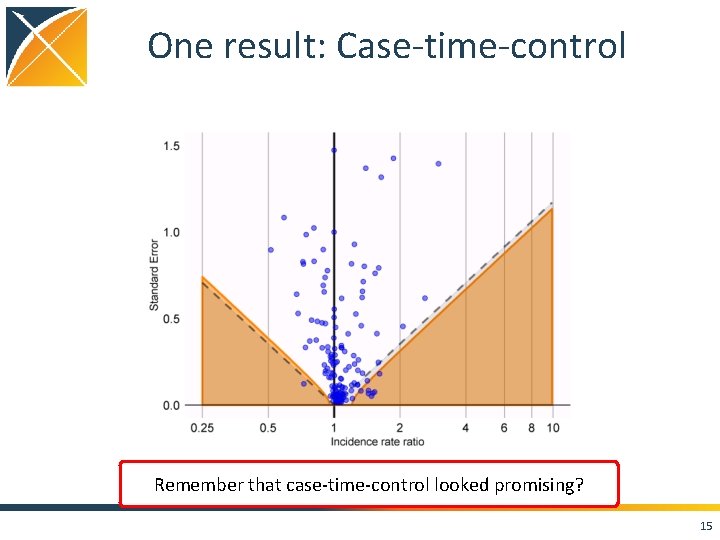
One result: Case-time-control Remember that case-time-control looked promising? 15
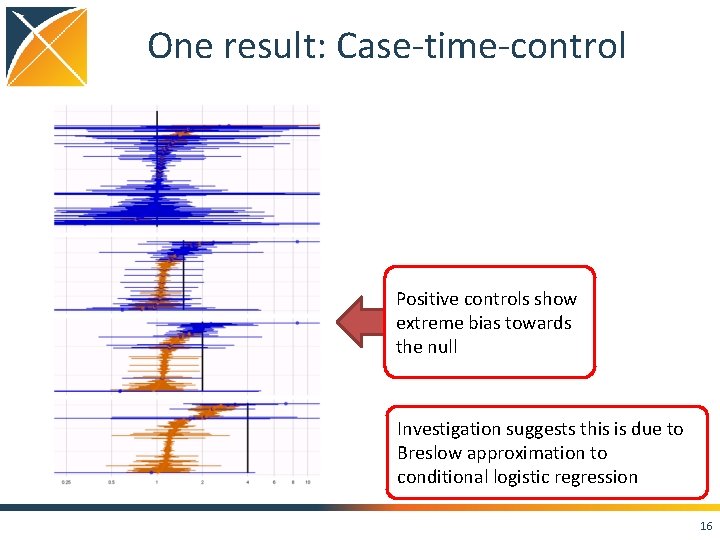
One result: Case-time-control Positive controls show extreme bias towards the null Investigation suggests this is due to Breslow approximation to conditional logistic regression 16
OHDSI Symposium is coming! (October 18) Posters? • OHDSI Methods Benchmark • Evaluation of OHDSI Methods Library using OHDSI Methods Benchmark • … 17
Topic of next meeting(s)? • ? 18
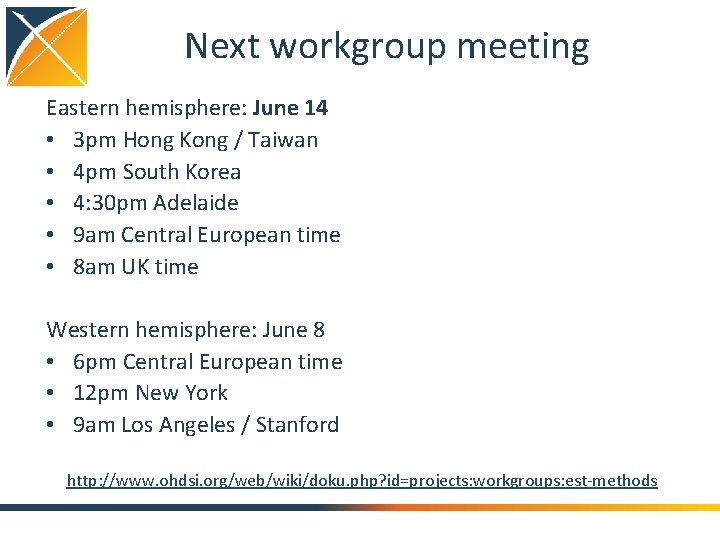
Next workgroup meeting Eastern hemisphere: June 14 • 3 pm Hong Kong / Taiwan • 4 pm South Korea • 4: 30 pm Adelaide • 9 am Central European time • 8 am UK time Western hemisphere: June 8 • 6 pm Central European time • 12 pm New York • 9 am Los Angeles / Stanford http: //www. ohdsi. org/web/wiki/doku. php? id=projects: workgroups: est-methods