
FDR Group Watchmen Members Brock Arp Lorenzo Stewart

FDR Group: Watchmen Members: Brock Arp Lorenzo Stewart Cameron Whigham Wade Vine
Team Roles • Brock Arp- Planform, aerodynamics, materials/manufacturing, cost analysis. • Lorenzo Stewert - Propulsion, Optimization, CAD (launch system), CFD analyis. • Wade Vine - Aircraft/launch system design, controls, refined sizing, and electronics. • Cameron Whigham - Project Management, CAD (airplane), initial sizing, and analysis.
Project Statement Our goal was to design an unmanned Aerial Vehicle that was capable of surveying power lines to increase the safety and productivity/versatility of linemen.
Background • Typical power line voltages: 155, 000 to 765, 000 Volts in non residential areas • Many lines span areas that are hard to reach for inspection such as wooded or densely populated locations • Cannot reach these areas easily from the ground
Project Requirements • Weigh less than 55 pounds • Fly 200 linear miles • Takeoff/land from rough/grassy road conditions or confined areas • Operate from f-150 pickup truck
Minimum Success Criteria • • Meet weight Requirement Fly halfway and refuel to finish mission RTB capability in the event of connection loss Complete the mission in a two working shift time frame
Maximum Success Criteria • Complete mission on one tank of fuel • Eliminate the need for a runway completely • Complete the mission in a single working shift time frame
Challenges Faced • 55 lb weight limit • Hard to find decent baseline for comparison due to size • Slower flight velocities • Hard to find concrete SFC values for model engines
Mission Profile • • • Takeoff(Launch Mechanism) Cruise Loiter Cruise Back Land(Net Capture)
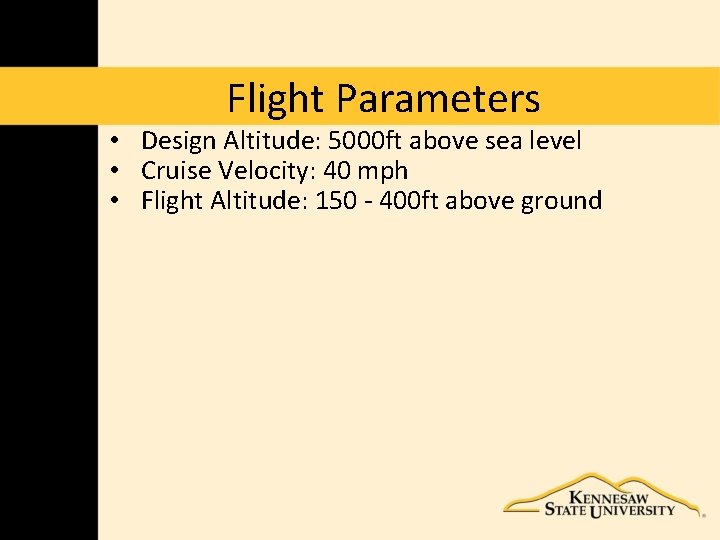
Flight Parameters • Design Altitude: 5000 ft above sea level • Cruise Velocity: 40 mph • Flight Altitude: 150 - 400 ft above ground

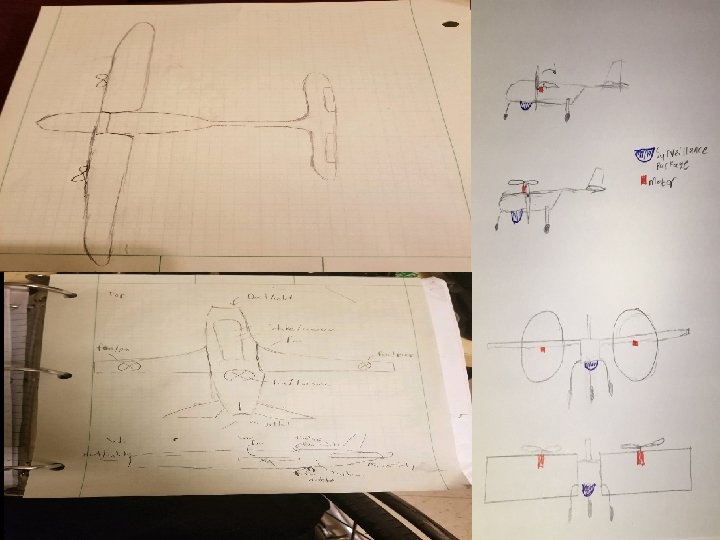
Initial Design(s)
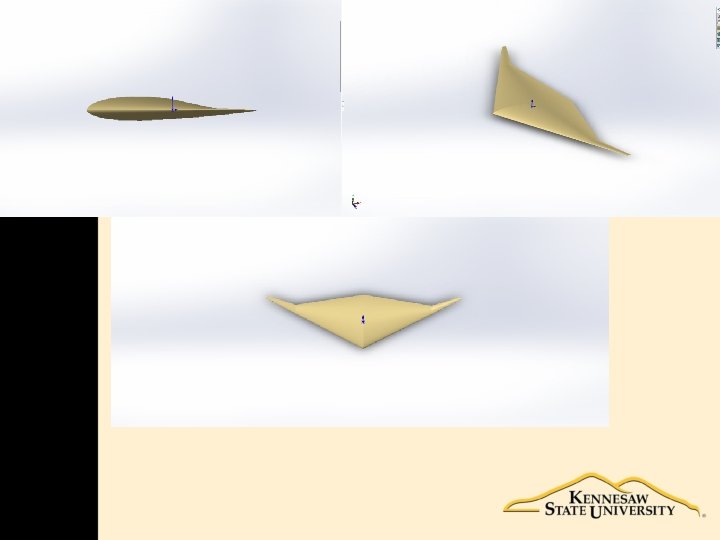

Final Design
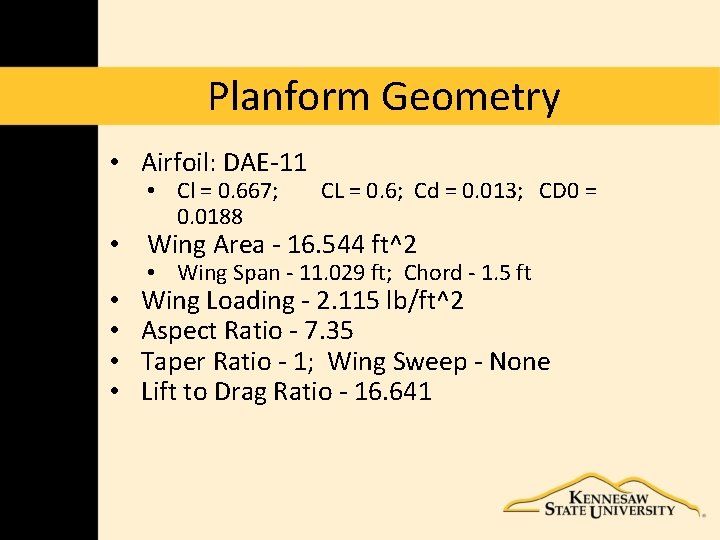
Planform Geometry • Airfoil: DAE-11 • • • Cl = 0. 667; 0. 0188 CL = 0. 6; Cd = 0. 013; CD 0 = Wing Area - 16. 544 ft^2 • Wing Span - 11. 029 ft; Chord - 1. 5 ft Wing Loading - 2. 115 lb/ft^2 Aspect Ratio - 7. 35 Taper Ratio - 1; Wing Sweep - None Lift to Drag Ratio - 16. 641
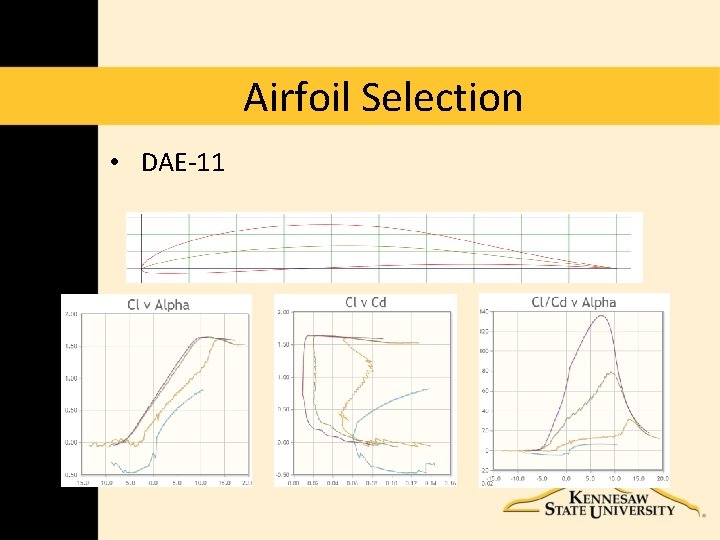
Airfoil Selection • DAE-11
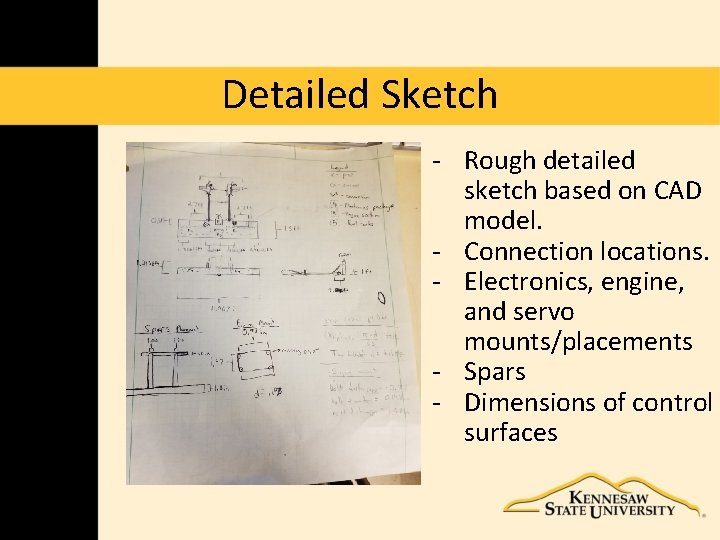
Detailed Sketch - Rough detailed sketch based on CAD model. - Connection locations. - Electronics, engine, and servo mounts/placements - Spars - Dimensions of control surfaces
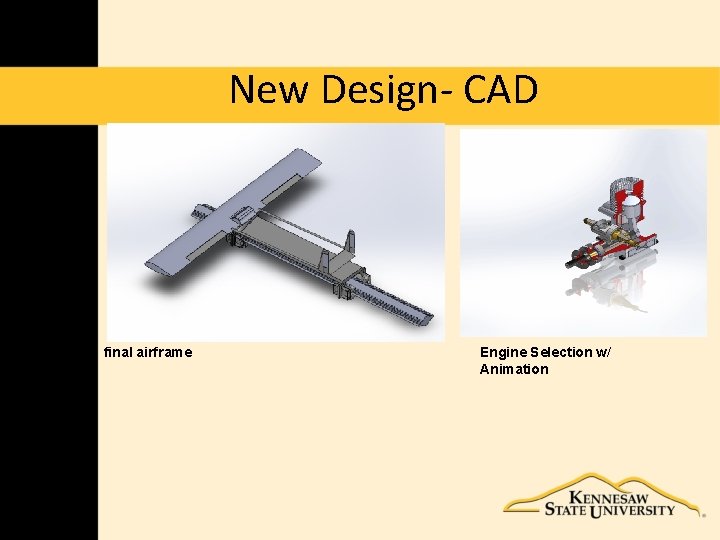
New Design- CAD final airframe Engine Selection w/ Animation

Launch Mechanism
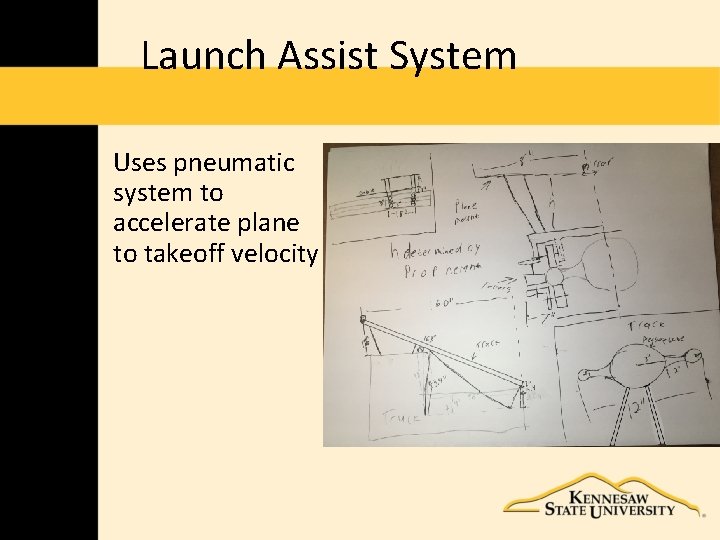
Launch Assist System Uses pneumatic system to accelerate plane to takeoff velocity
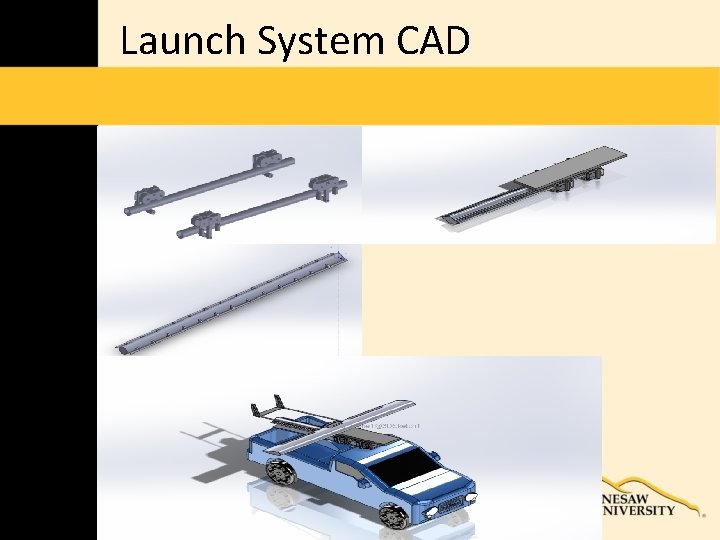
Launch System CAD

Control System/Servos
Control Systems Aileron sizes 2. 7 ft by 0. 3 ft chord X 2 (requires 1 servo each) Elevator size 2. 5 ft by 0. 25 ft chord X 1 (requires 1 servo) Rudders size 1 ft by 0. 25 ft chord X 2 (requires 1 servo for both combined) the servo selected for all of these applications is the HS-645 MG which provides the necessary torque to actuate the surfaces without being unnecessarily powerful and thus heavy

Engine Selection
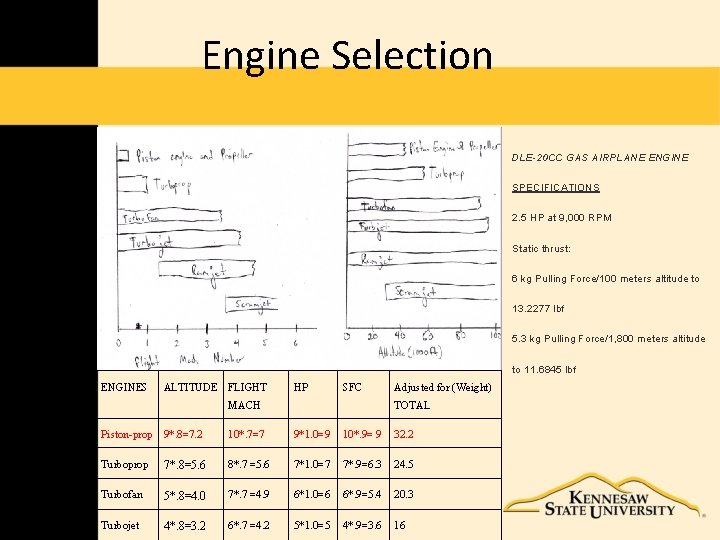
Engine Selection DLE-20 CC GAS AIRPLANE ENGINE SPECIFICATIONS 2. 5 HP at 9, 000 RPM Static thrust: 6 kg Pulling Force/100 meters altitude to 13. 2277 lbf 5. 3 kg Pulling Force/1, 800 meters altitude to 11. 6845 lbf ENGINES ALTITUDE FLIGHT HP SFC MACH Adjusted for (Weight) TOTAL Piston-prop 9*. 8=7. 2 10*. 7=7 9*1. 0=9 10*. 9= 9 32. 2 Turboprop 7*. 8=5. 6 8*. 7 =5. 6 7*1. 0=7 7*. 9=6. 3 24. 5 Turbofan 5*. 8=4. 0 7*. 7 =4. 9 6*1. 0=6 6*. 9=5. 4 20. 3 Turbojet 4*. 8=3. 2 6*. 7 =4. 2 5*1. 0=5 4*. 9=3. 6 16
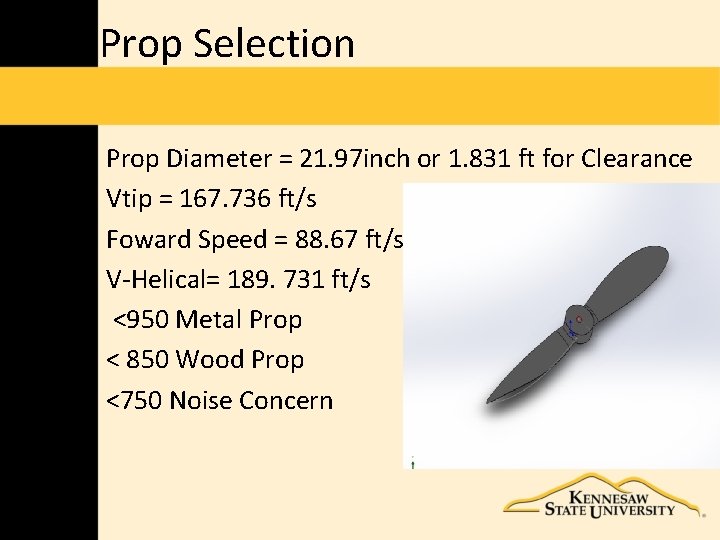
Prop Selection Prop Diameter = 21. 97 inch or 1. 831 ft for Clearance Vtip = 167. 736 ft/s Foward Speed = 88. 67 ft/s V-Helical= 189. 731 ft/s <950 Metal Prop < 850 Wood Prop <750 Noise Concern

Materials
Materials Selection • EPP(Expanded Polypropylene) foam for airfoils • Carbon Fiber or Aluminum dowel rods through the wing for support and for the tail connections • Epoxy coating for skin to achieve slick finish with minimal weight
Surveillance Package
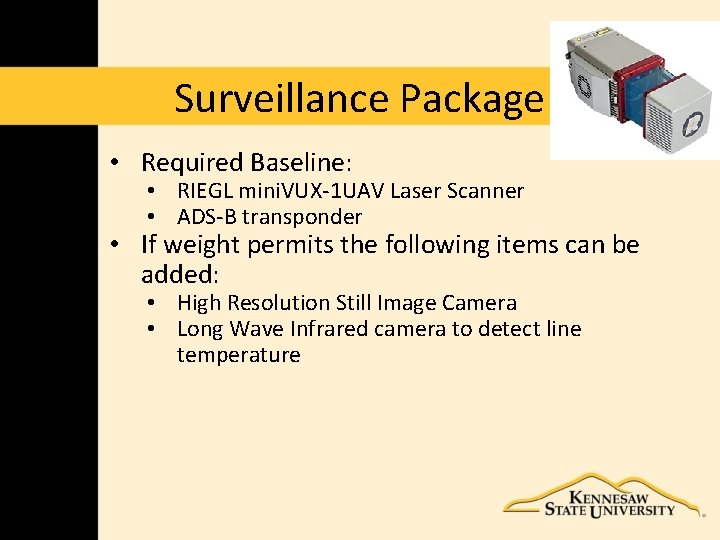
Surveillance Package • Required Baseline: • RIEGL mini. VUX-1 UAV Laser Scanner • ADS-B transponder • If weight permits the following items can be added: • High Resolution Still Image Camera • Long Wave Infrared camera to detect line temperature
Battery Required The LADAR system will require a 24 V 3. 5 ah battery to operate for duration The apollo 6 s lithium ion battery provides this at a weight of 2. 6 lbs
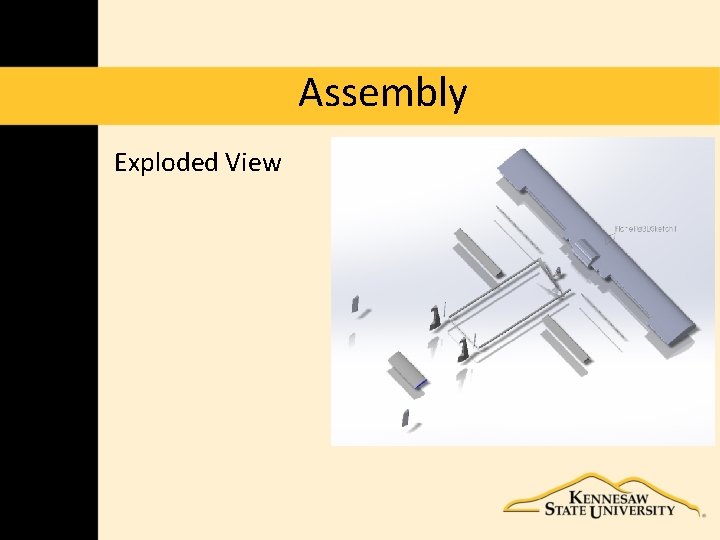
Assembly Exploded View
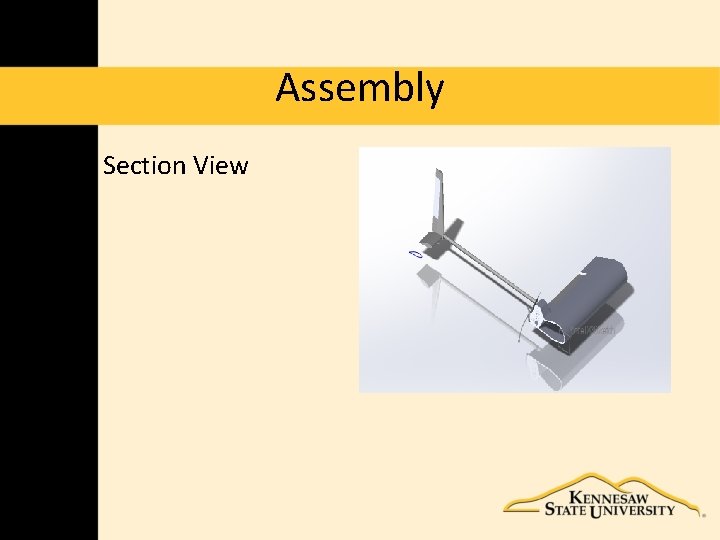
Assembly Section View
Future Work • Final Cost Analysis • Even more detailed drawing (nuts & bolts) • Propeller optimization
Acknowledgements • Dr. Khaleed - support, guidance, and additional knowledge base. • Kennesaw State University - facilities and software packages • Robert Zenko, Michael Grimes, & Chris assistance with the CAD • Ourselves for seeing it through to the end • You all for being here and giving us your time and attention.
- Slides: 36