
FDES Chapter 2 Conceptual Foundation and Structure FDES
- Slides: 41
FDES: Chapter 2 Conceptual Foundation and Structure FDES: Framework for the Development of Environment Statistics http: //www. unescap. org/our-work/statistics
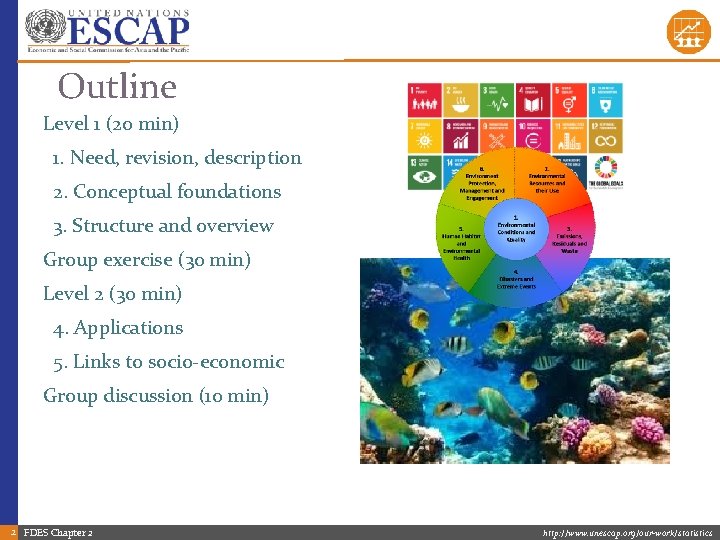
Outline Level 1 (20 min) 1. Need, revision, description 2. Conceptual foundations 3. Structure and overview Group exercise (30 min) Level 2 (30 min) 4. Applications 5. Links to socio-economic Group discussion (10 min) 2 FDES Chapter 2 http: //www. unescap. org/our-work/statistics
Learning objectives • Level 1 • Understand the concepts of FDES manual • Understand the need for a framework • Learn to describe your data • Level 2 • Understand applications and links 3 FDES Chapter 2 http: //www. unescap. org/our-work/statistics
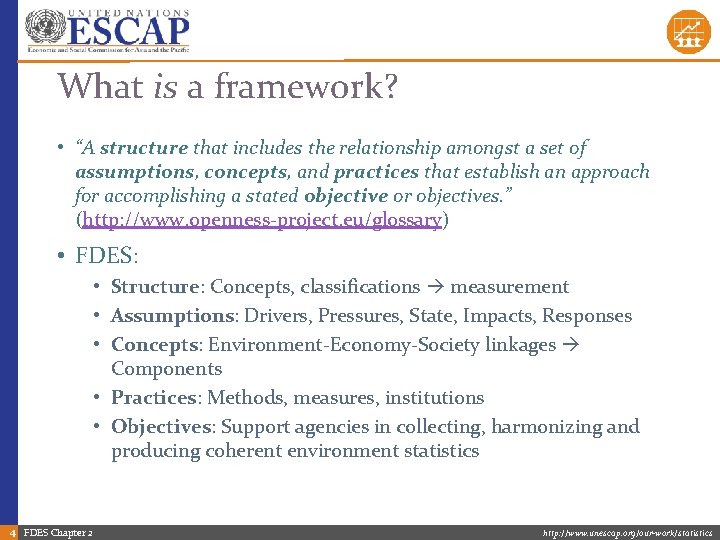
What is a framework? • “A structure that includes the relationship amongst a set of assumptions, concepts, and practices that establish an approach for accomplishing a stated objective or objectives. ” (http: //www. openness-project. eu/glossary) • FDES: • Structure: Concepts, classifications measurement • Assumptions: Drivers, Pressures, State, Impacts, Responses • Concepts: Environment-Economy-Society linkages Components • Practices: Methods, measures, institutions • Objectives: Support agencies in collecting, harmonizing and producing coherent environment statistics 4 FDES Chapter 2 http: //www. unescap. org/our-work/statistics
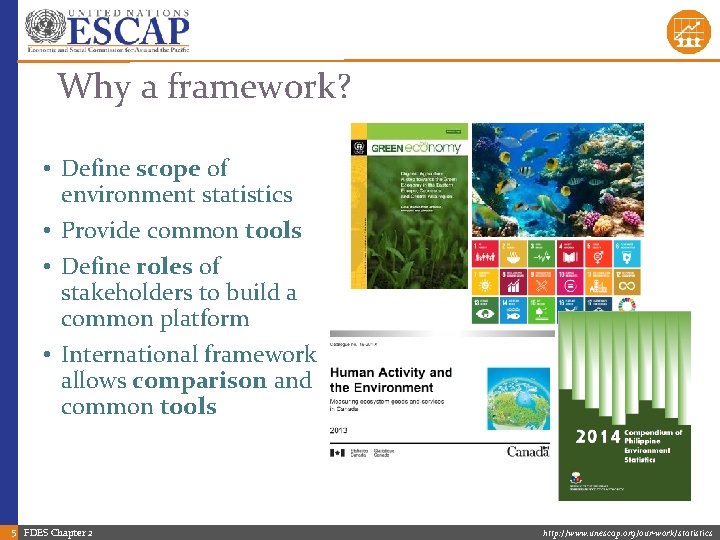
Why a framework? • Define scope of environment statistics • Provide common tools • Define roles of stakeholders to build a common platform • International framework allows comparison and common tools 5 FDES Chapter 2 http: //www. unescap. org/our-work/statistics
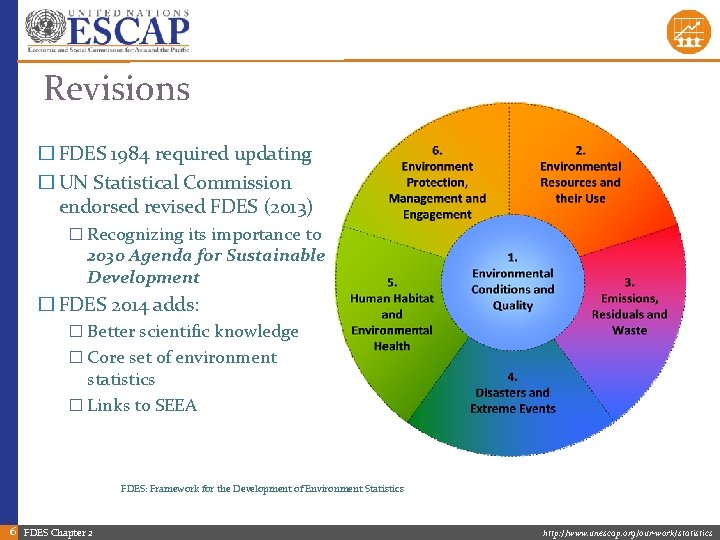
Revisions � FDES 1984 required updating � UN Statistical Commission endorsed revised FDES (2013) � Recognizing its importance to 2030 Agenda for Sustainable Development � FDES 2014 adds: � Better scientific knowledge � Core set of environment statistics � Links to SEEA FDES: Framework for the Development of Environment Statistics 6 FDES Chapter 2 http: //www. unescap. org/our-work/statistics
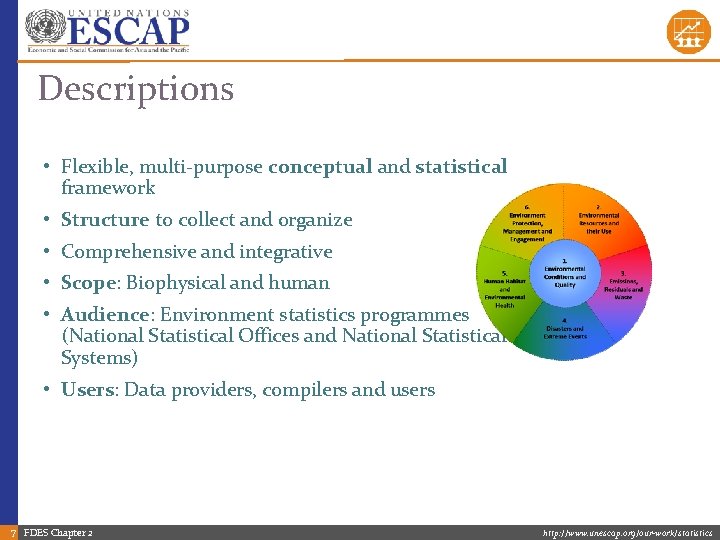
Descriptions • Flexible, multi-purpose conceptual and statistical framework • Structure to collect and organize • Comprehensive and integrative • Scope: Biophysical and human • Audience: Environment statistics programmes (National Statistical Offices and National Statistical Systems) • Users: Data providers, compilers and users 7 FDES Chapter 2 http: //www. unescap. org/our-work/statistics
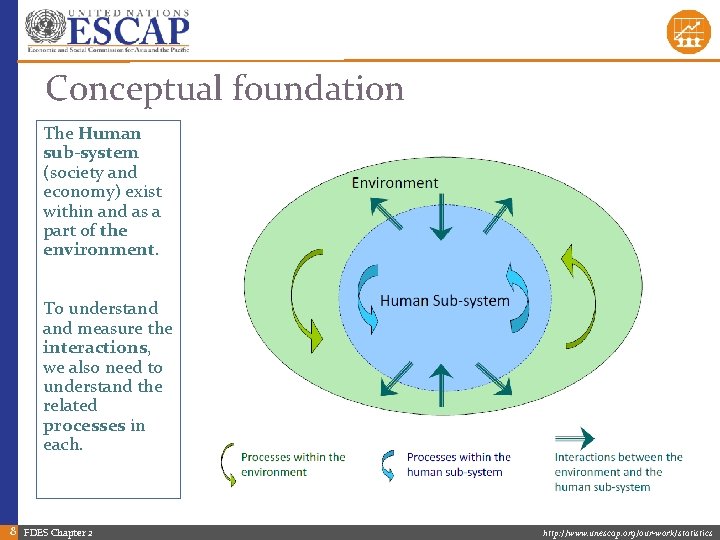
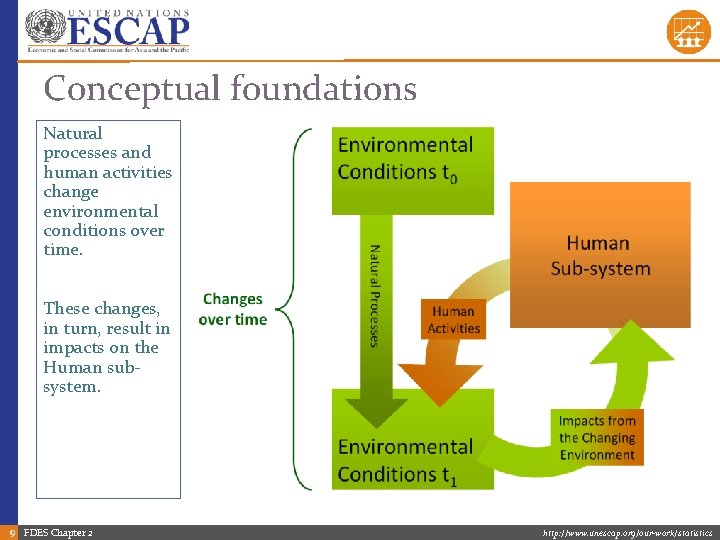
Conceptual foundation The Human sub-system (society and economy) exist within and as a part of the environment. To understand measure the interactions, we also need to understand the related processes in each. 8 FDES Chapter 2 http: //www. unescap. org/our-work/statistics
Conceptual foundations Natural processes and human activities change environmental conditions over time. These changes, in turn, result in impacts on the Human subsystem. 9 FDES Chapter 2 http: //www. unescap. org/our-work/statistics
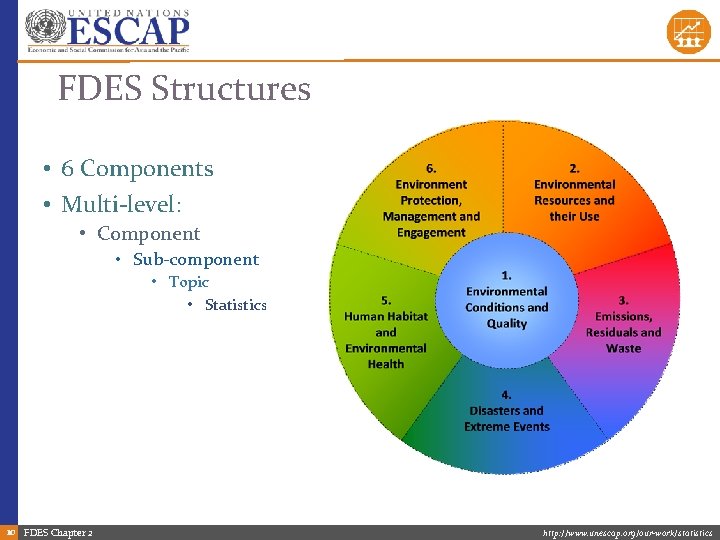
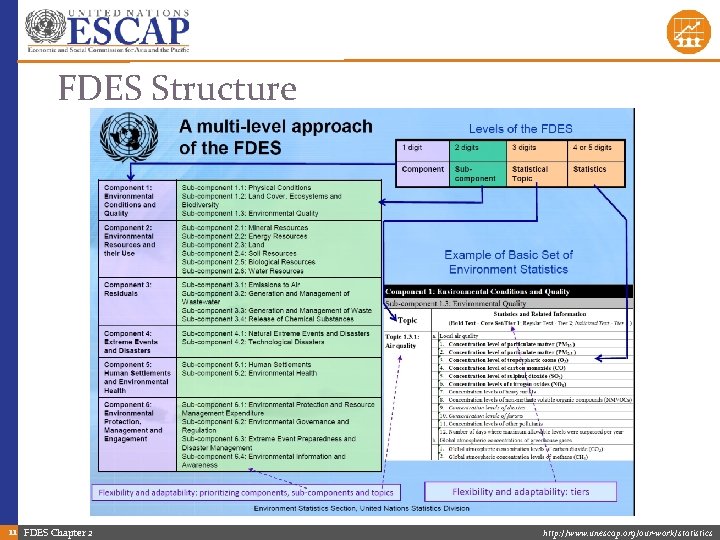
FDES Structures • 6 Components • Multi-level: • Component • Sub-component • Topic • Statistics 10 FDES Chapter 2 http: //www. unescap. org/our-work/statistics
FDES Structure 11 FDES Chapter 2 http: //www. unescap. org/our-work/statistics
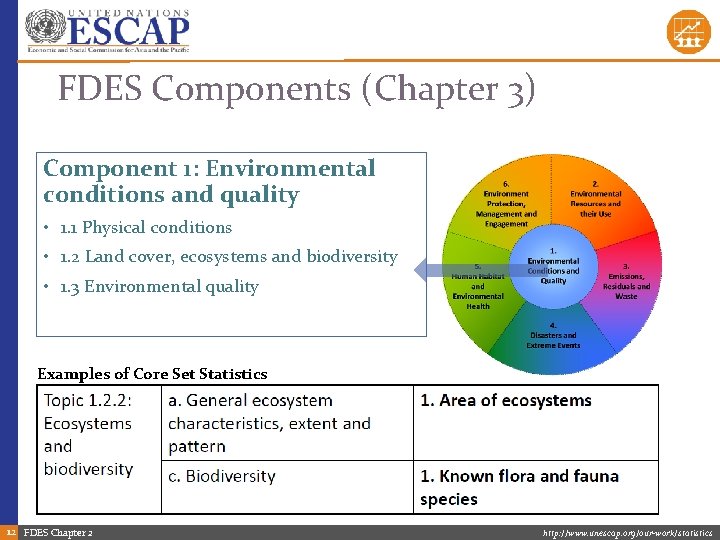
FDES Components (Chapter 3) Component 1: Environmental conditions and quality • 1. 1 Physical conditions • 1. 2 Land cover, ecosystems and biodiversity • 1. 3 Environmental quality Examples of Core Set Statistics 12 FDES Chapter 2 http: //www. unescap. org/our-work/statistics
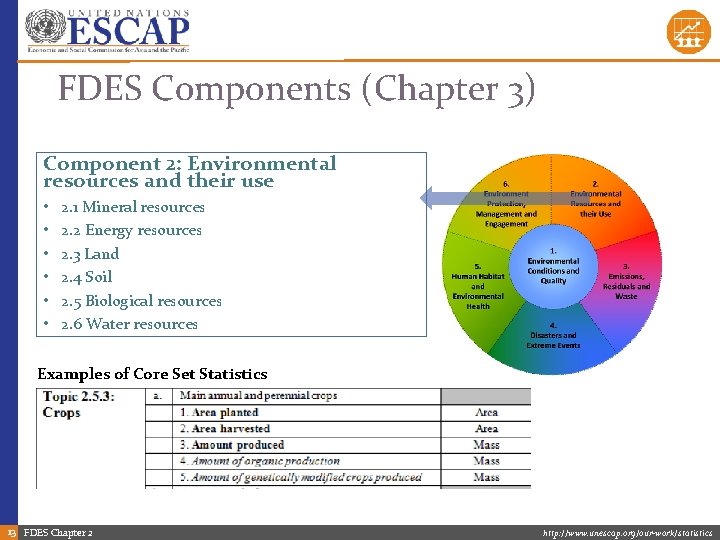
FDES Components (Chapter 3) Component 2: Environmental resources and their use • • • 2. 1 Mineral resources 2. 2 Energy resources 2. 3 Land 2. 4 Soil 2. 5 Biological resources 2. 6 Water resources Examples of Core Set Statistics 13 FDES Chapter 2 http: //www. unescap. org/our-work/statistics
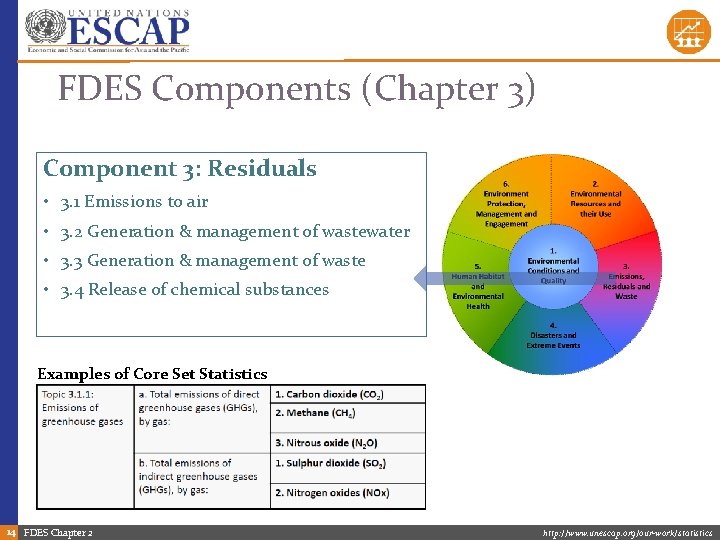
FDES Components (Chapter 3) Component 3: Residuals • 3. 1 Emissions to air • 3. 2 Generation & management of wastewater • 3. 3 Generation & management of waste • 3. 4 Release of chemical substances Examples of Core Set Statistics 14 FDES Chapter 2 http: //www. unescap. org/our-work/statistics
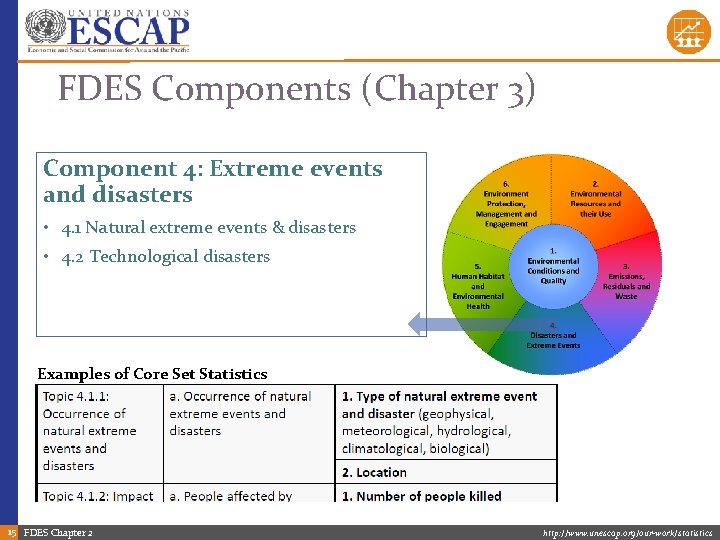
FDES Components (Chapter 3) Component 4: Extreme events and disasters • 4. 1 Natural extreme events & disasters • 4. 2 Technological disasters Examples of Core Set Statistics 15 FDES Chapter 2 http: //www. unescap. org/our-work/statistics
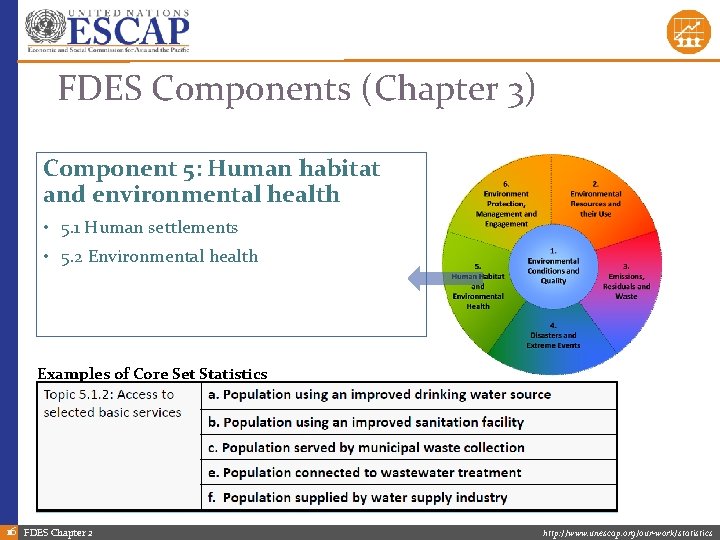
FDES Components (Chapter 3) Component 5: Human habitat and environmental health • 5. 1 Human settlements • 5. 2 Environmental health Examples of Core Set Statistics 16 FDES Chapter 2 http: //www. unescap. org/our-work/statistics
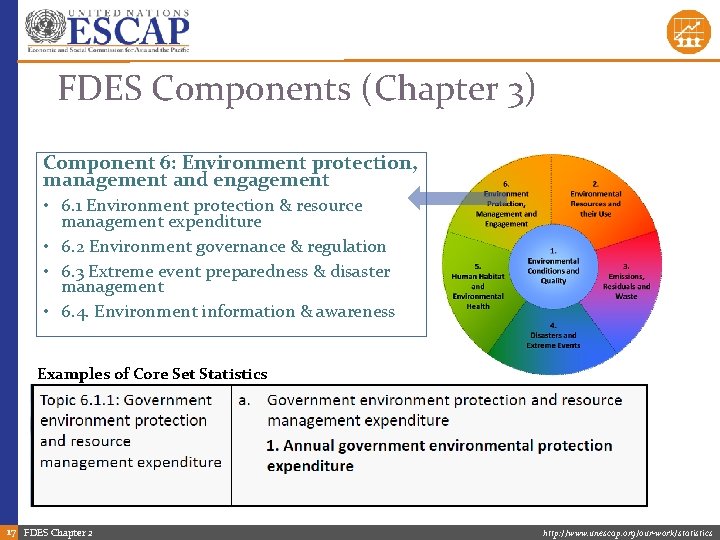
FDES Components (Chapter 3) Component 6: Environment protection, management and engagement • 6. 1 Environment protection & resource management expenditure • 6. 2 Environment governance & regulation • 6. 3 Extreme event preparedness & disaster management • 6. 4. Environment information & awareness Examples of Core Set Statistics 17 FDES Chapter 2 http: //www. unescap. org/our-work/statistics
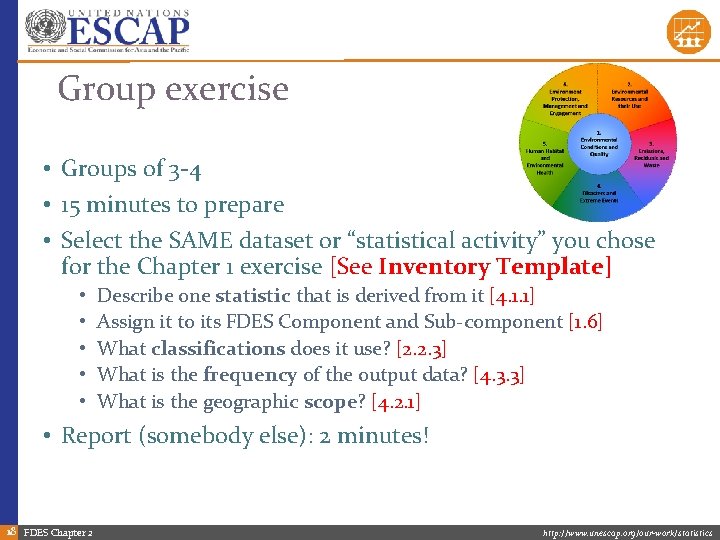
Group exercise • Groups of 3 -4 • 15 minutes to prepare • Select the SAME dataset or “statistical activity” you chose for the Chapter 1 exercise [See Inventory Template] • • • Describe one statistic that is derived from it [4. 1. 1] Assign it to its FDES Component and Sub-component [1. 6] What classifications does it use? [2. 2. 3] What is the frequency of the output data? [4. 3. 3] What is the geographic scope? [4. 2. 1] • Report (somebody else): 2 minutes! 18 FDES Chapter 2 http: //www. unescap. org/our-work/statistics
Welcome to Level 2! • Links to SDGs • From Basic set to Core set (Chapter 4) • Applications (Chapter 5) • Links to socio-economic • Group discussion (10 min) 19 FDES Chapter 2 http: //www. unescap. org/our-work/statistics
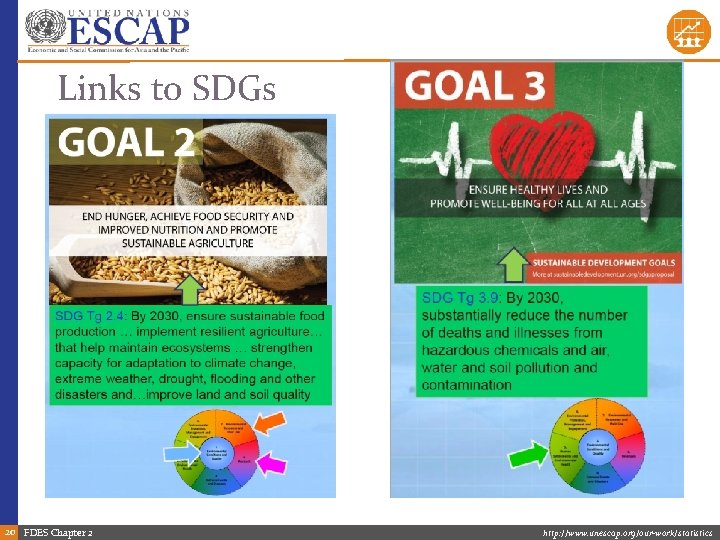
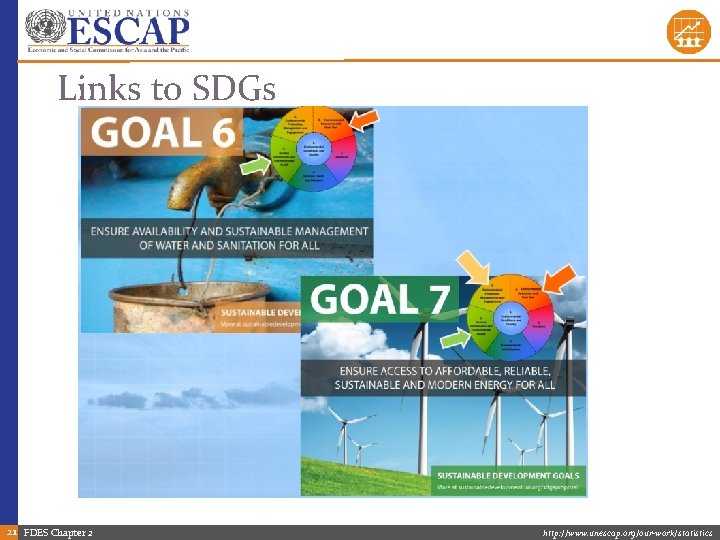
Links to SDGs 20 FDES Chapter 2 http: //www. unescap. org/our-work/statistics
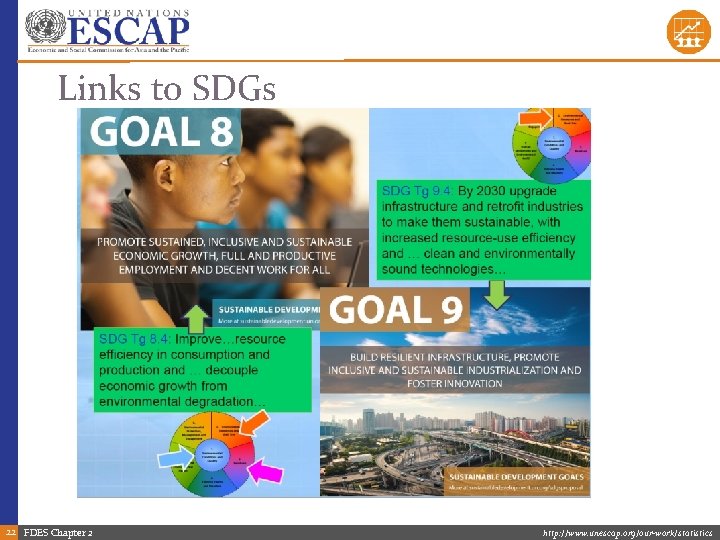
Links to SDGs 21 FDES Chapter 2 http: //www. unescap. org/our-work/statistics
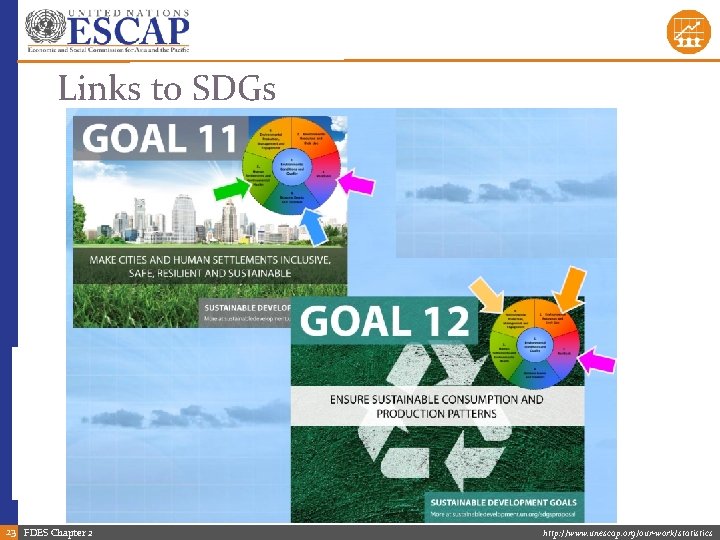
Links to SDGs 22 FDES Chapter 2 http: //www. unescap. org/our-work/statistics
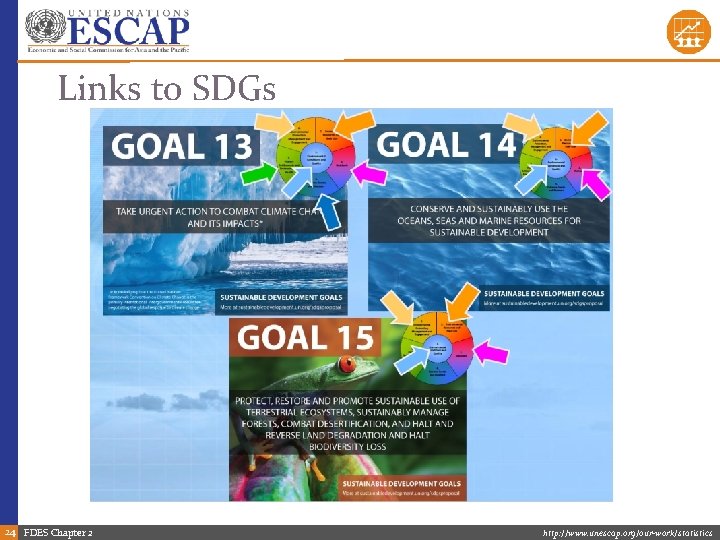
Links to SDGs 23 FDES Chapter 2 http: //www. unescap. org/our-work/statistics
Links to SDGs 24 FDES Chapter 2 http: //www. unescap. org/our-work/statistics
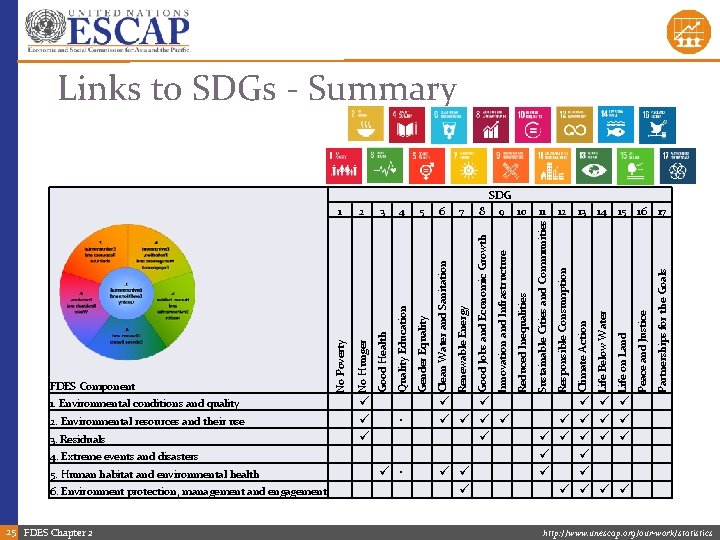
Links to SDGs - Summary 25 FDES Chapter 2 ü ü ü Partnerships for the Goals ü ü ü Peace and Justice ü ü ü Life on Land 15 16 17 Life Below Water 14 Climate Action ü 13 Responsible Consumption Innovation and Infrastructure ü ü ü 12 Sustainable Cities and Communities Good Jobs and Economic Growth 11 Reduced Inequalities 7 Renewable Energy 6. Environment protection, management and engagement 6 Clean Water and Sanitation 5. Human habitat and environmental health 5 Gender Equality 4. Extreme events and disasters 4 Quality Education 3. Residuals 3 Good Health 2. Environmental resources and their use 2 No Hunger 1. Environmental conditions and quality 1 No Poverty FDES Component SDG 8 9 10 ü ü ü ü ü http: //www. unescap. org/our-work/statistics
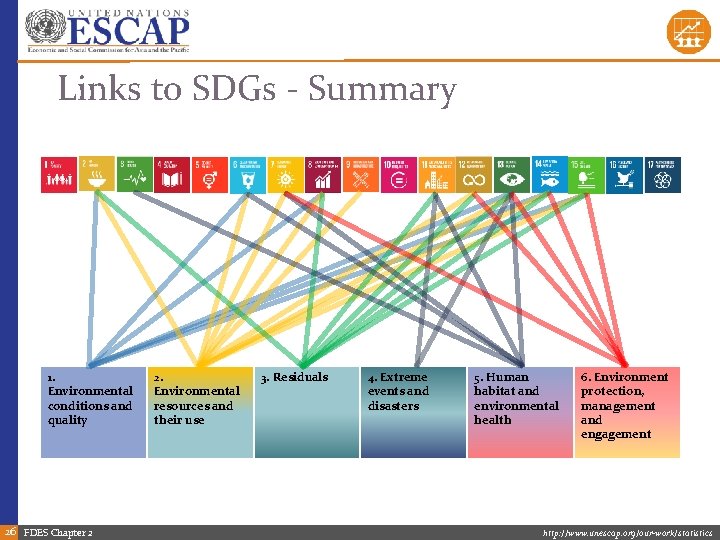
Links to SDGs - Summary 1. Environmental conditions and quality 26 FDES Chapter 2 2. Environmental resources and their use 3. Residuals 4. Extreme events and disasters 5. Human habitat and environmental health 6. Environment protection, management and engagement http: //www. unescap. org/our-work/statistics
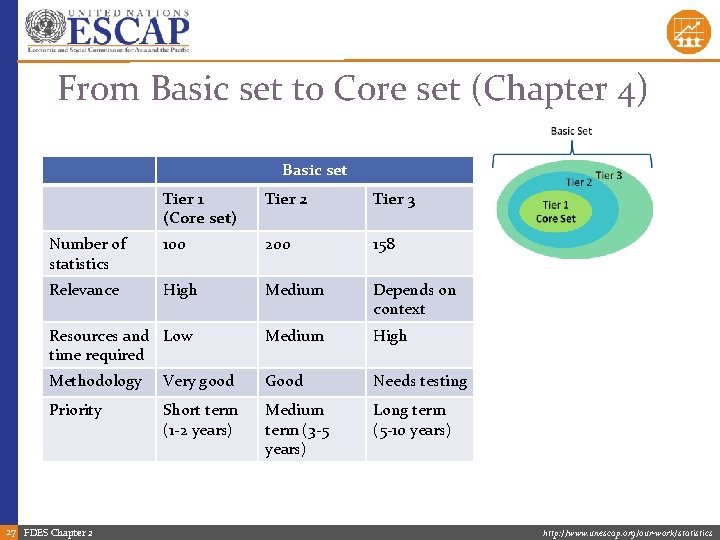
From Basic set to Core set (Chapter 4) Basic set Tier 1 (Core set) Tier 2 Tier 3 Number of statistics 100 200 158 Relevance High Medium Depends on context Resources and Low time required Medium High Methodology Very good Good Needs testing Priority Short term (1 -2 years) Medium term (3 -5 years) Long term (5 -10 years) 27 FDES Chapter 2 http: //www. unescap. org/our-work/statistics
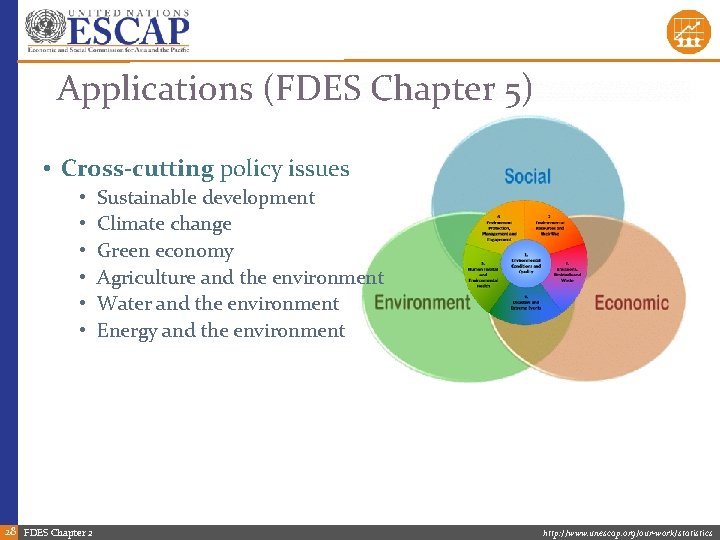
Applications (FDES Chapter 5) • Cross-cutting policy issues • • • 28 FDES Chapter 2 Sustainable development Climate change Green economy Agriculture and the environment Water and the environment Energy and the environment http: //www. unescap. org/our-work/statistics
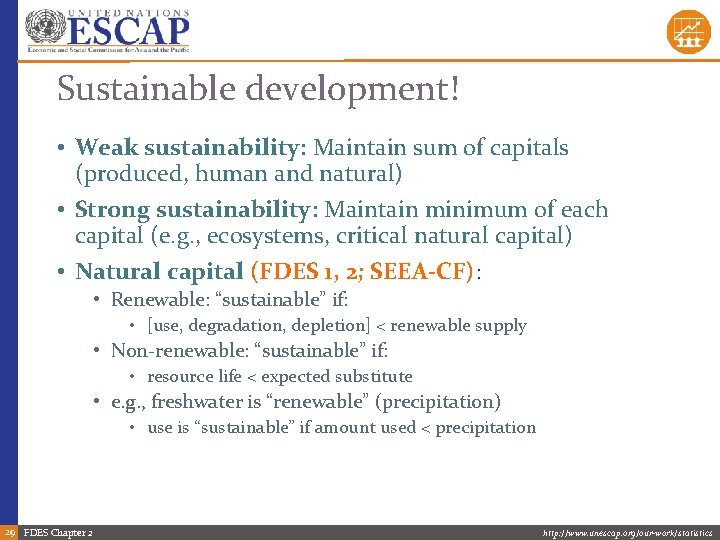
Sustainable development! • Weak sustainability: Maintain sum of capitals (produced, human and natural) • Strong sustainability: Maintain minimum of each capital (e. g. , ecosystems, critical natural capital) • Natural capital (FDES 1, 2; SEEA-CF): • Renewable: “sustainable” if: • [use, degradation, depletion] < renewable supply • Non-renewable: “sustainable” if: • resource life < expected substitute • e. g. , freshwater is “renewable” (precipitation) • use is “sustainable” if amount used < precipitation 29 FDES Chapter 2 http: //www. unescap. org/our-work/statistics
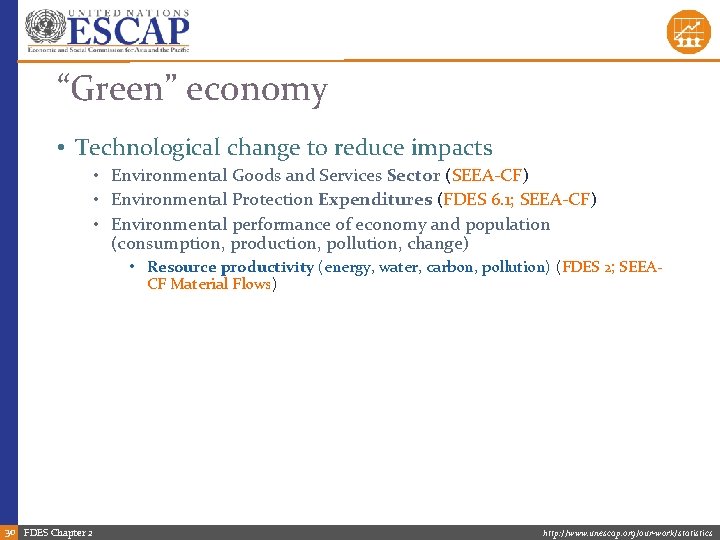
“Green” economy • Technological change to reduce impacts • Environmental Goods and Services Sector (SEEA-CF) • Environmental Protection Expenditures (FDES 6. 1; SEEA-CF) • Environmental performance of economy and population (consumption, production, pollution, change) • Resource productivity (energy, water, carbon, pollution) (FDES 2; SEEACF Material Flows) 30 FDES Chapter 2 http: //www. unescap. org/our-work/statistics
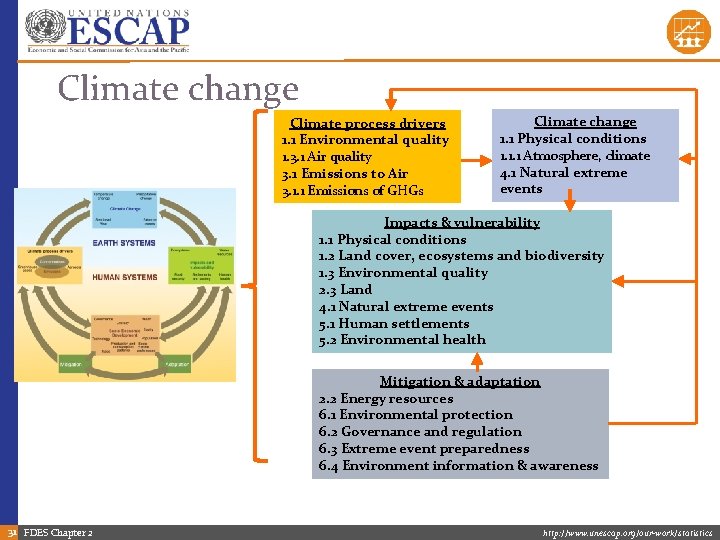
Climate change Climate process drivers 1. 1 Environmental quality 1. 3. 1 Air quality 3. 1 Emissions to Air 3. 1. 1 Emissions of GHGs Climate change 1. 1 Physical conditions 1. 1. 1 Atmosphere, climate 4. 1 Natural extreme events Impacts & vulnerability 1. 1 Physical conditions 1. 2 Land cover, ecosystems and biodiversity 1. 3 Environmental quality 2. 3 Land 4. 1 Natural extreme events 5. 1 Human settlements 5. 2 Environmental health Mitigation & adaptation 2. 2 Energy resources 6. 1 Environmental protection 6. 2 Governance and regulation 6. 3 Extreme event preparedness 6. 4 Environment information & awareness 31 FDES Chapter 2 http: //www. unescap. org/our-work/statistics
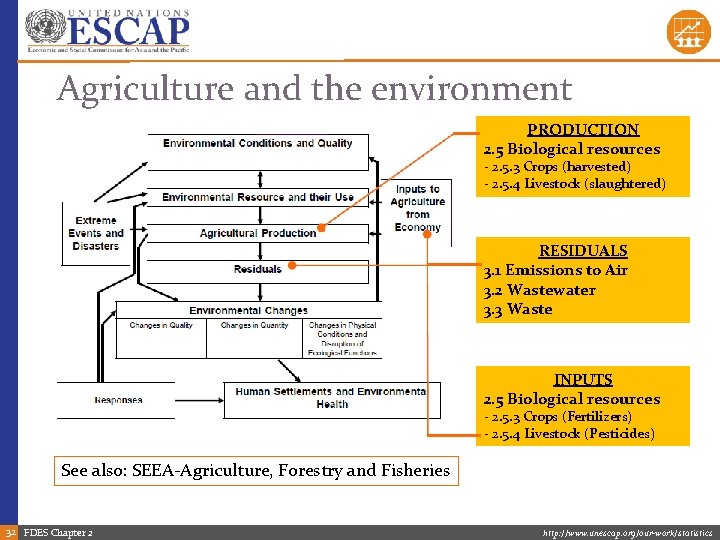
Agriculture and the environment PRODUCTION 2. 5 Biological resources - 2. 5. 3 Crops (harvested) - 2. 5. 4 Livestock (slaughtered) RESIDUALS 3. 1 Emissions to Air 3. 2 Wastewater 3. 3 Waste INPUTS 2. 5 Biological resources - 2. 5. 3 Crops (Fertilizers) - 2. 5. 4 Livestock (Pesticides) See also: SEEA-Agriculture, Forestry and Fisheries 32 FDES Chapter 2 http: //www. unescap. org/our-work/statistics
Water and the environment • Freshwater as a commodity: • Drinking, cleaning, cooling, incorporation into products, substrate for human activities (FDES 2) • Water as an ecosystem (freshwater, coastal, marine): • Cultural and spiritual services (FDES 1) • Water provides regulation and maintenance services: • Purification, carbon sequestration (FDES 1) 33 FDES Chapter 2 http: //www. unescap. org/our-work/statistics
Energy and the environment • Non-renewable: • Extraction, processing, consumption impacts (FDES 2) • Renewable: • Infrastructure, processing, consumption impacts (FDES 2) • Consumption: • Efficiency (FDES 2) 34 FDES Chapter 2 http: //www. unescap. org/our-work/statistics
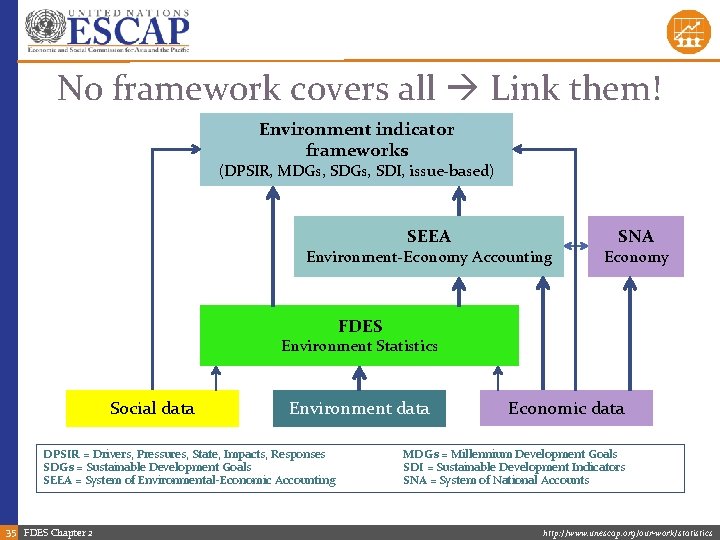
No framework covers all Link them! Environment indicator frameworks (DPSIR, MDGs, SDI, issue-based) SEEA Environment-Economy Accounting SNA Economy FDES Environment Statistics Social data Environment data DPSIR = Drivers, Pressures, State, Impacts, Responses SDGs = Sustainable Development Goals SEEA = System of Environmental-Economic Accounting 35 FDES Chapter 2 Economic data MDGs = Millennium Development Goals SDI = Sustainable Development Indicators SNA = System of National Accounts http: //www. unescap. org/our-work/statistics
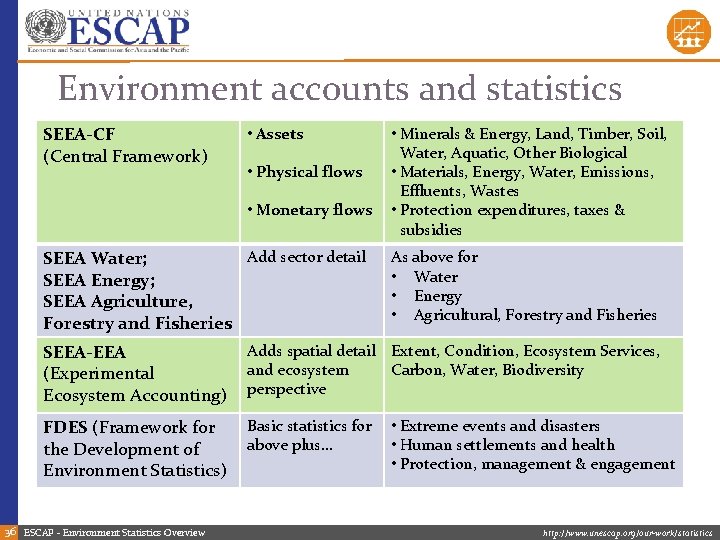
Environment accounts and statistics SEEA-CF (Central Framework) • Assets • Physical flows • Monetary flows • Minerals & Energy, Land, Timber, Soil, Water, Aquatic, Other Biological • Materials, Energy, Water, Emissions, Effluents, Wastes • Protection expenditures, taxes & subsidies Add sector detail SEEA Water; SEEA Energy; SEEA Agriculture, Forestry and Fisheries As above for • Water • Energy • Agricultural, Forestry and Fisheries SEEA-EEA (Experimental Ecosystem Accounting) Adds spatial detail and ecosystem perspective Extent, Condition, Ecosystem Services, Carbon, Water, Biodiversity FDES (Framework for the Development of Environment Statistics) Basic statistics for above plus… • Extreme events and disasters • Human settlements and health • Protection, management & engagement 36 ESCAP - Environment Statistics Overview http: //www. unescap. org/our-work/statistics
Discussion • What “frameworks” are used in your country in: • Statistical offices? • Environment and natural resource departments? • How do they link to FDES? • Which component/sub-component? • What’s missing? (equity/access to resources, distribution of impacts…) 37 FDES Chapter 2 http: //www. unescap. org/our-work/statistics
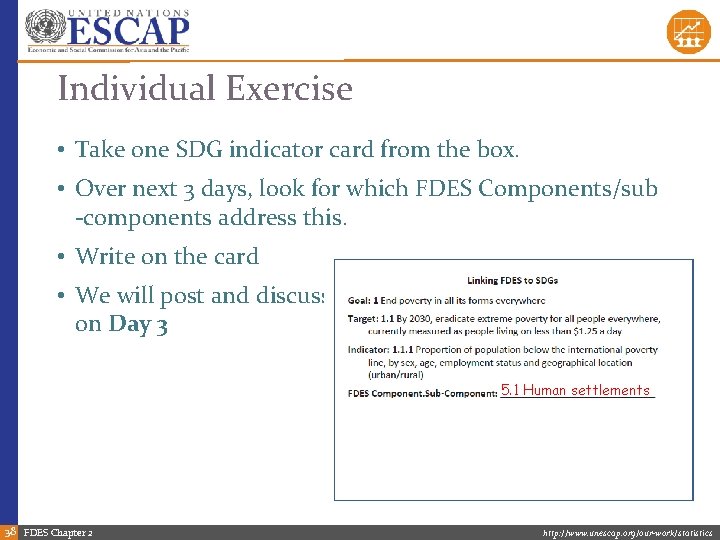
Individual Exercise • Take one SDG indicator card from the box. • Over next 3 days, look for which FDES Components/sub -components address this. • Write on the card • We will post and discuss on Day 3 5. 1 Human settlements 38 FDES Chapter 2 http: //www. unescap. org/our-work/statistics
References • FDES: http: //unstats. un. org/unsd/environment/fdes. htm • SEEA-CF: http: //unstats. un. org/unsd/envaccounting/seea. Rev/SEEA_CF_Final_en. pdf • SEEA-Energy: http: //unstats. un. org/unsd/envaccounting/seeae/chapter. List. asp • SEEA-Water: http: //unstats. un. org/unsd/envaccounting/seeawaterwebversion. pdf • SEEA-Agriculture, Forestry and Fisheries: http: //unstats. un. org/unsd/envaccounting/aff/2 GC_Draft. pdf • SEEA-EEA (Experimental Ecosystem Accounting): http: //unstats. un. org/unsd/envaccounting/seea. Rev/eea_final_en. pdf 39 FDES Chapter 2 http: //www. unescap. org/our-work/statistics
Acknowledgements • Materials prepared by: • Michael Bordt • Regional Adviser on Environment Statistics ESCAP Statistics Division bordt@un. org • Materials adapted from: • UNSD (Environment Statistics) FDES presentations: • Tanzania: http: //unstats. un. org/unsd/environment/unsd_EAC_Project. html • Togo: http: //unstats. un. org/unsd/environment/unsd_Togo. Workshop. ht ml (aussi en Français) 40 FDES Chapter 2 http: //www. unescap. org/our-work/statistics
FDES and social and economic statistics • Structured to link with social and economic domains • • • SNA: System of National Accounts SEEA: System of Environmental-Economic Accounting DPSIR: Drivers, Pressures, State, Impact, Response MDGs: Millennium Development Goals SDGs: Sustainable Development Goals SDI: Sustainable Development Indicator frameworks • Uses existing statistical classifications (when available) Facilitates integration 41 FDES Chapter 2 http: //www. unescap. org/our-work/statistics