
Fauvism and the Still Life Its all about
Fauvism and the Still Life: It’s all about COLOR Visual Art I
Who were the Fauves? Fauvism was a French art movement, led by Henri Matisse, spanning from 1869 -1954. n Fauves is French for “Wild Beasts”. This name was used because the artists used intense, almost violent colors in an unnatural way. n
Influences n n In the early 1900 s there were several major exhibitions in Paris of Post Impressionist artwork. These included the works of Paul Gauguin, Vincent van Gogh, and Paul Cezanne and were radically different from previous work displayed. They had loose brush strokes and bright, free use of color. These exhibitions inspired many artists who were looking to liberate their own style.
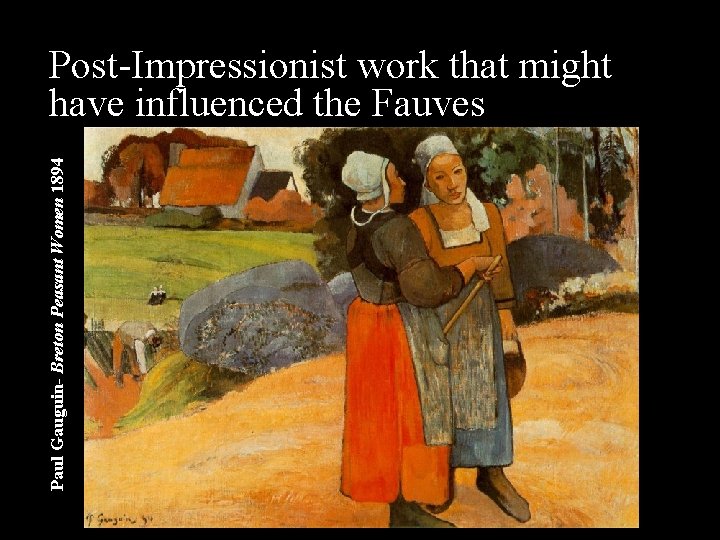
Paul Gauguin- Breton Peasant Women 1894 Post-Impressionist work that might have influenced the Fauves

Vincent van Gogh - Village Street in Auvers 1890 Post-Impressionist work that might have influenced the Fauves
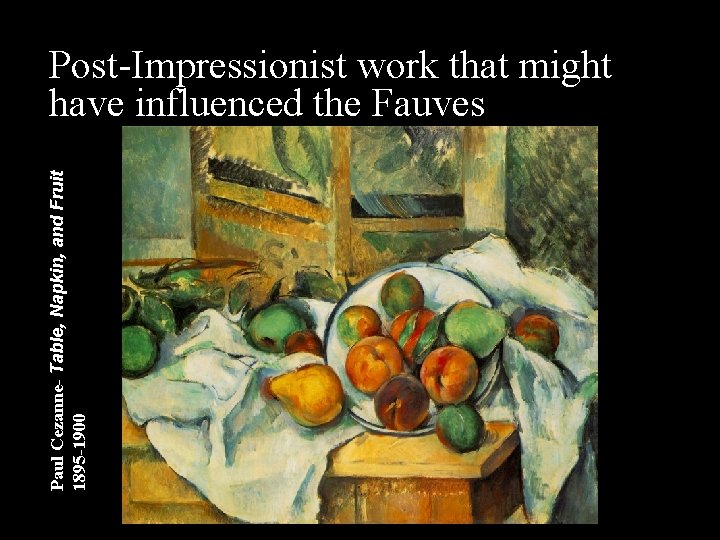
Paul Cezanne- Table, Napkin, and Fruit 1895 -1900 Post-Impressionist work that might have influenced the Fauves
“Wild Beasts” The Fauves took the free use of color even further by using arbitrary and unnatural colors. They might paint a sky bright red or a person’s face green. n Complementary or Analogous color schemes were often used. n Colors were chosen for expressive purposes, not based on realism. n

Complimentary Colors: Colors that are across from each other on the color wheel. What are the 3 Primary Colors and their 3 Complimentary Colors? Analogous Colors: are groups of colors that are adjacent to each other on the color wheel. Analogous Colors are the range of colors that fall between two primary colors. Example: Yellow-Orange Red-Orange Red

Other Fauves Include Maurice de Vlaminck n Kees van Dongen n Andre Derain n Raoul Dufy n

Henri Matisse The Red Studio - 1911 Green Stripe - 1905
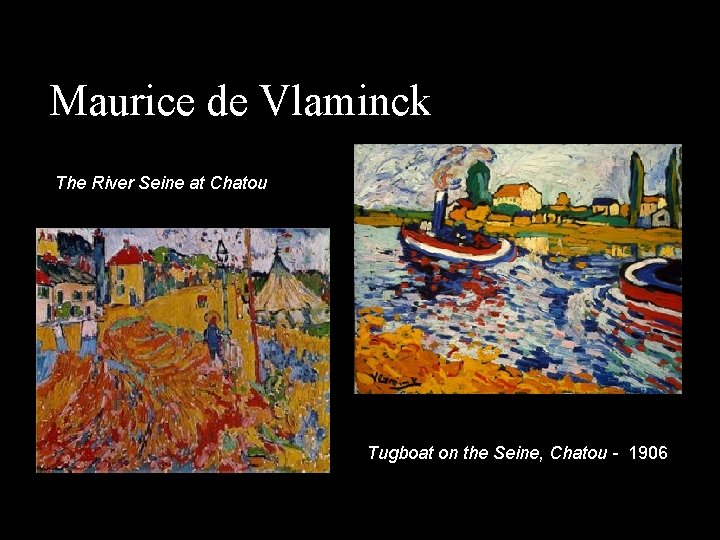
Maurice de Vlaminck The River Seine at Chatou Tugboat on the Seine, Chatou - 1906
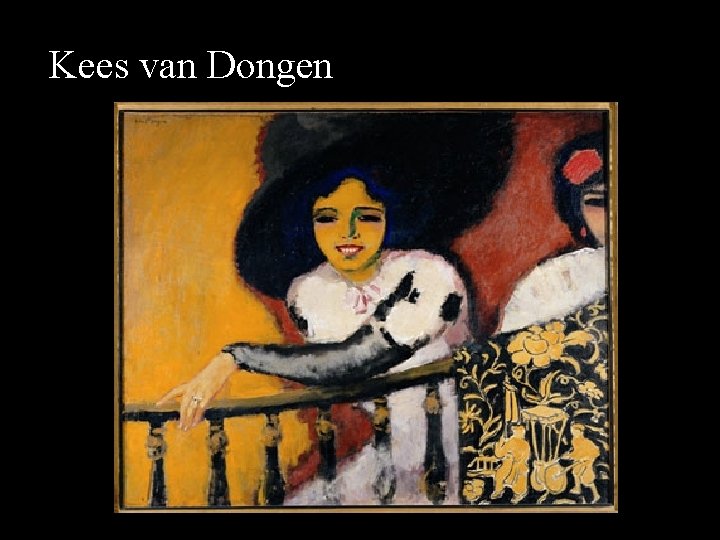
Kees van Dongen
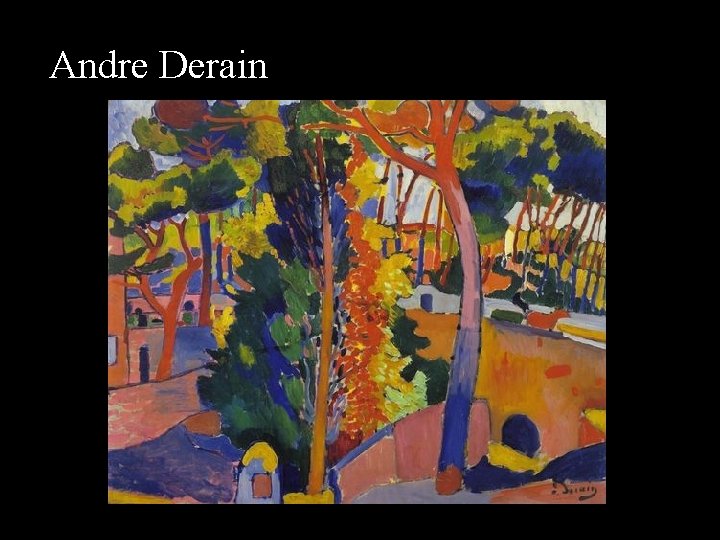
Andre Derain
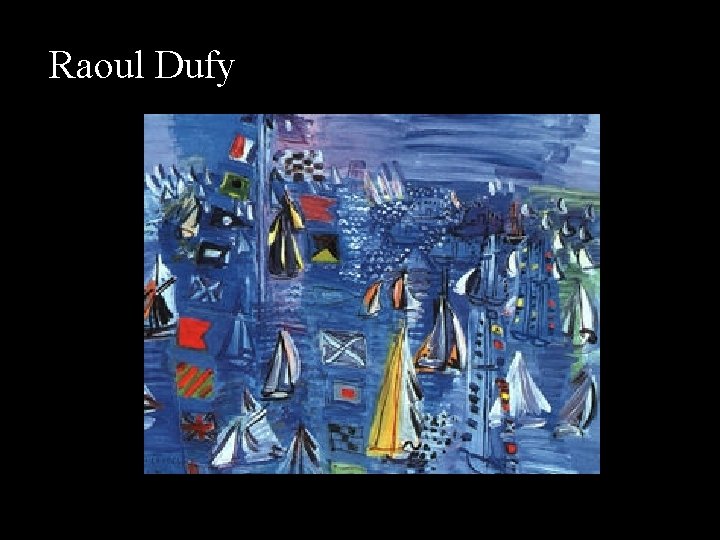
Raoul Dufy
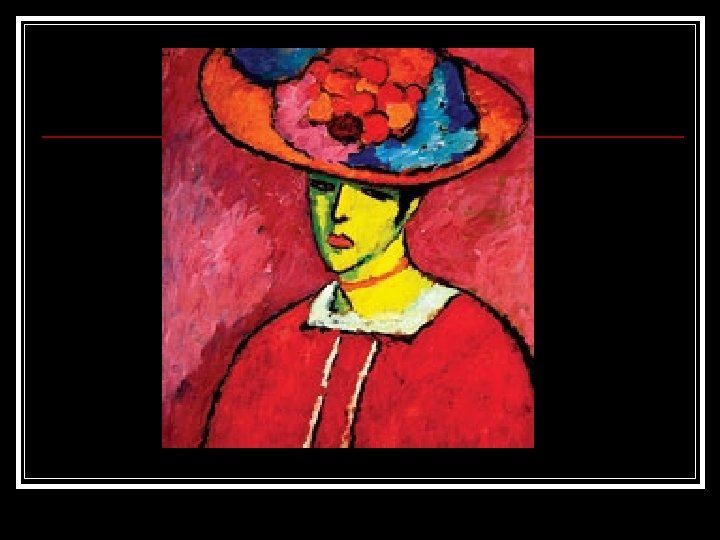
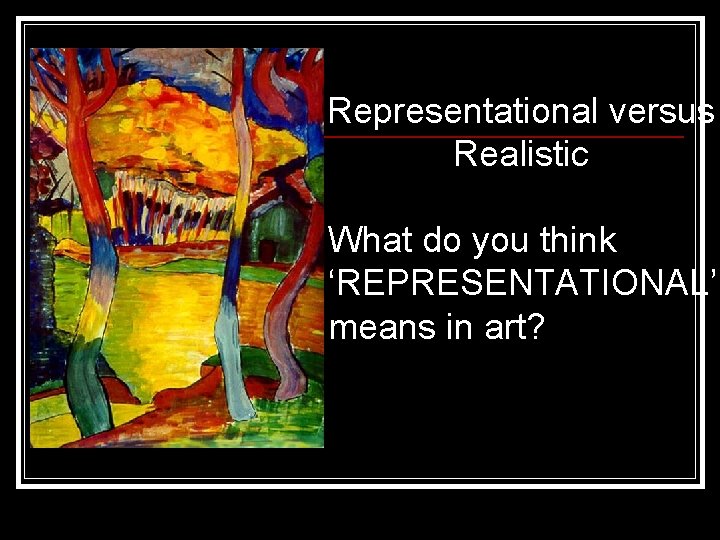
Representational versus Realistic What do you think ‘REPRESENTATIONAL’ means in art?
Characteristics of Fauvist Artwork 1. Painters used VIVID COLORS in their paintings 2. Colors were used to express FEELINGS & EMOTIONS 3. When painting, the artists did not blend or mix the paints 4. Their subject matter was REPRESENTATIONAL but did not necessarily look completely REALISTIC. 5. Fauvist Artists painted using SIMPLE & sometimes ‘Blocky’ Shapes 6. Their BRUSH STROKES were LOOSE & REPETITIVE and often created patterns within the artwork
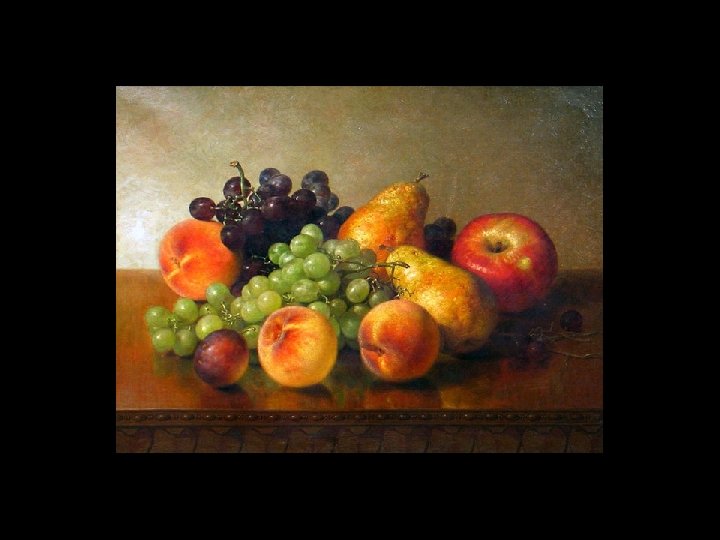
The Still Life in Art n A picture of inanimate objects. Common still life subjects include vessels, food, flowers, books, clothing. n A still life painting which reminds us of life's fleeting qualities is called a vanitas. n This genre flourished particularly among Dutch painters of the seventeenth century. n The plural form is "still lifes. " Still life definition from ARTLEX. COM
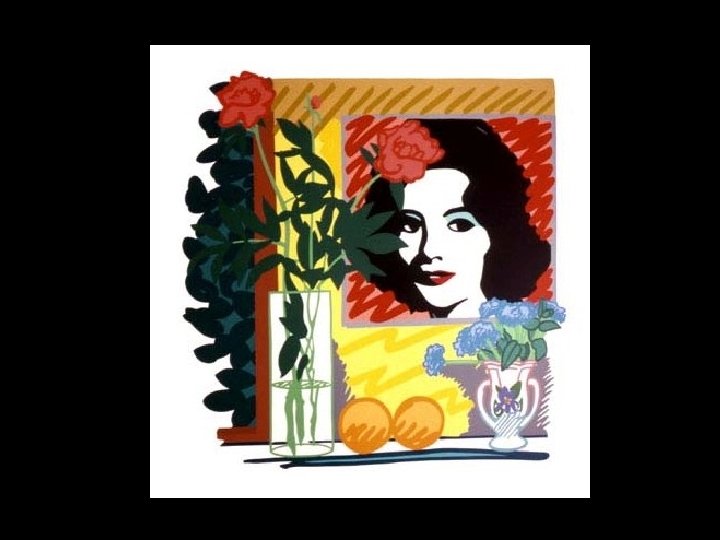
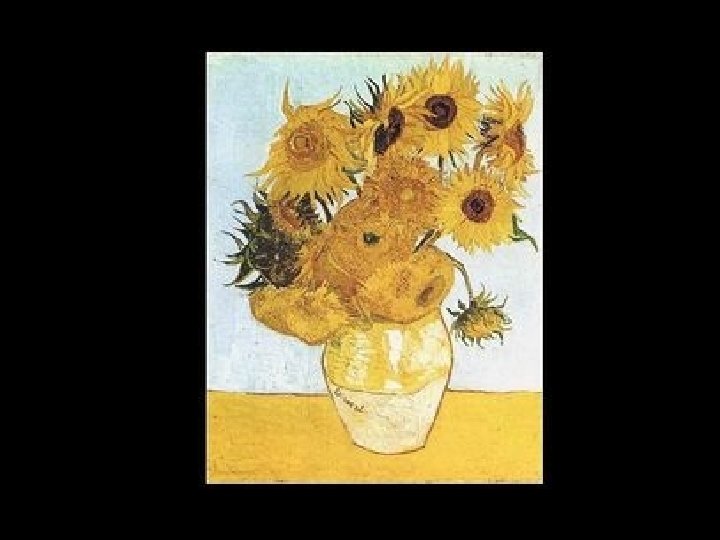
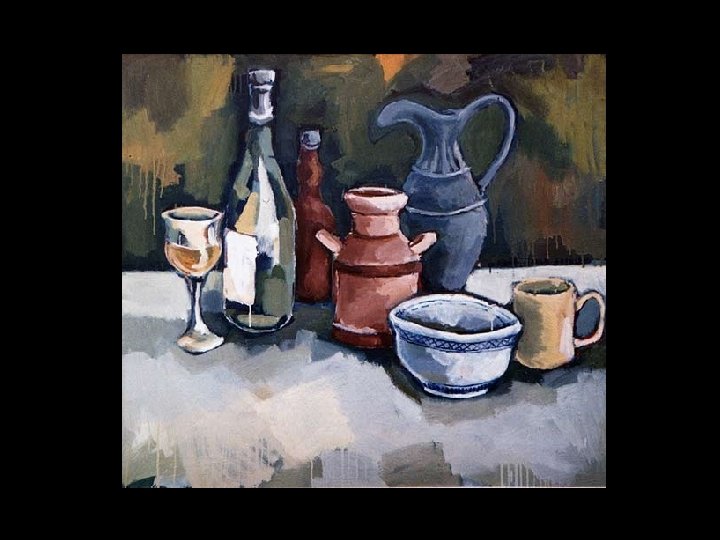

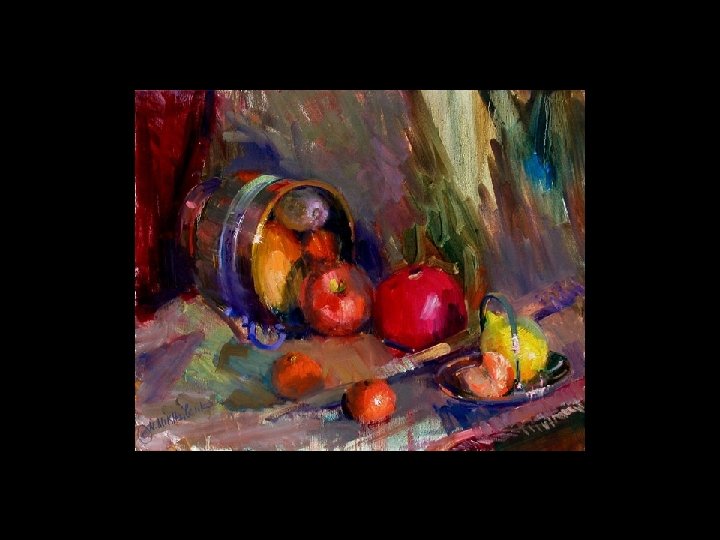
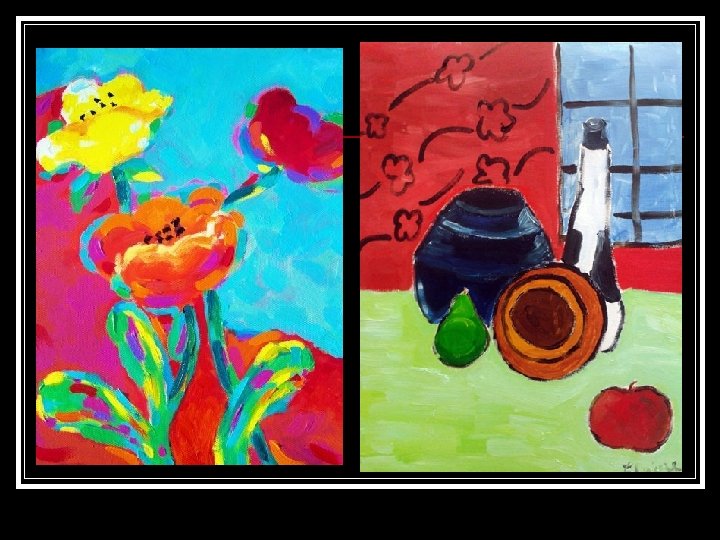
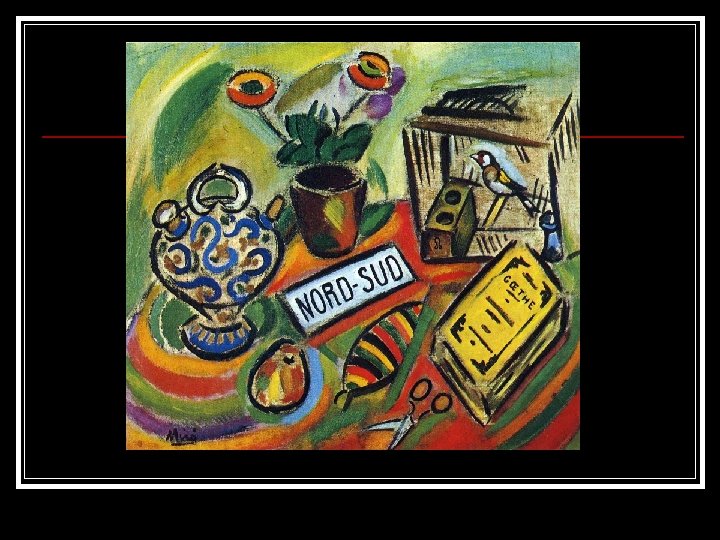
Fauvist Style Still Lifes
- Slides: 27