
FaultTolerant and Secure Distributed Data Storage Using Random
Fault-Tolerant and Secure Distributed Data Storage Using Random Linear Network Coding Pouya Ostovari and Jie Wu Computer & Information Sciences Temple University Center for Networked Computing http: //www. cnc. temple. edu
Agenda �Introduction ◦ Distributed data storages ◦ Network coding �Setting ◦ Problem formulation �Fault-tolerant and secure data storage �Evaluations �Conclusions 2
Introduction �Popularity of cloud storages ◦ More convenient that local copies �Access from different devices ◦ Fault-tolerant �Storing data on multiple storages �Different geographic location (data centers) ◦ More secure �Encryption �Advanced security mechanisms ◦ Different versions of files 3
Fault tolerance �Fault tolerance ◦ Storing redundant data on multiple storages ◦ More redundancy higher level of protection against storage failure ◦ More redundancy requires increases the cost �Previous work ◦ Finding amount of redundancy to achieve a given level of fault tolerance ◦ Different coding methods �Fault tolerance using network coding 4

Network Coding in Wired Networks 5 �Single multicast session ◦ Bottleneck problem (Ahlswede, 2000) No coding Coding
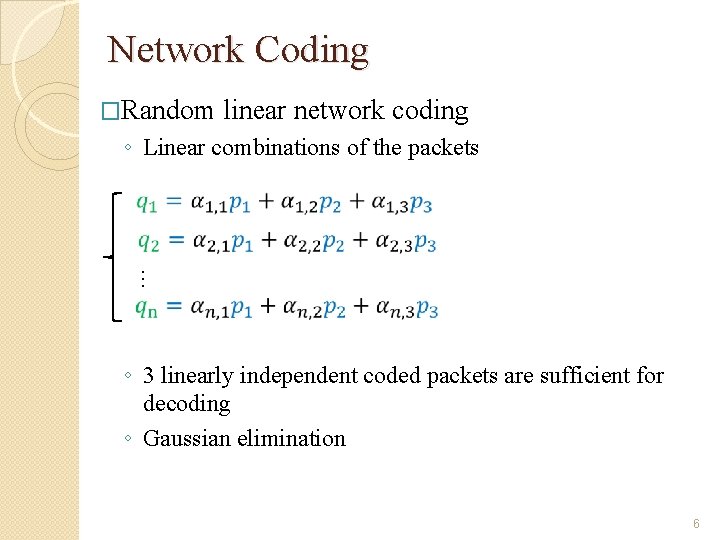
Network Coding �Random linear network coding ◦ Linear combinations of the packets … ◦ 3 linearly independent coded packets are sufficient for decoding ◦ Gaussian elimination 6
Network Coding �Applications of network coding ◦ Reliable transmissions �Wireless/wired networks ◦ Throughput/capacity enhancement �Distributed storage systems �Content distribution �Layered multicast ◦ Providing security 7
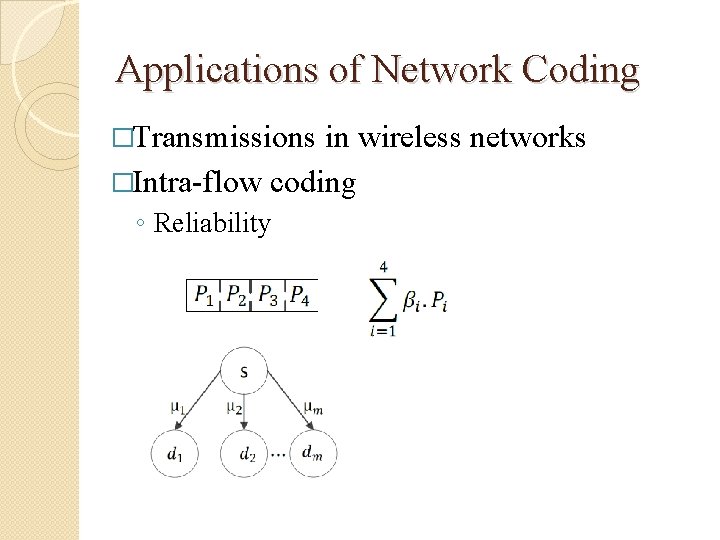
Applications of Network Coding �Transmissions in wireless networks �Intra-flow coding ◦ Reliability
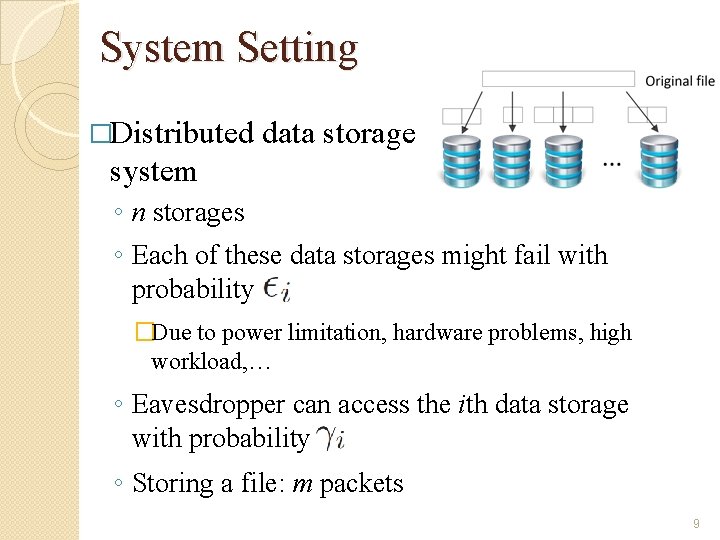
System Setting �Distributed data storage system ◦ n storages ◦ Each of these data storages might fail with probability �Due to power limitation, hardware problems, high workload, … ◦ Eavesdropper can access the ith data storage with probability ◦ Storing a file: m packets 9
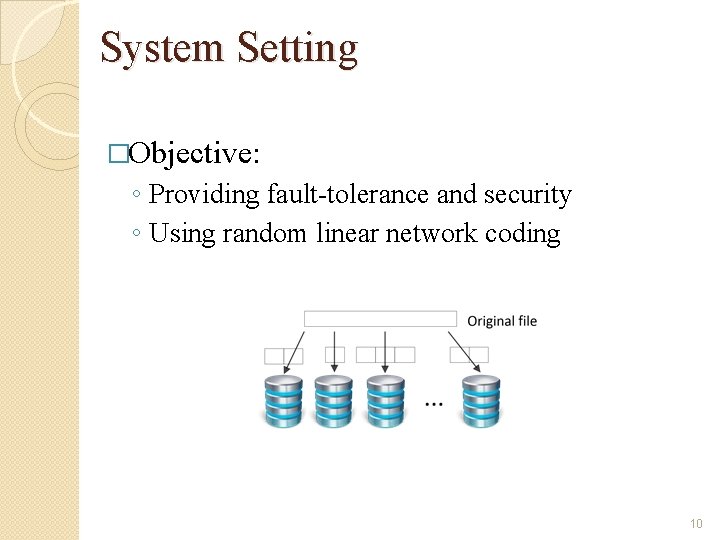
System Setting �Objective: ◦ Providing fault-tolerance and security ◦ Using random linear network coding 10
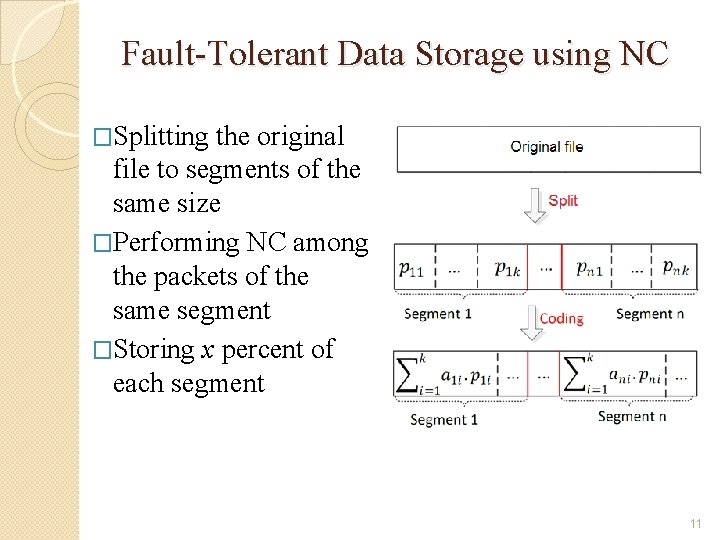
Fault-Tolerant Data Storage using NC �Splitting the original file to segments of the same size �Performing NC among the packets of the same segment �Storing x percent of each segment 11
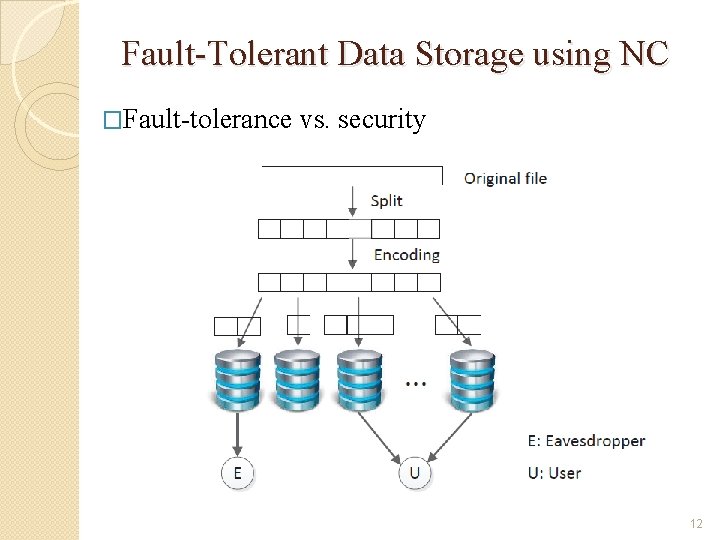
Fault-Tolerant Data Storage using NC �Fault-tolerance vs. security 12
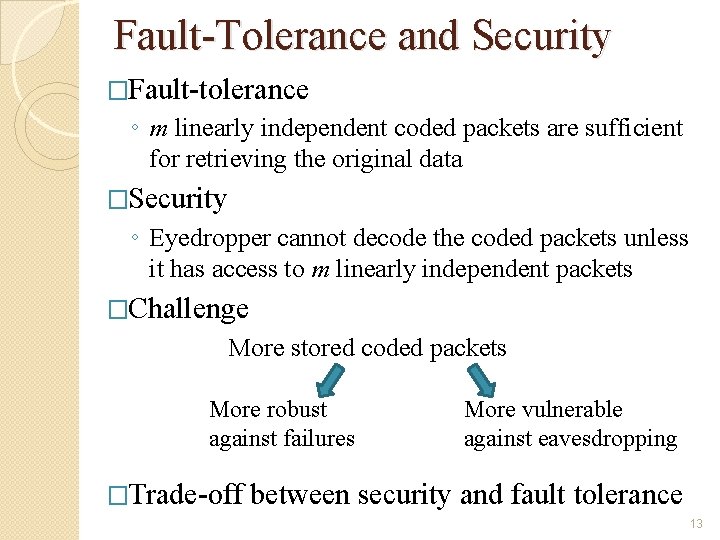
Fault-Tolerance and Security �Fault-tolerance ◦ m linearly independent coded packets are sufficient for retrieving the original data �Security ◦ Eyedropper cannot decode the coded packets unless it has access to m linearly independent packets �Challenge More stored coded packets More robust against failures �Trade-off More vulnerable against eavesdropping between security and fault tolerance 13
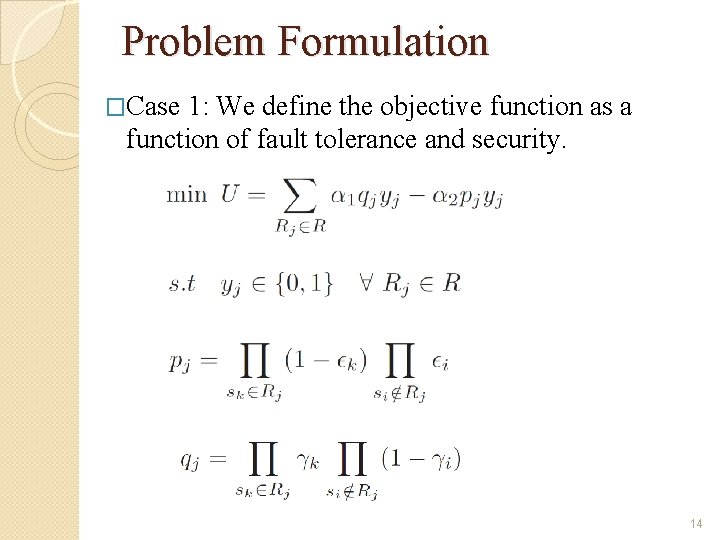
Problem Formulation �Case 1: We define the objective function as a function of fault tolerance and security. 14
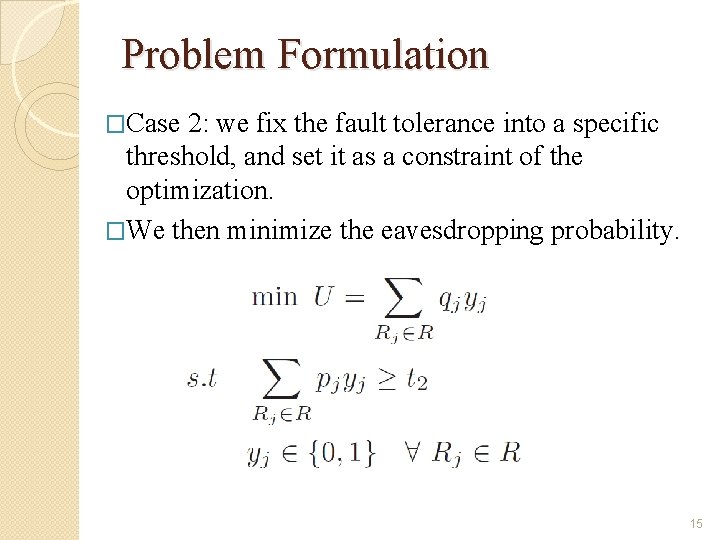
Problem Formulation �Case 2: we fix the fault tolerance into a specific threshold, and set it as a constraint of the optimization. �We then minimize the eavesdropping probability. 15
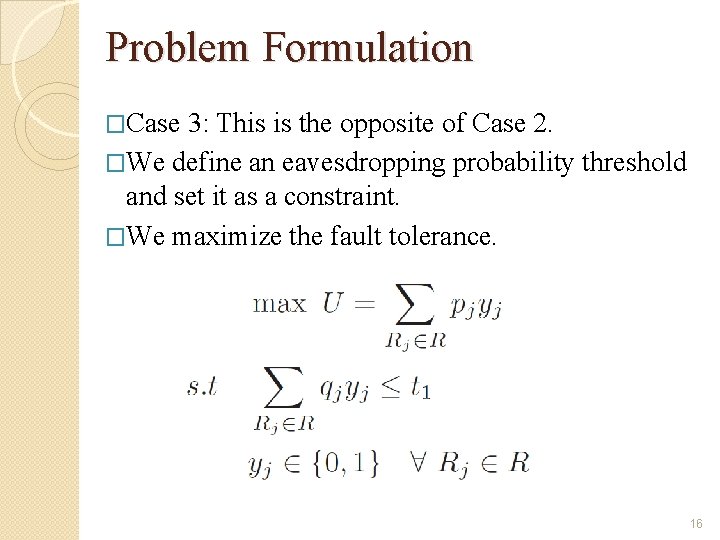
Problem Formulation �Case 3: This is the opposite of Case 2. �We define an eavesdropping probability threshold and set it as a constraint. �We maximize the fault tolerance. 16
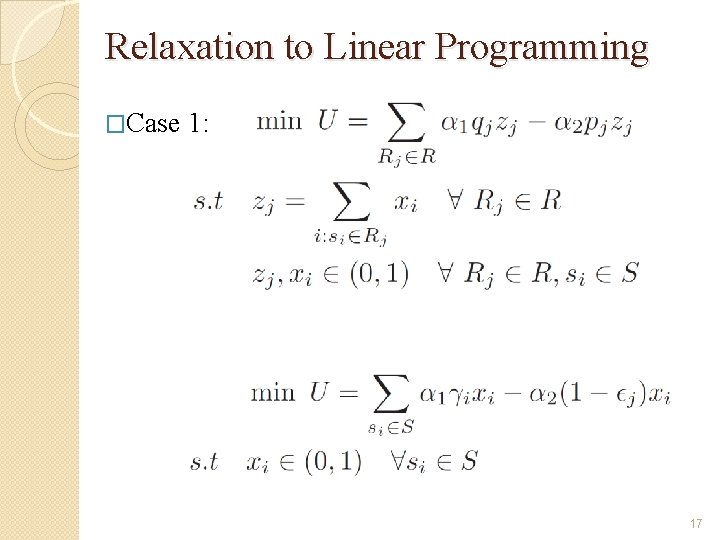
Relaxation to Linear Programming �Case 1: 17
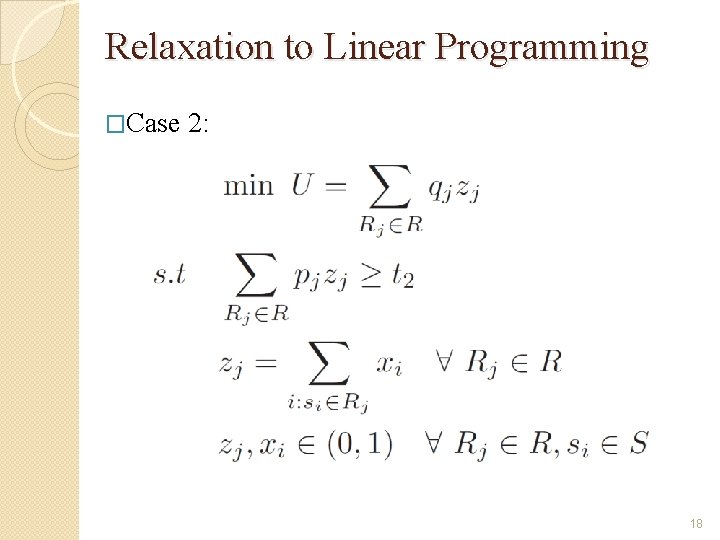
Relaxation to Linear Programming �Case 2: 18
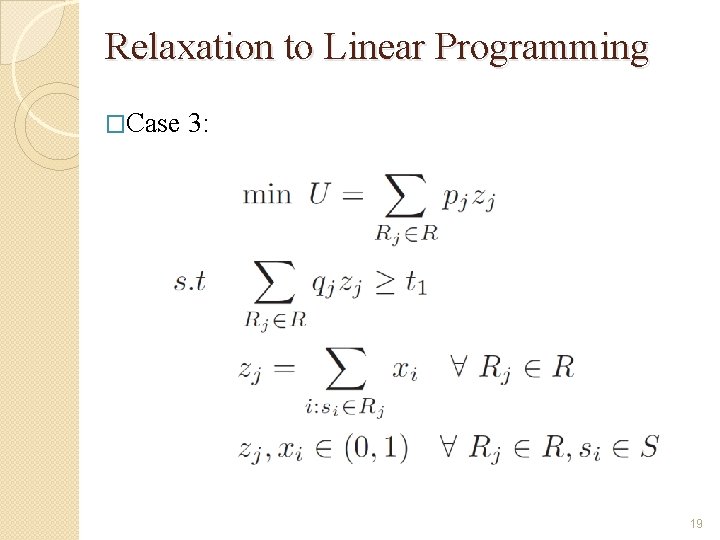
Relaxation to Linear Programming �Case 3: 19
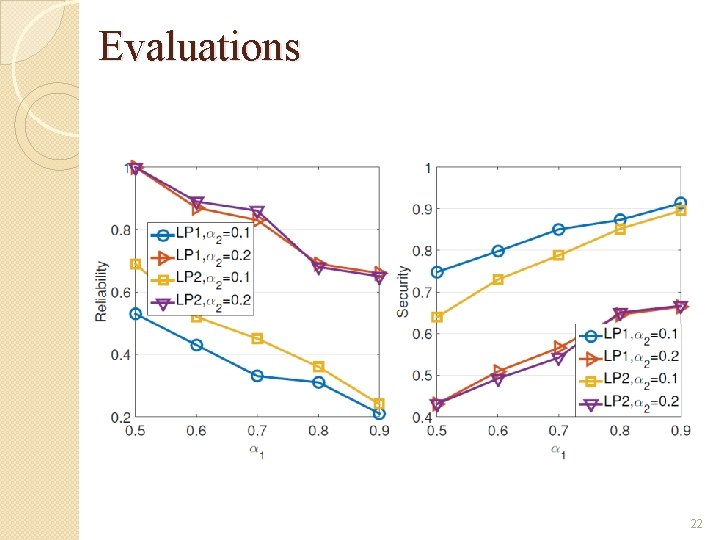
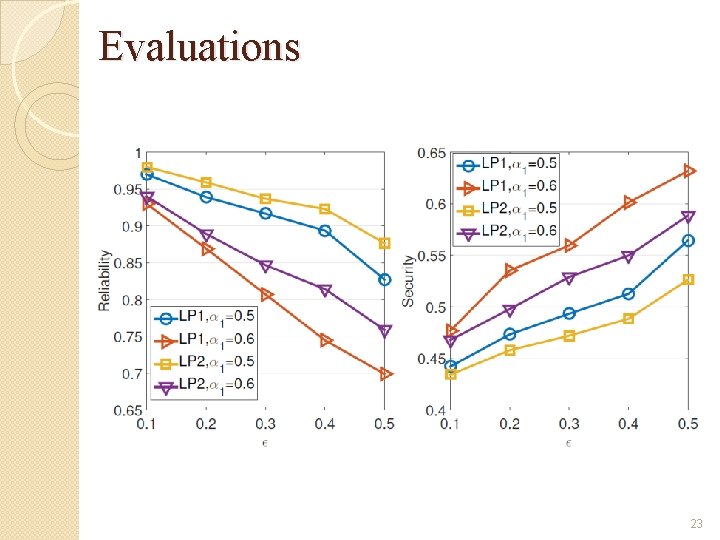
Evaluations �Simulator in Matlab environment �We use Linprog tool of Matlab to find the solution of the optimizations � 100 simulation runs 20
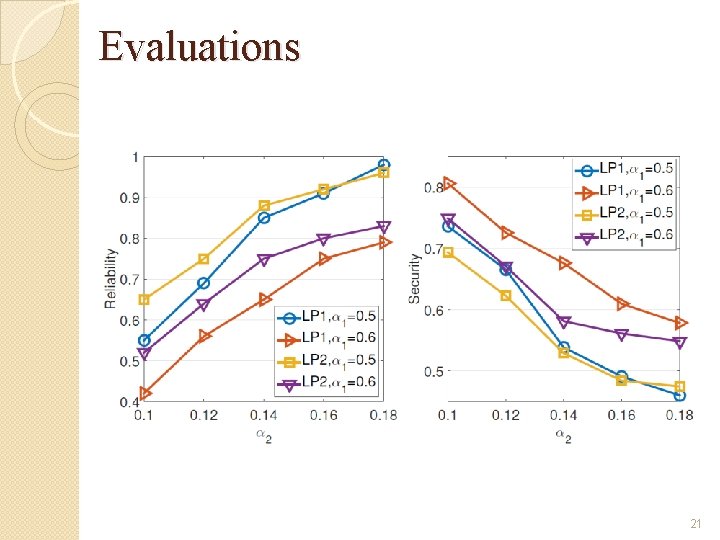
Evaluations 21
Evaluations 22
Evaluations 23
Conclusion �Fault-tolerance using network coding ◦ Storing redundant data on multiple storages �Security using network coding ◦ Preventing eavesdropper to receive sufficient coded packets �Trade-off between fault-tolerance and security 24

Thank you 25
- Slides: 25