
Faults III Lecture 29 Gly 326 Compression and
- Slides: 31
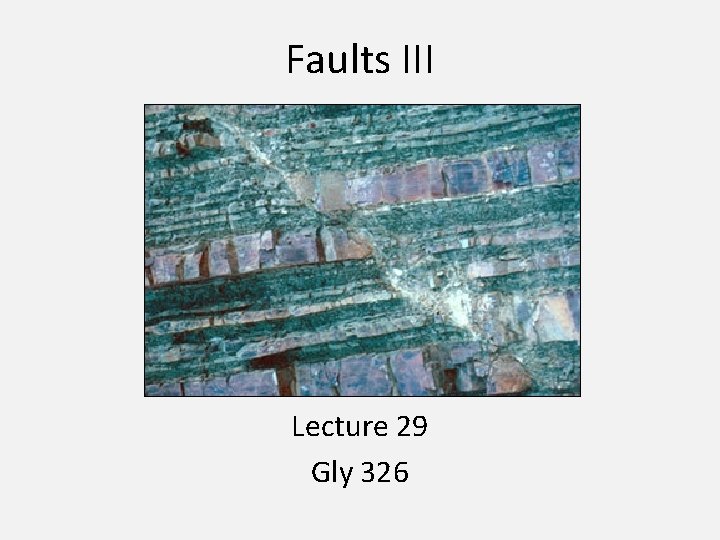
Faults III Lecture 29 Gly 326
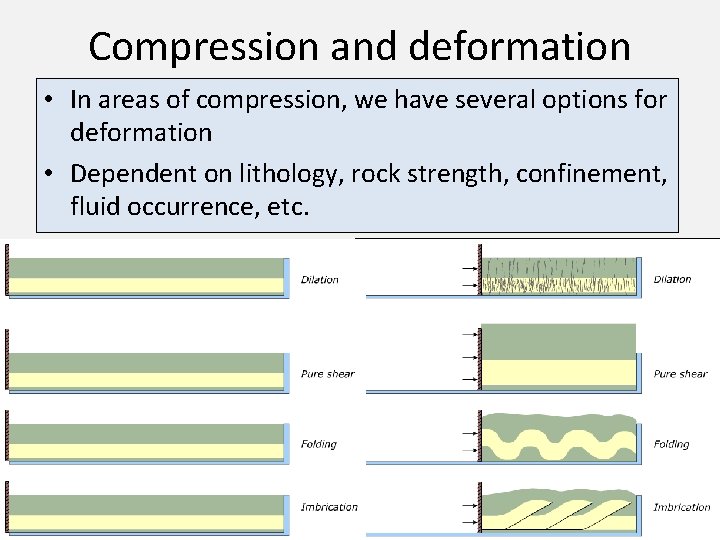
Compression and deformation • In areas of compression, we have several options for deformation • Dependent on lithology, rock strength, confinement, fluid occurrence, etc.
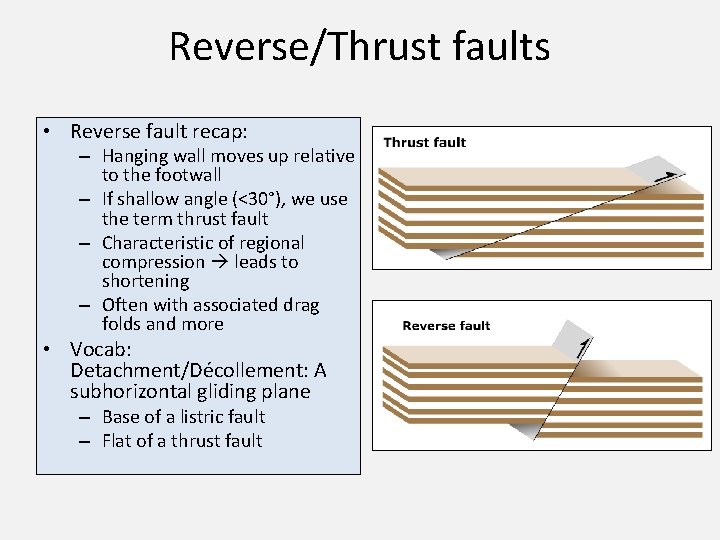
Reverse/Thrust faults • Reverse fault recap: – Hanging wall moves up relative to the footwall – If shallow angle (<30°), we use the term thrust fault – Characteristic of regional compression leads to shortening – Often with associated drag folds and more • Vocab: Detachment/Décollement: A subhorizontal gliding plane – Base of a listric fault – Flat of a thrust fault
Thrust faults: Horses and Wedges A thrust fault is a reverse fault in which the dip of the fault plane is very low… (<30 o)
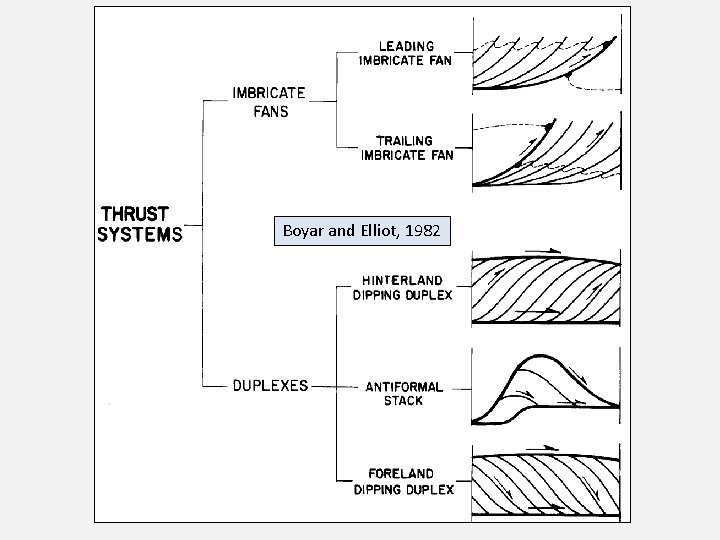
Boyar and Elliot, 1982
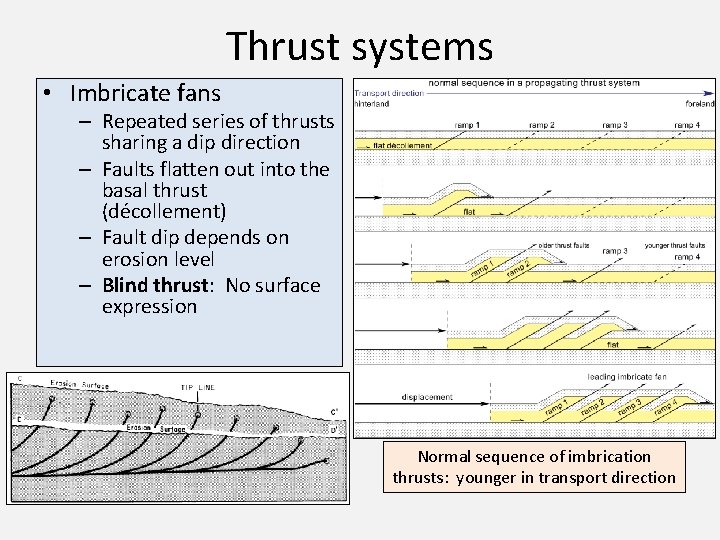
Thrust systems • Imbricate fans – Repeated series of thrusts sharing a dip direction – Faults flatten out into the basal thrust (décollement) – Fault dip depends on erosion level – Blind thrust: No surface expression Normal sequence of imbrication thrusts: younger in transport direction
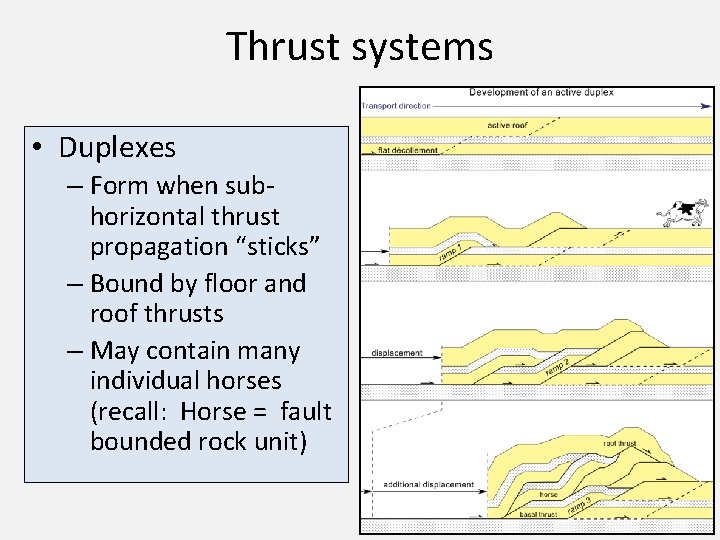
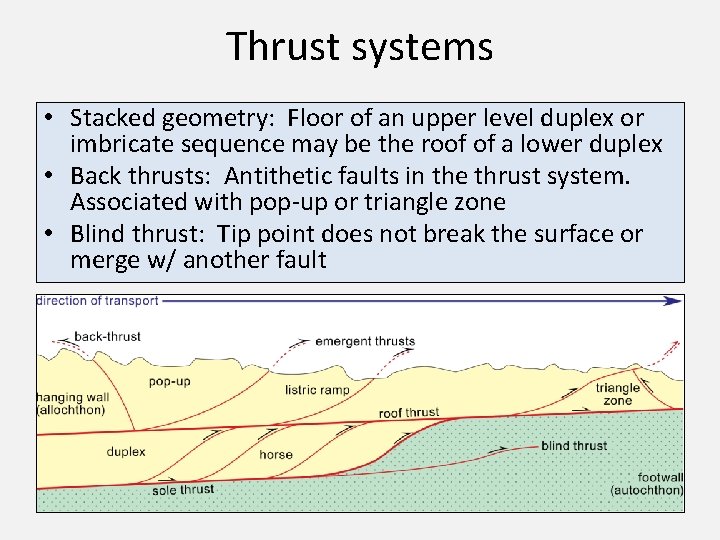
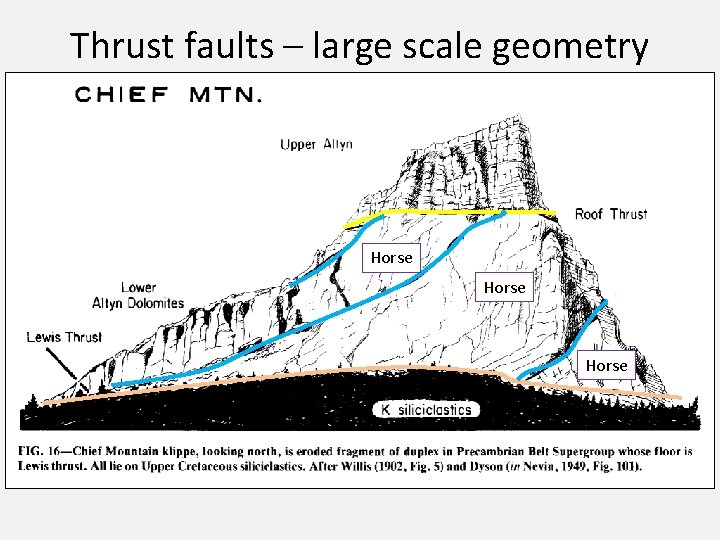
Thrust systems • Duplexes – Form when subhorizontal thrust propagation “sticks” – Bound by floor and roof thrusts – May contain many individual horses (recall: Horse = fault bounded rock unit)
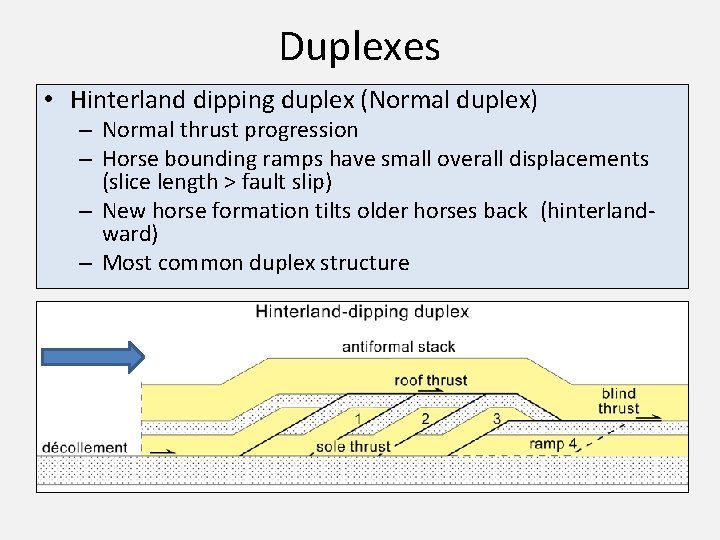
Duplexes • Hinterland dipping duplex (Normal duplex) – Normal thrust progression – Horse bounding ramps have small overall displacements (slice length > fault slip) – New horse formation tilts older horses back (hinterlandward) – Most common duplex structure
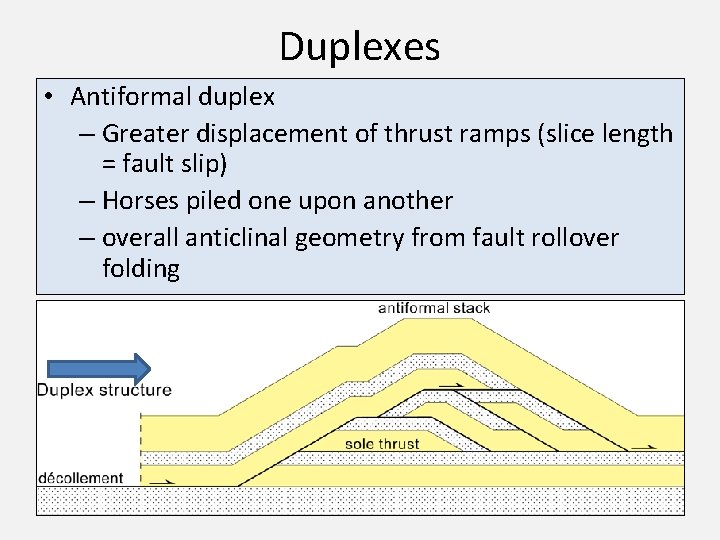
Duplexes • Antiformal duplex – Greater displacement of thrust ramps (slice length = fault slip) – Horses piled one upon another – overall anticlinal geometry from fault rollover folding
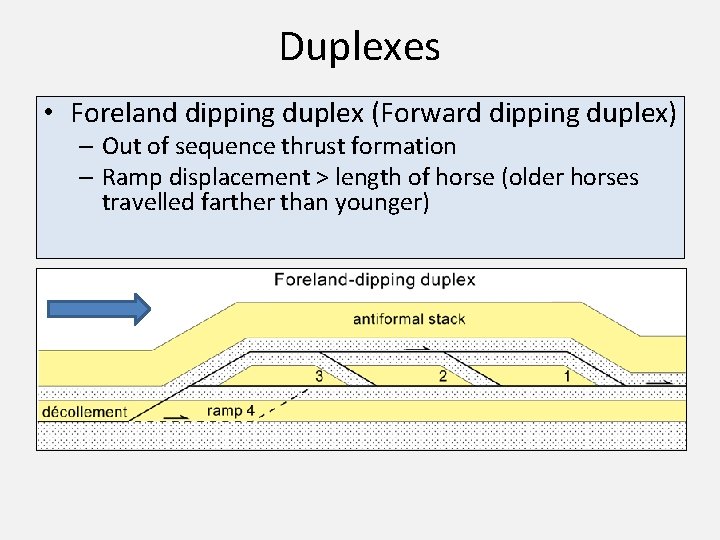
Duplexes • Foreland dipping duplex (Forward dipping duplex) – Out of sequence thrust formation – Ramp displacement > length of horse (older horses travelled farther than younger)
Thrust systems • Stacked geometry: Floor of an upper level duplex or imbricate sequence may be the roof of a lower duplex • Back thrusts: Antithetic faults in the thrust system. Associated with pop-up or triangle zone • Blind thrust: Tip point does not break the surface or merge w/ another fault
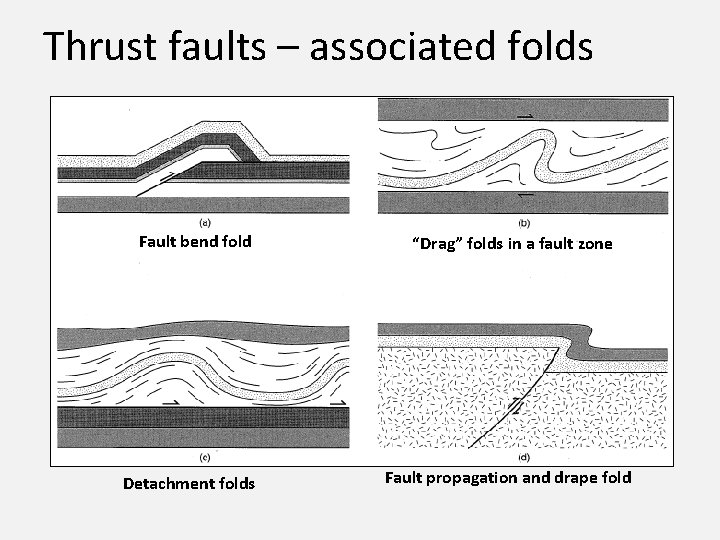
Thrust faults – associated folds Fault bend fold Detachment folds “Drag” folds in a fault zone Fault propagation and drape fold
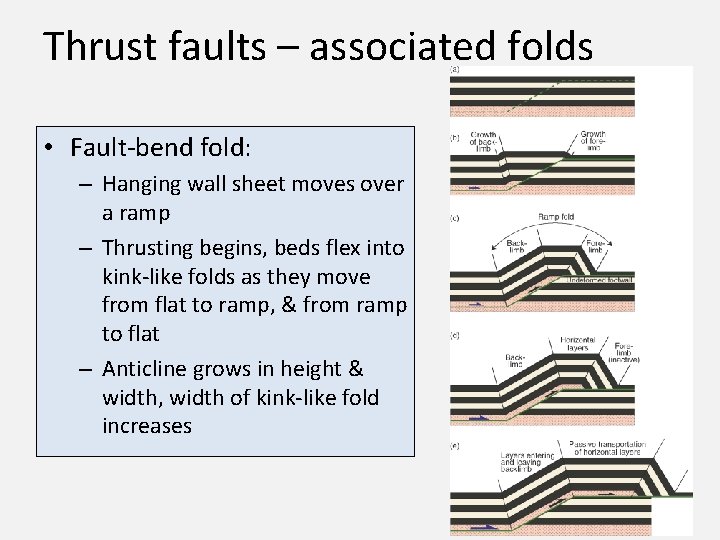
Thrust faults – associated folds • Fault-bend fold: – Hanging wall sheet moves over a ramp – Thrusting begins, beds flex into kink-like folds as they move from flat to ramp, & from ramp to flat – Anticline grows in height & width, width of kink-like fold increases
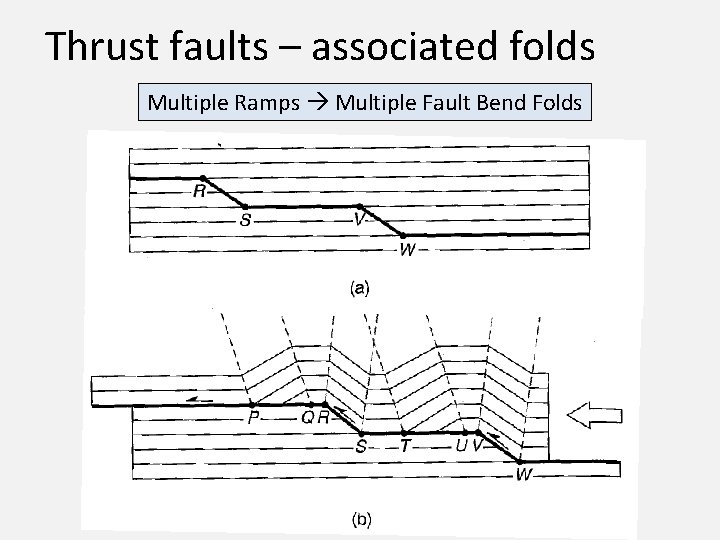
Thrust faults – associated folds Multiple Ramps Multiple Fault Bend Folds
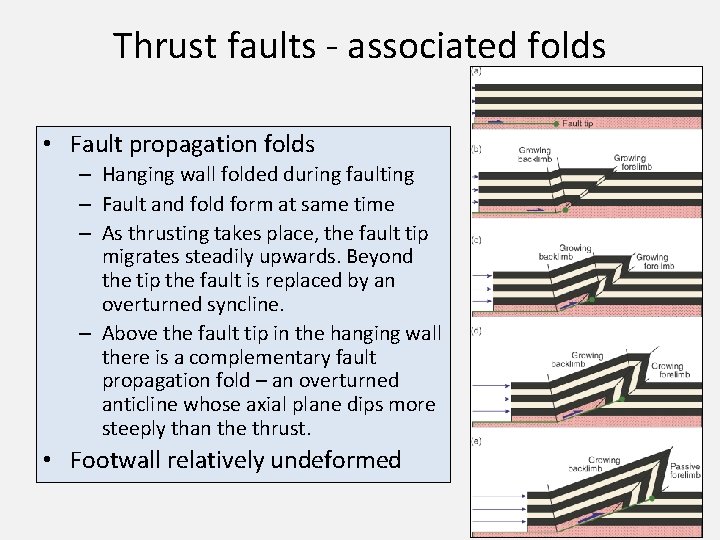
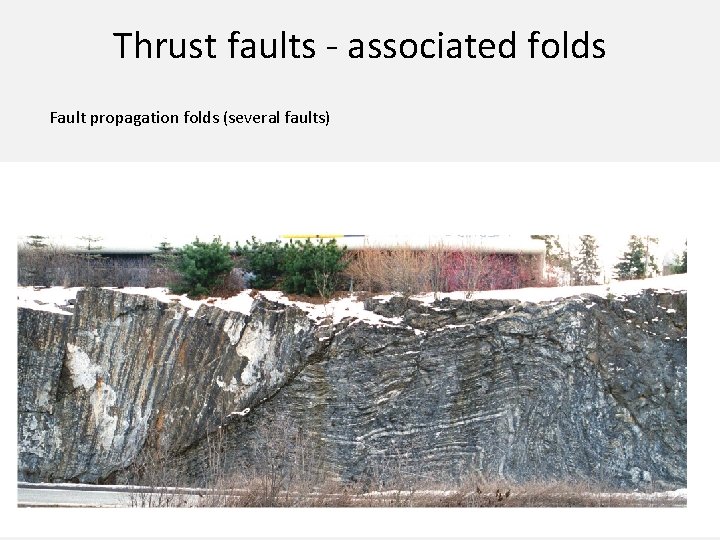
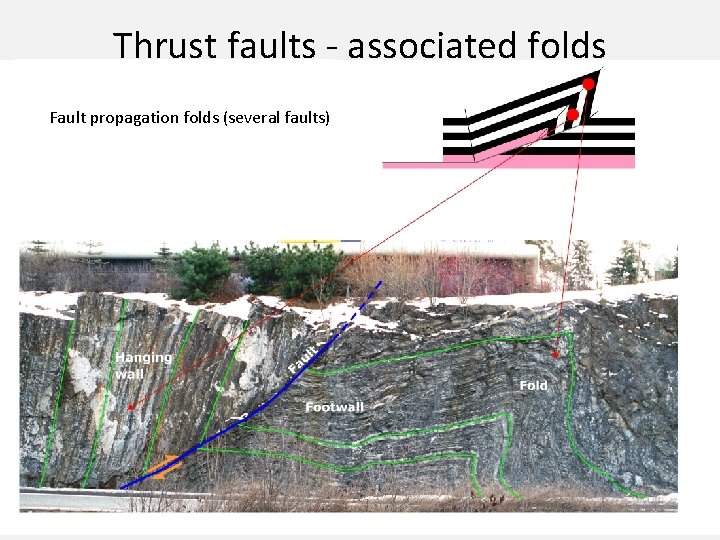
Thrust faults - associated folds • Fault propagation folds – Hanging wall folded during faulting – Fault and fold form at same time – As thrusting takes place, the fault tip migrates steadily upwards. Beyond the tip the fault is replaced by an overturned syncline. – Above the fault tip in the hanging wall there is a complementary fault propagation fold – an overturned anticline whose axial plane dips more steeply than the thrust. • Footwall relatively undeformed
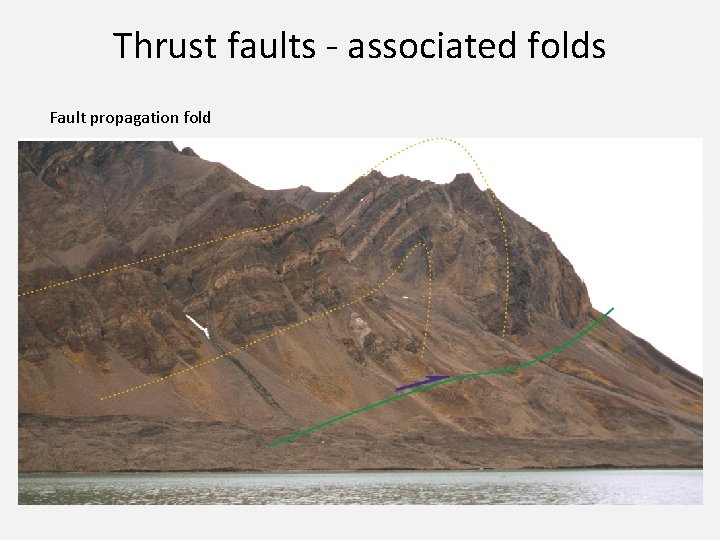
Thrust faults - associated folds Fault propagation fold
Thrust faults - associated folds Fault propagation folds (several faults)
Thrust faults - associated folds Fault propagation folds (several faults)
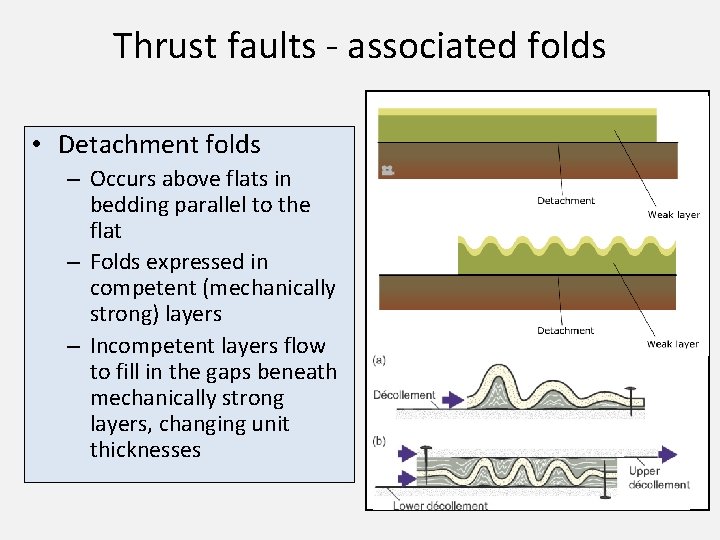
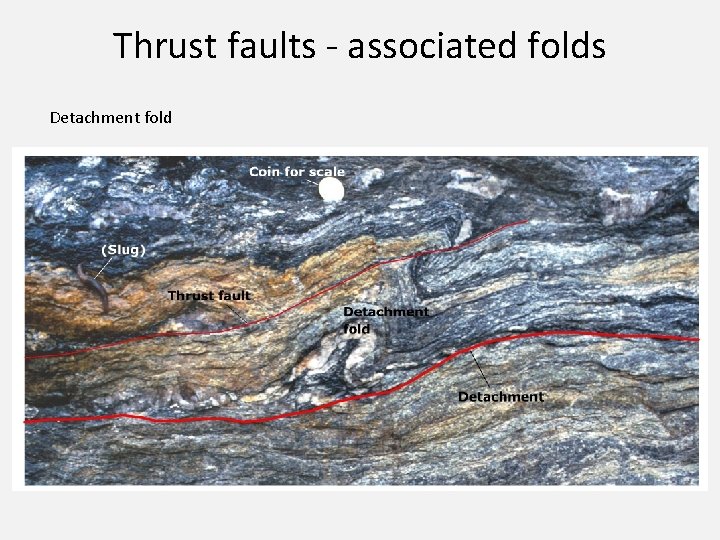
Thrust faults - associated folds • Detachment folds – Occurs above flats in bedding parallel to the flat – Folds expressed in competent (mechanically strong) layers – Incompetent layers flow to fill in the gaps beneath mechanically strong layers, changing unit thicknesses
Thrust faults - associated folds Detachment fold
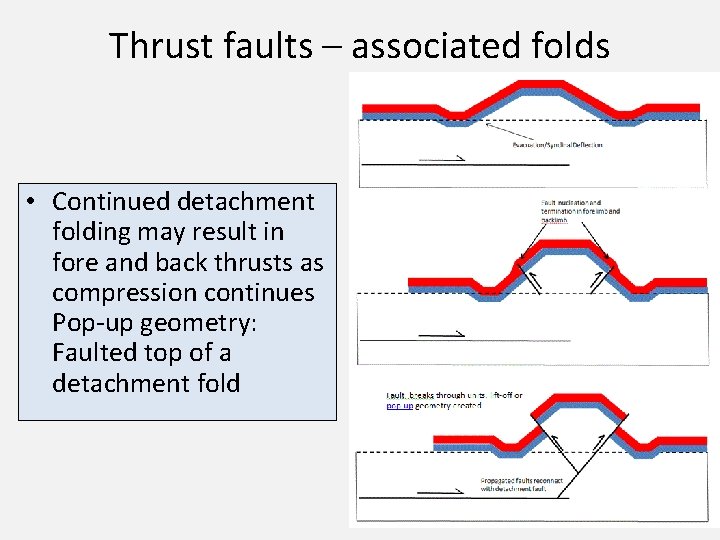
Thrust faults – associated folds • Continued detachment folding may result in fore and back thrusts as compression continues Pop-up geometry: Faulted top of a detachment fold
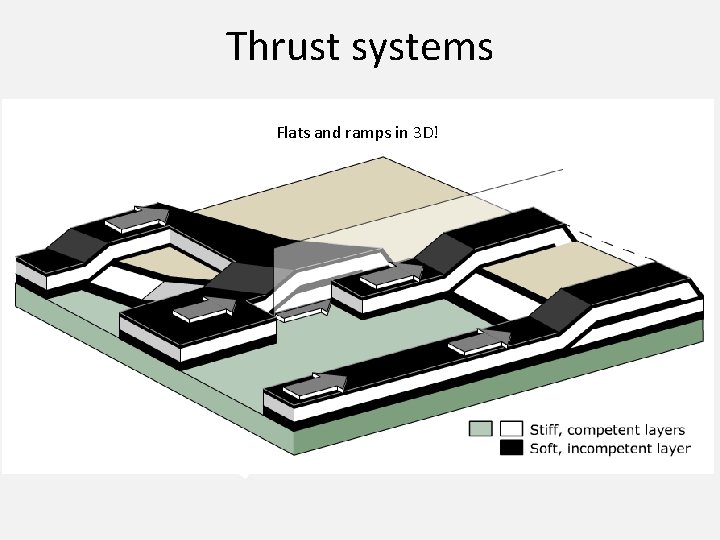
Thrust systems Flats and ramps in 3 D!
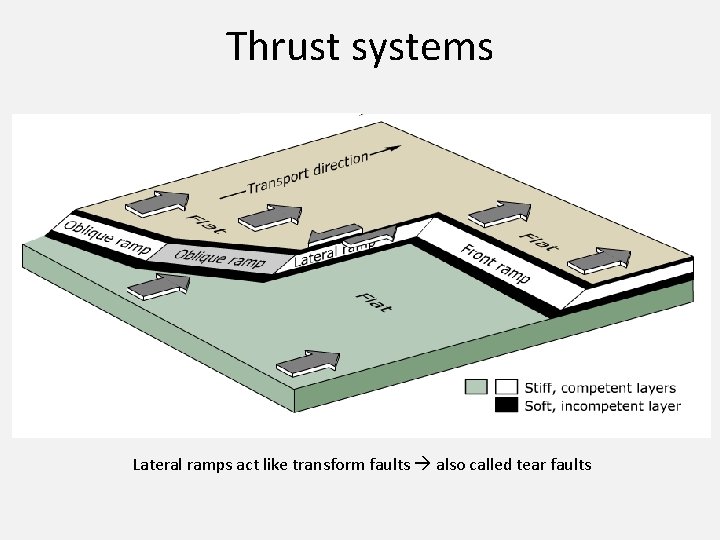
Thrust systems Lateral ramps act like transform faults also called tear faults
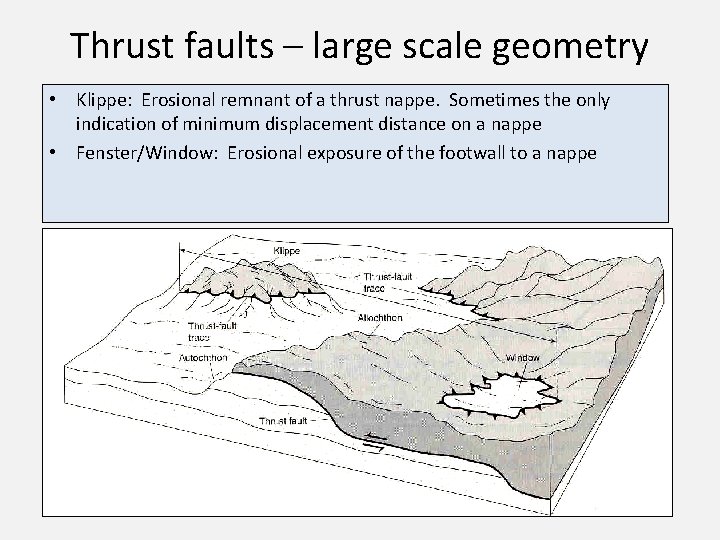
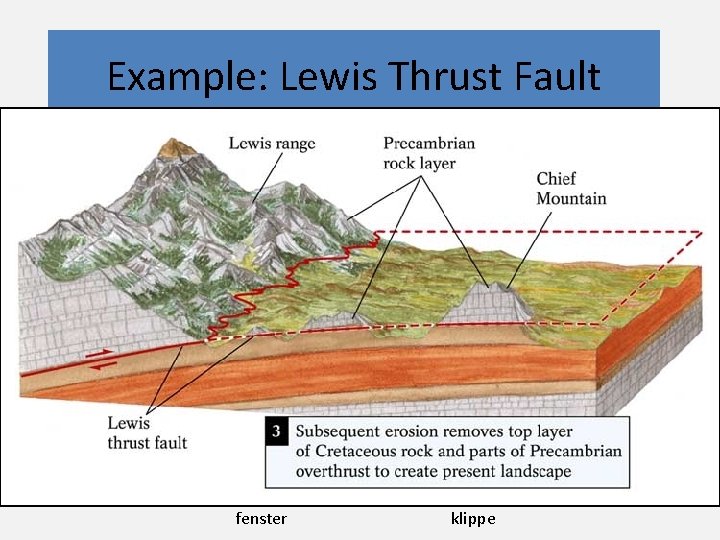
Thrust faults – large scale geometry • Klippe: Erosional remnant of a thrust nappe. Sometimes the only indication of minimum displacement distance on a nappe • Fenster/Window: Erosional exposure of the footwall to a nappe
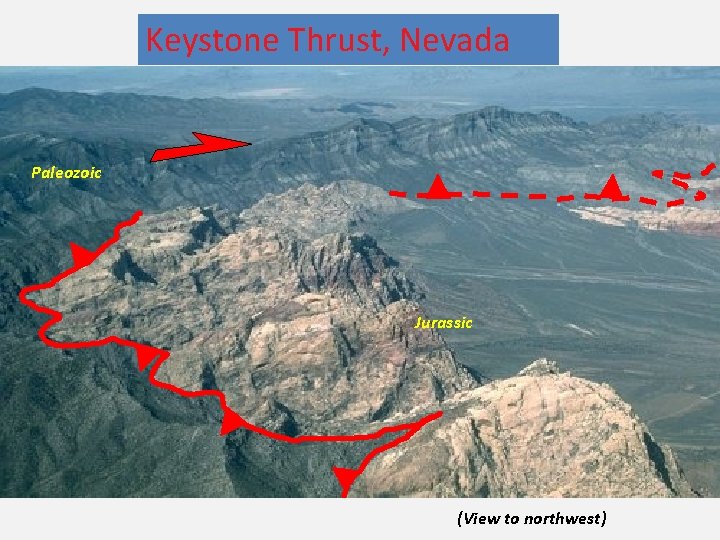
Keystone Thrust, Nevada Paleozoic Jurassic (View to northwest)
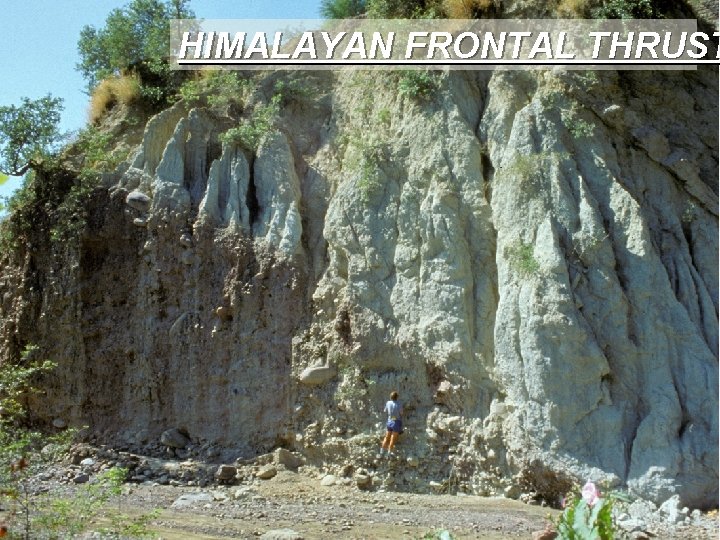
HIMALAYAN FRONTAL THRUST
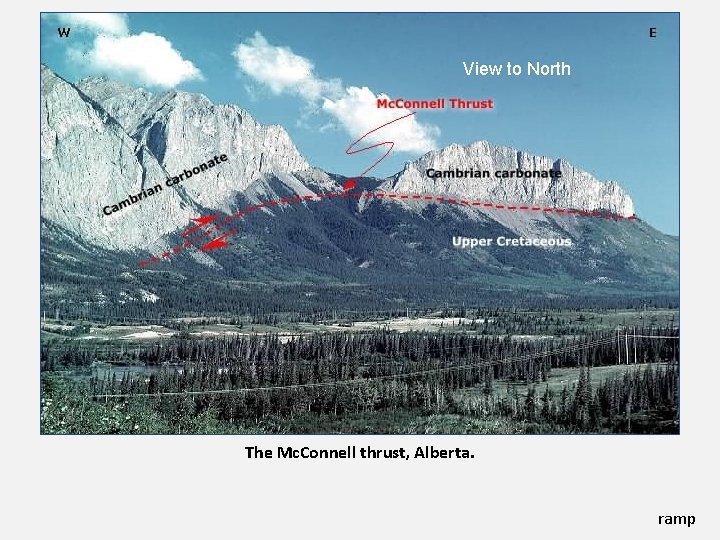
View to North The Mc. Connell thrust, Alberta. ramp
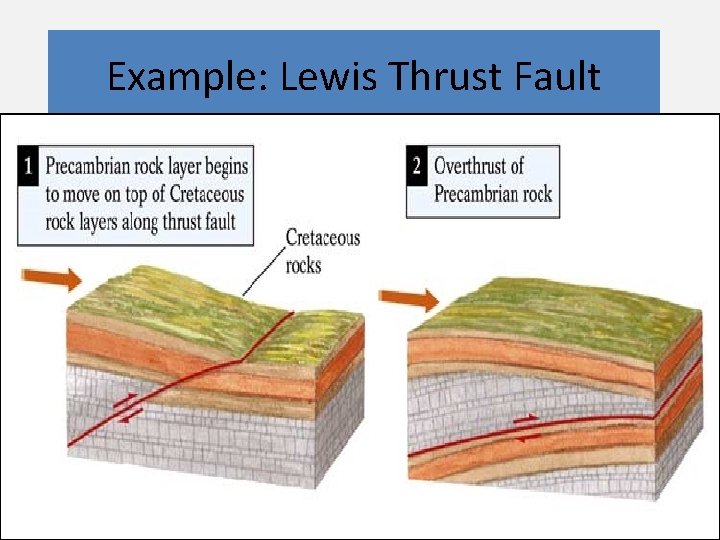
Example: Lewis Thrust Fault
Example: Lewis Thrust Fault fenster klippe
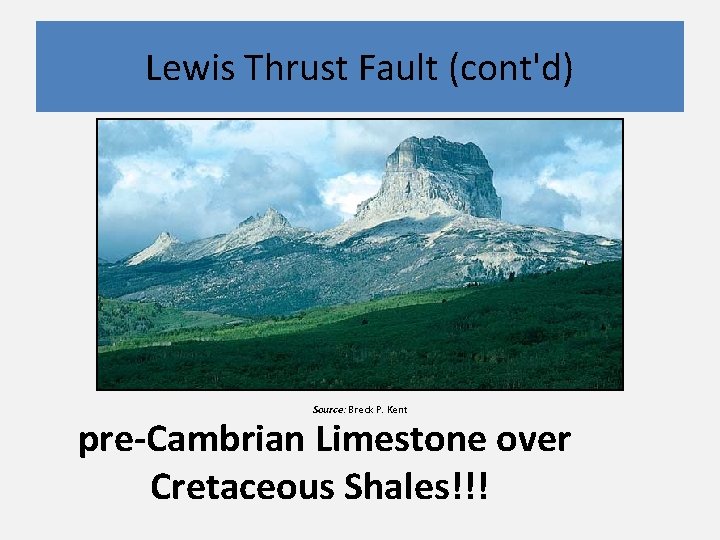
Lewis Thrust Fault (cont'd) Source: Breck P. Kent pre-Cambrian Limestone over Cretaceous Shales!!!
Thrust faults – large scale geometry Horse