
Fault Tolerance CSCI 47806780 RPC Semantics in Presence

- Slides: 13
Fault Tolerance CSCI 4780/6780
RPC Semantics in Presence of Failures • • • 5 types of exceptions Client cannot locate server Request to server is lost Server crashes after receiving request Reply message from server is lost Client crashes after sending in request
Not Locating Server • Causes: – Server might be down – Version mismatch between client and server stubs • Possible solutions – Raising exception • Relying on programming language for a systems problem • Not all languages have exceptions • Transparency is compromised
Lost Request Messages • Easiest to handle • Use timers • Retransmission on timeout • Duplicate detection at server end
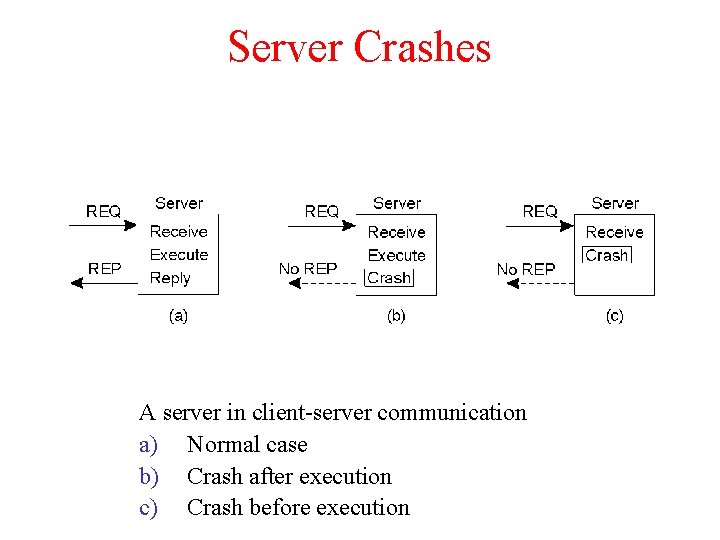
Server Crashes • Server can crash either before executing or after executing (before sending reply) • Crash after execution needs to be reported to client • Crash before execution can be handled by retransmission • Client’s OS cannot distinguish between the two
Server Crashes A server in client-server communication a) Normal case b) Crash after execution c) Crash before execution
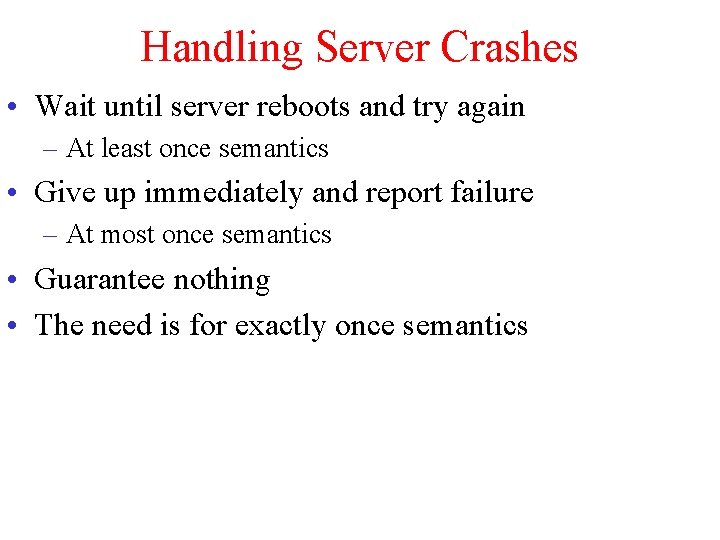
Handling Server Crashes • Wait until server reboots and try again – At least once semantics • Give up immediately and report failure – At most once semantics • Guarantee nothing • The need is for exactly once semantics
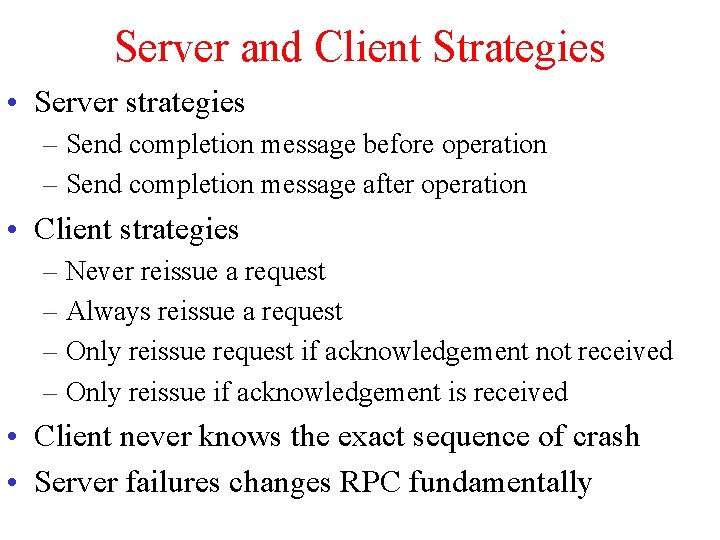
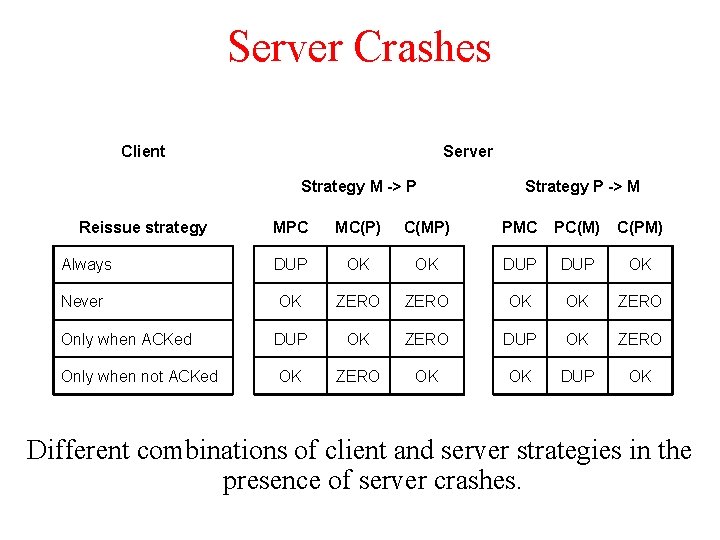
Server and Client Strategies • Server strategies – Send completion message before operation – Send completion message after operation • Client strategies – Never reissue a request – Always reissue a request – Only reissue request if acknowledgement not received – Only reissue if acknowledgement is received • Client never knows the exact sequence of crash • Server failures changes RPC fundamentally
Server Crash Scenarios • • • M -> P -> C M -> C-> (P) C -> (M -> P) P -> M -> C P -> C -> (M) C -> (P -> M)
Server Crashes Client Server Strategy M -> P Reissue strategy Strategy P -> M MPC MC(P) C(MP) PMC PC(M) C(PM) Always DUP OK OK DUP OK Never OK ZERO OK OK ZERO DUP OK ZERO OK OK DUP OK Only when ACKed Only when not ACKed Different combinations of client and server strategies in the presence of server crashes.
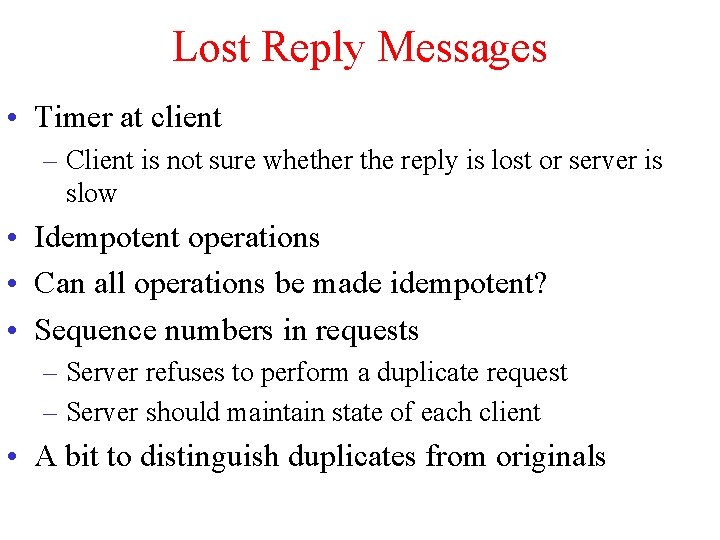
Lost Reply Messages • Timer at client – Client is not sure whether the reply is lost or server is slow • Idempotent operations • Can all operations be made idempotent? • Sequence numbers in requests – Server refuses to perform a duplicate request – Server should maintain state of each client • A bit to distinguish duplicates from originals
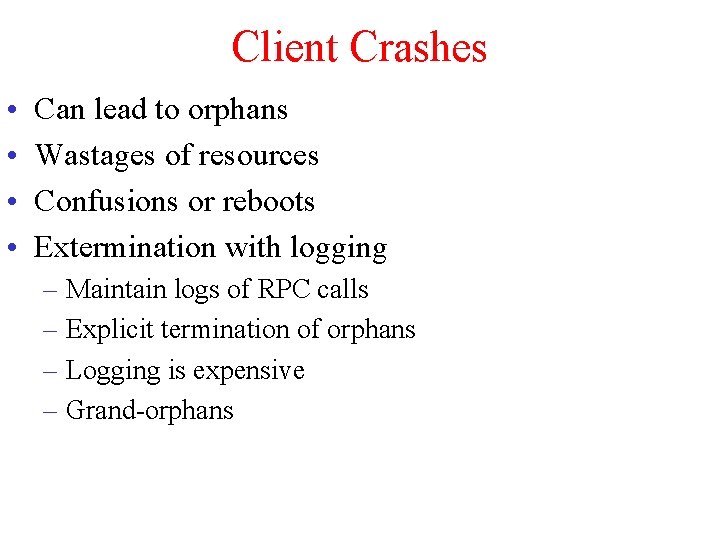
Client Crashes • • Can lead to orphans Wastages of resources Confusions or reboots Extermination with logging – Maintain logs of RPC calls – Explicit termination of orphans – Logging is expensive – Grand-orphans
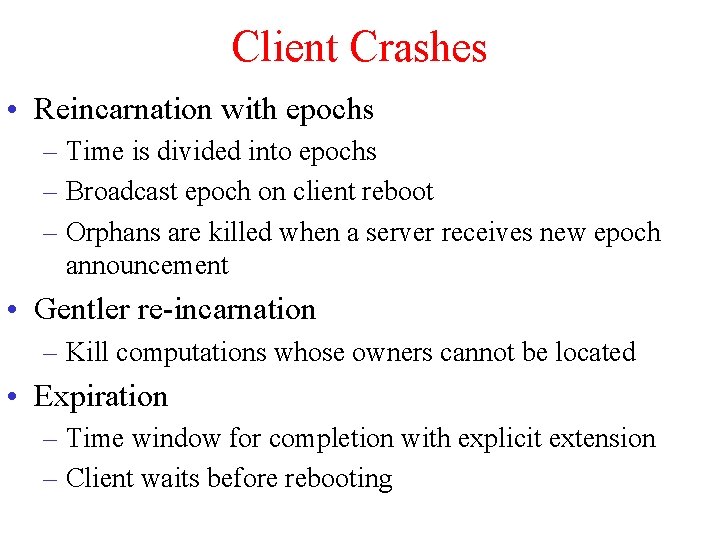
Client Crashes • Reincarnation with epochs – Time is divided into epochs – Broadcast epoch on client reboot – Orphans are killed when a server receives new epoch announcement • Gentler re-incarnation – Kill computations whose owners cannot be located • Expiration – Time window for completion with explicit extension – Client waits before rebooting