
Fatty acid synthesis 1 FATTY ACIDS Oleic acid
- Slides: 29
Fatty acid synthesis 1
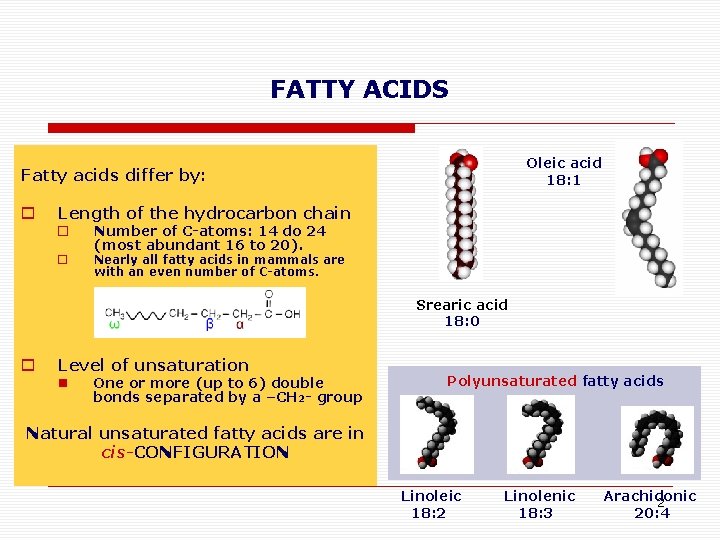
FATTY ACIDS Oleic acid 18: 1 Fatty acids differ by: o Length of the hydrocarbon chain o o Number of C-atoms: 14 do 24 (most abundant 16 to 20). Nearly all fatty acids in mammals are with an even number of C-atoms. Srearic acid 18: 0 o Level of unsaturation n One or more (up to 6) double bonds separated by a –CH 2 - group Polyunsaturated fatty acids Natural unsaturated fatty acids are in cis-CONFIGURATION Linoleic 18: 2 Linolenic 18: 3 Arachidonic 2 20: 4
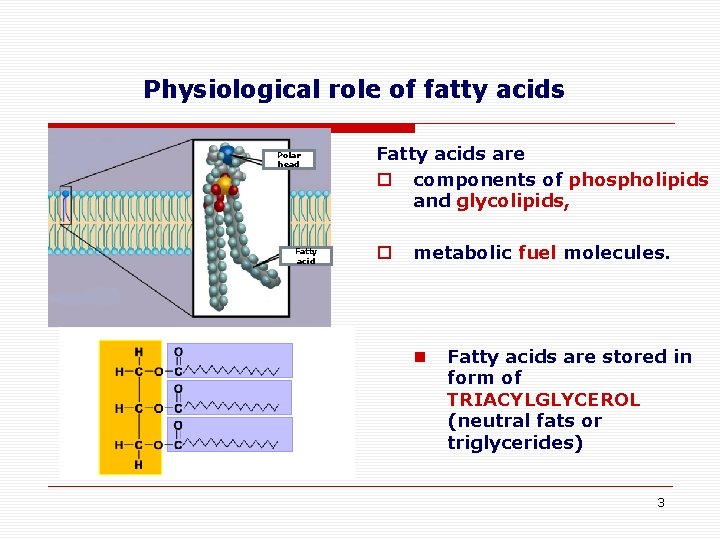
Physiological role of fatty acids Polar head Fatty acids are o components of phospholipids and glycolipids, o metabolic fuel molecules. n Fatty acids are stored in form of TRIACYLGLYCEROL (neutral fats or triglycerides) 3
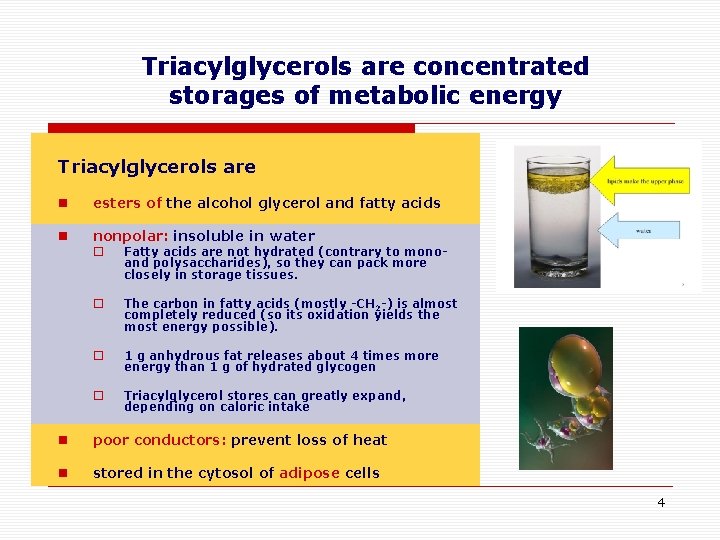
Triacylglycerols are concentrated storages of metabolic energy Triacylglycerols are n esters of the alcohol glycerol and fatty acids n nonpolar: insoluble in water o Fatty acids are not hydrated (contrary to monoand polysaccharides), so they can pack more closely in storage tissues. o The carbon in fatty acids (mostly -CH 2 -) is almost completely reduced (so its oxidation yields the most energy possible). o 1 g anhydrous fat releases about 4 times more energy than 1 g of hydrated glycogen o Triacylglycerol stores can greatly expand, depending on caloric intake n poor conductors: prevent loss of heat n stored in the cytosol of adipose cells 4
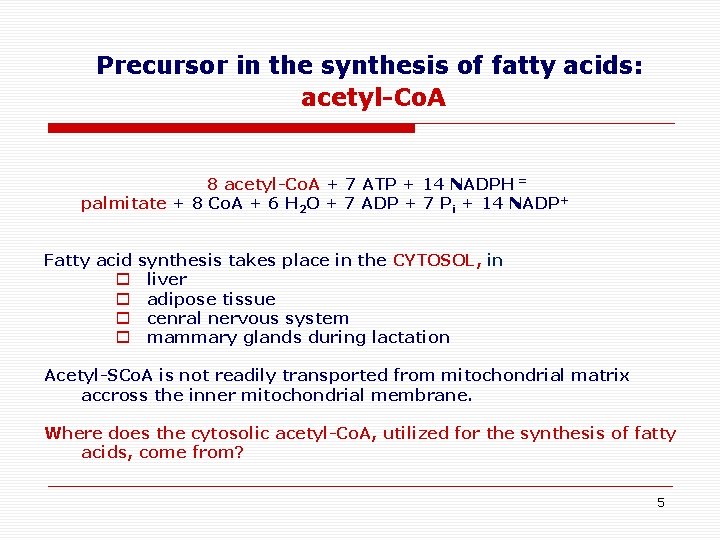
Precursor in the synthesis of fatty acids: acetyl-Co. A 8 acetyl-Co. A + 7 ATP + 14 NADPH = palmitate + 8 Co. A + 6 H 2 O + 7 ADP + 7 Pi + 14 NADP+ Fatty acid o o synthesis takes place in the CYTOSOL, in liver adipose tissue cenral nervous system mammary glands during lactation Acetyl-SCo. A is not readily transported from mitochondrial matrix accross the inner mitochondrial membrane. Where does the cytosolic acetyl-Co. A, utilized for the synthesis of fatty acids, come from? 5
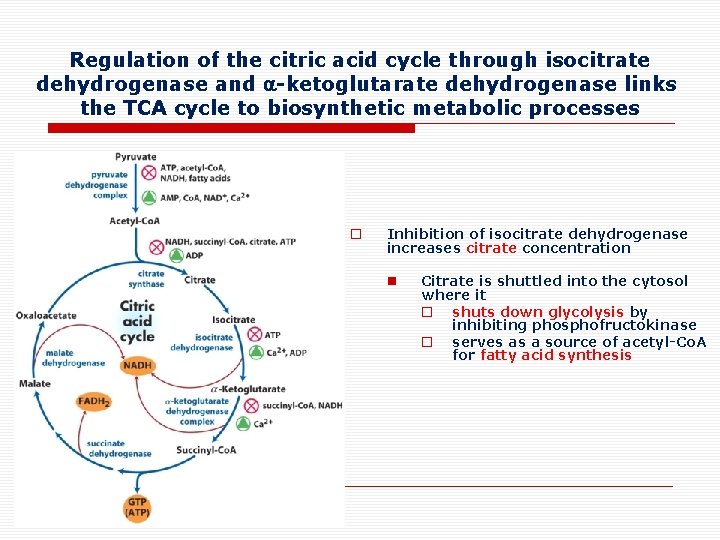
Regulation of the citric acid cycle through isocitrate dehydrogenase and -ketoglutarate dehydrogenase links the TCA cycle to biosynthetic metabolic processes o Inhibition of isocitrate dehydrogenase increases citrate concentration n Citrate is shuttled into the cytosol where it o shuts down glycolysis by inhibiting phosphofructokinase o serves as a source of acetyl-Co. A for fatty acid synthesis
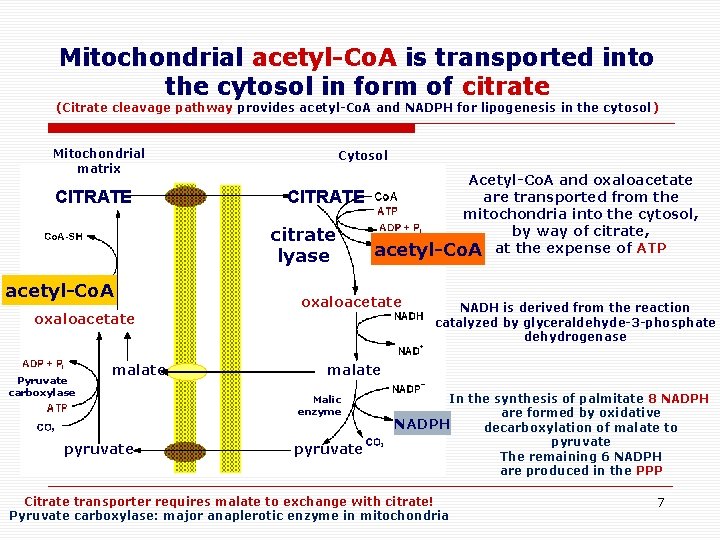
Mitochondrial acetyl-Co. A is transported into the cytosol in form of citrate (Citrate cleavage pathway provides acetyl-Co. A and NADPH for lipogenesis in the cytosol) Mitochondrial matrix CITRATE Cytosol CITRATE citrate lyase acetyl-Co. A oxaloacetate Pyruvate carboxylase malate pyruvate Acetyl-Co. A and oxaloacetate are transported from the mitochondria into the cytosol, by way of citrate, acetyl-Co. A at the expense of ATP oxaloacetate NADH is derived from the reaction catalyzed by glyceraldehyde-3 -phosphate dehydrogenase malate Malic enzyme pyruvate In the synthesis of palmitate 8 NADPH are formed by oxidative NADPH decarboxylation of malate to pyruvate The remaining 6 NADPH are produced in the PPP Citrate transporter requires malate to exchange with citrate! Pyruvate carboxylase: major anaplerotic enzyme in mitochondria 7
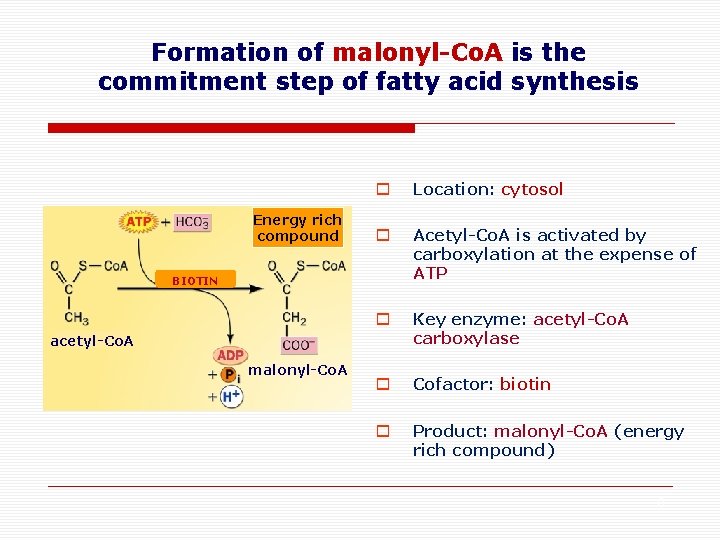
Formation of malonyl-Co. A is the commitment step of fatty acid synthesis Energy rich compound o Location: cytosol o Acetyl-Co. A is activated by carboxylation at the expense of ATP o Key enzyme: acetyl-Co. A carboxylase o Cofactor: biotin o Product: malonyl-Co. A (energy rich compound) BIOTIN acetyl-Co. A malonyl-Co. A 8
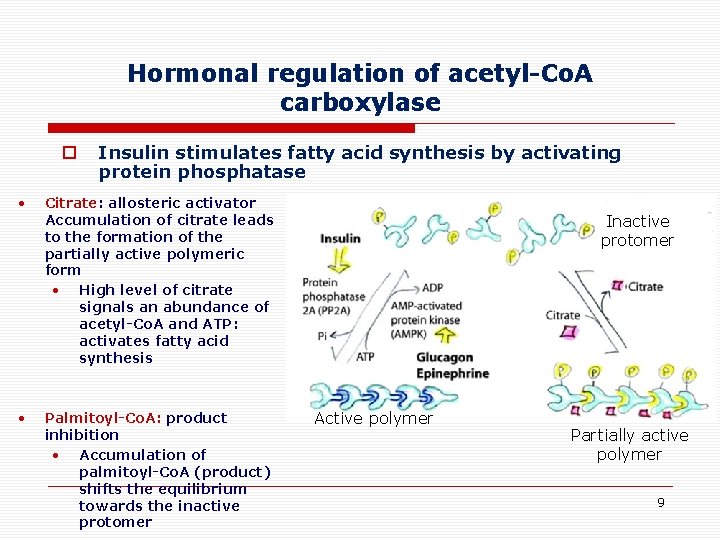
Hormonal regulation of acetyl-Co. A carboxylase o Insulin stimulates fatty acid synthesis by activating protein phosphatase • Citrate: allosteric activator Accumulation of citrate leads to the formation of the partially active polymeric form • High level of citrate signals an abundance of acetyl-Co. A and ATP: activates fatty acid synthesis • Palmitoyl-Co. A: product inhibition • Accumulation of palmitoyl-Co. A (product) shifts the equilibrium towards the inactive protomer Inactive protomer Active polymer Partially active polymer 9
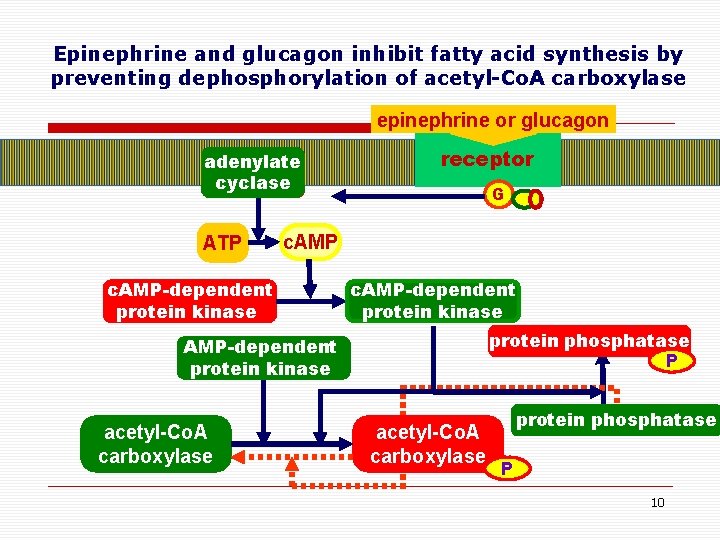
Epinephrine and glucagon inhibit fatty acid synthesis by preventing dephosphorylation of acetyl-Co. A carboxylase epinephrine or glucagon adenylate cyclase ATP receptor G c. AMP-dependent protein kinase protein phosphatase P AMP-dependent protein kinase acetyl-Co. A carboxylase protein phosphatase P 10
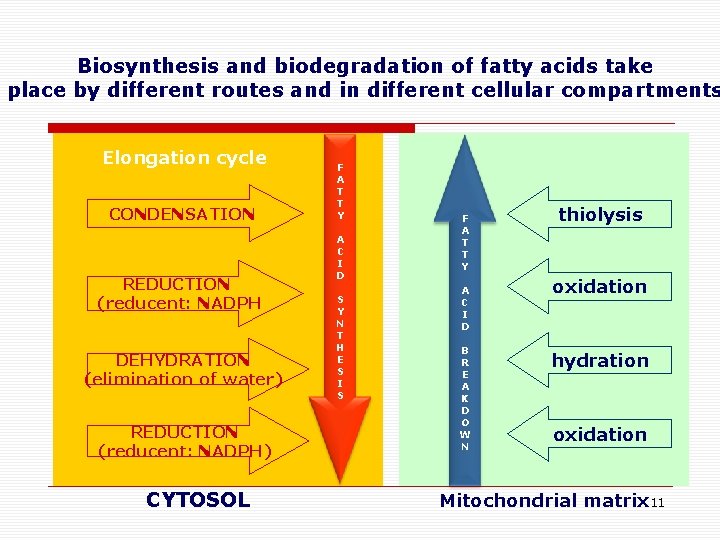
Biosynthesis and biodegradation of fatty acids take place by different routes and in different cellular compartments Elongation cycle CONDENSATION REDUCTION (reducent: NADPH DEHYDRATION (elimination of water) REDUCTION (reducent: NADPH) CYTOSOL F A T T Y A C I D S Y N T H E S I S F A T T Y A C I D B R E A K D O W N thiolysis oxidation hydration oxidation Mitochondrial matrix 11
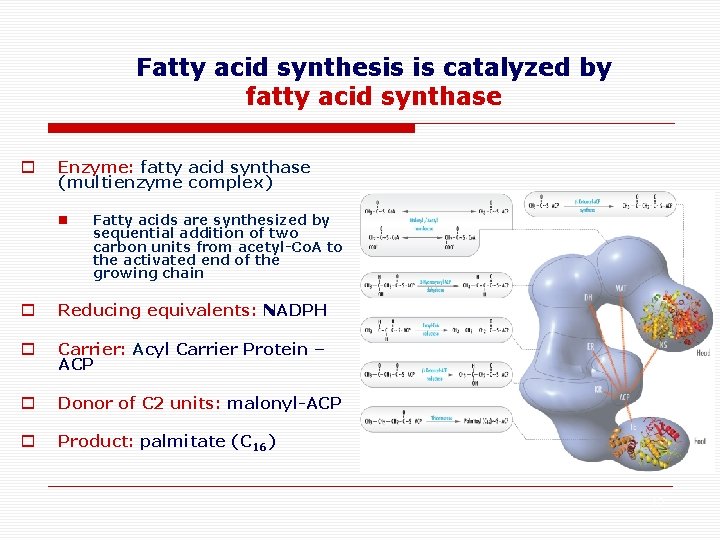
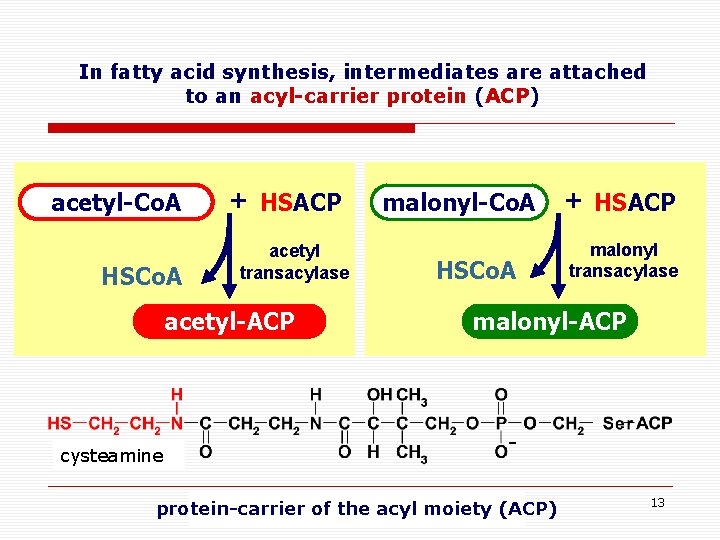
Fatty acid synthesis is catalyzed by fatty acid synthase o Enzyme: fatty acid synthase (multienzyme complex) n Fatty acids are synthesized by sequential addition of two carbon units from acetyl-Co. A to the activated end of the growing chain o Reducing equivalents: NADPH o Carrier: Acyl Carrier Protein – ACP o Donor of C 2 units: malonyl-ACP o Product: palmitate (C 16) 12
In fatty acid synthesis, intermediates are attached to an acyl-carrier protein (ACP) acetyl-Co. A HSCo. A + HSACP acetyl transacylase acetyl-ACP malonyl-Co. A HSCo. A + HSACP malonyl transacylase malonyl-ACP cisteamin cysteamine protein-carrier of the acyl moiety (ACP) 13
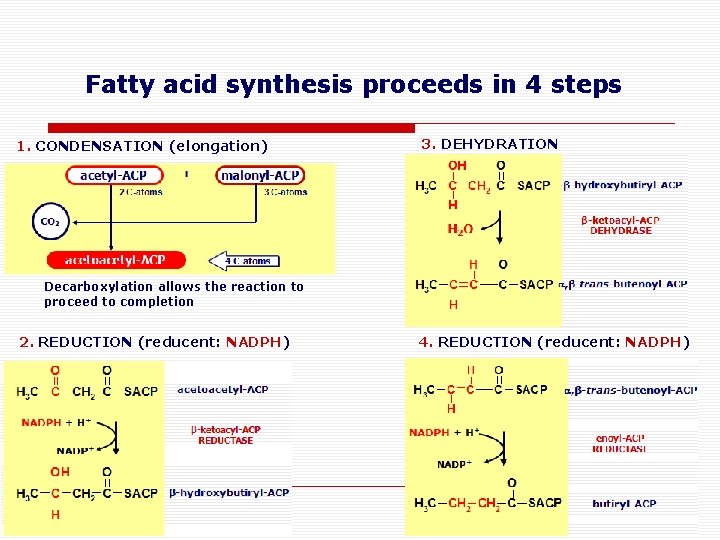
Fatty acid synthesis proceeds in 4 steps 1. CONDENSATION (elongation) 3. DEHYDRATION Decarboxylation allows the reaction to proceed to completion 2. REDUCTION (reducent: NADPH) 4. REDUCTION (reducent: NADPH) 14
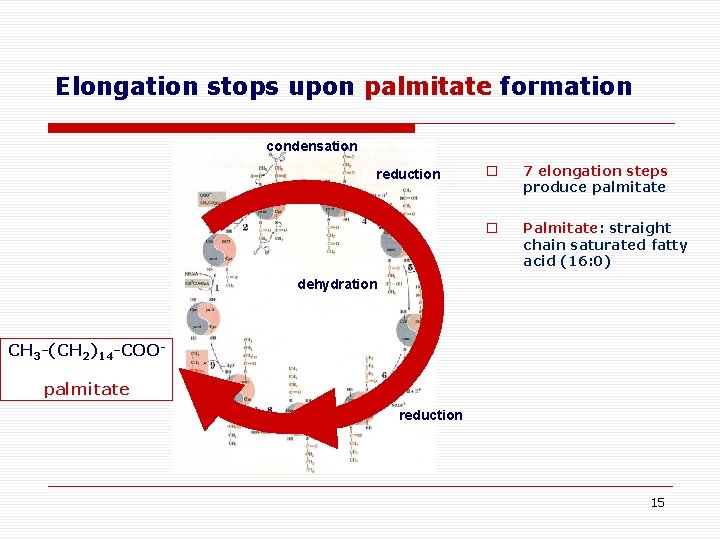
Elongation stops upon palmitate formation condensation reduction o 7 elongation steps produce palmitate o Palmitate: straight chain saturated fatty acid (16: 0) dehydration CH 3 -(CH 2)14 -COOpalmitate reduction 15
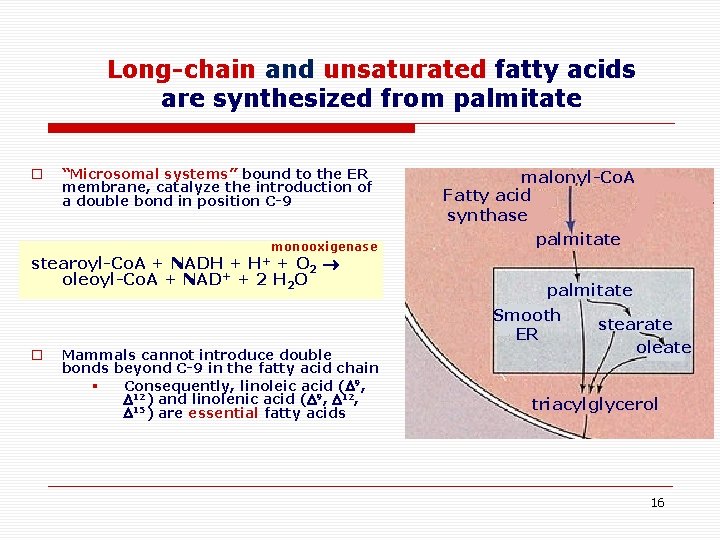
Long-chain and unsaturated fatty acids are synthesized from palmitate o “Microsomal systems” bound to the ER membrane, catalyze the introduction of a double bond in position C-9 monooxigenase stearoyl-Co. A + NADH + H+ + O 2 oleoyl-Co. A + NAD+ + 2 H 2 O malonyl-Co. A Fatty acid synthase palmitate Smooth ER o Mammals cannot introduce double bonds beyond C-9 in the fatty acid chain § Consequently, linoleic acid ( 9, 12) and linolenic acid ( 9, 12, 15) are essential fatty acids stearate oleate triacylglycerol 16
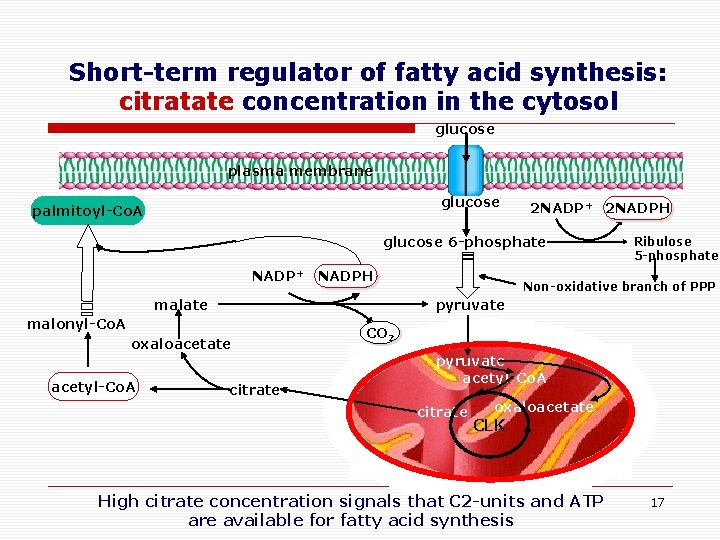
Short-term regulator of fatty acid synthesis: citratate concentration in the cytosol glucose plasma membrane glucose palmitoyl-Co. A 2 NADP+ 2 NADPH glucose 6 -phosphate NADP+ NADPH malate Non-oxidative branch of PPP pyruvate malonyl-Co. A oxaloacetate acetyl-Co. A Ribulose 5 -phosphate citrate CO 2 pyruvate acetyl-Co. A citrate oxaloacetate CLK High citrate concentration signals that C 2 -units and ATP are available for fatty acid synthesis 17
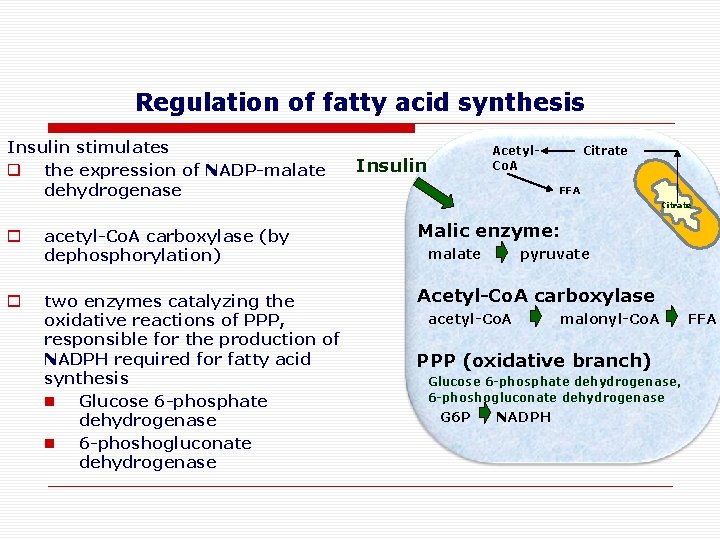
Regulation of fatty acid synthesis Insulin stimulates q the expression of NADP-malate dehydrogenase Acetyl. Co. A Insulin Citrate FFA Citrate o acetyl-Co. A carboxylase (by dephosphorylation) Malic enzyme: o two enzymes catalyzing the oxidative reactions of PPP, responsible for the production of NADPH required for fatty acid synthesis n Glucose 6 -phosphate dehydrogenase n 6 -phoshogluconate dehydrogenase Acetyl-Co. A carboxylase malate pyruvate acetyl-Co. A malonyl-Co. A PPP (oxidative branch) Glucose 6 -phosphate dehydrogenase, 6 -phoshogluconate dehydrogenase G 6 P NADPH FFA
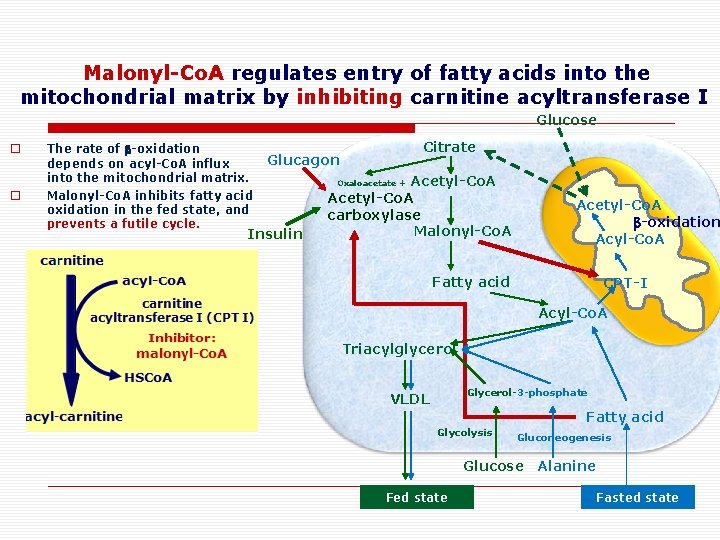
Malonyl-Co. A regulates entry of fatty acids into the mitochondrial matrix by inhibiting carnitine acyltransferase I Glucose o o The rate of -oxidation depends on acyl-Co. A influx into the mitochondrial matrix. Malonyl-Co. A inhibits fatty acid oxidation in the fed state, and prevents a futile cycle. Citrate Glucagon Insulin Acetyl-Co. A carboxylase Malonyl-Co. A Oxaloacetate + Acetyl-Co. A -oxidation Acyl-Co. A Fatty acid CPT-I / Acyl-Co. A Triacylglycerol Glycerol-3 -phosphate VLDL Fatty acid Glycolysis Gluconeogenesis Glucose Alanine Fed state Fasted state 19
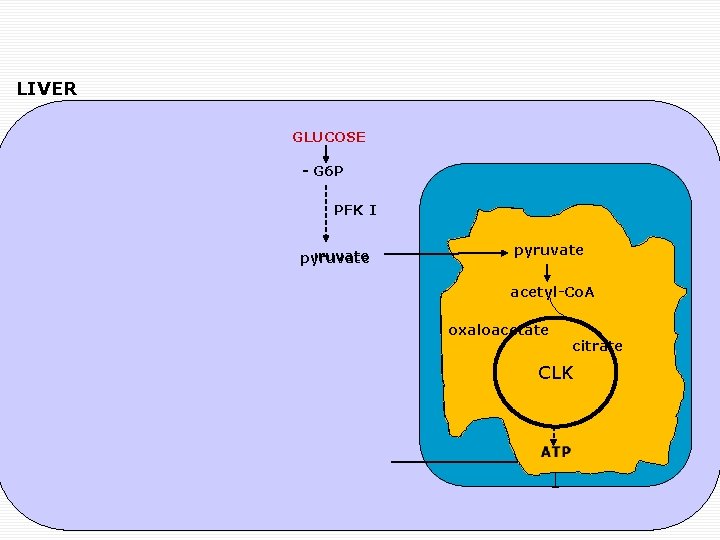
LIVER GLUCOSE G 6 P PFK I fatty acid pyruvate PPP NADPH ribulose 5 -phosphate NADPH malonyl-Co. A acetyl-Co. A malate oxaloacetate pyruvate acetyl-Co. A oxaloacetate citrate CLK citrate ATP
Lipid transport and storage 21
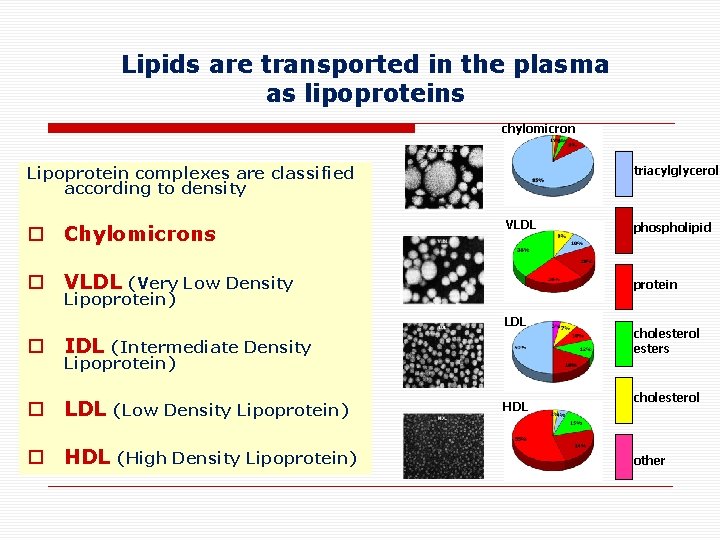
Lipids are transported in the plasma as lipoproteins chylomicron Lipoprotein complexes are classified according to density o Chylomicrons triacylglycerol VLDL o VLDL (Very Low Density Lipoprotein) protein LDL o IDL (Intermediate Density Lipoprotein) o LDL (Low Density Lipoprotein) o HDL (High Density Lipoprotein) phospholipid HDL cholesterol esters cholesterol other
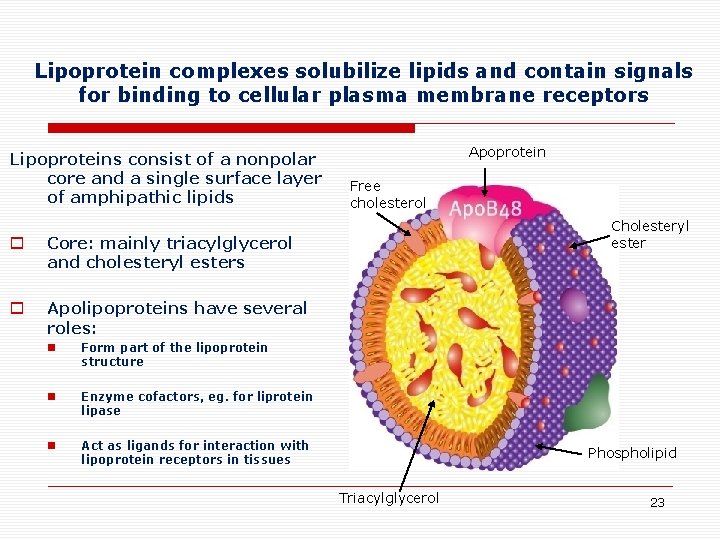
Lipoprotein complexes solubilize lipids and contain signals for binding to cellular plasma membrane receptors Lipoproteins consist of a nonpolar core and a single surface layer of amphipathic lipids o Core: mainly triacylglycerol and cholesteryl esters o Apolipoproteins have several roles: n Form part of the lipoprotein structure n Enzyme cofactors, eg. for liprotein lipase n Act as ligands for interaction with lipoprotein receptors in tissues Apoprotein Free cholesterol Cholesteryl ester Phospholipid Triacylglycerol 23
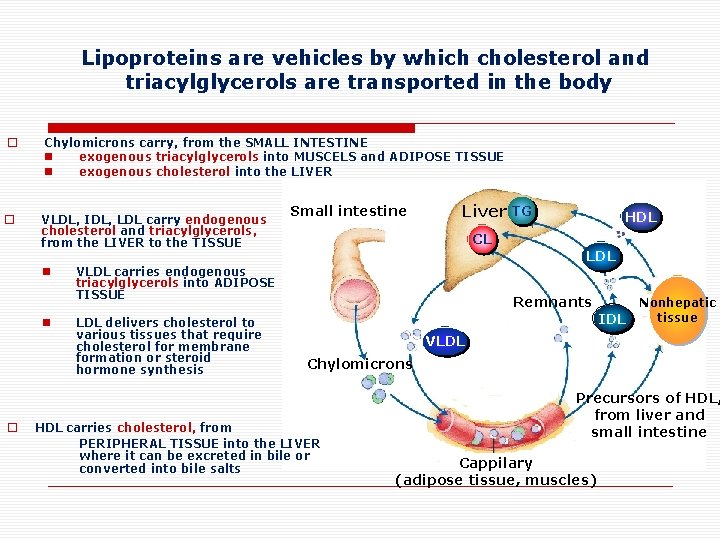
Lipoproteins are vehicles by which cholesterol and triacylglycerols are transported in the body o Chylomicrons carry, from the SMALL INTESTINE n exogenous triacylglycerols into MUSCELS and ADIPOSE TISSUE n exogenous cholesterol into the LIVER o VLDL, IDL, LDL carry endogenous cholesterol and triacylglycerols, from the LIVER to the TISSUE n n o Small intestine Liver TG CL LDL VLDL carries endogenous triacylglycerols into ADIPOSE TISSUE LDL delivers cholesterol to various tissues that require cholesterol for membrane formation or steroid hormone synthesis HDL Remnants IDL Nonhepatic tissue VLDL Chylomicrons HDL carries cholesterol, from PERIPHERAL TISSUE into the LIVER where it can be excreted in bile or converted into bile salts Precursors of HDL, from liver and small intestine Cappilary (adipose tissue, muscles)
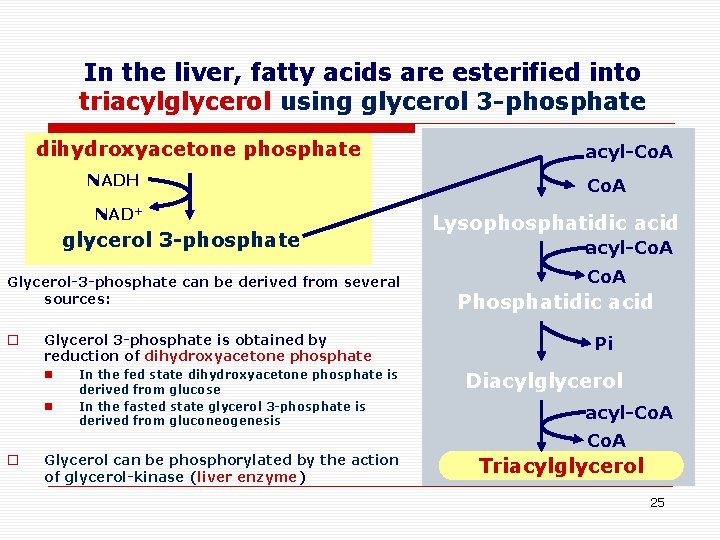
In the liver, fatty acids are esterified into triacylglycerol using glycerol 3 -phosphate dihydroxyacetone phosphate NADH NAD+ glycerol 3 -phosphate Glycerol-3 -phosphate can be derived from several sources: o Glycerol 3 -phosphate is obtained by reduction of dihydroxyacetone phosphate n n In the fed state dihydroxyacetone phosphate is derived from glucose In the fasted state glycerol 3 -phosphate is derived from gluconeogenesis acyl-Co. A Lysophosphatidic acid acyl-Co. A Phosphatidic acid Pi Diacylglycerol acyl-Co. A o Glycerol can be phosphorylated by the action of glycerol-kinase (liver enzyme) Triacylglycerol 25
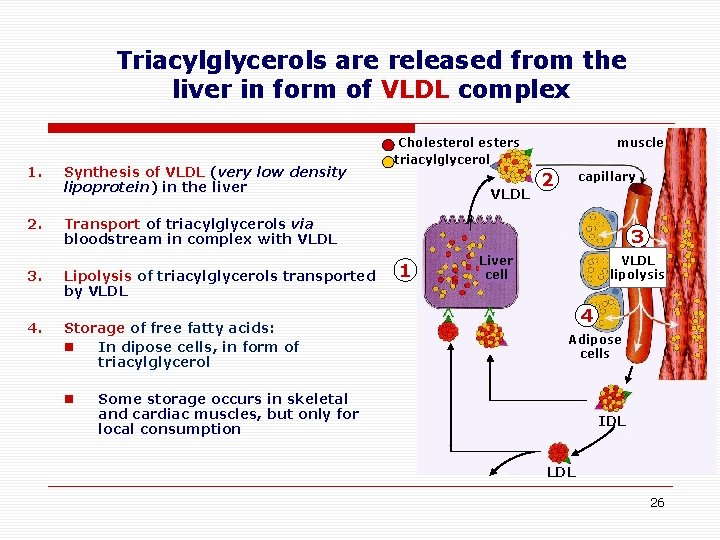
Triacylglycerols are released from the liver in form of VLDL complex 1. 2. Synthesis of VLDL (very low density lipoprotein) in the liver Cholesterol esters triacylglycerol VLDL muscle 2 capillary Transport of triacylglycerols via bloodstream in complex with VLDL 3. Lipolysis of triacylglycerols transported by VLDL 4. Storage of free fatty acids: n In dipose cells, in form of triacylglycerol n 3 1 VLDL lipolysis Liver cell 4 Adipose cells Some storage occurs in skeletal and cardiac muscles, but only for local consumption IDL LDL 26
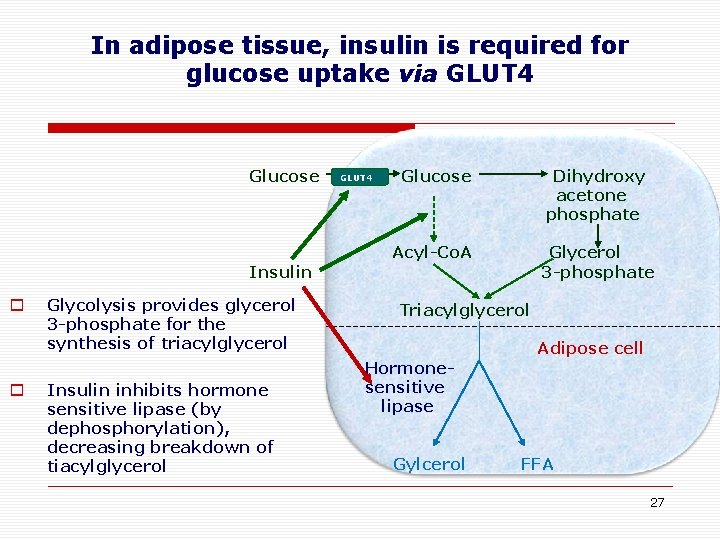
In adipose tissue, insulin is required for glucose uptake via GLUT 4 Glucose Insulin o o Glycolysis provides glycerol 3 -phosphate for the synthesis of triacylglycerol Insulin inhibits hormone sensitive lipase (by dephosphorylation), decreasing breakdown of tiacylglycerol GLUT 4 Glucose Dihydroxy acetone phosphate Acyl-Co. A Glycerol 3 -phosphate Triacylglycerol Hormonesensitive lipase Gylcerol Adipose cell FFA 27
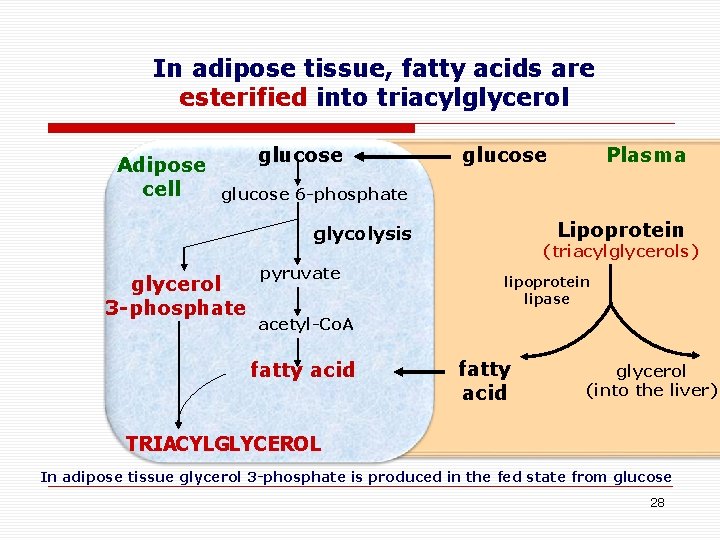
In adipose tissue, fatty acids are esterified into triacylglycerol Adipose cell glucose Plasma glucose 6 -phosphate Lipoprotein glycolysis glycerol 3 -phosphate pyruvate (triacylglycerols) lipoprotein lipase acetyl-Co. A fatty acid glycerol (into the liver) TRIACYLGLYCEROL In adipose tissue glycerol 3 -phosphate is produced in the fed state from glucose 28
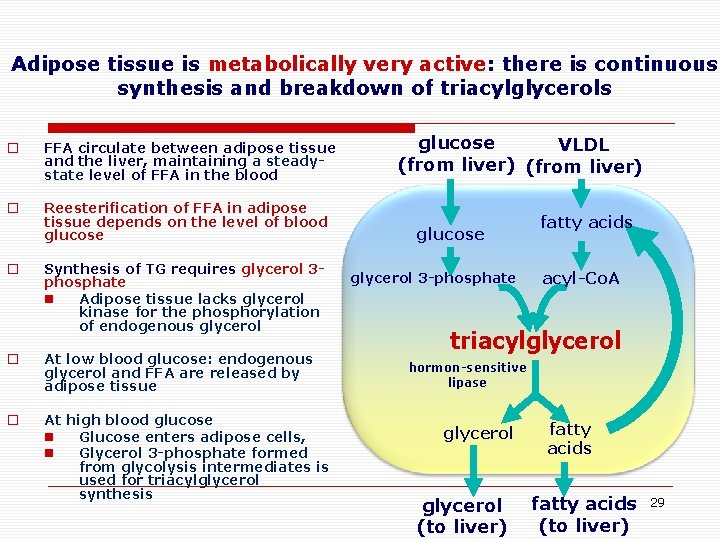
Adipose tissue is metabolically very active: there is continuous synthesis and breakdown of triacylglycerols o FFA circulate between adipose tissue and the liver, maintaining a steadystate level of FFA in the blood o Reesterification of FFA in adipose tissue depends on the level of blood glucose o Synthesis of TG requires glycerol 3 phosphate n Adipose tissue lacks glycerol kinase for the phosphorylation of endogenous glycerol o At low blood glucose: endogenous glycerol and FFA are released by adipose tissue o At high blood glucose n Glucose enters adipose cells, n Glycerol 3 -phosphate formed from glycolysis intermediates is used for triacylglycerol synthesis glucose VLDL (from liver) glucose glycerol 3 -phosphate fatty acids acyl-Co. A triacylglycerol hormon-sensitive lipase glycerol (to liver) fatty acids (to liver) 29