
Fats in Food Dietary recommendations Lower fat intake
- Slides: 20
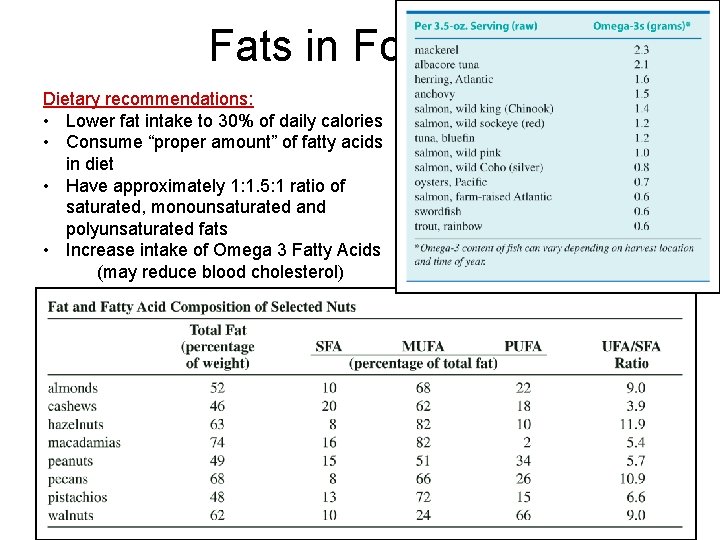
Fats in Food Dietary recommendations: • Lower fat intake to 30% of daily calories • Consume “proper amount” of fatty acids in diet • Have approximately 1: 1. 5: 1 ratio of saturated, monounsaturated and polyunsaturated fats • Increase intake of Omega 3 Fatty Acids (may reduce blood cholesterol)
Artificial Fats Olestra: Substitute for fat. Not a triester or triglyceride. Made from 8 fatty acids bonded to sucrose by eight ester bonds. an "octo-ester" Some similarity in structure to fats. Some similar functions (taste, texture, etc. ). Differences in structure - enzymes hydrolyzing fats do not hydrolyze Olestra. Advantage: does not break down, enter bloodstream, & turn into fat. Disadvantage: remains in digestive tract, may reduce vitamin uptake, & cause anal leakage (oily stool).
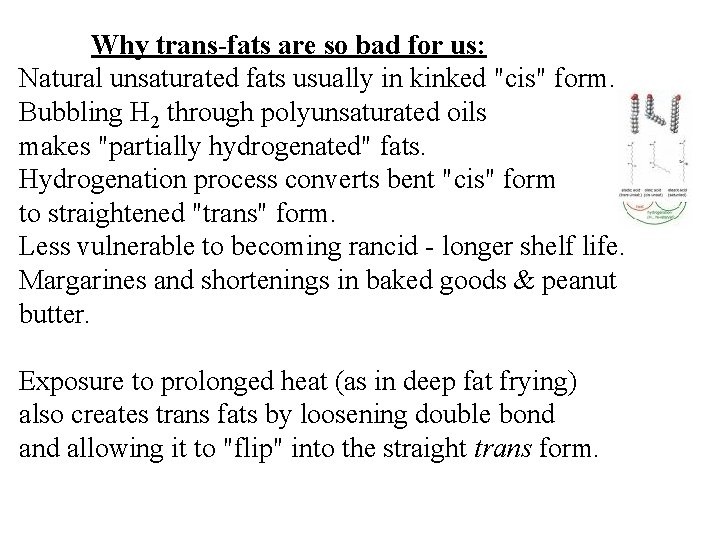
Why trans-fats are so bad for us: Natural unsaturated fats usually in kinked "cis" form. Bubbling H 2 through polyunsaturated oils makes "partially hydrogenated" fats. Hydrogenation process converts bent "cis" form to straightened "trans" form. Less vulnerable to becoming rancid - longer shelf life. Margarines and shortenings in baked goods & peanut butter. Exposure to prolonged heat (as in deep fat frying) also creates trans fats by loosening double bond allowing it to "flip" into the straight trans form.
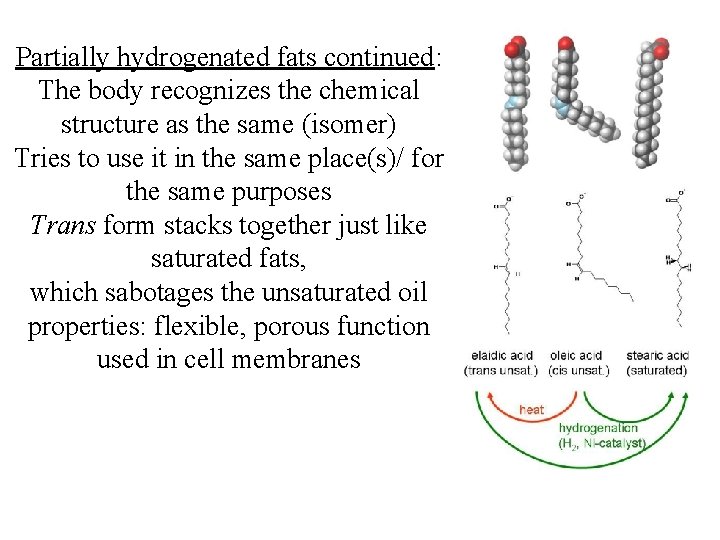
Partially hydrogenated fats continued: The body recognizes the chemical structure as the same (isomer) Tries to use it in the same place(s)/ for the same purposes Trans form stacks together just like saturated fats, which sabotages the unsaturated oil properties: flexible, porous function used in cell membranes
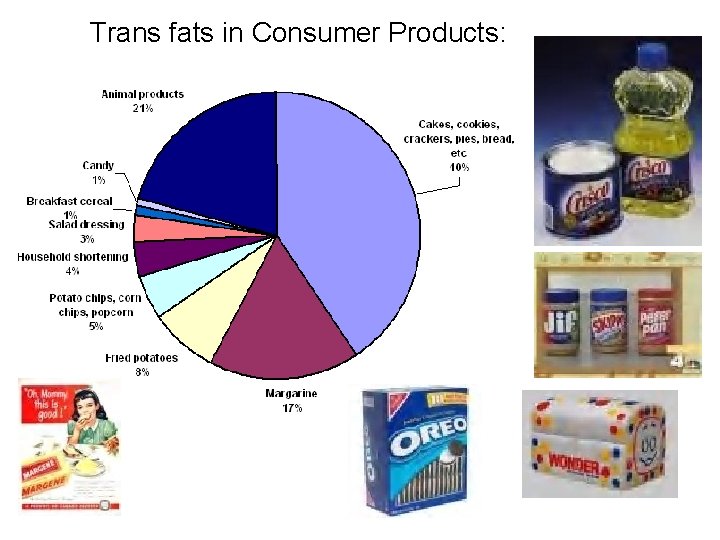
Trans fats in Consumer Products:
Chemical Reactions of Triacylglycerols • Hydrolysis - reverse of esterification – Stepwise: enzyme controlled • Saponificatioin - hydrolysis in basic sol’n • Hydrogenation – UFA + H 2 --> SFA – Side effect: Cis --> Trans double bonds • Oxidation – Associated with rancidity – Counteracted by adding antioxidants
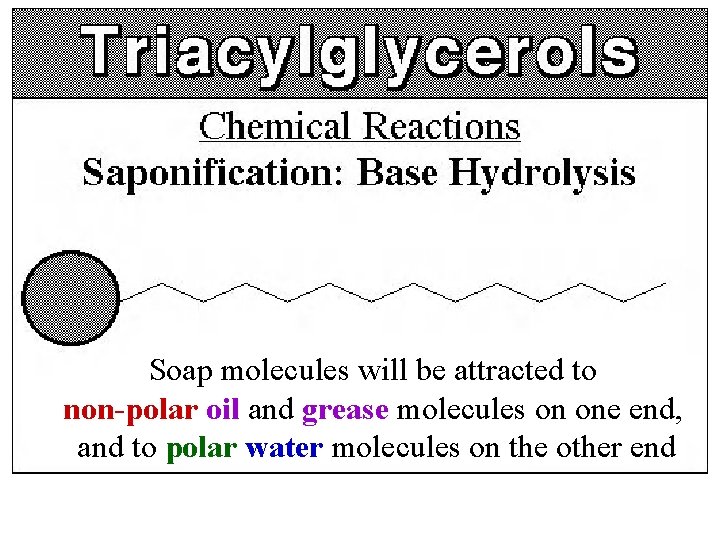
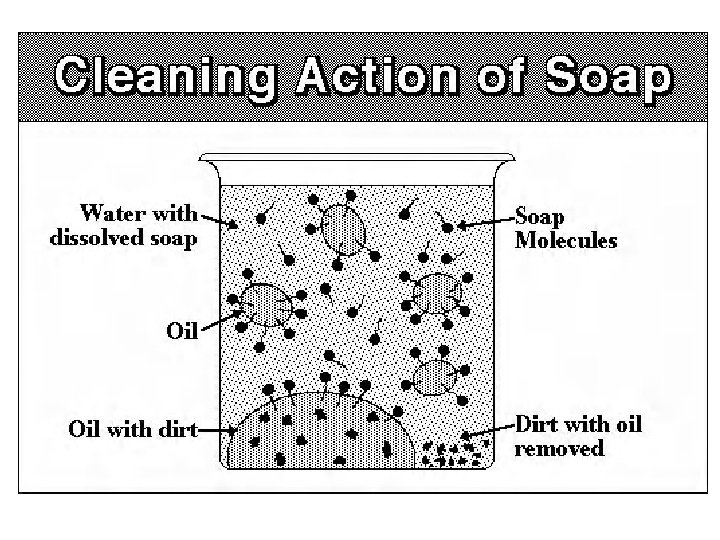
Soap molecules will be attracted to non-polar oil and grease molecules on one end, and to polar water molecules on the other end
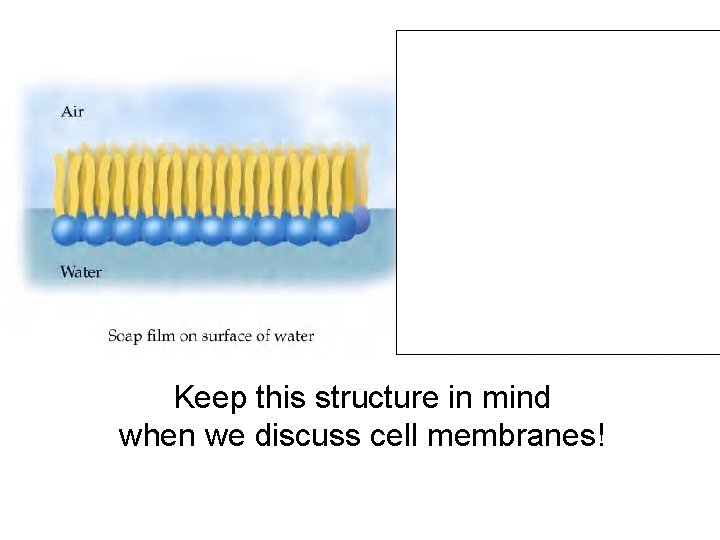
Keep this structure in mind when we discuss cell membranes!
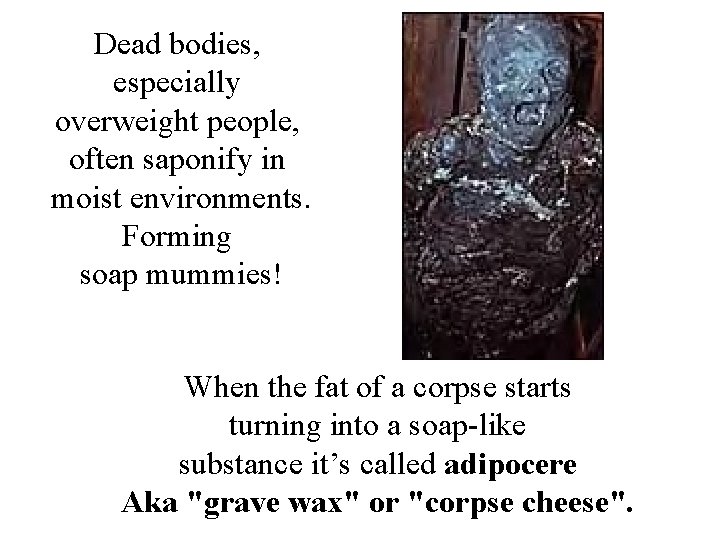
Dead bodies, especially overweight people, often saponify in moist environments. Forming soap mummies! When the fat of a corpse starts turning into a soap-like substance it’s called adipocere Aka "grave wax" or "corpse cheese".
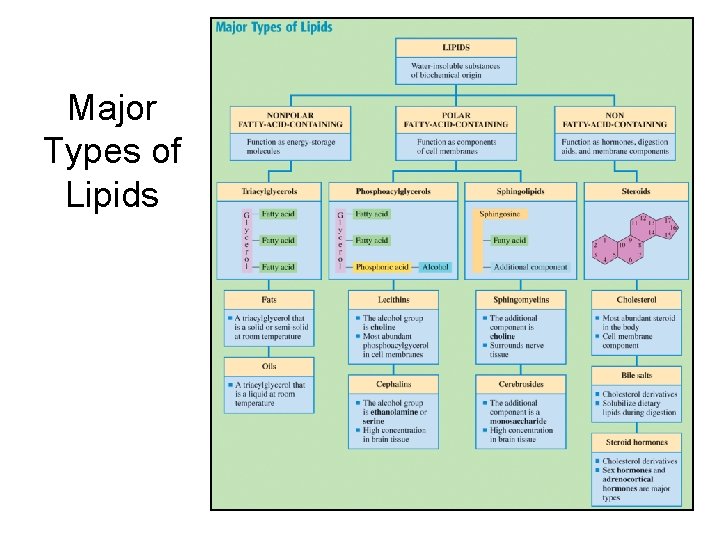
Major Types of Lipids
Phospholipids: cell membrane molecules Three main types of membrane lipids: 1. Phospholipids • Glycerophospholipids • Sphingophospholipids 2. Glycolipids • Sphingoglycolipids 3. Cholesterol • The Cell Membrane separates cell’s interior from the environment. • 80% of a cell membrane is some type of lipid • Most abundant are the phospholipids
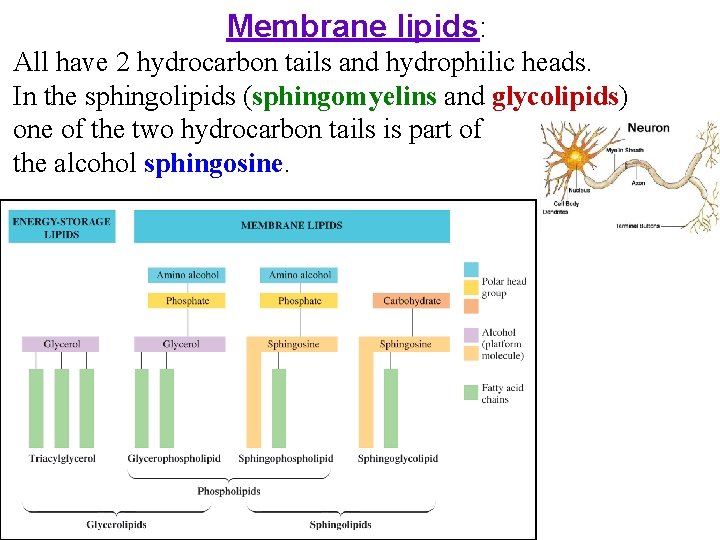
Membrane lipids: All have 2 hydrocarbon tails and hydrophilic heads. In the sphingolipids (sphingomyelins and glycolipids) one of the two hydrocarbon tails is part of the alcohol sphingosine.
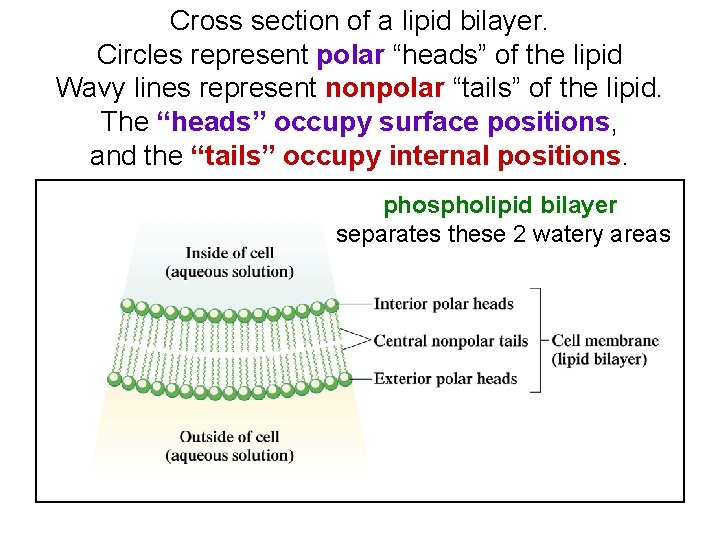
Cross section of a lipid bilayer. Circles represent polar “heads” of the lipid Wavy lines represent nonpolar “tails” of the lipid. The “heads” occupy surface positions, and the “tails” occupy internal positions. phospholipid bilayer separates these 2 watery areas
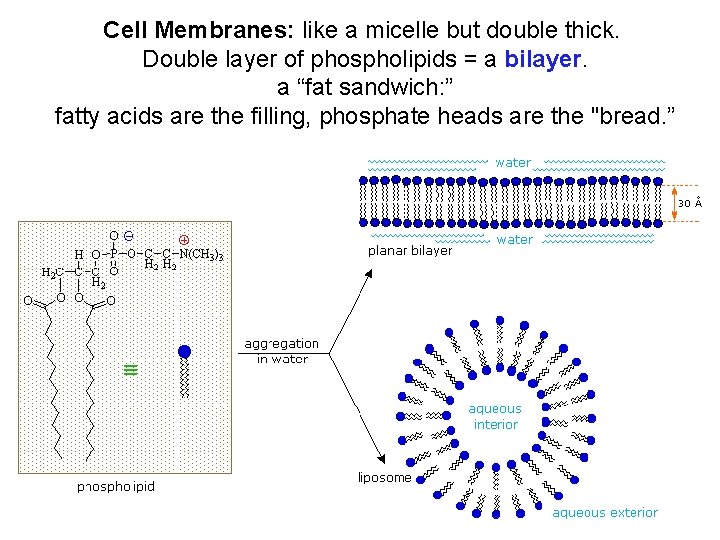
Cell Membranes: like a micelle but double thick. Double layer of phospholipids = a bilayer. a “fat sandwich: ” fatty acids are the filling, phosphate heads are the "bread. ”
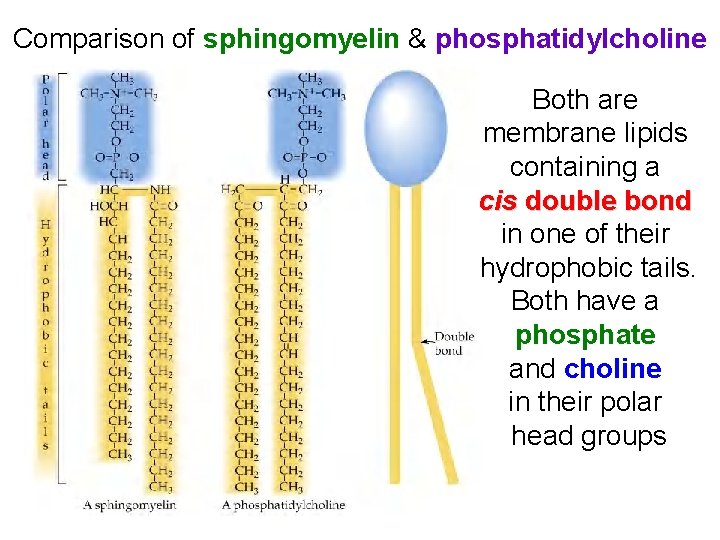
Comparison of sphingomyelin & phosphatidylcholine Both are membrane lipids containing a cis double bond in one of their hydrophobic tails. Both have a phosphate and choline in their polar head groups
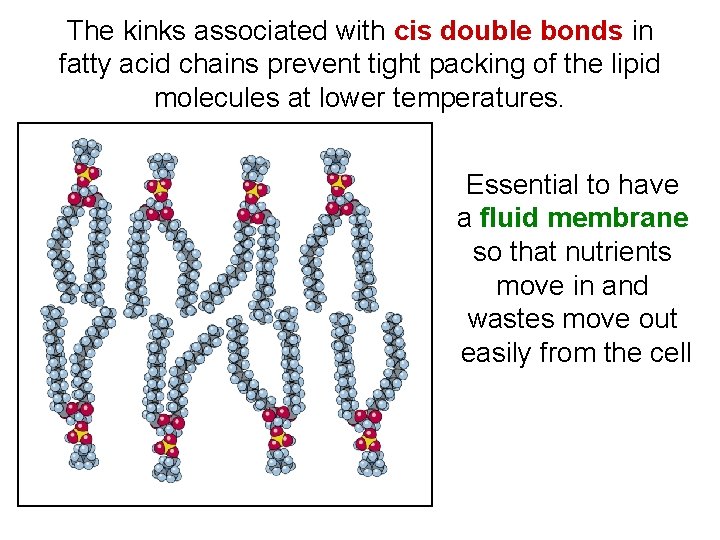
The kinks associated with cis double bonds in fatty acid chains prevent tight packing of the lipid molecules at lower temperatures. Essential to have a fluid membrane so that nutrients move in and wastes move out easily from the cell
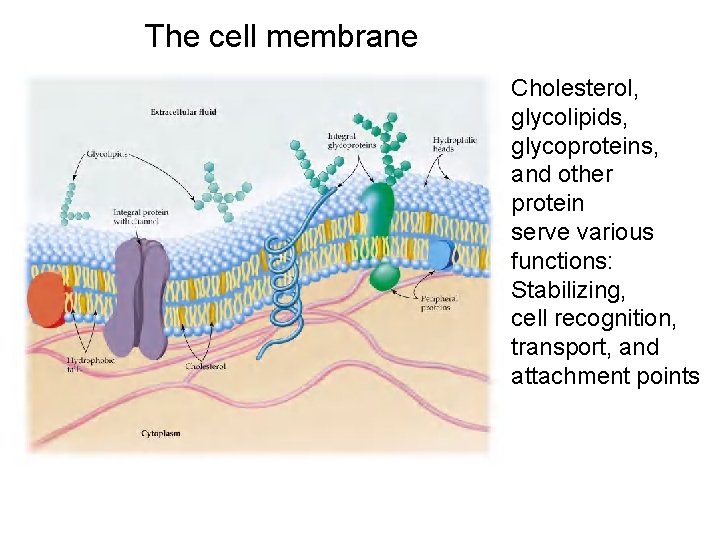
The cell membrane Cholesterol, glycolipids, glycoproteins, and other protein serve various functions: Stabilizing, cell recognition, transport, and attachment points
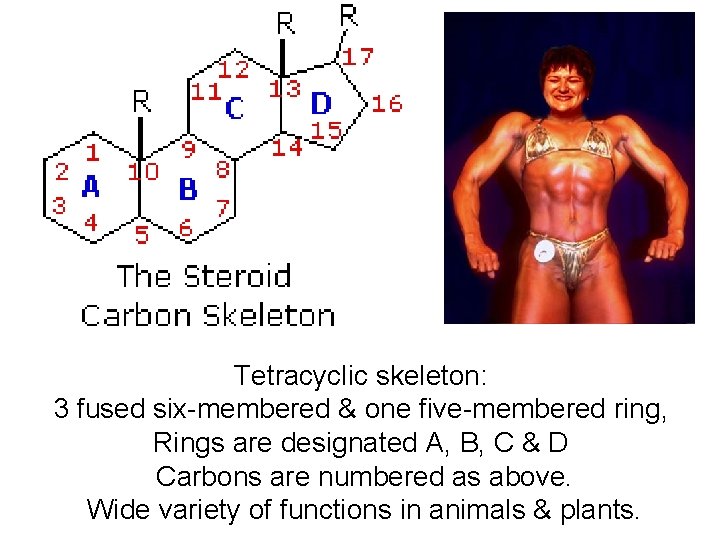
Tetracyclic skeleton: 3 fused six-membered & one five-membered ring, Rings are designated A, B, C & D Carbons are numbered as above. Wide variety of functions in animals & plants.
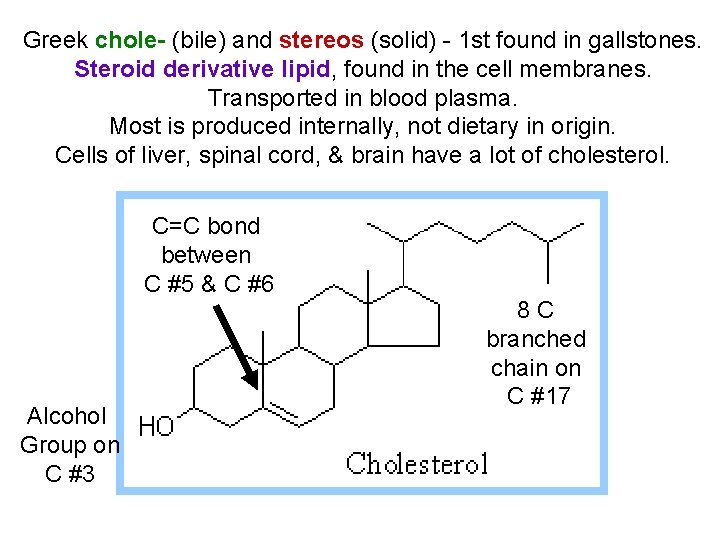
Greek chole- (bile) and stereos (solid) - 1 st found in gallstones. Steroid derivative lipid, found in the cell membranes. Transported in blood plasma. Most is produced internally, not dietary in origin. Cells of liver, spinal cord, & brain have a lot of cholesterol. C=C bond between C #5 & C #6 Alcohol Group on C #3 8 C branched chain on C #17