
Fatigue Risk Management Fatigue vs Sleepiness Fatigue response

- Slides: 40
Fatigue Risk Management
Fatigue vs. Sleepiness • Fatigue: response to sleep deprivation or prolonged physical or mental exertion • Physical vs. cognitive (may be independent) • Reduced by sedentary activity or rest without sleep • Slowed reaction time>reduced vigilance>reduced decisionmaking capacity>impaired judgment>distraction>loss of awareness • Sleepiness: desire or propensity to fall asleep • Exacerbated by sedentary activity or rest • Decreased alertness>decreased attention to detail>impaired judgment>slowed response time
Sleep and Circadian Rhythms • Sleep stages (1 -4, REM) • Range 6 -10 hrs (ave. 7 -8) • Intrinsic circadian cycle 24+ hours • Environmental cues reinforce • Regulates body temp, hormone secretion, sleep/wake • Sleep drive peaks at 2 -4 a. m. and lesser peak at 1 -3 p. m. • Individual variability in adaption to circadian disturbances
Fatigue & Sleepiness • Related to duration and timing of sleep • Shift work can impair both • Correlated with increase in accidents and injury • Correlated with adverse physiologic and medical outcomes
Fatigue Risk Factors • Sleep insufficiency or deprivation • Circadian variability • Time awake • Health factors (sleep disorders, medication, etc. ) • Environmental factors (light, noise, climate, etc. ) • Workload and rest breaks
Shift Work • Work outside of usual daytime hours (7 a. m. – 6 p. m. ) • Overtime work (> 40 hrs/week) • Extended work (> 8 hrs/day) • Irregular shifts (split or rotating shifts) • On call work • 20% of U. S. workers are shift workers
2010 Sleep in America Poll • 1/4 of respondents said work schedule prevented adequate sleep • 1/3 of respondents said they did not have enough sleep for optimal function
Effects • 24 hours of sleep deprivation comparable to 0. 10% blood alcohol • Loss of two hours per night for one week can lead to similar performance decrements • Incidents related to time of day rather than time on task with peak risk at early morning hours (peak sleepiness) • Significant individual differences in level of alertness and performance
National Highway Traffic Safety Administration (NHTSA) • Fatigue causes or contributes to: • • 100, 000 police reported crashes annually 1550 deaths 71, 000 injuries $12. 5 B in economic losses
Healthcare Workers • Extended work shifts over 12 hours result in an increased risk of: • Medical errors • Sharps injuries • Motor vehicle accidents going home
Manufacturing Workers • Risk of work injury increases with decreasing hours of sleep and increasing hours of work • 88% excess risk in working >64 hours/week vs. working <40 hours/week • $1967 per employee per year in lost productivity • Productivity 3 x loss when fatigue combined with condition specific productivity loss
Chronic Health Effects • Association of decreased sleep duration or disturbance with: • • Diabetes Hypertension Cardiovascular disease Obesity and Metabolic Syndrome Adverse Reproductive Outcomes Cancer IARC (2007) Shiftwork is Probable Human Carcinogen (Group 2 A)
Worker Health Effects Overtime (NIOSH) Shift work (NZ Nurses) • • Poor perceived general health Weight gain and obesity Increased alcohol and smoking Increased injury, illness and mortality • Decreased neuropsychological test performance Higher absence More medical utilization More self-reported symptoms Disrupted social relationships
Societal Effects • Advent of electricity and artificial lighting • 1910: average sleep duration 9 hrs/night • Today: average sleep duration 7 hrs/night • Industrialization • 24/7 operations • Communications and globalization • Working across time zones
Hours of Service Regulations • Department of Transportation • FMCSA: Truck drivers • FAA: Air crews • FRA: Rail crews • ACGME • Medical residents
Nuclear Power Plant Incidents • Three Mile Island at 4 a. m. on March 28, 1979 shiftworkers failed to recognize the loss of core coolant water resulting from a stuck valve. Although a mechanical problem precipitated the incident, it was chiefly this human error of omission and the subsequent flawed corrective action that caused the near meltdown of the reactor later that morning. • Davis-Besse Reactor, Oak Harbor, Ohio, at 1: 35 a. m. on June 9, 1985 went into automatic shutdown followed by a total loss of the main feedwater, operator then pushed the wrong two buttons in the control room, thereby defeating the safety function of the auxiliary feed-water system. • Rancho Seco nuclear reactor near Sacramento, California, at 4: 14 a. m. on December 26, 1985, automatically tripped after DC power to the integrated control system was lost. For a variety of reasons, including equipment design flaws, inadequate training, and human errors of omission and commission, operators were slow to regain control. • Chernobyl is officially acknowledged to have begun at 1: 23 a. m. on April 26, 1986 as the result of human error. The limited amount of information currently available about the human factors component of this accident.
NASA • Columbia near-disaster on January 6, 1986 • Operator fatigue was reported “as one of the major factors contributing to this incident”. The operators had been on duty for 11 h. It was their 3 rd day of working on a 12 -h night shift. As is often the case in industrial accidents, the contribution of human error was precipitated by an unusual mechanical or control system malfunction. In this case, such a malfunction occurred during the final tanking procedure. The Commission concluded, “An evaluation by NASA of the consequences of work schedules should be conducted as part of its effort to reform its launch and operational procedures” • Challenger explosion on January 28, 1986 • Presidential Commission on the Space Shuttle Challenger Accident did cite the contribution of human error and poor judgement related to sleep loss and shiftwork during the early morning hours substantial sleep loss experienced by senior managers at Marshall Space Flight Center before the evening teleconference with Morton-Thiokol on January 27, 1986, the report stated that the decision to launch “should have been based on engineering judgments. However, other factors may have impeded or prevented effective communication and exchange of information”
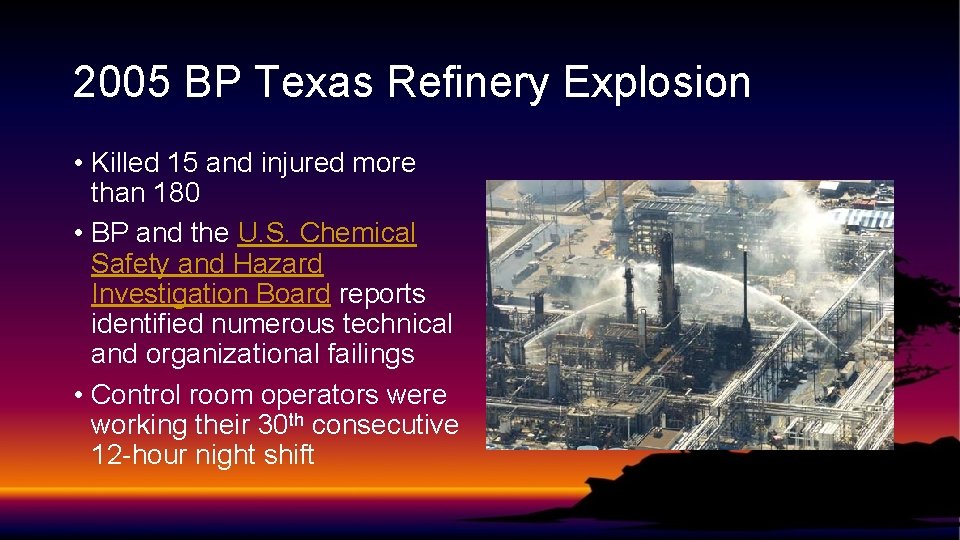
2005 BP Texas Refinery Explosion • Killed 15 and injured more than 180 • BP and the U. S. Chemical Safety and Hazard Investigation Board reports identified numerous technical and organizational failings • Control room operators were working their 30 th consecutive 12 -hour night shift
ANSI/API Recommended Practice RP 755 • “Fatigue Risk Management Systems for Personal in the Refining and Petrochemical Industries” • Developed as an alternative to hours of service regulations • Specifically written for US facilities operating under OSHA’s Process Safety Management Standard • Can be adapted to upstream processes, other industries, and international operations
Fatigue Risk Management Systems (FRMS) • Comprehensive approach to: • • Measuring Mitigating Managing Actual fatigue risk in an organization • Outcomes-based • More flexible than duty-rest and hours of service regulations
FRMS Components 1. 2. 3. 4. 5. Fatigue Management Policy Fatigue Risk Analysis and Mitigation Fatigue Reporting System Fatigue Incident Investigation Fatigue Training & Education (Employees, Management and Families) 6. Sleep Disorder Management 7. Internal and External Auditing 8. Continuous Feedback & Improvement
FRMS • Australia & New Zealand European agencies implemented FRMS rules for road and air transportation as alternative to hours of service rules. • Australian Medical Association also implemented for shift work and extended hours operations • Also applied to mining and pipeline operations in U>S> and Australia
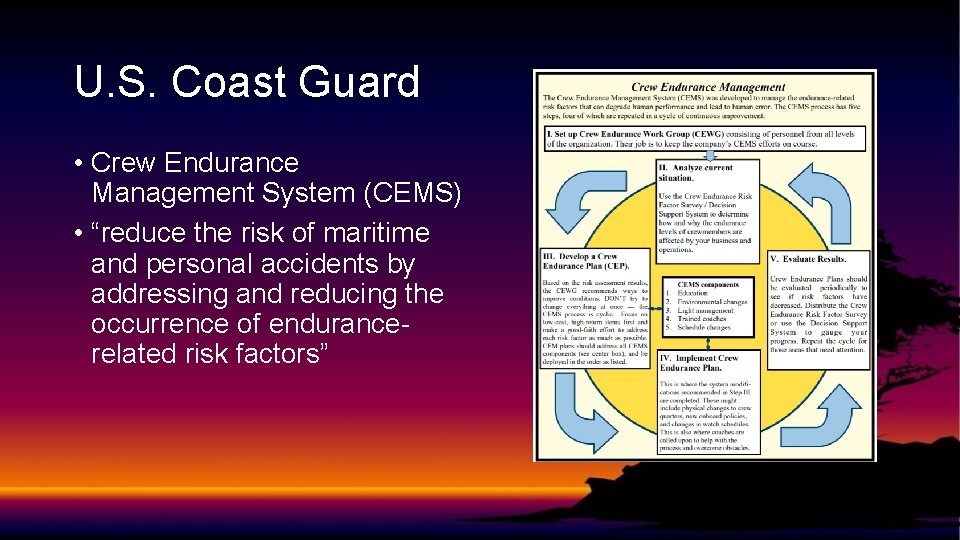
U. S. Coast Guard • Crew Endurance Management System (CEMS) • “reduce the risk of maritime and personal accidents by addressing and reducing the occurrence of endurancerelated risk factors”
FRMS Interventions • Balancing Workload and Staffing • Shift Scheduling • Fatigue Training • Sleep Disorder Recognition and Treatment • Workplace Environment • Fatigue Monitoring and Fitness for Duty
Balancing Workload and Staffing • Staffing levels influence shift timing and duration • Effect of scheduled and unscheduled employee absences • Variability in workload • External: Changes in supply and demand • Internal: Planned and unplanned shutdowns or slowdowns
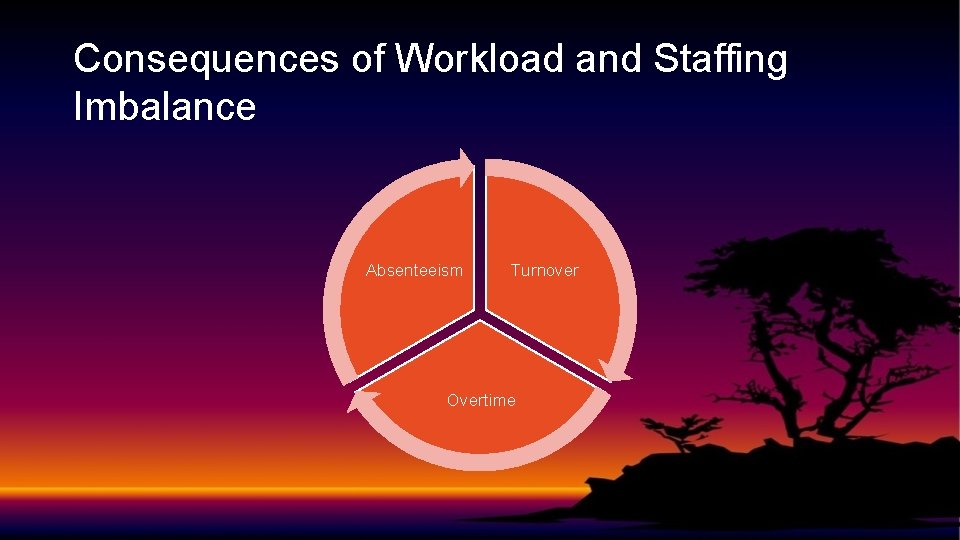
Consequences of Workload and Staffing Imbalance Absenteeism Turnover Overtime
Shift Scheduling • Leads to sleep deprivation and circadian disturbance • Exaggerated drowsiness from combined effect in early morning hours (increased sleep drive). • Sleep duration and timing (break of more than 8 hours between shifts and nighttime sleep is more restorative)
Mitigation Strategies 1. Opportunities to obtain adequate sleep, particularly at night 2. Maximizing quality of sleep through training and environment 3. Maximizing alertness on the job by task scheduling, task engineering and environmental changes 4. Phase resetting strategies (shift rotation, light/dark)
Australian Obtained Sleep Model • START RULE: employee must have obtained 5 hours of sleep in the prior 24 hours and 12 hours of sleep in the 48 hours prior to commencing work • FINISH RULE: period from waking up to the end of shift should not exceed the amount of sleep obtained in the 48 hours prior to beginning the shift.
Shift Duration • Evidence that performance decreases and risk increases after 8 hours • Cognitive fatigue is independent of physical fatigue • Breaks reduce risk associated with shifts > 8 hrs • Breaks should include consideration of: • • Job demands Time on task Shift duration Physical needs
Fatigue Training • Training specific to workers and family • • • Sleep and fatigue physiology Fatigue hazards Health and social impact Sleep hygiene and disorders Fatigue recognition Alertness strategies • Additional training for managers • Staffing, scheduling and training considerations
Training Resources • NIOSH provides fatigue awareness and prevention training for: • • Nurses (online with CE credit) Truck and other motor vehicle drivers AK Bush Pilots Mines • US FAA for aviation • US Coast Guard for maritime operations • Industry associations
Sleep Disorder Recognition and Treatment • 40 million Americans • 85 different sleep disorders, most prevalent are: • • • Sleep apnea Acute or chronic insomnia Restless leg syndrome Narcolepsy Circadian rhythm disorders (shift work sleep disorder) • $60 B accidents, medical costs and lost productivity
Sleep Disorder Recognition and Treatment • Screening • Questionnaires (Epworth, Berlin, Stanford) • Diagnosis • Sleep study (polysomnography) (lab vs. home) • Sleep Latency and Maintenance of Wakefulness • Treatment • Specific to disorder (sleep hygiene, PAP, surgery, medications, etc. ) • Compliance monitoring • Early and ongoing • Data driven
Workplace Environment • Should be designed to promote wakefulness and alertness • Light, temperature, humidity, ventilation, noise • Task design, human factors, human-machine interface, fatigue monitoring and countermeasures • Scheduling of critical tasks • Bright night shift lighting with filtering of < 480 nm wavelengths • Breaks or opportunities for exercise, social interaction, napping, food, caffeine, etc.
Fatigue Monitoring and Fitness for Duty • Self, coworker and supervisor monitoring for signs of fatigue • Fatigue mitigation and intervention • Rest breaks • Referral for medical evaluation • Fatigue monitoring technology • Operator monitoring • Physiologic • Performance • Psychomotor testing
Feedback and Improvement • Monitoring key metrics • Overtime, absence and turnover • Incidents and injuries • Medical costs and productivity • Incident investigation • Was there potential for fatigue-related factors? • Was there evidence of performance impairment (inaction or inattention)?
Incident Investigation • Operator factors • • Sleep-wake patterns 72 hours prior to incident Sleep interruptions Hours working 7 days prior to incident (overtime, extended shifts) Circadian factors • Scheduling factors • Time of incident • Work schedule (start/stop, duration) • Medical factors • Sleep disorders • Comorbid conditions • Medications (Rx, OTC, illicit)
Conclusion • Fatigue is an unsafe working condition • Fatigue can be managed • Any organization can benefit • Particularly safety sensitive industries • Transportation • Healthcare • Energy
Thank you! Sleep well!