
Fatigue Brooks Ch 33 1 Outline Definitions Central
Fatigue Brooks Ch 33 1
Outline • Definitions – Central Fatigue – Peripheral Fatigue • Exhaustion (depletion) Hypothesis – Phosphagens – Glycogen / glucose • Accumulation Hypothesis – – – p. H Phosphate Calcium Potassium (Foss p 65) Oxygen • Future of Fatigue 2
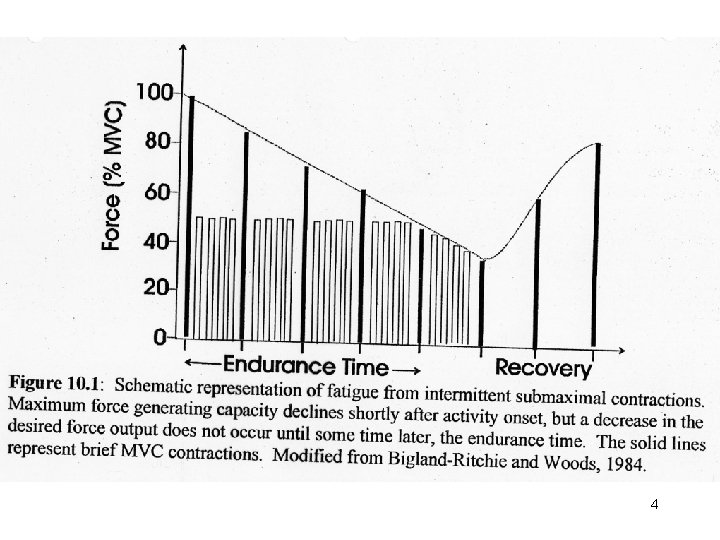
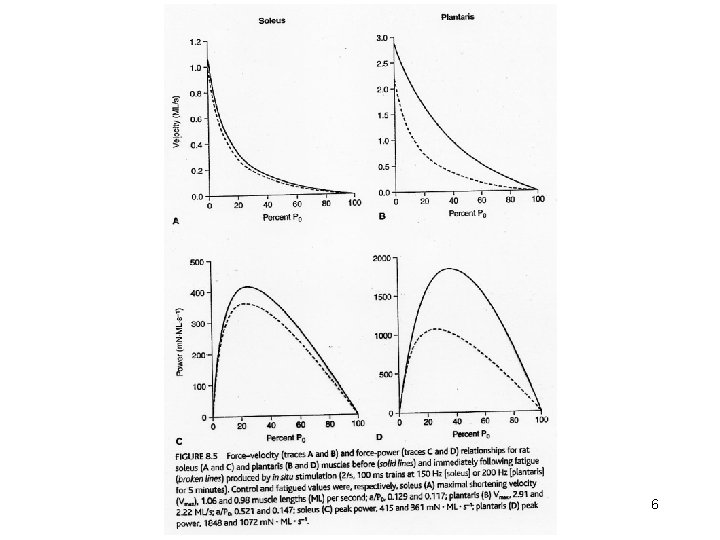
Fatigue During Exercise • Fatigue - inability to maintain a given exercise intensity or power output – Reversible with rest (recovery) – rarely completely fatigued - can maintain lower intensity output – Studied with EMG and observation of contractile function with electrical (nerve) or magnetic stimulation (cortex) – Observe reduction in force and velocity and a prolonged relaxation time after fatigue • The effect of exercise at an absolute or relative exercise intensity will be more severe on an untrained individual 3
4
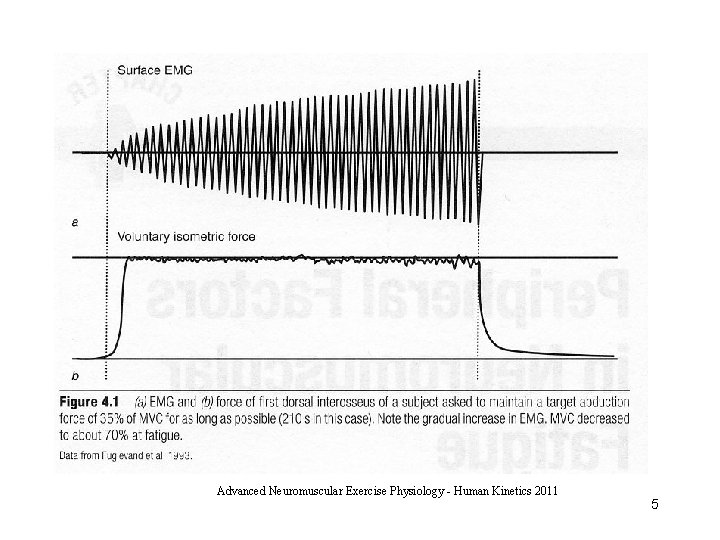
Advanced Neuromuscular Exercise Physiology - Human Kinetics 2011 5
6
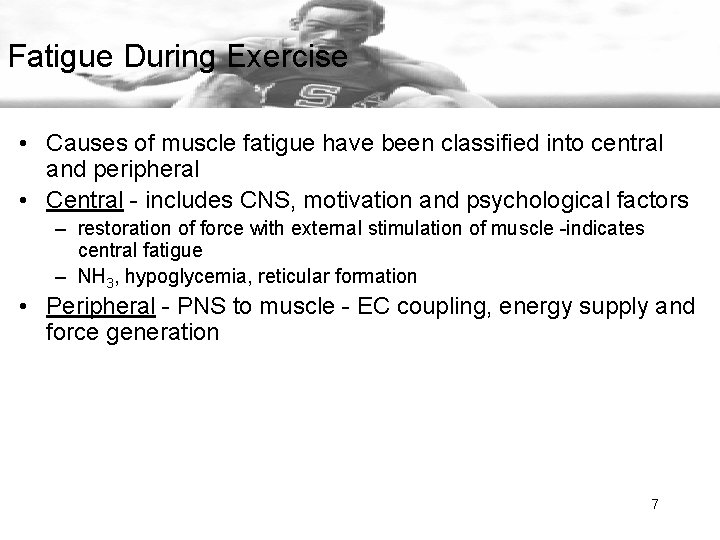
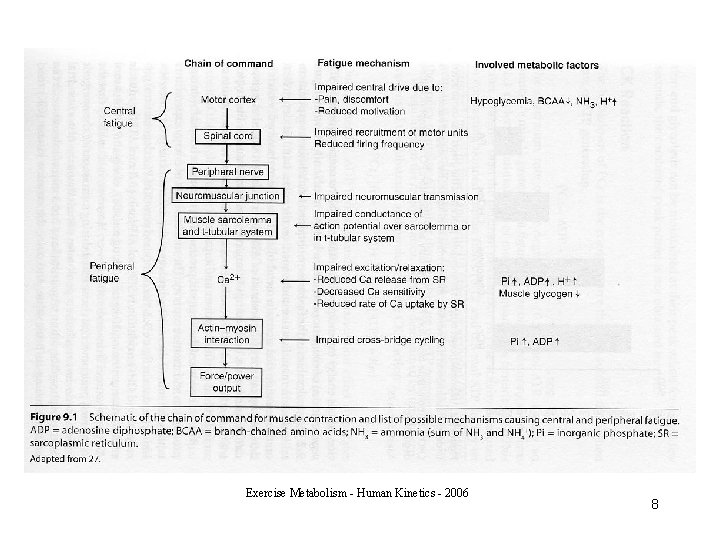
Fatigue During Exercise • Causes of muscle fatigue have been classified into central and peripheral • Central - includes CNS, motivation and psychological factors – restoration of force with external stimulation of muscle -indicates central fatigue – NH 3, hypoglycemia, reticular formation • Peripheral - PNS to muscle - EC coupling, energy supply and force generation 7
Exercise Metabolism - Human Kinetics - 2006 8
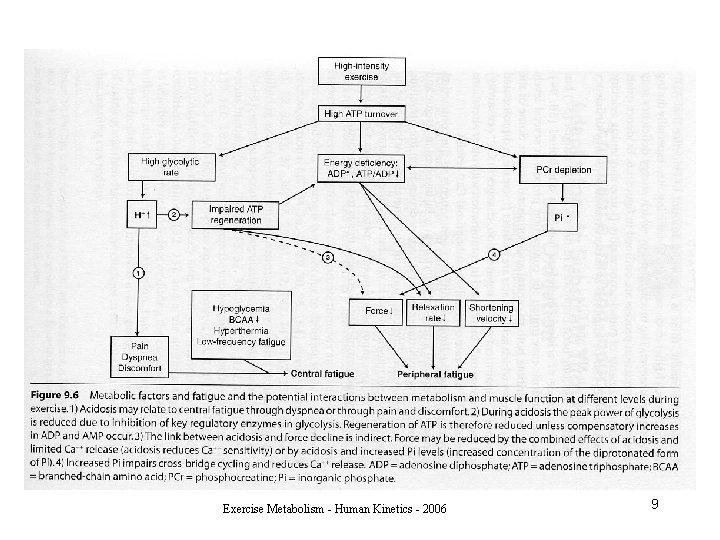
Exercise Metabolism - Human Kinetics - 2006 9
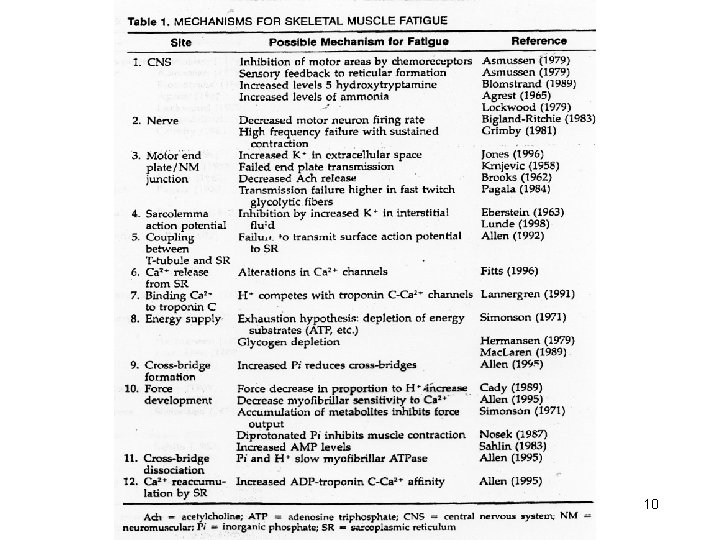
10
Identifying site of Fatigue • fatigue can be identified specifically - eg. Glycogen, Ca++ depletion • Compartmentalization within the cell increases the difficult of determining the source of fatigue – eg. ATP may be depleted at the myosin head, but adequate elsewhere in the cell - is this detectable? • Often the origin of fatigue is diffuse – eg dehydration – several factors then contribute to a disturbance of homeostasis – Often easier to identify correlations to fatigue, rather than causal contributions to fatigue 11
Environment and Fatigue • Heat and humidity - can affect endurance performance • inc sweat, heat gain, dehydration, changes in electrolytes results in – redistribution of Cardiac Output – Uncoupling of mitochondria - less ATP with same VO 2 – changes in psychological perception of exercise • Fatigue is cumulative over time – dehydration yesterday can influence performance today – Glycogen depletion cumulative as well • Reduced circulation to muscle may result in glycogen depletion – Reducing endurance capacity 12

Central Fatigue • possible to have fatigue w/out the muscles itself being fatigued – eg pain may affect drive to continue • Compare force output during fatigue with force output during maximal external stimulus (eg electrical impulse on motor nerve) – An ability of this external stimulation to restore force would indicate central fatigue • Psychological Fatigue – understanding is minimal – With training - athletes can learn to minimize influence of sensory inputs 13 – Able to approach performance limits
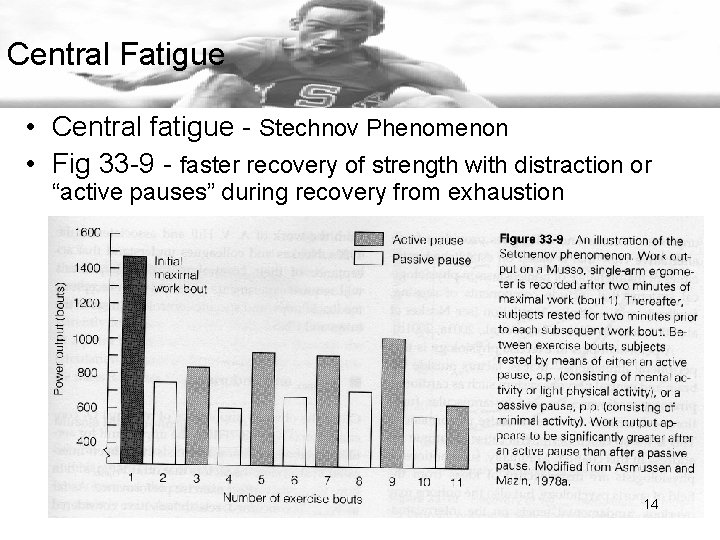
Central Fatigue • Central fatigue - Stechnov Phenomenon • Fig 33 -9 - faster recovery of strength with distraction or “active pauses” during recovery from exhaustion 14

Peripheral Fatigue • Fig 33 -6 - ulnar stimulation is constant - force development decrease over time - indicating peripheral fatigue 15
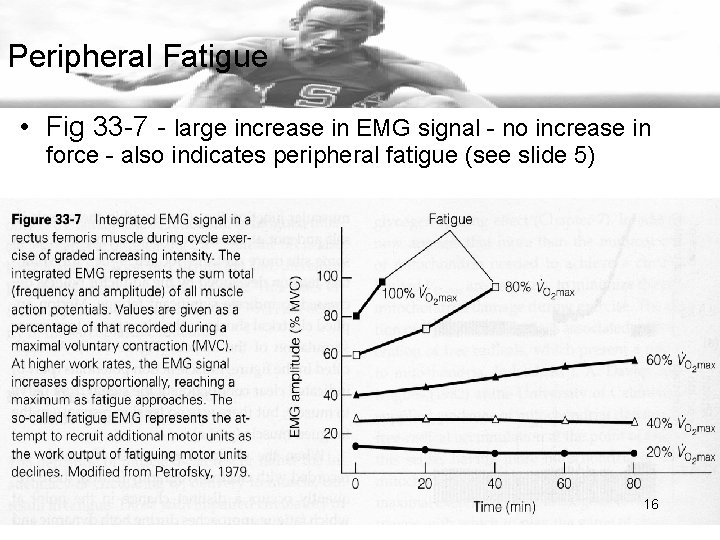
Peripheral Fatigue • Fig 33 -7 - large increase in EMG signal - no increase in force - also indicates peripheral fatigue (see slide 5) 16
Peripheral Fatigue • Two hypothesis for peripheral fatigue • a) Exhaustion - depletion of energy substrates - eg ATP, CP, glycogen – Phosphagens are present in low quantities – Must match use with restoration from other metabolic pathways - or fatigue • b) Accumulation of metabolic byproducts - eg H+, Ca++, Pi • Likely a combination of factors with contributions influenced by the specific conditions of the activity 17
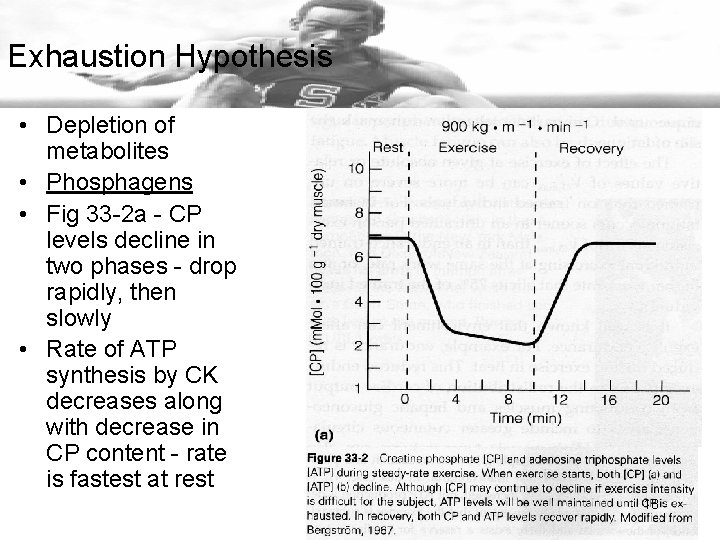
Exhaustion Hypothesis • Depletion of metabolites • Phosphagens • Fig 33 -2 a - CP levels decline in two phases - drop rapidly, then slowly • Rate of ATP synthesis by CK decreases along with decrease in CP content - rate is fastest at rest 18
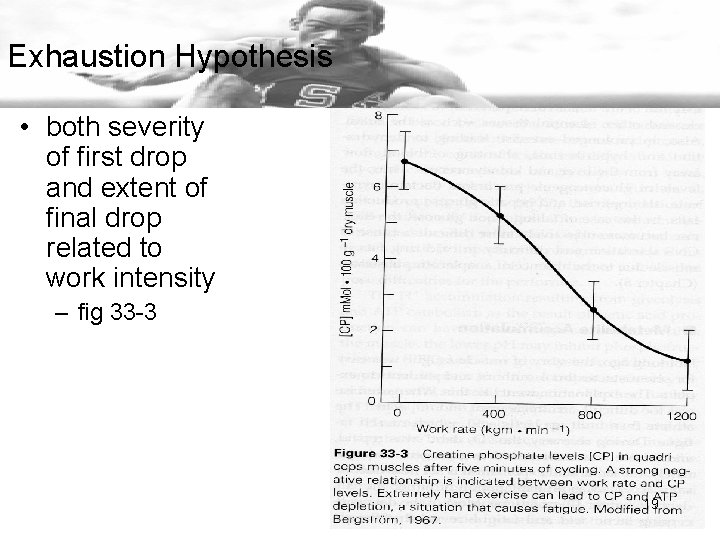
Exhaustion Hypothesis • both severity of first drop and extent of final drop related to work intensity – fig 33 -3 19
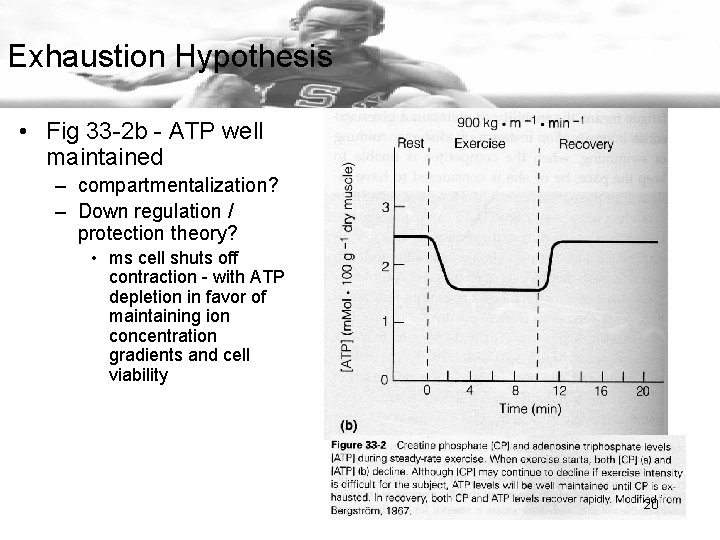
Exhaustion Hypothesis • Fig 33 -2 b - ATP well maintained – compartmentalization? – Down regulation / protection theory? • ms cell shuts off contraction - with ATP depletion in favor of maintaining ion concentration gradients and cell viability 20
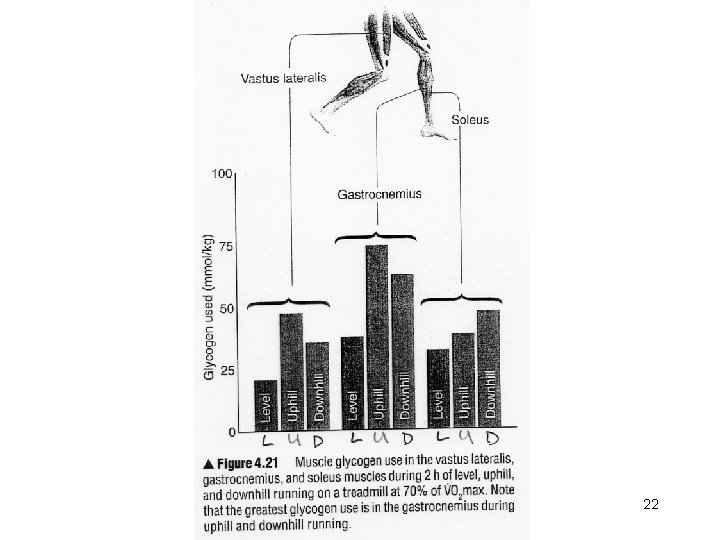
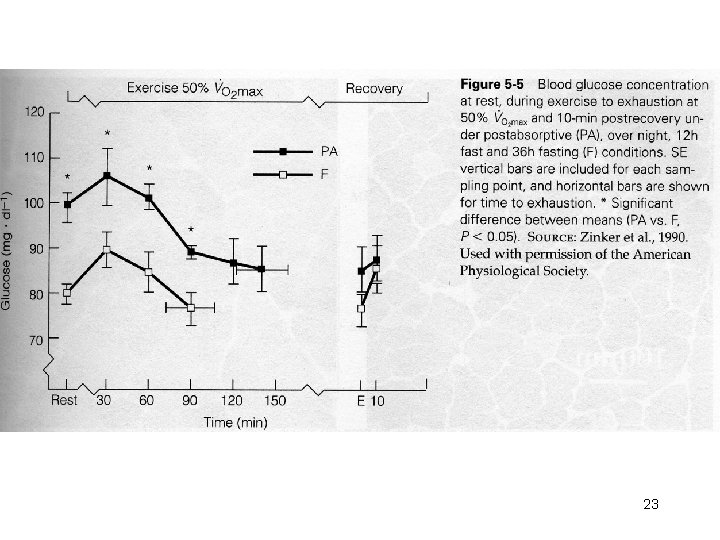
Depletion (continued) • Glycogen – depletion associated with fatigue – moderate activity - uniform depletion from different fiber types • Also activity specific fiber depletion – Carbohydrate loading can improve performance – Caffeine (inc FFA mobilization) can also offset fatigue • Blood Glucose – During short intense exercise bouts - blood glucose rises – With prolonged activity- blood glucose may fall • Fatigue at blood glucose below 3. 5 m. M • Anapleurotic substrates – Krebs cycle intermediates - decline results in reduced capacity of Krebs 21
22
23
Accumulation Hypothesis • H+ (acidity) • Lactic acid accumulates during short term high intensity exercise – As production exceeds removal – exported into blood from muscle • As it is a strong acid -blood p. H decreases – H+ in blood - affects CNS • pain, nausea, discomfort, disorientation – inhibits O 2 / Hb combination in lung – reduces HS lipase - dec FFA oxidation – **still unsure if this induces fatigue** 24
Accumulation Hypothesis • muscle acidosis – all glycolytic intermediates are weak acids – ATP breakdown also produces H+ • may inhibit PFK - slowing glycolysis • may interfere with calcium binding Tn. C • may stimulate pain receptors 25
Accumulation • Phosphate( Pi) and Diprotenated phosphate (H 2 PO 4) • phosphagen depletion (CP) - results in Pi accumulation – behaves like proton • inhibiting PFK • interfering with X-bridge attachment, detachment and force production 26
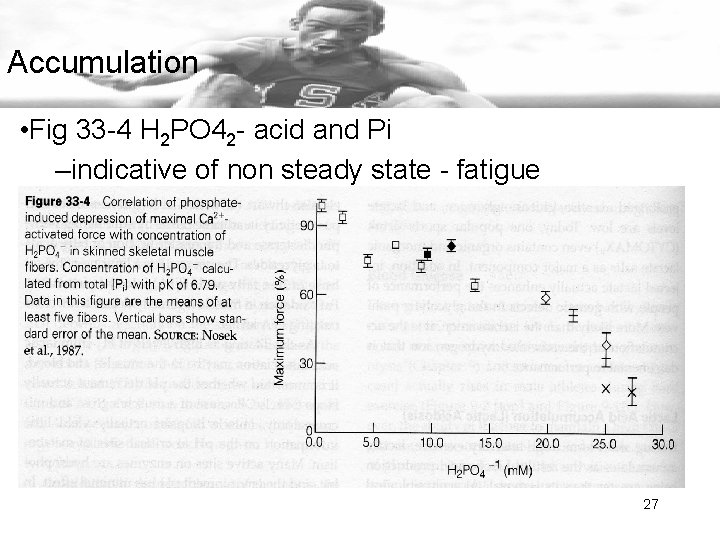
Accumulation • Fig 33 -4 H 2 PO 42 - acid and Pi –indicative of non steady state - fatigue 27
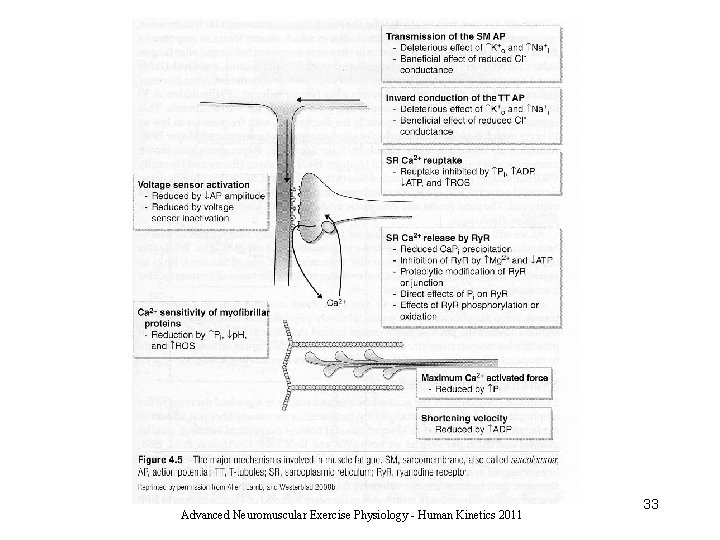
Accumulation • Calcium Ion Accumulation • mitochondrial coupling efficiency – – some Ca++ stimulates Krebs cycle accumulation - requires energy to remove the calcium Creates oxidative phosphorylation uncoupling in test tube exacerbated by reduced Ca++ sequestering by SR with fatigue 28
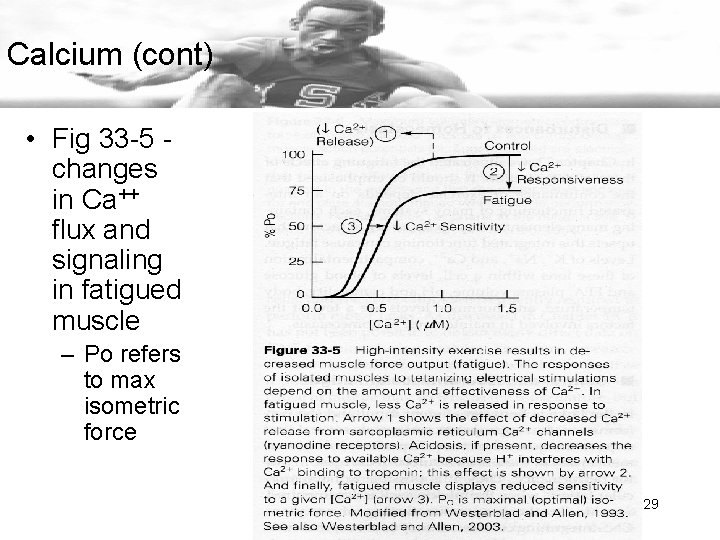
Calcium (cont) • Fig 33 -5 changes in Ca++ flux and signaling in fatigued muscle – Po refers to max isometric force 29
Calcium (cont) • symptoms of fatigue (fig 33 -5) – decreased force generation - with single or tetanic stimulation – related to SR Ca++ release, and/or p. H affects on opening of SR channels • 1. dec free calcium – – May be EC coupling at T tubules, sarcolemma, or SR channels Accumulation in mito, dec SR uptake Lactate anion interference with ryanodine receptor Pi precipitation with free calcium • 2. Responsiveness - down shift – H+ interference with Ca++ binding • 3. Sensitivity - small L-R shift – given free Ca++ - less force – less impact than dec release or responsiveness 30
Potassium (K+) • Foss p 65 • K+ is released from contracting muscle resulting in – reducing cytosolic and an increasing plasma K+ content – Release high enough to block nerve transmission in T tubules – Concomitant increase in Na+ intracellulary disrupts normal sarcolemmal membrane potential and excitability • High Na+/K+ pump activity improves performance • Rapid recovery of K+- 2 -5 minutes – Complete in ~30 minutes – During exercise inactive tissues take up K+ 31
O 2 depletion and Mitochondria • O 2 depletion and Mito density – dec in ms O 2 or circ O 2 can lead to fatigue eg altitude, circulation impairments – low O 2 often indicated by lactate accumulation, CP depletion or both – exercise depends on integration of many functions - any upset -- fatigue • Doubling of oxidative capacity with training – increases use of FFA -sparing glycogen – Minimizes impact of the damaging effects of free radicals 32
Advanced Neuromuscular Exercise Physiology - Human Kinetics 2011 33
Heart Fatigue • Heart as site of Fatigue – no direct evidence that heart is site of fatigue – Arterial PO 2 is maintained during exercise, heart gets Q priority – heart can utilize lactate or FFA – ECG - no signs of ischemia at maximal effort or fatigue – if there are signs- heart disease is indicated – With severe dehydration. . . Cardiac arrhythmia is possible 34
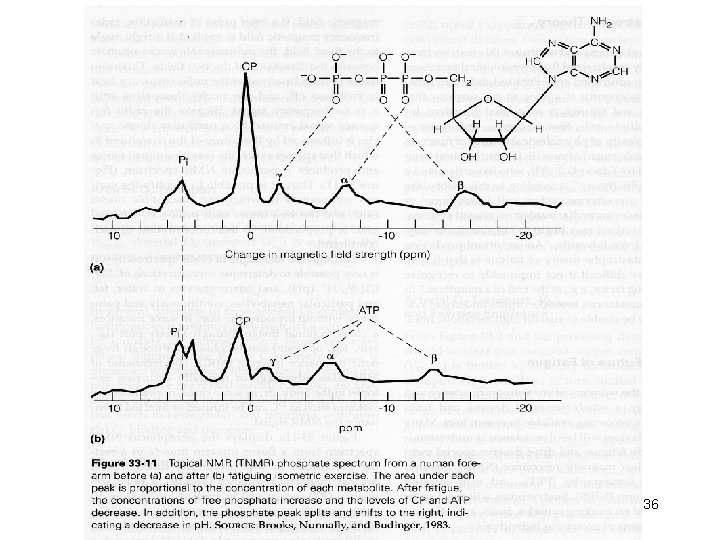
Future of Fatigue • Technology is making available new devices - further investigation of fatigue • NMR – possible to determine [ ] of Phosphagens, protons, water, fat, metabolites – without breaking the skin – Fig 33 -11 – a at rest - before fatigue – b after fatigue – area under curve represents [ ] of metabolites (ATP, CP, Pi) – Clear indication of declines and accumulations at fatigue • Table 33 -1 comparison of values – NMR vs muscle biopsy 35
36
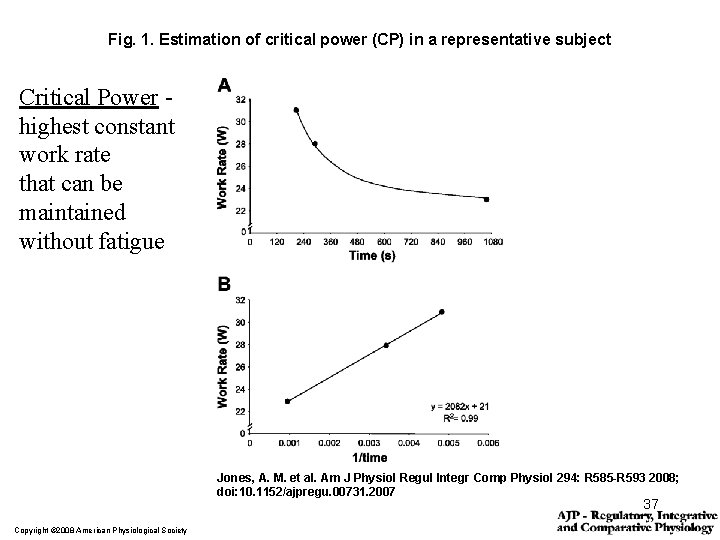
Fig. 1. Estimation of critical power (CP) in a representative subject Critical Power highest constant work rate that can be maintained without fatigue Jones, A. M. et al. Am J Physiol Regul Integr Comp Physiol 294: R 585 -R 593 2008; doi: 10. 1152/ajpregu. 00731. 2007 37 Copyright © 2008 American Physiological Society
Exercise Metabolism - Human Kinetics - 2006 38
- Slides: 38