
FAT POLITICS EMBODIMENT AND REPRESENTATION Elise C Nagy
FAT POLITICS, EMBODIMENT, AND REPRESENTATION Elise C. Nagy WS/AC 240 The University of Michigan December 4 t h -6 t h 2017
ACCESS TO LECTURE / ADDITIONAL INFO Write down your questions for me or your GSI Slides will be available on Canvas I’ll be happy to share more resources! (This is the tip of the iceberg. ) Content Note: Anti-fat bias, weight loss, dieting, disordered eating, healthcare discrimination, slurs
DISABILITY JUSTICE-INFORMED FEMINIST FAT POSITIVE APPROACH Critiques the equation of health with morality and goodness Looks at how hegemonic health discourses disproportionately vilify women, people of color, poor people, disabled people, LGBTQ+ people, etc. Makes the argument that unhealthy and disabled fat people should get the same respect / right to autonomy as healthy fat people Critiques divides between “good” and “bad” fat people
DISABILITY JUSTICE-INFORMED FEMINIST FAT POSITIVE APPROACH Recognizes that a lot of anti-fat sentiment and ableist sentiment come out of the same health rhetoric, same power structures (medicalization, moralizing) Contextualizes fatness within a relational model of disability Foregrounds gender and demands intersectional analysis Feminist epistemology: consciousness raising, multiple standpoints, academically rigorous critique of “weight science”
WHY IS THIS A FEMINIST ISSUE? Anti-fat bias affects all people but it affects women & girls most harshly Women’s value has been placed more on their appearance than on their thoughts and actions Eating disorders, disordered eating, and body image issues are much more common amongst girls and women § although this is increasingly a problem for men in GBTQ communities, as well, and we need more data on how this affects NB people. Rhetoric about embodiment shaping access to social power is one of the main through lines in feminist thought, re: gender , race, class, sexuality, dis/ability, etc.
LEARNING GOALS 1. Our understandings of health, beauty, and fatness are socially constructed. 1. Anti-fat oppression is inextricable from oppression based on gender, race, class, sexuality, and dis/ability status. 3. Fat positive advocates have been organizing for decades to bring these issues to light, using intersectional feminism to envision the possibility of a world in which fat people can thrive.
WHAT IS ANTI-FAT OPPRESSION? “According to research previously conducted at the Yale Rudd Center for Food Policy & Obesity, the prevalence of weightbased stigmatization is now on par with rates of racial discrimination, and has been documented across multiple domains, including employment, medical, and interpersonal settings. ” -Natasha Schvey Structural stigmatization, marginalization & discrimination.
MARGINALIZATION AT SCHOOL 1 of 3 children has experienced weight bias from a teacher. (Rudd Report 2008) 2 of 3 children have experienced weight bias from a classmate. (Rudd Report 2008) Fat students are significantly less likely to be accepted for admissions to college despite comparable academic performance. (Canning 1966) Teachers have a lower expectation for fat students in comparison to thinner students. (O’Brien et al 2007) Negative attitudes start in preschool and progress as students age. (Turnbull et al 2000)
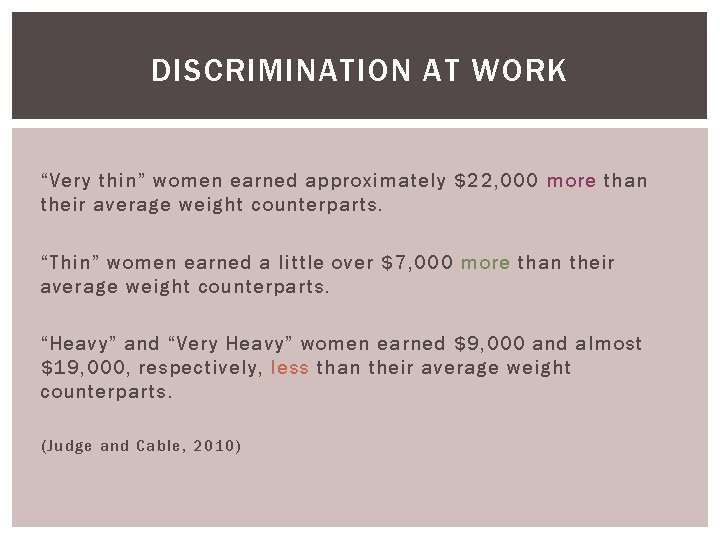
DISCRIMINATION AT WORK “Very thin” women earned approximately $22, 000 more than their average weight counterparts. “Thin” women earned a little over $7, 000 more than their average weight counterparts. “Heavy” and “Very Heavy” women earned $9, 000 and almost $19, 000, respectively, less than their average weight counterparts. (Judge and Cable, 2010)
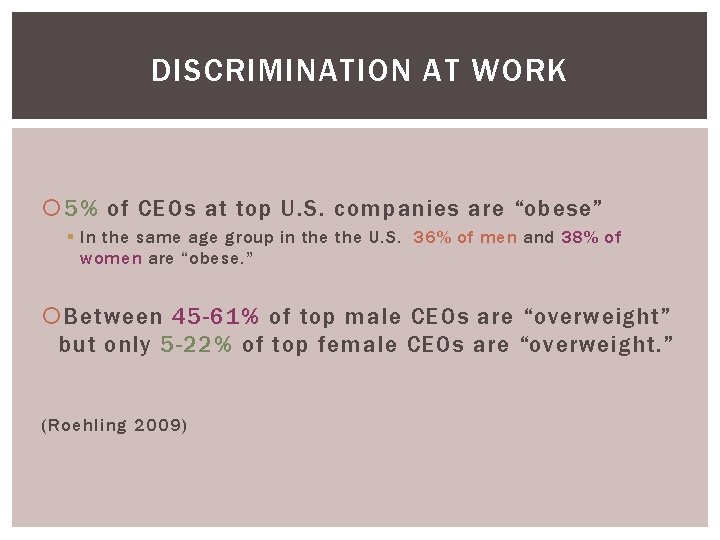
DISCRIMINATION AT WORK 5% of CEOs at top U. S. companies are “obese” § In the same age group in the U. S. 36% of men and 38% of women are “obese. ” Between 45 -61% of top male CEOs are “overweight” but only 5 -22% of top female CEOs are “overweight. ” (Roehling 2009)
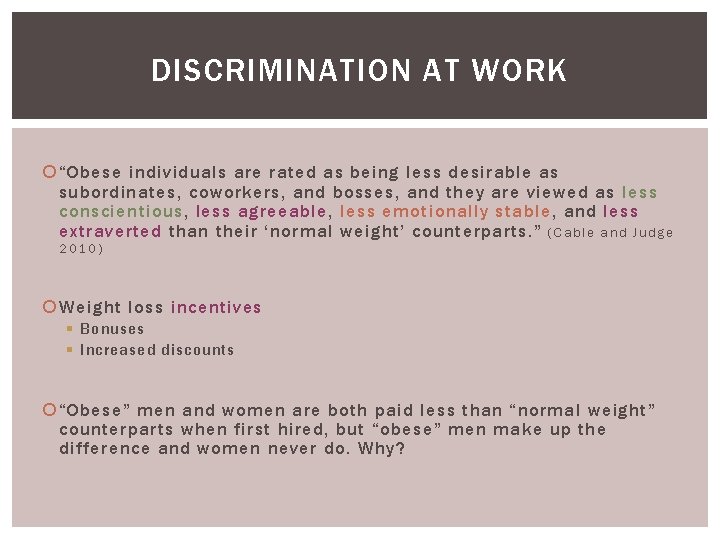
DISCRIMINATION AT WORK “Obese individuals are rated as being less desirable as subordinates, coworkers, and bosses, and they are viewed as less conscientious, less agreeable, less emotionally stable, and less extraverted than their ‘normal weight’ counterparts. ” ( C a b l e a n d J u d g e 2010) Weight loss incentives § Bonuses § Increased discounts “Obese” men and women are both paid less than “normal weight” counterparts when first hired, but “obese” men make up the difference and women never do. Why?
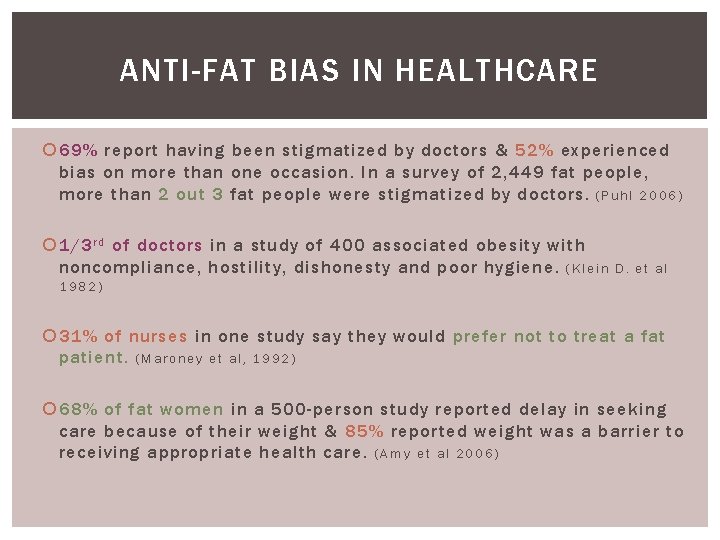
ANTI-FAT BIAS IN HEALTHCARE 69% report having been stigmatized by doctors & 52% experienced bias on more than one occasion. In a survey of 2, 449 fat people, more than 2 out 3 fat people were stigmatized by doctors. ( P u h l 2 0 0 6 ) 1/3 r d of doctors in a study of 400 associated obesity with noncompliance, hostility, dishonesty and poor hygiene. ( K l e i n D. et al 1982) 31% of nurses in one study say they would prefer not to treat a fat patient. ( M a r o n e y e t a l , 1 9 9 2 ) 68% of fat women in a 500 -person study reported delay in seeking care because of their weight & 85% reported weight was a barrier to receiving appropriate health care. ( A m y e t a l 2 0 0 6 )
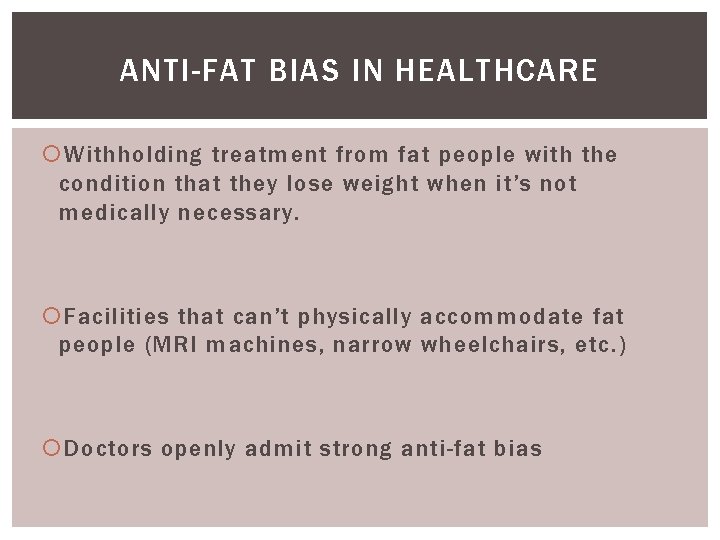
ANTI-FAT BIAS IN HEALTHCARE Withholding treatment from fat people with the condition that they lose weight when it’s not medically necessary. Facilities that can’t physically accommodate fat people (MRI machines, narrow wheelchairs, etc. ) Doctors openly admit strong anti-fat bias
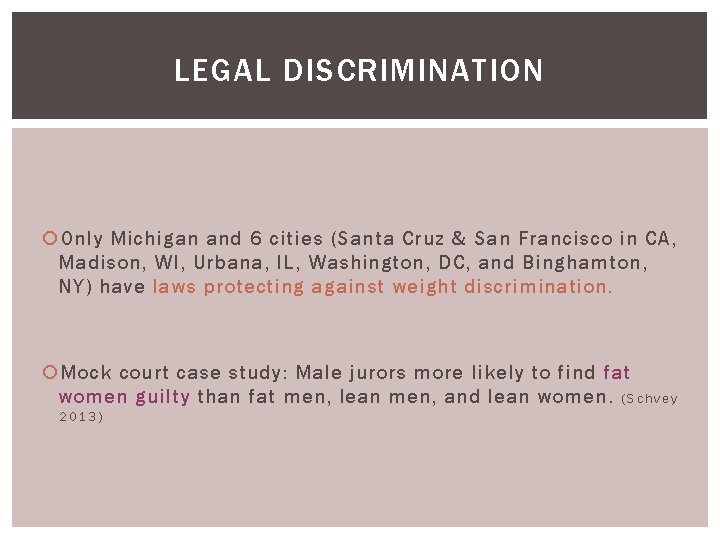
LEGAL DISCRIMINATION Only Michigan and 6 cities (Santa Cruz & San Francisco in CA, Madison, WI, Urbana, IL, Washington, DC, and Binghamton, NY) have laws protecting against weight discrimination. Mock court case study: Male jurors more likely to find fat women guilty than fat men, lean men, and lean women. ( S c h v e y 2013)
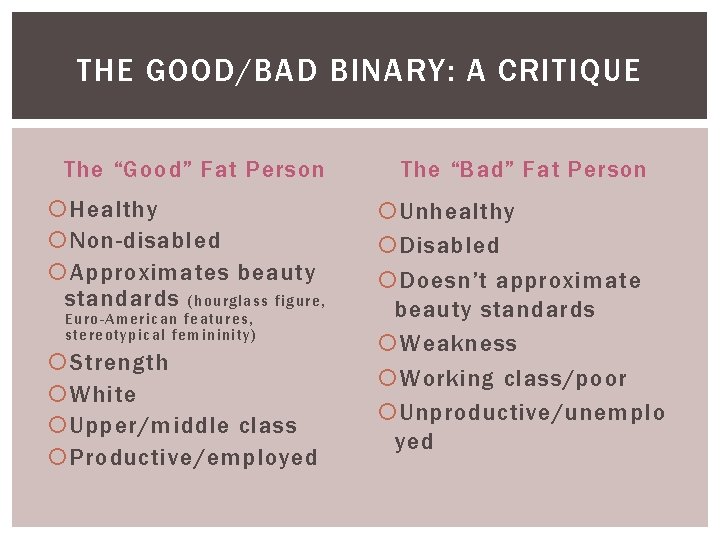
THE GOOD/BAD BINARY: A CRITIQUE The “Good” Fat Person Healthy Non-disabled Approximates beauty standards (hourglass figu re, E uro- A meric an features, st ere ot yp ical femininity) Strength White Upper/middle class Productive/employed The “Bad” Fat Person Unhealthy Disabled Doesn’t approximate beauty standards Weakness Working class/poor Unproductive/unemplo yed
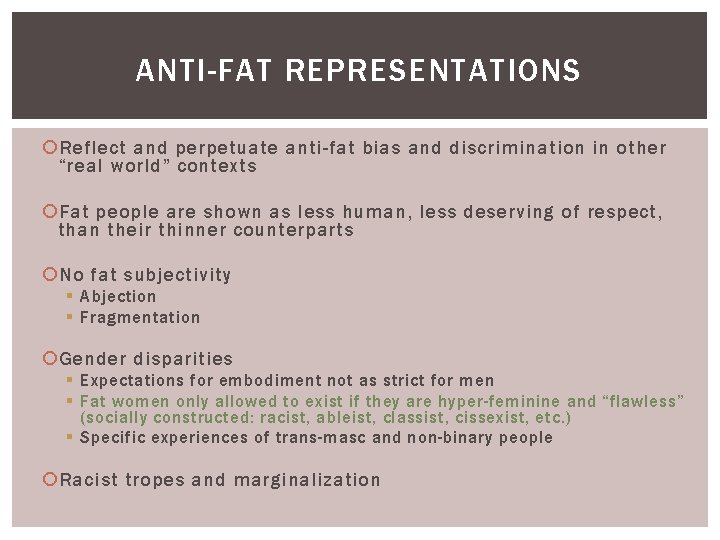
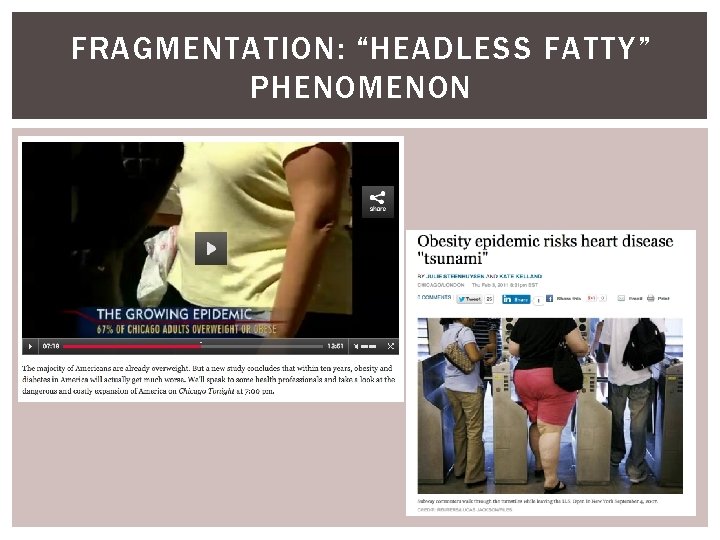
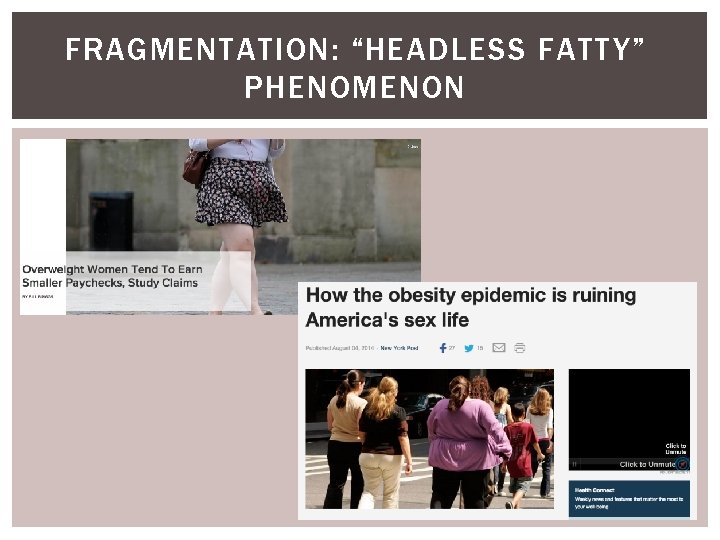
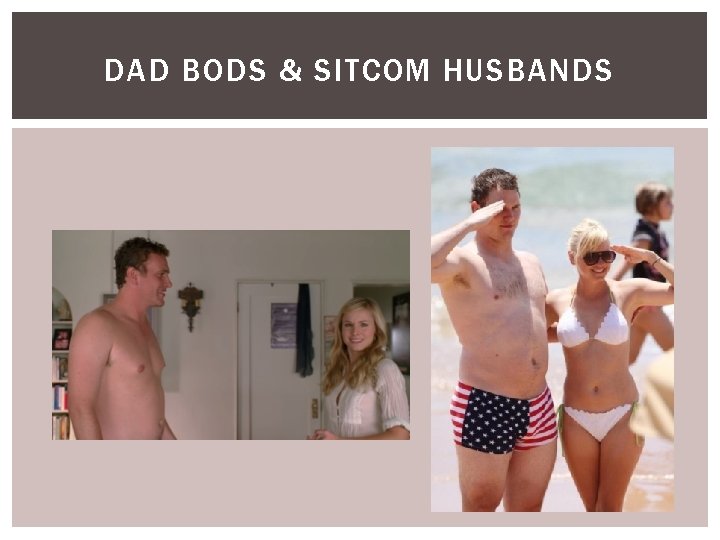
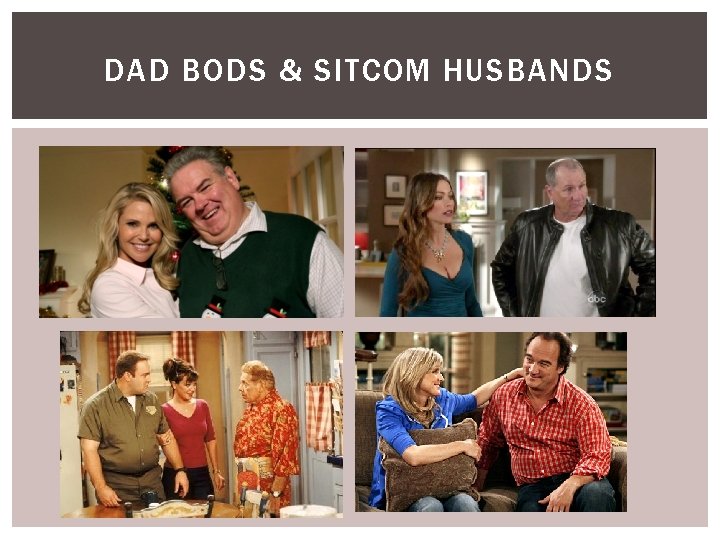
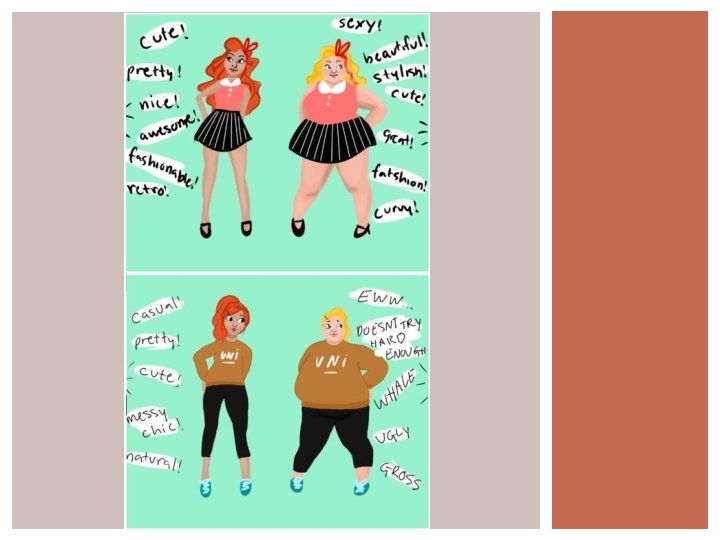
ANTI-FAT REPRESENTATIONS Reflect and perpetuate anti-fat bias and discrimination in other “real world” contexts Fat people are shown as less human, less deserving of respect, than their thinner counterparts No fat subjectivity § Abjection § Fragmentation Gender disparities § Expectations for embodiment not as strict for men § Fat women only allowed to exist if they are hyper-feminine and “flawless” (socially constructed: racist, ableist, classist, cissexist, etc. ) § Specific experiences of trans-masc and non-binary people Racist tropes and marginalization
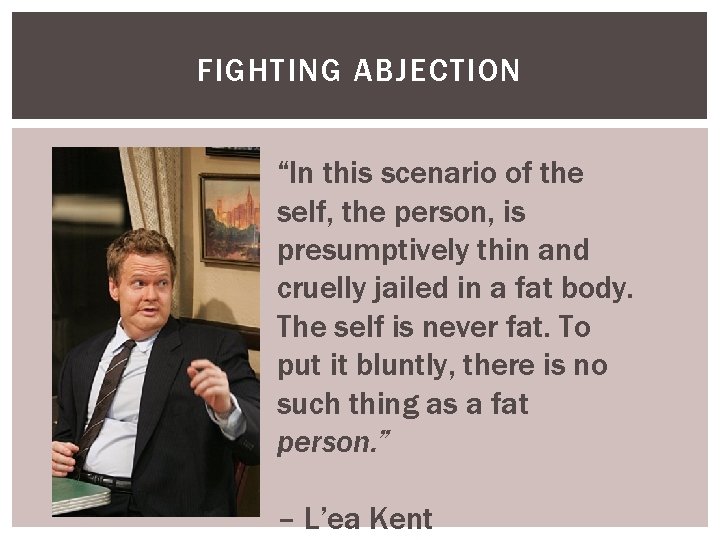
FIGHTING ABJECTION “In this scenario of the self, the person, is presumptively thin and cruelly jailed in a fat body. The self is never fat. To put it bluntly, there is no such thing as a fat person. ” – L’ea Kent
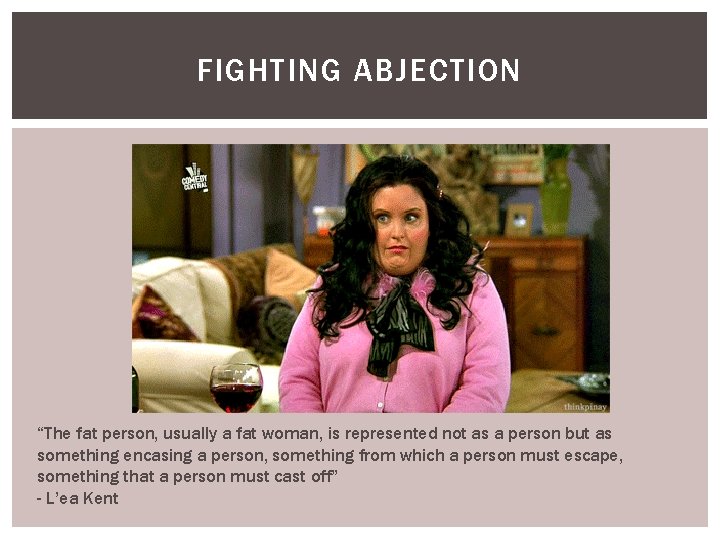
FIGHTING ABJECTION “The fat person, usually a fat woman, is represented not as a person but as something encasing a person, something from which a person must escape, something that a person must cast off” - L’ea Kent
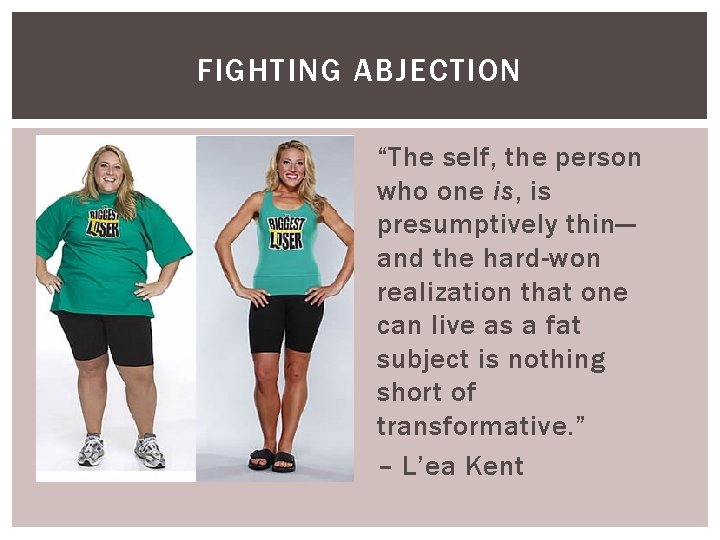
FIGHTING ABJECTION “The self, the person who one is, is presumptively thin— and the hard-won realization that one can live as a fat subject is nothing short of transformative. ” – L’ea Kent
ERASURE / FRAGMENTATION “Literal erasure and extreme fragmentation characterize the few representations of fat people” – L’ea Kent
FRAGMENTATION: “HEADLESS FATTY” PHENOMENON
FRAGMENTATION: “HEADLESS FATTY” PHENOMENON
DAD BODS & SITCOM HUSBANDS
DAD BODS & SITCOM HUSBANDS
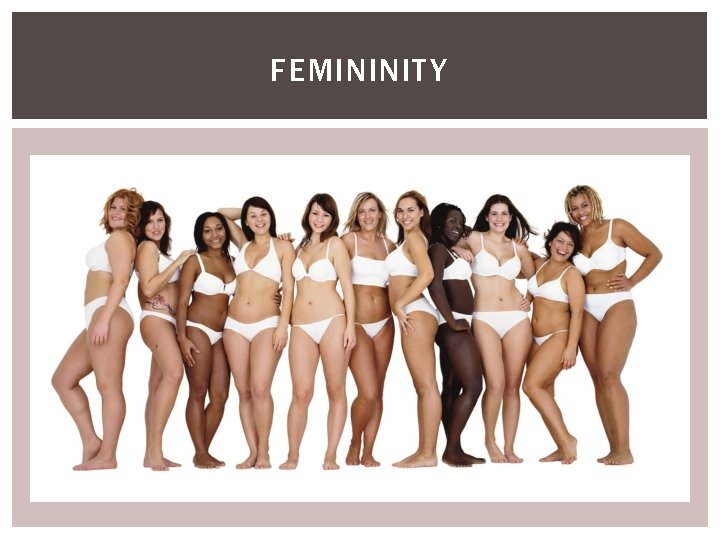
FEMININITY
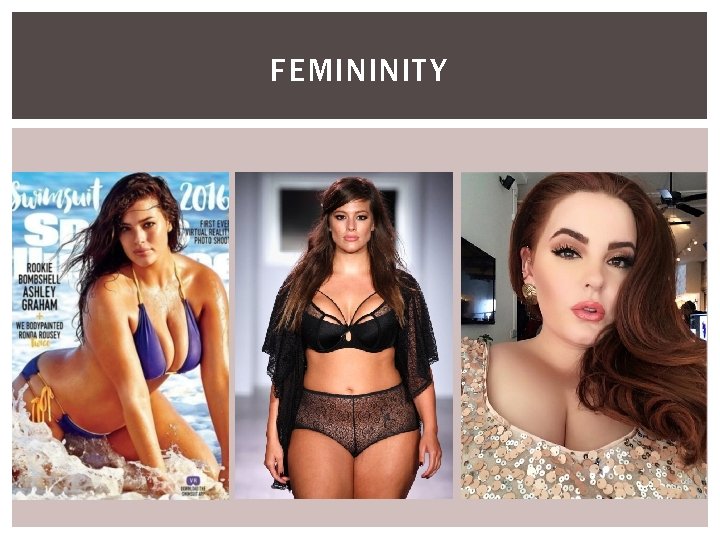
FEMININITY
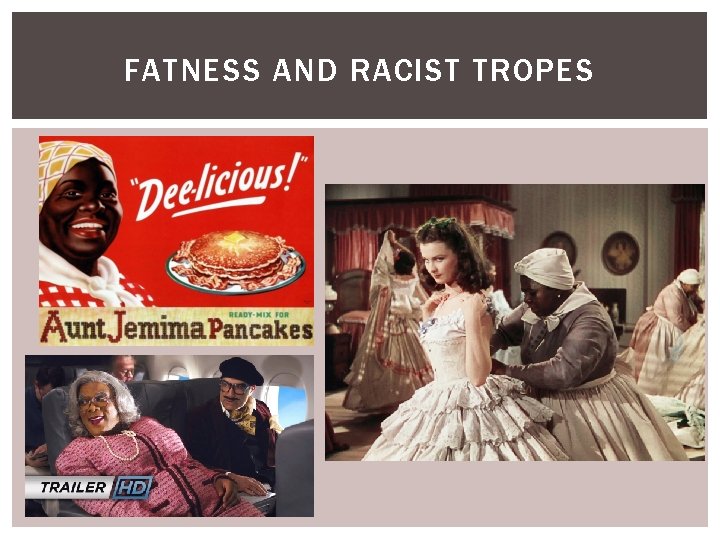
FATNESS AND RACIST TROPES
ANTI-FAT DISCRIMINATION AND RACISM Racist/misogynistic tropes enmeshed with anti-fat sentiment Assumptions that women of color don’t deal with anti-fat discrimination, actually often feel compounded effects of racism and anti-fat discrimination Lack of positive representation Marginalization within fat positive movement
POSITIVE REPRESENTATIONS OF FATNESS? Can you think of any representations of fat embodiment with: 1. 2. 3. 4. 5. Complex interiority Social and sexual agency Fatness isn’t a joke Doesn’t perpetuate fatness as abjection Doesn’t emphasize fatness as self-inflicted health problem
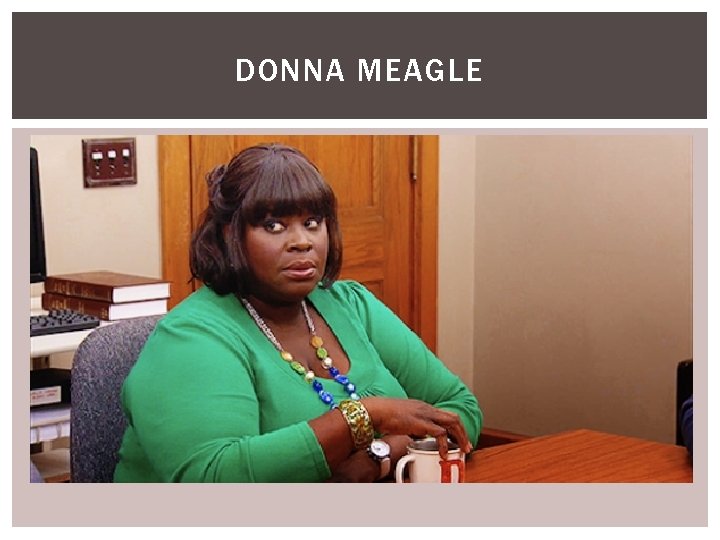
DONNA MEAGLE
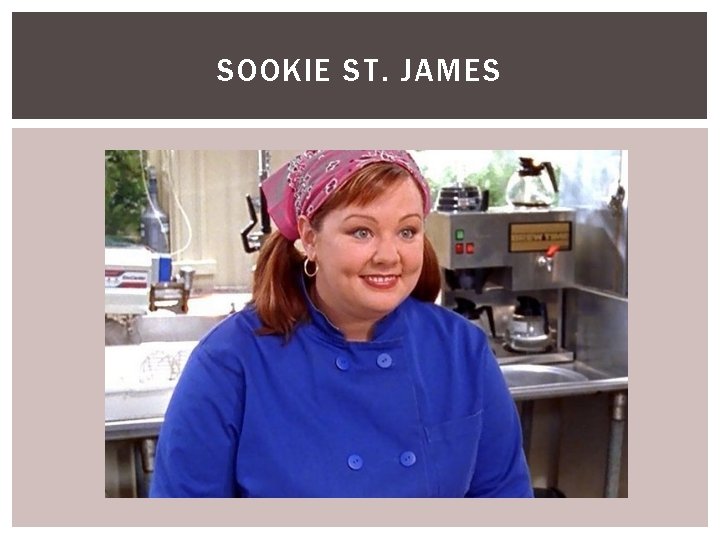
SOOKIE ST. JAMES
MOVEMENT BUILDING Educating people, especially current/future healthcare providers Making art and media (books, podcasts, movies, TV shows, zines) Using their platform to advocate self-love and fat justice Doing research Consciousness raising
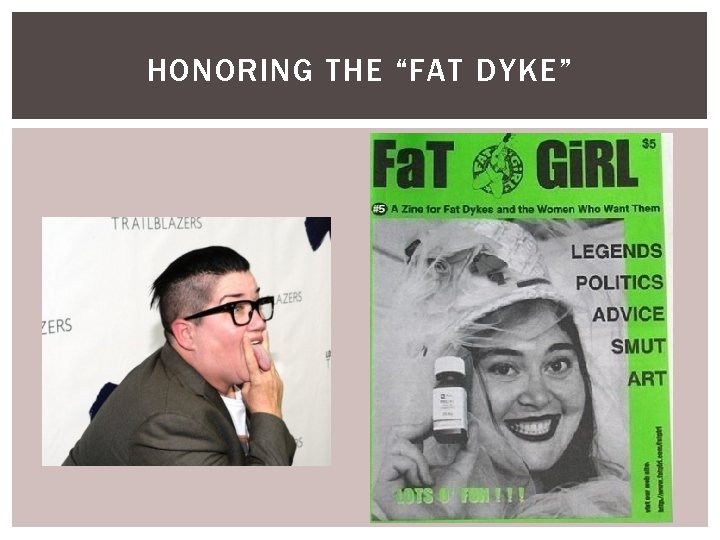
HONORING THE “FAT DYKE”
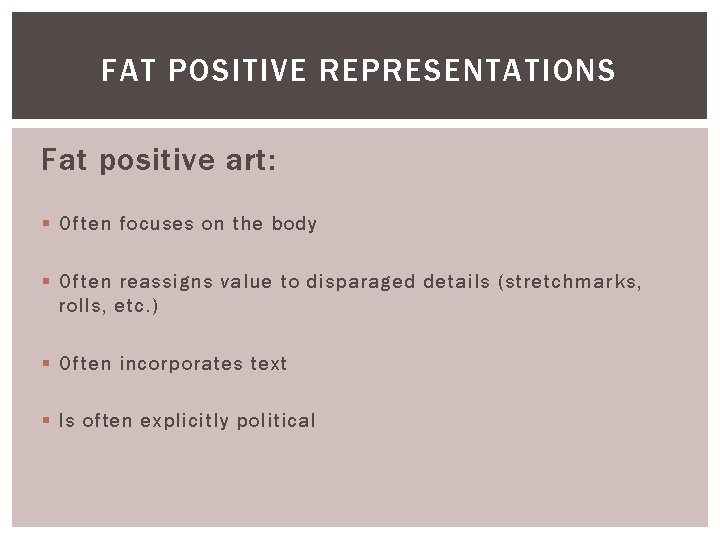
FAT POSITIVE REPRESENTATIONS Fat positive art: § Often focuses on the body § Often reassigns value to disparaged details (stretchmarks, rolls, etc. ) § Often incorporates text § Is often explicitly political
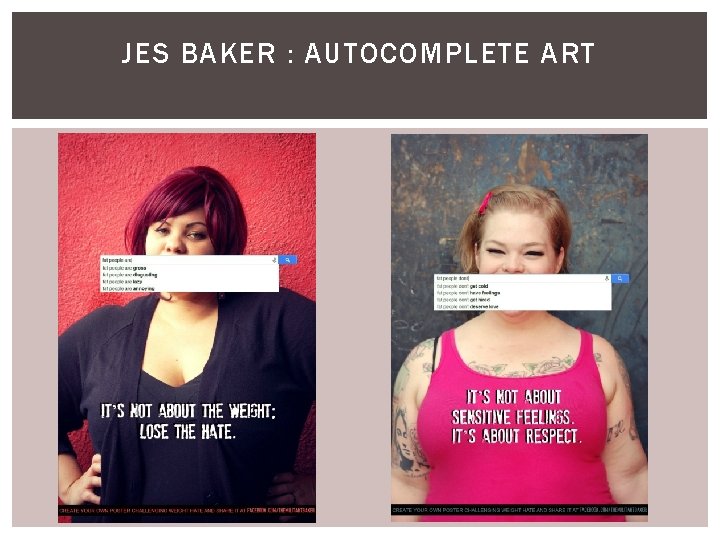
JES BAKER : AUTOCOMPLETE ART
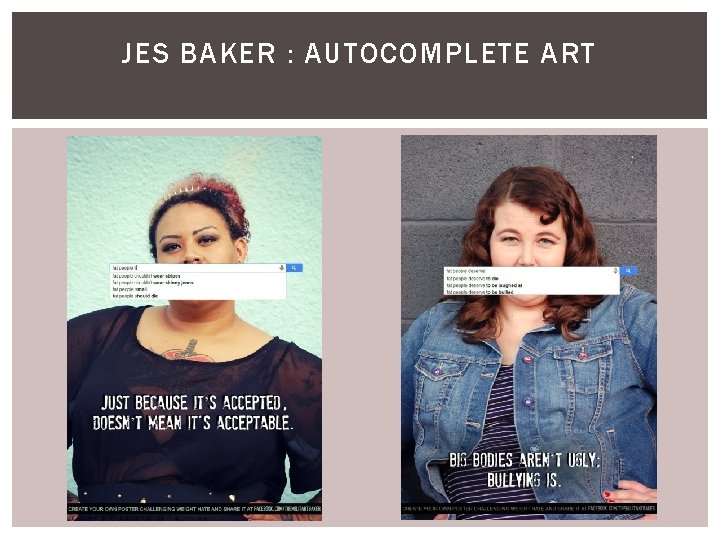
JES BAKER : AUTOCOMPLETE ART
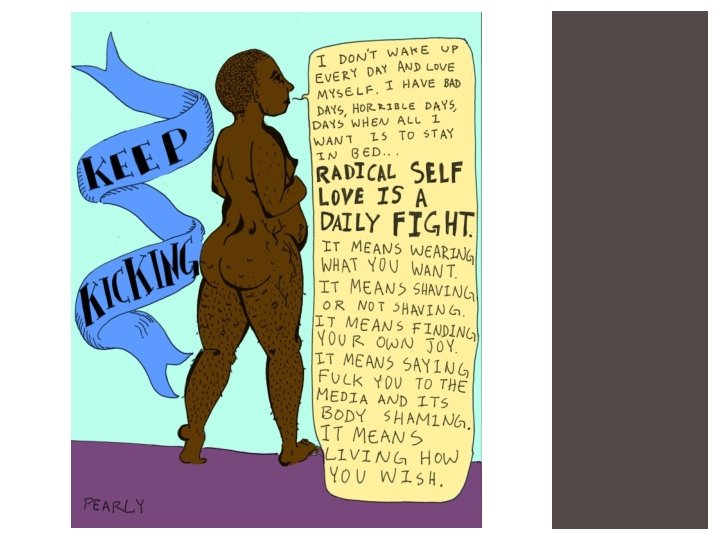
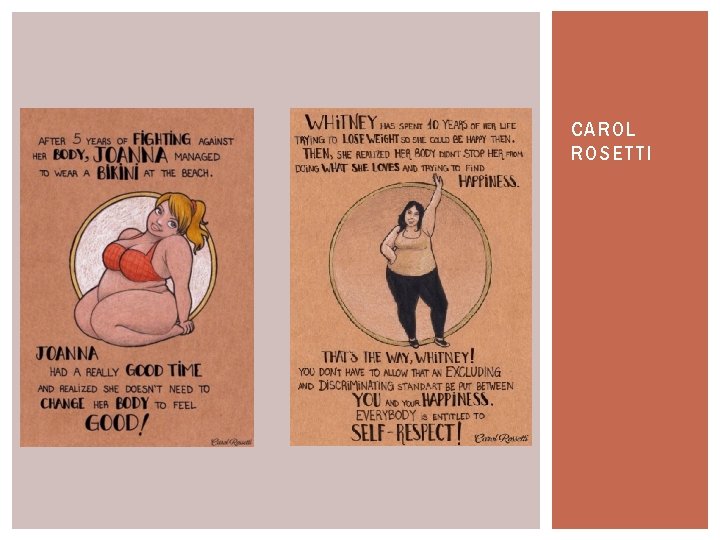
CAROL ROSETTI
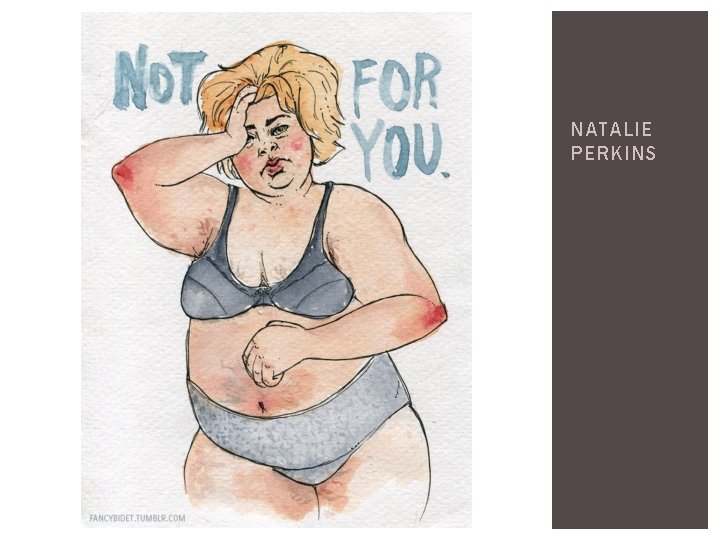
NATALIE PERKINS
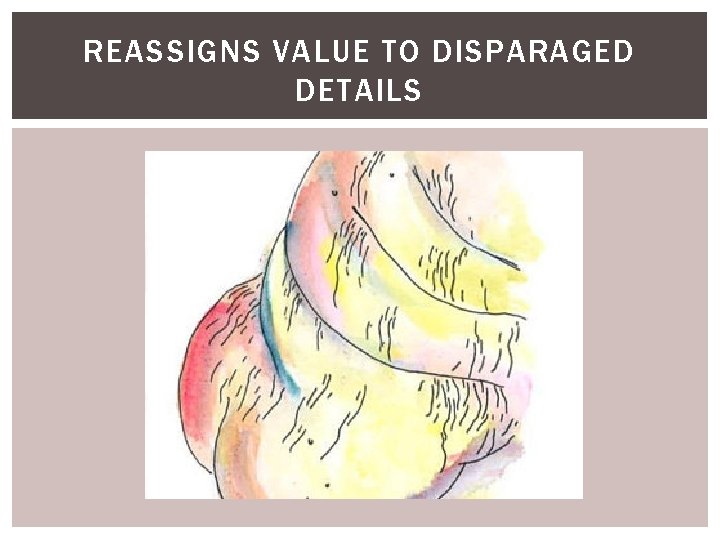
REASSIGNS VALUE TO DISPARAGED DETAILS
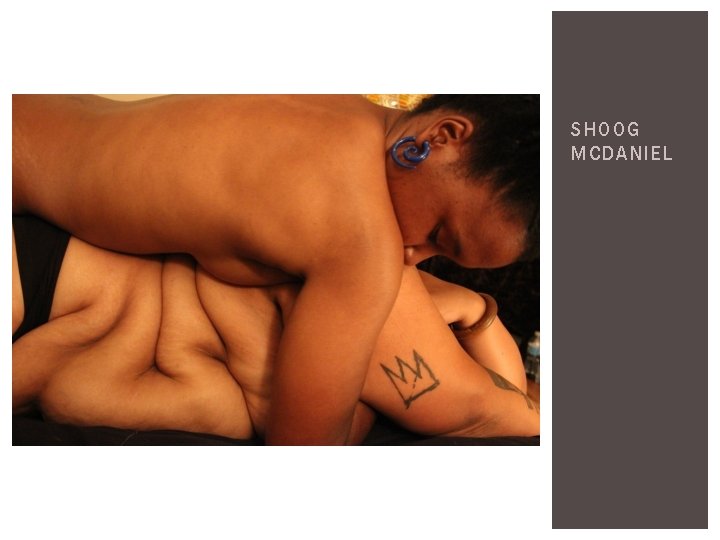
SHOOG MCDANIEL
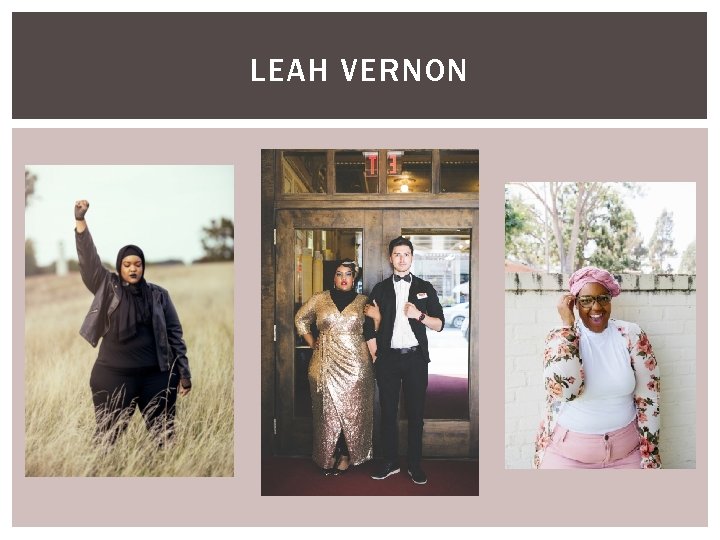
LEAH VERNON
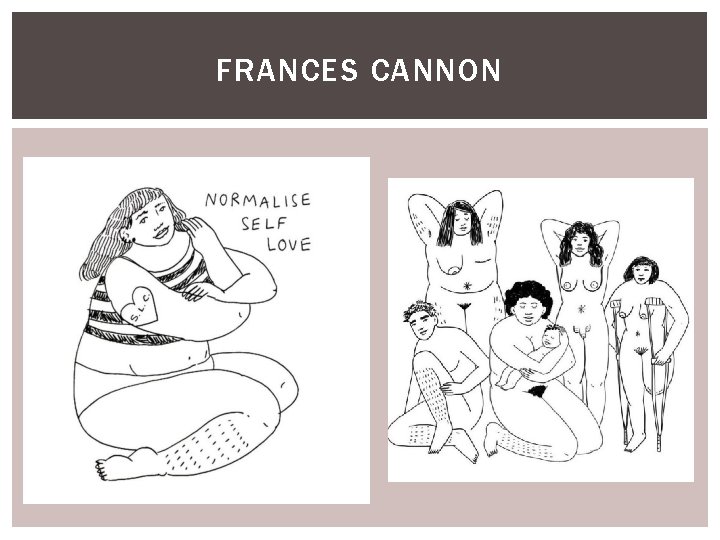
FRANCES CANNON
LEARNING GOALS 1. Our understandings of health, beauty, and fatness are socially constructed. 1. Anti-fat oppression is inextricable from oppression based on gender, race, class, sexuality, and dis/ability status. 3. Fat positive advocates have been organizing for decades to bring these issues to light, using intersectional feminism to envision the possibility of a world in which fat people can thrive.
WHAT CAN YOU DO? Interrogate your own assumptions about people with stigmatized body types. What assumptions do you make about fat people? How might you be contributing to this oppression unintentionally? Don’t shame people for their body size/weight, even with good intentions (like a supposed concern about their health). Don't participate in “diet talk” or negative body talk and encourage friends to not do it.
WHAT CAN YOU DO? Think critically about how you talk to the children in your life about embodiment and what makes bodies “good” or “bad. ” Try to practice eating competence if you can. Try to have a more holistic relationship to food—i. e. be in tune with your body and listen to it rather than ascribing so much meaning to calories, etc. Think about nutrients (protein and vitamins, etc. ) Try to think about health as something you feel not a way to look.
WHAT CAN YOU DO? When you see something that claims to be “body positive” be critical about which bodies are missing. Seek out fat positive representation, community, and culture.
CONTACT INFO ECNAGY@UMICH. EDU
- Slides: 49