
Fat Digestion Bile acid physiology Lipolysis and Micelles
Fat Digestion Bile acid physiology Lipolysis and Micelles Transport and chylomicron physiology Daniel S. Kamin MD Boston Children’s Hospital Content Reviewers: Sohail Z. Husain, MD Veronique Morinville MD, FRCP(C)

NASPGHAN Physiology Education Series Editors: Christine Waasdorp Hurtado, MD, MSCS, FAAP Christine. Waasdorp@childrenscolorado. org Daniel Kamin, MD Daniel. Kamin@childrens. harvard. edu
Learning Objectives • Understand how bile salts are synthesized, secreted, transformed, and conserved • Describe the composition of micelles and how they function to efficiently move fat-soluble nutrients to the mucosal surface • Explain how efficient lipolysis proceeds in the intestine • Understand how long-chain fatty acids, medium chain fatty acids, and fat soluble vitamins gain access to systemic circulation
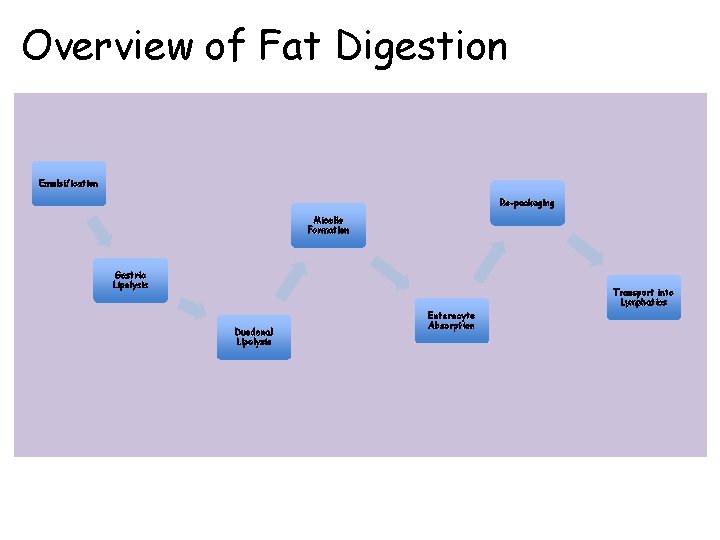
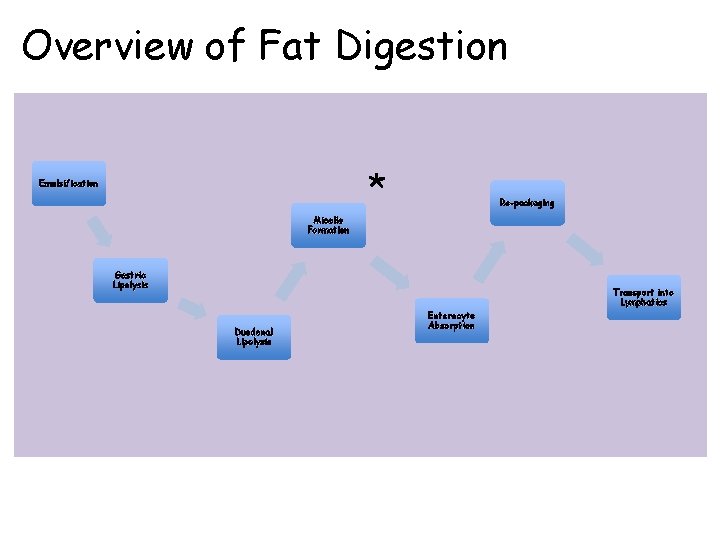
Overview of Fat Digestion Emulsification Re-packaging Micelle Formation Gastric Lipolysis Transport into Lymphatics Duodenal Lipolysis Enterocyte Absorption
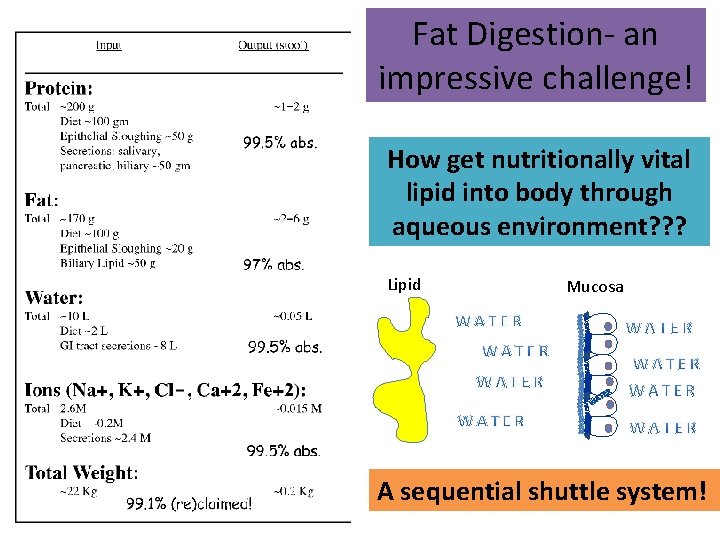
Fat Digestion- an impressive challenge! How get nutritionally vital lipid into body through aqueous environment? ? ? Lipid Mucosa R TE WA A sequential shuttle system!
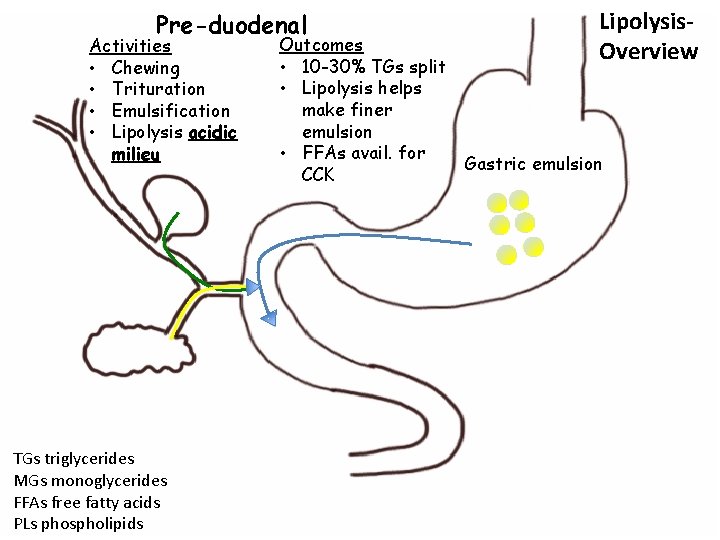
Pre-duodenal Activities • Chewing • Trituration • Emulsification • Lipolysis acidic milieu TGs triglycerides MGs monoglycerides FFAs free fatty acids PLs phospholipids Outcomes • 10 -30% TGs split • Lipolysis helps make finer emulsion • FFAs avail. for CCK Lipolysis. Overview Gastric emulsion
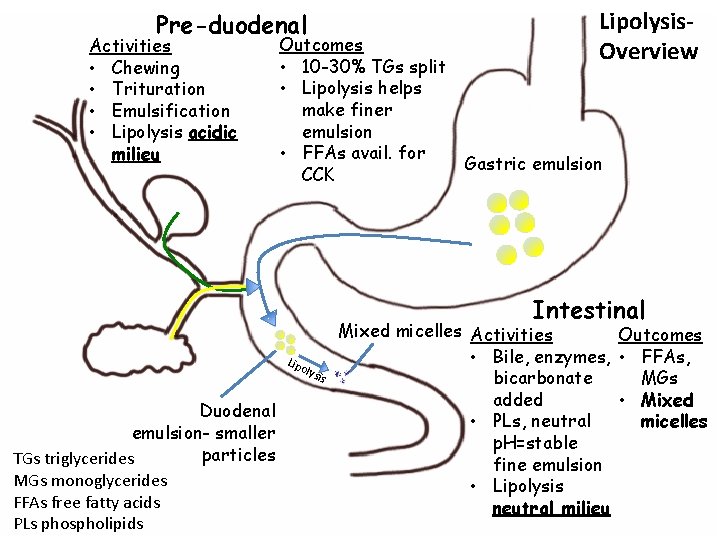
Pre-duodenal Activities • Chewing • Trituration • Emulsification • Lipolysis acidic milieu Outcomes • 10 -30% TGs split • Lipolysis helps make finer emulsion • FFAs avail. for CCK Lipolysis. Overview Gastric emulsion Intestinal Lip oly Duodenal emulsion- smaller particles TGs triglycerides MGs monoglycerides FFAs free fatty acids PLs phospholipids sis Mixed micelles Activities Outcomes • Bile, enzymes, • FFAs, MGs bicarbonate • Mixed added micelles • PLs, neutral p. H=stable fine emulsion • Lipolysis neutral milieu

Overview of Fat Digestion Emulsification Re-packaging Gastric Lipolysis Micelle Formation * Transport into Lymphatics Duodenal Lipolysis Enterocyte Absorption
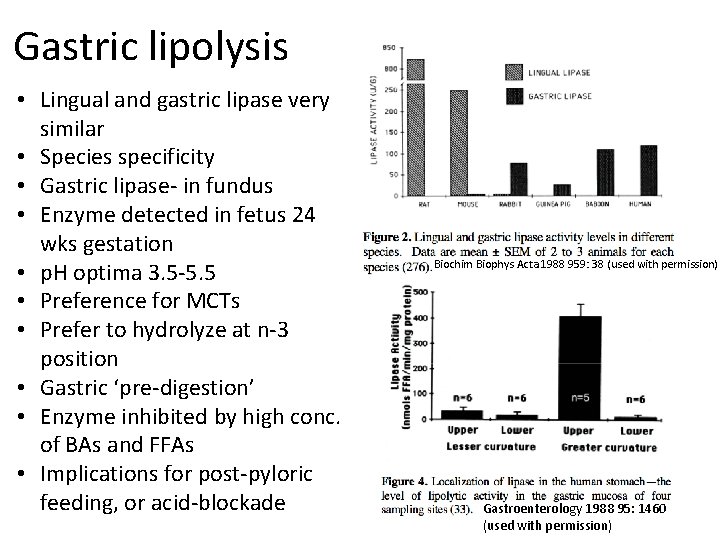
Gastric lipolysis • Lingual and gastric lipase very similar • Species specificity • Gastric lipase- in fundus • Enzyme detected in fetus 24 wks gestation • p. H optima 3. 5 -5. 5 • Preference for MCTs • Prefer to hydrolyze at n-3 position • Gastric ‘pre-digestion’ • Enzyme inhibited by high conc. of BAs and FFAs • Implications for post-pyloric feeding, or acid-blockade Biochim Biophys Acta 1988 959: 38 (used with permission) Gastroenterology 1988 95: 1460 (used with permission)
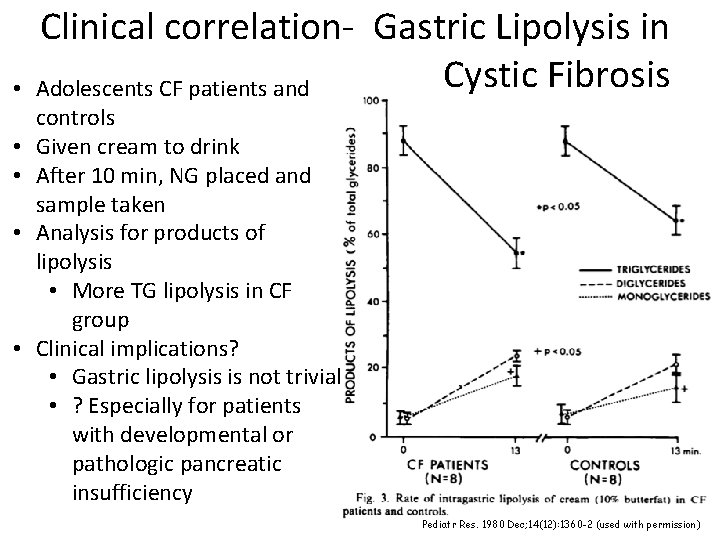
• • • Clinical correlation- Gastric Lipolysis in Cystic Fibrosis Adolescents CF patients and controls Given cream to drink After 10 min, NG placed and sample taken Analysis for products of lipolysis • More TG lipolysis in CF group Clinical implications? • Gastric lipolysis is not trivial • ? Especially for patients with developmental or pathologic pancreatic insufficiency Pediatr Res. 1980 Dec; 14(12): 1360 -2 (used with permission)
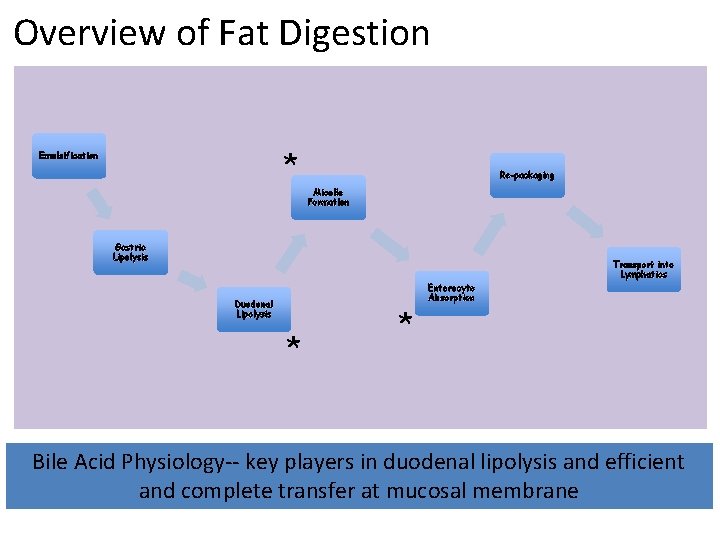
Overview of Fat Digestion * Emulsification Re-packaging Micelle Formation Gastric Lipolysis Transport into Lymphatics Enterocyte Absorption Duodenal Lipolysis * * Bile Acid Physiology-- key players in duodenal lipolysis and efficient and complete transfer at mucosal membrane
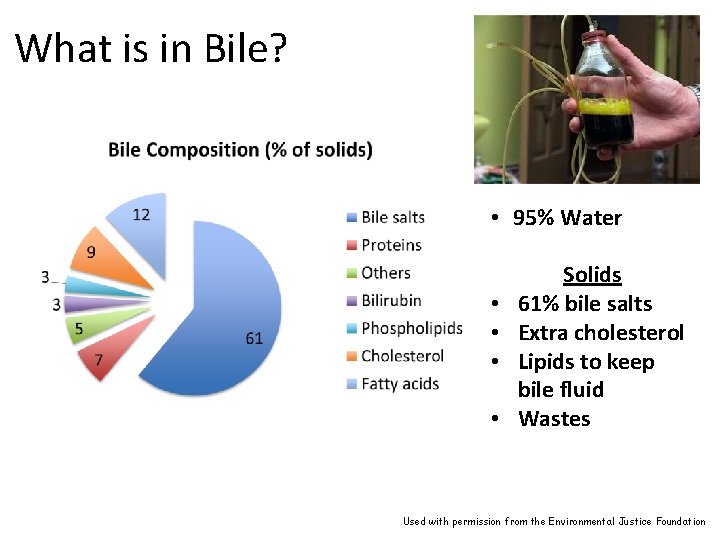
What is in Bile? • 95% Water • • Solids 61% bile salts Extra cholesterol Lipids to keep bile fluid Wastes Used with permission from the Environmental Justice Foundation
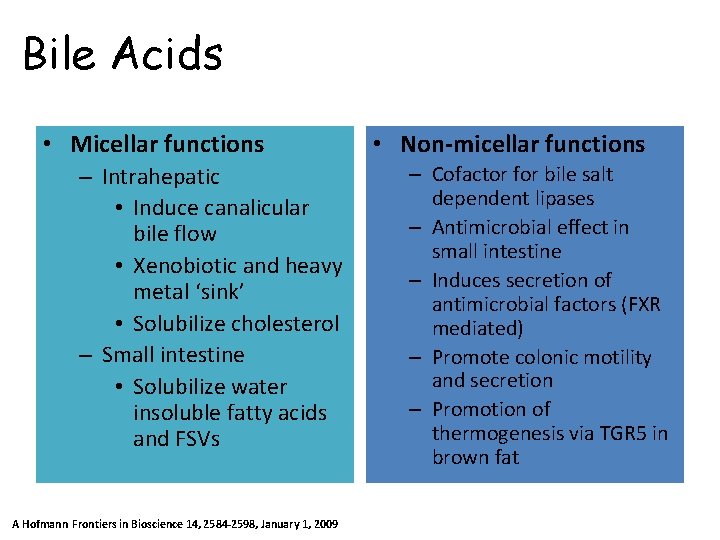
Bile Acids • Micellar functions – Intrahepatic • Induce canalicular bile flow • Xenobiotic and heavy metal ‘sink’ • Solubilize cholesterol – Small intestine • Solubilize water insoluble fatty acids and FSVs A Hofmann Frontiers in Bioscience 14, 2584 -2598, January 1, 2009 • Non-micellar functions – Cofactor for bile salt dependent lipases – Antimicrobial effect in small intestine – Induces secretion of antimicrobial factors (FXR mediated) – Promote colonic motility and secretion – Promotion of thermogenesis via TGR 5 in brown fat
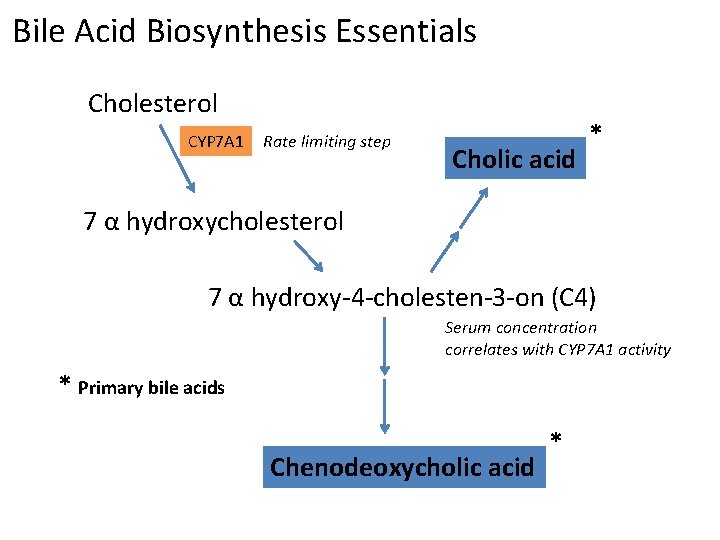
Bile Acid Biosynthesis Essentials Cholesterol CYP 7 A 1 Rate limiting step Cholic acid * 7 α hydroxycholesterol 7 α hydroxy-4 -cholesten-3 -on (C 4) Serum concentration correlates with CYP 7 A 1 activity * Primary bile acids Chenodeoxycholic acid *
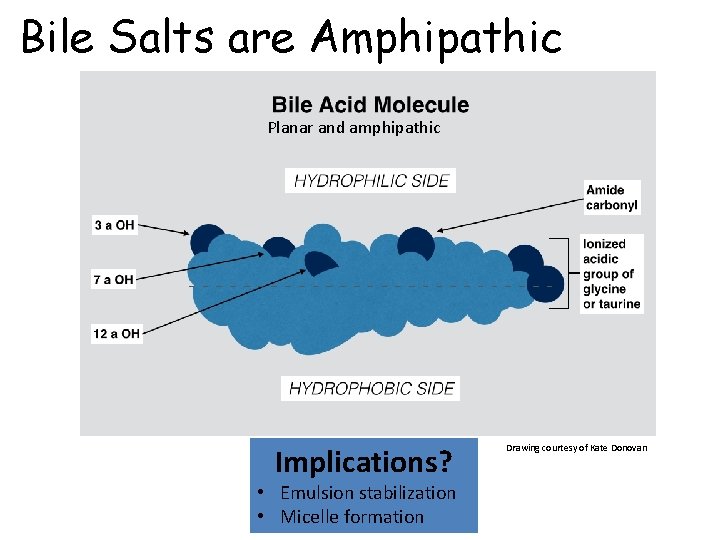
Bile Salts are Amphipathic Planar and amphipathic Implications? • Emulsion stabilization • Micelle formation Drawing courtesy of Kate Donovan
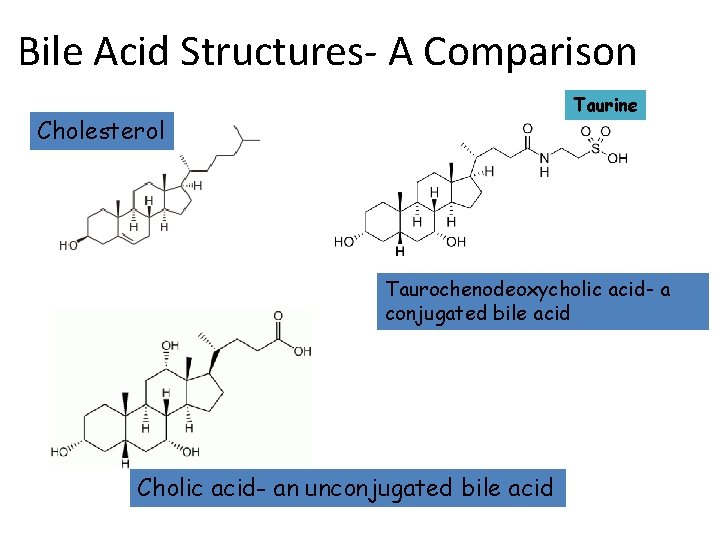
Bile Acid Structures- A Comparison Taurine Cholesterol Taurochenodeoxycholic acid- a conjugated bile acid Cholic acid- an unconjugated bile acid
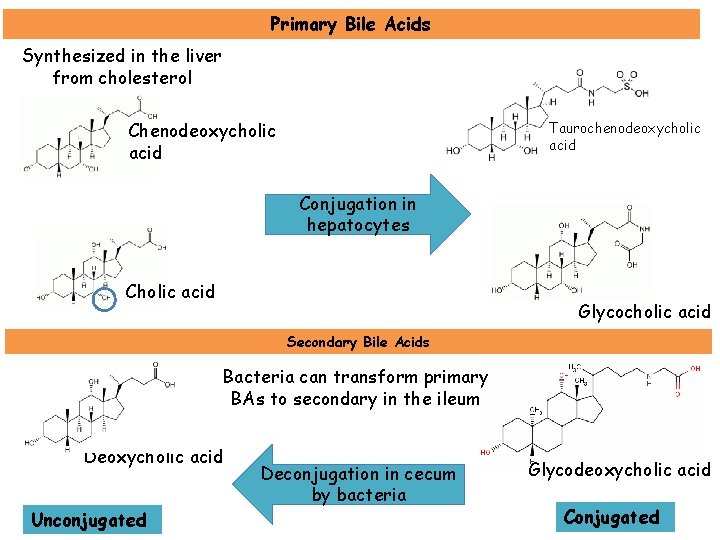
Primary Bile Acids Synthesized in the liver from cholesterol Chenodeoxycholic acid Taurochenodeoxycholic acid Conjugation in hepatocytes Cholic acid Glycocholic acid Secondary Bile Acids Bacteria can transform primary BAs to secondary in the ileum Deoxycholic acid Unconjugated Deconjugation in cecum by bacteria Glycodeoxycholic acid Conjugated

Common Bile Acids in Humans Common Name Type Cholic acid Primary Chenodeoxycholic acid Primary Deoxycholic acid Secondary Lithocholic acid Secondary Total Key Characteristic Synthesized from cholesterol in the liver Produced in intestine from action of bacteria on primary bile acids Pool Size (mg) Daily Synthesis (mg) 500 -1500 180 -360 500 -1400 100 -250 200 -1000 NA 50 -100 NA 1250 -4000 280 -610 Based on Pattni and Walters British Medical Bulletin 2009 92: 79 -93
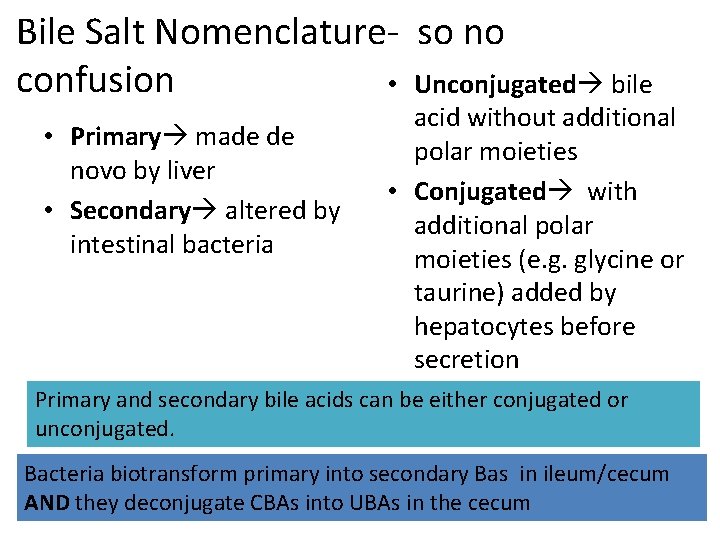
Bile Salt Nomenclature- so no confusion • Unconjugated bile • Primary made de novo by liver • Secondary altered by intestinal bacteria acid without additional polar moieties • Conjugated with additional polar moieties (e. g. glycine or taurine) added by hepatocytes before secretion Primary and secondary bile acids can be either conjugated or unconjugated. Bacteria biotransform primary into secondary Bas in ileum/cecum AND they deconjugate CBAs into UBAs in the cecum
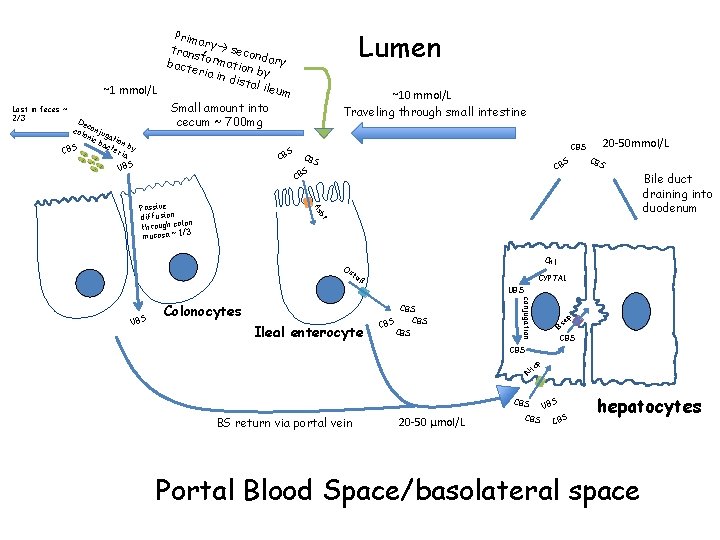
De c col onju g oni c b ation act S eri by CB a UBS Lumen ~10 mmol/L Traveling through small intestine S CB CBS S CB BS C CB S Bile duct draining into duodenum As Passive diffusion lon through co 3 mucosa ~ 1/ 20 -50 mmol/L bt Chl Os tα β CYP 7 A 1 Colonocytes CBS Ileal enterocyte CBS CBS conjugation CBS p CBS N tc UBS ep UBS Bs Lost in feces ~ 2/3 Prima r trans y seco nd f bact ormation ary eria in dis by tal il eum ~1 mmol/L Small amount into cecum ~ 700 mg CBS BS return via portal vein 20 -50 μmol/L CBS UBS S CB hepatocytes Portal Blood Space/basolateral space
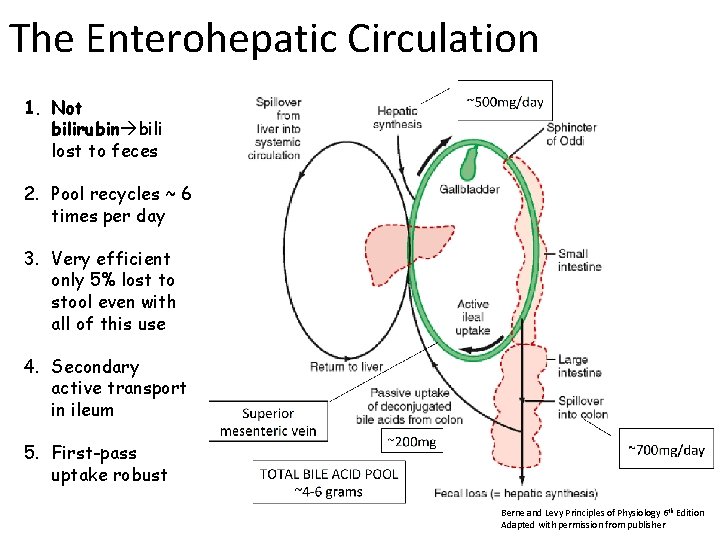
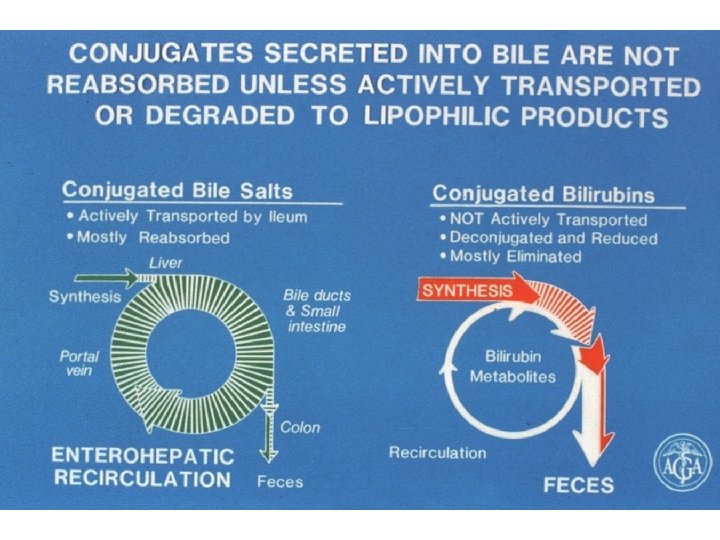
The Enterohepatic Circulation 1. Not bilirubin bili lost to feces 2. Pool recycles ~ 6 times per day 3. Very efficient only 5% lost to stool even with all of this use 4. Secondary active transport in ileum 5. First-pass uptake robust Berne and Levy Principles of Physiology 6 th Edition Adapted with permission from publisher
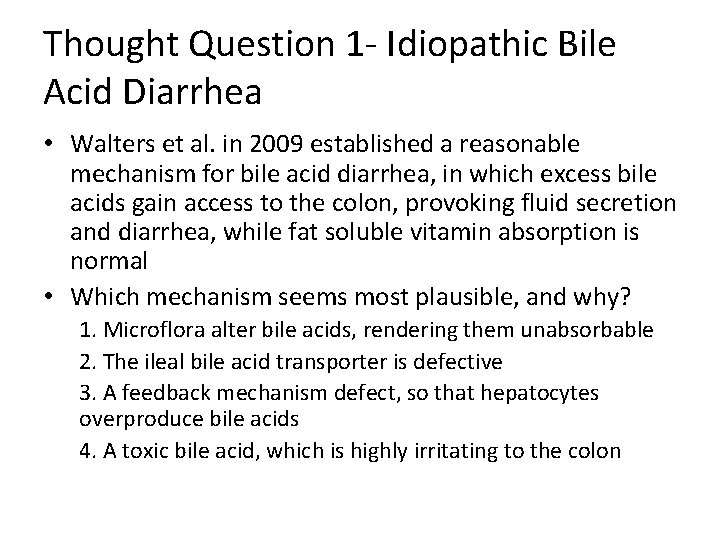
Thought Question 1 - Idiopathic Bile Acid Diarrhea • Walters et al. in 2009 established a reasonable mechanism for bile acid diarrhea, in which excess bile acids gain access to the colon, provoking fluid secretion and diarrhea, while fat soluble vitamin absorption is normal • Which mechanism seems most plausible, and why? 1. Microflora alter bile acids, rendering them unabsorbable 2. The ileal bile acid transporter is defective 3. A feedback mechanism defect, so that hepatocytes overproduce bile acids 4. A toxic bile acid, which is highly irritating to the colon
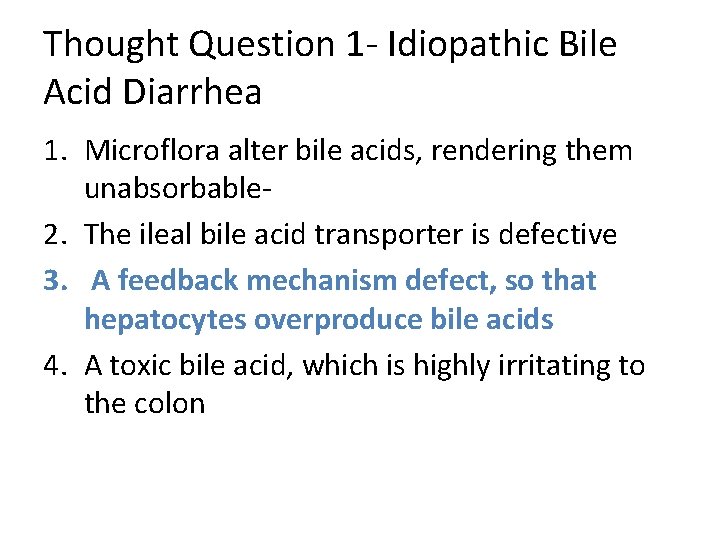
Thought Question 1 - Idiopathic Bile Acid Diarrhea 1. Microflora alter bile acids, rendering them unabsorbable- 2. The ileal bile acid transporter is defective 3. A feedback mechanism defect, so that hepatocytes overproduce bile acids 4. A toxic bile acid, which is highly irritating to the colon
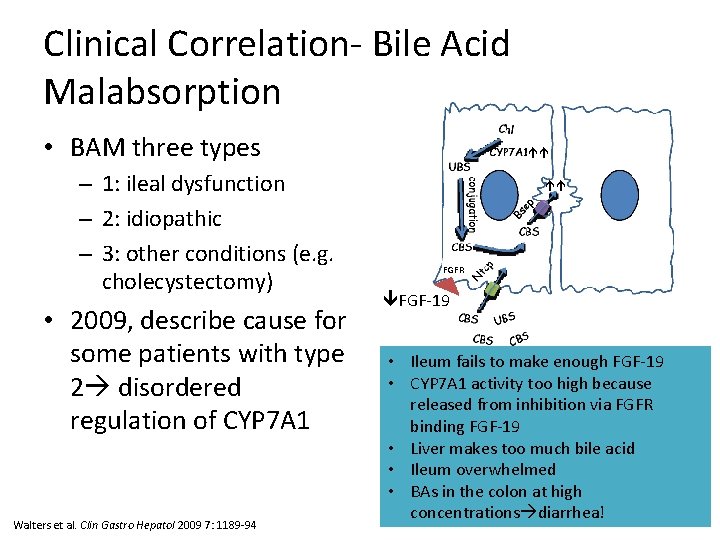
Clinical Correlation- Bile Acid Malabsorption • BAM three types – 1: ileal dysfunction – 2: idiopathic – 3: other conditions (e. g. cholecystectomy) • 2009, describe cause for some patients with type 2 disordered regulation of CYP 7 A 1 Walters et al. Clin Gastro Hepatol 2009 7: 1189 -94 FGFR FGF-19 • Ileum fails to make enough FGF-19 • CYP 7 A 1 activity too high because released from inhibition via FGFR binding FGF-19 • Liver makes too much bile acid • Ileum overwhelmed • BAs in the colon at high concentrations diarrhea!
Stating the Obvious, but Easy to Get Confused… Bilirubin and Bile acids share mechanisms but are handled completely differently in the intestine
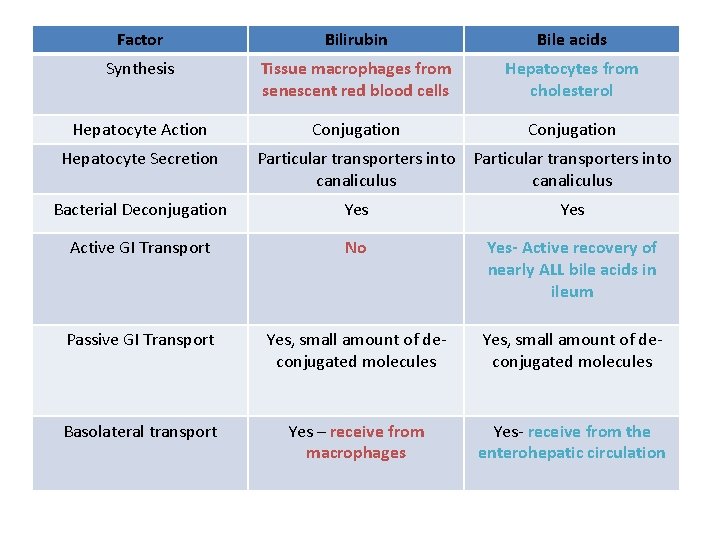
Factor Bilirubin Bile acids Synthesis Tissue macrophages from senescent red blood cells Hepatocytes from cholesterol Hepatocyte Action Conjugation Hepatocyte Secretion Particular transporters into canaliculus Bacterial Deconjugation Yes Active GI Transport No Yes- Active recovery of nearly ALL bile acids in ileum Passive GI Transport Yes, small amount of deconjugated molecules Basolateral transport Yes – receive from macrophages Yes- receive from the enterohepatic circulation
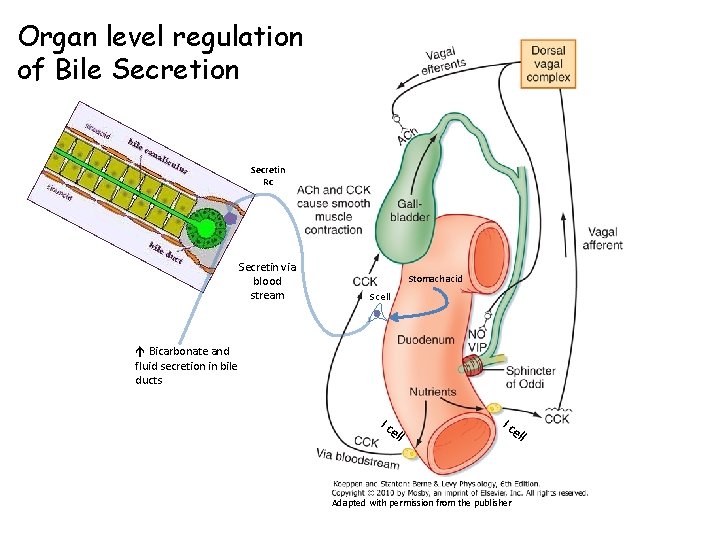
Organ level regulation of Bile Secretion Secretin Rc Secretin via blood stream Stomach acid S cell Bicarbonate and fluid secretion in bile ducts I c ell Adapted with permission from the publisher
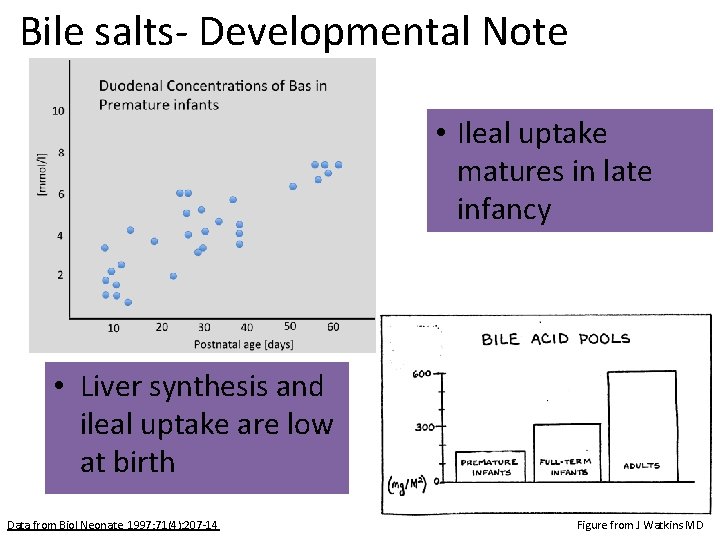
Bile salts- Developmental Note • Ileal uptake matures in late infancy • Liver synthesis and ileal uptake are low at birth Data from Biol Neonate. 1997; 71(4): 207 -14 Figure from J Watkins MD
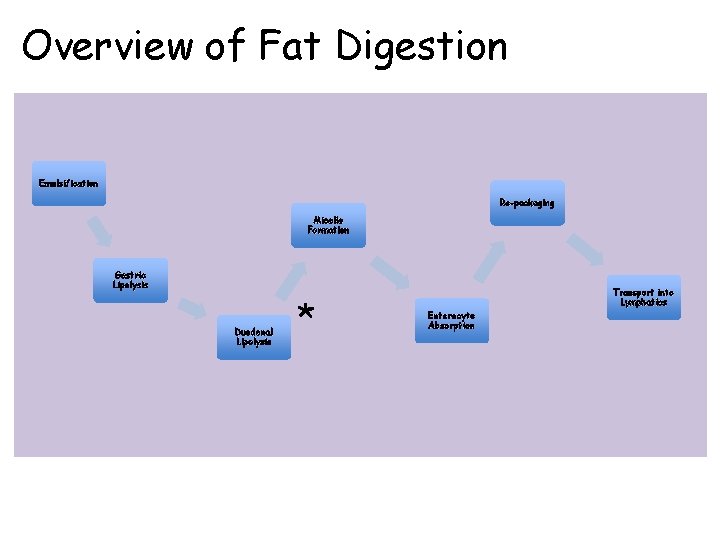
Overview of Fat Digestion Emulsification Re-packaging Micelle Formation Gastric Lipolysis Duodenal Lipolysis * Transport into Lymphatics Enterocyte Absorption
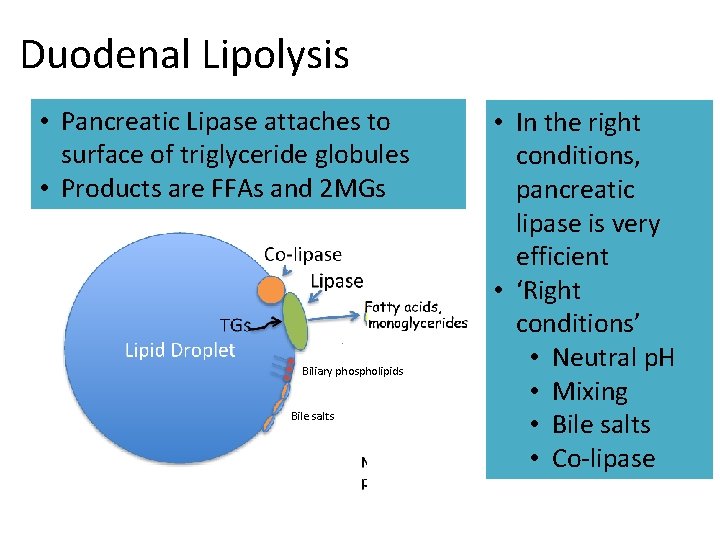
Duodenal Lipolysis • Pancreatic Lipase attaches to surface of triglyceride globules • Products are FFAs and 2 MGs Biliary phospholipids Bile salts • In the right conditions, pancreatic lipase is very efficient • ‘Right conditions’ • Neutral p. H • Mixing • Bile salts • Co-lipase

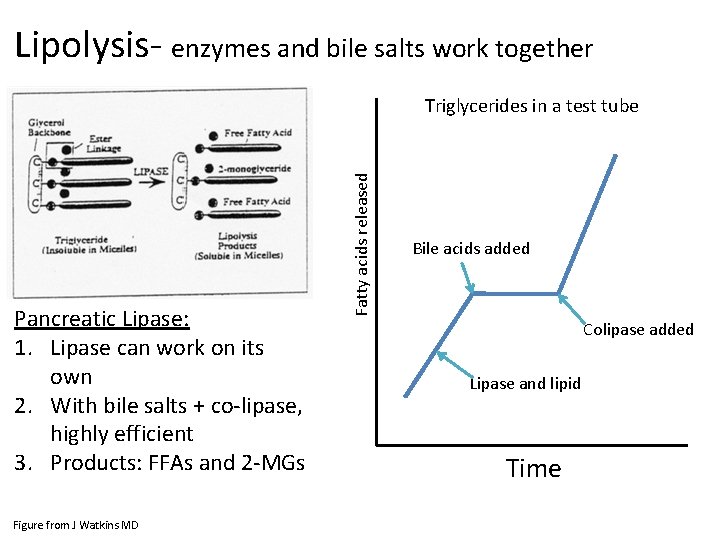
Lipolysis- enzymes and bile salts work together Pancreatic Lipase: 1. Lipase can work on its own 2. With bile salts + co-lipase, highly efficient 3. Products: FFAs and 2 -MGs Figure from J Watkins MD Fatty acids released Triglycerides in a test tube Bile acids added Colipase added Lipase and lipid Time
Thought Question 2 - CF patient missing her enzymes • An adult with cystic fibrosis has adequate lingual/gastric lipase activity but inability to secrete bicarbonate or pancreatic enzymes. • She has run out of supplemental pancreatic enzymes. • She knows to cook with coconut oil (medium chain triglycerides) and try to eat lower fat meals. • She would like to enhance lipolysis in her GI tract. She therefore chews antacid tablets (sodium bicarbonate) with her meals.
Thought Question 2 - which explanation is best? • An adult with cystic fibrosis has adequate lingual/gastric lipase activity but pancreatic insufficiency-- bicarbonate and pancreatic enzyme secretion is very low. • She has run out of supplemental pancreatic enzymes. • She knows to cook with coconut oil (medium chain triglycerides) and try to eat lower fat meals. • She would like to enhance lipolysis in her GI tract. She therefore chews anti -acids tablets (sodium bicarbonate) with her meals. 1. 2. 3. 4. We would predict that This would help because residual pancreatic lipase would be at p. H optima This would help because triglyceride would be more ionized, so emulsion particles would coalesce This would be detrimental because rebound acid secretion would impair downstream bile salt function This would be detrimental because intra-gastric lipolysis would be impaired at more neutral p. H
Overview of Fat Digestion * Emulsification Re-packaging Micelle Formation Gastric Lipolysis Transport into Lymphatics Duodenal Lipolysis Enterocyte Absorption
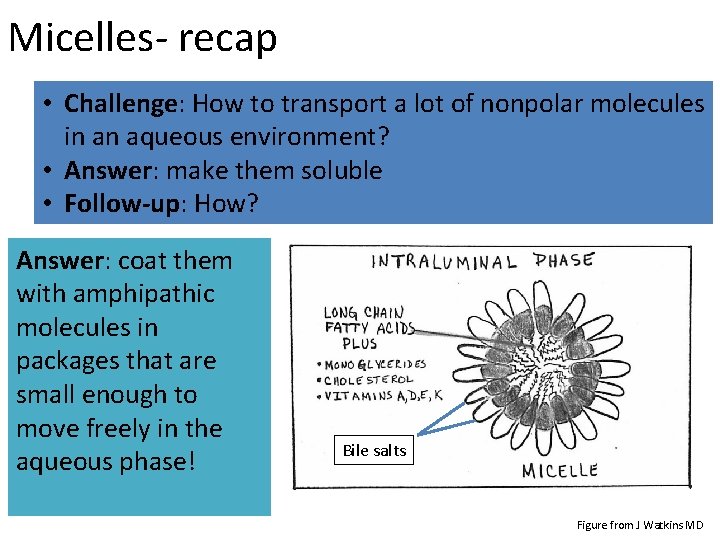
Micelles- recap • Challenge: How to transport a lot of nonpolar molecules in an aqueous environment? • Answer: make them soluble • Follow-up: How? Answer: coat them with amphipathic molecules in packages that are small enough to move freely in the aqueous phase! Bile salts Figure from J Watkins MD
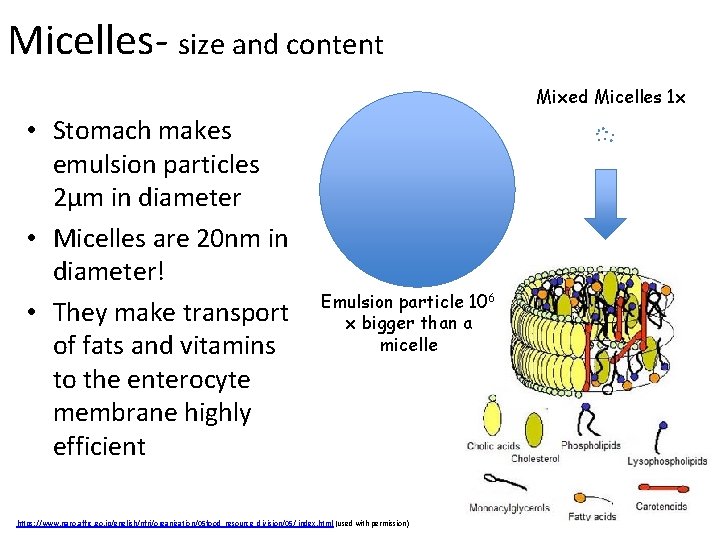
Micelles- size and content Mixed Micelles 1 x • Stomach makes emulsion particles 2μm in diameter • Micelles are 20 nm in diameter! • They make transport of fats and vitamins to the enterocyte membrane highly efficient Emulsion particle 106 x bigger than a micelle https: //www. naro. affrc. go. jp/english/nfri/organization/05 food_resource_division/05/ index. html (used with permission)
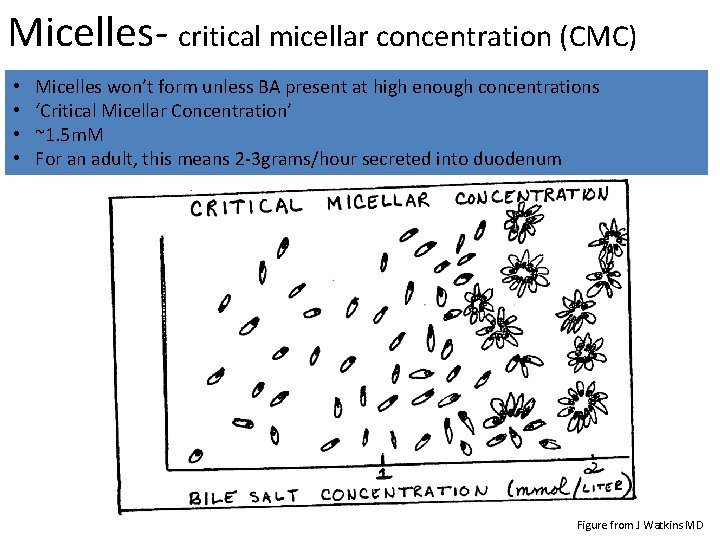
Micelles- critical micellar concentration (CMC) • • Micelles won’t form unless BA present at high enough concentrations ‘Critical Micellar Concentration’ ~1. 5 m. M For an adult, this means 2 -3 grams/hour secreted into duodenum Figure from J Watkins MD
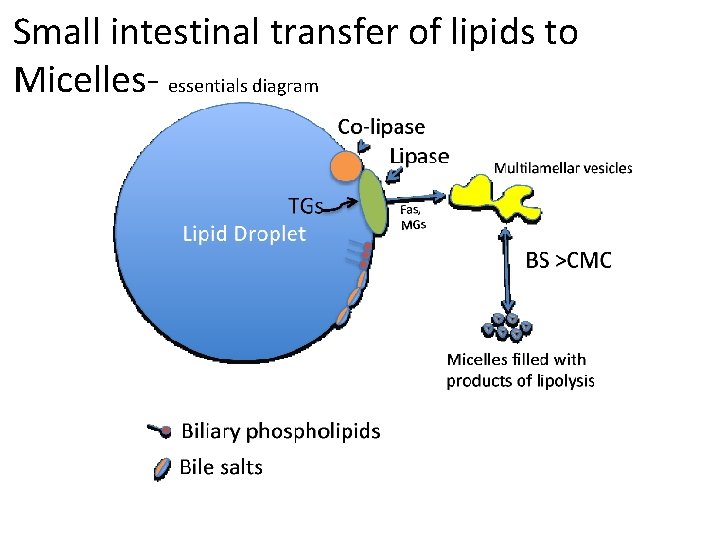
Small intestinal transfer of lipids to Micelles- essentials diagram
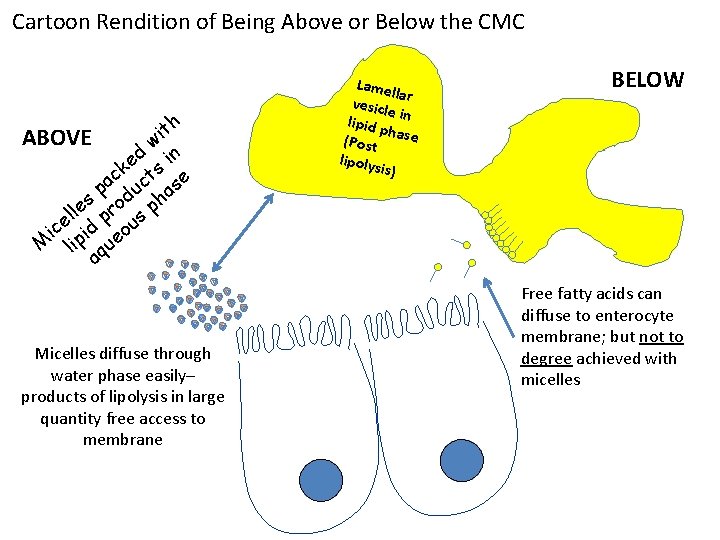
Cartoon Rendition of Being Above or Below the CMC h t i ABOVE w d e s in k c ct se a p du a h s ll e pro s p e ic pid eou M li qu a Micelles diffuse through water phase easily– products of lipolysis in large quantity free access to membrane Lame lla vesicl r e lipid p in h (Post ase lipoly sis) BELOW Free fatty acids can diffuse to enterocyte membrane; but not to degree achieved with micelles
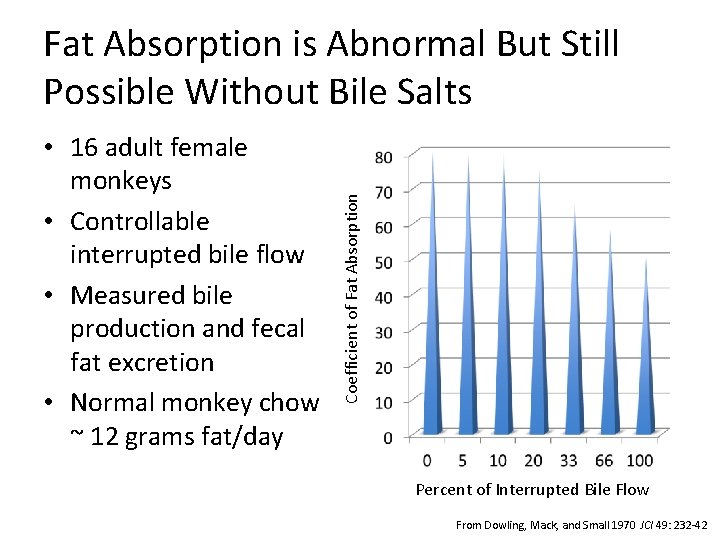
• 16 adult female monkeys • Controllable interrupted bile flow • Measured bile production and fecal fat excretion • Normal monkey chow ~ 12 grams fat/day Coefficient of Fat Absorption is Abnormal But Still Possible Without Bile Salts Percent of Interrupted Bile Flow From Dowling, Mack, and Small 1970 JCI 49: 232 -42
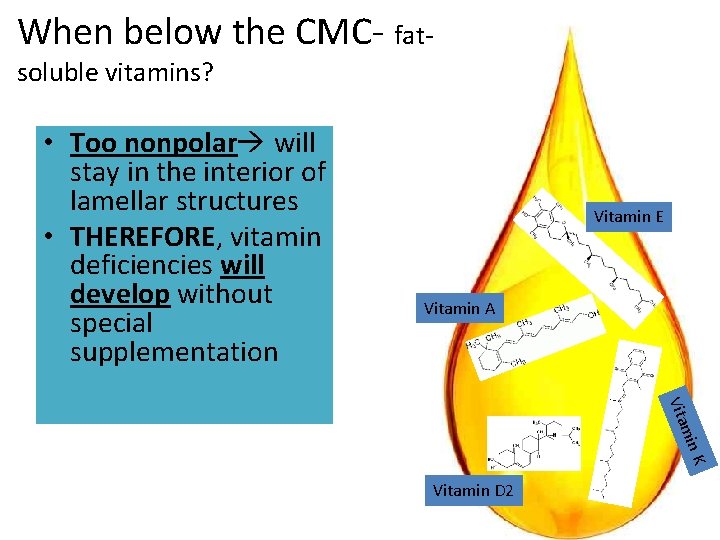
When below the CMC- fatsoluble vitamins? • Too nonpolar will stay in the interior of lamellar structures • THEREFORE, vitamin deficiencies will develop without special supplementation Vitamin E Vitamin A min Vita K Vitamin D 2
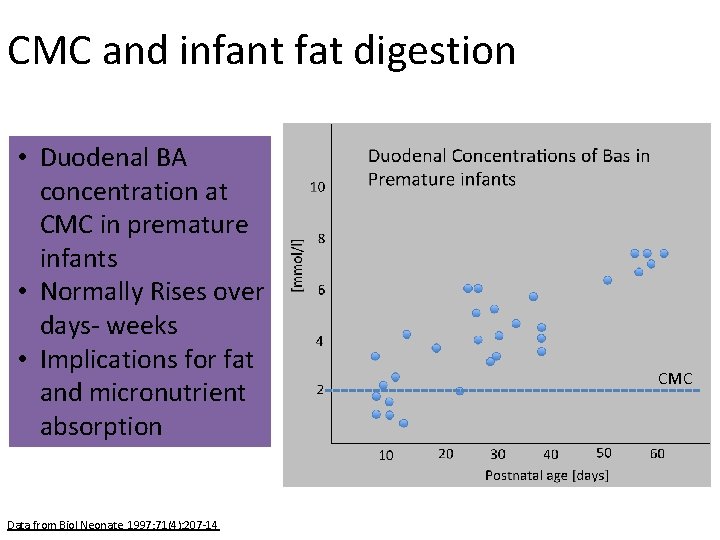
CMC and infant fat digestion • Duodenal BA concentration at CMC in premature infants • Normally Rises over days- weeks • Implications for fat and micronutrient absorption Data from Biol Neonate. 1997; 71(4): 207 -14 CMC
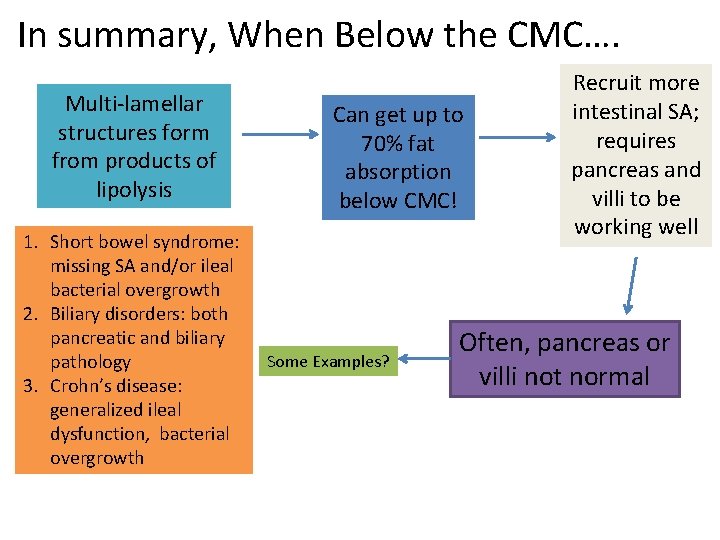
In summary, When Below the CMC…. Multi-lamellar structures form from products of lipolysis 1. Short bowel syndrome: missing SA and/or ileal bacterial overgrowth 2. Biliary disorders: both pancreatic and biliary pathology 3. Crohn’s disease: generalized ileal dysfunction, bacterial overgrowth Can get up to 70% fat absorption below CMC! Some Examples? Recruit more intestinal SA; requires pancreas and villi to be working well Often, pancreas or villi not normal
Thought Question-3 two patients… • Q: an infant with cholestasis from biliary atresia and a man with traumatic common bile duct disruption (the bile is diverted into an external bag outside the man’s body) from a MVA are in hospital. You are in the lab. True or False, and then give short explanations – The infant stool has innumerable lipid droplets of triglyceride, while the adult stool has a modicum of triglyceride droplets. – Serum Vitamin E is normal in the adult, but low in the infant. – Both infant and adult would have stools containing a modicum of triglyceride droplets and would have normal serum vitamin E levels if they were provided supplemental pancreatic enzymes.
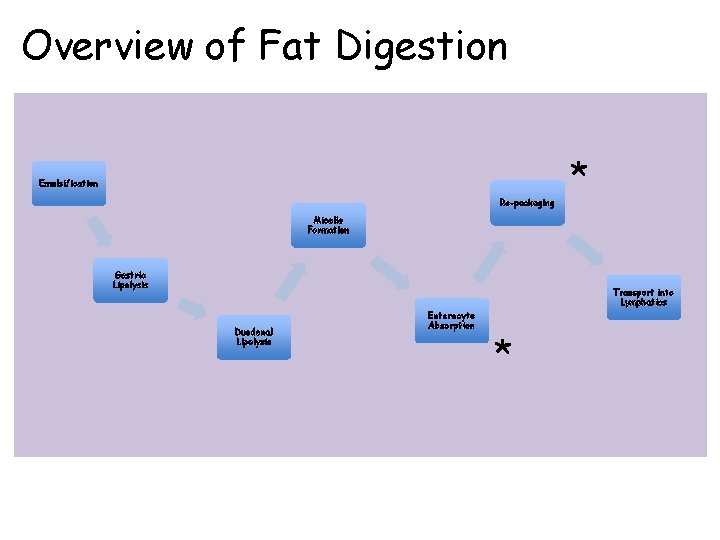
Overview of Fat Digestion Emulsification Re-packaging * Micelle Formation Gastric Lipolysis Transport into Lymphatics Duodenal Lipolysis Enterocyte Absorption *
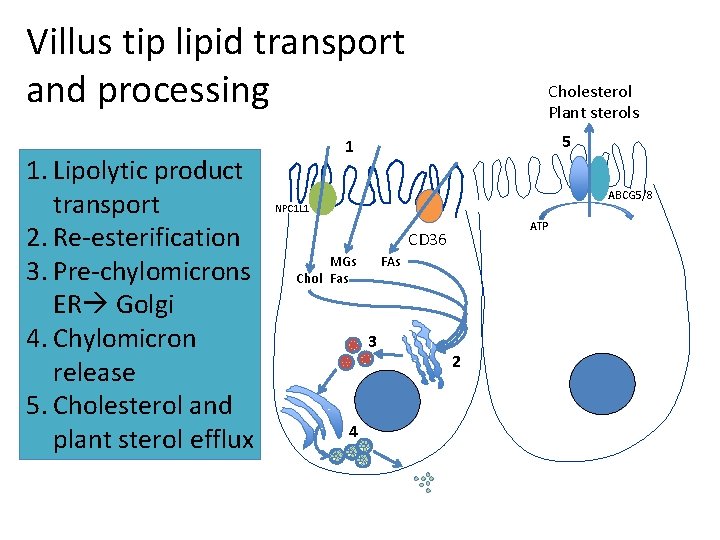
Villus tip lipid transport and processing 1. Lipolytic product transport 2. Re-esterification 3. Pre-chylomicrons ER Golgi 4. Chylomicron release 5. Cholesterol and plant sterol efflux Cholesterol Plant sterols 5 1 ABCG 5/8 NPC 1 L 1 ATP CD 36 MGs Chol Fas FAs 3 4 2
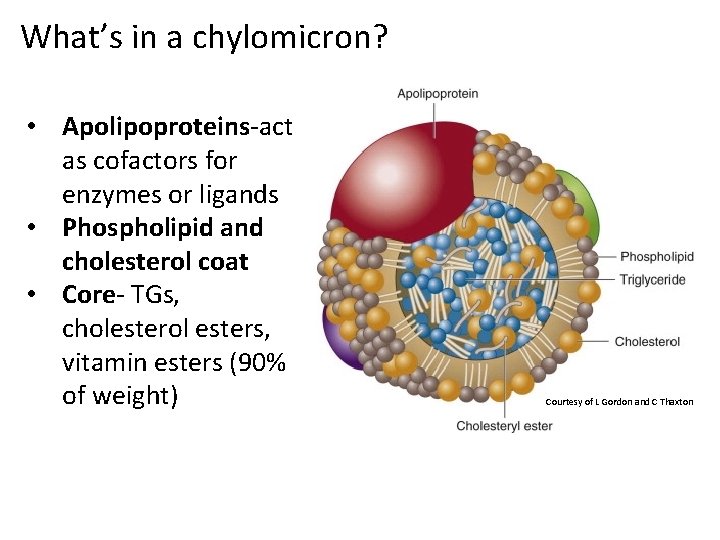
What’s in a chylomicron? • Apolipoproteins-act as cofactors for enzymes or ligands • Phospholipid and cholesterol coat • Core- TGs, cholesterol esters, vitamin esters (90% of weight) Courtesy of L Gordon and C Thaxton
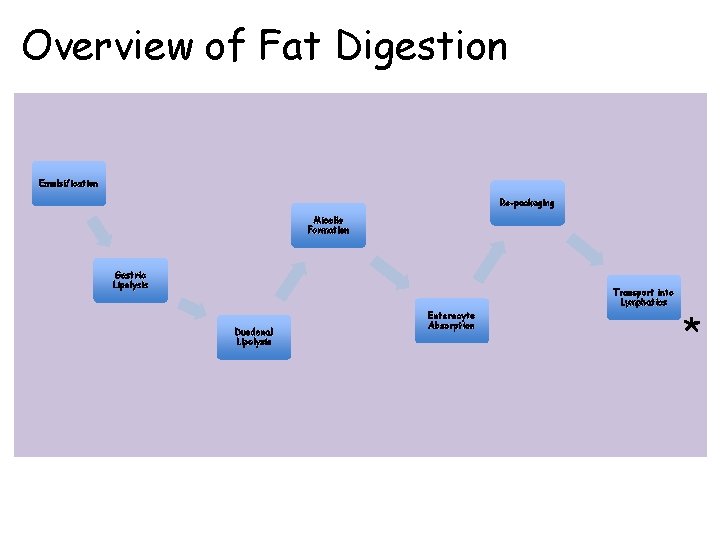
Overview of Fat Digestion Emulsification Re-packaging Micelle Formation Gastric Lipolysis Transport into Lymphatics Duodenal Lipolysis Enterocyte Absorption *
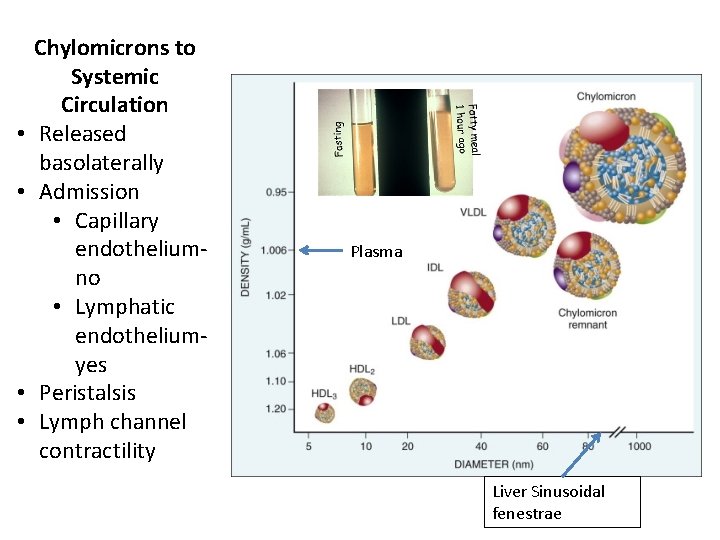
• • Chylomicrons to Systemic Circulation Released basolaterally Admission • Capillary endothelium- no • Lymphatic endothelium- yes Peristalsis Lymph channel contractility Plasma Liver Sinusoidal fenestrae
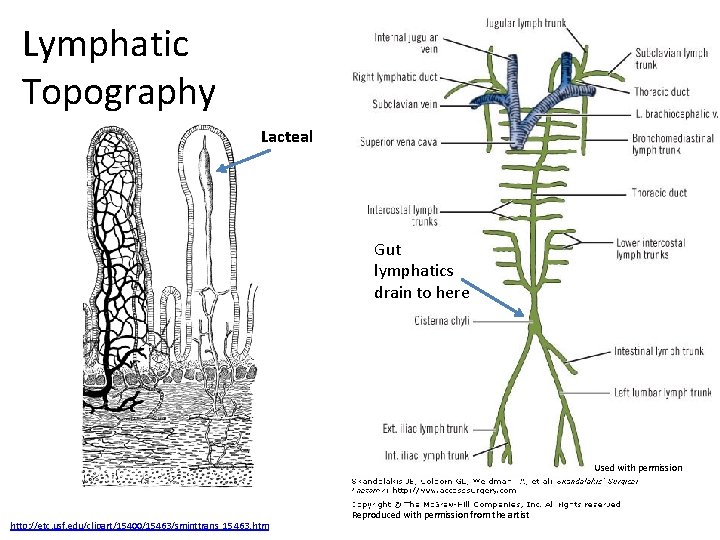
Lymphatic Topography Lacteal Gut lymphatics drain to here Used with permission http: //etc. usf. edu/clipart/15400/15463/sminttrans_15463. htm Reproduced with permission from the artist
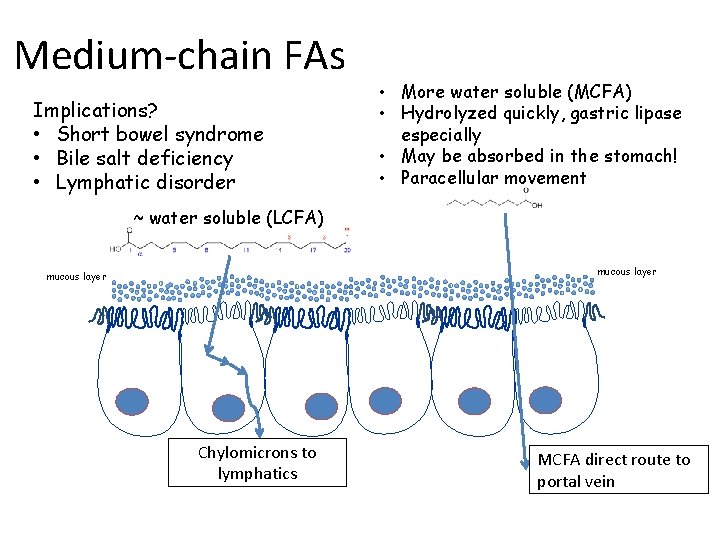
Medium-chain FAs Implications? • Short bowel syndrome • Bile salt deficiency • Lymphatic disorder • More water soluble (MCFA) • Hydrolyzed quickly, gastric lipase especially • May be absorbed in the stomach! • Paracellular movement ~ water soluble (LCFA) mucous layer Chylomicrons to lymphatics MCFA direct route to portal vein
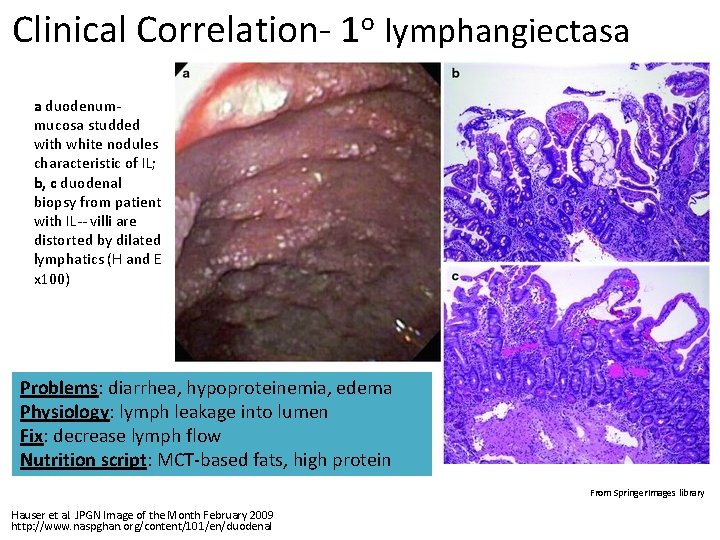
Clinical Correlation- 1 o lymphangiectasa a duodenum- mucosa studded with white nodules characteristic of IL; b, c duodenal biopsy from patient with IL-- villi are distorted by dilated lymphatics (H and E x 100) Problems: diarrhea, hypoproteinemia, edema Physiology: lymph leakage into lumen Fix: decrease lymph flow Nutrition script: MCT-based fats, high protein From Springer. Images library Hauser et al. JPGN Image of the Month February 2009 http: //www. naspghan. org/content/101/en/duodenal
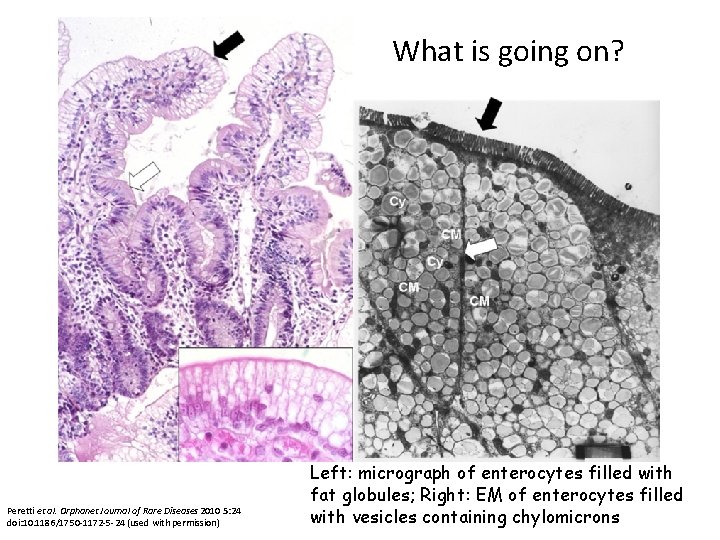
What is going on? Peretti et al. Orphanet Journal of Rare Diseases 2010 5: 24 doi: 10. 1186/1750 -1172 -5 -24 (used with permission) Left: micrograph of enterocytes filled with fat globules; Right: EM of enterocytes filled with vesicles containing chylomicrons
Thought Question-4 chylomicron retention disease • • A child has enterocytes that cannot secrete chylomicrons Q 1: would medium-chain triglycerides in place of longchain result in less steatorrhea? Q 2: A colleague proposes giving pancreatic enzymes. Would this be effective? Q 3: Another colleague proposes giving massive amounts of predigested omega-3 fatty acids. And this? Q 4: Water-miscible vitamin preparations allow even vitamin E to be easily absorbed without bile salts. Would this work for this child?
Summary Points 1. Fat digestion is most complicated because vital nutrients that are insoluble in water have to transfer efficiently and safely from one aqueous environment to another through a layer of cells. 2. This problem is solved by enzymes that can work on the surface of emulsion particles; 3. AND, by lipolytic break down products which can be solubilized in micelles. http: //etc. usf. edu/clipart/38800/38801/pancreas_38801. htm http: //images 4. wikia. nocookie. net/__cb 20121217140702/popeye/images/d/d 2/Normal 3. JPG
Summary Points- 2 3. Critical processes include: – mechanical breakdown to form an emulsion – enzymatic hydrolysis of triglyceride mostly on account of pancreatic lipases – transfer of hydrolysis products into micelles when bile acids are in adequate supply – enterocyte transport – repackaging into chylomicrons 3. transfer out of enterocytes through lymphatic channels to the blood for systemic delivery
Summary Points-3 4. Pancreatic and biliary secretions are provoked by release of secretin and CCK in the duodenal mucosa. 5. Bile salts are conserved by their enterohepatic circulation; synthesis of bile acids is tightly controlled. 6. Fatty acids and fat soluble vitamins are delivered to the enterocyte membrane in mixed micelles. Transfer across the membrane occurs passively and by facilitated diffusion.
Summary Points-4 7. Most fats are re-esterified and packaged into chylomicrons and exit basolaterally via exocytosis for transport to lymph channels and then via thoracic duct to systemic circulation. 8. Medium-chain triglycerides are more readily hydrolyzed in the stomach, released fatty acids have greater water solubility that long-chain counterparts, and can reach systemic circulation via the portal vein bound to albumin.
Boards-style Questions- pancreas • Which explanation seems most plausible in the case of a patient with cystic fibrosis and new GJ feeds who is having worsening oily stool and poor weight gain? A. The proton pump inhibitor dose is too high; intense acid suppression is inhibiting duodenal lipolysis. B. The pancreatic enzymes are not being given in the GJ tube. C. The formula is being delivered beyond the stomach- gastric lipolysis cannot contribute to intraluminal digestion. D. A formula switch occurred that contain mostly longchain triglycerides.
Boards-style Questions- bile salts • A child with bile salt export pump (BSEP) deficiency received a biliary diversion for intractable pruritus. Stumbling at night occurs six months later. You suspect vitamin A deficiency. Which explanation is most plausible? A. Vitamin A is being lost in the bile. B. Emulsion particles are no longer stable; vitamin A esters cannot be hydrolyzed. C. Unabsorbed fatty acids are forming soaps and the precipitant removes vitamin A from the lumen. D. Vitamin A esters are being hydrolyzed but inadequate micelle formation prevents enough Vitamin A from reaching brush border for absorption.
Boards-style Questions- lymph • A child with neuroblastoma has chylous ascites 4 days after the tumor is resected. The child is made NPO and started on parenteral nutrition. True or False: A. B. C. D. Parenteral nutrition will improve ascites because intravenous fat will get incorporated into chylomicrons in the thoracic duct. Exclusive medium-chain triglyceride (MCTs) diets would also work because of MCT’s suppressive impact on chylomicron exocytosis. Parenteral nutrition will not help because IV fat still will get incorporated into chylomicrons in the interstitium. A balance of medium and long-chain triglycerides in the diet would prevent ascites because the medium chain fatty acids would complex with long chain acids and albumin in plasma.

Please send any questions or comments to: • Christine. waasdorp@childrenscolorado. org or • Daniel. Kamin@childrens. harvard. edu
- Slides: 64