
FASTTRACK CITIES INITIATIVE IMPLEMENTATION PLAN Reuben Granich MD
FAST-TRACK CITIES INITIATIVE IMPLEMENTATION PLAN Reuben Granich, MD, MPH Vice President and Chief Technical Officer (IAPAC) Sindhu Ravishankar, MPhil Senior Manager, Technical Initiatives (IAPAC)
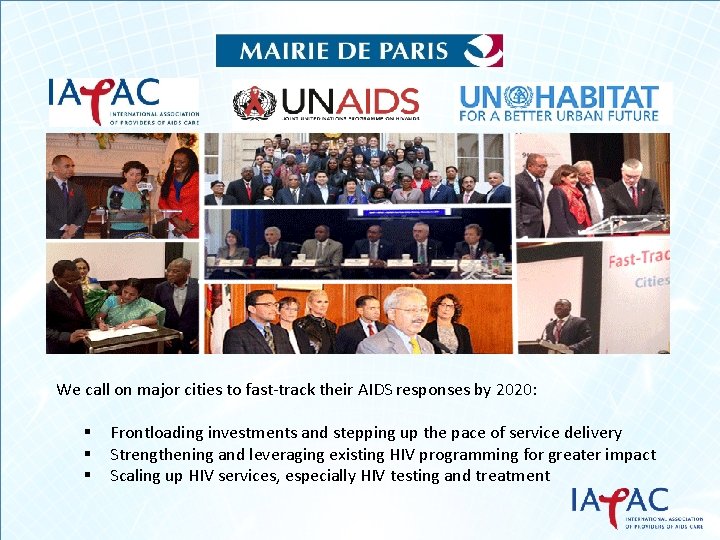
We call on major cities to fast-track their AIDS responses by 2020: § § § Frontloading investments and stepping up the pace of service delivery Strengthening and leveraging existing HIV programming for greater impact Scaling up HIV services, especially HIV testing and treatment
FAST-TRACK CITY INITIATIVE TARGETS 90% Of people living with HIV knowing their HIV status 90% Of people who know their HIV status on ART 90% Of people on treatment with suppressed viral load 0% Stigma and discrimination
BENEFITS AFFORDED TO FAST-TRACK CITIES 1. Joining a global network to collectively end AIDS as a public health threat by 2030. 2. Using the FTCI as a framework for implementation and metrics of success. 3. Receiving technical support capacitating local health departments. 4. Leveraging the FTCI web portal and city-specific dashboards. 5. Engaging in out-of-the-box financing and resource mobilization
INTERNATIONAL TECHNICAL COLLABORATION FTCI provides a platform for thinking and partnering globally and locally to leverage existing programs and resources. • Twinning and technical exchanges • Sharing best practices • Cities conferences and meetings • Scientific literature publications and presentations

CURRENT FAST-TRACK CITIES

FTCI INCLUDES ALL TYPES OF CITIES FROM ALL REGIONS OF THE WORLD
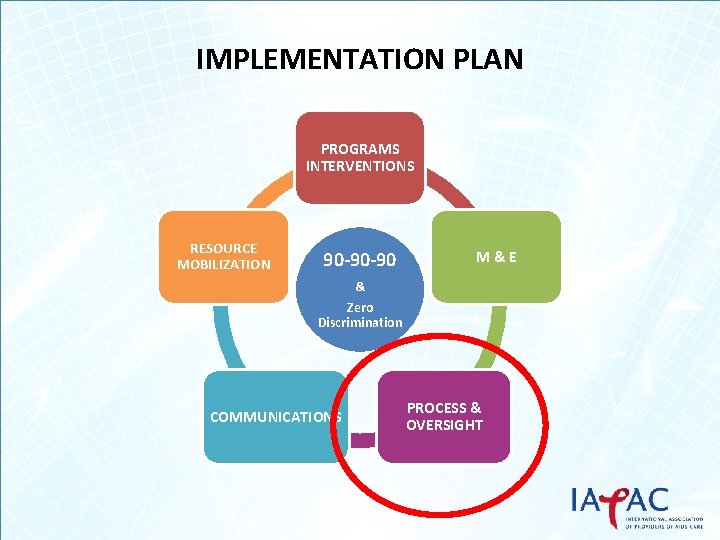
IMPLEMENTATION PLAN PROGRAMS INTERVENTIONS RESOURCE MOBILIZATION 90 -90 -90 M&E & Zero Discrimination COMMUNICATIONS PROCESS & OVERSIGHT
PROCESS AND OVERSIGHT: • International FTCI process and oversight – IAPAC, UNAIDS, City of Paris and UN-HABITAT • City leadership for local process and oversight – Cities host meetings to convene stakeholders – Review HIV epidemiology and response – Discuss program and resources – Develop measurable targets and action plans – Establish process for implementing and monitoring progress towards FTCI (read local) targets.
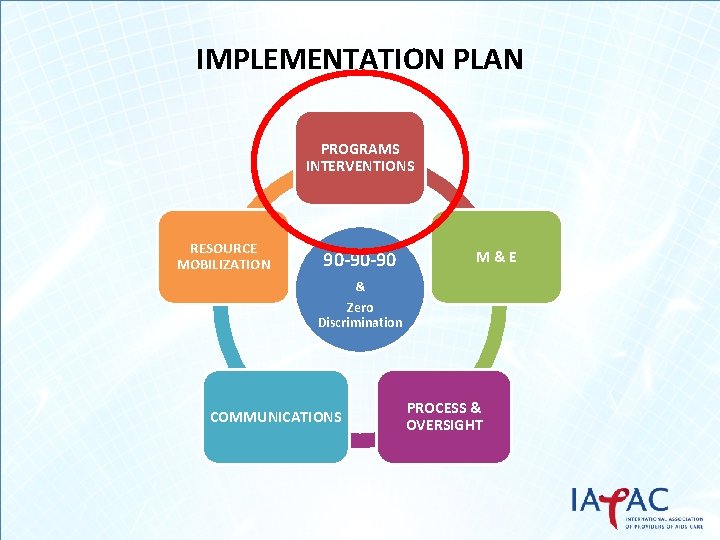
IMPLEMENTATION PLAN PROGRAMS INTERVENTIONS RESOURCE MOBILIZATION 90 -90 -90 M&E & Zero Discrimination COMMUNICATIONS PROCESS & OVERSIGHT
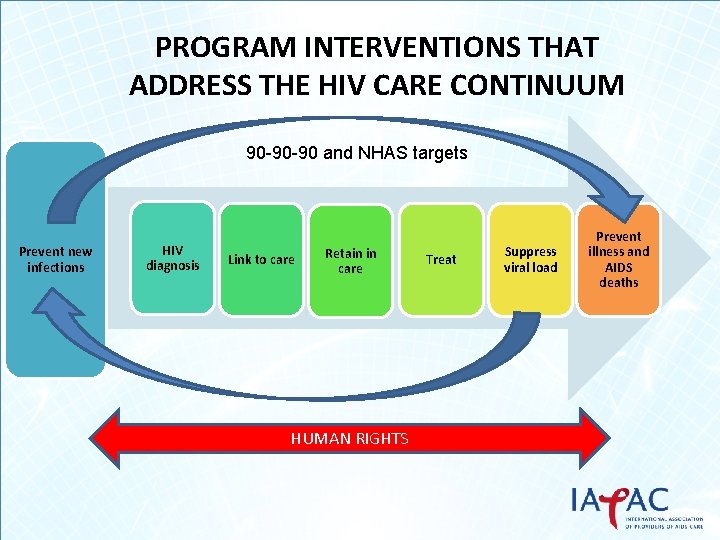
PROGRAM INTERVENTIONS THAT ADDRESS THE HIV CARE CONTINUUM 90 -90 -90 and NHAS targets Prevent new infections HIV diagnosis Link to care Retain in care HUMAN RIGHTS Treat Suppress viral load Prevent illness and AIDS deaths
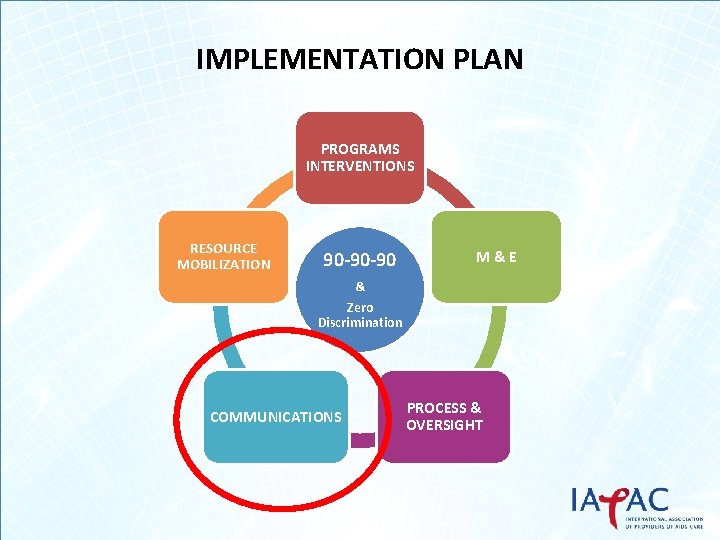
IMPLEMENTATION PLAN PROGRAMS INTERVENTIONS RESOURCE MOBILIZATION 90 -90 -90 M&E & Zero Discrimination COMMUNICATIONS PROCESS & OVERSIGHT
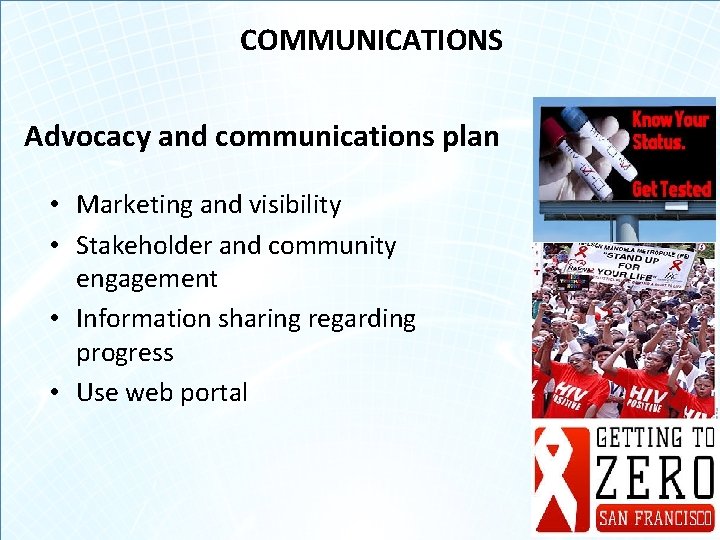
COMMUNICATIONS Advocacy and communications plan • Marketing and visibility • Stakeholder and community engagement • Information sharing regarding progress • Use web portal
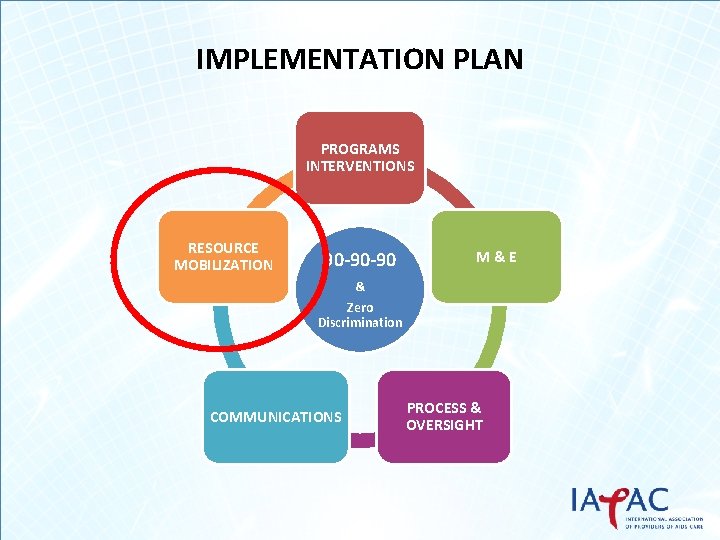
IMPLEMENTATION PLAN PROGRAMS INTERVENTIONS RESOURCE MOBILIZATION 90 -90 -90 M&E & Zero Discrimination COMMUNICATIONS PROCESS & OVERSIGHT
RESOURCE MOBILIZATION The Initiative will provide support: • Technical guidance • Joint Fundraising • Proposal Templates
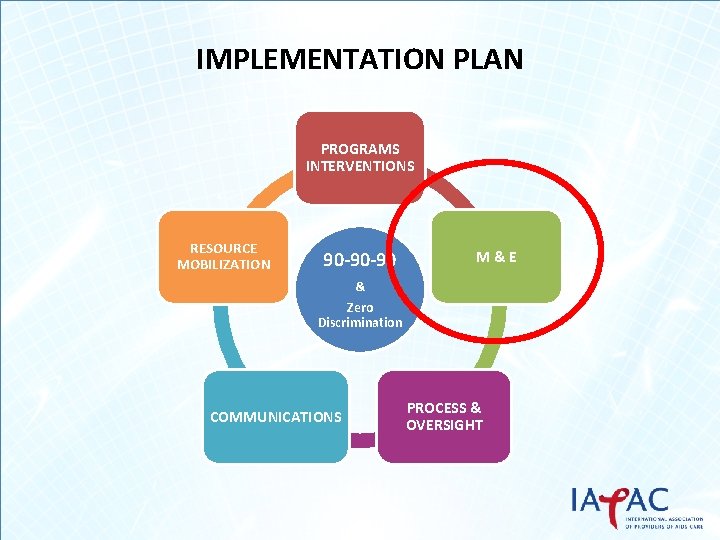
IMPLEMENTATION PLAN PROGRAMS INTERVENTIONS RESOURCE MOBILIZATION 90 -90 -90 M&E & Zero Discrimination COMMUNICATIONS PROCESS & OVERSIGHT
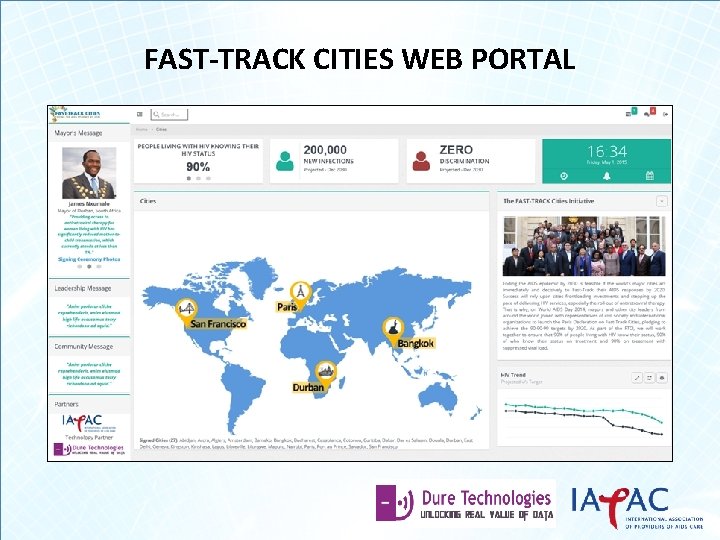
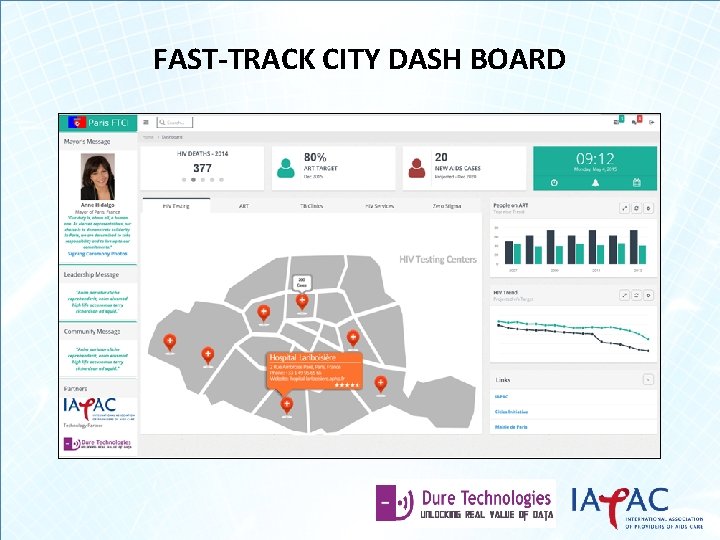
MONITORING AND EVALUATION § Establish epidemiology and program baseline – HIV care continuum – Basic HIV indicators – Program targets § Define success – Paris Declaration – 90 -90 -90 – End of AIDS – Urban HIV Control § Web portal to track initiative progress
URBAN FTCI DATA SET: BASIC BENCHMARKING Each city will develop a baseline profile using the following indicators (and any additional relevant indicators): • City’s (or relevant metropolitan area’s) population • Number and proportion of people estimated to be living with HIV (PLHIV) • Number and proportion of PLHIV diagnosed with HIV • Number and proportion of PLHIV on antiretroviral therapy (ART) • Number and proportion of PLHIV on ART who are virally suppressed • Number of AIDS cases • Number of AIDS-related deaths • Number of new HIV infections • Number and proportion of estimated HIV transmission from mother to child
AREAS OF TECHNICAL ASSISTANCE
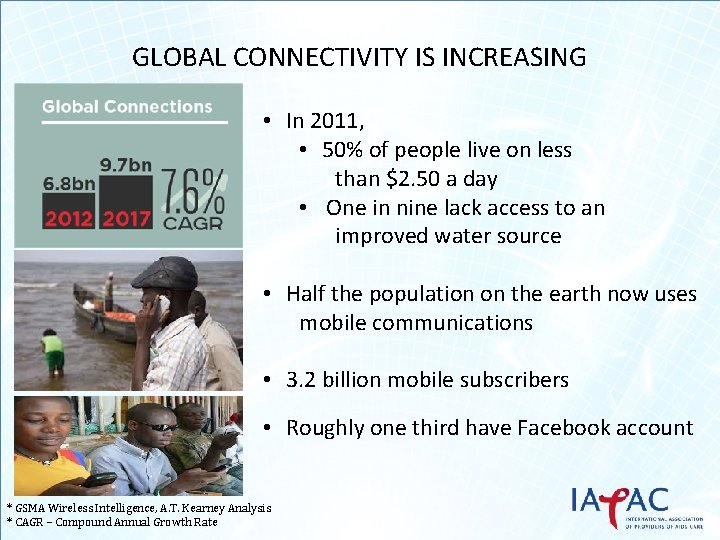
GLOBAL CONNECTIVITY IS INCREASING • In 2011, • 50% of people live on less than $2. 50 a day • One in nine lack access to an improved water source • Half the population on the earth now uses mobile communications • 3. 2 billion mobile subscribers • Roughly one third have Facebook account * GSMA Wireless Intelligence, A. T. Kearney Analysis * CAGR – Compound Annual Growth Rate
FAST-TRACK CITIES WEB PORTAL
FAST-TRACK CITY DASH BOARD
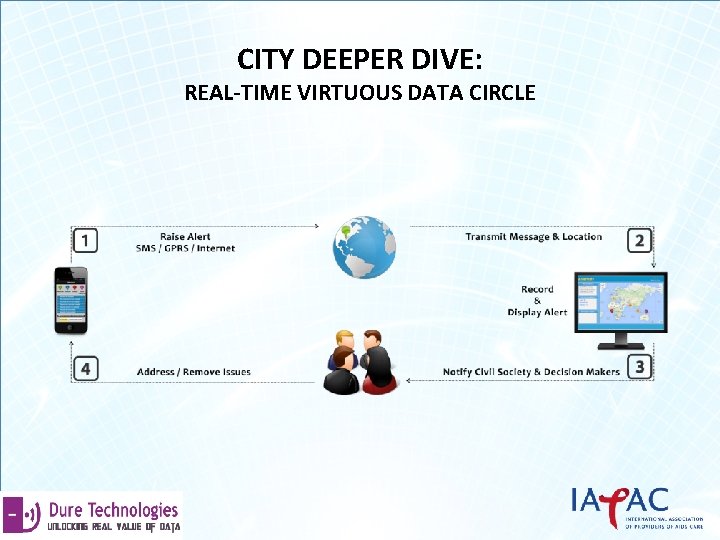
CITY DEEPER DIVE: REAL-TIME VIRTUOUS DATA CIRCLE
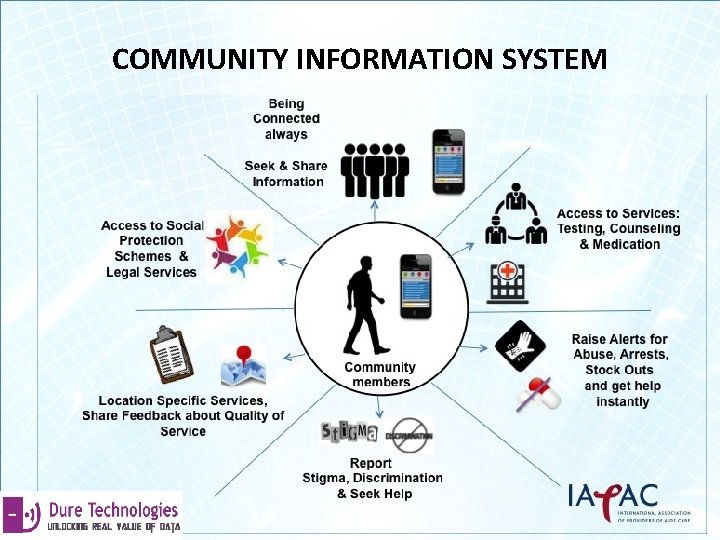
COMMUNITY INFORMATION SYSTEM
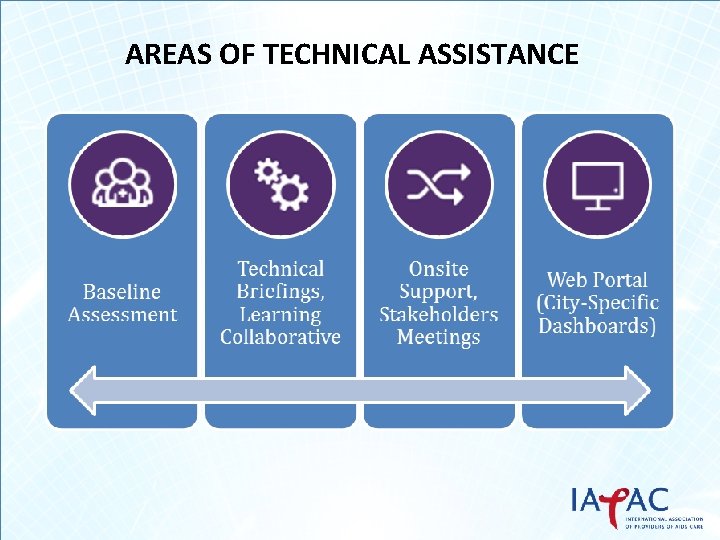
AREAS OF TECHNICAL ASSISTANCE
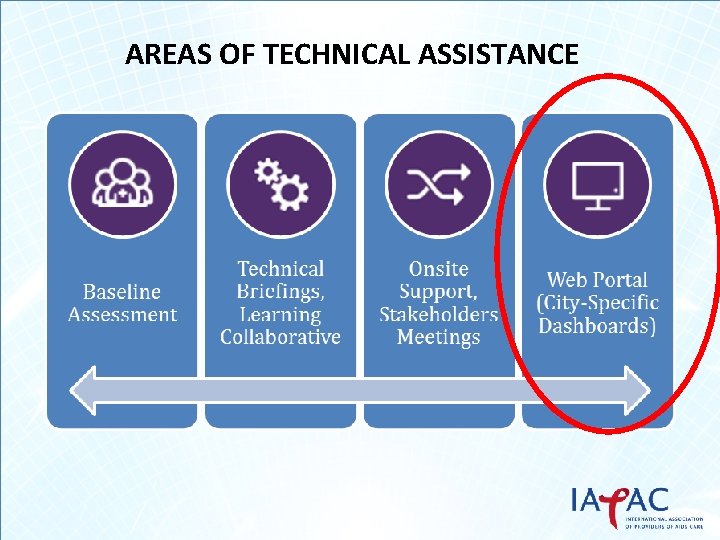
MEASURING AND MONITORING THE HIV CARE CONTINUUM AREAS OF TECHNICAL SUPPORT • FTCI Learning Collaborative • Technical Briefing Webinars • Technical Stakeholder Meetings • On-site Technical Support
FTCI LEARNING COLLABORATIVE What: The FTCI Learning Collaborative will facilitate multi-city dialogue around data generation, analysis, and reporting. Who: Local health departments in fast-track cities How: Cities will rotate chairing sessions. Technical data experts will be available to provide additional guidance as needed.
TECHNICAL BRIEFING WEBINARS 1. Identifying capacity-building gaps for data generation, analysis, and reporting 2. Methods for measuring and monitoring data; FTCI dashboard 3. Analyzing and interpreting data for data-driven programmatic decision making 4. Data reporting including guidance on drafting the FTCI annual city report
FTCI TECHNICAL STAKEHOLDER MEETINGS Technical stakeholder meetings will convene key stakeholders throughout the city and relevant jurisdictions with the purpose of: § Reviewing HIV care continuum baseline data and the existing AIDS response throughout the continuum § Mapping needs for on-going data generation, analysis, and reporting § Laying the foundation for a city-specific implementation plan § Providing training on the use of the Global FTCI web portal and city dashboard
ONSITE TECHNICAL SUPPORT FTCI data expert teams will provide onsite support to local health departments for those cities requiring direct technical assistance. On-site support will be tailored to city-specific needs and may include support on: § Data generation, with specific focus on data at local agency level augmented by epidemiology, surveillance, payer, and other system. § Reporting across the HIV Care Continuum § Quality assurance and standardization of data generation, analysis, and reporting procedures
THANK YOU

Reuben Granich rgranich@iapac. org Sindhu Ravishankar sravishankar@iapac. org www. IAPAC. org
- Slides: 32