
Fasteners Chapter 5 Fasteners Objectives Describe USC threadedfastener
Fasteners Chapter 5
Fasteners Objectives • Describe USC threaded-fastener measuring system • Describe metric threaded measuring system • Identify grade markings of threaded fasteners • List and describe common thread repair tools
Objectives • Identify and explain purpose of common nonthreaded fasteners • Explain importance of wire gauge sizes • Identify common types of electrical fasteners
Introduction • Automotive components are held together with fasteners • Much of a technician’s time is spent removing and installing fasteners • There are two basic groups – Threaded – Non-threaded

Threaded Fasteners • Most common type of fastener – Use spiral threads to wedge parts together • Fastener Sizing and Torquing – Must be correct strength and size – Must be replaced with like size and quality – Never install a heavier sheer pin to “fix” a problem
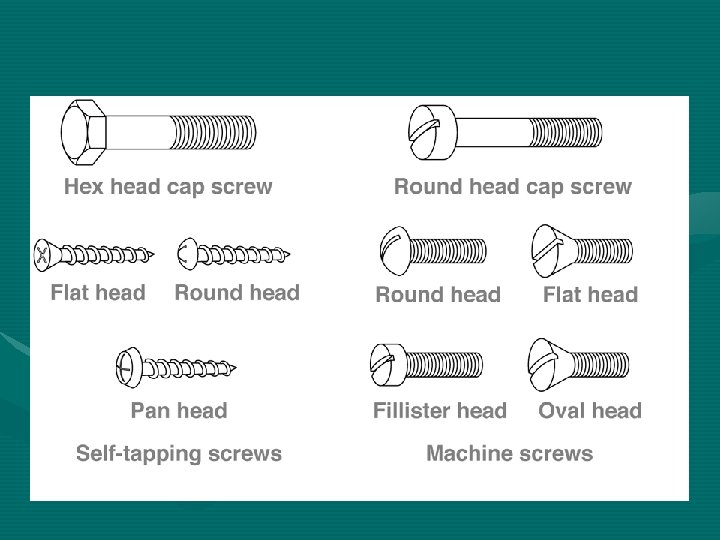
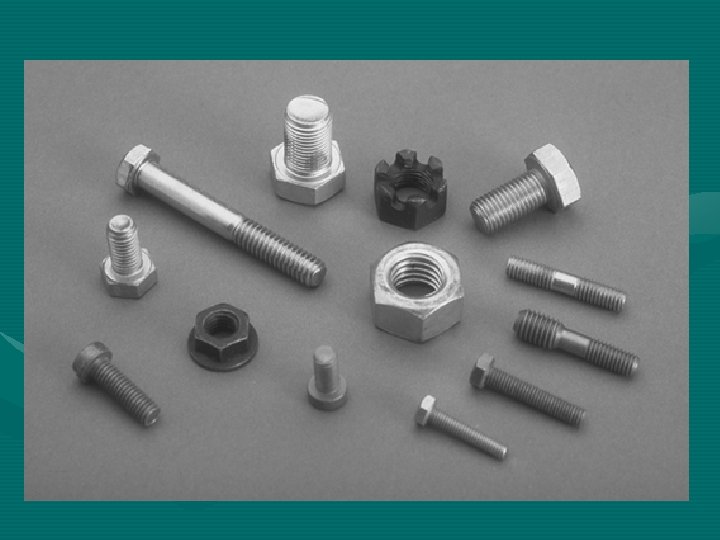
Threaded Fasteners • Screws – One of the most common threaded fasteners – Fits into a threaded hole – Different designs to meet attaching needs – Some require a wrench to install, others can be installed with screwdrivers – Often classed by shape of head
Threaded Fasteners • Bolts – Use a nut instead of a threaded hole – Usually goes through parts that don’t have threads – Most have hex-shaped head – Two different types • Standard • Torque-to-yield
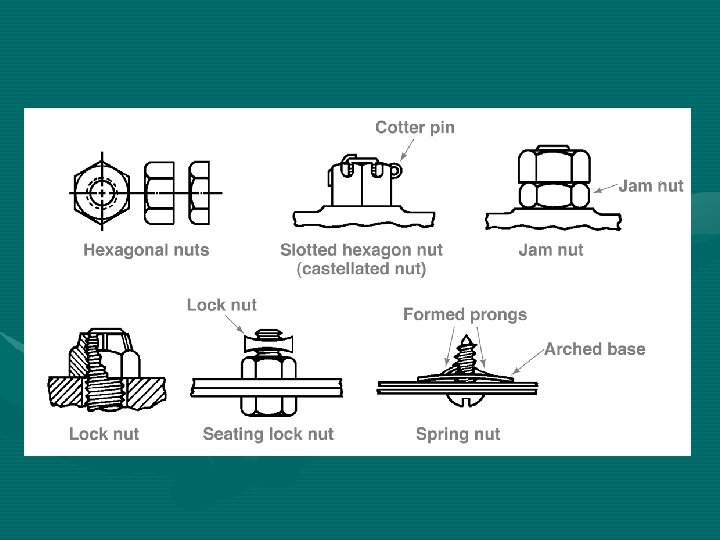
Threaded Fasteners • Studs – Fastener with no head and threads on both ends • Nuts – Used with bolts and studs – Many different designs – Can be specialized to specific applications
Torque-to-Yield Bolt Installation • Follow all manufacturer instructions on torquing the bolt • Typically first two steps involve an actual ft. lbs reading on a torque meter
Torque-to-Yield Bolt Installation • Final step requires tightening the fastener a specified number of degrees • Greatly reduces effect of friction on torque readings
Threaded Fasteners • Washers – Often used to distribute loads – Prevent a nut from becoming loose – Prevent damage to a machined surface
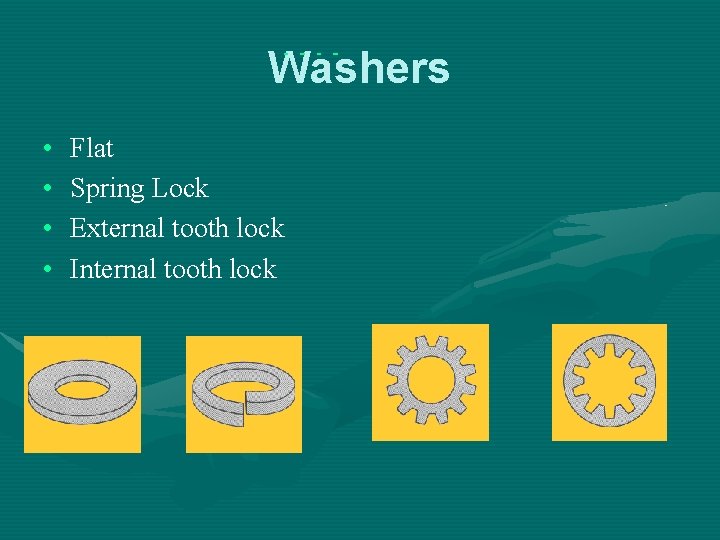
Washers • • Flat Spring Lock External tooth lock Internal tooth lock
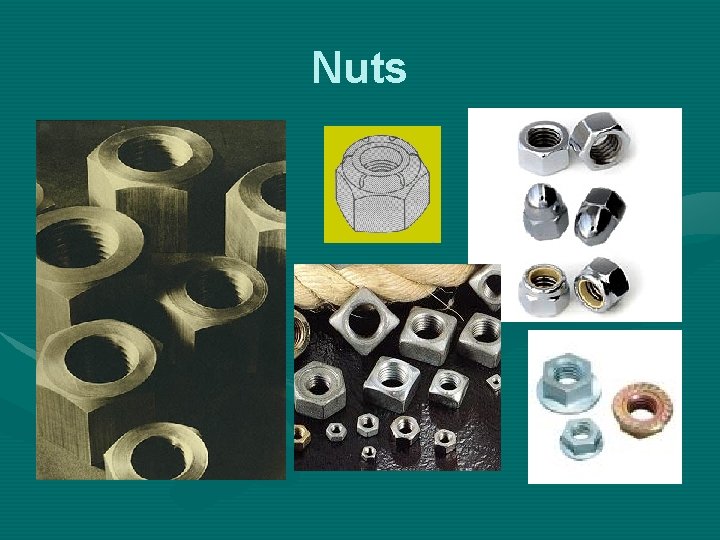
Nuts
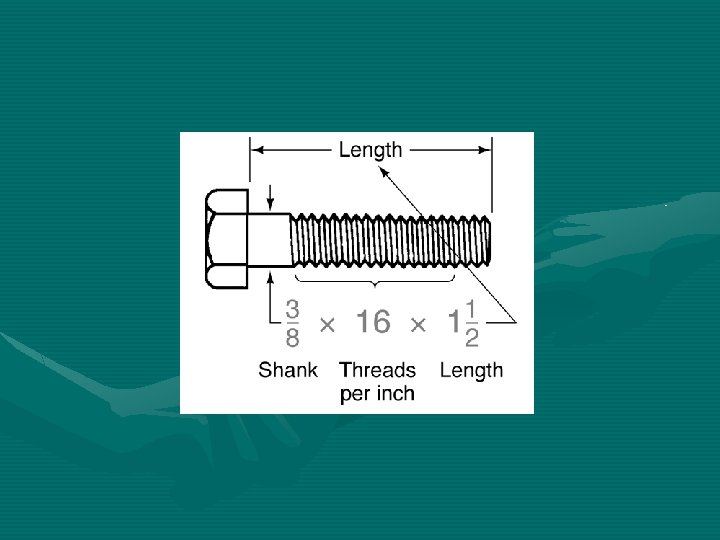
Threaded Fasteners • U. S. (English) Thread Sizes – Manufactured to Unified System specifications in Fractions of an Inch – Threads can be course or fine depending on the number of threads per inch – Bolt size is determined by shank diameter, bolt length, and threads per inch
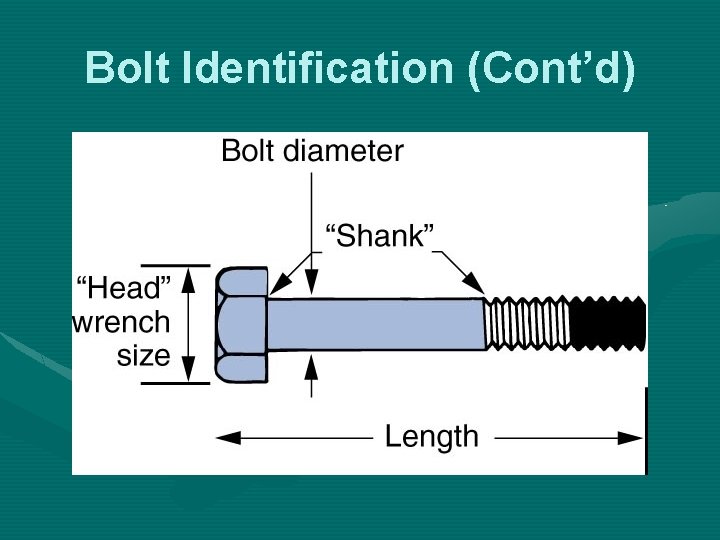
Bolt Identification (Cont’d)
Bolt Identification • Diameter – Measured across the threaded area • Thread pitch (English system) – The number of threads per inch • Thread pitch (Metric system) – The distance in millimeters between two adjacent threads
Metric Size Bolt Identification Example • A metric size bolt that is identified as 6 mm x 30 mm x 1. 25 mm: – Has a shank diameter of 6 millimeters. – Is 30 millimeters long from the bottom of the head to the end of the shank. – Has a distance of 1. 25 millimeters between its threads.
Imperial Size Bolt Identification Example • An Imperial size bolt that is identified as 3/8" x 24: – Has a shank diameter of 3/8 inch. – Is 2 inches long from the bottom of the head to the end of the shank. – Has 24 threads per inch.
Threaded Fasteners • Metric Thread Sizes – Same basic measurements as U. S. (English) bolts – Pitch number differentiates between fine and coarse as opposed to NC or NF ratings
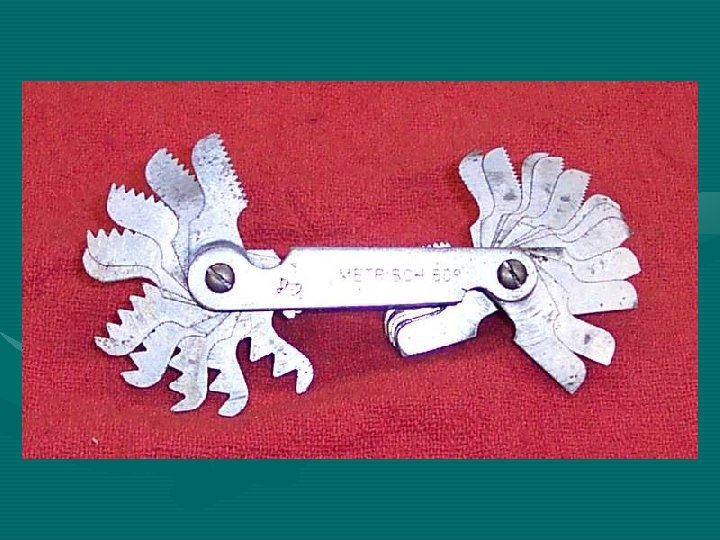
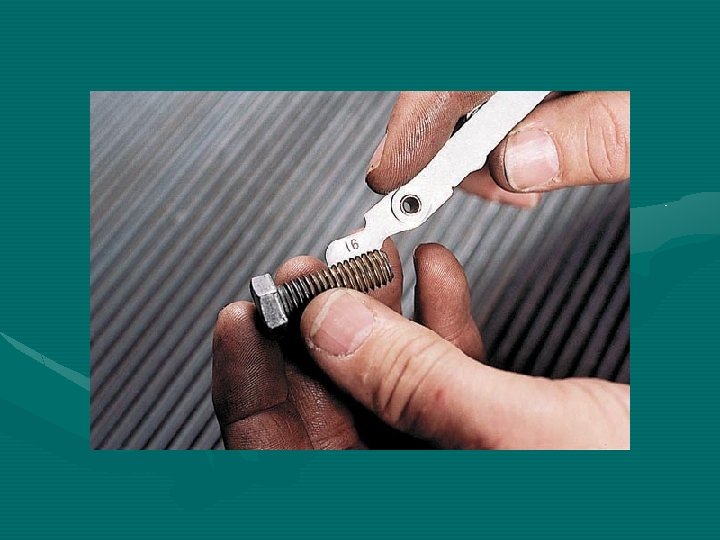
Measuring Devices (Cont’d) • Screw pitch gauge / Thread pitch gauge – Is used to determine thread pitch of a bolt or screw. • Machinist’s rule – Is usually used to measure items that don’t require extremely close tolerances, such as bolt lengths
Bolt Grade Markings • Customary (inch) bolts – Identification marks correspond to bolt strength. – Increasing numbers represent increasing strength. • Metric bolts – Identification class numbers correspond to bolt strength. – Increasing numbers represent increasing strength. • Metric and SAE size wrenches are not
Threaded Fasteners • Hardness and Strength – Strength is identified by grade markings on the bolt head – Standards are set by the Society of Automotive Engineers (SAE) – Tensile strength is amount of pressure the fastener can take before it breaks
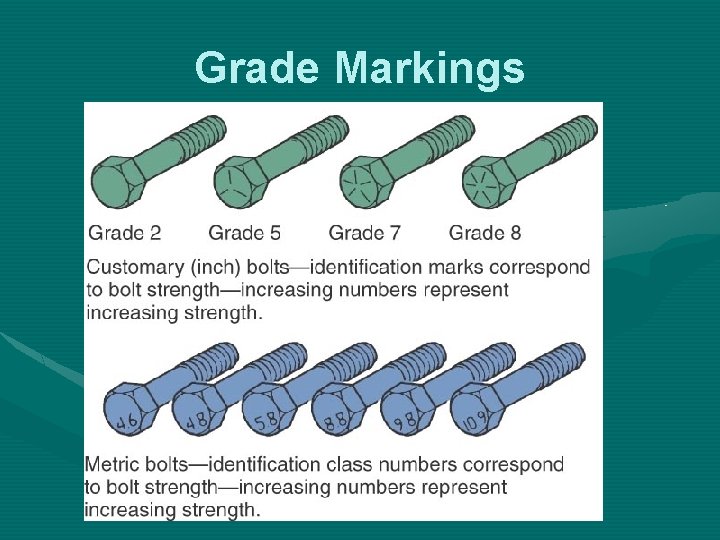
Grade Markings
Threaded Fasteners • Fastener Torque – Must be tightened to the correct amount – Not enough torque causes fastener to loosen – Too much leads to breakage
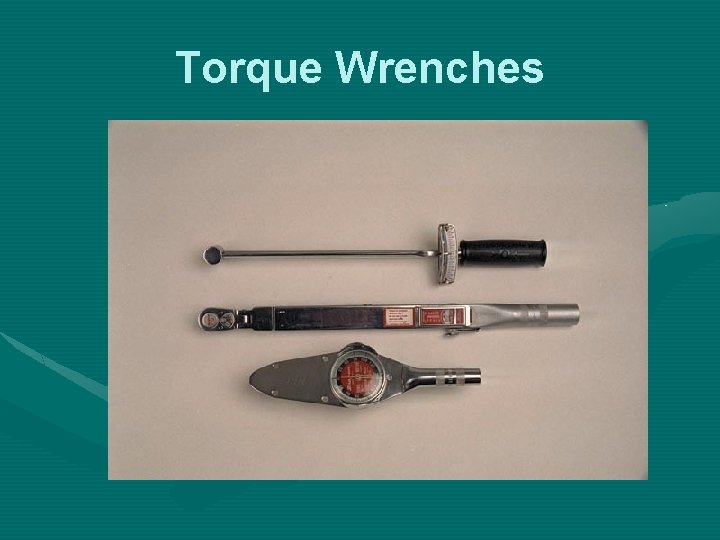
Torque Wrenches
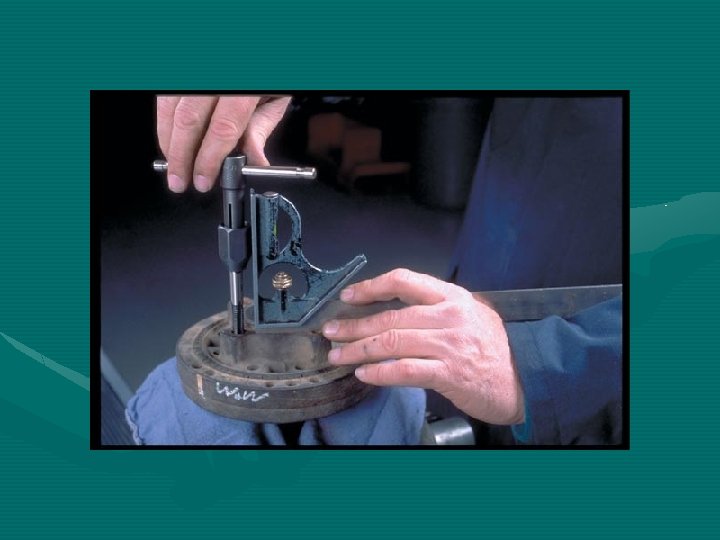
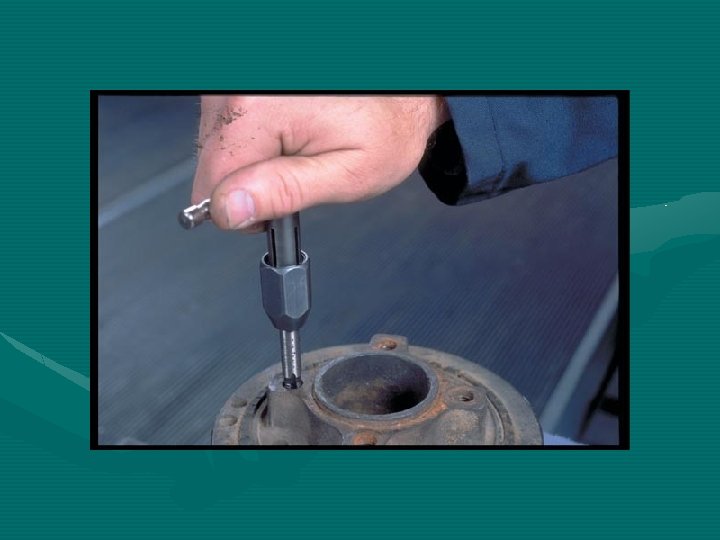
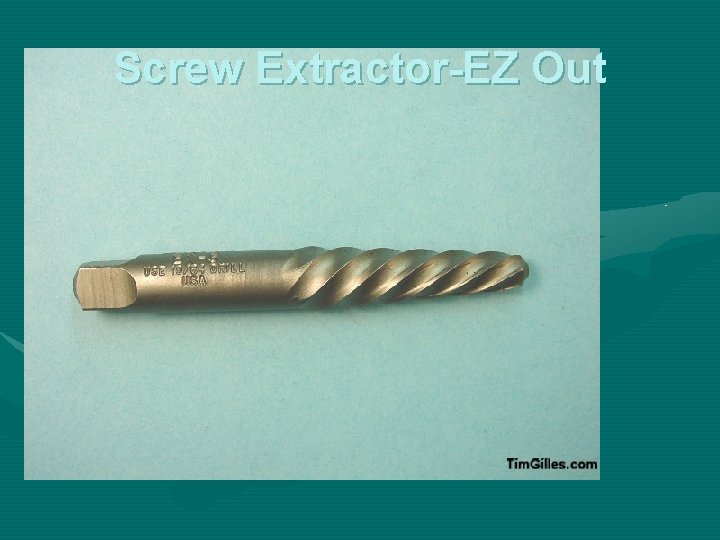
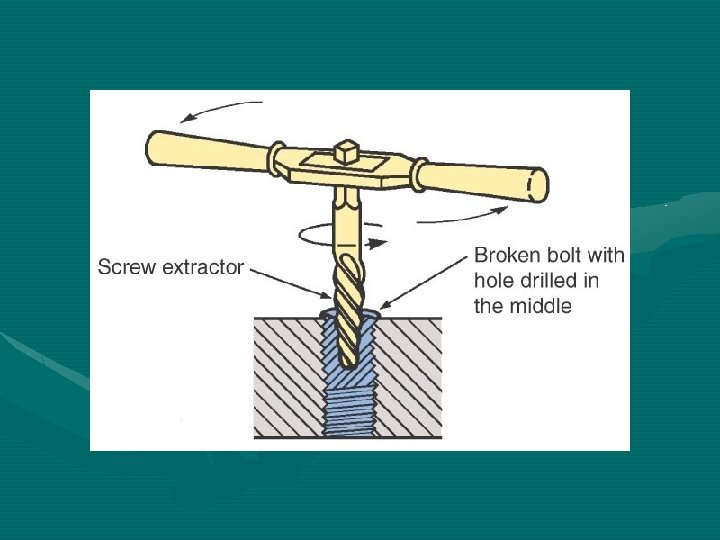
Thread Repair Tools • • Tap and Die Set Heilicoil Thread Restorer and Chasers Screw Extractor or EZ-Out (Brand Name)
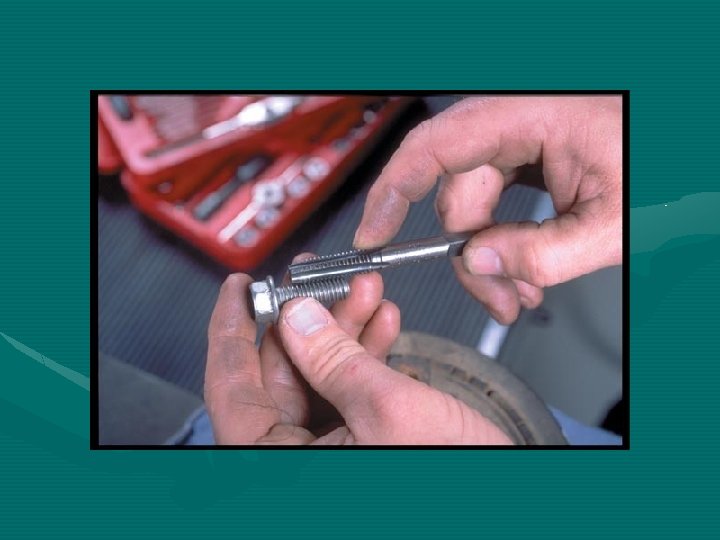
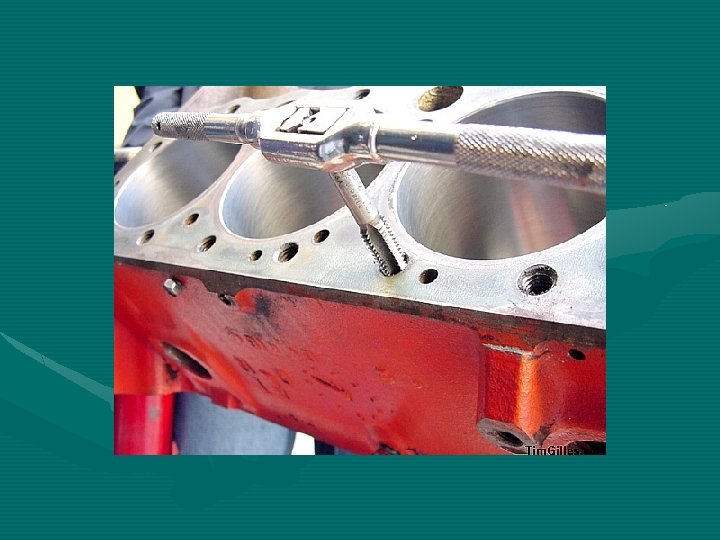
Thread Repair Tools • Tap and Die Sets – Dies are used to make external threads – Taper taps must extend through hole to work properly – Bottoming taps thread to bottom of hole
Thread Repair Tools • Helicoils – Threaded device threads into a hole and provides internal threads for a bolt – Must be used in conjunction with a properly sized drill and tap
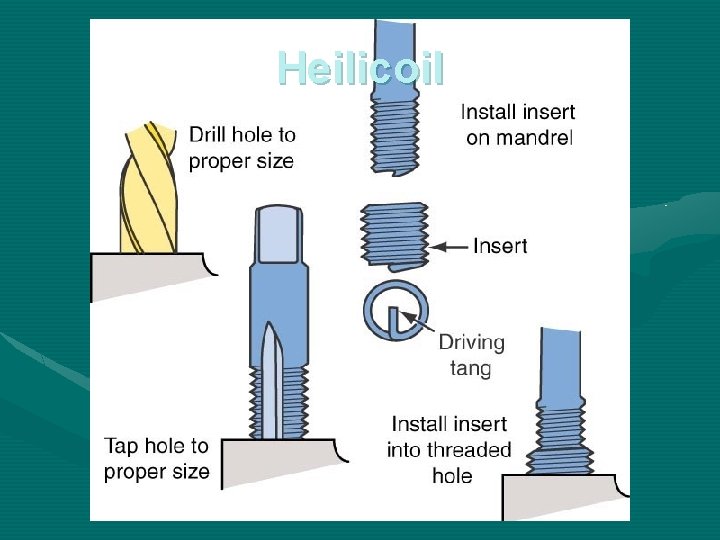
Heilicoil
Thread Repair Tools • Thread Restorers and Chasers – Restoring files are used to smooth and shape damaged threads – Thread chasers fit over the damaged thread like a fastener • Turned back and forth over damaged threads until repaired
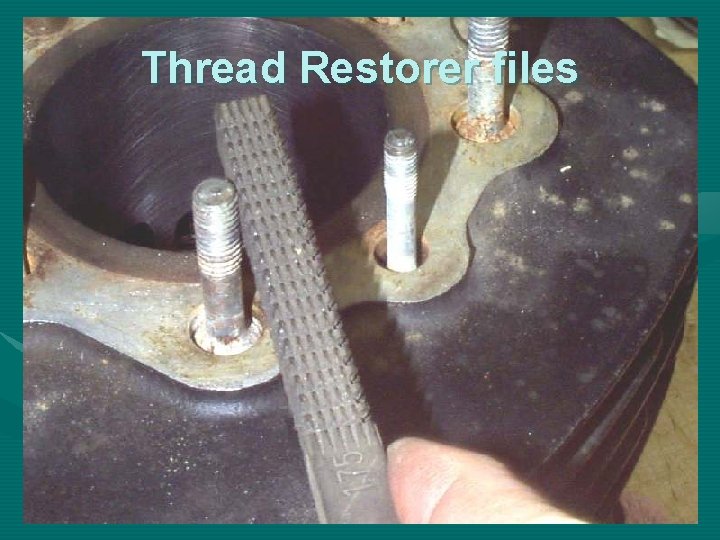
Thread Restorer files
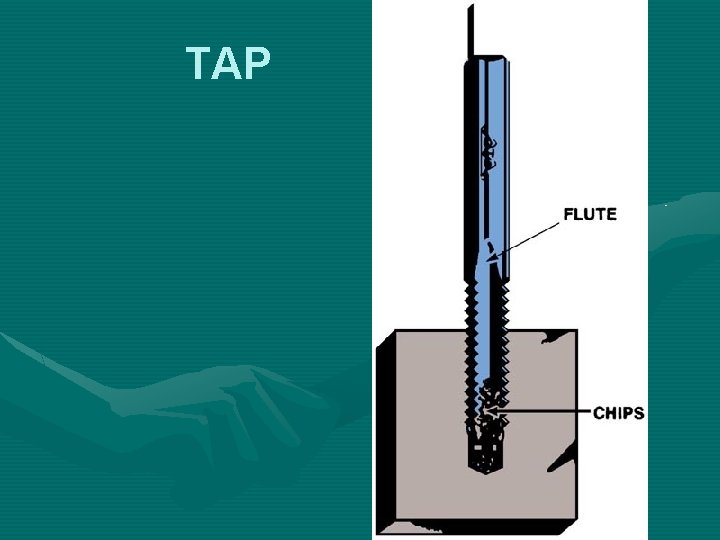
TAP
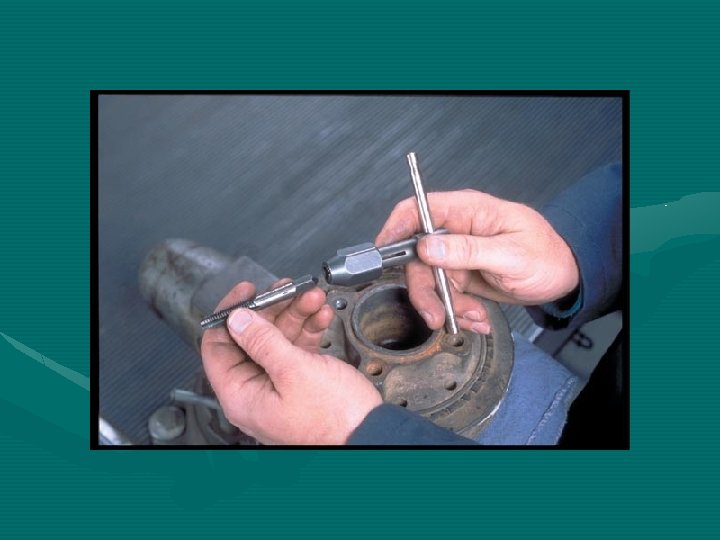
Screw Extractor-EZ Out
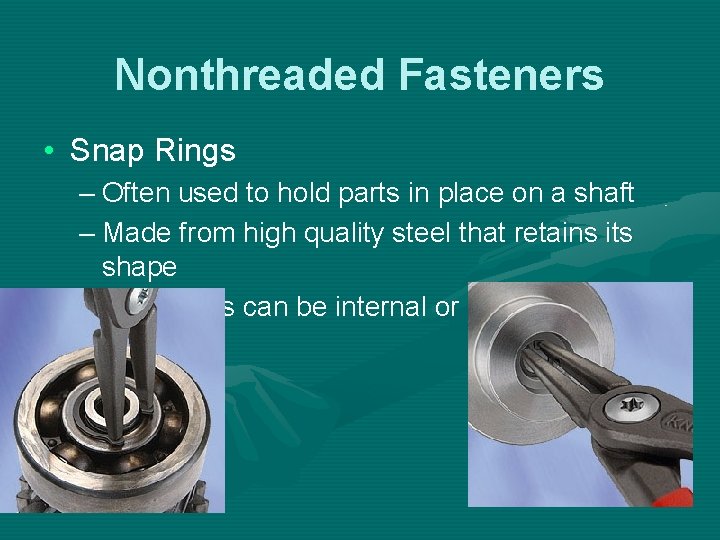
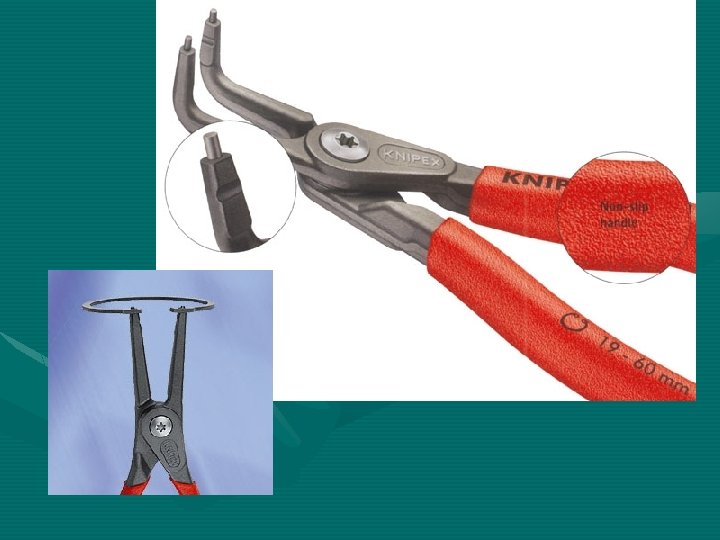
Nonthreaded Fasteners • Snap Rings – Often used to hold parts in place on a shaft – Made from high quality steel that retains its shape – Snap rings can be internal or external
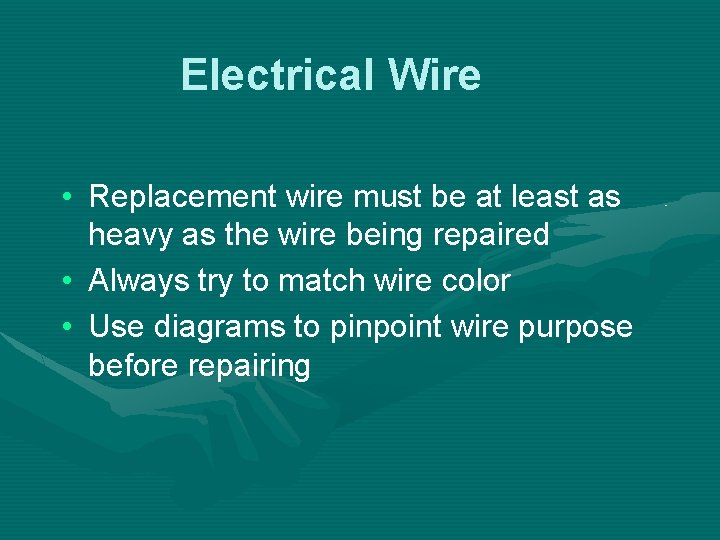
Electrical Wire • Replacement wire must be at least as heavy as the wire being repaired • Always try to match wire color • Use diagrams to pinpoint wire purpose before repairing
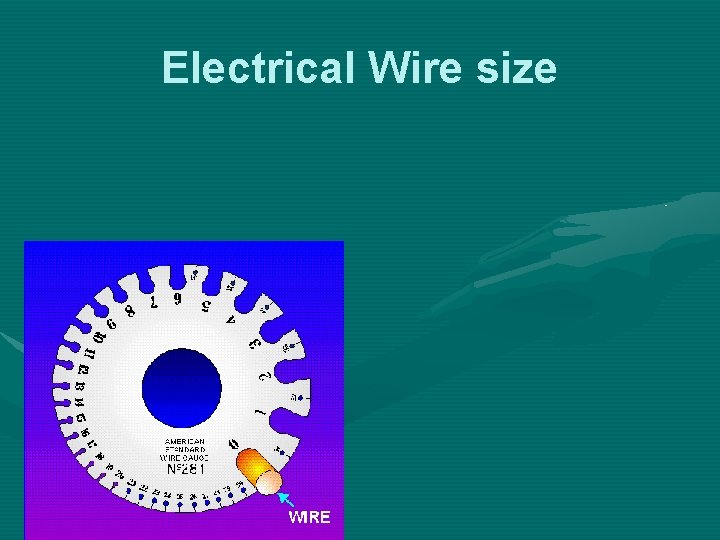
Electrical Wire size
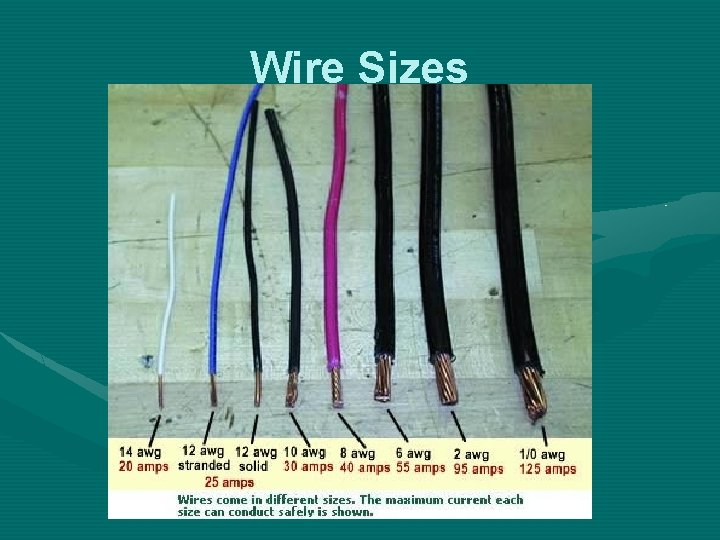
Wire Sizes
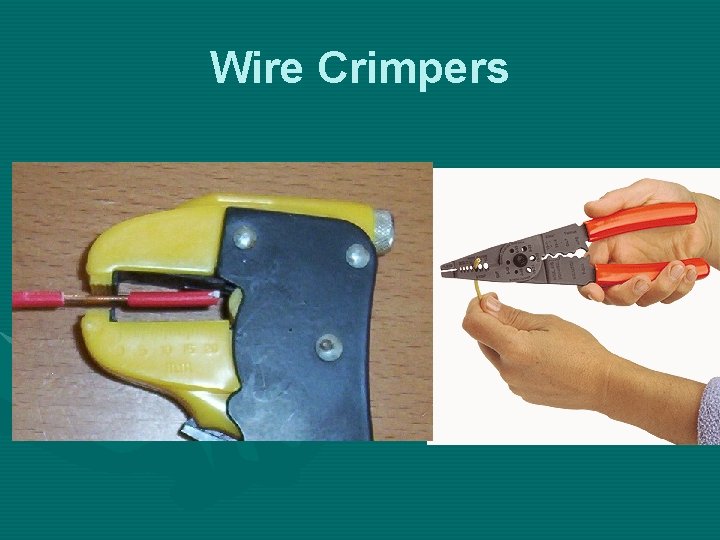
Wire Crimpers
Connectors • Two types of connectors-Solder and solderless • Soldering – Best repair method for wires – Adds little or no resistance to circuit – Use only resin based solder in automotive circuits Acid based solder can add resistance to circuit. • Terminal Connectors – Device fastened to end of wire, allowing
Connectors • Molded and Shell Connectors – Many different shapes and sizes – Matched in color, shape, purpose to help prevent crossing circuits
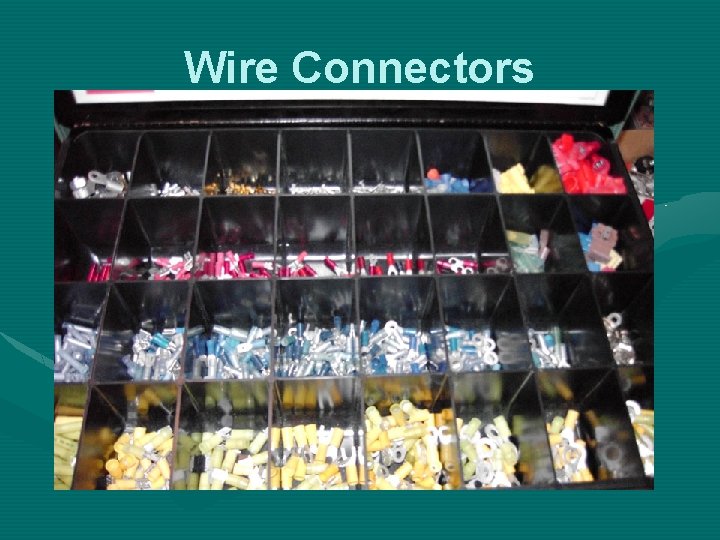
Wire Connectors
Connectors • Butt Connectors – Connects two wires together – Quick and easy to install, but may add resistance
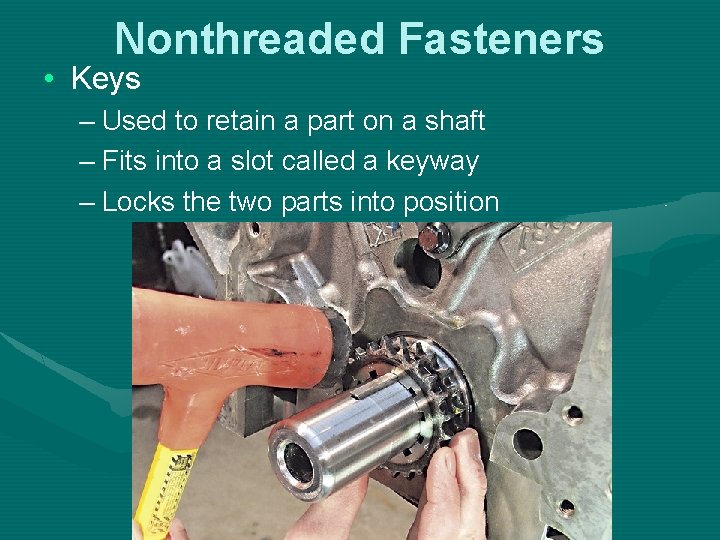
Nonthreaded Fasteners • Keys – Used to retain a part on a shaft – Fits into a slot called a keyway – Locks the two parts into position
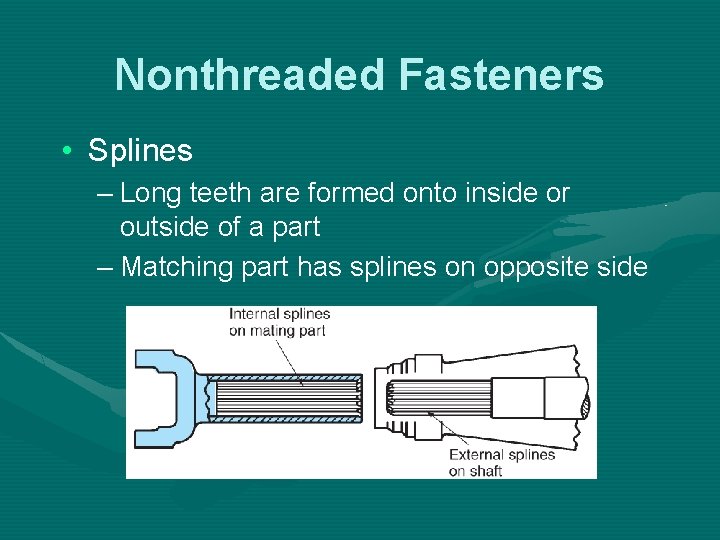
Nonthreaded Fasteners • Splines – Long teeth are formed onto inside or outside of a part – Matching part has splines on opposite side
Nonthreaded Fasteners • Rivets – Used to hold parts together that are hardly ever disassembled – Made from soft materials – Rivets are removed by a drill or chisel • Then drive shaft out with a punch
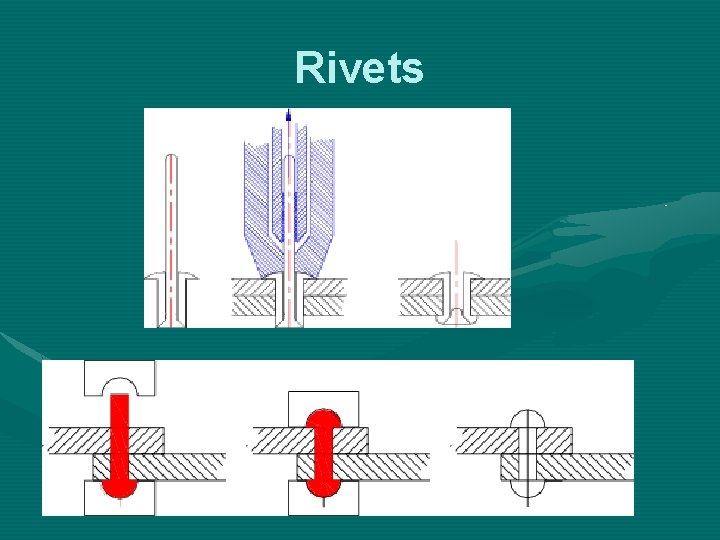
Rivets
Summary • Threads are measured and classified using U. S. (English) or metric system • Fasteners must be used as designed • Nonthreaded fasteners are also common • Electrical terminals and wiring must be maintained
- Slides: 60