
FAST Functional Assessment Service Teams The California Experience
- Slides: 13
FAST – Functional Assessment Service Teams: The California Experience 11. 12. 20 - CFILC Disaster Strategies Coalition 1
Objecvtives • Understand history, vision & development • Review outcomes, strengths & weaknesses • Discuss options for the road forward 2
History - 1970 s & on - identified lack of equal & inclusive services - 2007 California Department of Social Services began developing FAST: - concept, - plans, & - training course eventually approved by FEMA 3
Vision - Working smarter - Building partnerships with - CBOs (community based organizations) - Cities - Counties - States & - American Red Cross 4
Vision - Blend competencies & skill sets of governments with community disability services, - Provide assistance to people with often complex and urgent disability needs, • Competencies: – Nimble, flexible, scalable response – Deal with complexities of what it takes maintain health & safety & survive emergencies. 5
Vision • Working knowledge of crossdisability access issues: –hearing, vision, mobility, speech, memory, learning, understanding • Applying core IL values: –Honoring dignity of risk, choice & self-determination 6
Vision • Identifying, remedying & retooling interventions that reflect old, stigmatizing biases, stereotypes & beliefs: –Indiscriminate & widespread applying of medical model 7
Future: FAST 2. 0 • Sustaining the effort • Current models - heavy lift for some jurisdictions struggling with lean budgets • Broaden focus • A strengthened & expanded whole community model • Training & evaluation 8
CFILC Disaster Advisor jik@pacbell. net | www. jik. com/mrp. html Adding value to service by increasing access 9 health care and disaster inclusive practices training, policies, processes, & exercises
FAST: the California Experience SVILC’s Perspective What is working? What needs work? Vision for the future? November 12, 2020
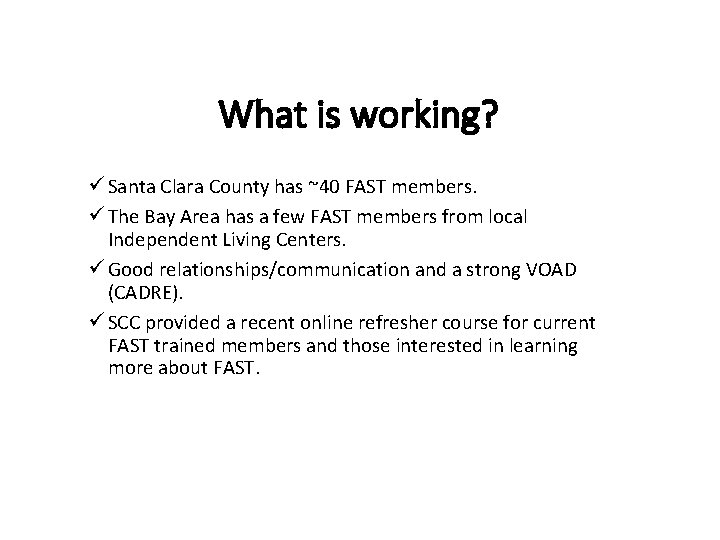
What is working? ü Santa Clara County has ~40 FAST members. ü The Bay Area has a few FAST members from local Independent Living Centers. ü Good relationships/communication and a strong VOAD (CADRE). ü SCC provided a recent online refresher course for current FAST trained members and those interested in learning more about FAST.
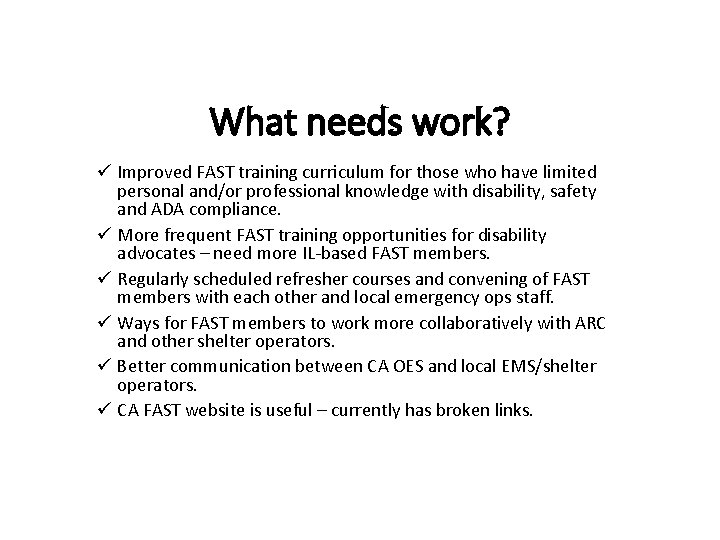
What needs work? ü Improved FAST training curriculum for those who have limited personal and/or professional knowledge with disability, safety and ADA compliance. ü More frequent FAST training opportunities for disability advocates – need more IL-based FAST members. ü Regularly scheduled refresher courses and convening of FAST members with each other and local emergency ops staff. ü Ways for FAST members to work more collaboratively with ARC and other shelter operators. ü Better communication between CA OES and local EMS/shelter operators. ü CA FAST website is useful – currently has broken links.
Vision for the future? ü Structured and coordinated FAST program at State and County levels. ü Comprehensive training curriculum that is disability peerbased and includes safety issues. ü Annual FAST trainings and annual refresher courses. (Originally re-certification was supposed to be every two years, but they haven’t happened in several years. ) ü FAST assessment protocols are integrated into all shelter operations with all shelter managers knowledgeable about FAST.