
Fast Bus Transfer Systems A System Solution Approach
Fast Bus Transfer Systems : A System Solution Approach Power-Gen Middle East Bahrain International Exhibition Centre, Manama, Bahrain 6 th Feb 2008 Amit Raje, Anil Raje Aartech Solonics Ltd. , Bhopal, India Arvind Chaudhary Cooper Power Systems, WI, USA
Bus Transfer Scheme w Process Continuity w Transfer of motor loads from Normal Source to Alternate Source – Contingencies – Unplanned shut-downs and start-ups – Voltage dips 12/24/2021 2
Critical Applications w Fossil fuel fired boiler w Pressurized water reactor nuclear unit w Semiconductor manufacturing plants w Chemical plants w Petrochemical plants w Paper mills etc. 12/24/2021 3
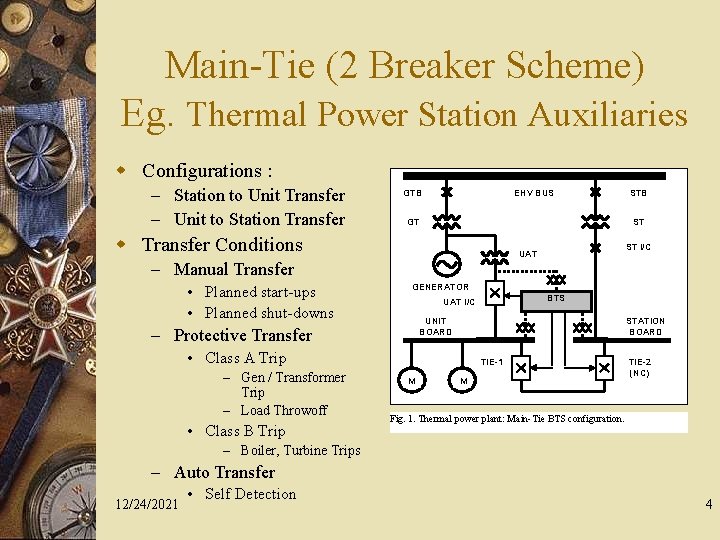
Main-Tie (2 Breaker Scheme) Eg. Thermal Power Station Auxiliaries w Configurations : – Station to Unit Transfer – Unit to Station Transfer GTB EHV BUS GT STB ST w Transfer Conditions ST I/C UAT – Manual Transfer • Planned start-ups • Planned shut-downs GENERATOR UNIT BOARD – Protective Transfer STATION BOARD • Class A Trip – Gen / Transformer Trip – Load Throwoff • Class B Trip BTS UAT I/C TIE-1 M M TIE-2 (NC) Fig. 1. Thermal power plant: Main-Tie BTS configuration. – Boiler, Turbine Trips – Auto Transfer 12/24/2021 • Self Detection 4
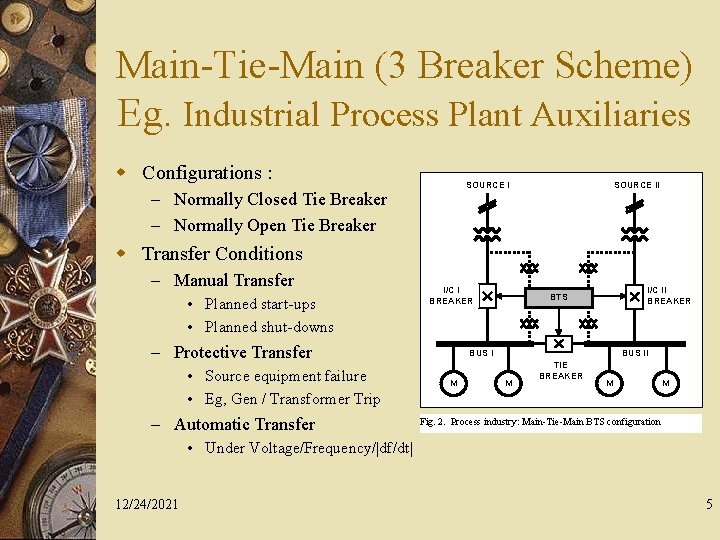
Main-Tie-Main (3 Breaker Scheme) Eg. Industrial Process Plant Auxiliaries w Configurations : SOURCE I – Normally Closed Tie Breaker – Normally Open Tie Breaker SOURCE II w Transfer Conditions – Manual Transfer • Planned start-ups • Planned shut-downs I/C I BREAKER – Protective Transfer • Source equipment failure • Eg, Gen / Transformer Trip – Automatic Transfer I/C II BREAKER BTS BUS I M BUS II M TIE BREAKER M M Fig. 2. Process industry: Main-Tie-Main BTS configuration • Under Voltage/Frequency/|df/dt| 12/24/2021 5
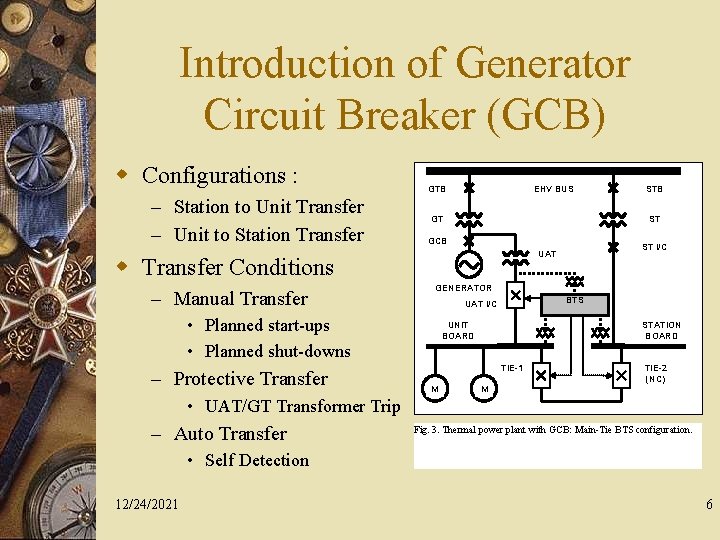
Introduction of Generator Circuit Breaker (GCB) w Configurations : – Station to Unit Transfer – Unit to Station Transfer GTB EHV BUS GT ST GCB GENERATOR BTS UAT I/C • Planned start-ups • Planned shut-downs – Protective Transfer ST I/C UAT w Transfer Conditions – Manual Transfer STB UNIT BOARD STATION BOARD TIE-1 M M TIE-2 (NC) • UAT/GT Transformer Trip – Auto Transfer Fig. 3. Thermal power plant with GCB: Main-Tie BTS configuration. • Self Detection 12/24/2021 6
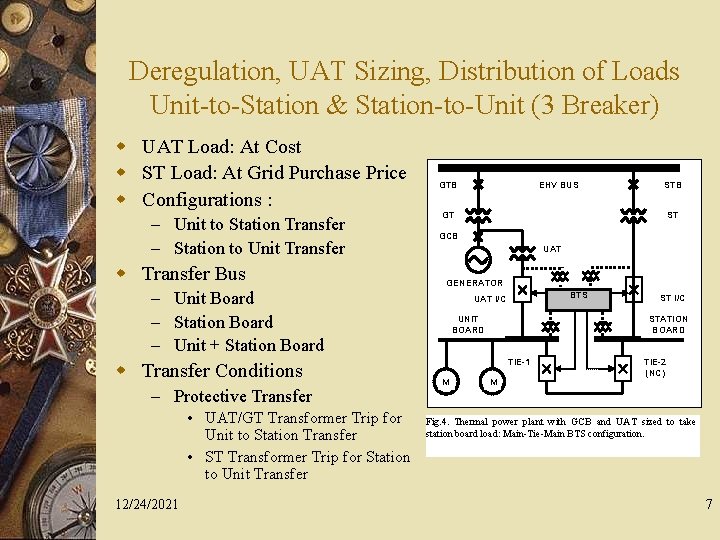
Deregulation, UAT Sizing, Distribution of Loads Unit-to-Station & Station-to-Unit (3 Breaker) w UAT Load: At Cost w ST Load: At Grid Purchase Price w Configurations : – Unit to Station Transfer – Station to Unit Transfer w Transfer Bus – Unit Board – Station Board – Unit + Station Board w Transfer Conditions – Protective Transfer • UAT/GT Transformer Trip for Unit to Station Transfer • ST Transformer Trip for Station to Unit Transfer 12/24/2021 GTB EHV BUS STB GT ST GCB UAT GENERATOR BTS UAT I/C UNIT BOARD STATION BOARD TIE-1 M ST I/C M TIE-2 (NC) Fig. 4. Thermal power plant with GCB and UAT sized to take station board load: Main-Tie-Main BTS configuration. 7
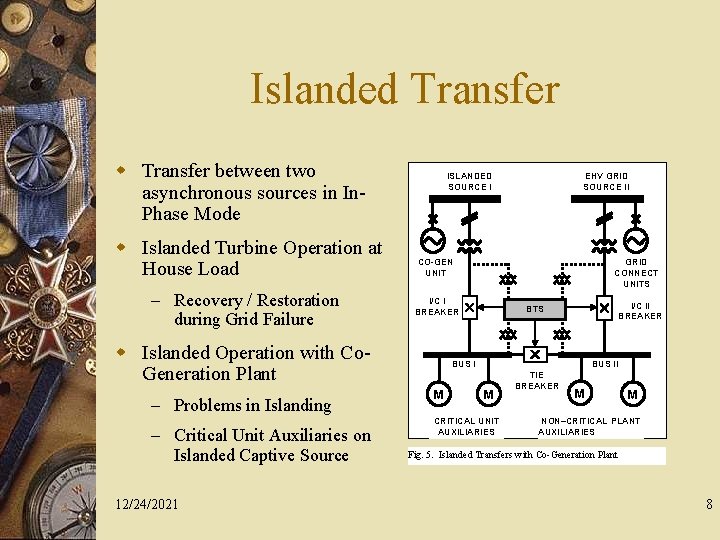
Islanded Transfer w Transfer between two asynchronous sources in In. Phase Mode w Islanded Turbine Operation at House Load – Recovery / Restoration during Grid Failure ISLANDED SOURCE I CO-GEN UNIT – Critical Unit Auxiliaries on Islanded Captive Source 12/24/2021 GRID CONNECT UNITS I/C I BREAKER w Islanded Operation with Co. Generation Plant – Problems in Islanding EHV GRID SOURCE II I/C II BREAKER BTS BUS I M BUS II M CRITICAL UNIT AUXILIARIES TIE BREAKER M M NON–CRITICAL PLANT AUXILIARIES Fig. 5. Islanded Transfers with Co-Generation Plant 8
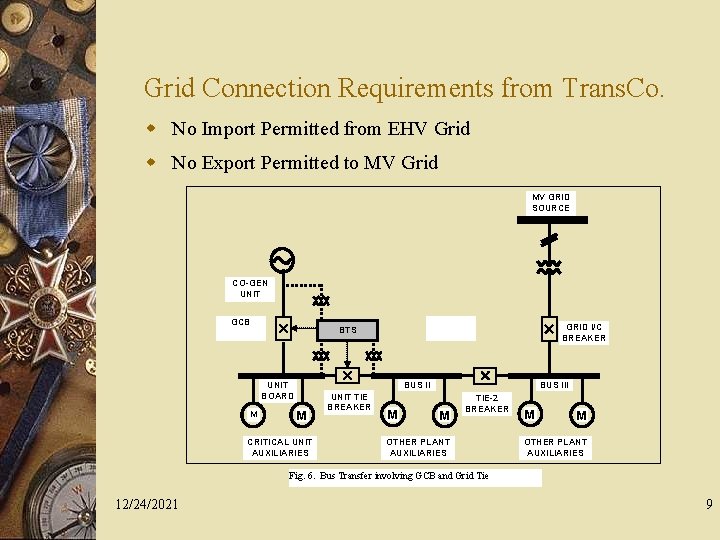
Grid Connection Requirements from Trans. Co. w No Import Permitted from EHV Grid w No Export Permitted to MV Grid MV GRID SOURCE CO-GEN UNIT GCB UNIT BOARD M GRID I/C BREAKER BTS BUS II M CRITICAL UNIT AUXILIARIES UNIT TIE BREAKER M BUS III M TIE-2 BREAKER OTHER PLANT AUXILIARIES M M OTHER PLANT AUXILIARIES Fig. 6. Bus Transfer involving GCB and Grid Tie 12/24/2021 9
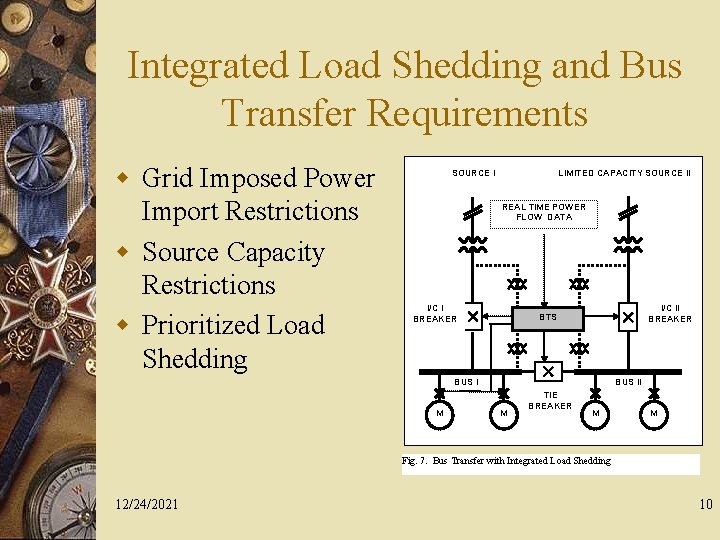
Integrated Load Shedding and Bus Transfer Requirements w Grid Imposed Power Import Restrictions w Source Capacity Restrictions w Prioritized Load Shedding SOURCE I LIMITED CAPACITY SOURCE II REAL TIME POWER FLOW DATA I/C I BREAKER I/C II BREAKER BTS BUS I M BUS II M TIE BREAKER M M Fig. 7. Bus Transfer with Integrated Load Shedding 12/24/2021 10
Source Loss / Source Faults and Process Time Constants w Source Loss: Upstream Source goes Dead – Spin Down Characteristics – Auto Transfer Initiation w Source Fault: Upstream Source gets Faulted – – Bus De-energized during Fault Bus Swelling on Isolation from Fault Solution depends on Process Time Constants Small Process Time Constant: • Fast Protection (Sub Cycle Protection) with Intelligent Auto Transfer Initiated Bus Transfer – Large Process Time Constant: • Slow Transfer Schemes with Load Tripping and Re-acceleration 12/24/2021 11
Bridging Power Supplies w Factors – Duration – Power Requirements – Energy Requirements w Technologies – – – Capacitors for Reactive Power Support Synchronous Generators Flywheels Batteries Ultra-Capacitors 12/24/2021 12
Retrofitting Slow Transfer Schemes w Older schemes using residual voltage / long timer based schemes w Unable to meet process continuity requirements w Improved Motor Health – Reduced Motor Maintenance (End Winding Failures) 12/24/2021 13
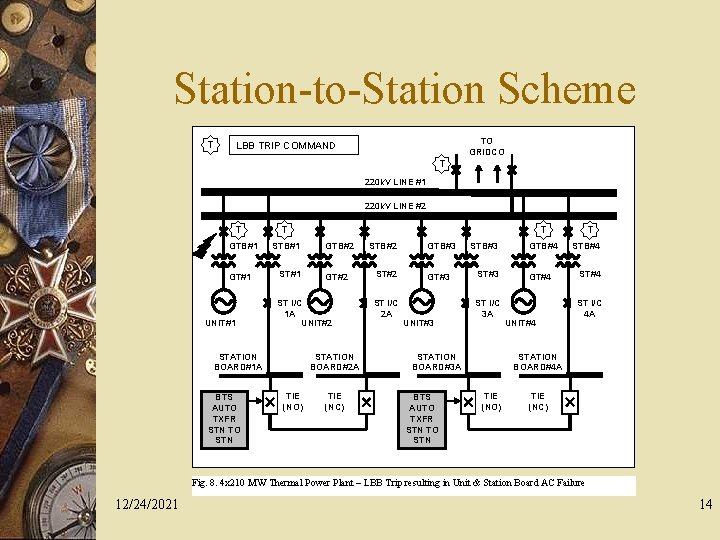
Station-to-Station Scheme T TO GRIDCO LBB TRIP COMMAND T 220 k. V LINE #1 220 k. V LINE #2 T GTB#1 GT#1 UNIT#1 T STB#1 ST#1 GTB#2 GT#2 ST I/C 1 A UNIT#2 STATION BOARD#1 A BTS AUTO TXFR STN TO STN T STATION BOARD#2 A TIE (NO) TIE (NC) STB#2 ST I/C 2 A GTB#3 GT#3 UNIT#3 STB#3 ST I/C 3 A STATION BOARD#3 A BTS AUTO TXFR STN TO STN GTB#4 GT#4 UNIT#4 T STB#4 ST I/C 4 A STATION BOARD#4 A TIE (NO) TIE (NC) Fig. 8. 4 x 210 MW Thermal Power Plant – LBB Trip resulting in Unit & Station Board AC Failure 12/24/2021 14
Integrated Unit-to-Station & ½ Station-to-Station Scheme w Bus Transfer Requirements for: – 1 Unit Board – 1 Station Board w More Economy Per Scheme 12/24/2021 15
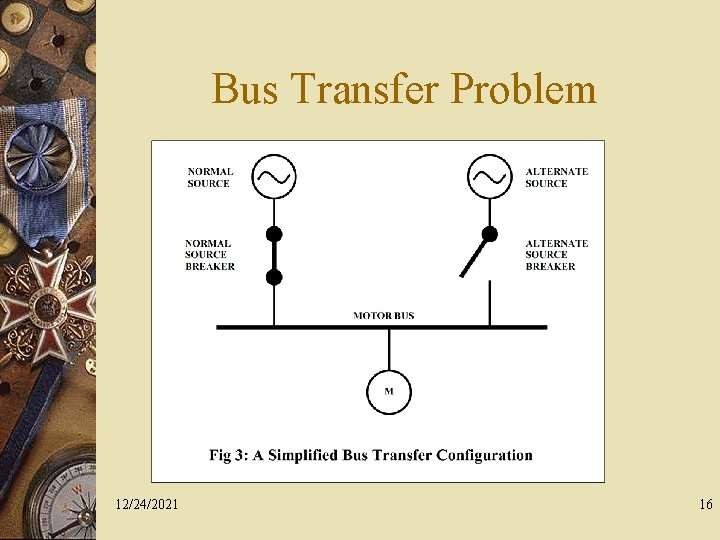
Bus Transfer Problem 12/24/2021 16
Bus Transfer Problem w Momentory Paralleling – Fault During Transfer • Interrupt ratings of circuit breakers violated • Withstand ratings of transformers violated – Phase Difference Monitoring • Power surge 12/24/2021 17
Bus Transfer Problem (Contd…) w Open Circuit Condition – Spin Down Characteristics • Normal source integrity prior to the opening of the normal source breaker. • Stored energy and motor load inertia – High Inertia • Fans, Reactor coolant pumps – Low Inertia • Centrifugal pumps etc. 12/24/2021 18
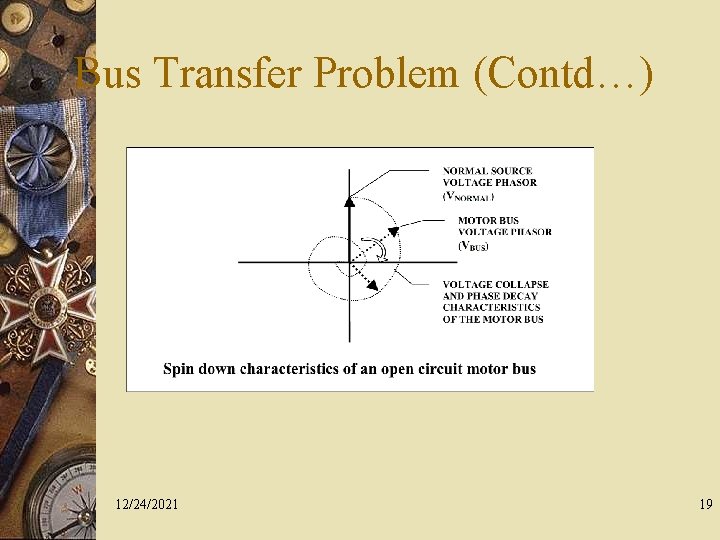
Bus Transfer Problem (Contd…) 12/24/2021 19
Bus Transfer Problem (Contd…) • Adjustable Speed Drives – Motoring Mode, Coast Mode, Regenerative Braking Mode • Motor under-voltage disconnection from the bus – Re-energization • Most critical task of an open circuit based transfer – The motor bus residual voltage magnitude. – The phase angle between the motor bus residual voltage and the alternate source voltage. – The phase relationship between the oscillating shaft torque and transient electrical air gap torque, all at the time of reenergization. 12/24/2021 20
Worst Case Analysis w ~ Applying twice the rated voltage w Inrush current is – twice the normal motor starting current – Transient • 6 to 10 times the rated full load current – Sub-Transient • 9 to 15 times the rated full load current 12/24/2021 21
Worst Case Analysis (Contd…) w Possible Effects – An improper re-energization can : • • • 12/24/2021 loosen the stator coils loosen the rotor bars of the induction motors twist a shaft Can even rip the machine from its base plate. premature motor failure due to fatigue. 22
Bus Transfer Method w Parallel (Hot) Transfer – Advantages • Bump-less transfer • Ease of application and operator understanding – Disadvantages • Increase in available fault current • Transfer not possible in case of : – Steady state voltage/phase difference – Electrical fault or abnormal conditions 12/24/2021 23
Fast Transfer Method w Phase difference monitoring – Simultaneous Transfer (1 - 2 cycles) – Sequential Transfer (5 - 10 cycles) w Advantages : – Minimum interruption of power to the bus – Safe, reliable as well as economic in nature – Paralleling of the normal and alternate sources is avoided. 12/24/2021 24
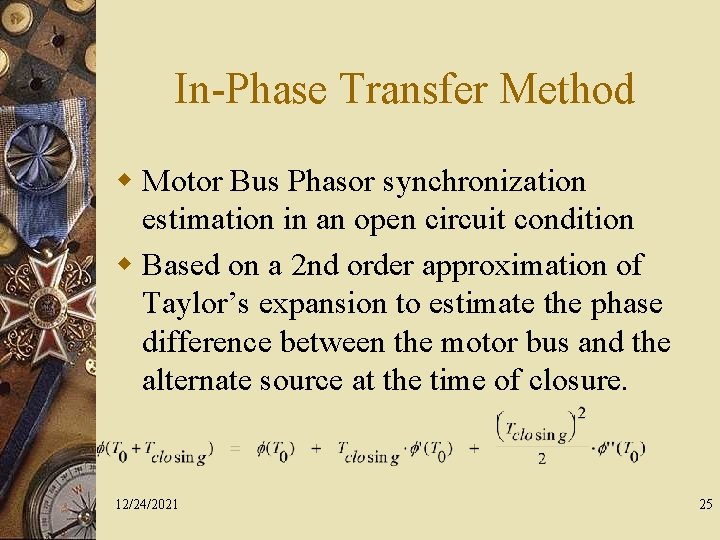
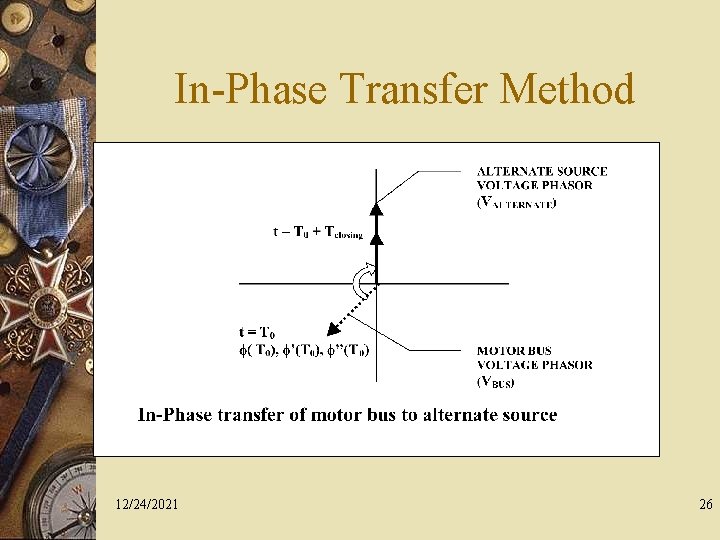
In-Phase Transfer Method w Motor Bus Phasor synchronization estimation in an open circuit condition w Based on a 2 nd order approximation of Taylor’s expansion to estimate the phase difference between the motor bus and the alternate source at the time of closure. 12/24/2021 25
In-Phase Transfer Method 12/24/2021 26
Residual Voltage Transfer w Voltage decay allowed in an Open Circuit condition upto 20 - 25% before reenergization w Load shedding of auxiliaries usually required to avoid overcurrent trip on reenergization w Loss of process continuity possible 12/24/2021 27
Bus Transfer Standards w ANSI C 50. 41 (1982) and NEMA MG-1 (1982) – Magnitude of Phasor difference between motor bus and alternate source in (V/Hz) should be less than 1. 33 p. u. w NEMA MG-1 (1987) – Detailed shaft-motor-driven load analysis required 12/24/2021 28
Bus Transfer Experiences w Transfer Initiation – Planned Transfers • Manual • Remote SCADA Actuation – Contingency Transfers • Protective Transfers – Generator Master Trip, Transformer Trip/Fault • Auto Transfers – Undervoltage, Underfrequency, df/dt Based Transfers 12/24/2021 29
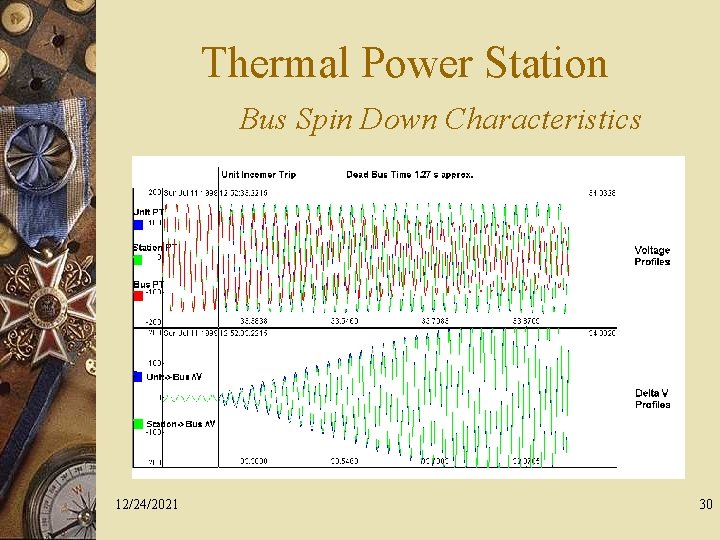
Thermal Power Station Bus Spin Down Characteristics 12/24/2021 30
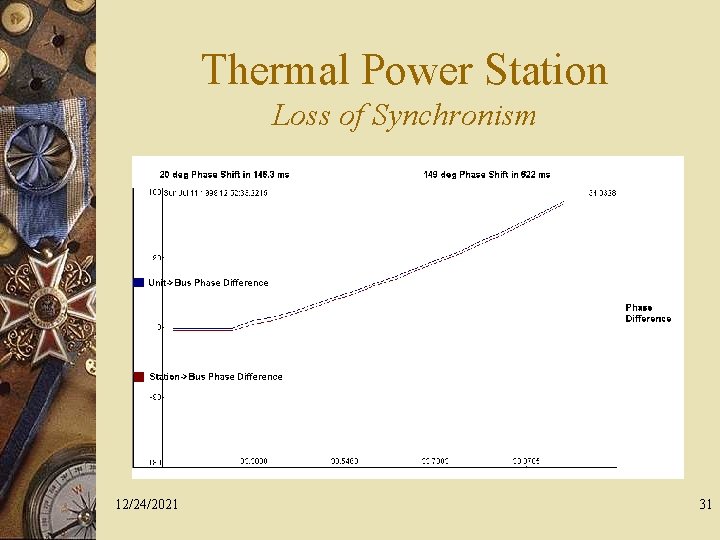
Thermal Power Station Loss of Synchronism 12/24/2021 31
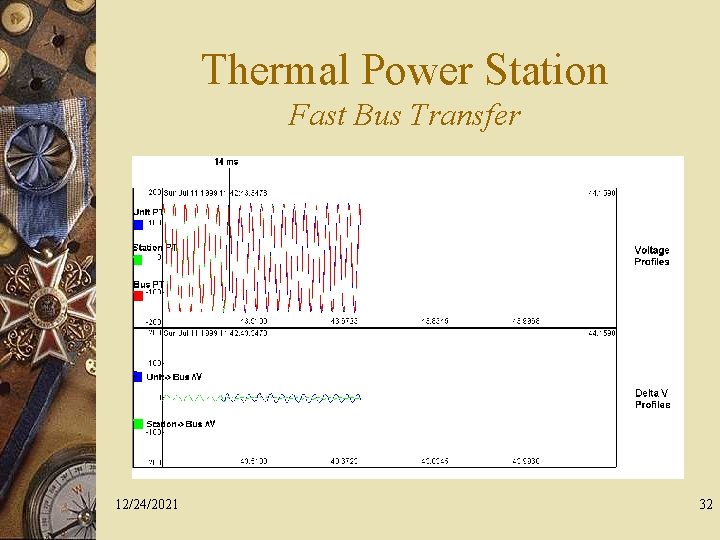
Thermal Power Station Fast Bus Transfer 12/24/2021 32
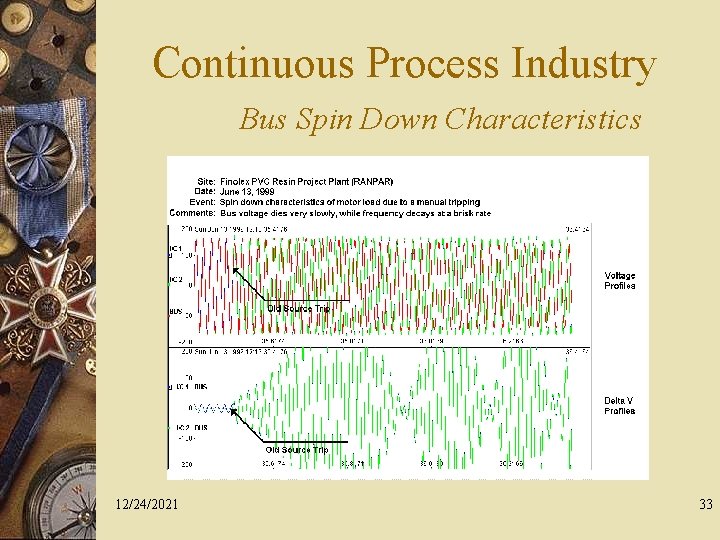
Continuous Process Industry Bus Spin Down Characteristics 12/24/2021 33
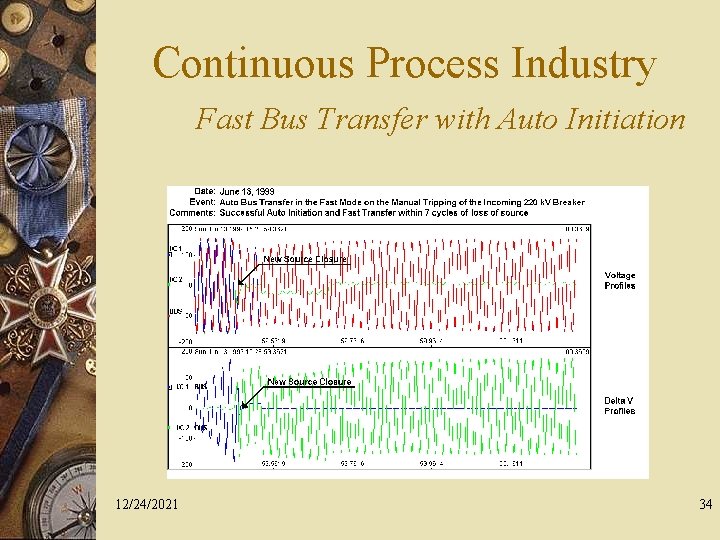
Continuous Process Industry Fast Bus Transfer with Auto Initiation 12/24/2021 34
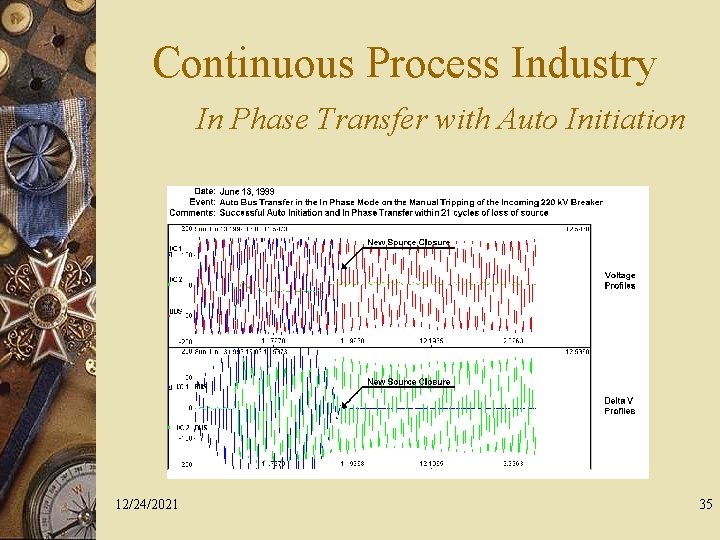
Continuous Process Industry In Phase Transfer with Auto Initiation 12/24/2021 35
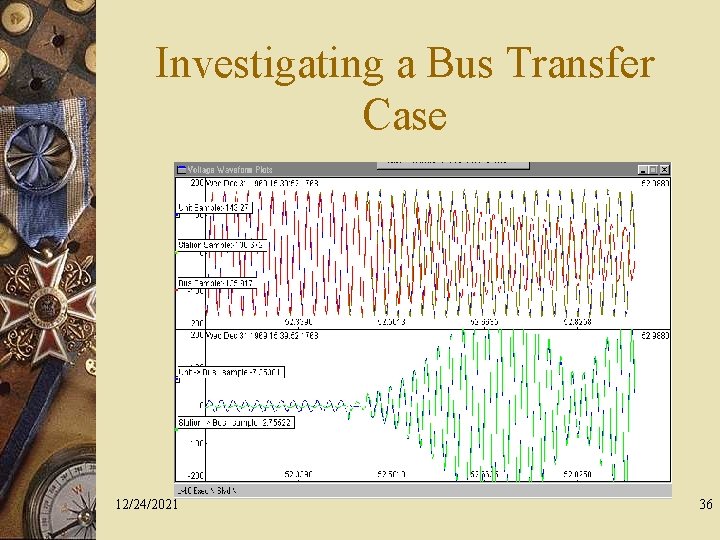
Investigating a Bus Transfer Case 12/24/2021 36
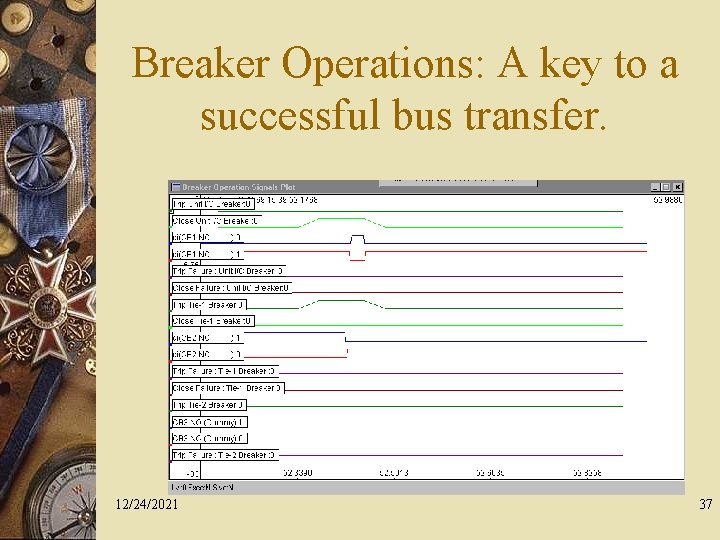
Breaker Operations: A key to a successful bus transfer. 12/24/2021 37
Conclusions w A Bus Transfer Scheme is a critical necessity in various power generation as well as industrial processing scenarios. w Customised System Solution Approach required for Integrated Application Engineered Requirements. w Proven Performance and Features of High Speed Motor Bus Transfers 12/24/2021 38
- Slides: 38